
Mathematical formulas are used to describe relationships between numbers, quantities, and measurements. They allow us to solve problems without writing the same calculation repeatedly. At the heart of many formulas are variables. A variable is a symbol, usually a letter, that represents a value that can change or is not yet known.
For example, the formula for the area of a rectangle is:
A = l × w
Here, A represents area, l represents length, and w represents width. If the length or width changes, the area changes as well. This simple example shows why variables are so useful in mathematics.
Understanding how variables work is an important foundation for learning algebra, equations, geometry, physics, chemistry, statistics, and many other areas of science and mathematics. Once you understand what variables represent and how they behave inside formulas, many mathematical expressions become much easier to read and use.
What Is a Variable?
A variable is a symbol used to represent a value. The value represented by a variable may change depending on the situation or problem.
Letters such as x, y, a, b, m, and t are commonly used as variables.
For example:
x = 5
In this case, the variable x represents the number 5.
But a variable does not always have to represent the same number. In another problem, we might have:
x = 12
Therefore, the value of a variable depends on the context in which it is being used.
The word “variable” comes from the idea that its value can vary. However, in a particular problem, a variable may have one fixed value once the required information is given.
Why Are Variables Used in Mathematical Formulas?
Variables make formulas general and flexible.
Consider the perimeter of a square. If the side length is 5 cm, the perimeter can be calculated as:
P = 4 × 5 = 20 cm
But instead of creating a separate calculation for every possible side length, we can write a general formula:
P = 4s
Here, s represents the side length.
If s = 5 cm:
P = 4 × 5 = 20 cm
If s = 8 cm:
P = 4 × 8 = 32 cm
The same formula works for both situations. This is one of the main advantages of variables: they allow a single mathematical rule to describe many different cases.
Variables and Constants
To understand variables properly, it is useful to distinguish them from constants.
A constant is a value that does not change within a particular formula or situation. A variable can represent different values.
For example:
y = 3x + 2
In this formula:
x is a variable.
y is a variable.
3 is a constant.
2 is a constant.
If the value of x changes, the value of y changes.
For example, when x = 1:
y = 3(1) + 2 = 5
When x = 4:
y = 3(4) + 2 = 14
The constants remain the same, while the variable value changes.
Variables Can Represent Different Quantities
A variable does not have one universal meaning. Its meaning depends on the formula and the context.
For example, t is often used to represent time, but it could represent something else in another mathematical problem.
Consider the formula:
d = vt
Here:
d = distance
v = velocity or speed
t = time
In a different formula, t might represent the temperature or another quantity.
Therefore, you should not assume the meaning of a variable only from the letter itself. Always look at the definition of the variables in the formula.
Variables Can Represent Unknown Values
Variables are also used when a value is not known.
For example:
x + 7 = 15
Here, x represents an unknown number.
To find x, we subtract 7 from both sides:
x = 15 − 7
Therefore:
x = 8
In this situation, the variable allows us to represent an unknown quantity before we know its value.
This is one of the most important uses of variables in algebra.
Variables in Formulas
A mathematical formula usually describes a relationship between two or more quantities.
For example, the formula for the area of a triangle is:
A = ½bh
Here:
A = area
b = base
h = height
Suppose the base is 10 cm and the height is 6 cm.
Substitute these values into the formula:
A = ½ × 10 × 6
A = 30 cm²
The variables b and h allowed us to write one general formula that works for triangles with different dimensions.
If the base and height change, we simply substitute the new values.
Substitution and Variables
Substitution means replacing a variable with its known value.
Suppose we have:
y = 5x + 3
If x = 4, substitute 4 for x:
y = 5(4) + 3
Then calculate:
y = 20 + 3
y = 23
Substitution is one of the most common operations involving variables. It is used whenever a formula is applied to a specific situation.
A useful habit is to substitute carefully and keep the structure of the formula clear before performing the calculation.
Variables Can Have Units
When variables represent physical quantities, they may have units.
For example:
d = vt
If:
v = 20 m/s
and:
t = 5 s
then:
d = 20 m/s × 5 s
The seconds cancel:
d = 100 m
Therefore, the distance is 100 metres.
The units associated with variables are important because they help us understand what the values represent and can also help identify calculation errors.
More Than One Variable in a Formula
Many formulas contain several variables.
For example, the area of a rectangle is:
A = lw
The area depends on two variables:
l = length
w = width
If the length is 8 m and the width is 3 m:
A = 8 × 3
A = 24 m²
If either the length or width changes, the area changes.
Formulas with multiple variables are especially useful because they show how several quantities are connected.
Dependent and Independent Variables
Some formulas describe how one variable changes when another variable changes.
For example:
y = 2x + 1
Here, x can be treated as the independent variable, while y depends on the value of x.
If:
x = 1, then y = 3
If:
x = 2, then y = 5
If:
x = 3, then y = 7
As x changes, y changes according to the rule given by the formula.
This relationship is important when working with graphs, functions, scientific measurements, and data.
Variables in Geometry
Variables are widely used in geometry to describe dimensions.
For example, the circumference of a circle is:
C = 2πr
Here, r represents the radius.
If the radius is 7 cm:
C = 2π(7)
C = 14π cm
A variable allows the formula to work for circles of different sizes.
Similarly, the area of a circle is:
A = πr²
If the radius changes, the area changes as well.
Variables in Physics
Variables are essential in physics because physical laws describe relationships between measurable quantities.
For example, Newton’s second law is commonly written as:
F = ma
Here:
F = force
m = mass
a = acceleration
Suppose an object has a mass of 10 kg and an acceleration of 3 m/s².
Then:
F = 10 × 3
F = 30 N
The variables make the formula applicable to different objects and situations.
Other physics formulas also use variables to represent quantities such as distance, time, energy, pressure, temperature, velocity, and momentum.
Variables in Chemistry
Variables also appear frequently in chemistry formulas and equations.
For example, the ideal gas law is:
PV = nRT
The variables represent different physical quantities:
P = pressure
V = volume
n = amount of substance
R = gas constant
T = temperature
Changing one quantity can affect another according to the relationship described by the formula.
This shows that variables are not limited to pure mathematics. They are essential tools for describing relationships in science.
Variables and Algebraic Expressions
A mathematical expression can contain numbers, variables, and mathematical operations.
For example:
3x + 5
This is an algebraic expression.
If x = 4, the expression becomes:
3(4) + 5
= 12 + 5
= 17
Expressions do not necessarily contain an equals sign. A formula or equation, on the other hand, usually expresses a relationship using an equals sign.
Understanding variables in expressions makes it easier to work with equations later.
Variables Can Be Raised to Powers
Variables can also appear with exponents.
For example:
x²
means:
x × x
If x = 5:
x² = 5² = 25
Similarly:
x³ = x × x × x
If x = 2:
x³ = 2³ = 8
Powers of variables appear in many mathematical formulas, including formulas for area, volume, quadratic relationships, and scientific laws.
For example, the volume of a sphere is:
V = ⁴⁄₃πr³
Here, the radius variable r is raised to the third power.
Variables Can Be Rearranged in Formulas
Sometimes we know the value of one quantity but need to find another. In such cases, a formula can be rearranged.
Consider:
v = d/t
Suppose we want to find distance instead of velocity.
Multiply both sides by t:
d = vt
Now the formula can be used to calculate distance.
For example, if:
v = 15 m/s
and:
t = 4 s
then:
d = 15 × 4
d = 60 m
Rearranging formulas is an important skill because it allows us to solve for different variables.
Common Mistakes When Working With Variables
Although variables are simple in principle, several mistakes can occur when using them.
Confusing a Variable With Its Value
A variable is not always equal to one particular number. Its value depends on the problem.
For example, x could be 5 in one problem and 20 in another.
Forgetting Multiplication
In algebra:
3x
means:
3 × x
It does not mean 3 plus x.
Incorrect Substitution
If:
A = lw
and l = 5, w = 4, then:
A = 5 × 4
not 5 + 4.
Ignoring Units
When variables represent physical quantities, their units should be considered during calculations.
Misreading Exponents
There is an important difference between:
2x²
and:
(2x)²
The first means:
2 × x²
while the second means:
(2x)(2x)
These expressions are not generally equal.
How to Read a Formula With Variables
When you encounter an unfamiliar formula, follow a simple process.
First, identify every variable in the formula. Then determine what each variable represents. Check whether the variables have units. Next, identify any constants and mathematical operations. Finally, substitute known values carefully.
For example:
E = mc²
You can identify:
E = energy
m = mass
c = speed of light
c² = speed of light squared
Once the meaning of each symbol is understood, the formula becomes much easier to interpret.
Why Understanding Variables Matters
Variables provide a bridge between basic arithmetic and more advanced mathematics.
Arithmetic mainly works with known numbers. Variables allow mathematics to describe general relationships, unknown quantities, changing values, and patterns.
Once you understand variables, you can begin to understand:
algebraic expressions
equations
functions
graphs
mathematical models
geometry formulas
physics equations
chemistry equations
statistical relationships
scientific calculations
Variables are therefore one of the fundamental ideas behind mathematical formulas.
Conclusion
Variables are symbols used to represent values in mathematical formulas. Their values may change, remain fixed within a particular problem, or represent quantities that are initially unknown. By using variables, a single formula can describe a relationship that applies to many different situations.
Learning to identify variables, understand what they represent, substitute values, work with units, and rearrange formulas provides a strong foundation for mathematics and science. Whether you are calculating the area of a shape, solving an algebraic equation, studying motion, or working with a scientific law, variables make it possible to express relationships clearly and efficiently.
Once variables become familiar, mathematical formulas stop looking like collections of unfamiliar letters and symbols. Instead, they become meaningful descriptions of how different quantities are connected.
FAQs
1. What is a variable in a mathematical formula?
A variable is a symbol, usually a letter, used to represent a value in mathematics. The value of a variable can change depending on the problem or situation. Common variables include x, y, a, b, m, and t. For example, in the formula A = lw, the letters l and w represent the length and width of a rectangle, while A represents its area. Variables allow formulas to describe general relationships instead of being limited to particular numbers. They can also represent unknown values that need to be found while solving mathematical equations.
2. Why are variables important in mathematical formulas?
Variables make mathematical formulas general, flexible, and useful for many different situations. Instead of writing a separate calculation for every possible value, a formula can use variables to represent changing quantities. For example, P = 4s gives the perimeter of any square when s represents its side length. If the side changes, the same formula can still be used. Variables also allow mathematicians and scientists to describe relationships between quantities. They are essential in algebra, geometry, calculus, statistics, physics, chemistry, and many other fields where quantities may change or initially be unknown.
3. What is the difference between a variable and a constant?
A variable represents a value that can change or an unknown value, while a constant represents a fixed value within a particular mathematical situation. For example, in y = 3x + 2, x and y are variables because their values can vary. The numbers 3 and 2 are constants because they remain fixed in that formula. Constants provide fixed numerical information, while variables allow the formula to represent different situations. Understanding this difference makes it easier to read algebraic expressions, formulas, and equations and to understand how different quantities are related.
4. Can a variable represent an unknown number?
Yes, a variable can represent an unknown number. This is one of its most common uses in algebra. For example, consider the equation x + 5 = 12. The variable x represents the number that is not yet known. By subtracting 5 from both sides, we find x = 7. A variable can therefore act as a placeholder until the unknown value is determined. Variables are particularly useful because they allow mathematical problems to be expressed clearly even when some information is missing. Once the required information or equation is available, the variable can be solved.
5. What does substitution mean when working with variables?
Substitution means replacing a variable with its known value in a mathematical expression or formula. For example, consider y = 4x + 2. If x = 3, replace x with 3: y = 4(3) + 2. Then calculate the expression: y = 12 + 2 = 14. Substitution is important because formulas are often written using variables first and numerical values are provided later. By carefully replacing each variable with its corresponding value, you can use a general formula to calculate a specific result. Proper substitution also helps prevent calculation errors.
6. Can a formula contain more than one variable?
Yes, many mathematical formulas contain several variables. Each variable can represent a different quantity or dimension. For example, the formula for the area of a rectangle is A = lw, where A represents area, l represents length, and w represents width. The area depends on both the length and the width. Another example is the physics formula F = ma, which contains force, mass, and acceleration. Formulas with multiple variables are useful for describing relationships between several quantities. Changing one variable may affect the result depending on how the variables are connected.
7. Do variables always have the same meaning?
No, the meaning of a variable depends on the formula and the context in which it is used. For example, t commonly represents time in physics, but it could represent another quantity in a different mathematical problem. Similarly, r may represent radius in geometry but could have a different meaning elsewhere. The letter itself does not determine the meaning. When using a formula, always check the definitions provided for its variables. Understanding what each symbol represents is necessary for correctly interpreting the formula, choosing appropriate values, and performing accurate calculations.
8. Can variables have units?
Yes, variables can have units when they represent physical quantities. For example, in the formula d = vt, distance d may be measured in metres, velocity v in metres per second, and time t in seconds. If v = 10 m/s and t = 5 s, then d = 10 × 5 = 50 m. Units help explain what a variable represents and provide useful information during calculations. Checking units can also help identify mistakes, especially in scientific formulas. Pure mathematical variables may not always have physical units, depending on the problem.
9. How are variables used in physics and science?
Variables are fundamental to scientific formulas because they represent measurable quantities and describe relationships between them. For example, Newton’s second law is written as F = ma, where force depends on mass and acceleration. Similarly, the ideal gas law PV = nRT contains variables representing pressure, volume, amount of substance, and temperature. Scientists can change or measure different variables to study how quantities are related. Variables therefore allow scientific laws and mathematical models to be expressed in a general form that can be applied to many different experiments and real-world situations.
10. Why should I learn variables before studying advanced mathematics?
Understanding variables provides an essential foundation for learning more advanced mathematics. Variables appear throughout algebra, geometry, functions, graphs, calculus, probability, statistics, and mathematical modeling. They allow you to represent unknown values, changing quantities, and relationships between different quantities. Once you understand how to identify variables, substitute values, simplify expressions, and interpret formulas, many advanced mathematical concepts become easier to understand. Variables are also widely used in physics, chemistry, engineering, computer science, and other scientific fields. Learning how variables work early helps you build the skills needed to work confidently with mathematical formulas and equations.
Related Posts
How to Avoid Unit Conversion Mistakes in Physics
Unit conversion is one of the most common sources of mistakes in physics. A formula may be correct, the calculation...
Read MoreWhat does a subscript mean in a chemical formula?

A chemical formula is a short way of showing what a substance is made of. Instead of writing the names...
Read MoreWhy Is Accuracy Different From Precision?

When we measure something, we usually want to know how close our result is to the actual value. But measurements...
Read MoreHow does a chemical formula represent a substance?

A chemical formula is a short and precise way of representing a substance using chemical symbols and numbers. Instead of...
Read MoreHow to Learn Physics Formulas Without Rote Memorization

Physics formulas can seem difficult when there are dozens of equations to remember. Students often try to memorize formulas repeatedly,...
Read MoreUnderstanding Coefficients in Mathematical Expressions and Formulas
When working with mathematical expressions and formulas, numbers and letters often appear together in ways that may seem confusing at...
Read MoreCommon Formulas of Acids in Chemistry

Acids are among the most important substances studied in chemistry. They are found in laboratories, foods, medicines, industrial materials, and...
Read MoreHow Charges Affect Chemical Formulas

Chemical formulas are a simple way to represent substances using symbols and numbers. A formula can tell us which elements...
Read MoreWhy Is Energy Conserved Even When It Seems to Disappear?

Energy is one of the most important ideas in science. We use energy to move objects, produce light, heat homes,...
Read MoreWhat Is a Reference Point in Physics?
In physics, we often describe where an object is, how it moves, or how far it has traveled. But to...
Read MorePowers and Exponents Formulas for Beginners
Powers and exponents are a simple way to write repeated multiplication in a shorter form. Instead of writing the same...
Read MoreSI Unit of Amount of Substance Mole Explained

The mole is one of the seven SI base units used in science. It is the SI unit of amount...
Read MoreWhat Is Power in Physics?
Power is an important concept in physics that tells us how quickly work is done or energy is transferred. Two...
Read MoreHow to Write Formulas for Polyatomic Ions

Writing chemical formulas becomes slightly more challenging when a compound contains a polyatomic ion. Unlike a single-atom ion, a polyatomic...
Read MoreHow to Calculate Molar Mass From a Chemical Formula
Molar mass is one of the most useful concepts in chemistry because it connects the microscopic world of atoms and...
Read MoreHow Valency Helps in Writing Chemical Formulas

Writing a chemical formula is not simply a matter of putting element symbols together. A correct formula must show how...
Read MoreCommon Formulas of Salts in Chemistry

Salts are an important group of chemical compounds found in laboratories, industries, food, agriculture, medicines, and everyday materials. In chemistry,...
Read MoreHow Are Derived Units Built From Fundamental Units?

Physics uses units to make measurements meaningful. Saying that a car travels at a speed of 20 does not tell...
Read MoreHow to Convert Units in Physics
Unit conversion is one of the most important skills in physics. Measurements are expressed using units such as metres, kilometres,...
Read MoreWhat Is a Chemical Formula in Chemistry?

Chemistry is the study of substances, their properties, and the changes they undergo. To describe these substances clearly, chemists need...
Read MoreHow to Check Whether a Physics Formula Is Correct
A physics formula is more than a collection of symbols and numbers. It represents a relationship between physical quantities and...
Read MoreLinear Equation Formulas for Beginners
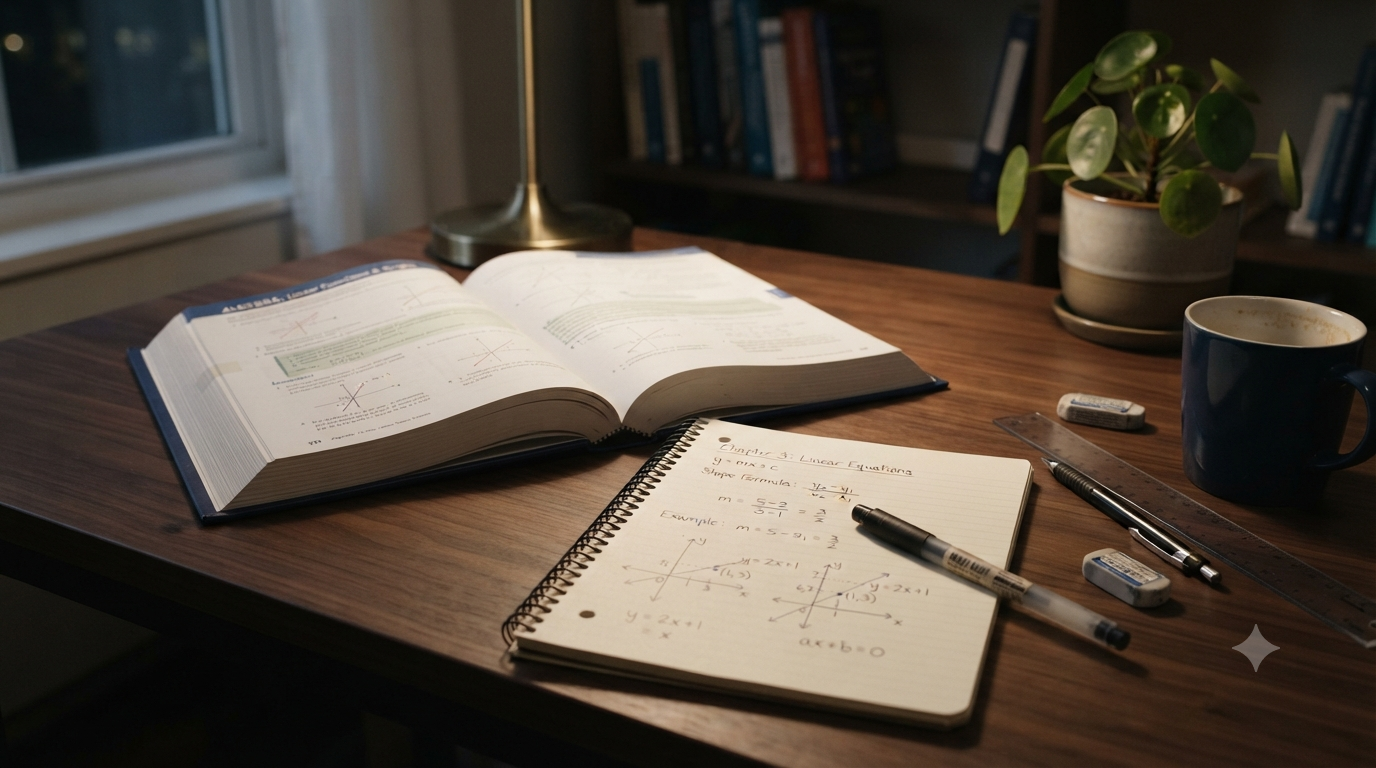
Linear equations are one of the most important foundations of algebra. They help us describe relationships between quantities, find unknown...
Read MoreHow Does Force Change the Momentum of an Object?
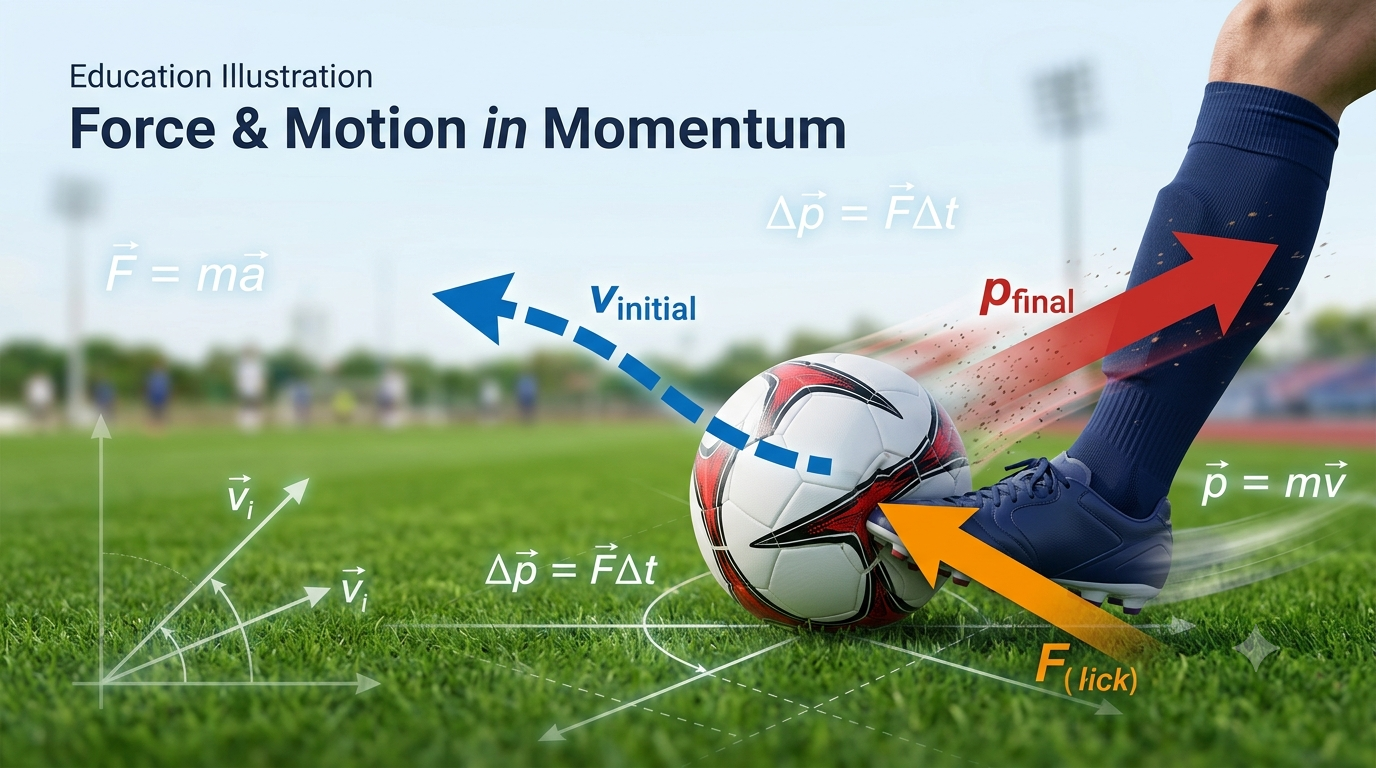
Momentum is one of the most useful ideas in physics for understanding how objects move and how their motion changes....
Read MoreWhat Is Force in Physics?
Force is one of the most important ideas in physics. We experience forces every day, even when we do not...
Read MoreHow Chemical Formulas Relate to the Mole Concept

Chemistry often uses symbols, numbers, and formulas to describe substances that cannot be seen directly. A chemical formula tells us...
Read MoreHow Are Physical Quantities Represented in Physics?
Physics is the science of describing how nature works. To study motion, forces, energy, temperature, electricity, and many other phenomena,...
Read MoreWhy can different compounds have the same empirical formula?
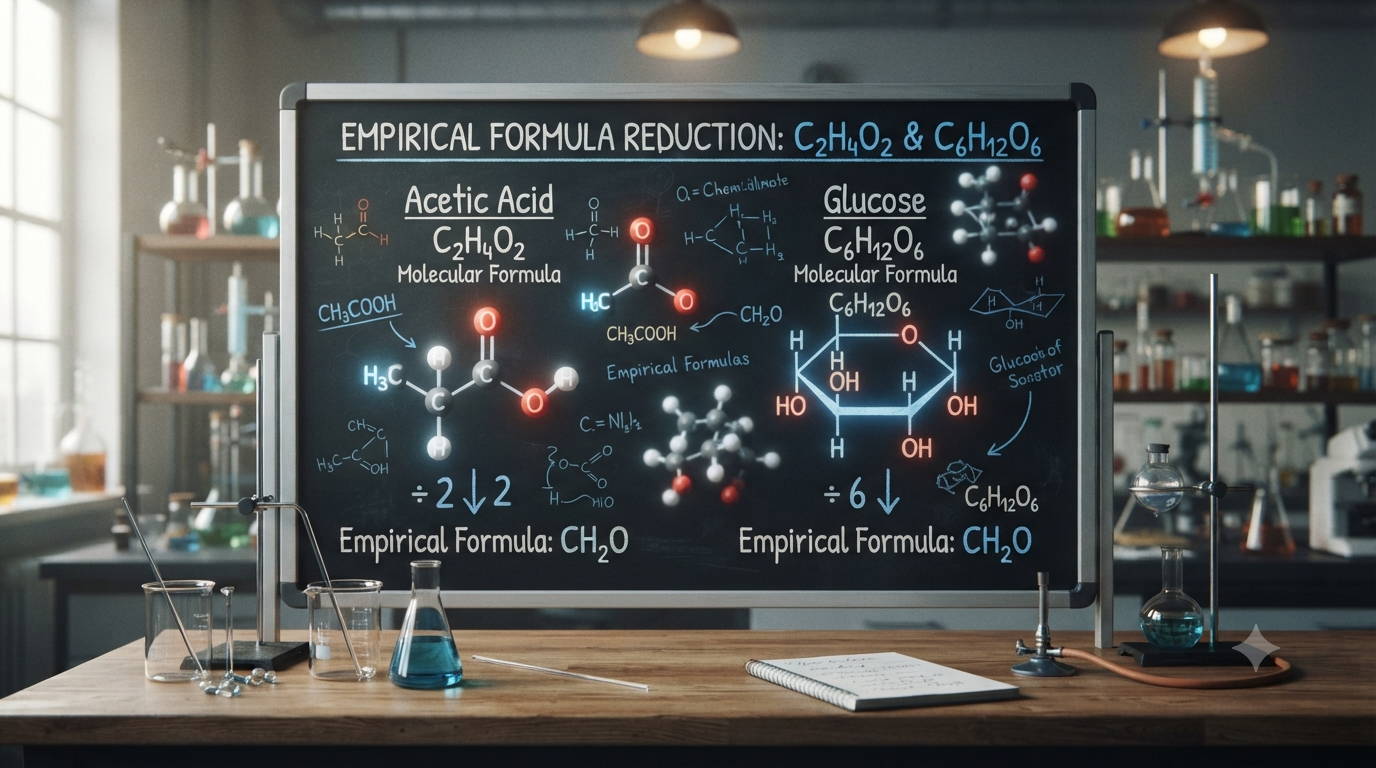
An empirical formula gives the simplest whole-number ratio of atoms present in a compound. It is useful because it tells...
Read MoreWhat Is Valency in Chemistry?
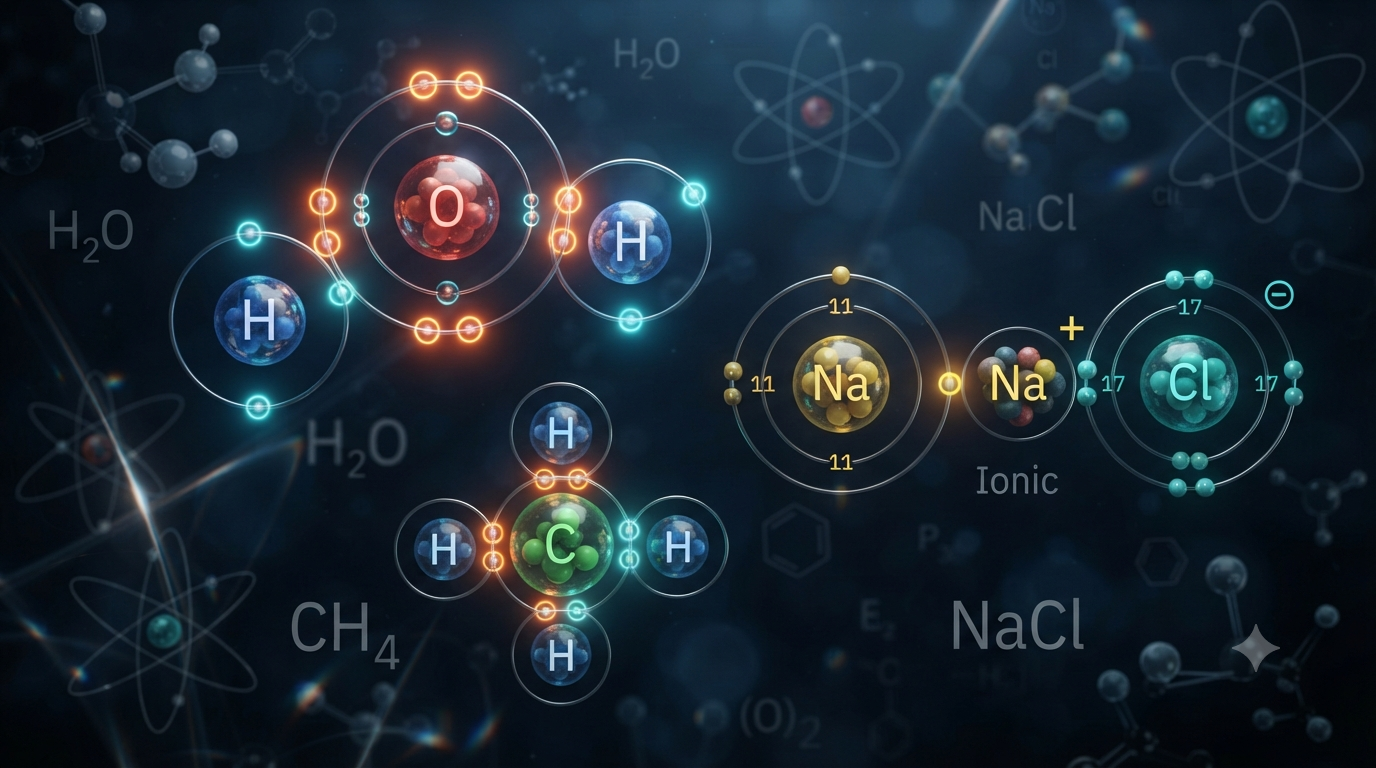
Valency is one of the basic concepts in chemistry that helps us understand how atoms combine with one another to...
Read MoreArithmetic Formulas for Basic Mathematical Calculations

Arithmetic is one of the most fundamental parts of mathematics. It deals with the basic operations we use to work...
Read MoreMolar Mass vs Molecular Mass vs Formula Mass

Chemistry uses several terms to describe the mass of substances, and three of them often cause confusion: molar mass, molecular...
Read More