
How to Avoid Unit Conversion Mistakes in Physics

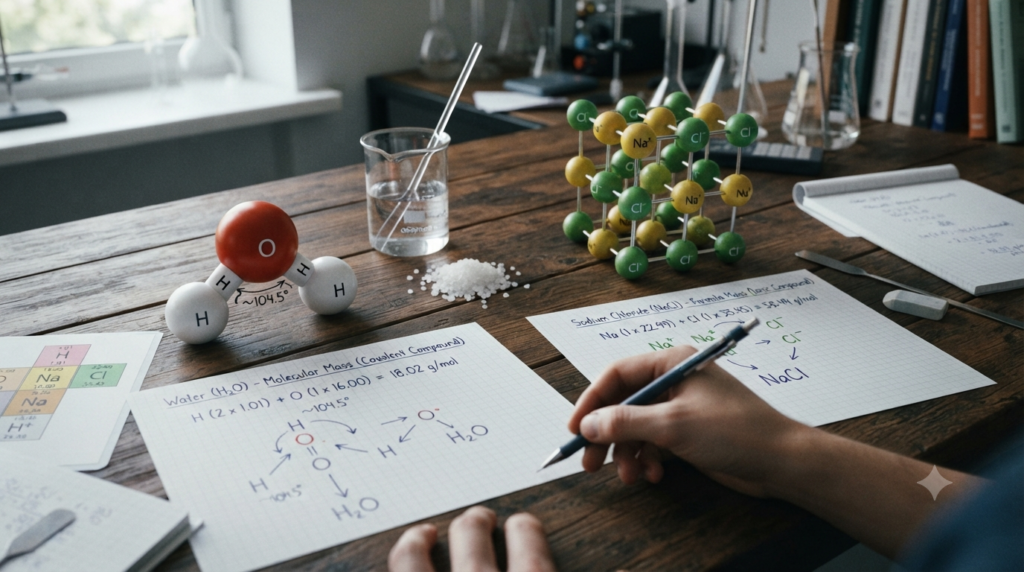
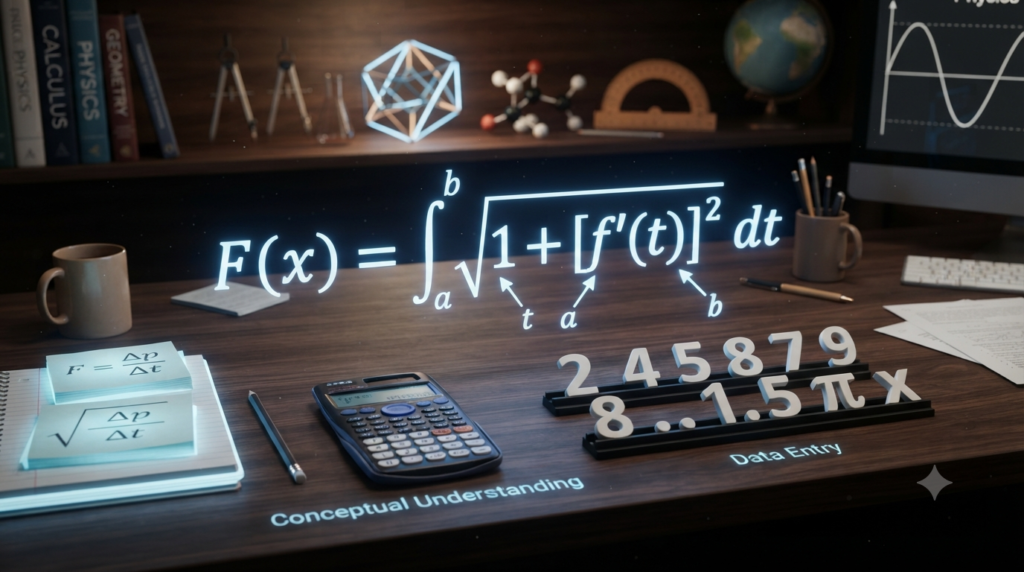
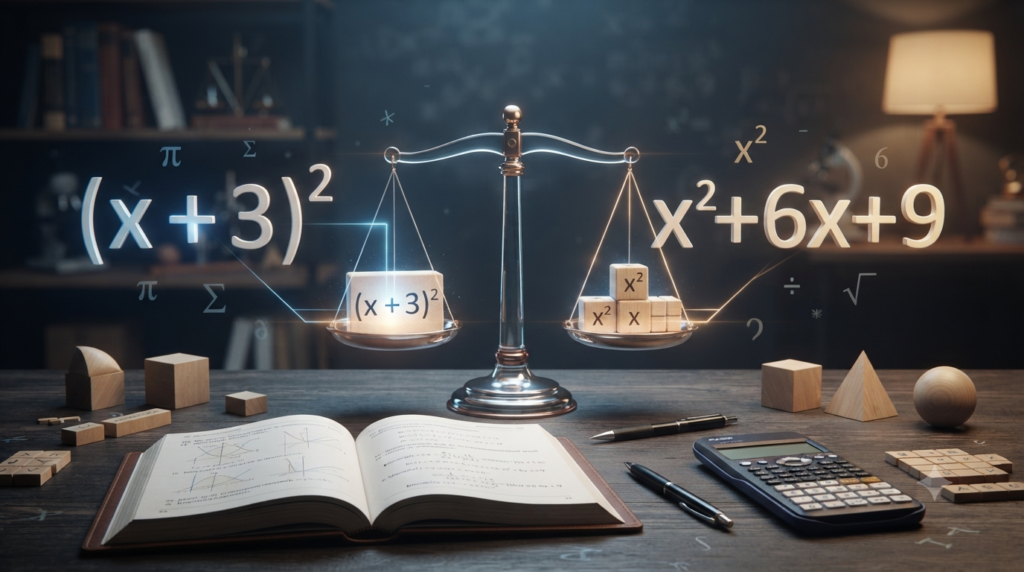
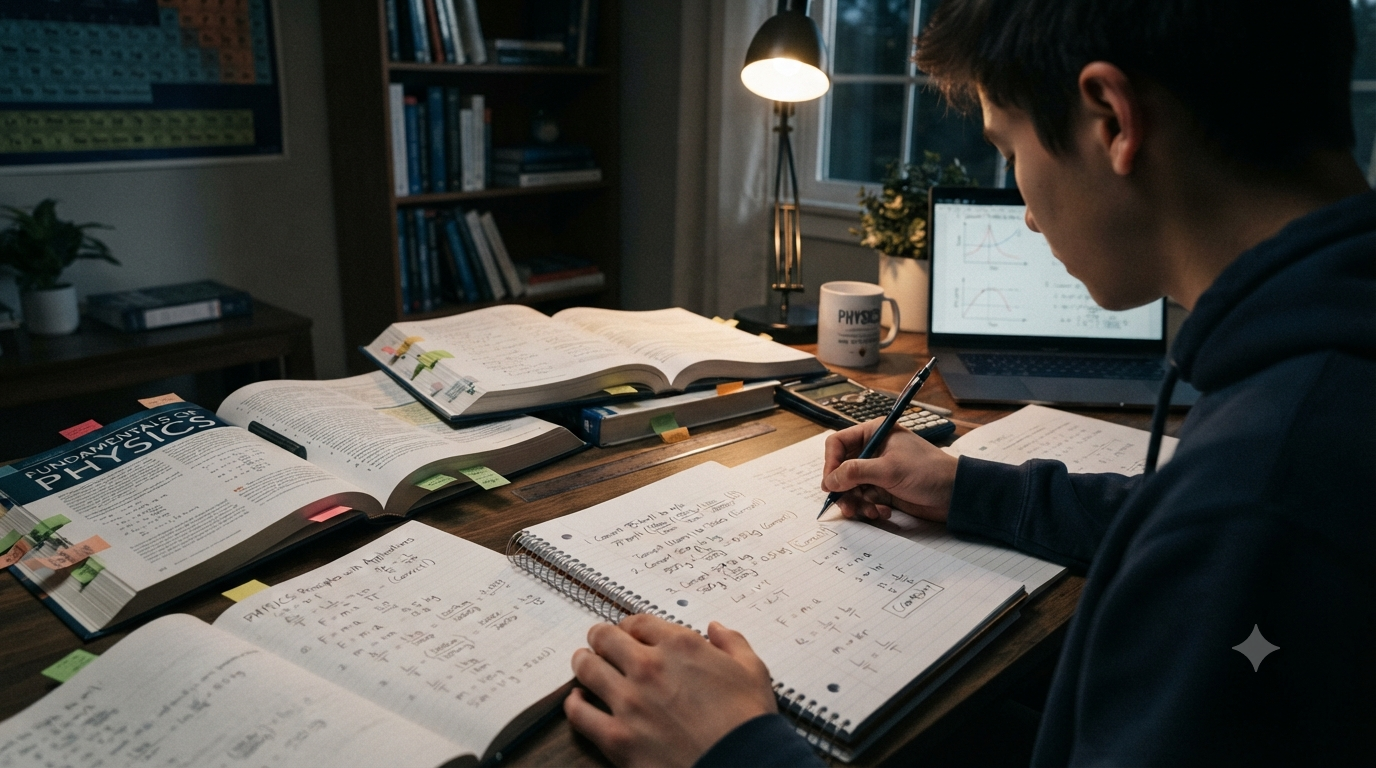
Physics study desk showing unit conversion, SI units, conversion factors, and dimensional analysis

Unit conversion is one of the most common sources of mistakes in physics. A formula may be correct, the calculation may be done perfectly, and the final answer can still be wrong if the quantities are expressed in incompatible units. Converting kilometres to metres, hours to seconds, grams to kilograms, or centimetres to metres may seem simple, but small mistakes in conversion factors can produce very large errors.

Learning how to handle units carefully is therefore an important part of solving physics problems. Unit conversion is not just a mathematical step; it is a way of checking whether the quantities in a calculation make physical sense. By following a few systematic methods, you can reduce errors and become more confident when working with physics formulas.

Why Unit Conversion Matters in Physics

Physics formulas usually connect quantities that must be expressed using compatible units. For example, the formula for speed is:

v = s/t

If distance is given in metres and time is given in seconds, the resulting speed is measured in metres per second. But if the distance is given in kilometres while time is given in seconds, directly substituting the values without conversion will give an incorrect result in the intended unit.

Units provide information about what a numerical value actually represents. The number 5 by itself tells us very little. Five metres, five seconds, and five kilograms represent completely different physical quantities.

Correct unit conversion ensures that numerical values and their units remain consistent throughout a calculation.

Use the Same Unit System Before Calculating

One of the simplest ways to avoid conversion mistakes is to convert all quantities into a common unit system before using a formula.

The International System of Units, or SI system, is widely used in physics. Some important SI units include:

  • Length → metre (m)

  • Mass → kilogram (kg)

  • Time → second (s)

  • Temperature → kelvin (K)

  • Electric current → ampere (A)

Suppose a problem gives a distance of 2 km and asks for speed when the time is 5 s. Before calculating, convert the distance:

2 km = 2000 m

Now the formula can be applied:

v = 2000/5 = 400 m/s

Converting the quantity first makes the calculation straightforward and reduces the chance of mixing units.

Memorize Common Conversion Factors

You do not need to memorize hundreds of conversion factors. A small set of common relationships is enough for many basic physics problems.

Some useful conversions are:

1 km = 1000 m

1 m = 100 cm

1 cm = 10 mm

1 kg = 1000 g

1 g = 1000 mg

1 hour = 3600 s

1 minute = 60 s

1 L = 1000 mL

For speed:

1 m/s = 3.6 km/h

These basic relationships appear frequently in physics problems. Knowing them well can make calculations faster and safer.

Pay Attention to the Direction of Conversion

A common mistake occurs when a conversion factor is used in the wrong direction.

For example:

1 km = 1000 m

Therefore:

5 km = 5 × 1000 = 5000 m

But when converting metres to kilometres, the operation is reversed:

5000 m = 5000 ÷ 1000 = 5 km

A useful way to think about this is to ask whether the new unit is larger or smaller.

When converting from a larger unit to a smaller unit, the numerical value usually becomes larger. When converting from a smaller unit to a larger unit, the numerical value usually becomes smaller.

For example:

3 m = 300 cm

300 cm = 3 m

This simple check can catch many conversion errors.

Write the Conversion as a Fraction

A powerful method for avoiding mistakes is dimensional conversion using conversion factors.

Suppose you want to convert 72 km/h into m/s.

Start with:

72 km/h

Use:

1 km = 1000 m

and

1 h = 3600 s

Then:

72 km/h × 1000 m/1 km × 1 h/3600 s

The km and h units cancel:

72 × 1000/3600 m/s

= 20 m/s

Writing units throughout the calculation makes it much easier to identify mistakes.

Never Ignore Squared and Cubed Units

Area and volume conversions require extra care because the conversion factor must also be squared or cubed.

For example:

1 m = 100 cm

But:

1 m² = 10,000 cm²

because:

1 m² = (100 cm)² = 10,000 cm²

Similarly:

1 m³ = 1,000,000 cm³

because:

1 m³ = (100 cm)³ = 1,000,000 cm³

This is an important point because simply using 100 as the conversion factor for square metres would give an incorrect answer.

Be Careful With Prefixes

SI prefixes represent powers of ten. Understanding them can make unit conversion much easier.

Some common prefixes are:

  • kilo (k) = 10³

  • centi (c) = 10⁻²

  • milli (m) = 10⁻³

  • micro (µ) = 10⁻⁶

  • nano (n) = 10⁻⁹

  • mega (M) = 10⁶

  • giga (G) = 10⁹

For example:

1 km = 10³ m

1 mm = 10⁻³ m

1 µm = 10⁻⁶ m

A mistake in the exponent can produce an error by a factor of 10, 100, 1000, or even much more.

Check Units After Using a Formula

Unit checking should not stop after conversion. Always look at the unit of the final answer.

For example, acceleration is given by:

a = Δv/Δt

Velocity has units of m/s and time has units of s.

Therefore:

a = (m/s)/s

= m/s²

So acceleration should have the unit m/s².

If your calculation produces kg/s or m/s instead, something may have gone wrong.

This process is called dimensional analysis, and it is one of the most useful tools for checking physics calculations.

Avoid Converting Too Many Times

Repeated conversions can increase the chance of making mistakes. Whenever possible, convert the original quantities once and then continue the calculation using consistent units.

For example, if a problem contains kilometres, metres, hours, and seconds, decide which units you want to use before beginning. In most physics calculations, SI units are a convenient choice.

Instead of repeatedly switching between km/h and m/s, convert everything into SI units first and keep the same system throughout the calculation.

Estimate the Answer Before Calculating

An approximate estimate can help you identify major conversion errors.

Suppose you convert 5 km into metres. You know that 1 km is 1000 m, so the answer should be around 5000 m.

If your calculation gives 0.005 m, the result is obviously suspicious.

Estimation does not replace exact calculation, but it provides a quick reality check. Large powers-of-ten errors often become obvious when you compare the calculated result with an approximate expected value.

Keep Units Visible During Calculations

One of the easiest habits to develop is to write units beside every physical quantity.

Instead of writing:

20 × 5 = 100

write:

20 m/s × 5 s = 100 m

The units show what the calculation actually means.

Keeping units visible also makes it easier to cancel unwanted units and identify incorrect formulas or conversions.

Common Unit Conversion Mistakes

Several mistakes appear repeatedly in physics calculations.

Using the wrong conversion factor: For example, confusing 1 km = 1000 m with 1 km = 100 m.

Converting in the wrong direction: Multiplying when division is required, or dividing when multiplication is required.

Mixing units: Substituting kilometres and seconds into a formula that requires metres and seconds without converting the distance.

Ignoring powers: Treating square or cubic units as ordinary units.

Forgetting time conversions: Remembering that 1 hour is 3600 seconds, not 100 seconds.

Dropping units: Writing only numerical values throughout the calculation makes mistakes harder to detect.

Ignoring prefixes: Confusing milli, micro, kilo, mega, and other SI prefixes can create large numerical errors.

A Simple Method to Avoid Conversion Errors

A reliable unit conversion process can be summarized in five steps:

  1. Identify every quantity and its unit.

  2. Choose a consistent unit system, usually SI.

  3. Convert the quantities before substituting them into the formula.

  4. Keep units visible during every calculation.

  5. Check the final unit and estimate whether the answer is reasonable.

This method may take a few extra seconds, but it can prevent many avoidable mistakes.

Conclusion

Unit conversion is a basic skill, but it plays a major role in accurate physics calculations. A small mistake in a conversion factor can change an answer by several orders of magnitude. The safest approach is to use consistent units, prefer SI units when appropriate, write conversion factors explicitly, keep units throughout the calculation, and check the final result using dimensional analysis and estimation.

With regular practice, unit conversion becomes almost automatic. More importantly, careful handling of units develops a habit that is useful throughout physics. Whether you are solving a simple motion problem or working with advanced scientific equations, correct units help connect mathematical calculations with physical reality.

FAQs

1. Why is unit conversion important in physics?

Unit conversion is important because physics formulas require quantities to be expressed in compatible units. If different units are used incorrectly, the numerical result can be wrong even when the formula and calculation are correct. For example, using kilometres for distance and seconds for time may cause problems when calculating speed if the required unit is metres per second. Converting quantities into a consistent system, such as SI units, helps prevent these errors. Unit conversion also makes it easier to compare measurements, check formulas, and understand the meaning of a final answer. Careful conversion improves both accuracy and confidence when solving physics problems.

2. What is the most common unit conversion mistake in physics?

One of the most common unit conversion mistakes is using the wrong conversion factor or applying the correct factor in the wrong direction. For example, since 1 km = 1000 m, converting kilometres to metres requires multiplication by 1000. Converting metres to kilometres requires division by 1000. Another common mistake is forgetting to convert all quantities into compatible units before using a formula. Students may also confuse units such as minutes and seconds or grams and kilograms. Writing the conversion factor explicitly and keeping units visible throughout the calculation can make these mistakes easier to identify and avoid.

3. Should all physics quantities be converted into SI units?

Using SI units is generally a reliable approach because the SI system provides a consistent set of units for physical quantities. Converting quantities into SI units before calculation can reduce confusion and make formulas easier to apply. For example, distance can be expressed in metres, mass in kilograms, and time in seconds. However, it is not always necessary to convert every quantity into SI units if the formula and units are already compatible. The important point is consistency. Before starting a calculation, check what units the formula requires and convert the given quantities accordingly.

4. How can dimensional analysis help prevent unit conversion mistakes?

Dimensional analysis helps check whether the units in a physics calculation are consistent. It involves examining the dimensions or units of quantities and confirming that they combine correctly. For example, acceleration is calculated using a change in velocity divided by time. Since velocity has units of m/s, dividing it by seconds gives m/s², which is the expected unit of acceleration. If the final unit is unexpected, there may be an error in the formula, substitution, or conversion. Dimensional analysis therefore acts as a useful checking method before accepting a numerical answer as correct.

5. Why do squared and cubed units cause conversion mistakes?

Squared and cubed units can cause mistakes because the conversion factor must also be squared or cubed. For example, 1 m = 100 cm, but 1 m² is not 100 cm². Instead, 1 m² = (100 cm)² = 10,000 cm². Similarly, 1 m³ = (100 cm)³ = 1,000,000 cm³. Simply using the ordinary length conversion factor for area or volume produces an incorrect result. Whenever a quantity contains a squared or cubed unit, apply the conversion factor to the entire power. This is especially important in problems involving area, volume, density, and geometry.

6. How do I know whether to multiply or divide during unit conversion?

The easiest way is to write the conversion as a fraction so that the unwanted unit cancels. For example, to convert 5 km into metres, use 5 km × 1000 m/1 km. The kilometre units cancel, leaving metres. To convert metres into kilometres, use 5000 m × 1 km/1000 m. Again, the unwanted unit cancels. This method reduces the need to memorize whether multiplication or division is required. The numerical value also provides a quick check: converting to a smaller unit generally makes the numerical value larger, while converting to a larger unit generally makes it smaller.

7. What happens if I use incompatible units in a physics formula?

Using incompatible units can produce an incorrect numerical result and may also give a meaningless final unit. For example, if a speed formula requires distance in metres and time in seconds, directly inserting kilometres without conversion can make the numerical answer incorrect by a factor of 1000. In some cases, the calculation may still look mathematically correct because the numbers can be multiplied or divided normally. However, the physical interpretation will be wrong. Checking the units of every quantity before substitution helps ensure that the formula is being applied correctly and that the final answer represents the intended physical quantity.

8. How can I avoid mistakes when converting km/h to m/s?

To convert km/h to m/s, convert kilometres into metres and hours into seconds. Since 1 km = 1000 m and 1 hour = 3600 s, write the conversion as:

1 km/h = 1000 m/3600 s

This simplifies to approximately:

1 km/h = 5/18 m/s

Therefore, to convert a speed from km/h to m/s, multiply it by 5/18. For example:

72 km/h × 5/18 = 20 m/s

Writing the conversion step instead of relying only on memory makes the process easier to check and reduces the chance of using the wrong factor.

9. Can estimation help identify a unit conversion error?

Yes, estimation is a useful way to detect large unit conversion errors. Before or after calculating, think about the approximate size of the expected answer. For example, 3 km should be about 3000 m, not 3 m or 0.003 m. Similarly, one hour contains 3600 seconds, so converting a time from hours to seconds should significantly increase the numerical value. Estimation will not always identify small errors, but it can quickly reveal mistakes involving powers of ten or incorrect conversion directions. Combining estimation with dimensional analysis provides a stronger check for physics calculations.

10. What is the best way to avoid unit conversion mistakes in physics?

The best approach is to follow a consistent procedure every time you solve a physics problem. First, identify the units of all given quantities. Next, choose a consistent unit system, usually SI units. Convert the quantities before substituting them into the formula. Keep the units visible during calculations and use conversion factors carefully. After calculating, check the final unit using dimensional analysis and compare the result with a rough estimate. This routine helps catch incorrect conversion factors, incompatible units, and powers-of-ten errors. With regular practice, careful unit conversion becomes a natural part of solving physics problems.

Related Posts

Leave a Comment

Your email address will not be published. Required fields are marked *

Scroll to Top