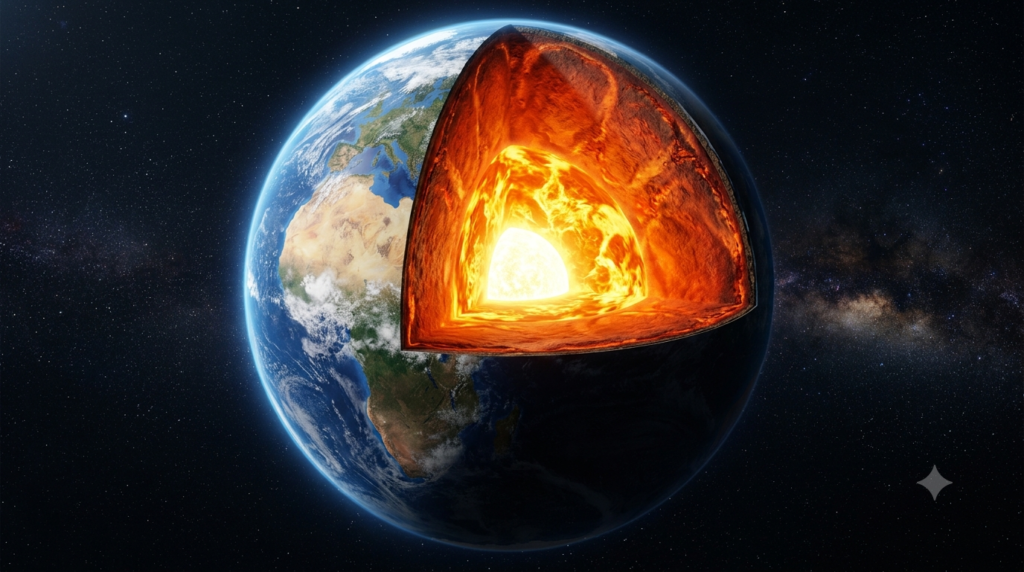
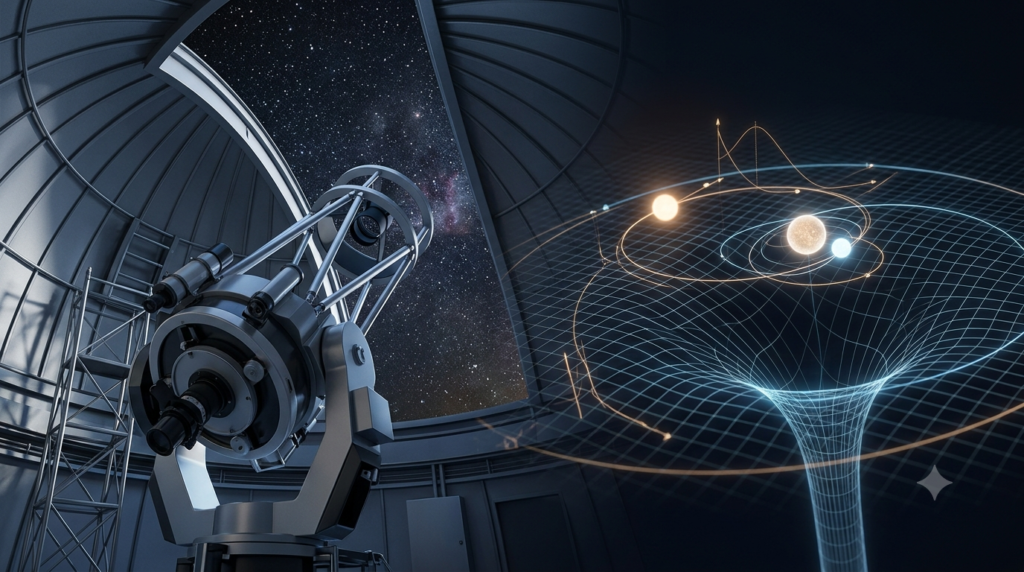
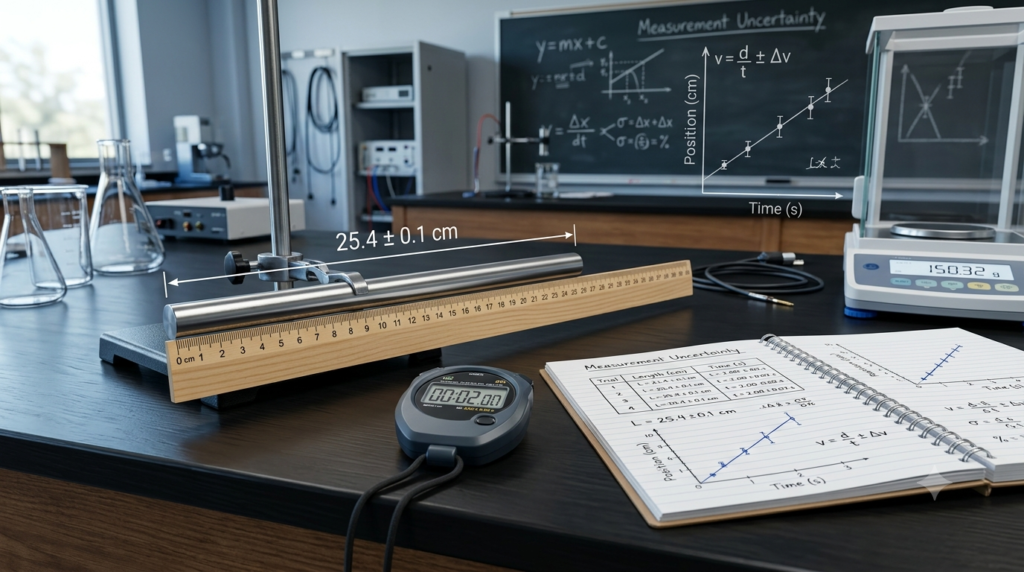
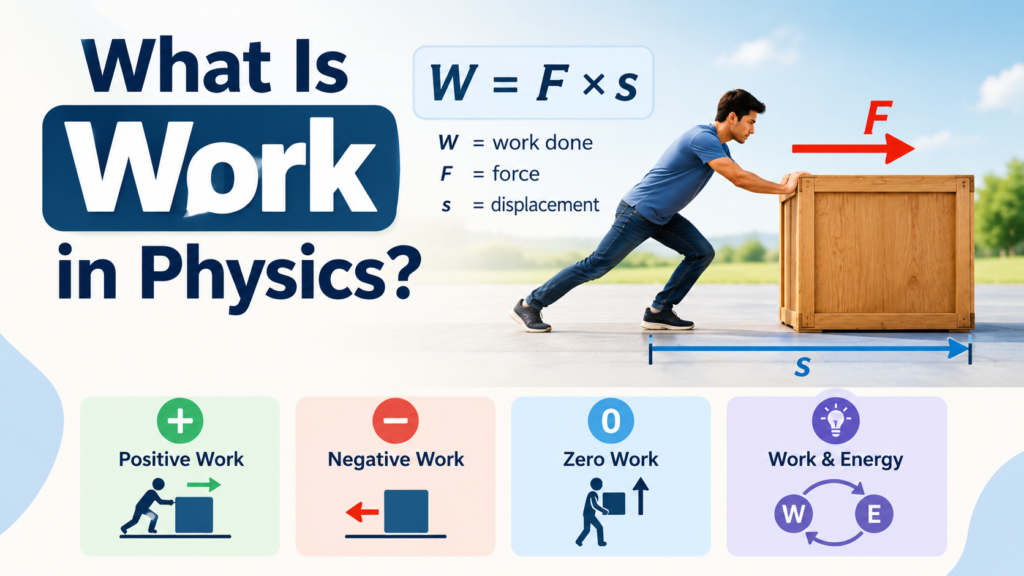
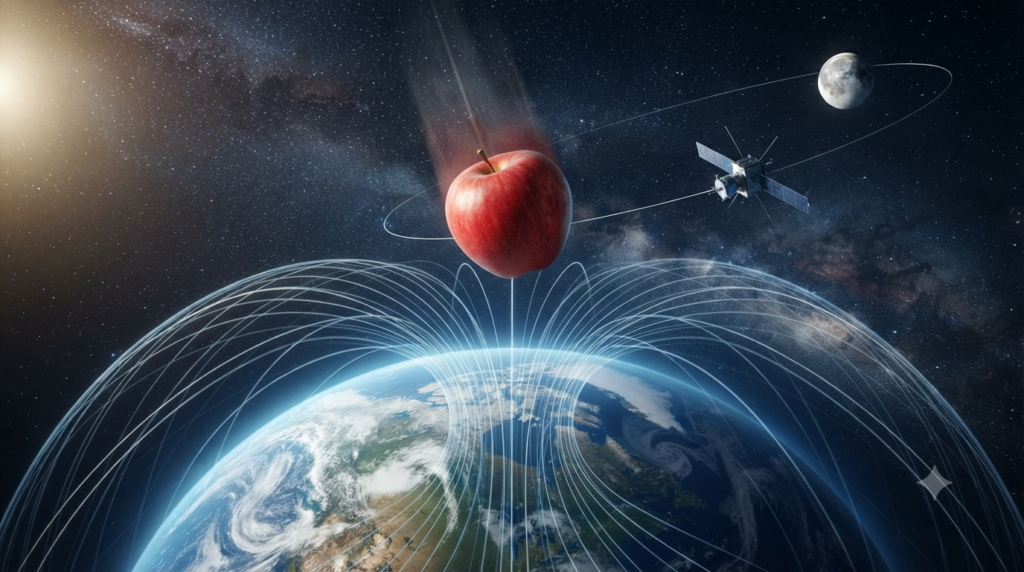
Physics is one of the fundamental sciences that helps us understand how the universe works. From the motion of planets and the behavior of light to the structure of atoms and the nature of space and time, physics provides explanations for many phenomena we observe every day. Because the subject covers an enormous range of ideas, scientists divide it into different branches. Each branch focuses on particular types of phenomena while remaining connected to the others.
The main branches of physics include mechanics, thermodynamics, electromagnetism, optics, acoustics, quantum mechanics, relativity, nuclear physics, particle physics, condensed matter physics, astrophysics, and cosmology. Understanding these branches makes it easier to see how physics connects everyday experiences with some of the deepest questions about nature.
Classical Physics
Classical physics deals mainly with phenomena that can be understood without using quantum mechanics or modern theories of relativity. Many of its ideas were developed between the seventeenth and nineteenth centuries, although they continue to be extremely useful today.
The major areas of classical physics include mechanics, thermodynamics, electromagnetism, optics, and acoustics.
Mechanics
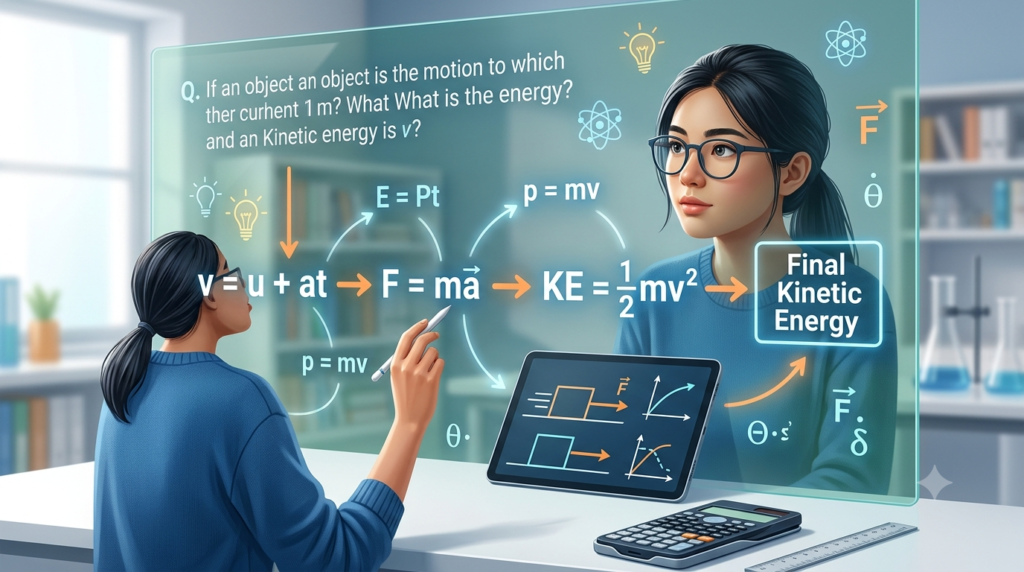
Mechanics is the branch of physics concerned with motion, forces, and the behavior of physical objects. It helps explain why objects move, stop, accelerate, or change direction.
Newton’s laws of motion form an important foundation of classical mechanics. Mechanics is used to study everything from a falling ball to the motion of vehicles, machines, satellites, and planets.
Mechanics can be divided into areas such as kinematics, which describes motion, and dynamics, which examines the forces responsible for motion. Fluid mechanics studies the behavior of liquids and gases.
Thermodynamics
Thermodynamics studies heat, temperature, energy, and the processes through which energy is transferred or transformed.
It explains why heat flows from hotter objects to colder ones and how heat engines, refrigerators, and other systems operate. The laws of thermodynamics are also important in chemistry, engineering, biology, and environmental science.
Thermodynamics is closely related to statistical mechanics, which explains the large-scale behavior of matter using the microscopic motion of atoms and molecules.
Electromagnetism
Electromagnetism deals with electricity, magnetism, electric charges, electric fields, and magnetic fields. It explains how electric and magnetic phenomena are connected.
Electromagnetism is responsible for many technologies used in modern life, including electric motors, generators, transformers, communication systems, and electronic devices.
James Clerk Maxwell developed a set of equations that brought electricity and magnetism together into a unified theory. His work also showed that light is an electromagnetic phenomenon.
Optics
Optics is the study of light and its behavior. It examines phenomena such as reflection, refraction, diffraction, interference, and polarization.
Optics has both practical and theoretical importance. Cameras, microscopes, telescopes, spectacles, lasers, fiber-optic communication, and many medical instruments depend on principles of optics.
Modern optics also connects with quantum physics because light can behave as both a wave and a collection of particles called photons.
Acoustics
Acoustics is the branch of physics concerned with sound and mechanical waves. It studies how sound is produced, transmitted, reflected, absorbed, and detected.
Acoustics is useful in areas such as musical instrument design, building construction, underwater communication, medical ultrasound, and noise control.
Modern Physics
Classical physics successfully explains many everyday phenomena, but it cannot fully describe processes occurring at extremely small scales, extremely high speeds, or very strong gravitational fields. Modern physics developed to address these limitations.
The two major foundations of modern physics are quantum mechanics and relativity.
Quantum Mechanics
Quantum mechanics describes nature at microscopic scales, particularly the behavior of atoms, electrons, photons, and other particles.
At this scale, objects do not always behave according to classical expectations. Energy can occur in discrete amounts, particles can display wave-like behavior, and physical systems can exist in combinations of possible states.
Quantum mechanics is essential for understanding atoms, molecules, semiconductors, lasers, nuclear processes, and many modern technologies.
Relativity
Relativity was developed primarily by Albert Einstein. It includes special relativity and general relativity.
Special relativity describes space, time, motion, and energy when objects move at speeds approaching the speed of light. It leads to the famous relationship between mass and energy, expressed as E = mc².
General relativity provides a theory of gravity based on the curvature of spacetime. It explains phenomena such as the motion of planets, gravitational time dilation, black holes, and gravitational waves.
Nuclear Physics
Nuclear physics focuses on the atomic nucleus and the interactions that occur within it. It examines protons, neutrons, nuclear forces, radioactive decay, and nuclear reactions.
Nuclear physics has applications in energy production, medical imaging, cancer treatment, radiation detection, and scientific research. Nuclear reactions also help explain how stars produce energy.
Particle Physics
Particle physics investigates the most fundamental known constituents of matter and the forces acting between them.
Instead of studying complete atoms or nuclei, particle physicists examine particles such as quarks, leptons, photons, and other elementary or composite particles. The Standard Model provides a major framework for describing elementary particles and three of the fundamental interactions.
Particle physics often requires powerful particle accelerators and detectors to investigate extremely small scales.
Condensed Matter Physics
Condensed matter physics studies the physical properties of materials, particularly solids and liquids. It explores how enormous numbers of atoms and electrons interact to produce the properties of materials.
Topics include electrical conductivity, magnetism, superconductivity, semiconductors, crystals, and nanomaterials.
This branch has played a major role in the development of computers, electronic devices, sensors, displays, and many other technologies.
Astrophysics
Astrophysics applies the principles of physics to astronomical objects and events. It helps scientists understand stars, planets, galaxies, black holes, neutron stars, and other objects in space.
Astrophysicists study properties such as temperature, mass, composition, radiation, magnetic fields, and motion. They use observations from telescopes and space missions together with physical theories and mathematical models.
Cosmology
Cosmology focuses on the universe as a whole. It examines its origin, evolution, large-scale structure, and possible future.
Cosmologists study questions involving the early universe, cosmic expansion, the cosmic microwave background, dark matter, and dark energy. Cosmology combines ideas from general relativity, particle physics, astrophysics, and observational astronomy.
How the Branches of Physics Are Connected
Although physics is divided into branches, these areas are not isolated. They frequently overlap.
For example, astrophysics uses mechanics to study planetary motion, thermodynamics to understand stars, electromagnetism to study radiation, and relativity to investigate black holes. Similarly, modern electronics depends on quantum mechanics, electromagnetism, and condensed matter physics.
This connection is one of the most interesting features of physics. A single natural phenomenon can require ideas from several branches to understand it completely.
Why Are There So Many Branches of Physics?
The universe contains phenomena that occur across an enormous range of sizes, energies, and conditions. A human-sized object behaves differently from an atomic particle, while a galaxy presents completely different challenges from a laboratory experiment.
Dividing physics into branches allows scientists to develop specialized tools, mathematical methods, and experimental techniques. At the same time, researchers continue to search for theories that connect different areas into a more unified understanding of nature.
The boundaries between branches can therefore change as science develops. New fields and interdisciplinary areas continue to emerge as scientists investigate increasingly complex problems.
Conclusion
The main branches of physics provide different ways of studying the natural world. Mechanics explains motion and forces, thermodynamics explores heat and energy, electromagnetism describes electricity and magnetism, and optics investigates light. Modern physics adds quantum mechanics and relativity, while nuclear physics and particle physics explore matter at fundamental scales. Condensed matter physics examines materials, whereas astrophysics and cosmology extend physical principles to stars, galaxies, and the universe itself.
Together, these branches form a connected framework for understanding nature. Whether we study a moving object, an atom, a material, a star, or the entire universe, physics gives us tools to ask deeper questions and discover how the world works.