In physics, we often describe where an object is, how it moves, or how far it has traveled. But to describe motion clearly, we need something to compare the object’s position with. This chosen location is called a reference point. A reference point provides a fixed basis for deciding whether an object is at rest or in motion.
For example, imagine sitting inside a moving bus. You may appear to be at rest relative to another passenger, but you are moving relative to a person standing on the road. The difference occurs because the two observations use different reference points. Understanding reference points is therefore essential for studying motion, position, distance, displacement, velocity, and many other concepts in physics.
Meaning of a Reference Point
A reference point is a chosen fixed location or object relative to which the position or motion of another object is described.
When we say that an object has moved, we are comparing its position at different times with respect to a reference point. Without a reference point, statements such as “the car is moving” or “the ball is 5 meters away” may not provide complete information.
Consider a tree beside a road. If a car changes its position relative to the tree, we can say that the car is moving with respect to the tree. Here, the tree acts as the reference point.
A reference point does not necessarily have to be a physical object. It can also be an imaginary or mathematically selected location used for describing position.
Why Is a Reference Point Needed?
Motion is not described independently. It is always described relative to something.
Suppose a person is sitting inside a train. Relative to another passenger sitting beside them, the person is at rest. However, relative to a person standing on the railway platform, the same person is moving along with the train.
This shows that motion and rest are relative.
A reference point helps us answer questions such as:
Where is an object located?
Has the object changed its position?
In which direction has it moved?
How far has it moved?
Is the object at rest or in motion?
Therefore, choosing a suitable reference point is one of the first steps in describing motion.
Reference Point and Position
The position of an object tells us where the object is located relative to a reference point.
For example, suppose a school gate is selected as the reference point. A bicycle is parked 20 meters east of the gate. We can describe the bicycle’s position as 20 meters east of the reference point.
If the bicycle moves to a location 50 meters east of the gate, its position has changed.
The reference point remains the basis for both descriptions.
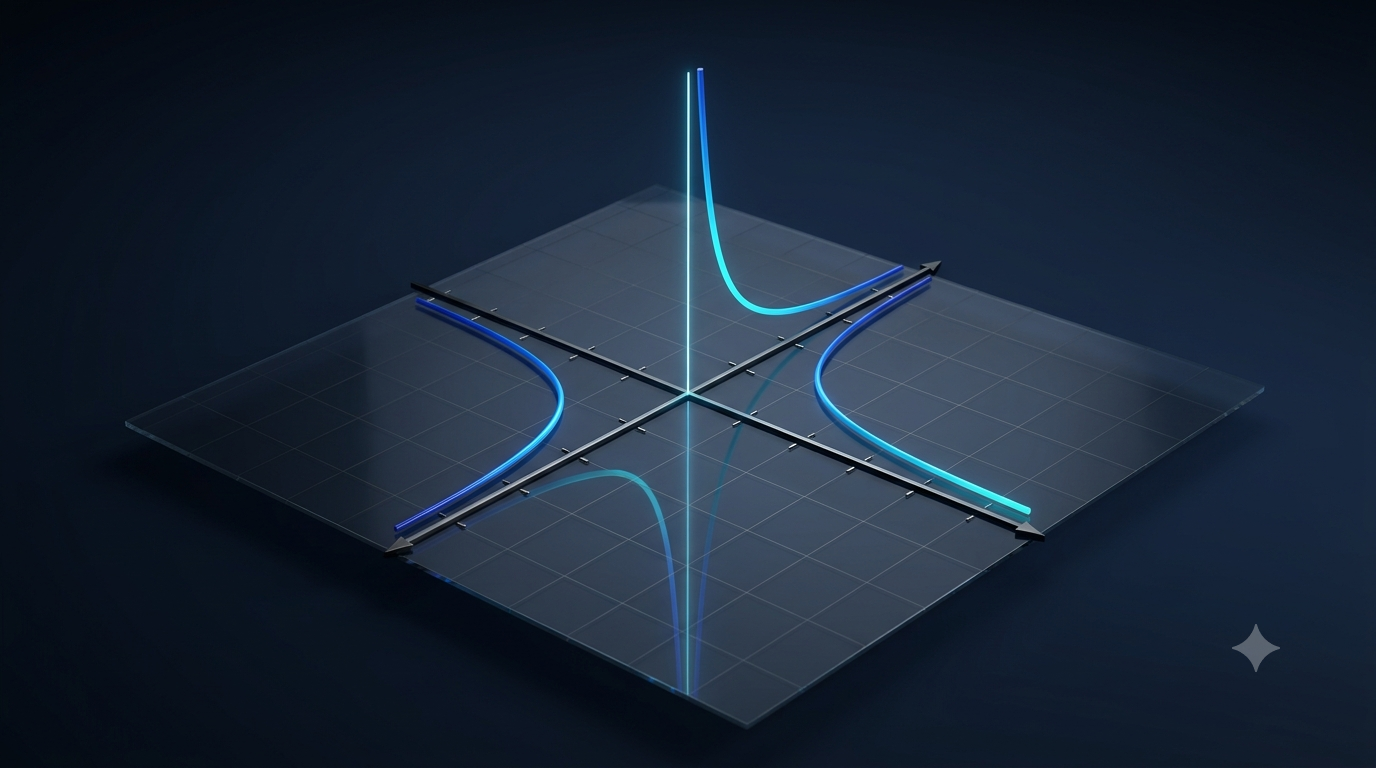
In physics, position can be represented using coordinates. A reference point can serve as the origin, usually represented by zero. Positions can then be described as positive or negative depending on the chosen direction.
Reference Point and Motion
An object is considered to be in motion when its position changes with time relative to a reference point.
Imagine a cyclist traveling along a straight road. A milestone can be used as a reference point. If the cyclist is initially 10 meters from the milestone and later becomes 100 meters away, the cyclist’s position has changed relative to that reference point. Therefore, the cyclist is in motion.
On the other hand, if the cyclist remains at the same position relative to the reference point, the cyclist is considered to be at rest with respect to that reference point.
This simple idea forms the foundation for understanding motion in physics.
Examples of Reference Points in Everyday Life
Reference points are used constantly in daily life, even when we do not consciously think about them.
A Tree Beside a Road
Suppose a bus passes a tree. The tree can be used as a reference point. As the bus changes its position relative to the tree, we observe that the bus is moving.
A Building
When describing the location of a house, a nearby building can act as a reference point. Someone might say, “The shop is 200 meters north of the school.”
Here, the school provides the reference for describing the shop’s position.
A Railway Station
A railway station can serve as a reference point for describing the position of a train. For example, a train may be described as being 3 kilometers from the station.
A Starting Line
In a race, the starting line is commonly used as a reference point. The distance traveled by a runner can be described relative to that starting position.
Reference Point and Rest
An object is said to be at rest when its position does not change relative to a chosen reference point.
For example, a book placed on a table remains at the same position relative to the table. Therefore, the book is at rest with respect to the table.
However, the situation can change if the table is inside a moving train. The book remains at rest relative to the table, but it is moving relative to a person standing outside the train.
Thus, rest is also relative to the reference point.
Reference Point and Relative Motion
The concept of a reference point leads directly to the idea of relative motion.
Relative motion means that the motion of an object is described with respect to another object or reference frame.
Consider two cars traveling on a highway in the same direction. If both cars travel at exactly the same speed, one driver may see the other car as nearly stationary. However, a person standing beside the road sees both cars moving.
The motion observed by each person depends on the reference point used.
This is why two observers can describe the same situation differently without either observation necessarily being incorrect.
Choosing a Good Reference Point
A reference point should be selected carefully so that the motion or position of an object can be described clearly.
A convenient reference point is usually:
Easy to identify
Fixed relative to the situation being studied
Located in a useful position
Suitable for measuring distances and directions
For simple problems, a tree, building, road sign, starting line, or stationary object may be enough.
In more advanced physics, scientists use coordinate systems and reference frames to describe motion precisely.
Reference Point and Reference Frame
A reference point and a reference frame are closely related, but they are not exactly the same.
A reference point is a particular location used for comparison. A reference frame is a broader system used to describe the position, motion, and measurements of objects.
For example, a person standing on a railway platform can be part of a reference frame associated with the ground. A person sitting inside a moving train can use the train as a reference frame.
In elementary physics, the idea of a reference point is often enough to understand basic motion. As physics becomes more advanced, reference frames become increasingly important.
Can the Reference Point Change?
Yes. The reference point can be chosen differently depending on what we want to study.
Suppose a passenger is sitting inside a moving bus. If we use another passenger as the reference point, the seated passenger is at rest. If we use a tree beside the road as the reference point, the passenger is moving.
The physical situation has not changed. Only the reference point has changed.
This demonstrates an important principle: the description of motion depends on the observer’s chosen reference point or reference frame.
Reference Point in Distance and Displacement
Reference points are also important when discussing distance and displacement.
Distance describes how much ground an object covers during motion, while displacement describes the change in position from the initial position to the final position.
To determine displacement, we need to know the object’s initial and final positions. These positions are described relative to a chosen reference point or coordinate system.
For example, if a person walks 10 meters east from a starting point and then returns 4 meters west, the starting point can act as the reference point. The person’s final position is 6 meters east of that point, so the displacement is 6 meters east.
Reference Points in Physics Experiments
Scientists frequently use reference points when conducting experiments.
When studying the motion of a falling object, the ground or a fixed measuring scale can provide a reference. When studying the movement of a pendulum, its fixed support can help establish a reference position. In laboratory experiments, rulers, scales, coordinate axes, and marked positions are commonly used to describe changes accurately.
Using a consistent reference point makes measurements easier to compare and helps scientists communicate their observations clearly.
Conclusion
A reference point in physics is a chosen location or object used to describe the position and motion of another object. It provides the basis for determining whether an object has changed its position and whether it is at rest or in motion. Everyday objects such as trees, buildings, road signs, railway platforms, and starting lines can serve as reference points. The choice of reference point can change how motion is described, which is why motion and rest are considered relative. Understanding reference points is a fundamental step toward learning distance, displacement, velocity, acceleration, and more advanced concepts of mechanics.