
Common Formulas of Acids in Chemistry

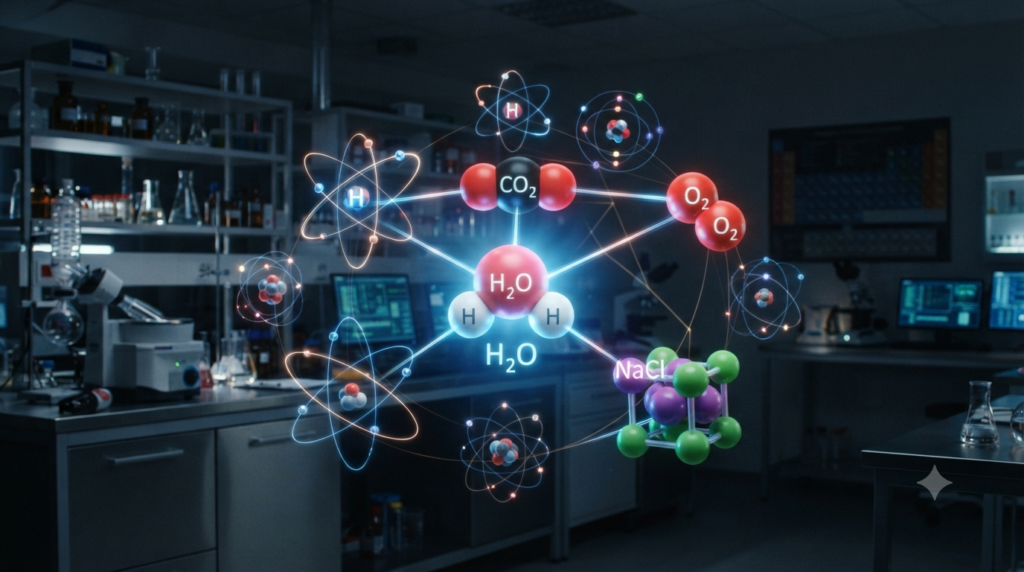
Common acid formulas in chemistry shown with laboratory glassware, molecular structures, and chemical formulas

Acids are among the most important substances studied in chemistry. They are found in laboratories, foods, medicines, industrial materials, and even in natural systems. From the citric acid present in lemons to hydrochloric acid used in chemical processes, acids have a wide range of properties and applications. Learning their chemical formulas makes it easier to identify acids, understand their composition, write chemical equations, and study how they react with other substances.

An acid is generally a substance that can donate hydrogen ions (H⁺) in an aqueous solution. Many common acids contain hydrogen along with elements such as chlorine, sulfur, nitrogen, carbon, or oxygen. Some acids are simple binary compounds, while others are oxyacids containing oxygen. Their formulas provide useful information about the elements present and the number of atoms of each element in one molecule or formula unit.

What Is an Acid in Chemistry?

An acid is a substance that produces hydrogen ions when dissolved in water according to the Arrhenius concept. For example, hydrochloric acid dissociates in water to produce hydrogen ions and chloride ions:

HCl → H⁺ + Cl⁻

According to the Brønsted–Lowry concept, an acid is a proton donor. This definition is broader because it applies to reactions in which proton transfer occurs even when water is not the solvent.

Acids can be classified in several ways. They may be strong or weak, organic or inorganic, and monobasic, dibasic, or tribasic depending on the number of ionizable hydrogen ions they can donate.

Common Inorganic Acids and Their Formulas

Inorganic acids are widely used in chemistry laboratories, manufacturing, metal processing, fertilizers, batteries, and many other applications.

Hydrochloric Acid

Formula: HCl

Hydrochloric acid is a strong acid composed of hydrogen and chlorine. In water, it ionizes almost completely:

HCl → H⁺ + Cl⁻

It is commonly used in laboratory reactions and industrial processes. It is also naturally present in the stomach, where it contributes to the acidic environment needed for digestion.

Sulfuric Acid

Formula: H₂SO₄

Sulfuric acid is a strong mineral acid containing hydrogen, sulfur, and oxygen. It is one of the most important industrial chemicals.

Its formula shows that each molecule contains two hydrogen atoms, one sulfur atom, and four oxygen atoms.

Sulfuric acid can donate two protons in suitable reactions, so it is commonly described as a diprotic acid.

Nitric Acid

Formula: HNO₃

Nitric acid is a strong acid containing hydrogen, nitrogen, and oxygen. It is important in the production of fertilizers and various industrial chemicals.

In aqueous solution, it ionizes as:

HNO₃ → H⁺ + NO₃⁻

The nitrate ion, NO₃⁻, is an important polyatomic ion in chemistry.

Phosphoric Acid

Formula: H₃PO₄

Phosphoric acid contains hydrogen, phosphorus, and oxygen. It is a weak acid and can donate up to three protons in successive reactions.

Because it has three ionizable hydrogen atoms, it is classified as a triprotic acid.

Carbonic Acid

Formula: H₂CO₃

Carbonic acid forms when carbon dioxide dissolves in water:

CO₂ + H₂O ⇌ H₂CO₃

It plays an important role in natural water systems and the carbon cycle. Carbonic acid is also involved in the chemistry of carbonated beverages.

Hydrofluoric Acid

Formula: HF

Hydrofluoric acid is a solution of hydrogen fluoride in water. Although HF is a weak acid compared with hydrochloric acid, it is highly hazardous because fluoride ions can penetrate tissues and interfere with biological processes.

The formula contains one hydrogen atom and one fluorine atom.

Hydrobromic Acid

Formula: HBr

Hydrobromic acid is the aqueous form of hydrogen bromide. It is a strong acid and produces hydrogen ions and bromide ions in water.

HBr → H⁺ + Br⁻

Hydriodic Acid

Formula: HI

Hydriodic acid is the aqueous form of hydrogen iodide. It is a strong acid and ionizes readily in water.

HI → H⁺ + I⁻

Common Organic Acids and Their Formulas

Organic acids contain carbon and are often found naturally in plants, fruits, animals, and food products. Many familiar acids in everyday life belong to this group.

Acetic Acid

Formula: CH₃COOH

Acetic acid is the main acid responsible for the characteristic sour smell and taste of vinegar. It is a weak acid.

Its molecular formula can also be written as C₂H₄O₂. The formula CH₃COOH is particularly useful because it shows the carboxyl group, –COOH, responsible for its acidic behavior.

Formic Acid

Formula: HCOOH

Formic acid is the simplest carboxylic acid. It occurs naturally in the venom of some ants and in certain other organisms.

It contains one carbon atom, two oxygen atoms, and two hydrogen atoms.

Citric Acid

Formula: C₆H₈O₇

Citric acid is a weak organic acid commonly found in citrus fruits such as lemons and oranges. It is widely used in foods and beverages.

Citric acid contains three carboxyl groups, so it can donate three acidic protons under appropriate conditions.

Lactic Acid

Formula: C₃H₆O₃

Lactic acid is an organic acid associated with biochemical processes. It is produced in certain fermentation processes and occurs naturally in various foods.

Its formula contains three carbon atoms, six hydrogen atoms, and three oxygen atoms.

Oxalic Acid

Formula: H₂C₂O₄

Oxalic acid is a dicarboxylic acid. It occurs naturally in some plants and can form salts known as oxalates.

Its molecular formula is also commonly written as C₂H₂O₄.

Tartaric Acid

Formula: C₄H₆O₆

Tartaric acid is an organic acid found naturally in fruits such as grapes. It has applications in food chemistry and is associated with the characteristic chemistry of grapes and wine.

It contains four carbon atoms, six hydrogen atoms, and six oxygen atoms.

Ascorbic Acid

Formula: C₆H₈O₆

Ascorbic acid is commonly known as vitamin C. It is an important water-soluble vitamin and occurs naturally in many fruits and vegetables.

Although it is called an acid, its chemical behavior is more complex than that of a simple mineral acid.

A Quick List of Common Acid Formulas

AcidChemical FormulaType
Hydrochloric acidHClInorganic
Sulfuric acidH₂SO₄Inorganic
Nitric acidHNO₃Inorganic
Phosphoric acidH₃PO₄Inorganic
Carbonic acidH₂CO₃Inorganic
Hydrofluoric acidHFInorganic
Hydrobromic acidHBrInorganic
Hydriodic acidHIInorganic
Acetic acidCH₃COOHOrganic
Formic acidHCOOHOrganic
Citric acidC₆H₈O₇Organic
Lactic acidC₃H₆O₃Organic
Oxalic acidH₂C₂O₄Organic
Tartaric acidC₄H₆O₆Organic
Ascorbic acidC₆H₈O₆Organic

Strong Acids and Weak Acids

Acids are often classified according to how extensively they ionize in water.

Strong acids ionize almost completely in aqueous solution. Common examples include hydrochloric acid, nitric acid, and sulfuric acid. For example:

HNO₃ → H⁺ + NO₃⁻

Weak acids only partially ionize in water. Acetic acid is a familiar example:

CH₃COOH ⇌ H⁺ + CH₃COO⁻

The double arrow indicates that the reaction reaches an equilibrium rather than proceeding almost completely in one direction.

It is important not to confuse acid strength with acid concentration. A strong acid can be present in a dilute solution, while a weak acid can be present at a relatively high concentration.

Monoprotic, Diprotic, and Triprotic Acids

Another useful way to classify acids is by the number of protons they can donate.

Monoprotic Acids

Monoprotic acids can donate one proton per molecule in the relevant acid-base reaction.

Examples include:

HCl
HNO₃
HBr
CH₃COOH

Diprotic Acids

Diprotic acids can donate two protons in successive steps.

Examples include:

H₂SO₄
H₂CO₃
H₂C₂O₄

For a diprotic acid represented by H₂A, ionization can occur in two stages:

H₂A ⇌ H⁺ + HA⁻

HA⁻ ⇌ H⁺ + A²⁻

The two ionizations do not necessarily have the same strength.

Triprotic Acids

Triprotic acids can donate three protons in successive reactions.

A common example is phosphoric acid:

H₃PO₄

Its ionization can occur step by step:

H₃PO₄ ⇌ H⁺ + H₂PO₄⁻

H₂PO₄⁻ ⇌ H⁺ + HPO₄²⁻

HPO₄²⁻ ⇌ H⁺ + PO₄³⁻

These successive ionizations are important when studying acid-base equilibria and buffer systems.

How to Read an Acid Formula

A chemical formula gives information about the composition of an acid. Consider sulfuric acid:

H₂SO₄

The subscript ₂ after H means that each molecule contains two hydrogen atoms. There is no subscript after S, so there is one sulfur atom. The subscript ₄ after O means that there are four oxygen atoms.

Similarly, the formula H₃PO₄ contains three hydrogen atoms, one phosphorus atom, and four oxygen atoms.

For organic acids, the structural arrangement can sometimes be more informative than the molecular formula. For example, acetic acid can be written as C₂H₄O₂, but CH₃COOH makes its carboxylic acid group easier to recognize.

Why Learning Acid Formulas Is Important

Knowing common acid formulas is useful for several areas of chemistry. Chemical equations require correct formulas for reactants and products. Formula knowledge also helps when identifying ions, predicting products, balancing equations, calculating molar masses, and understanding acid-base reactions.

For example, when hydrochloric acid reacts with sodium hydroxide, the formulas allow the reaction to be written correctly:

HCl + NaOH → NaCl + H₂O

Similarly, sulfuric acid reacts with sodium hydroxide according to a stoichiometric relationship that can be represented as:

H₂SO₄ + 2NaOH → Na₂SO₄ + 2H₂O

Understanding the formula therefore provides the starting point for understanding the entire chemical reaction.

Acids in Everyday Life

Acids are not limited to chemistry laboratories. They occur throughout everyday life. Citric acid is present in citrus fruits, acetic acid is present in vinegar, carbonic acid is associated with carbonated water, and ascorbic acid is vitamin C.

The human body also depends on acid-base chemistry. Stomach acid contains hydrochloric acid, while many biological reactions depend on carefully controlled acid-base conditions.

In industry, acids are used in chemical manufacturing, metal processing, fertilizer production, petroleum refining, batteries, and many other processes. Their wide range of uses comes from their ability to participate in reactions involving proton transfer, salts, metals, bases, and other substances.

Common Acid Formulas to Remember

A useful starting set for learning chemistry includes:

  • HCl — Hydrochloric acid

  • H₂SO₄ — Sulfuric acid

  • HNO₃ — Nitric acid

  • H₃PO₄ — Phosphoric acid

  • H₂CO₃ — Carbonic acid

  • HF — Hydrofluoric acid

  • HBr — Hydrobromic acid

  • HI — Hydriodic acid

  • CH₃COOH — Acetic acid

  • HCOOH — Formic acid

  • C₆H₈O₇ — Citric acid

  • C₃H₆O₃ — Lactic acid

  • H₂C₂O₄ — Oxalic acid

  • C₄H₆O₆ — Tartaric acid

  • C₆H₈O₆ — Ascorbic acid

Memorizing every formula at once is not always necessary. It is more useful to understand the patterns behind the formulas and gradually become familiar with the most frequently used acids.

Conclusion

Common acid formulas provide a foundation for understanding many important concepts in chemistry. Formulas such as HCl, H₂SO₄, HNO₃, H₃PO₄, and H₂CO₃ represent important inorganic acids, while CH₃COOH, C₆H₈O₇, C₃H₆O₃, and C₆H₈O₆ represent familiar organic acids. By learning what these formulas contain and how acids behave in water, it becomes easier to understand ionization, acid strength, chemical equations, and acid-base reactions. Instead of treating formulas as isolated facts to memorize, connecting each formula with its composition, properties, and common applications can make acid chemistry much easier to learn and remember.

FAQs

1. What is the chemical formula of hydrochloric acid?

Hydrochloric acid has the chemical formula HCl. It consists of hydrogen and chlorine and is considered a strong acid in aqueous solution. When HCl dissolves in water, it ionizes almost completely into hydrogen ions (H⁺) and chloride ions (Cl⁻). Hydrochloric acid is widely used in chemistry laboratories and industrial processes. It is also naturally present in the stomach, where it contributes to the acidic environment involved in digestion. Learning the formula HCl is important because hydrochloric acid frequently appears in chemical equations involving acids, bases, metals, carbonates, and other compounds.

2. What is the chemical formula of sulfuric acid?

The chemical formula of sulfuric acid is H₂SO₄. It contains two hydrogen atoms, one sulfur atom, and four oxygen atoms. Sulfuric acid is a strong mineral acid and an important industrial chemical. Because it has two ionizable hydrogen atoms, it is commonly classified as a diprotic acid. It participates in many chemical reactions, including reactions with bases and certain metals. The formula H₂SO₄ is especially important when writing balanced chemical equations and performing stoichiometric calculations. Students should learn both its formula and its composition to understand how sulfuric acid behaves in different chemical reactions.

3. What is the chemical formula of nitric acid?

Nitric acid has the chemical formula HNO₃. It contains one hydrogen atom, one nitrogen atom, and three oxygen atoms. Nitric acid is classified as a strong acid because it ionizes extensively in aqueous solution. It produces hydrogen ions and nitrate ions when dissolved in water. Nitric acid is important in laboratory chemistry and is also used in several industrial processes, including the manufacture of fertilizers and other chemicals. Its formula is commonly encountered when studying acids, bases, salts, chemical equations, and oxidation-reduction reactions. Correctly remembering HNO₃ helps in writing formulas and balancing chemical equations.

4. What is the chemical formula of phosphoric acid?

The chemical formula of phosphoric acid is H₃PO₄. It contains three hydrogen atoms, one phosphorus atom, and four oxygen atoms. Phosphoric acid is generally classified as a weak acid and can donate up to three protons through successive ionization steps. Because it has three ionizable hydrogen atoms, it is called a triprotic acid. Phosphoric acid is important in chemistry and is used in various industrial and food-related applications. Its formula is particularly useful when studying acid-base reactions, phosphate ions, chemical equations, and equilibrium. Understanding H₃PO₄ also helps explain the formation of different phosphate ions.

5. What is the chemical formula of acetic acid?

Acetic acid has the chemical formula CH₃COOH. Its molecular formula can also be written as C₂H₄O₂. Acetic acid is a weak organic acid and is the main acid associated with vinegar. The structural formula CH₃COOH is useful because it clearly shows the carboxyl group, –COOH, responsible for its acidic behavior. In water, acetic acid only partially ionizes, producing hydrogen ions and acetate ions. Acetic acid is an important example when learning the difference between strong and weak acids. It also helps students understand how organic acids differ from many common inorganic acids.

6. What is the chemical formula of citric acid?

Citric acid has the chemical formula C₆H₈O₇. It is a weak organic acid naturally found in citrus fruits such as lemons and oranges. Citric acid contains three carboxyl groups and can donate three acidic protons under appropriate conditions. It is widely used in food and beverage products and is also important in biological chemistry. The formula C₆H₈O₇ tells us that each molecule contains six carbon atoms, eight hydrogen atoms, and seven oxygen atoms. Learning citric acid’s formula provides a useful example of how acids can occur naturally in foods and biological systems.

7. What is the chemical formula of carbonic acid?

Carbonic acid has the chemical formula H₂CO₃. It can form when carbon dioxide dissolves in water and undergoes a reversible reaction: CO₂ + H₂O ⇌ H₂CO₃. Carbonic acid is a weak acid and can donate two protons in successive steps, making it a diprotic acid. It plays an important role in natural water systems and the carbon cycle. Carbonic acid is also associated with the chemistry of carbonated water and beverages. Its formula is important when studying equilibrium, acid-base reactions, carbon dioxide, bicarbonate ions, carbonate ions, and the chemistry of aqueous solutions.

8. What is the difference between strong and weak acids?

The main difference between strong and weak acids is the extent to which they ionize in water. Strong acids ionize almost completely, producing a high proportion of hydrogen ions in solution. Hydrochloric acid (HCl) and nitric acid (HNO₃) are common examples. Weak acids only partially ionize and establish an equilibrium between their molecular and ionized forms. Acetic acid (CH₃COOH) and carbonic acid (H₂CO₃) are examples of weak acids. Acid strength should not be confused with concentration. A strong acid can be dilute, while a weak acid can be relatively concentrated.

9. What are monoprotic, diprotic, and triprotic acids?

Monoprotic, diprotic, and triprotic describe the number of protons an acid can donate in relevant acid-base reactions. A monoprotic acid can donate one proton, as in HCl or HNO₃. A diprotic acid can donate two protons in successive steps, such as H₂SO₄ or H₂CO₃. A triprotic acid can donate three protons, such as H₃PO₄. These classifications help explain the formulas and reactions of different acids. However, the number of hydrogen atoms in a formula does not automatically mean that every hydrogen atom is equally ionizable as an acidic proton.

10. Why is it important to learn common acid formulas?

Learning common acid formulas is important because chemical formulas are the foundation of many chemistry calculations and reactions. Formulas such as HCl, H₂SO₄, HNO₃, H₃PO₄, CH₃COOH, and C₆H₈O₇ appear frequently in chemical equations, acid-base reactions, laboratory work, and chemistry problems. Knowing the formulas makes it easier to identify the elements present, determine molar masses, write balanced equations, and understand ionization. Instead of memorizing formulas without context, learners can connect each formula with the acid’s type, composition, properties, and common applications. This approach makes acid chemistry easier to understand and remember.

Related Posts

Leave a Comment

Your email address will not be published. Required fields are marked *

Scroll to Top