How Mathematical Formulas Represent Relationships

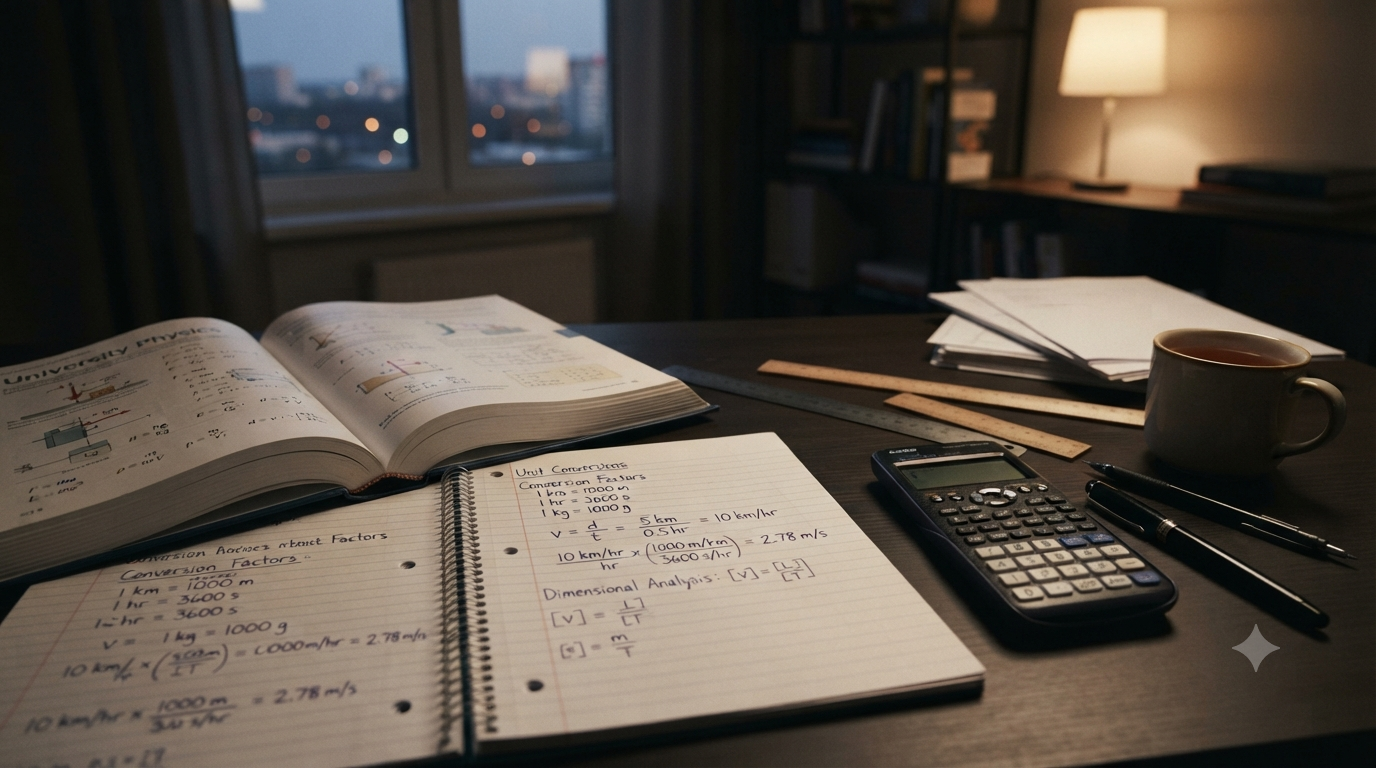
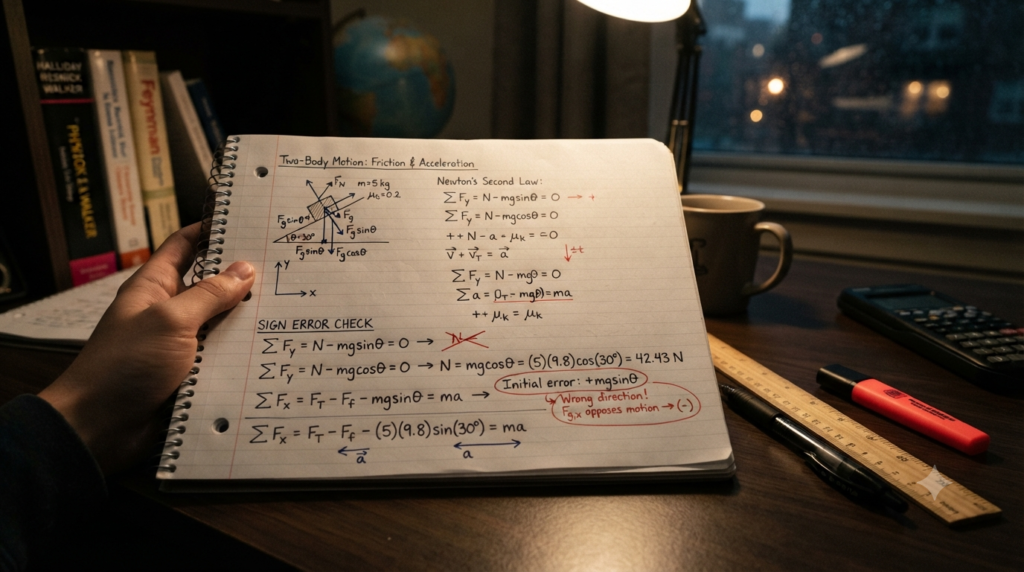
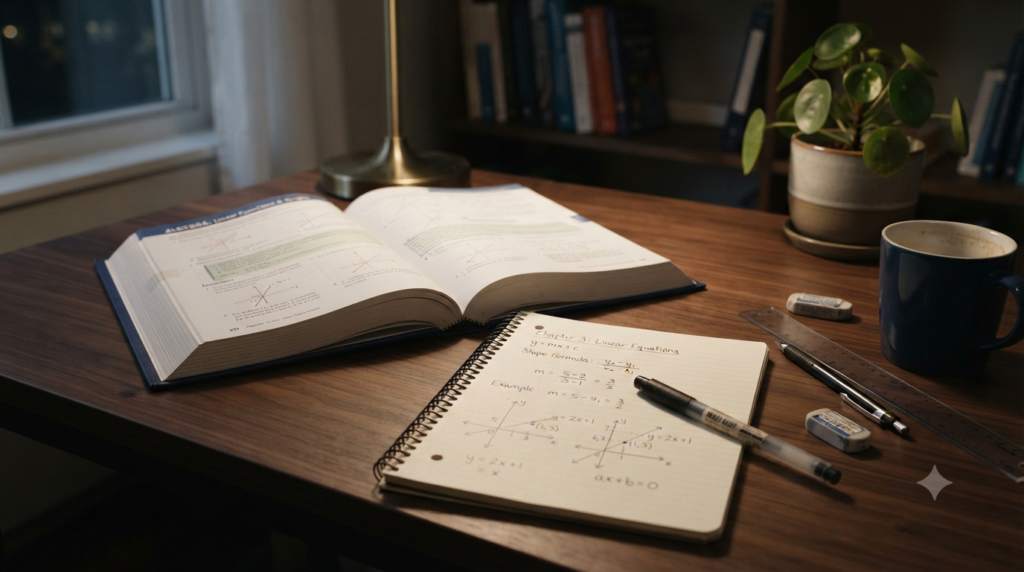
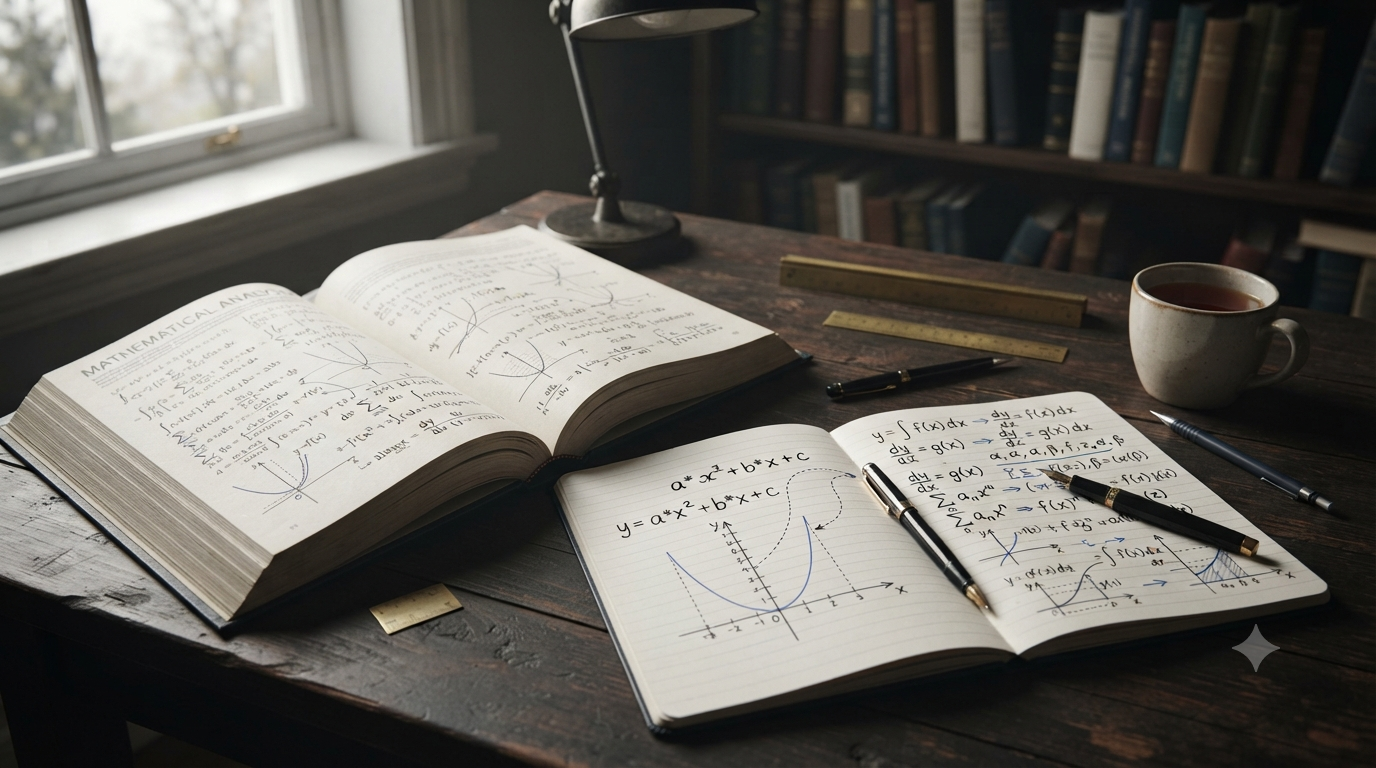
Mathematical formulas showing relationships between variables and quantities

Mathematics is often used to describe how different quantities are connected. In everyday situations, we may say that the cost of several items depends on their price and quantity, or that the distance travelled depends on speed and time. These relationships can be explained using words, tables, graphs, or equations. A mathematical formula provides a concise way to express such a relationship.

A formula uses numbers, symbols, variables, and mathematical operations to show how one quantity is related to another. Instead of describing a relationship with a long sentence, a formula can represent the same idea in a short and precise form. For example, the formula d = vt represents the relationship between distance, speed, and time. It tells us that distance is obtained by multiplying speed by time.

Understanding how formulas represent relationships is an important part of learning mathematics. It helps us move beyond simply memorizing formulas and allows us to understand what each formula actually means.

What Is a Mathematical Relationship?

A mathematical relationship describes how two or more quantities are connected. When one quantity changes, another quantity may also change in a predictable way.

For example, imagine buying notebooks at the same price. If one notebook costs ₹50, the total cost depends on how many notebooks are purchased. If n represents the number of notebooks and C represents the total cost, the relationship can be written as:

C = 50n

Here, the total cost changes when the number of notebooks changes. If n = 1, the cost is ₹50. If n = 2, the cost is ₹100. If n = 5, the cost is ₹250.

The formula therefore does more than provide a calculation. It describes the connection between the number of notebooks and the total cost.

How Formulas Express Relationships

A mathematical formula represents a relationship by connecting quantities through mathematical operations.

Consider:

y = 3x + 2

This formula tells us that the value of y depends on the value of x. First, x is multiplied by 3, and then 2 is added to the result.

If x = 1:

y = 3(1) + 2 = 5

If x = 4:

y = 3(4) + 2 = 14

As x changes, y changes according to the rule given by the formula.

This is one of the most important ideas behind mathematical formulas: a formula provides a rule that connects quantities.

Variables Represent Changing Quantities

Variables are central to mathematical formulas because they represent quantities that can change.

For example:

A = lw

represents the area of a rectangle, where:

  • A represents area

  • l represents length

  • w represents width

The length and width can have different values, so the area can also change.

Suppose a rectangle has a length of 8 cm and a width of 5 cm:

A = 8 × 5

A = 40 cm²

If the length increases to 10 cm while the width remains 5 cm:

A = 10 × 5

A = 50 cm²

The formula shows exactly how the area depends on the length and width.

Constants Provide Fixed Values

Not every quantity in a formula changes. Some values remain fixed and are called constants.

Consider:

C = 50n

The number 50 is a constant because the price of one notebook remains ₹50 in this example. The variable n can change depending on how many notebooks are purchased.

Another example is:

y = 2x + 5

Here, 2 and 5 are constants, while x and y are variables.

Constants help define the particular relationship represented by a formula.

Mathematical Operations Show How Quantities Are Connected

The operation used in a formula tells us something about the relationship between quantities.

Addition

A formula such as:

y = x + 5

means that 5 is added to x.

If x increases by 1, y also increases by 1.

Subtraction

A formula such as:

y = x - 3

shows that 3 is subtracted from x.

For example, if x = 10:

y = 10 - 3 = 7

Multiplication

Consider:

y = 4x

This means that y is four times x.

If x = 3:

y = 4 × 3 = 12

Multiplication is commonly used when one quantity changes in direct proportion to another.

Division

A formula such as:

v = d/t

shows that speed is calculated by dividing distance by time.

The operation itself provides information about how the quantities are related.

Formulas Can Show Direct Relationships

Two quantities have a direct relationship when one quantity changes in a consistent proportion with another.

For example:

y = 5x

Here, y is always five times x.

If x = 1, then y = 5.

If x = 2, then y = 10.

If x = 10, then y = 50.

When x doubles, y also doubles. When x becomes three times larger, y also becomes three times larger.

This type of relationship is known as direct proportionality and can be written as:

y ∝ x

The formula:

y = kx

is a general representation of direct proportionality, where k is a constant.

Formulas Can Show Inverse Relationships

A formula can also represent an inverse relationship.

For example:

y = k/x

means that y changes inversely with x.

Consider:

y = 12/x

If x = 2:

y = 12/2 = 6

If x = 4:

y = 12/4 = 3

If x increases, y decreases.

Inverse relationships appear in many areas of mathematics and science. For example, when a fixed distance is travelled, the time required can decrease as speed increases.

Formulas Can Describe Real-World Relationships

One of the most useful features of mathematical formulas is their ability to represent real-world situations.

For example, the formula:

d = vt

represents the relationship between distance, speed, and time.

If a vehicle travels at a constant speed of 60 km/h for 3 hours:

d = 60 × 3

d = 180 km

The formula allows us to calculate the distance without describing the entire situation in words.

Similarly, the formula:

P = 2(l + w)

represents the perimeter of a rectangle. It connects the perimeter with the rectangle’s length and width.

In this way, formulas act as mathematical models of real situations.

Formulas Can Represent Relationships Between More Than Two Quantities

Some relationships involve several variables.

For example, the formula for the volume of a rectangular box is:

V = lwh

The volume depends on three dimensions: length, width, and height.

If:

l = 4 cm

w = 3 cm

h = 2 cm

then:

V = 4 × 3 × 2

V = 24 cm³

Changing any one of the three dimensions changes the volume.

More complex formulas can contain many variables and constants, allowing mathematics to describe complicated relationships.

Rearranging a Formula Reveals Different Parts of the Relationship

A formula can often be rearranged to find different quantities.

Consider:

d = vt

This formula can be used to find distance when speed and time are known.

But if we want to find speed, we can rearrange it:

v = d/t

To find time:

t = d/v

All three formulas describe the same underlying relationship.

This shows why understanding a formula is more useful than simply memorizing it. Once the relationship is understood, the formula can be rearranged according to what needs to be calculated.

Formulas and Tables

A mathematical relationship can also be represented using a table.

Consider:

y = 2x + 1

We can calculate values for different values of x.

xy
01
13
25
37
49

The table provides individual examples of the relationship, while the formula describes the general rule.

This is an important difference. A table may show several specific values, but a formula can describe the relationship for many possible values.

Formulas and Graphs

The same relationship can also be represented graphically.

For example:

y = 2x + 1

produces a straight-line graph. Every point on the graph represents a pair of values that satisfies the formula.

If a point has coordinates (2, 5), it satisfies the formula because:

5 = 2(2) + 1

Graphs make relationships easier to visualize. A formula gives the mathematical rule, while a graph provides a visual representation of that rule.

Together, formulas, tables, and graphs can provide different ways of understanding the same mathematical relationship.

The Equal Sign Represents a Relationship

The equal sign = is one of the most important symbols in mathematics.

In a formula such as:

A = lw

the equal sign states that the area A has the same mathematical value as the product of length and width.

It does not simply mean that an answer comes after the equal sign. It expresses a relationship between two mathematical expressions.

For example:

2x + 3 = 11

states that the expression 2x + 3 has the same value as 11.

Understanding the equal sign as a statement of equality helps build a stronger understanding of equations and formulas.

Formulas Can Show How Changes Affect Other Quantities

A formula can help us understand what happens when one quantity changes.

Consider:

C = 10n

If n represents the number of items and each item costs ₹10, increasing the number of items increases the total cost.

For 2 items:

C = 10(2) = ₹20

For 5 items:

C = 10(5) = ₹50

For 10 items:

C = 10(10) = ₹100

The formula makes the relationship clear: the total cost changes at a constant rate of ₹10 for every additional item.

This type of reasoning is useful in mathematics, economics, science, engineering, and everyday decision-making.

Formulas Are More Than Rules to Memorize

Students often encounter formulas as something to remember for solving problems. However, memorization alone does not explain what a formula represents.

For example, knowing:

F = ma

is useful, but understanding the relationship is more important. The formula represents a connection between force, mass, and acceleration.

If the mass remains constant, increasing the force increases the acceleration. If the applied force remains constant, increasing the mass changes the acceleration.

The formula therefore describes how the quantities are connected, not merely how to calculate one number.

Why Understanding Relationships Matters

Understanding mathematical relationships makes formulas easier to use and remember.

When you know what each variable represents, what the operations mean, and how quantities change together, a formula becomes meaningful.

This also helps identify whether an answer makes sense. For example, if a formula shows that increasing one quantity should increase another, but a calculation produces the opposite result, the relationship can be used to check the calculation.

This is particularly important in science, where formulas are used to describe physical relationships such as speed and time, force and acceleration, energy and mass, pressure and volume, and many others.

Conclusion

Mathematical formulas are compact ways of representing relationships between quantities. Variables show which quantities can change, constants provide fixed values, and mathematical operations explain how the quantities are connected. A formula can describe direct relationships, inverse relationships, and more complex connections involving several variables.

The same relationship can often be represented through a formula, table, graph, or words. Among these representations, formulas are especially powerful because they provide a general rule that can be applied to many different values.

Instead of viewing formulas as expressions that must simply be memorized, it is more useful to see them as descriptions of how quantities behave together. Once the relationship behind a formula is understood, solving problems, rearranging equations, interpreting graphs, and applying mathematics to real-world situations become much easier.

FAQs

1. What is a mathematical relationship?

A mathematical relationship describes how two or more quantities are connected. When one quantity changes, another quantity may change according to a particular rule. For example, the formula C = 50n shows a relationship between the number of notebooks purchased and their total cost when each notebook costs ₹50. Here, n represents the number of notebooks and C represents the total cost. Mathematical relationships can be represented using formulas, equations, tables, graphs, or words. Understanding these relationships helps us see how quantities depend on one another and makes it easier to solve mathematical and real-world problems.

2. How do mathematical formulas represent relationships?

Mathematical formulas represent relationships by connecting quantities with variables, constants, and mathematical operations. For example, d = vt connects distance, speed, and time. The formula tells us that distance can be found by multiplying speed by time. Each symbol has a specific meaning, while the operations show how the quantities are connected. When the value of one variable changes, the formula can show how another quantity changes. This makes formulas useful for describing general rules rather than only individual examples. A formula can therefore provide a concise mathematical description of a relationship between different quantities.

3. What is the role of variables in mathematical formulas?

Variables represent quantities that can change within a mathematical relationship. They are usually written using letters such as x, y, a, or t. For example, in y = 3x + 2, both x and y are variables. The value of y depends on the value assigned to x. If x changes, the value of y changes according to the rule represented by the formula. Variables allow one formula to describe many different situations instead of representing only one set of numbers. This makes mathematical formulas flexible and useful for general problem-solving.

4. What is the difference between a variable and a constant?

A variable represents a quantity that can change, while a constant represents a fixed value within a particular relationship. For example, in the formula C = 50n, n is a variable because the number of items can change, while 50 is a constant because the price per item remains fixed in that example. Constants help define the specific relationship represented by a formula. Variables allow the formula to be applied to different situations. Understanding the difference between variables and constants makes it easier to interpret formulas and understand what happens when different quantities change.

5. How does a formula show how one quantity changes with another?

A formula shows how quantities change together by providing a mathematical rule. For example, y = 4x means that y is always four times x. If x increases from 2 to 3, y changes from 8 to 12. The formula therefore describes not only the values of the quantities but also the pattern connecting them. Different formulas can describe different types of relationships. Some show quantities increasing together, while others show one quantity decreasing as another increases. By examining a formula, we can understand how changes in one variable affect another.

6. What is a direct relationship in mathematics?

A direct relationship occurs when two quantities change in the same proportion. It can be represented by the formula y = kx, where k is a constant. For example, if y = 5x, then doubling x also doubles y. If x becomes three times larger, y becomes three times larger as well. This type of relationship is also called direct proportionality and can be written as y ∝ x. Direct relationships appear in many mathematical and scientific situations. Recognizing them helps us understand how two quantities respond when one of them changes.

7. What is an inverse relationship in mathematics?

An inverse relationship occurs when one quantity increases while another decreases in a predictable way. A common form is y = k/x, where k is a constant. For example, consider y = 12/x. When x = 2, y = 6, but when x = 4, y = 3. As x increases, y decreases. Inverse relationships are useful for describing situations where two quantities are connected through a fixed product. They appear in various areas of mathematics and science, including situations involving speed, time, rates, and other changing quantities.

8. How are formulas related to graphs and tables?

A formula, table, and graph can represent the same mathematical relationship in different ways. A formula provides the general mathematical rule, while a table shows specific pairs of values. A graph provides a visual representation of those pairs of values. For example, the formula y = 2x + 1 can be used to create a table of values for different values of x. Those pairs can then be plotted on a coordinate graph. Using all three representations can make a relationship easier to understand because they show the same mathematical idea through symbols, numbers, and visuals.

9. Why is understanding a formula more important than memorizing it?

Understanding a formula helps you know what the symbols mean, how quantities are connected, and when the formula should be used. Memorizing a formula without understanding it can make it difficult to apply when a problem is presented differently. For example, understanding d = vt allows you to recognize that distance depends on speed and time. You can also rearrange the relationship to find speed or time. When the meaning of a formula is clear, it becomes easier to check calculations, interpret results, and apply the formula to real situations. This makes mathematical problem-solving more meaningful and effective.

10. Why are mathematical formulas important in real life?

Mathematical formulas are important because they allow us to describe, calculate, and predict relationships between quantities. They are used in everyday situations such as calculating costs, distances, areas, time, and rates. Formulas are also essential in science, engineering, economics, technology, and many other fields. For example, A = lw helps calculate the area of a rectangle, while d = vt connects distance, speed, and time. Instead of calculating each situation from the beginning, a formula provides a general rule that can be applied to many different values. This makes formulas powerful tools for understanding and solving real-world problems.

Related Posts

Leave a Comment

Your email address will not be published. Required fields are marked *

Scroll to Top