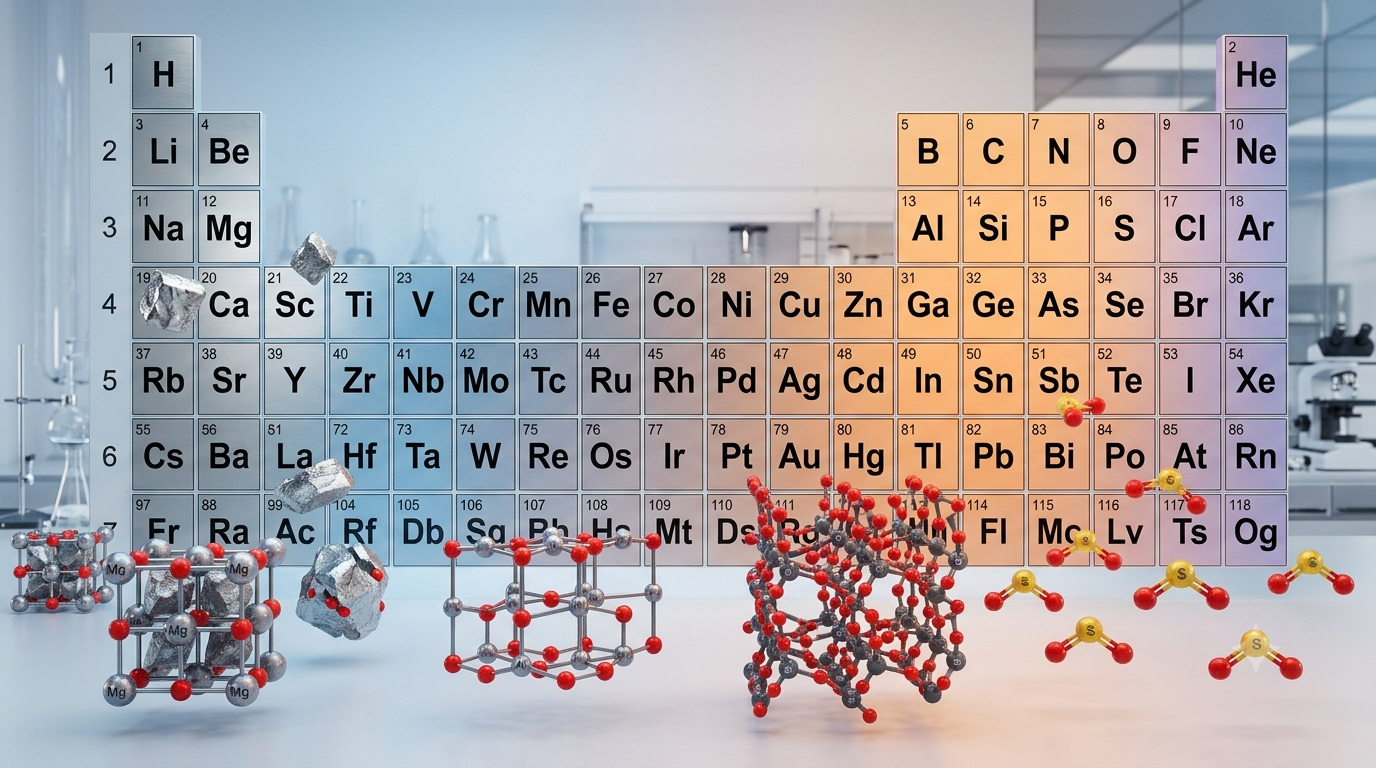
Oxides are among the most common and important compounds in chemistry. They are formed when oxygen combines with another element, including metals and non-metals. Oxides are found in rocks, minerals, water, the atmosphere, industrial materials, and even in biological systems. Examples include sodium oxide (Na₂O), magnesium oxide (MgO), carbon dioxide (CO₂), and silicon dioxide (SiO₂).
Although all these compounds contain oxygen, their chemical properties can be very different. Some oxides react with acids, some react with bases, and others can react with both. Certain oxides are acidic, while others are basic or neutral. There are also oxides that show both acidic and basic characteristics, known as amphoteric oxides.
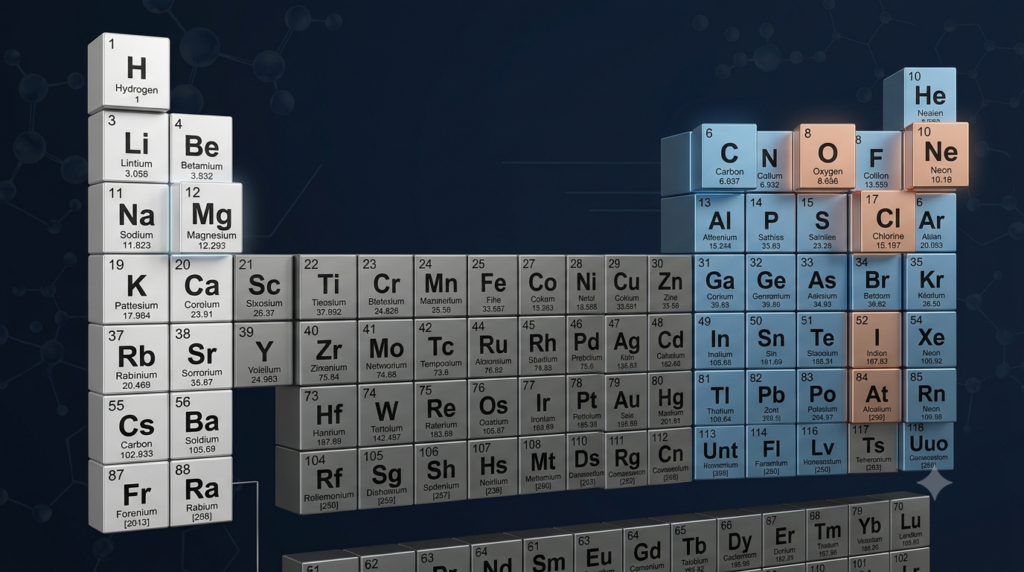
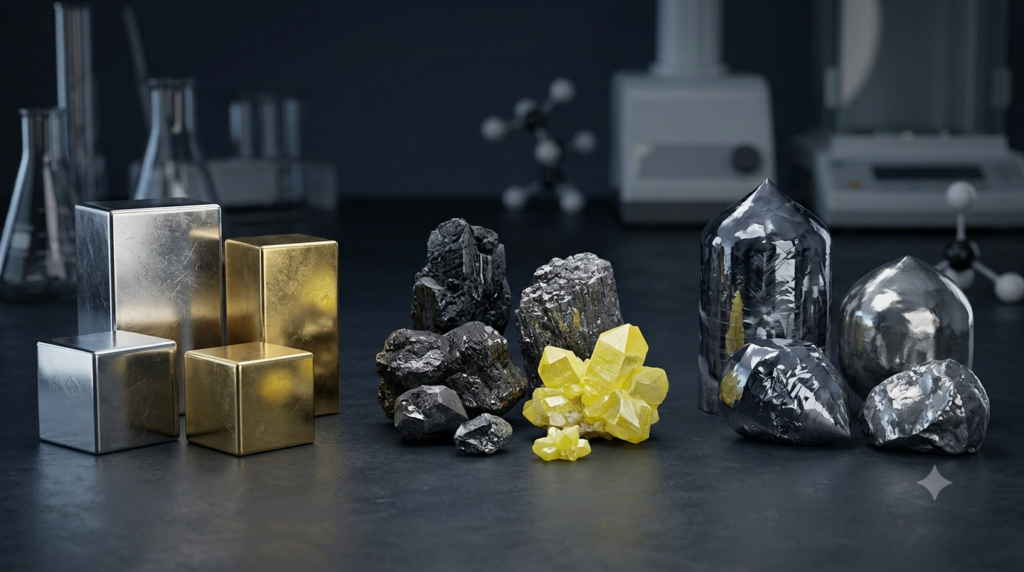
The nature of oxides is closely related to the position of their elements in the periodic table. Metallic elements generally form basic oxides, whereas non-metallic elements generally form acidic oxides. However, this is not an absolute rule because some metals form amphoteric oxides and certain non-metals form neutral oxides.
Understanding the nature of oxides across the periodic table helps explain periodic trends, chemical reactions, and the relationship between metallic and non-metallic properties.
What Are Oxides?
Oxides are binary compounds formed when oxygen combines with another element. In these compounds, oxygen usually has an oxidation state of −2.
For example:
Sodium oxide: Na₂O
Calcium oxide: CaO
Aluminium oxide: Al₂O₃
Carbon dioxide: CO₂
Sulfur dioxide: SO₂
Silicon dioxide: SiO₂
Oxides can be classified according to their chemical behaviour, structure, and the nature of the elements present in them.
Based on their acid-base properties, the four major categories are:
Basic oxides
Acidic oxides
Amphoteric oxides
Neutral oxides
These categories help us understand how different elements behave when they react with acids, bases, and water.
Types of Oxides Based on Their Chemical Nature
1. Basic Oxides
Basic oxides are generally formed by metals. They show basic properties and react with acids to produce salt and water.
For example, magnesium oxide (MgO) is a basic oxide. It reacts with hydrochloric acid to form magnesium chloride and water.
MgO + 2HCl → MgCl₂ + H₂O
Some basic oxides also react with water to form metal hydroxides, which are bases.
For example:
Na₂O + H₂O → 2NaOH
CaO + H₂O → Ca(OH)₂
However, not all basic oxides react readily with water. Some, such as copper(II) oxide (CuO), are basic but do not react significantly with water under ordinary conditions.
Examples of basic oxides:
Sodium oxide (Na₂O)
Potassium oxide (K₂O)
Calcium oxide (CaO)
Magnesium oxide (MgO)
Copper(II) oxide (CuO)
Basic oxides are commonly found among metals, particularly alkali metals and alkaline earth metals.
2. Acidic Oxides
Acidic oxides are generally formed by non-metals. They show acidic properties and usually react with bases to form salt and water.
For example, carbon dioxide reacts with sodium hydroxide to produce sodium carbonate and water.
CO₂ + 2NaOH → Na₂CO₃ + H₂O
Many acidic oxides react with water to form acids.
For example:
SO₃ + H₂O → H₂SO₄
CO₂ + H₂O ⇌ H₂CO₃
However, not every acidic oxide reacts directly with water. Silicon dioxide (SiO₂), for example, is an acidic oxide but does not readily react with water under normal conditions.
Examples of acidic oxides:
Carbon dioxide (CO₂)
Sulfur dioxide (SO₂)
Sulfur trioxide (SO₃)
Nitrogen dioxide (NO₂)
Phosphorus pentoxide (P₄O₁₀)
Acidic oxides are commonly associated with non-metallic elements.
3. Amphoteric Oxides
Amphoteric oxides are compounds that can react with both acids and bases to form salts and water or other related products.
They show both acidic and basic behaviour depending on the substance with which they react.
For example, aluminium oxide (Al₂O₃) reacts with hydrochloric acid:
Al₂O₃ + 6HCl → 2AlCl₃ + 3H₂O
It also reacts with sodium hydroxide under suitable conditions:
Al₂O₃ + 2NaOH → 2NaAlO₂ + H₂O
The exact products can depend on the reaction conditions and the medium.
Examples of amphoteric oxides:
Aluminium oxide (Al₂O₃)
Zinc oxide (ZnO)
Beryllium oxide (BeO)
Tin(II) oxide (SnO)
Lead(II) oxide (PbO)
Amphoteric behaviour is particularly important for understanding the chemical properties of certain metals and their position in the periodic table.
4. Neutral Oxides
Neutral oxides are oxides that generally do not show acidic or basic properties. They do not normally react with acids or bases to produce salts.
Some common examples include:
Carbon monoxide (CO)
Nitric oxide (NO)
Nitrous oxide (N₂O)
These oxides are different from acidic and basic oxides because they do not form acids or bases simply by reacting with water under ordinary conditions.
Carbon monoxide, for example, is a neutral oxide in terms of acid-base classification, although it is chemically reactive in other types of reactions.
Nature of Oxides Across a Period
One of the most important periodic trends in chemistry is the change in the nature of oxides from left to right across a period.
As we move from left to right across a period, metallic character generally decreases, while non-metallic character increases.
This change influences the acid-base properties of the oxides formed by the elements.
In general, the nature of oxides changes through the following sequence:
Basic → Amphoteric → Acidic
This trend is particularly clear in the third period of the periodic table.
Oxides of Third-Period Elements
The third period contains the following elements:
Sodium (Na), Magnesium (Mg), Aluminium (Al), Silicon (Si), Phosphorus (P), Sulfur (S), Chlorine (Cl), and Argon (Ar).
Their oxides demonstrate an important change in chemical behaviour.
1. Sodium oxide (Na₂O)
Sodium is an alkali metal with strongly metallic character. Its oxide is strongly basic.
It reacts with water to produce sodium hydroxide.
Na₂O + H₂O → 2NaOH
2. Magnesium oxide (MgO)
Magnesium is an alkaline earth metal. Its oxide is basic, although it is less soluble in water than sodium oxide.
MgO + 2HCl → MgCl₂ + H₂O
3. Aluminium oxide (Al₂O₃)
Aluminium oxide is amphoteric. It reacts with both acids and strong bases.
This behaviour represents an important transition between basic and acidic oxides across the period.
4. Silicon dioxide (SiO₂)
Silicon dioxide is an acidic oxide. It reacts with strong bases to form silicates.
SiO₂ + 2NaOH → Na₂SiO₃ + H₂O
5. Phosphorus oxides
Phosphorus forms acidic oxides, mainly phosphorus trioxide (P₄O₆) and phosphorus pentoxide (P₄O₁₀).
These oxides react with water to form phosphorous acid and phosphoric acid, respectively.
P₄O₁₀ + 6H₂O → 4H₃PO₄
6. Sulfur oxides
Sulfur forms acidic oxides such as sulfur dioxide (SO₂) and sulfur trioxide (SO₃).
SO₂ + H₂O ⇌ H₂SO₃
SO₃ + H₂O → H₂SO₄
7. Chlorine oxides
Chlorine forms several oxides, including Cl₂O, ClO₂, and Cl₂O₇. Many of these are acidic oxides or acid anhydrides.
For example, chlorine heptoxide reacts with water to produce perchloric acid.
Cl₂O₇ + H₂O → 2HClO₄
Argon, being a noble gas, does not normally form a common stable oxide under ordinary conditions.
Therefore, the third period clearly demonstrates how the nature of oxides changes from basic to amphoteric and then acidic as we move from left to right.
Nature of Oxides Across a Group
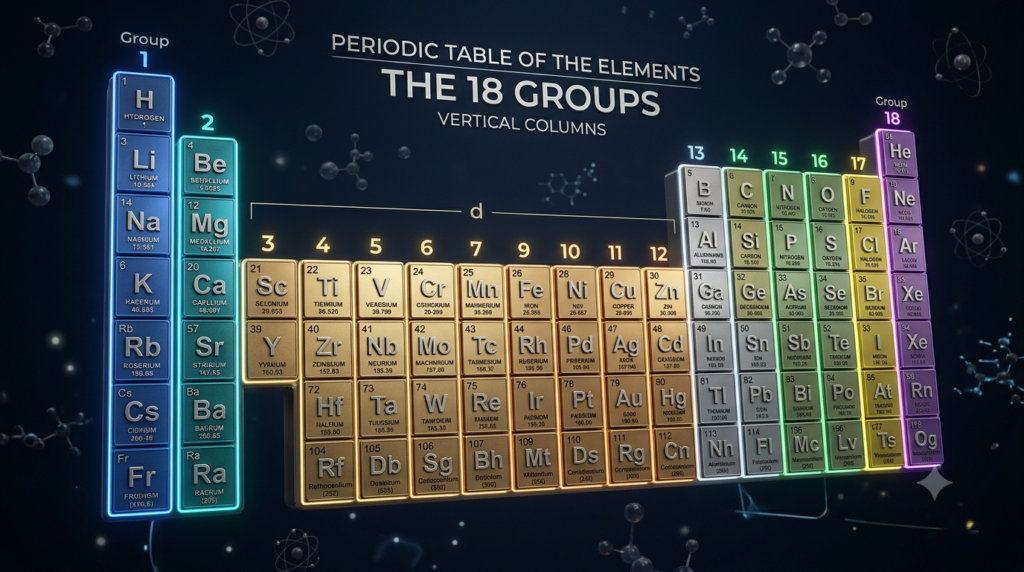
The nature of oxides can also show interesting changes when we move down a group in the periodic table.
However, unlike the general trend across a period, the trend down a group is not identical for every group. It depends on the chemical properties and oxidation states of the elements involved.
In many groups, metallic character increases as we move downward. This can influence the acid-base nature of their oxides.
Group 1: Alkali Metals
Group 1 elements include lithium, sodium, potassium, rubidium, and caesium.
These elements form strongly basic oxides.
Examples:
Lithium oxide (Li₂O)
Sodium oxide (Na₂O)
Potassium oxide (K₂O)
Rubidium oxide (Rb₂O)
Caesium oxide (Cs₂O)
Their oxides react with water to form strongly basic hydroxides.
For example:
K₂O + H₂O → 2KOH
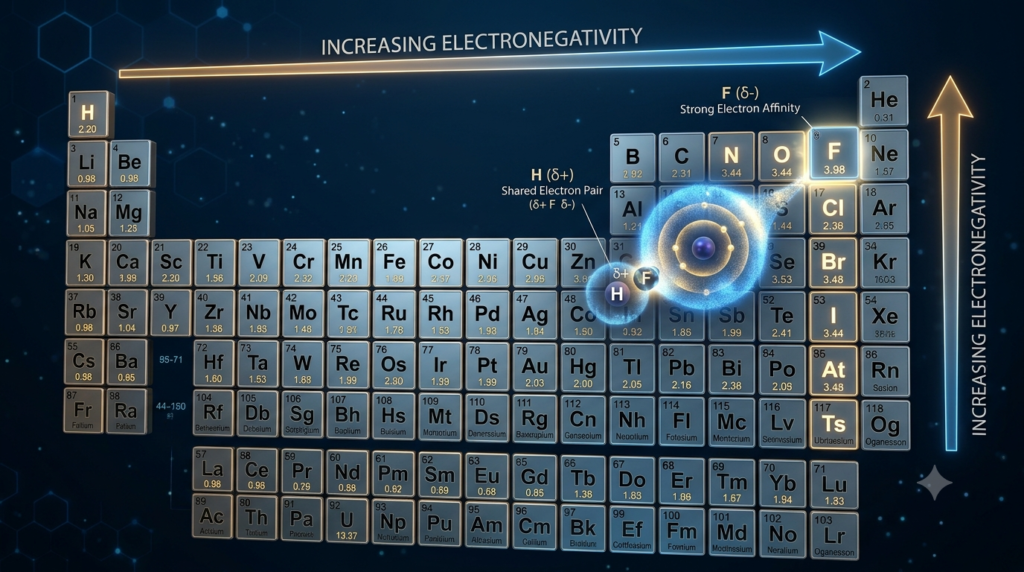
The basic character of alkali metal oxides is associated with their strongly electropositive metallic nature.
Group 2: Alkaline Earth Metals
Group 2 elements include beryllium, magnesium, calcium, strontium, and barium.
Their oxides show differences in basic character.
BeO is amphoteric.
MgO is basic.
CaO is strongly basic.
SrO is strongly basic.
BaO is strongly basic.
As we move down the group, the basic character of the oxides generally increases.
Beryllium oxide is an important exception because it shows amphoteric behaviour rather than typical basic behaviour.
Group 13: Boron Family
Group 13 includes boron, aluminium, gallium, indium, and thallium.
The nature of their oxides changes with increasing metallic character.
B₂O₃ is acidic.
Al₂O₃ is amphoteric.
Ga₂O₃ is amphoteric.
In₂O₃ is mainly basic.
Tl₂O₃ shows predominantly basic character.
This group demonstrates how increasing metallic character down a group can influence the acid-base nature of oxides.
Group 14: Carbon Family
Group 14 contains carbon, silicon, germanium, tin, and lead.
Their common oxides show different chemical properties.
CO₂ is acidic.
SiO₂ is acidic.
GeO₂ is amphoteric.
SnO₂ is amphoteric.
PbO₂ is amphoteric.
The lower members show increasing metallic character, which is reflected in the changing nature of their oxides.
However, the behaviour of individual oxidation states must also be considered when comparing these compounds.
Group 15: Nitrogen Family
Group 15 includes nitrogen, phosphorus, arsenic, antimony, and bismuth.
Nitrogen and phosphorus form several acidic oxides.
Examples include:
N₂O₃
N₂O₅
P₄O₆
P₄O₁₀
Arsenic and antimony form oxides that can show acidic or amphoteric behaviour.
Bismuth oxide (Bi₂O₃) is predominantly basic.
This group shows a general change from acidic oxides in the upper members towards more basic character in the lower members.
Group 16: Oxygen Family
Group 16 contains oxygen, sulfur, selenium, tellurium, and polonium.
Sulfur and selenium form several acidic oxides, such as SO₂, SO₃, SeO₂, and SeO₃.
Tellurium dioxide (TeO₂) is amphoteric, while polonium dioxide (PoO₂) shows more basic or amphoteric character depending on the conditions and classification used.
The trend is influenced by the increasing metallic character down the group.
Why Does the Nature of Oxides Change Across the Periodic Table?
The changing nature of oxides is mainly explained by three important chemical factors.
1. Metallic and Non-Metallic Character
Metallic character refers to the tendency of an element to lose electrons and form positive ions.
Metals generally form ionic oxides. These oxides often show basic properties because they contain metal cations and oxide ions.
For example:
Na₂O and CaO are basic oxides.
Non-metals generally form covalent oxides. Many of these oxides react with water to form acids or react with bases to produce salts.
For example:
CO₂ and SO₃ are acidic oxides.
Therefore, metallic character and non-metallic character play an important role in determining the nature of oxides.
2. Nature of Chemical Bonding
The type of chemical bonding also influences the acid-base properties of oxides.
Metallic oxides are often ionic, while non-metallic oxides are generally covalent.
Ionic oxides containing oxide ions can behave as bases because oxide ions can accept protons.
For example:
O²⁻ + H₂O → 2OH⁻
Covalent oxides can behave as acidic oxides when they react with water or bases.
However, bonding is not the only factor. Some metal oxides are covalent or show significant covalent character, which helps explain amphoteric behaviour.
3. Oxidation State of the Element
The oxidation state of an element can strongly influence the nature of its oxide.
For the same element, oxides with higher oxidation states generally show greater acidic character, while oxides with lower oxidation states tend to show greater basic character.
For example, consider the oxides of manganese:
MnO is basic.
Mn₂O₃ is mainly basic.
MnO₂ is amphoteric or weakly acidic in certain reactions.
Mn₂O₇ is strongly acidic.
Similarly, chromium forms oxides with different acid-base properties:
CrO is basic.
Cr₂O₃ is amphoteric.
CrO₃ is acidic.
This demonstrates that the oxidation state is an important factor when predicting the nature of an oxide.
Difference Between Basic, Acidic, Amphoteric, and Neutral Oxides
The following table summarises the main differences between the four types of oxides.
| Type of oxide | Main characteristics | Examples |
|---|---|---|
| Basic oxide | Reacts with acids to form salt and water | Na₂O, MgO, CaO |
| Acidic oxide | Reacts with bases to form salts | CO₂, SO₂, SO₃ |
| Amphoteric oxide | Reacts with both acids and bases | Al₂O₃, ZnO, BeO |
| Neutral oxide | Generally shows neither acidic nor basic behaviour | CO, NO, N₂O |
This classification is useful for comparing oxides and understanding their chemical reactions.
Applications and Importance of Different Oxides
Oxides are widely used in everyday life, industrial processes, construction, and scientific research.
1. Construction and Building Materials
Calcium oxide (CaO), commonly called quicklime, is used in cement manufacturing and other construction-related processes.
Silicon dioxide (SiO₂) is a major component of sand and is widely used in glass manufacturing.
2. Industrial Manufacturing
Aluminium oxide (Al₂O₃) is used in the production of aluminium and in the manufacture of ceramics and abrasive materials.
Magnesium oxide (MgO) is used in refractory materials because it can withstand high temperatures.
3. Environmental Chemistry
Carbon dioxide (CO₂) plays an important role in the carbon cycle and influences Earth’s climate.
Sulfur dioxide (SO₂) and nitrogen oxides contribute to air pollution and acid rain.
Understanding their acidic nature helps scientists study environmental problems and develop pollution-control methods.
4. Everyday Applications
Zinc oxide (ZnO) is used in certain sunscreens, cosmetics, and protective coatings.
Titanium dioxide (TiO₂) is used as a white pigment in paints, coatings, and other products.
Iron oxides are widely used as pigments and are responsible for many red, brown, and yellow colours found in soils and minerals.
Key Points to Remember
Oxides are binary compounds formed by oxygen and another element.
Oxides can be classified as basic, acidic, amphoteric, or neutral.
Metallic elements generally form basic oxides.
Non-metallic elements generally form acidic oxides.
Amphoteric oxides react with both acids and bases.
Neutral oxides generally show neither acidic nor basic properties.
Across a period, the nature of oxides generally changes from basic to amphoteric to acidic.
Down many groups, increasing metallic character can increase the basic nature of oxides.
The oxidation state of an element also influences the acid-base properties of its oxides.
The third period provides a useful example of the periodic trend in oxide behaviour.
Conclusion
The nature of oxides across the periodic table is an important concept for understanding periodic properties and chemical behaviour. Metals generally form basic oxides, non-metals usually form acidic oxides, and certain elements form amphoteric oxides that react with both acids and bases. Neutral oxides represent another category with neither typical acidic nor basic behaviour.
Across a period, the nature of oxides generally changes from basic to amphoteric and then acidic as metallic character decreases and non-metallic character increases. Down a group, the increasing metallic character often influences oxides towards more basic behaviour, although the exact trend depends on the element and its oxidation state.
By studying these patterns, we can better understand chemical reactions, periodic trends, and the practical applications of oxides in science, technology, and everyday life.
FAQs
1. What are oxides in chemistry?
Oxides are binary compounds formed when oxygen combines with another element. They contain oxygen, which usually has an oxidation state of −2. Oxides can be formed by both metals and non-metals. Examples include sodium oxide (Na₂O), magnesium oxide (MgO), carbon dioxide (CO₂), and sulfur dioxide (SO₂). Their chemical properties depend on the nature of the elements, the type of bonding, and their oxidation states. Based on their acid-base behaviour, oxides are classified into four main types: basic, acidic, amphoteric, and neutral oxides.
2. What are the four main types of oxides?
The four main types of oxides are basic oxides, acidic oxides, amphoteric oxides, and neutral oxides. Basic oxides generally react with acids to form salt and water, while acidic oxides react with bases to produce salts. Amphoteric oxides can react with both acids and bases. Neutral oxides generally show neither acidic nor basic properties. Examples include calcium oxide (CaO) as a basic oxide, carbon dioxide (CO₂) as an acidic oxide, aluminium oxide (Al₂O₃) as an amphoteric oxide, and carbon monoxide (CO) as a neutral oxide.
3. Why do metals generally form basic oxides?
Metals generally form basic oxides because they tend to lose electrons and form positively charged ions. Their oxides often contain oxide ions (O²⁻), which can accept hydrogen ions and produce water or hydroxide ions. Many basic metal oxides react with acids to form salts and water. For example, magnesium oxide reacts with hydrochloric acid to produce magnesium chloride and water. Alkali metals and alkaline earth metals commonly form basic oxides. However, some metal oxides, such as aluminium oxide and zinc oxide, show amphoteric behaviour instead of being purely basic.
4. Why do non-metals generally form acidic oxides?
Non-metals generally form acidic oxides because they tend to form covalent compounds with oxygen. Many of these oxides react with water to produce acids or react with bases to form salts. For example, carbon dioxide reacts with water to form carbonic acid, while sulfur trioxide reacts with water to form sulfuric acid. Non-metallic oxides such as CO₂, SO₂, and SO₃ show acidic properties. However, not all non-metal oxides are acidic. Carbon monoxide (CO), nitric oxide (NO), and nitrous oxide (N₂O) are common examples of neutral oxides.
5. What are amphoteric oxides? Give examples.
Amphoteric oxides are oxides that show both acidic and basic properties. They can react with acids as well as strong bases under suitable conditions to form salts and other products. Aluminium oxide (Al₂O₃) is a common example. It reacts with hydrochloric acid to form aluminium chloride and water. It also reacts with sodium hydroxide to form sodium aluminate. Other examples include zinc oxide (ZnO), beryllium oxide (BeO), tin(II) oxide (SnO), and lead(II) oxide (PbO). Amphoteric behaviour is particularly important for understanding the chemical properties of metals.
6. How does the nature of oxides change across a period?
As we move from left to right across a period, metallic character generally decreases and non-metallic character increases. Consequently, the nature of oxides generally changes from basic to amphoteric and then acidic. The third period provides a clear example of this trend. Sodium oxide and magnesium oxide are basic, aluminium oxide is amphoteric, while silicon dioxide, phosphorus oxides, and sulfur oxides are acidic. This change occurs because the elements gradually become less metallic and more non-metallic across the period. However, the trend is a general pattern rather than an absolute rule.
7. How does the nature of oxides change down a group?
Down many groups of the periodic table, metallic character generally increases. As a result, the oxides often show increasing basic character. For example, in Group 2, beryllium oxide is amphoteric, while magnesium oxide, calcium oxide, strontium oxide, and barium oxide are basic. The basic character generally increases down this group. A similar change can be observed in several other groups. However, the exact trend depends on the element, its oxidation state, and the type of oxide formed. Therefore, the nature of oxides should be considered using both periodic trends and individual chemical properties.
8. How does oxidation state affect the nature of oxides?
The oxidation state of an element plays an important role in determining the acidic or basic nature of its oxides. Generally, for the same element, oxides with higher oxidation states tend to show greater acidic character, while those with lower oxidation states tend to show greater basic character. For example, chromium(II) oxide (CrO) is basic, chromium(III) oxide (Cr₂O₃) is amphoteric, and chromium(VI) oxide (CrO₃) is acidic. Similarly, manganese oxides show different acid-base properties depending on their oxidation states. This trend helps explain why one element can form different types of oxides.
9. What is the difference between acidic and basic oxides?
Acidic and basic oxides differ mainly in their chemical reactions. Basic oxides generally react with acids to form salt and water, whereas acidic oxides generally react with bases to form salts and water. Basic oxides are commonly formed by metals, such as sodium oxide (Na₂O), calcium oxide (CaO), and magnesium oxide (MgO). Acidic oxides are commonly formed by non-metals, such as carbon dioxide (CO₂), sulfur dioxide (SO₂), and phosphorus pentoxide (P₄O₁₀). Another difference is that many acidic oxides form acids when they react with water, while some basic oxides form hydroxides.
10. Why is the study of the nature of oxides important?
Studying the nature of oxides is important because it helps explain periodic trends, chemical reactions, and the properties of elements. It allows us to predict whether an oxide will behave as an acid, base, or amphoteric compound. This knowledge is useful in understanding industrial processes, environmental chemistry, and material science. For example, calcium oxide is used in construction, silicon dioxide is important in glass manufacturing, and aluminium oxide is used in ceramics and abrasive materials. Understanding acidic oxides such as sulfur dioxide and nitrogen oxides also helps scientists study air pollution and environmental problems.