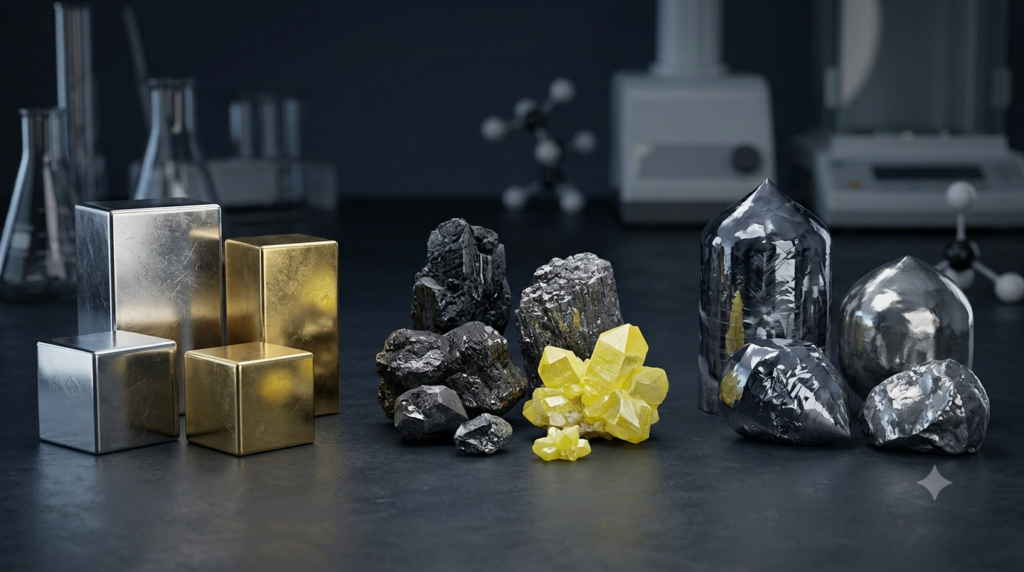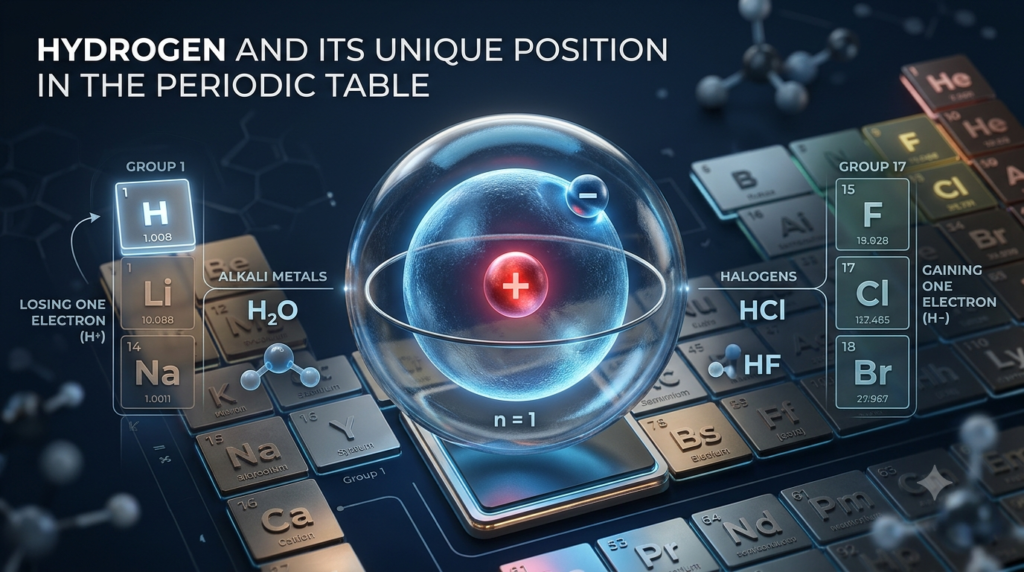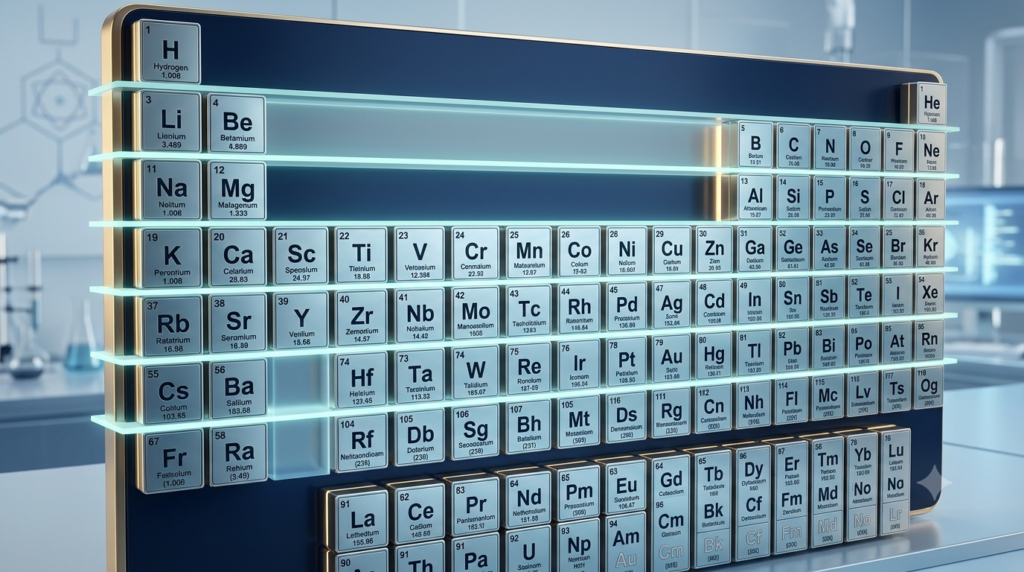
Elements in the periodic table are generally classified into three major categories: metals, nonmetals, and metalloids. Metals usually lose electrons to form positive ions, while nonmetals tend to gain or share electrons during chemical reactions. This difference in their chemical behaviour is closely related to a property known as nonmetallic character.
Nonmetallic character is an important periodic property that helps explain how elements behave during chemical reactions, how they form chemical bonds, and how they interact with other elements. It is mainly associated with the tendency of an atom to attract electrons towards itself or gain electrons to achieve a stable electronic configuration.
Nonmetallic character is not the same for all nonmetals. For example, fluorine has a very strong tendency to attract electrons, whereas elements such as carbon and sulfur show different levels of nonmetallic behaviour. These differences follow a systematic pattern in the periodic table.
Understanding nonmetallic character and its periodic trend makes it easier to study chemical bonding, electronegativity, electron affinity, oxidation states, and the general chemical properties of elements.
What Is Nonmetallic Character?
Nonmetallic character is the tendency of an element to attract electrons towards itself or gain electrons during chemical reactions.
Nonmetals generally have relatively high electronegativity and tend to gain or share electrons rather than lose them. They often form negative ions when they gain electrons, although many nonmetals also form covalent bonds by sharing electrons.
For example, chlorine has seven electrons in its outermost shell. It requires only one additional electron to complete its octet. Therefore, chlorine readily gains an electron to form a chloride ion.
Cl + e⁻ → Cl⁻
Similarly, oxygen has six valence electrons and generally gains or shares two electrons to achieve a stable electronic configuration.
O + 2e⁻ → O²⁻
These examples demonstrate the electron-accepting behaviour commonly associated with nonmetals.
However, not every nonmetal gains electrons in every chemical reaction. Many nonmetals, such as carbon, nitrogen, and oxygen, frequently form covalent compounds by sharing electrons.
Characteristics of Nonmetallic Elements
Nonmetallic elements show several characteristic properties that distinguish them from metals.
1. Tendency to Gain Electrons
Nonmetals generally have a strong tendency to accept electrons during chemical reactions. By gaining electrons, they can achieve a more stable electronic configuration.
For example, chlorine gains one electron to form a chloride ion.
2. High Electronegativity
Most nonmetals have relatively high electronegativity values. Electronegativity describes the ability of an atom to attract shared electrons towards itself in a chemical bond.
Fluorine is the most electronegative element in the periodic table.
3. Formation of Negative Ions
Many nonmetals form negatively charged ions, called anions, by gaining electrons.
Examples include:
Chlorine forms Cl⁻.
Oxygen forms O²⁻.
Sulfur forms S²⁻.
However, some nonmetals commonly form covalent compounds instead of simple negative ions.
4. Formation of Covalent Bonds
Nonmetals frequently combine with other nonmetals by sharing electrons. This type of chemical bond is called a covalent bond.
For example, hydrogen and oxygen share electrons to form water (H₂O).
5. Formation of Acidic Oxides
Many nonmetallic elements form acidic oxides when they react with oxygen.
Examples include:
Carbon dioxide (CO₂)
Sulfur dioxide (SO₂)
Sulfur trioxide (SO₃)
These oxides generally react with water to produce acidic solutions, although not every nonmetal oxide behaves in exactly the same way.
Nonmetallic Character Across a Period
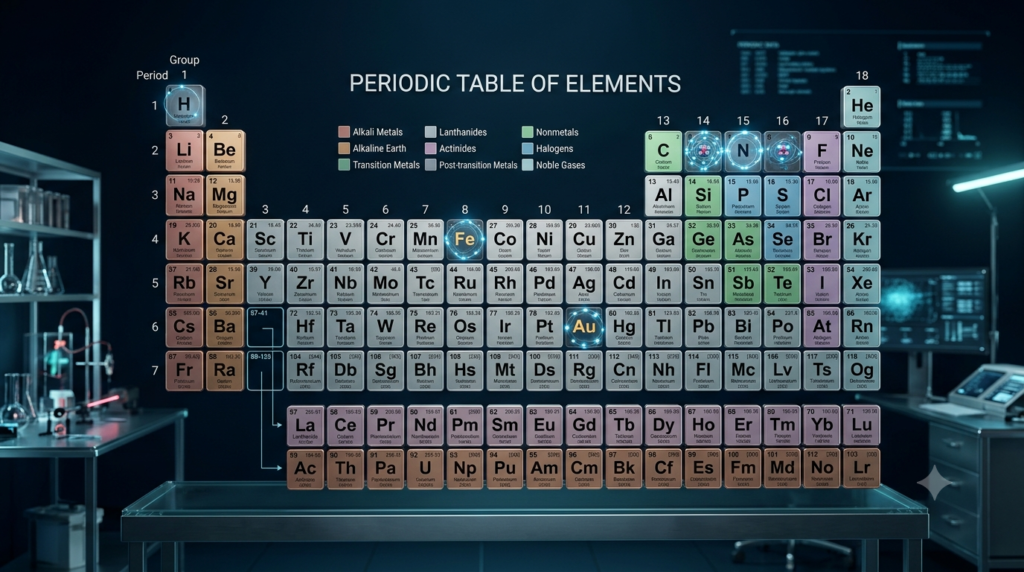
One of the most important periodic trends is the change in nonmetallic character from left to right across a period.
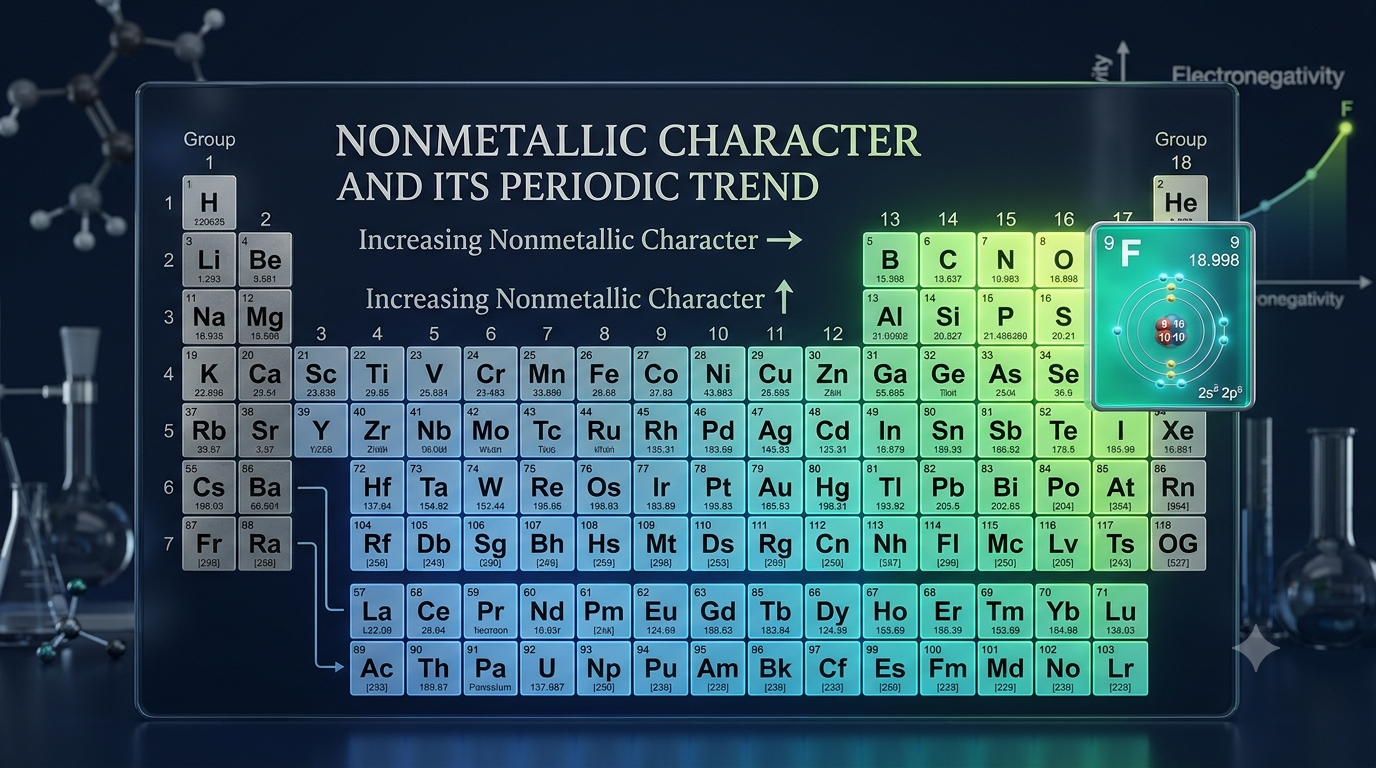
Nonmetallic character generally increases from left to right across a period in the periodic table.
This happens because the nuclear charge increases as we move from left to right. At the same time, the added electrons enter the same principal energy shell.
As a result, the effective nuclear charge generally increases, and the attraction between the nucleus and the outermost electrons becomes stronger.
This causes the atomic radius to decrease and increases the tendency of atoms to attract electrons.
For example, consider the third period:
Na → Mg → Al → Si → P → S → Cl → Ar
The elements on the left side, such as sodium and magnesium, are metals. As we move towards the right, metallic character decreases and nonmetallic character generally increases.
The nonmetallic elements in this period include phosphorus, sulfur, and chlorine. Chlorine shows a particularly strong nonmetallic character.
Argon is a noble gas and is generally excluded from simple comparisons of nonmetallic character because it has a complete outermost electron shell and very low chemical reactivity.
Why Does Nonmetallic Character Increase Across a Period?
There are several reasons behind this trend.
1. Increase in Nuclear Charge
The number of protons increases from left to right across a period. Therefore, the positive charge of the nucleus increases.
2. Increase in Effective Nuclear Charge
The additional electrons enter the same principal energy level. Shielding does not increase enough to balance the increasing nuclear charge.
Consequently, the effective nuclear charge generally increases.
3. Decrease in Atomic Radius
The stronger attraction between the nucleus and the electrons pulls the electron cloud closer to the nucleus. Therefore, atomic size generally decreases across a period.
4. Greater Attraction for Electrons
Smaller atoms with a stronger effective nuclear attraction generally attract electrons more strongly.
This increases the tendency of elements to gain or attract electrons, resulting in greater nonmetallic character.
Nonmetallic Character Down a Group
Nonmetallic character generally decreases as we move from top to bottom in a group of the periodic table.
This happens because new electron shells are added as we move down a group. The outermost electrons become farther away from the nucleus.
At the same time, the shielding effect increases because more inner electron shells are present.
As a result, the attraction between the nucleus and the outermost electrons becomes weaker.
The atoms also become larger, making it generally less favourable for them to attract additional electrons.
For example, consider the halogen group (Group 17):
F → Cl → Br → I → At
Fluorine is at the top of the group and shows the strongest nonmetallic character among these elements. As we move down the group, nonmetallic character generally decreases.
Astatine is considered a highly radioactive element with properties that show some metallic tendencies. Its classification and properties are more complex than those of the lighter halogens.
Why Does Nonmetallic Character Decrease Down a Group?
The decrease in nonmetallic character can be explained by the following factors.
1. Increase in Atomic Size
Each successive element has an additional electron shell. Therefore, atomic radius generally increases down a group.
2. Increase in Shielding Effect
Inner electrons partially block the attraction of the nucleus for the outermost electrons. As the number of inner shells increases, the shielding effect becomes stronger.
3. Decrease in Effective Attraction on the Outermost Electrons
The increased distance and shielding reduce the effective attraction experienced by the outermost electrons.
4. Lower Tendency to Attract Additional Electrons
Larger atoms generally attract incoming electrons less strongly than smaller atoms within the same group, contributing to a decrease in nonmetallic character.
Periodic Trend of Nonmetallic Character
The general periodic trend of nonmetallic character can be summarised as follows:
Across a period: Nonmetallic character increases from left to right.
Down a group: Nonmetallic character decreases from top to bottom.
The strongest nonmetallic character is generally found towards the upper-right region of the periodic table, excluding noble gases.
Fluorine is considered the most nonmetallic element because it has the highest electronegativity and a very strong tendency to attract electrons.
Factors Affecting Nonmetallic Character
Nonmetallic character is influenced by several atomic properties. These properties help explain why some elements show stronger nonmetallic behaviour than others.
1. Electronegativity
Electronegativity is the ability of an atom to attract shared electrons towards itself in a chemical bond.
Nonmetals generally have higher electronegativity than metals. Elements with higher electronegativity usually show stronger nonmetallic character.
For example, fluorine has the highest electronegativity value on the Pauling scale, approximately 3.98.
As a general trend, electronegativity increases across a period and decreases down a group.
2. Electron Affinity
Electron affinity refers to the energy change when an isolated gaseous atom accepts an electron.
Many nonmetals release energy when they gain an electron, indicating a favourable electron-accepting tendency.
Halogens generally have high electron affinities. Chlorine, for example, has a more favourable electron affinity than fluorine, even though fluorine is more electronegative.
This difference occurs partly because fluorine has a very small atomic size, causing greater electron-electron repulsion when an additional electron enters its compact 2p orbital.
Therefore, electron affinity and electronegativity are related but are not identical properties.
3. Ionisation Energy
Ionisation energy is the minimum energy required to remove an electron from an isolated gaseous atom.
Nonmetals generally have higher ionisation energies than metals because their outermost electrons are held more strongly by the nucleus.
Elements with high ionisation energy are less likely to lose electrons during chemical reactions.
Across a period, ionisation energy generally increases, while down a group, it generally decreases.
4. Atomic Radius
Atomic radius is the approximate size of an atom.
Smaller atoms generally attract additional electrons more strongly because incoming electrons can experience a stronger effective nuclear attraction.
Across a period, atomic radius generally decreases, contributing to an increase in nonmetallic character.
Down a group, atomic radius increases, contributing to a decrease in nonmetallic character.
5. Effective Nuclear Charge
Effective nuclear charge is the net positive charge experienced by an electron in an atom after considering the shielding effect of other electrons.
An increase in effective nuclear charge generally strengthens the attraction between the nucleus and electrons.
This is one of the major reasons why nonmetallic character increases across a period.
Difference Between Metallic and Nonmetallic Character
Metallic character and nonmetallic character describe opposite general tendencies of elements during chemical reactions.
| Metallic Character | Nonmetallic Character |
|---|---|
| Tendency to lose electrons | Tendency to attract or gain electrons |
| Generally forms positive ions | Often forms negative ions |
| Usually has low electronegativity | Usually has high electronegativity |
| Generally has low ionisation energy | Generally has high ionisation energy |
| Increases down a group | Generally decreases down a group |
| Decreases across a period | Generally increases across a period |
| Commonly forms basic oxides | Many elements form acidic oxides |
These are general trends, and exceptions occur depending on the element and chemical environment.
Examples of Nonmetallic Character in the Periodic Table
A few groups of elements clearly demonstrate the periodic trend of nonmetallic character.
1. Halogens (Group 17)
Halogens are among the most strongly nonmetallic elements in the periodic table.
The group includes fluorine, chlorine, bromine, iodine, and astatine.
They have seven valence electrons and generally need one additional electron to complete their outermost shell.
Their nonmetallic character generally decreases down the group.
Fluorine is the strongest nonmetallic element in this group, followed by chlorine, bromine, and iodine.
2. Oxygen Family (Group 16)
The oxygen family includes oxygen, sulfur, selenium, tellurium, and polonium.
These elements have six valence electrons.
Oxygen and sulfur show strong nonmetallic properties. As we move down the group, nonmetallic character generally decreases.
Tellurium is commonly classified as a metalloid, while polonium is generally classified as a metal.
3. Carbon Family (Group 14)
The carbon family includes carbon, silicon, germanium, tin, and lead.
Carbon is a nonmetal, while silicon and germanium are commonly classified as metalloids. Tin and lead are metals.
This group demonstrates how metallic character increases and nonmetallic character decreases down a group.
Nonmetallic Character and Chemical Bonding
Nonmetallic character plays an important role in determining how elements form chemical bonds.
1. Ionic Bonding
When a metal reacts with a nonmetal, electrons may transfer from the metal to the nonmetal.
For example, sodium transfers one electron to chlorine to form sodium chloride (NaCl).
Na → Na⁺ + e⁻
Cl + e⁻ → Cl⁻
The oppositely charged ions attract each other through electrostatic forces, forming an ionic bond.
2. Covalent Bonding
When two nonmetals combine, they generally share electrons to achieve more stable electronic configurations.
For example, two hydrogen atoms share electrons to form a hydrogen molecule (H₂).
Similarly, oxygen and hydrogen share electrons to form water (H₂O).
3. Polar Covalent Bonding
When two atoms with different electronegativities share electrons, the shared electrons may be attracted more strongly towards one atom.
This creates unequal electron sharing and produces a polar covalent bond.
For example, the bonds between hydrogen and oxygen in water are polar covalent bonds because oxygen attracts the shared electrons more strongly than hydrogen.
Exceptions and Limitations of the Trend
Although nonmetallic character follows a general periodic pattern, some exceptions and complexities should be understood.
1. Noble Gases
Noble gases have complete outermost electron shells, making them relatively unreactive. Their nonmetallic character is not always compared directly with that of other nonmetals.
2. Electron Affinity Does Not Follow a Perfect Trend
Electron affinity does not increase or decrease smoothly across every period or down every group. Chlorine, for example, has a more favourable electron affinity than fluorine.
3. Different Measures Give Different Results
Nonmetallic character is a general chemical concept rather than a single directly measurable quantity. Electronegativity, electron affinity, and ionisation energy describe related but different atomic properties.
Therefore, their trends should not be treated as perfectly interchangeable.
4. Metalloids Show Intermediate Behaviour
Elements such as silicon, germanium, and arsenic show properties between those of metals and nonmetals. Their behaviour depends on their electronic structure and chemical environment.
Importance of Understanding Nonmetallic Character
Nonmetallic character is important for understanding several fundamental concepts in chemistry.
Predicting Chemical Reactions: It helps predict whether an element is more likely to gain, lose, or share electrons.
Understanding Chemical Bonding: It helps explain the formation of ionic, covalent, and polar covalent bonds.
Comparing Elements: It provides a systematic way to compare the chemical behaviour of elements in the periodic table.
Understanding Oxidation States: It helps explain why many nonmetals show negative oxidation states in certain compounds.
Studying Periodic Properties: It connects atomic radius, electronegativity, electron affinity, and ionisation energy.
Understanding Chemical Compounds: It helps explain the formation and properties of many inorganic and organic compounds.
Conclusion
Nonmetallic character is an important periodic property that describes the tendency of an element to attract or gain electrons during chemical reactions. Nonmetals generally have high electronegativity and tend to form negative ions or covalent bonds.
The periodic trend of nonmetallic character is straightforward: it generally increases from left to right across a period and decreases from top to bottom down a group. These changes are mainly related to effective nuclear charge, atomic radius, and the shielding effect.
Fluorine is considered the most nonmetallic element because of its exceptionally high electronegativity and strong attraction for electrons. Understanding this property helps explain chemical bonding, periodic behaviour, and the reactivity of different elements.
FAQs
1. What is nonmetallic character?
Nonmetallic character is the tendency of an element to attract or gain electrons during chemical reactions. Nonmetals generally have high electronegativity and tend to accept electrons or share them with other atoms to achieve stable electronic configurations. For example, chlorine gains one electron to form a negatively charged chloride ion (Cl⁻). Elements such as oxygen, nitrogen, sulfur, and fluorine also show nonmetallic properties. Nonmetallic character helps explain the chemical behaviour of elements, their bonding patterns, and their position in the periodic table.
2. How does nonmetallic character change across a period?
Nonmetallic character generally increases from left to right across a period in the periodic table. This happens because the nuclear charge increases while the added electrons enter the same principal energy shell. Consequently, effective nuclear charge increases and atomic radius generally decreases. Atoms attract electrons more strongly, resulting in greater nonmetallic character. For example, in the third period, sodium and magnesium are metals, while phosphorus, sulfur, and chlorine are nonmetals. Chlorine shows strong nonmetallic properties compared with the elements on the left side of the period.
3. How does nonmetallic character change down a group?
Nonmetallic character generally decreases from top to bottom down a group in the periodic table. This occurs because atomic size and the number of electron shells increase. The additional inner electron shells also increase the shielding effect, reducing the effective attraction experienced by the outermost electrons. Consequently, atoms generally become less effective at attracting additional electrons. For example, among the halogens, fluorine shows the strongest nonmetallic character, followed by chlorine, bromine, and iodine. This trend demonstrates the relationship between atomic structure and periodic properties.
4. Which element has the highest nonmetallic character?
Fluorine is considered the element with the highest nonmetallic character in the periodic table. It has the highest electronegativity value, approximately 3.98 on the Pauling scale. Its small atomic size and strong effective nuclear attraction allow it to attract shared electrons very strongly. Fluorine also has a strong tendency to participate in reactions by accepting electrons. Although chlorine has a more favourable electron affinity than fluorine, fluorine remains the most electronegative element and is generally considered the strongest nonmetal in terms of nonmetallic character.
5. Why does nonmetallic character increase from left to right?
Nonmetallic character increases from left to right because the effective nuclear charge generally increases across a period. As the number of protons increases, the nucleus attracts electrons more strongly. However, the additional electrons enter the same principal energy shell, so shielding does not increase enough to balance the stronger nuclear charge. This causes atomic radius to decrease and strengthens the attraction for electrons. Therefore, elements become less likely to lose electrons and generally show greater nonmetallic behaviour as we move towards the right side of a period.
6. Why does nonmetallic character decrease down a group?
Nonmetallic character decreases down a group because atoms become larger and contain more electron shells. The increased distance between the nucleus and the outermost electrons reduces the effective attraction experienced by these electrons. Additionally, inner electrons produce a stronger shielding effect. These changes generally reduce the tendency of atoms to attract additional electrons. For example, fluorine attracts electrons more strongly than iodine. Therefore, fluorine shows greater nonmetallic character than the heavier halogens. This trend is an important part of understanding the periodic behaviour of elements.
7. What is the relationship between electronegativity and nonmetallic character?
Electronegativity and nonmetallic character are closely related periodic properties. Electronegativity measures the ability of an atom to attract shared electrons towards itself in a chemical bond. Nonmetallic character describes the general tendency of an element to attract or gain electrons during chemical reactions. Elements with higher electronegativity generally show stronger nonmetallic character. For example, fluorine has the highest electronegativity and shows the strongest nonmetallic behaviour. Both properties generally increase across a period and decrease down a group, although they describe different aspects of electron attraction.
8. What is the difference between metallic and nonmetallic character?
Metallic character describes the tendency of an element to lose electrons and form positive ions, whereas nonmetallic character describes the tendency to attract or gain electrons. Metals generally have lower electronegativity and ionisation energy, while nonmetals usually have higher values. Metallic character increases down a group and decreases across a period. Nonmetallic character generally follows the opposite trend. Metals commonly form basic oxides, while many nonmetals form acidic oxides. These properties help distinguish the chemical behaviour of metals and nonmetals in the periodic table.
9. How is nonmetallic character related to atomic radius?
Nonmetallic character is generally inversely related to atomic radius. Smaller atoms can attract electrons more strongly because the outer electron region is closer to the nucleus and experiences a stronger effective nuclear attraction. Across a period, atomic radius generally decreases, causing nonmetallic character to increase. Down a group, atomic radius increases because additional electron shells are added, and nonmetallic character generally decreases. However, atomic radius is only one factor influencing this property. Effective nuclear charge, shielding effect, electronegativity, and electron affinity also contribute to the chemical behaviour of elements.
10. Why is nonmetallic character important in chemistry?
Nonmetallic character is important because it helps explain the chemical behaviour and reactivity of elements. It allows us to understand why certain elements gain electrons while others share electrons during chemical reactions. It also helps predict the formation of ionic and covalent compounds, compare the properties of elements, and understand periodic trends. Additionally, nonmetallic character is closely connected to electronegativity, atomic radius, electron affinity, and ionisation energy. By understanding this property, students and science learners can better understand chemical bonding, the periodic table, and the behaviour of different elements.