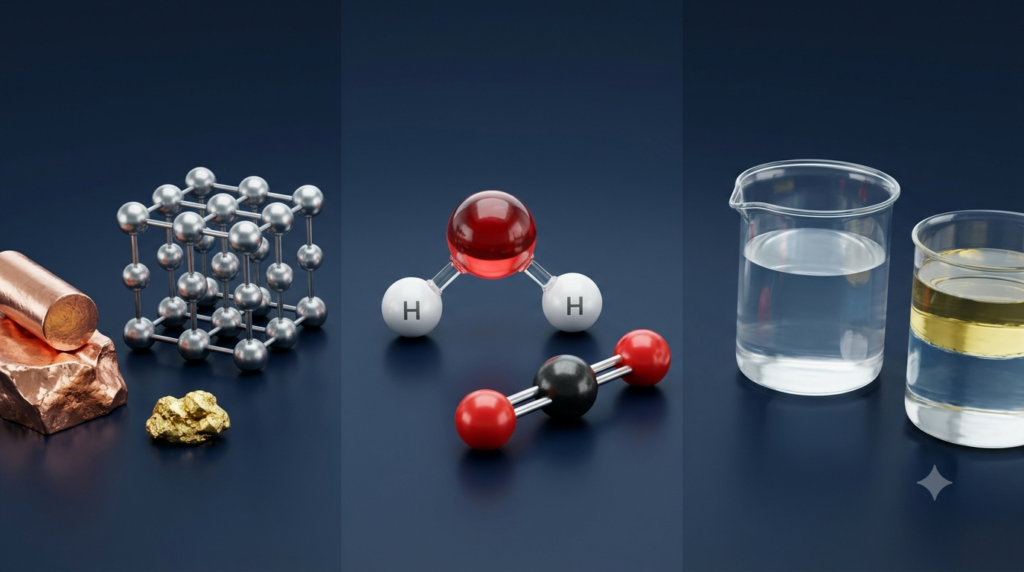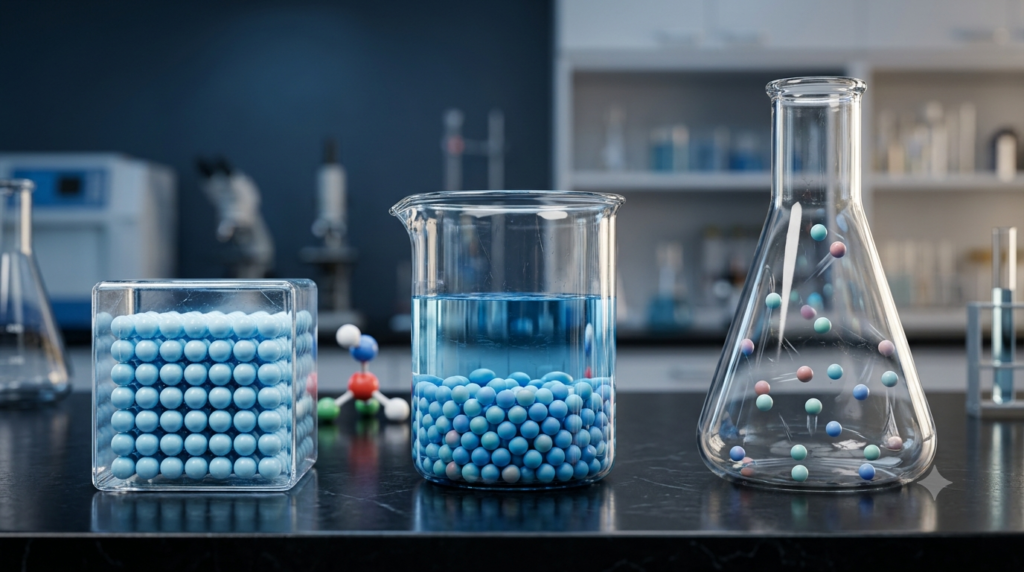
In chemistry, most materials we encounter in everyday life are mixtures. Air contains several gases, seawater contains dissolved salts, and soil contains sand, clay, minerals, and organic matter. Even a cup of tea can contain water, dissolved sugar, and other substances. Although these materials contain different components, they can often be separated using suitable physical methods.
The methods of separating mixtures are techniques used to separate the different substances present in a mixture without changing their chemical identities. These methods work because the components of a mixture may differ in properties such as particle size, density, solubility, boiling point, magnetism, or ability to move through a material. Common separation techniques include filtration, evaporation, distillation, decantation, centrifugation, chromatography, and magnetic separation. Understanding these methods helps explain many laboratory procedures, industrial processes, and everyday activities.
What Is a Mixture?
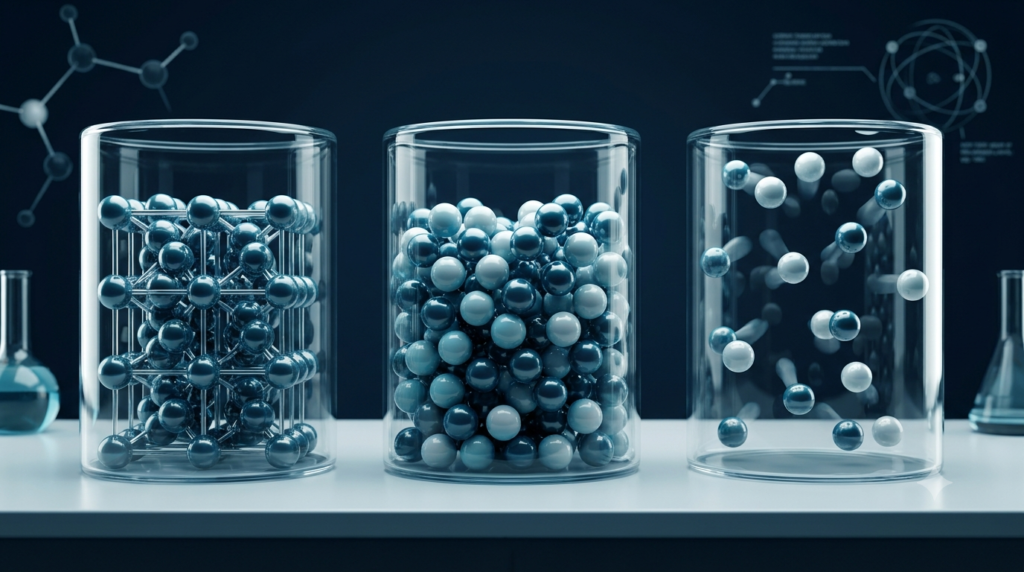
A mixture is a material formed when two or more substances are combined physically. The substances retain their individual chemical identities and can often be separated using physical methods.
Mixtures are generally classified into two main types.
Homogeneous Mixtures
A homogeneous mixture has a uniform composition throughout. Its components are distributed evenly, so the different substances cannot usually be distinguished by looking at the mixture.
Examples include:
Salt dissolved in water.
Sugar dissolved in tea.
Air containing different gases.
Vinegar, which contains acetic acid dissolved in water.
A homogeneous mixture is also called a solution. Separating its components often requires methods such as evaporation, distillation, or chromatography.
Heterogeneous Mixtures
A heterogeneous mixture does not have a uniform composition throughout. Its components may remain visibly separate or form different layers.
Examples include:
Sand mixed with water.
Oil mixed with water.
Iron filings mixed with sand.
Soil containing small stones and organic matter.
Heterogeneous mixtures can often be separated using filtration, sieving, decantation, magnetic separation, or other physical techniques.
Why Are Mixtures Separated?
Separating mixtures is important because the individual components may have different uses. Sometimes an unwanted substance must be removed, while in other situations a useful component needs to be collected.
Common reasons for separating mixtures include:
Obtaining pure substances from impure materials.
Removing unwanted particles from liquids.
Recovering dissolved substances such as salt.
Purifying drinking water.
Separating useful minerals from ores.
Analyzing chemical substances in laboratories.
Recovering valuable materials from industrial waste.
Separating different components of petroleum.
The method selected depends on the nature of the mixture and the physical properties of its components.
1. Handpicking
Handpicking is one of the simplest methods of separating mixtures. It involves manually removing unwanted solid particles from a mixture.
This method is suitable when the components are present in relatively large quantities, can be seen easily, and differ clearly in appearance, shape, size, or color.
For example, small stones can be removed from rice or beans by hand. Similarly, damaged seeds may be separated from healthy seeds before planting.
Handpicking is generally used for small quantities of materials because it requires time and human effort. It is not suitable for separating very small particles or components that look almost identical.
Principle: The components can be distinguished visually or by their physical appearance.
Everyday applications: Cleaning grains, sorting beans, and removing visible impurities from vegetables.
2. Sieving
Sieving is a separation method based on differences in particle size. A sieve contains a mesh or screen with openings of a particular size. Smaller particles pass through the openings, while larger particles remain on the sieve.
For example, flour is passed through a fine sieve to remove lumps and larger impurities. In construction, sand may be sieved to separate larger stones and gravel.
Sieving works best when the particles differ sufficiently in size. It cannot effectively separate two materials whose particles are almost identical in size.
Principle: Differences in particle size.
Everyday applications: Sieving flour, grading sand, separating gravel, and sorting powdered materials.
3. Magnetic Separation
Magnetic separation is used when one component of a mixture is attracted to a magnet while the other component is not.
For example, iron filings can be separated from sand by moving a magnet over the mixture. The iron filings are attracted to the magnet, while the sand remains behind.
This technique is also used in recycling facilities to recover certain iron and steel objects from mixed waste. In mining, magnetic equipment can help separate magnetic minerals from non-magnetic materials.
However, not every metal is attracted strongly to an ordinary magnet. Iron, nickel, cobalt, and many materials containing these elements exhibit magnetic behavior, while metals such as copper and aluminium are not attracted to a typical household magnet in the same way.
Principle: Differences in magnetic properties.
Everyday and industrial applications: Recycling, mineral processing, and removing iron particles from other solids.
4. Winnowing
Winnowing is a traditional method used to separate lighter particles from heavier particles with the help of moving air.
In agriculture, a mixture of harvested grains and lighter husks is dropped from a height or allowed to fall in moving air. The lighter husks are carried farther away, while the heavier grains fall closer to the collection point.
This method is especially useful when the components differ significantly in mass or how easily air can carry them.
Winnowing is not suitable for every mixture. If both components have similar masses and aerodynamic properties, separating them using air may be difficult.
Principle: Differences in mass and the ability of moving air to carry particles.
Everyday applications: Separating grain from husks and removing lightweight impurities from harvested crops.
5. Sedimentation
Sedimentation is a method in which heavier, insoluble particles settle at the bottom of a liquid under the influence of gravity.
For example, when muddy water is left undisturbed, many soil particles gradually settle at the bottom of the container. The upper liquid becomes clearer, although it may still contain very fine particles or dissolved substances.
The speed of sedimentation depends on factors such as particle size, density, liquid viscosity, and the degree of disturbance.
Sedimentation is often used as an initial stage in water treatment. The settled material forms a layer called sediment.
Principle: Differences in density and the settling of suspended particles under gravity.
Applications: Preliminary water treatment, settling suspended solids, and separating particles from industrial liquids.
6. Decantation
Decantation involves carefully pouring a liquid away from a settled solid or from another immiscible liquid without disturbing the material that should remain behind.
For example, after sand has settled at the bottom of a container of water, the clearer water can be poured into another container. The sand remains at the bottom.
Decantation can also separate two immiscible liquids, such as oil and water, when they form distinct layers. A separating funnel is particularly useful for this purpose.
Although decantation is simple, it may not produce a completely pure product. Some fine particles can remain suspended, and some liquid may remain mixed with the separated material.
Principle: Differences in density and the formation of separate phases or layers.
Applications: Separating settled solids from liquids and separating immiscible liquids.
7. Filtration
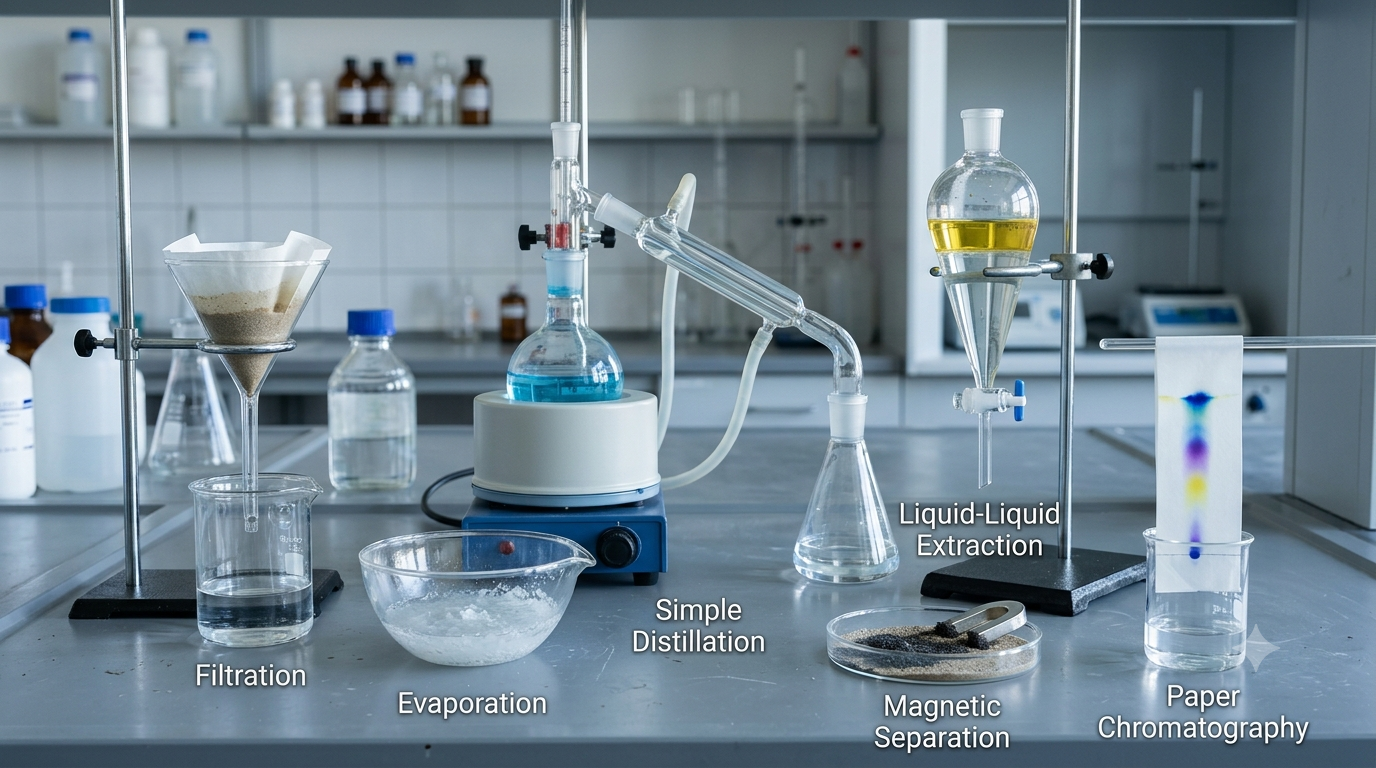
Filtration is used to separate insoluble solid particles from a fluid by passing the mixture through a porous material.
The porous material is called a filter. It allows the fluid and sufficiently small dissolved substances to pass through while retaining solid particles that are too large to pass through its openings.
For example, sand can be separated from water using filter paper and a funnel. The sand remains on the filter paper as the residue, while the liquid that passes through is called the filtrate.
Filtration is widely used in laboratories, drinking-water treatment, food preparation, and industrial manufacturing.
Ordinary filtration cannot remove dissolved salt from saltwater because the dissolved ions pass through the filter along with the water. Special membranes or other separation techniques are required to remove dissolved substances.
Principle: Differences in particle size and the ability of particles to pass through a porous barrier.
Applications: Filtering tea, separating sand from water, laboratory filtration, and removing suspended particles during water treatment.
8. Centrifugation
Centrifugation separates components of a mixture by spinning the mixture rapidly in a centrifuge. The rotation creates an outward acceleration in the rotating frame, causing suspended particles or phases to separate according to properties such as density, particle size, and shape.
In many laboratory procedures, denser particles collect toward the bottom or outer end of a sample container, while the remaining liquid forms a separate layer.
For example, centrifugation is used in medical laboratories to separate blood into components such as plasma and blood cells. It is also used in dairy processing to help separate cream from milk.
Centrifugation can separate particles that settle too slowly under normal gravity. However, its effectiveness depends on the mixture and the operating conditions.
Principle: Differences in sedimentation behavior under centrifugal acceleration.
Applications: Blood testing, dairy processing, laboratory research, and separating suspended particles from liquids.
9. Evaporation
Evaporation is used to recover a dissolved solid from a solution by allowing the liquid solvent to escape as vapor.
For example, when saltwater is heated or left under suitable conditions, water gradually evaporates and dissolved salt remains behind. In salt production, seawater is collected in shallow ponds, where sunlight and air help evaporate the water.
Evaporation is especially useful when the dissolved solid does not evaporate easily under the chosen conditions. However, heating may damage substances that are sensitive to high temperatures.
Unlike distillation, simple evaporation usually focuses on recovering the dissolved solid rather than collecting the vapor as a liquid.
Principle: Differences in volatility between the solvent and the dissolved substance.
Applications: Producing salt from seawater, concentrating solutions, and recovering dissolved solids.
10. Crystallization
Crystallization is a method used to obtain a solid substance in the form of crystals from a solution. It is often used to purify solids because the growing crystals may exclude many impurities.
A solution can be concentrated by evaporating some solvent and then cooled to encourage crystal formation. Alternatively, crystals may form when the solubility of a substance decreases because of a change in temperature or solvent composition.
For example, copper sulfate crystals can be prepared from a suitable copper sulfate solution. Salt and sugar can also be obtained through crystallization under appropriate conditions.
The process usually involves preparing a suitable solution, creating conditions for crystal formation, collecting the crystals, and drying them.
Crystallization does not automatically remove every impurity. Its success depends on the solubility properties of the substance and the impurities.
Principle: Differences in solubility and the formation of an ordered solid crystal structure.
Applications: Purifying chemicals, producing sugar crystals, and manufacturing pharmaceutical substances.
11. Sublimation
Sublimation is the direct change of a solid into a gas without passing through the ordinary liquid state. Some solids can be separated from mixtures by using this property.
For example, ammonium chloride can sublime when heated under suitable conditions. If it is mixed with a non-subliming substance such as sand, heating can cause ammonium chloride vapor to form. The vapor can then be cooled to deposit solid ammonium chloride on a cooler surface.
Other substances, including iodine and naphthalene, can also sublime under suitable conditions, although their behavior depends on temperature and pressure.
Sublimation is useful only when the components have sufficiently different sublimation or volatility behavior and can be handled safely.
Principle: Differences in the ability of components to sublime under selected conditions.
Applications: Purifying certain solids and separating sublimable substances from non-sublimable impurities.
12. Simple Distillation
Simple distillation separates a liquid from dissolved substances or from another liquid when their boiling behavior makes the separation practical.
The mixture is heated in a distillation apparatus. The more volatile component enters the vapor phase first or becomes enriched in the vapor. The vapor then travels into a condenser, where cooling converts it back into liquid. This collected liquid is called the distillate.
For example, simple distillation can be used to obtain water from a saltwater solution. The water vapor condenses and is collected, while most of the dissolved salt remains in the original container.
Distillation is also used to purify certain solvents. However, mixtures of liquids with close boiling points may require more efficient equipment or fractional distillation.
Principle: Differences in volatility and vapor–liquid equilibrium.
Applications: Recovering water from saline solutions, purifying solvents, and laboratory chemical preparation.
13. Fractional Distillation
Fractional distillation is used to separate mixtures of liquids whose boiling points are relatively close. It is similar to simple distillation but includes a fractionating column that improves separation.
As vapor rises through the column, repeated condensation and evaporation occur. The vapor becomes enriched in the more volatile component, while the less volatile component is more likely to return toward the boiling flask.
A major industrial application is petroleum refining. Crude oil contains many hydrocarbons, which are separated into fractions based on their boiling ranges. These fractions include gases, petrol-range materials, kerosene, diesel-range materials, and heavier products. Each fraction contains a range of compounds rather than necessarily being a single pure substance.
Fractional distillation is also used to separate liquid mixtures in chemical industries and laboratories.
Principle: Differences in volatility, boiling behavior, and repeated vaporization and condensation.
Applications: Petroleum refining, solvent separation, and industrial chemical processing.
14. Chromatography
Chromatography is a separation technique used to separate the components of a mixture based on their different interactions with two phases.
The stationary phase remains fixed, while the mobile phase moves through or across it. Different components travel at different rates because they interact differently with the two phases.
Paper chromatography is a simple example. A small spot of ink is placed near the bottom of chromatography paper, and the paper is placed in a suitable solvent with the spot above the solvent level. As the solvent moves through the paper, different dyes may travel different distances, producing separate colored spots.
Chromatography is used to analyze inks, plant pigments, food colorings, medicines, and many other chemical mixtures. More advanced techniques, such as gas chromatography and high-performance liquid chromatography, are used in laboratories and industry.
Principle: Differences in the distribution and interactions of substances between stationary and mobile phases.
Applications: Chemical analysis, pharmaceutical testing, food testing, forensic investigations, and environmental monitoring.
15. Separating Funnel
A separating funnel is used to separate two immiscible liquids that form distinct layers. Immiscible liquids do not mix uniformly with each other under the conditions used.
For example, oil and water form separate layers because they are immiscible and have different densities. When the mixture is placed in a separating funnel and allowed to settle, the denser liquid generally forms the lower layer. The lower layer can then be released through the stopcock, leaving the upper layer behind.
The position of each layer depends on the liquids’ densities. Water is usually denser than many common oils, so water often forms the lower layer in an oil–water mixture.
This technique is also important in chemistry for liquid–liquid extraction, where a substance is transferred between two immiscible liquids according to its relative solubility in them.
Principle: Immiscibility and differences in density, together with controlled draining of the layers.
Applications: Separating oil and water, extracting substances from solutions, and carrying out laboratory purification procedures.
16. Solvent Extraction
Solvent extraction separates a substance from a mixture by using a suitable solvent in which that substance dissolves more readily than other components.
For example, certain pigments can be extracted from plant material using a suitable solvent. The solvent enters the material, dissolves some of its components, and carries them into the liquid phase. The resulting extract can then be separated from the remaining solid by filtration or another suitable method.
Liquid–liquid extraction involves transferring a dissolved substance from one liquid phase to another immiscible liquid phase. A separating funnel is often used to separate the two liquid layers after mixing and settling.
Choosing an appropriate solvent is important. The solvent should dissolve the target substance effectively, allow practical recovery, and be compatible with the material being processed. Safety and environmental considerations are also essential.
Principle: Differences in solubility and the distribution of substances between solvents.
Applications: Extracting plant compounds, processing food ingredients, purifying chemicals, and recovering useful substances from mixtures.
How to Choose the Correct Separation Method
The most suitable separation method depends on the physical properties of the components and the purpose of the separation.
| Type of mixture or difference | Suitable method | Example |
|---|---|---|
| Large visible solid impurities | Handpicking | Removing stones from rice |
| Different particle sizes | Sieving | Separating gravel from sand |
| Magnetic and non-magnetic solids | Magnetic separation | Iron filings and sand |
| Light and heavy agricultural particles | Winnowing | Grain and husks |
| Heavy suspended particles in a liquid | Sedimentation | Muddy water |
| Liquid above settled solids | Decantation | Pouring water away from sand |
| Insoluble solid and liquid | Filtration | Sand and water |
| Suspended components that settle at different rates | Centrifugation | Blood components |
| Dissolved solid in a solution | Evaporation | Recovering salt from saltwater |
| Purifying a solid through crystal formation | Crystallization | Copper sulfate crystals |
| A sublimable solid and a non-sublimable solid | Sublimation | Ammonium chloride and sand |
| Liquid and dissolved non-volatile solid | Simple distillation | Recovering water from saltwater |
| Liquids with relatively close boiling points | Fractional distillation | Separating petroleum fractions |
| Components with different chromatographic behavior | Chromatography | Separating ink dyes |
| Two immiscible liquid layers | Separating funnel | Oil and water |
| A substance that dissolves selectively in a solvent | Solvent extraction | Extracting plant pigments |
Some mixtures require more than one separation technique. For example, muddy saltwater can first be filtered to remove insoluble particles and then distilled to recover water. Filtration alone cannot remove dissolved salt.
Importance of Mixture Separation in Daily Life and Industry
Separation techniques are important in many areas of modern life.
Water Purification
Water treatment plants use processes such as sedimentation and filtration to remove suspended particles. Additional treatment steps may be needed to remove dissolved contaminants and harmful microorganisms. Distillation and membrane-based techniques can also be used in specific water purification systems.
Food Processing
Food production uses sieving, filtration, centrifugation, crystallization, and other methods. Flour is sieved, fruit juices may be filtered, and sugar is purified and crystallized during manufacturing.
Medicine and Healthcare
Laboratories use centrifugation and chromatography to prepare and analyze biological samples. These methods help separate sample components and identify substances relevant to medical testing and research.
Mining and Recycling
Magnetic separation can recover iron-containing materials from mixed waste. Mineral processing uses several separation methods to concentrate valuable minerals and reduce unwanted material.
Chemical Manufacturing
Industries use distillation, crystallization, extraction, and filtration to purify raw materials, recover solvents, and manufacture products with the required composition.
Important Points to Remember
Mixtures contain two or more substances that retain their chemical identities.
Separation methods are generally based on differences in physical properties.
Filtration separates suitable insoluble particles from fluids, but it does not remove ordinary dissolved salts.
Evaporation can recover a dissolved solid, while distillation can recover a vaporized and condensed liquid.
Crystallization is commonly used to obtain and purify crystalline solids.
Fractional distillation is useful for separating suitable mixtures of liquids with relatively close boiling points.
Chromatography separates substances according to their different interactions with stationary and mobile phases.
A mixture may require multiple separation techniques to obtain the desired components.
Conclusion
Methods of separating mixtures are fundamental to basic chemistry because they allow different substances to be isolated, recovered, purified, and analyzed. Techniques such as handpicking, sieving, magnetic separation, sedimentation, decantation, and filtration are useful for many heterogeneous mixtures. Evaporation, crystallization, distillation, sublimation, chromatography, and solvent extraction help separate components with different solubility, volatility, or chemical interactions.
No single method is suitable for every mixture. The correct technique depends on the physical properties of the substances, the composition of the mixture, and the desired result. Learning these methods provides a foundation for understanding laboratory experiments, water purification, food processing, industrial manufacturing, and many other applications of chemistry.
FAQs
1. What Are the Methods of Separating Mixtures?
Methods of separating mixtures are physical techniques used to separate the different components of a mixture without changing their chemical identities. These methods depend on differences in physical properties such as particle size, density, solubility, magnetism, and boiling point. Common methods include handpicking, sieving, filtration, sedimentation, decantation, evaporation, crystallization, distillation, centrifugation, and chromatography. For example, filtration separates insoluble sand from water, while evaporation helps recover salt from saltwater. The appropriate method depends on the type of mixture and the component that needs to be separated or recovered.
2. Why Can Mixtures Be Separated by Physical Methods?
Mixtures can often be separated by physical methods because their components retain their individual chemical identities and physical properties. Combining substances to form a mixture does not usually produce a new substance through a chemical reaction. For example, iron filings mixed with sand retain their magnetic properties, allowing a magnet to separate the iron. Similarly, salt dissolved in water can be recovered through evaporation or crystallization. Physical separation methods take advantage of differences in properties such as size, density, solubility, and volatility. However, the method must be selected carefully to avoid damaging sensitive substances or losing valuable components.
3. Which Method Is Used to Separate Sand and Water?
Filtration is a common method used to separate sand and water because sand is insoluble in water and its particles can be retained by a suitable filter. During filtration, the mixture passes through filter paper or another porous material. The sand remains on the filter as the residue, while the water passes through as the filtrate. Sedimentation and decantation can also be used. In sedimentation, the sand settles at the bottom of a container. The clearer water can then be carefully poured into another container through decantation. Filtration is generally more effective at removing suspended sand particles.
4. How Can Salt Be Separated from Saltwater?
Salt can be separated from saltwater through evaporation or crystallization. During evaporation, water changes into vapor, leaving most of the dissolved salt behind. This method is commonly used in salt production from seawater. Crystallization involves concentrating a salt solution and creating conditions that allow salt crystals to form. The crystals can then be collected and dried. If the objective is to recover both salt and water, distillation is more suitable. In distillation, water evaporates and is subsequently condensed into a separate container, while most of the dissolved salt remains in the original vessel.
5. What Is the Difference Between Filtration and Decantation?
Filtration and decantation are both used to separate components of mixtures, but they work differently. Filtration uses a porous material to retain suitable insoluble particles while allowing the fluid to pass through. For example, filter paper can separate sand from water. Decantation involves carefully pouring a liquid away from settled solids or separating distinct liquid layers without using a filter. For instance, water can be poured away after sand settles at the bottom of a container. Filtration generally removes suspended particles more effectively, while decantation is simpler and often requires less equipment.
6. What Is the Difference Between Evaporation and Distillation?
Evaporation and distillation both involve converting a liquid into vapor, but their purposes differ. Evaporation is commonly used to recover a dissolved solid from a solution. For example, heating saltwater or allowing it to evaporate under suitable conditions leaves salt behind. Distillation involves vaporization followed by condensation, allowing the vapor to be collected as a liquid. It is useful when recovering a solvent, such as obtaining water from saltwater. Evaporation does not normally collect the vapor, whereas distillation does. The choice depends on whether the desired product is the dissolved solid, the liquid, or both.
7. How Does Chromatography Separate Mixture Components?
Chromatography separates components according to their different interactions with a stationary phase and a mobile phase. The stationary phase remains fixed, while the mobile phase moves through or across it. Different substances travel at different rates because they differ in properties such as solubility and attraction to the stationary material. In paper chromatography, for example, the dyes in an ink sample may separate into several colored spots as a solvent moves through the paper. Chromatography is widely used in chemical laboratories, pharmaceutical testing, food analysis, and forensic investigations to separate, identify, and sometimes measure substances in complex mixtures.
8. What Is the Difference Between Simple and Fractional Distillation?
Simple distillation is commonly used to separate a liquid from dissolved non-volatile substances or from another component when their volatility differences allow effective separation. Fractional distillation is particularly useful for separating mixtures of liquids with relatively close boiling points. It uses a fractionating column that supports repeated vaporization and condensation, improving the separation of components. For example, simple distillation can recover water from saltwater, while fractional distillation is used in petroleum refineries to separate crude oil into fractions with different boiling ranges. The best technique depends on the mixture’s composition and the required purity of the collected products.
9. Which Method Is Used to Separate Iron Filings from Sand?
Magnetic separation is used to separate iron filings from sand because iron is attracted to a suitable magnet, while sand is not. When a magnet is moved over the mixture, the iron filings are attracted to it and can be removed, leaving most of the sand behind. Covering the magnet with paper or a suitable removable covering can make collecting the iron easier. This method is simple, inexpensive, and effective when the magnetic component can be attracted selectively. Magnetic separation is also used in recycling and mineral processing to recover certain magnetic materials from mixtures containing non-magnetic substances.
10. How Do Scientists Choose the Best Method for Separating a Mixture?
Scientists choose a separation method by examining the mixture’s components, physical properties, and intended outcome. They consider differences in particle size, density, solubility, boiling point, magnetism, and interactions with other materials. For example, filtration is appropriate for separating insoluble sand from water, whereas distillation is useful for recovering water from a salt solution. Chromatography is suitable when components move differently through stationary and mobile phases. Some mixtures require multiple techniques. Muddy saltwater, for instance, can be filtered to remove suspended solids and then distilled to recover water. The goal is to achieve effective separation with minimal loss or contamination.