Human beings gain knowledge in many ways. We learn by observing our surroundings, listening to other people, experiencing different situations, and studying the natural world. Some knowledge comes from daily activities, family traditions, personal experiences, and common observations. Other knowledge develops through systematic observation, careful experiments, evidence collection, and logical analysis. These two forms of understanding are commonly known as everyday knowledge and scientific knowledge.
Everyday knowledge helps people make practical decisions in their daily lives, while scientific knowledge helps explain natural phenomena through systematic investigation. Both are important because they allow us to understand the world and respond to different situations. However, they differ in how information is collected, tested, verified, and used.
Understanding the difference between scientific knowledge and everyday knowledge helps us recognize the value of personal experience while learning why scientific evidence is essential for reliable explanations. It also encourages critical thinking, reduces the influence of unsupported beliefs, and helps us make better-informed decisions.
What Is Everyday Knowledge?
Everyday knowledge is the understanding people develop through ordinary experiences, observations, social interactions, and practical activities. It is also called common knowledge or practical knowledge in certain contexts. People often acquire it naturally without following a formal research process or conducting controlled experiments.
For example, a person may learn that wet floors can be slippery, dark clouds may indicate approaching rain, or food left outside for a long time may spoil. These observations help people understand their surroundings and respond to everyday situations.
Everyday knowledge is often passed from one generation to another. Parents teach children how to prepare food, farmers share knowledge about seasonal changes, and experienced workers explain how to perform particular tasks. People may also develop everyday knowledge by making mistakes and learning from their consequences.
Characteristics of Everyday Knowledge
Everyday knowledge has several important characteristics.
1. Based on personal experience: People frequently develop everyday knowledge by observing events and experiencing their results. For instance, someone who touches a hot cooking utensil may learn to handle it carefully.
2. Acquired naturally: Everyday knowledge does not always require formal education, specialized equipment, or scientific training. People can develop it through ordinary activities.
3. Influenced by culture and society: Family traditions, community practices, cultural beliefs, and social experiences can influence what people consider true.
4. Often practical: Everyday knowledge is particularly useful for solving common problems, managing household activities, interacting with others, and performing routine tasks.
5. May be incomplete or inaccurate: Personal observations do not always reveal the actual cause of an event. A belief may seem correct because of a few experiences even when it is not supported by sufficient evidence.
6. Not always systematically tested: People may accept an explanation because it has worked before, because someone they trust recommended it, or because it is widely believed. They may not investigate whether the explanation is consistently correct.
Everyday knowledge is therefore valuable, but its reliability depends on the quality of the experience, the accuracy of the observation, and the circumstances in which the knowledge is applied.
What Is Scientific Knowledge?
Scientific knowledge is understanding developed through systematic observation, investigation, evidence collection, logical reasoning, and the testing of explanations. It aims to explain how and why things happen by examining the natural and physical world using reliable methods.
Scientists do not simply accept an explanation because it sounds reasonable or has been believed for a long time. They develop questions, gather evidence, construct hypotheses, test predictions, and evaluate the results. Other researchers may examine their methods and repeat their investigations to determine whether the findings are reliable.
For example, people have observed for centuries that objects fall toward the ground. Scientific investigations have developed detailed explanations of gravity, allowing researchers to describe and predict the motion of falling objects and planets.
Scientific knowledge develops across many fields, including physics, chemistry, biology, astronomy, geology, and environmental science. It also contributes to medicine, agriculture, engineering, and modern technology.
Characteristics of Scientific Knowledge
1. Based on systematic observation: Scientific investigations follow organized procedures to collect information about a particular question or phenomenon.
2. Supported by evidence: Scientific explanations must be consistent with relevant observations, measurements, experimental results, or other appropriate evidence.
3. Testable: Scientific claims should be framed so that evidence can be used to evaluate them. Depending on the subject, testing may involve laboratory experiments, field observations, mathematical models, or statistical analysis.
4. Reproducible where appropriate: Researchers should provide sufficient information about their methods so that others can assess the findings and, when feasible, repeat the investigation.
5. Open to correction: Scientific knowledge can change when new evidence challenges existing explanations or reveals their limitations.
6. Logical and analytical: Scientific investigations use reasoning to connect evidence with conclusions and to identify possible errors or alternative explanations.
7. Shared and reviewed: Scientific findings are communicated to other researchers, who can examine the evidence, question the methods, and evaluate the conclusions.
Scientific knowledge is not necessarily absolute or permanently complete. Its strength comes from the systematic methods used to test explanations, evaluate uncertainty, and improve understanding over time.
Major Differences Between Scientific Knowledge and Everyday Knowledge
Although both forms of knowledge help people understand the world, they differ in several important ways.
1. Difference in How Knowledge Is Acquired
Everyday knowledge is usually acquired through personal experience, observation, social interaction, and practical activities. A person may learn that carrying an umbrella is useful when the sky becomes dark because they have experienced rain after seeing similar conditions.
Scientific knowledge is acquired through planned investigation and systematic analysis. Meteorologists examine atmospheric pressure, humidity, temperature, wind patterns, and other measurements to estimate the probability of rainfall.
The main difference is that everyday knowledge often develops naturally, whereas scientific knowledge generally requires a more organized process of investigation.
2. Difference in the Use of Evidence
Everyday knowledge may depend on a limited number of observations. If someone drinks a particular beverage while recovering from a cold and feels better afterward, they might conclude that the beverage caused the improvement.
However, recovery could have occurred naturally, or other factors could have contributed to the result.
Scientific investigation examines alternative explanations and gathers additional evidence. Researchers may compare groups, control relevant variables where possible, and use appropriate statistical methods to determine whether a treatment has a measurable effect.
Therefore, scientific knowledge places particular emphasis on evaluating evidence rather than relying only on personal impressions.
3. Difference in Testing and Verification
Everyday knowledge is not always tested through formal procedures. People often accept familiar practices because they appear useful or have been followed for generations.
Scientific knowledge requires claims to be evaluated using suitable methods. For example, a claim that a particular material conducts electricity can be tested by constructing an appropriate circuit and measuring its electrical behavior under defined conditions.
The results can then be compared with established scientific principles.
Systematic testing does not guarantee that every scientific conclusion is correct, but it makes errors easier to identify and investigate.
4. Difference in Accuracy and Reliability
Everyday knowledge can be accurate when it is based on repeated, consistent experience. An experienced cook may know how to prepare a dish successfully without measuring every ingredient precisely.
However, everyday knowledge may also produce misleading conclusions because people can overlook important details, remember unusual events more clearly, or confuse correlation with causation.
Scientific methods attempt to reduce these problems through careful measurement, appropriate controls, repeated observations, and independent evaluation.
Scientific knowledge is not free from mistakes, but well-supported scientific conclusions generally have stronger justification than claims based only on untested assumptions.
5. Difference in Objectivity and Bias
Everyday knowledge can be influenced by emotions, expectations, cultural beliefs, and personal preferences. People may interpret an event in a way that supports what they already believe.
For instance, someone who believes that a certain day is unlucky may remember unpleasant events that occurred on that day while ignoring ordinary or positive experiences.
Science attempts to limit such bias through transparent methods, clearly defined measurements, suitable study designs, statistical analysis, and independent scrutiny.
Scientists are also human and can experience bias. Scientific procedures help identify and reduce its influence rather than eliminating it completely.
6. Difference in Generalization
Everyday knowledge often develops from experiences in a particular situation. A person might conclude that a certain type of soil is suitable for growing a plant because it worked well in their garden.
Scientific knowledge seeks to determine how broadly an explanation applies. Researchers may examine different soil types, moisture levels, nutrient concentrations, temperatures, and plant varieties.
The results can help identify the conditions under which a conclusion remains valid.
However, scientific findings are not automatically universal. A conclusion may apply only to particular populations, environments, materials, or experimental conditions.
7. Difference in Purpose
Everyday knowledge primarily helps people manage routine activities and practical problems. It supports tasks such as cooking, cleaning, traveling, gardening, and communicating with others.
Scientific knowledge aims to develop systematic explanations, test predictions, discover relationships, and improve understanding of natural and social phenomena.
For example, a farmer may use everyday experience to decide when to water crops. Agricultural scientists may investigate soil moisture, plant physiology, irrigation efficiency, and local climate patterns to develop methods that improve water use.
Both forms of knowledge can contribute to the same practical goal.
8. Difference in the Possibility of Change
Everyday knowledge may remain unchanged because a belief is traditional, familiar, or widely accepted. People sometimes continue following a practice even when new information challenges its effectiveness.
Scientific knowledge is expected to change when reliable evidence requires revision. Scientific theories and explanations can be refined, expanded, or replaced as new observations become available.
For example, scientific understanding of infectious diseases has advanced through the development of microbiology, improved laboratory techniques, and new medical evidence.
This willingness to revise explanations is one of the central strengths of science.
Comparison Table
| Basis of comparison | Everyday knowledge | Scientific knowledge |
|---|---|---|
| Meaning | Understanding developed through ordinary experiences and observations | Understanding developed through systematic investigation and evidence |
| Acquisition | Daily activities, experience, traditions, and social learning | Observation, measurement, experimentation, and analysis |
| Evidence | May rely on personal or limited observations | Requires relevant evidence appropriate to the claim |
| Testing | Often informal or absent | Claims are evaluated using suitable methods |
| Accuracy | Can be accurate but may include assumptions or errors | Often more systematically evaluated, but can still be revised |
| Objectivity | May be influenced by personal beliefs and emotions | Uses methods intended to reduce bias |
| Generalization | Often limited to familiar situations | Examines how findings apply across conditions |
| Change | May persist through habit or tradition | Changes when convincing new evidence warrants revision |
| Main purpose | Practical decisions and routine problem-solving | Explanation, prediction, investigation, and understanding |
| Example | Knowing that wet roads can be slippery | Investigating how water affects friction between tires and road surfaces |
Examples of Scientific Knowledge and Everyday Knowledge
The differences become clearer when both forms of knowledge are examined through familiar situations.
Example 1: Understanding Weather
A person may observe dark clouds, strong winds, and falling temperatures and conclude that rain is likely. This is everyday knowledge developed through experience.
A meteorologist uses weather instruments, satellite images, radar observations, atmospheric measurements, and numerical models to forecast rainfall.
Both approaches can be useful, but scientific forecasting draws on a much larger and more systematically analyzed body of evidence.
Example 2: Understanding Plant Growth
A gardener may notice that plants grow better when they receive adequate sunlight and water. This practical observation is a form of everyday knowledge.
A plant scientist investigates photosynthesis, water transport, mineral nutrition, soil conditions, and the effects of light intensity on growth.
Scientific investigation can explain why these factors matter and identify conditions that may not be obvious from ordinary observation.
Example 3: Understanding Disease
A person may notice that several family members become ill after eating food that was stored improperly. This experience may encourage them to handle food more carefully.
Scientists investigate foodborne illness by identifying microorganisms, examining contamination pathways, analyzing samples, and studying patterns of infection.
Such investigations can establish more reliable explanations and support effective food safety practices.
Example 4: Understanding Objects in Motion
Everyday experience tells us that pushing a heavy object generally requires more effort than pushing a lighter object under similar conditions.
Physics investigates the relationships among force, mass, acceleration, friction, and motion. These relationships help explain why objects behave differently under different conditions.
Scientific principles can then be used to design vehicles, machinery, and safety systems.
Example 5: Understanding the Night Sky
People can use everyday observation to recognize that the Moon changes its visible shape over the course of a month.
Astronomy explains these changing appearances through the Moon’s orbital motion and the changing portion of its sunlit hemisphere visible from Earth.
The scientific explanation provides a consistent model that can be used to predict lunar phases.
How Everyday Knowledge Contributes to Scientific Knowledge
Everyday knowledge and scientific knowledge should not be treated as completely separate or opposing forms of understanding. In many cases, scientific investigations begin with observations that people make during ordinary life.
A person may notice that certain plants grow differently in shaded and sunny locations. This observation can lead to a scientific question about the relationship between light intensity and plant growth.
Researchers can then design an investigation, measure light levels, control other relevant conditions, and compare the results.
Everyday observations can therefore help scientists identify problems, recognize patterns, and develop hypotheses. Scientific methods provide ways to test whether these initial ideas are supported by evidence.
Traditional and local knowledge can also offer valuable information about ecosystems, seasonal patterns, farming methods, and natural resources. Researchers can study this knowledge carefully while considering its context, limitations, and compatibility with other evidence.
The relationship works in both directions. Scientific findings can improve everyday decisions, while new experiences and observations can raise questions that encourage further scientific research.
Limitations of Everyday Knowledge
Despite its practical value, everyday knowledge has certain limitations.
Limited observation: A person may observe only a small number of events and assume that the same pattern always occurs.
Confirmation bias: People may pay more attention to information that supports their existing beliefs than to information that challenges them.
Confusion between correlation and causation: Two events may occur together without one causing the other.
Influence of tradition: A practice may continue for generations even when its original explanation is inaccurate.
Difficulty identifying hidden causes: Many natural processes involve factors that cannot be detected through ordinary observation alone.
For example, a person may see that two plants grow at different rates and assume that the amount of water is responsible. However, differences in light, soil nutrients, temperature, pests, or plant genetics may also explain the result.
Recognizing these limitations encourages people to question assumptions and seek additional evidence when necessary.
Limitations of Scientific Knowledge
Scientific knowledge also has limitations. Science is a powerful method of investigation, but it cannot answer every question with complete certainty.
Incomplete evidence: Some phenomena are difficult to observe directly or investigate because of practical and technological limitations.
Measurement errors: Instruments may be inaccurate, and observations can contain uncertainty.
Limits of available methods: Certain experiments may be impossible, unethical, or impractical to conduct.
Changing explanations: New evidence may require scientists to revise conclusions that were previously considered reliable.
Specialized interpretation: Scientific findings can be misunderstood when methods, limitations, or statistical results are interpreted incorrectly.
For these reasons, scientific conclusions should be understood according to the strength of their evidence and the degree of uncertainty involved.
A well-supported scientific explanation is not simply an unsupported opinion. However, responsible scientific thinking recognizes that confidence in a conclusion should reflect the quality and quantity of available evidence.
Why Both Forms of Knowledge Are Important
Everyday knowledge and scientific knowledge serve different but complementary purposes.
Everyday knowledge allows people to respond quickly to familiar situations. It supports practical skills, social relationships, cultural continuity, and decisions based on accumulated experience.
Scientific knowledge provides methods for investigating complicated questions, testing explanations, identifying hidden relationships, and developing technologies.
For example, an experienced farmer may recognize signs of an approaching change in weather. Scientific weather forecasts can provide additional information about rainfall probability, temperature, and potential extreme conditions. Using both sources thoughtfully may support better agricultural decisions.
Similarly, everyday experience may help a person recognize unusual symptoms, but scientific medical knowledge and professional assessment are necessary to investigate possible causes and select appropriate treatment.
The important point is not to reject everyday experience. Instead, people should recognize when experience is sufficient for a practical decision and when a question requires systematic investigation or expert guidance.
Conclusion
Scientific knowledge and everyday knowledge are two important ways through which human beings understand the world. Everyday knowledge develops through ordinary experiences, observations, traditions, and practical activities. It helps people manage daily life and solve familiar problems. Scientific knowledge develops through systematic investigation, evidence collection, logical reasoning, and the testing of explanations.
The main difference lies in how claims are examined and justified. Everyday knowledge may rely on personal experience or familiar beliefs, while scientific knowledge uses methods designed to test explanations, reduce bias, and evaluate uncertainty. Nevertheless, everyday knowledge can be accurate and useful, and scientific knowledge can also contain errors or require revision.
Both forms of knowledge can complement each other. By combining practical experience with critical thinking and reliable scientific evidence, people can develop a deeper understanding of the world and make more informed decisions.
FAQs
1. What is the main difference between scientific knowledge and everyday knowledge?
The main difference between scientific knowledge and everyday knowledge is how they are acquired, tested, and verified. Everyday knowledge develops through personal experiences, daily observations, traditions, and social interactions. Scientific knowledge develops through systematic observation, experimentation, measurement, and logical analysis. For example, a person may learn from experience that dark clouds often indicate rain, while meteorologists analyze atmospheric conditions and weather data to forecast rainfall. Both forms of knowledge can be useful, but scientific knowledge involves more systematic methods for evaluating evidence, testing explanations, and identifying possible errors.
2. How is everyday knowledge acquired?
Everyday knowledge is acquired through ordinary experiences, observations, interactions, and practical activities. People develop this knowledge while cooking, traveling, gardening, working, and communicating with others. Children learn many everyday skills by observing their parents and imitating their actions. Similarly, experienced farmers may recognize seasonal changes through years of observation. Everyday knowledge can also be passed from one generation to another through traditions and cultural practices. Although it does not always require formal education or scientific investigation, its accuracy depends on the quality of experiences and observations from which it develops.
3. How is scientific knowledge developed?
Scientific knowledge develops through a systematic process of asking questions, observing phenomena, collecting evidence, testing hypotheses, and analyzing results. Researchers may conduct experiments, make measurements, study existing evidence, or develop mathematical models to investigate a particular problem. They then compare their findings with predictions and consider alternative explanations. Scientific results are communicated so that other researchers can examine the methods and evaluate the conclusions. When new evidence becomes available, existing explanations may be refined or revised. This process helps scientists develop reliable explanations and improve understanding of natural phenomena, although scientific conclusions can still involve uncertainty.
4. Can everyday knowledge be scientifically incorrect?
Yes, everyday knowledge can sometimes be incorrect because it may be based on limited observations, personal assumptions, or beliefs that have not been carefully tested. For example, someone might believe that a particular activity causes bad luck simply because an unpleasant event occurred after it. However, the sequence of events does not establish a causal relationship. Personal experiences can also be influenced by memory errors and confirmation bias. Scientific investigation helps evaluate such beliefs by examining evidence, testing alternative explanations, and identifying patterns. Nevertheless, everyday knowledge can also be accurate when supported by consistent experience.
5. Why is scientific knowledge considered reliable?
Scientific knowledge is considered reliable because it is developed through systematic investigation, evidence-based reasoning, careful measurement, and critical evaluation. Researchers use appropriate methods to test explanations and examine whether observations support their conclusions. Other scientists can review the evidence, identify weaknesses, and repeat investigations when feasible. These practices help reduce errors and improve the quality of scientific explanations. However, scientific knowledge is not always completely certain or permanently fixed. Its reliability depends on the strength of the available evidence, the quality of the methods, and the degree of agreement among relevant findings. Strong scientific conclusions remain open to revision when necessary.
6. What are some examples of everyday knowledge?
Examples of everyday knowledge include learning that wet floors can be slippery, recognizing that food may spoil when stored improperly, and understanding that plants generally need water to grow. People may also learn to identify familiar weather patterns, prepare meals, or operate household equipment through experience. These examples show how ordinary observations help people manage daily activities. Everyday knowledge often develops naturally without formal experiments or specialized equipment. However, it may not explain the scientific mechanisms behind an observation. For instance, a gardener may know that sunlight helps plants grow without fully understanding the process of photosynthesis.
7. What are some examples of scientific knowledge?
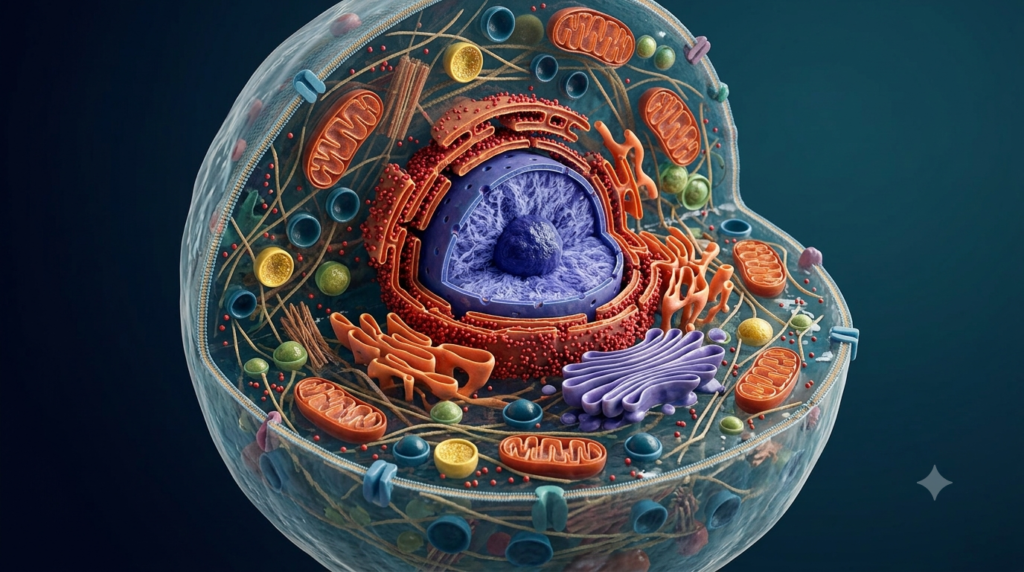
Scientific knowledge includes explanations of gravity, photosynthesis, electricity, cellular structure, and the movement of planets. These explanations are developed and evaluated through observations, experiments, mathematical reasoning, and other appropriate research methods. For example, biologists investigate how plants convert light energy into chemical energy during photosynthesis. Physicists study the relationships between force, mass, and acceleration to explain motion. Astronomers use observations and mathematical models to understand celestial objects and predict astronomical events. Scientific knowledge is useful because it explains not only what happens but also the mechanisms and conditions that influence particular phenomena.
8. How are scientific knowledge and everyday knowledge related?
Scientific knowledge and everyday knowledge are closely related because everyday observations can inspire scientific questions, while scientific discoveries can improve practical decisions. For example, a farmer may notice that plants grow differently under varying light conditions. This observation can lead scientists to investigate the effects of light intensity on plant growth. Researchers may then develop explanations using controlled experiments and measurements. Their findings can help farmers improve cultivation practices. Similarly, scientific knowledge about weather, nutrition, and disease can influence everyday choices. Both forms of knowledge contribute to human understanding, although they differ in the methods used to develop and evaluate explanations.
9. Does scientific knowledge change over time?
Yes, scientific knowledge can change over time when new evidence, improved instruments, or better research methods provide additional information. Scientists may refine existing explanations, identify previously unknown factors, or replace explanations that no longer adequately account for the evidence. For example, advances in microscopy have expanded scientific understanding of cells and microorganisms. Changes in scientific knowledge do not mean that science is unreliable. Instead, they demonstrate its ability to correct errors and improve explanations. Well-supported scientific conclusions may remain reliable for a long time, while their scope, details, or applications can become more precise as research progresses.
10. Why should we understand the difference between scientific knowledge and everyday knowledge?
Understanding the difference helps people evaluate information, recognize unsupported assumptions, and make better-informed decisions. Everyday knowledge is valuable for handling familiar situations, but it may not be sufficient for explaining complex phenomena or evaluating claims about health, technology, and the environment. Scientific knowledge provides systematic methods for investigating such questions and assessing available evidence. Recognizing the strengths and limitations of both forms of knowledge encourages critical thinking and reduces the risk of accepting misleading information. By combining practical experience with reliable evidence, people can develop a deeper understanding of the world and respond more effectively to new situations.