Every living organism, from a tiny bacterium to a giant blue whale, is made up of cells. Cells are the fundamental building blocks of life and perform the essential activities required for an organism to survive. They take in nutrients, produce energy, remove waste, grow, and reproduce. Although cells differ in size, shape, and function, they share several basic characteristics that allow them to carry out life processes. Some organisms consist of only one cell, while others contain trillions of cells organized into tissues, organs, and organ systems. Understanding cells helps us understand how living things are built, how their bodies function, and how diseases develop. For these reasons, the cell is considered the basic structural and functional unit of life and is one of the most important concepts in biology.
What Is a Cell?
A cell is the smallest structural and functional unit of a living organism that can perform the essential processes associated with life. It contains specialized components that work together to maintain its activities and, in many cases, support the survival of the entire organism.
Cells are usually microscopic, meaning they cannot be seen clearly with the naked eye. A microscope is commonly used to observe their structures. However, some cells, such as certain large egg cells, can be visible without magnification.
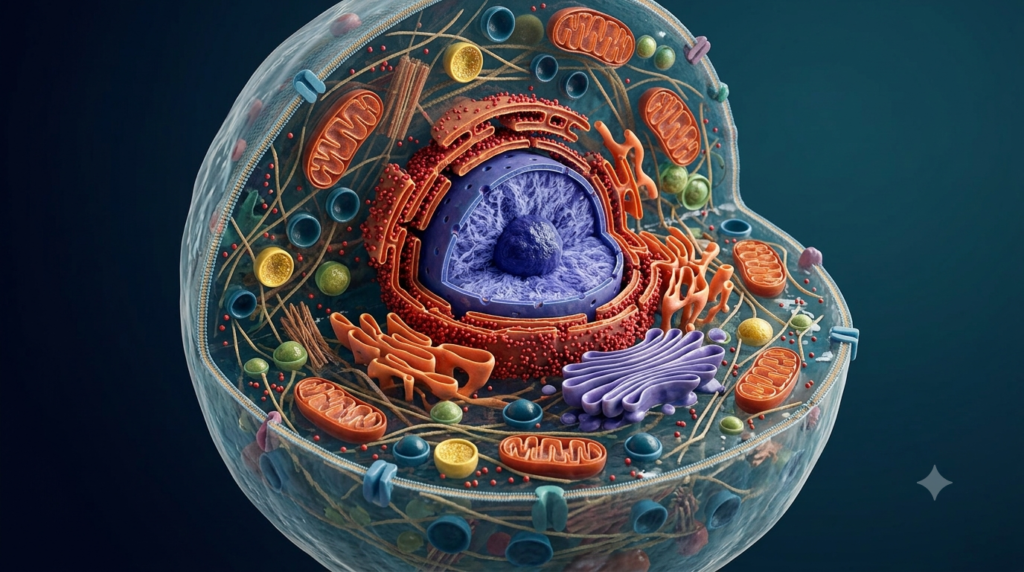
Each cell has a boundary that separates its internal environment from the outside surroundings. Inside this boundary are various structures that perform specific functions. These structures help the cell obtain energy, make proteins, maintain its internal conditions, and carry genetic information.
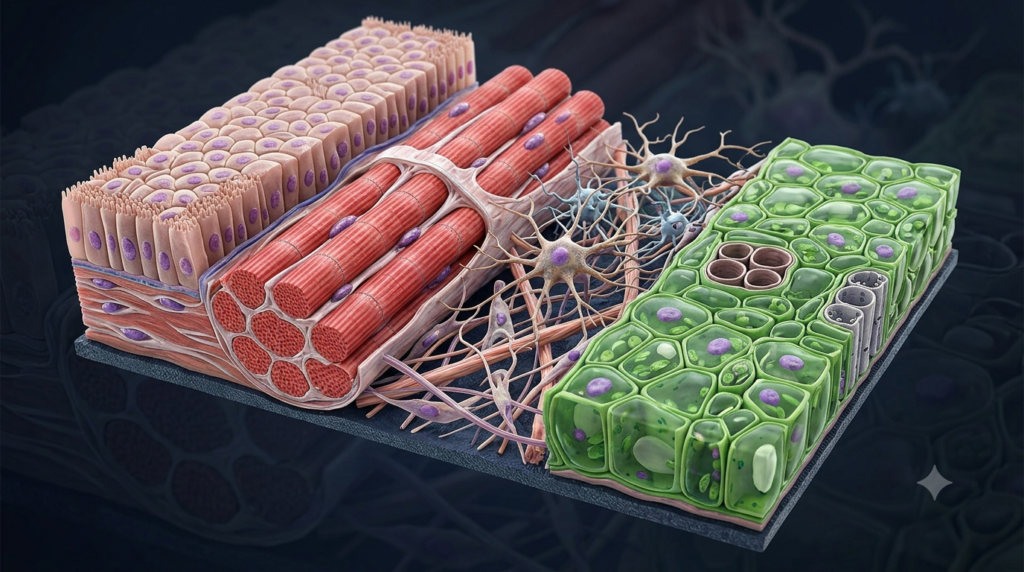
For example, a muscle cell is specialized for contraction, a nerve cell transmits signals, and a plant cell may contain chloroplasts that capture sunlight for photosynthesis. Although these cells perform different jobs, they share the basic organization needed to support life.
Why Is the Cell Called the Basic Unit of Life?
The cell is called the basic unit of life because it is the smallest unit that forms the structure of organisms and carries out essential life functions.
1. The Cell Is the Structural Unit of Life
All known cellular organisms are made up of one or more cells. In unicellular organisms, a single cell forms the entire organism. In multicellular organisms, many cells combine to form tissues, organs, and organ systems.
For example, the human body contains specialized cells that form tissues such as muscle tissue and nervous tissue. These tissues combine to form organs, including the heart and brain.
Therefore, cells provide the basic structure from which living organisms are organized.
2. The Cell Is the Functional Unit of Life
Cells perform essential biological activities such as respiration, nutrient processing, waste removal, and the production of proteins.
In unicellular organisms, one cell carries out nearly all the activities necessary for survival. In multicellular organisms, different cells specialize in particular tasks and cooperate to maintain the organism.
For example, red blood cells transport oxygen, while white blood cells help defend the body against infections. Their activities contribute to the normal functioning of the human body.
3. The Cell Is the Unit of Growth
Growth in living organisms generally involves an increase in cell number, cell size, or both. In many multicellular organisms, cells divide to produce new cells, allowing tissues to grow and damaged structures to be repaired.
When a child grows taller, for example, the number and size of cells in different tissues change. Cell division also replaces cells that are naturally lost or damaged.
4. The Cell Is the Unit of Reproduction
New cells arise from pre-existing cells through cell division. In unicellular organisms, cell division can produce a new individual. In multicellular organisms, it helps with growth, development, and tissue repair.
Reproduction at the organism level can occur in different ways, but the formation of new cells is central to the continuity of cellular life.
Cell Theory
Cell theory is one of the fundamental principles of biology. It explains the relationship between cells and living organisms.
The development of cell theory was made possible by improvements in microscopes and the observations of several scientists.
Important Scientists in Cell Biology
Robert Hooke: In 1665, Robert Hooke examined a thin slice of cork under a microscope. He observed tiny, box-like compartments and called them cells. The structures he observed were the remains of dead plant cells.
Antonie van Leeuwenhoek: In the seventeenth century, he observed living microscopic organisms and cells using powerful microscopes of his time. His observations expanded scientific understanding of the microscopic world.
Matthias Schleiden: In 1838, Schleiden concluded that plants are made up of cells.
Theodor Schwann: In 1839, Schwann concluded that animals are made up of cells. Together, the work of Schleiden and Schwann helped establish the foundations of cell theory.
Rudolf Virchow: In 1855, Virchow emphasized that new cells arise from existing cells, supporting the principle that cells do not appear spontaneously under ordinary cellular reproduction.
Main Principles of Cell Theory
Classical cell theory includes three main principles:
All living organisms are composed of one or more cells.
The cell is the basic structural and functional unit of life.
All cells arise from pre-existing cells.
Modern cell biology expands these principles by recognizing that cells contain hereditary information, pass it to daughter cells during cell division, and carry out energy transformations necessary for life.
Cell theory provides a foundation for understanding growth, reproduction, inheritance, and the organization of living organisms.
Types of Cells
Cells are broadly classified into two major categories: prokaryotic cells and eukaryotic cells. The main difference is the presence or absence of a membrane-bound nucleus.
1. Prokaryotic Cells
Prokaryotic cells do not have a membrane-bound nucleus. Their genetic material is located in a region of the cell called the nucleoid.
These cells generally have a simpler internal organization than eukaryotic cells. They contain a cell membrane, cytoplasm, ribosomes, and genetic material. Many also possess a cell wall.
Bacteria and archaea are examples of organisms with prokaryotic cells.
Despite their relatively simple structure, prokaryotic cells perform all the activities necessary for their survival. They obtain nutrients, produce proteins, use energy, respond to environmental changes, and reproduce.
Some bacteria are useful to humans. For example, certain bacteria help in digestion, food production, and nutrient recycling in ecosystems. Other bacteria can cause diseases.
2. Eukaryotic Cells
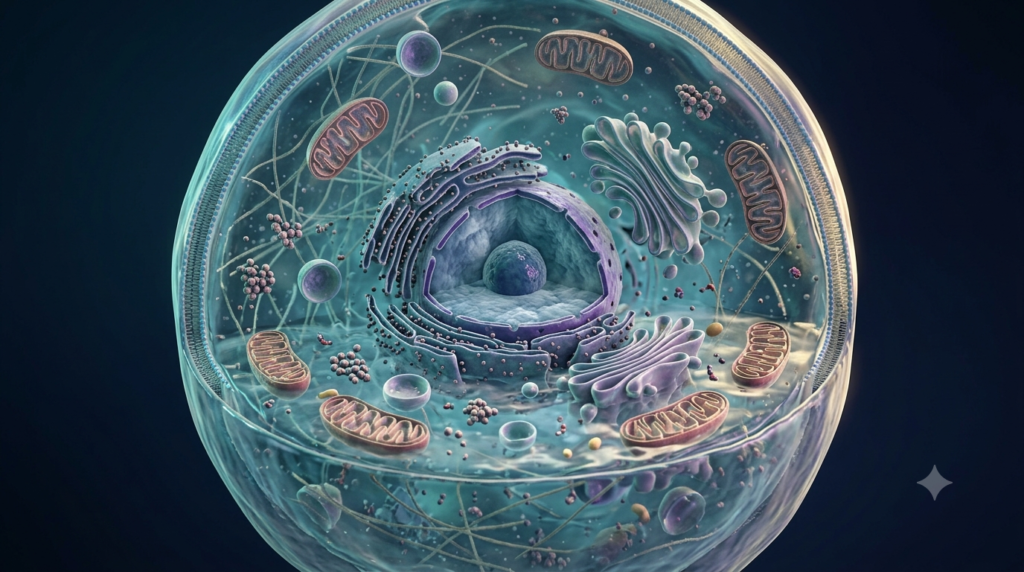
Eukaryotic cells contain a membrane-bound nucleus that stores most of the cell’s genetic material. They also contain membrane-bound organelles that perform specialized functions.
Animals, plants, fungi, and protists are made up of eukaryotic cells.
Eukaryotic cells are generally more complex than prokaryotic cells. Their internal organization allows different processes to occur in specialized compartments.
For example, mitochondria are involved in cellular energy production, while the Golgi apparatus modifies and sorts certain proteins and lipids for transport.
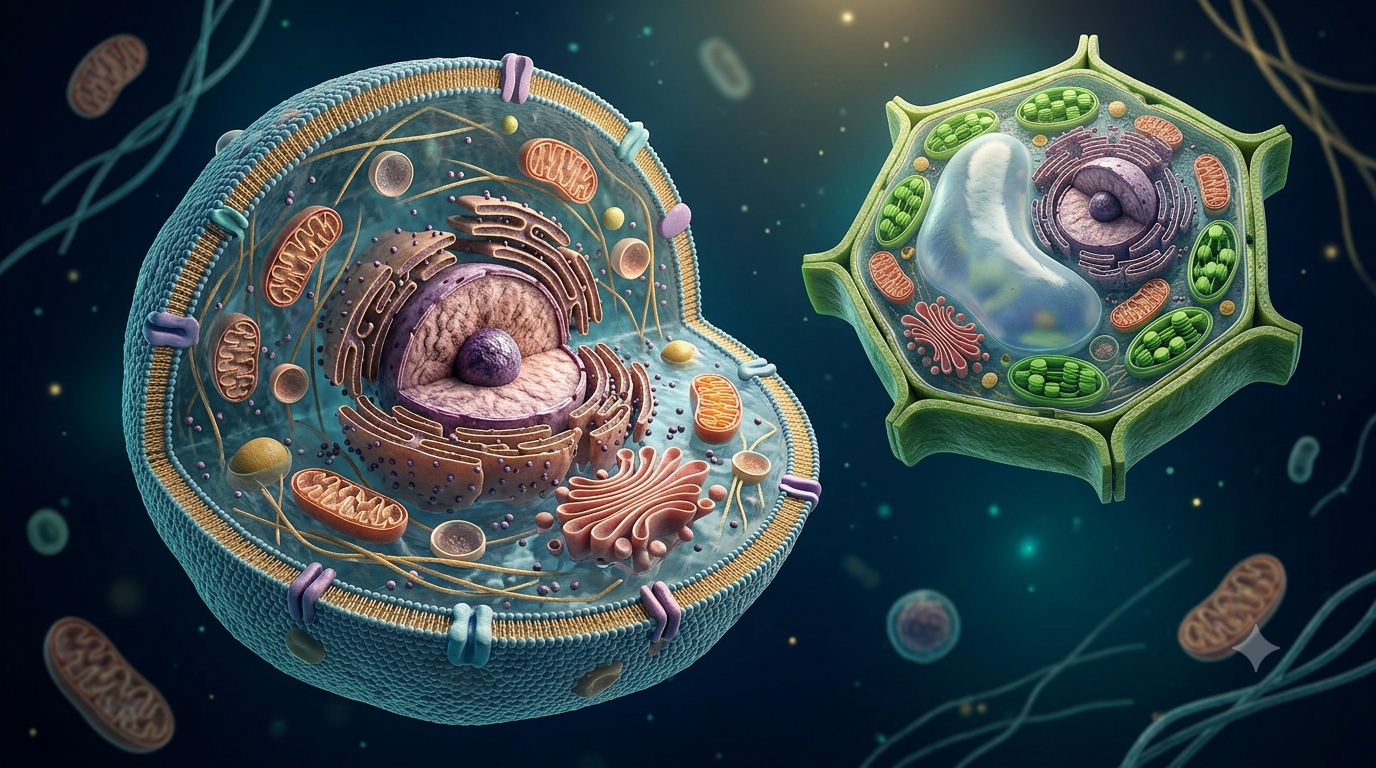
Plant and animal cells are both eukaryotic, but they differ in important ways. Plant cells typically contain a cellulose cell wall, chloroplasts in photosynthetic tissues, and a large central vacuole. Animal cells lack a cell wall and chloroplasts.
Basic Structure of a Cell
Although cells differ in appearance and function, many share several important structures. Each structure contributes to the overall functioning of the cell.
1. Cell Membrane
The cell membrane forms the boundary between the cell’s interior and its external environment. It is mainly composed of a double layer of lipids with embedded proteins.
The membrane is selectively permeable, meaning it controls the movement of many substances into and out of the cell.
Nutrients and ions can enter through specific transport mechanisms, while waste products can leave. The membrane also helps cells receive signals and interact with their surroundings.
Without a properly functioning cell membrane, a cell would struggle to maintain the internal conditions required for survival.
2. Cytoplasm
Cytoplasm is the material inside the cell membrane but outside the nucleus in eukaryotic cells. It includes the cytosol, which is a water-based mixture containing dissolved substances, and the structures suspended within it.
Many chemical reactions take place in the cytoplasm. It contains enzymes, nutrients, ions, proteins, and other molecules needed for cellular activities.
In prokaryotic cells, many essential processes also occur in the cytoplasm.
3. Nucleus
The nucleus is a membrane-bound organelle found in most eukaryotic cells. It contains most of the cell’s DNA, which carries instructions for building and maintaining the organism.
Genes within DNA influence the production of proteins and help regulate cellular activities. The nucleus also plays an important role in controlling gene expression and coordinating cell division.
Not all cells have a nucleus throughout their entire lifespan. For example, mature human red blood cells lack a nucleus, allowing more space for haemoglobin.
4. Mitochondria
Mitochondria are organelles involved in cellular respiration and the production of ATP, a molecule that supplies usable energy for many cellular processes.
Cells require energy to transport substances, produce proteins, move, divide, and maintain their internal organization.
Mitochondria are especially numerous in cells with high energy demands, such as many muscle cells.
However, not all cells have mitochondria. Prokaryotic cells, for example, do not contain these organelles.
5. Ribosomes
Ribosomes are responsible for protein synthesis. They use instructions carried by messenger RNA to assemble amino acids into proteins.
Proteins perform numerous functions, including catalysing chemical reactions, supporting cell structure, transporting substances, and helping cells communicate.
Ribosomes occur in both prokaryotic and eukaryotic cells.
6. Endoplasmic Reticulum
The endoplasmic reticulum is a network of membranes found in eukaryotic cells.
Rough endoplasmic reticulum has ribosomes attached to its surface and is involved in producing and processing many proteins. Smooth endoplasmic reticulum lacks attached ribosomes and participates in lipid synthesis, detoxification, and calcium storage in certain cells.
Together, these structures support the production and processing of important cellular materials.
7. Golgi Apparatus
The Golgi apparatus modifies, sorts, and packages proteins and lipids received from other parts of the cell.
Some of these materials are transported to the cell membrane, while others are delivered to specific organelles or released outside the cell.
This system helps ensure that cellular products reach the correct destinations.
8. Vacuoles
Vacuoles are membrane-bound compartments that store substances. They can contain water, nutrients, pigments, and waste materials.
Plant cells commonly possess a large central vacuole that helps maintain internal pressure and supports the shape of the plant.
Vacuoles also contribute to storage and other cellular processes in different organisms.
9. Chloroplasts
Chloroplasts are organelles found in plants and many algae. They contain chlorophyll and other pigments that capture light energy for photosynthesis.
During photosynthesis, organisms use light energy to convert carbon dioxide and water into energy-rich organic compounds, releasing oxygen as a by-product under typical oxygen-producing conditions.
Chloroplasts are essential for photosynthesis in plants, but they are absent from animal cells.
Differences Between Plant and Animal Cells
Plant and animal cells share several structures because both are eukaryotic. However, they also have distinct characteristics related to their functions.
| Feature | Plant Cell | Animal Cell |
|---|---|---|
| Cell membrane | Present | Present |
| Cell wall | Present, mainly cellulose | Absent |
| Nucleus | Usually present | Usually present |
| Mitochondria | Present | Present |
| Chloroplasts | Present in photosynthetic cells | Absent |
| Large central vacuole | Usually present | Usually absent; smaller vacuoles may occur |
| Typical shape | Often more fixed or regular | Often more flexible or varied |
| Energy acquisition | Photosynthesis in photosynthetic tissues and cellular respiration | Cellular respiration using available organic nutrients |
These differences reflect the different ways plants and animals obtain resources and interact with their environments.
Unicellular and Multicellular Organisms
Living organisms can also be classified according to the number of cells they contain.
Unicellular Organisms
Unicellular organisms consist of a single cell. That one cell carries out the functions required for survival, including obtaining nutrients, producing energy, responding to environmental conditions, and reproducing.
Examples include many bacteria, archaea, and protists, as well as unicellular fungi such as yeast.
For instance, an amoeba moves using temporary extensions of its cell, surrounds food particles, and digests them within its cell. It performs these activities without organs or tissues.
Unicellular organisms demonstrate that a single cell can function as a complete living system.
Multicellular Organisms
Multicellular organisms contain many cells that cooperate to support the life of the organism.
Examples include humans, dogs, trees, and mushrooms.
In these organisms, cells often become specialized for particular tasks. Muscle cells contract, nerve cells transmit signals, and many epithelial cells form protective coverings.
Specialized cells work together in tissues, organs, and organ systems. This organization makes it possible for multicellular organisms to perform complex activities efficiently.
Levels of Organization in Multicellular Organisms
In multicellular organisms, cells are arranged in levels of increasing complexity.
The typical sequence in animals is:
Cells → Tissues → Organs → Organ Systems → Organism
Each level depends on the proper functioning of the levels below it.
Cells
Cells are the smallest structural and functional units. Examples include muscle cells, nerve cells, and epithelial cells.
Tissues
A tissue is a group of similar cells, along with associated materials, that work together to perform a particular function. Major animal tissue types include epithelial, connective, muscle, and nervous tissue.
Organs
An organ consists of two or more tissue types working together to perform specific functions.
For example, the heart contains muscle tissue, connective tissue, nervous tissue, and epithelial tissue. These tissues cooperate to pump blood throughout the body.
Organ Systems
An organ system consists of organs that work together to perform major body functions.
The circulatory system, for example, includes the heart, blood, and blood vessels. Together, they transport oxygen, nutrients, hormones, and waste products.
Organism
An organism is an individual living thing. Its cells, tissues, organs, and organ systems cooperate to support survival, growth, and reproduction.
This hierarchy demonstrates how the basic cellular unit contributes to the organization of complex life.
Important Functions of Cells
Cells perform numerous functions that are essential for life.
1. Nutrition
Cells require nutrients to obtain energy and build or repair cellular structures. Depending on the organism, nutrients may be absorbed from the environment or obtained by breaking down food.
Plant cells in photosynthetic tissues produce organic compounds using light energy, while animal cells obtain nutrients from food consumed by the organism.
2. Cellular Respiration
Cellular respiration releases usable energy from organic molecules through a series of chemical reactions.
In many eukaryotic cells, aerobic respiration involves mitochondria and uses oxygen to help extract energy from nutrients. ATP produced through cellular respiration supports activities such as movement, transport, and biosynthesis.
3. Growth and Repair
Cells grow by producing cellular components and may divide to form new cells. Cell division allows many organisms to grow and helps replace damaged or worn-out cells.
For example, skin cells are continually replaced as part of normal tissue maintenance.
4. Waste Removal
Cellular chemical reactions produce waste substances that must be managed. Cells transport some waste products out through their membranes, while other substances are processed within the cell.
At the organism level, specialized organs may remove waste from the body.
5. Response to Stimuli
Cells can detect and respond to changes in their surroundings. These changes may involve temperature, chemicals, light, pressure, or signals from other cells.
For example, nerve cells respond to electrical and chemical signals, while certain plant cells respond to environmental cues that influence growth.
6. Reproduction and Cell Division
Cell division produces new cells. It supports growth, tissue repair, and reproduction in many organisms.
In multicellular organisms, cell division must be carefully regulated. Uncontrolled cell division can contribute to the development of cancer.
The Importance of Cells in Everyday Life
Cell biology is not limited to textbooks or laboratories. It helps explain many processes that affect daily life.
1. Understanding Human Health
The human body depends on the proper functioning of its cells. Healthy cells maintain tissues, transport substances, communicate, and protect the body.
Many diseases involve changes in cell structure or function. For example, cancer develops when abnormal cells acquire changes that allow them to grow and divide uncontrollably. Some infections occur when viruses enter host cells and use their machinery to produce more viruses.
Understanding cells helps scientists investigate the causes of disease and develop treatments.
2. Medicine and Treatment
Modern medicine relies heavily on cell biology. Researchers study cells to understand how medicines affect the body, how infections spread, and how damaged tissues might be repaired.
Cancer treatments, for example, may target processes involved in cell division. Stem cell research investigates how certain cells can develop into specialized cell types and how they might contribute to tissue repair.
Cell-based research also supports the development of vaccines, diagnostic tests, and new therapeutic approaches.
3. Agriculture and Food Production
Plants depend on their cells for photosynthesis, water transport, growth, and the production of fruits and seeds.
Understanding plant cells helps scientists improve crop growth, investigate plant diseases, and develop varieties that can tolerate environmental stress.
Cell biology also contributes to food production through fermentation. Yeast cells help bread dough rise, while selected bacteria help produce foods such as yoghurt and certain cheeses.
4. Biotechnology
Biotechnology uses living organisms, cells, or biological components to develop useful products and processes.
For example, genetically engineered microorganisms can produce human insulin for medical use. Scientists also use cells in research, industrial production, and the development of certain biological products.
Knowledge of cell structure, DNA, and protein synthesis is essential for many biotechnology applications.
5. Environmental Protection
Cells play important roles in ecosystems. Microorganisms decompose dead organisms and waste materials, helping return nutrients to the environment.
Certain microorganisms can also break down some pollutants under suitable conditions. This process, called bioremediation, can be used in efforts to clean contaminated soil or water.
Understanding microbial cells helps scientists investigate nutrient cycles, ecosystem health, and methods of environmental management.
How Do Scientists Study Cells?
Scientists use several methods to investigate cell structure and function.
Microscopy
Microscopes make it possible to observe structures that are too small to see clearly with the naked eye.
Light microscopes are commonly used to examine cells, tissues, and some organelles. Electron microscopes can reveal much finer structural details, although samples usually require specialized preparation.
Cell Staining
Some cellular structures are difficult to distinguish because they are nearly transparent. Scientists use dyes or fluorescent markers to make specific structures easier to observe.
Different staining methods can help identify nuclei, cell boundaries, microorganisms, and other components.
Cell Culture
Cell culture involves growing cells under controlled laboratory conditions. Researchers use cultured cells to study biological processes, test certain substances, and investigate diseases.
Cell culture requires suitable nutrients, temperature, and environmental conditions. Different cell types have different requirements.
Molecular Biology Techniques
Scientists also study cells by examining DNA, RNA, and proteins. These methods help researchers understand gene activity, protein production, cellular communication, and the molecular basis of disease.
Together, these techniques have greatly expanded scientific knowledge of living systems.
Conclusion
The cell is the basic structural and functional unit of life because it forms the foundation of living organisms and carries out essential biological processes. From a single-celled bacterium to the specialized cells of the human body, every cellular organism depends on cells for survival, growth, energy production, and reproduction. Cell theory explains that living organisms are composed of cells and that new cells arise from existing ones. The study of cell structures, including the cell membrane, cytoplasm, nucleus, and specialized organelles, helps us understand how life operates at its most fundamental level. Cell biology also has practical applications in medicine, agriculture, biotechnology, and environmental protection. By understanding cells, we gain a deeper appreciation of how living things function and how scientific discoveries can improve human life.
FAQs
1. What Is a Cell and Why Is It Called the Basic Unit of Life?
A cell is the smallest structural and functional unit of a living organism that can carry out essential life processes. It is called the basic unit of life because all known cellular organisms are made up of one or more cells. Cells perform important activities such as obtaining nutrients, producing energy, removing waste, and maintaining internal conditions. In unicellular organisms, one cell performs all the functions needed for survival. In multicellular organisms, specialized cells work together to form tissues, organs, and organ systems. Therefore, cells provide the foundation for the structure and functioning of living organisms.
2. What Are the Main Principles of Cell Theory?
Cell theory is a fundamental principle of biology that explains the importance of cells in living organisms. It has three main principles. First, all living organisms are composed of one or more cells. Second, the cell is the basic structural and functional unit of life. Third, all cells arise from pre-existing cells through cell division. Modern cell biology also recognizes that cells contain hereditary information, which is passed to daughter cells during division. Cell theory helps scientists understand how organisms grow, reproduce, and maintain their biological functions. It also provides a foundation for studying genetics, medicine, and other areas of life science.
3. Who Discovered the Cell?
Robert Hooke is credited with introducing the term “cell” in 1665. While examining a thin slice of cork under a microscope, he observed numerous small, box-like compartments that reminded him of tiny rooms. He called these structures cells. However, the structures he observed were the remains of dead plant cells. Later, Antonie van Leeuwenhoek observed living microscopic organisms using powerful microscopes. Scientists Matthias Schleiden and Theodor Schwann subsequently helped establish cell theory by concluding that plants and animals are composed of cells. Rudolf Virchow later emphasized that new cells arise from existing cells. These discoveries gradually established the foundation of modern cell biology.
4. What Are the Two Main Types of Cells?
The two main types of cells are prokaryotic cells and eukaryotic cells. Prokaryotic cells do not have a membrane-bound nucleus. Their genetic material is located in a region called the nucleoid. Bacteria and archaea are examples of organisms with prokaryotic cells. Eukaryotic cells have a membrane-bound nucleus and typically contain specialized organelles, such as mitochondria and the Golgi apparatus. Animals, plants, fungi, and protists are composed of eukaryotic cells. Both types of cells contain genetic material, ribosomes, cytoplasm, and a cell membrane. However, they differ in their internal organization, size, and complexity.
5. What Are the Main Parts of a Cell and Their Functions?
The main parts of a typical eukaryotic cell include the cell membrane, cytoplasm, nucleus, and various organelles. The cell membrane controls the movement of substances into and out of the cell. The cytoplasm provides an environment for many chemical reactions. The nucleus stores most of the cell’s DNA and helps regulate cellular activities. Mitochondria participate in cellular respiration and ATP production, while ribosomes manufacture proteins. The endoplasmic reticulum helps produce and process proteins and lipids, and the Golgi apparatus modifies and sorts cellular products. Each structure performs particular functions, allowing the cell to operate efficiently and maintain the conditions necessary for life.
6. What Is the Difference Between Plant Cells and Animal Cells?
Plant cells and animal cells are both eukaryotic cells, meaning they contain a membrane-bound nucleus and specialized organelles. However, they have several important differences. Plant cells typically possess a rigid cell wall made mainly of cellulose, chloroplasts in photosynthetic tissues, and a large central vacuole. These structures support the plant, enable photosynthesis, and help maintain water balance. Animal cells lack a cell wall and chloroplasts, and they generally have a more flexible shape. Animal cells may contain small vacuoles and other specialized structures. Despite these differences, both plant and animal cells contain a cell membrane, cytoplasm, DNA, ribosomes, and mitochondria.
7. How Do Cells Obtain Energy to Perform Their Functions?
Cells obtain usable energy through processes that convert energy stored in nutrients or captured from sunlight into forms that can support biological activities. In many organisms, cellular respiration breaks down organic molecules and produces ATP, a molecule used to power cellular processes. In eukaryotic cells, mitochondria play a major role in aerobic respiration. Plant cells also capture light energy through photosynthesis in chloroplasts, producing energy-rich organic compounds from carbon dioxide and water. These compounds can later be broken down during cellular respiration. Cells use ATP to support activities such as movement, growth, protein synthesis, and the transport of substances across cell membranes.
8. What Is the Difference Between Unicellular and Multicellular Organisms?
Unicellular organisms consist of a single cell that performs all essential life functions. Examples include many bacteria, archaea, amoebas, and yeasts. A unicellular organism obtains nutrients, produces energy, responds to its environment, and reproduces using its single cell. Multicellular organisms, such as humans, plants, and most animals, contain many cells. Their cells often specialize in different tasks. For example, nerve cells transmit signals, muscle cells contract, and red blood cells transport oxygen. These specialized cells work together to form tissues, organs, and organ systems. Multicellular organization allows organisms to perform complex biological activities through cooperation between different types of cells.
9. Why Is Cell Biology Important in Medicine and Biotechnology?
Cell biology is important in medicine and biotechnology because it explains how living cells function, communicate, grow, and respond to different substances. Medical researchers study cells to understand infections, cancer, genetic disorders, and other diseases. This knowledge supports the development of medicines, diagnostic methods, vaccines, and new treatments. In biotechnology, cells and microorganisms can be used to produce useful substances, including human insulin made by genetically engineered microorganisms. Scientists also investigate stem cells and their potential applications in research and regenerative medicine. Understanding cellular processes helps researchers develop innovative technologies and improve healthcare while expanding scientific knowledge of living organisms.
10. How Do Scientists Observe and Study Cells?
Scientists study cells using microscopes, laboratory experiments, and molecular biology techniques. Light microscopes allow researchers to observe many cells and some of their internal structures. Electron microscopes provide much greater detail and can reveal tiny cellular components that cannot be resolved clearly with ordinary light microscopes. Cell staining helps make particular structures easier to identify, while fluorescent markers can reveal specific molecules or processes. Scientists also grow cells in controlled laboratory environments through a technique called cell culture. Molecular methods allow researchers to investigate DNA, RNA, and proteins. Together, these techniques help scientists understand cell structure, cellular activities, disease mechanisms, and the fundamental processes of life.