Earth contains many valuable natural resources that support modern life, industry, agriculture, transportation, and technological development. Metals such as iron, copper, gold, and aluminum are essential for construction, electrical systems, and manufacturing. Non-metallic resources, including limestone, gypsum, phosphate, and industrial minerals, are equally important for producing cement, fertilizers, ceramics, and other materials. Energy resources such as coal, petroleum, natural gas, and uranium also contribute to the development of human civilization. However, these resources are not distributed evenly across the planet. Their locations depend on geological processes that have occurred over millions or even billions of years.
Economic geology is the branch of geology that studies the origin, distribution, exploration, evaluation, and extraction of economically valuable Earth resources. It helps scientists understand how useful minerals and energy resources form, why they occur in particular regions, and how they can be discovered and used responsibly. By combining geological knowledge with modern technology, economic geology supports resource exploration, industrial development, and sustainable management of Earth’s natural wealth.
What Is Economic Geology?
Economic geology focuses on geological materials and deposits that have practical or commercial value. These materials may be extracted directly from the ground or processed to obtain useful substances. The field examines how geological processes create concentrated deposits, how these deposits can be identified, and whether they can be developed economically.
A mineral deposit becomes economically important when it contains a useful material in a concentration, quantity, and location that make extraction potentially worthwhile. Not every occurrence of a valuable mineral is considered an economically recoverable resource. For example, gold may occur in small quantities in many rocks, but only certain deposits contain enough gold to justify mining under particular economic and technological conditions.
Economic geology studies several major categories of resources:
Metallic minerals: Iron, copper, gold, silver, aluminum-bearing minerals, lead, zinc, and nickel.
Non-metallic minerals: Limestone, gypsum, mica, feldspar, phosphate, and clay.
Energy resources: Coal, petroleum, natural gas, uranium, and geothermal energy.
Construction materials: Sand, gravel, dimension stone, and crushed rock.
Critical minerals: Lithium, cobalt, graphite, rare earth elements, and other materials important for batteries, electronics, renewable energy systems, and advanced manufacturing.
Economic geology connects geological science with mining, engineering, environmental science, and resource economics. Its central purpose is to understand and evaluate the natural resources that support human activities.
How Valuable Earth Resources Form
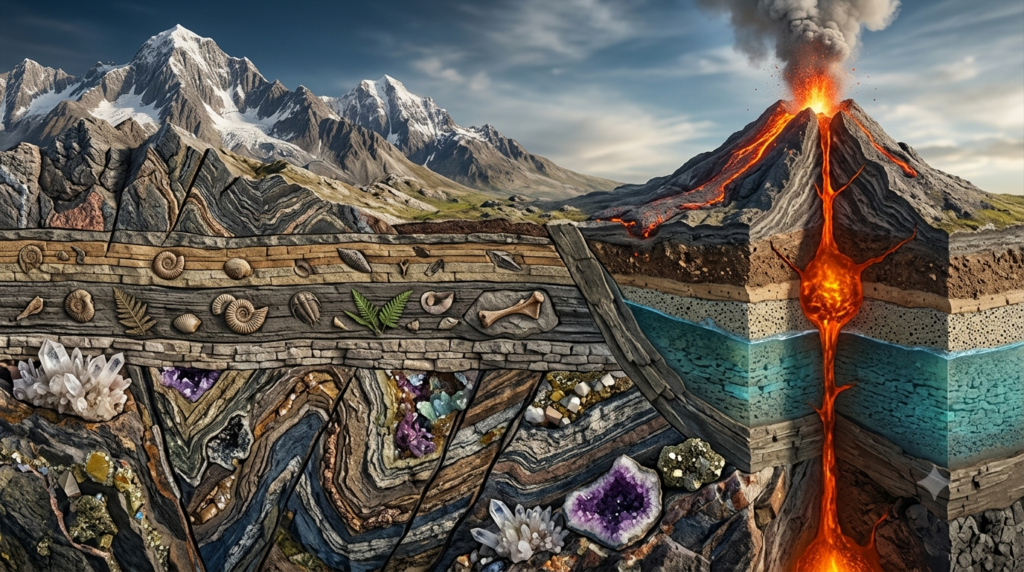
Valuable Earth resources develop through different geological processes. Some form when molten rock cools and crystallizes, while others develop when hot fluids move through fractures, minerals accumulate in sedimentary environments, or existing rocks undergo intense heat and pressure.
The formation of a mineral deposit generally requires a source of useful elements, a process that transports or concentrates those elements, and geological conditions that allow them to accumulate and remain preserved.
1. Magmatic Processes
Magmatic processes involve molten rock, known as magma, beneath Earth’s surface or lava at the surface. As magma cools, minerals crystallize at different temperatures. Some elements become concentrated in particular minerals, creating deposits that may have economic value.
During the cooling of certain magmas, dense minerals can settle or accumulate in specific parts of a magma chamber. This process is called magmatic segregation. It can produce deposits rich in chromium, platinum-group elements, nickel, and other metals.
For example, chromite deposits may form in layered igneous intrusions, while some nickel and copper deposits develop from sulfide liquids associated with particular magmatic systems. These deposits can be important sources of metals used in stainless steel, batteries, industrial equipment, and other products.
Magmatic processes also produce pegmatites, which are coarse-grained igneous rocks that can contain lithium, tantalum, cesium, and other valuable elements. Such deposits are increasingly important because several of these elements are used in modern electronics and energy-storage technologies.
2. Hydrothermal Processes
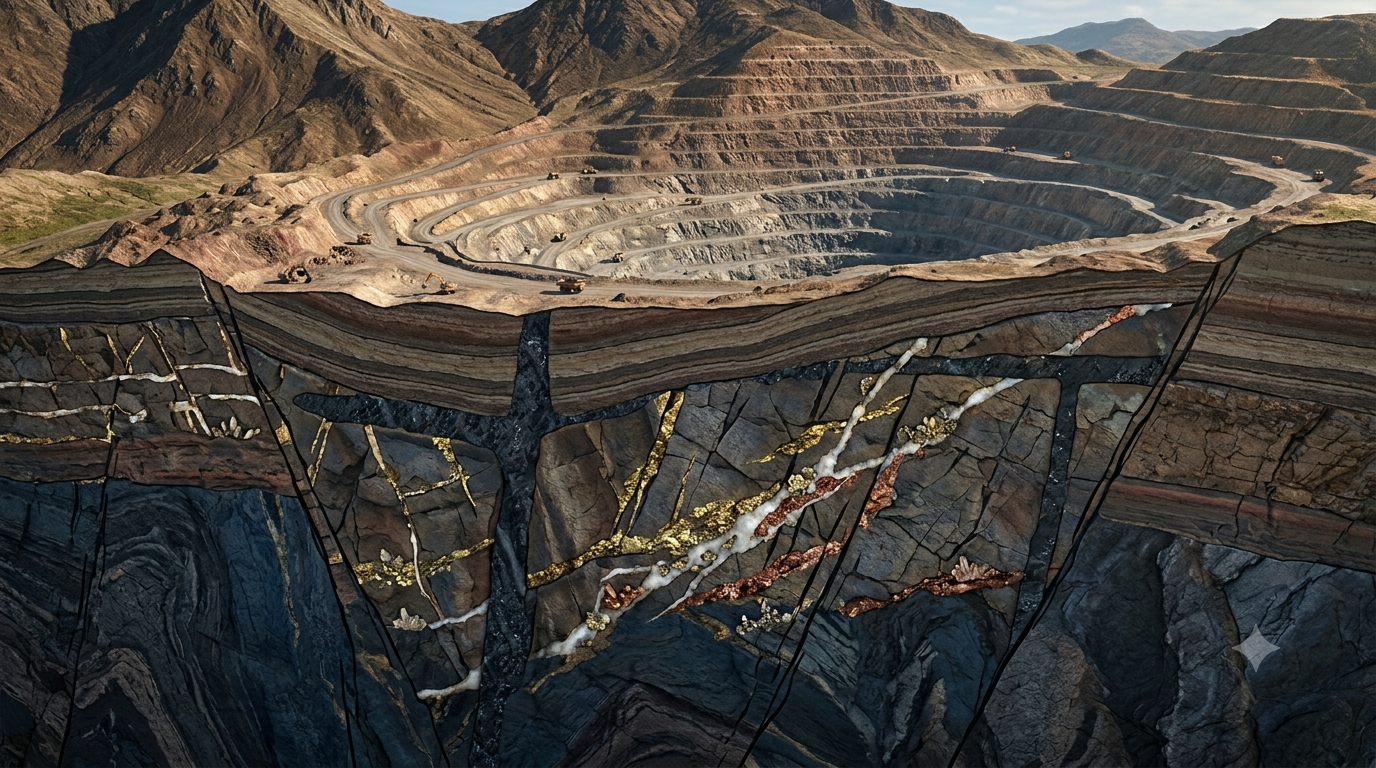
Hydrothermal processes are among the most important mechanisms responsible for forming metal deposits. They involve hot, mineral-rich fluids that move through cracks, faults, pores, and other openings in rocks.
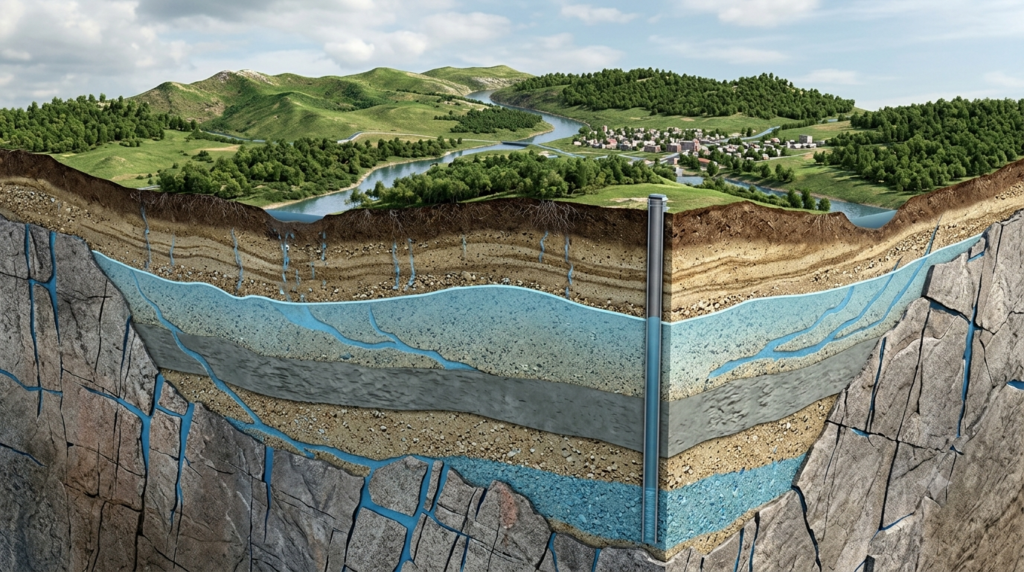
These fluids may originate from cooling magma, heated groundwater, or water circulating through the Earth’s crust. As they move, they dissolve and transport metals from surrounding rocks. When temperature, pressure, acidity, or chemical conditions change, the dissolved materials may precipitate and form mineral deposits.
Hydrothermal deposits commonly contain copper, gold, silver, lead, zinc, and other metals.
For example, copper deposits may form when hot fluids circulate through volcanic or intrusive rocks and deposit copper-bearing minerals. Gold can accumulate in quartz veins when hydrothermal fluids release dissolved gold into fractures.
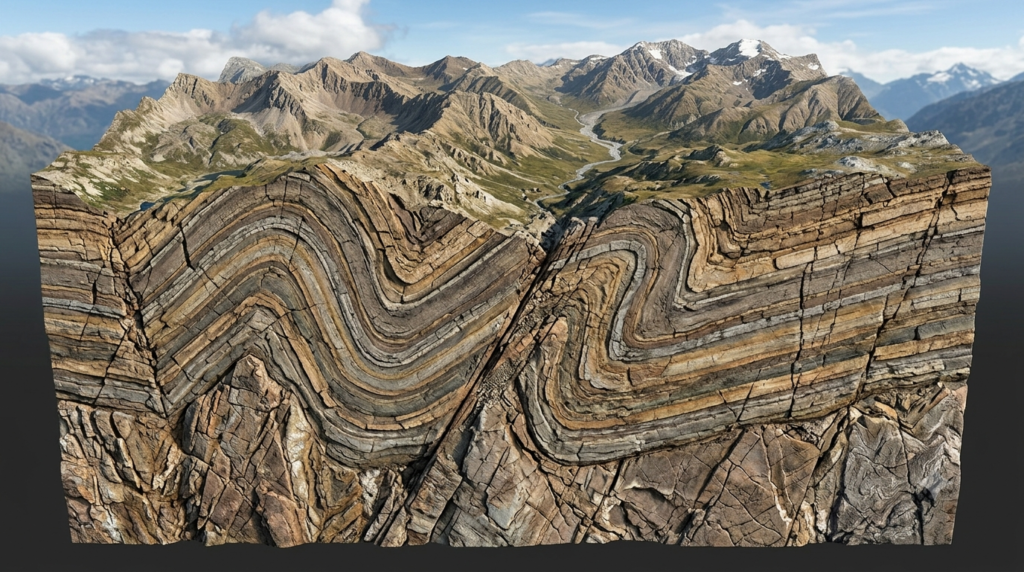
The distribution of these deposits often follows faults, fractures, and zones of intense geological alteration. Geologists study these structures and the minerals surrounding them to identify areas that may contain valuable resources.
Hydrothermal systems are especially significant because they can concentrate metals that would otherwise remain dispersed throughout large volumes of rock.
3. Sedimentary Processes
Sedimentary processes form many important mineral and energy resources. They involve the weathering, transportation, deposition, and accumulation of materials at or near Earth’s surface.
Weathering breaks down rocks into smaller particles and releases minerals into soil, rivers, and groundwater. Water and wind transport these materials, while gravity and changing environmental conditions cause them to settle in different locations.
Over time, accumulated sediments may become compacted and cemented into sedimentary rocks. Chemical reactions can also cause minerals to precipitate directly from water.
Examples of resources formed through sedimentary processes include:
Coal, formed from accumulated plant material buried under suitable conditions.
Evaporite minerals, such as halite and gypsum, formed when mineral-rich water evaporates.
Certain iron-rich sedimentary deposits, which preserve evidence of ancient changes in ocean chemistry.
Phosphate deposits, which are important for producing agricultural fertilizers.
Some sediment-hosted copper, lead, and zinc deposits.
Sedimentary processes can create extensive deposits that cover large areas. Their economic importance depends on mineral concentration, thickness, accessibility, and the quality of the resource.
4. Metamorphic Processes
Metamorphism occurs when existing rocks undergo changes in mineral composition, texture, or structure because of increased temperature, pressure, or chemically active fluids. These changes generally take place without the complete melting of the original rock.
Metamorphic processes can create or modify economically valuable mineral deposits. For example, graphite may develop from carbon-rich sedimentary material during metamorphism. Certain gemstones, including some varieties of garnet and other industrially useful minerals, can also form under metamorphic conditions.
Metamorphism may cause existing minerals to recrystallize, separate, or become concentrated. Fluids released during metamorphic reactions can transport metals and contribute to the formation of gold and other mineral deposits.
The relationship between metamorphism and mineral formation is complex because the final deposit depends on the composition of the original rocks, the temperature and pressure conditions, the movement of fluids, and the duration of geological activity.
5. Weathering and Residual Enrichment
Chemical weathering occurs when water, oxygen, carbon dioxide, and other substances react with rocks and minerals near Earth’s surface. Some minerals dissolve or break down more easily than others.
When soluble materials are removed by water, less soluble minerals may remain behind and become concentrated. This process is called residual enrichment.
Bauxite, the principal ore of aluminum, commonly forms through intense chemical weathering of suitable rocks in warm, humid environments. During prolonged weathering, silica and other soluble components may be removed, leaving aluminum-rich materials behind.
Nickel can also become concentrated in lateritic deposits formed by prolonged weathering of suitable ultramafic rocks.
Weathering can therefore transform ordinary rock into an economically significant deposit. However, these processes depend strongly on climate, drainage, original rock composition, and the length of time that the land surface remains exposed to weathering.
6. Placer Deposit Formation
Placer deposits form when moving water, wind, or waves separate mineral grains according to their density, size, and shape. Dense minerals tend to accumulate in particular environments while lighter particles are carried farther away.
Rivers may concentrate gold particles in gravel bars, stream bends, and bedrock depressions. Beach environments can accumulate heavy minerals such as ilmenite, rutile, and zircon.
These deposits are valuable because natural sorting can concentrate useful minerals without requiring them to form directly in their present location. Instead, the minerals may have originated in older rocks that weathered and released them.
Placer deposits can be easier to identify than some deeply buried deposits, although their economic value depends on mineral concentration, deposit size, environmental conditions, and extraction costs.
Major Types of Valuable Earth Resources
Economic geologists study many types of resources, each with distinct geological origins and practical uses.
Metallic Mineral Resources
Metallic mineral resources contain metals that can be recovered through mining and processing. Important examples include iron, copper, gold, aluminum, zinc, nickel, and lithium.
Iron ore is essential for producing steel, which is used in buildings, bridges, railways, machinery, and transportation infrastructure. Copper is widely used in electrical wiring, motors, electronic devices, and power transmission systems because of its excellent electrical conductivity.
Gold is valued for its chemical stability, use in jewelry, and applications in electronics. Aluminum is obtained primarily from bauxite and is widely used in vehicles, aircraft, packaging, and construction.
Lithium, nickel, cobalt, and graphite are important in many battery technologies, although the exact materials used vary by battery chemistry. Their geological occurrence and extraction have become increasingly important as energy-storage systems expand.
Non-Metallic Mineral Resources
Non-metallic minerals are important even though their principal value does not come from extracting a metal.
Limestone is widely used in cement manufacturing and construction. Gypsum is used in plaster, drywall, and cement production. Feldspar is important in glassmaking and ceramics, while mica has applications in electrical insulation and various industrial products.
Phosphate-bearing minerals provide phosphorus for agricultural fertilizers. Clay minerals are used in bricks, pottery, cement, and other manufactured materials.
These resources are essential to agriculture, housing, infrastructure, and industrial production. Their value depends not only on abundance but also on purity, physical properties, location, and the needs of nearby industries.
Energy Resources
Energy resources provide power for electricity generation, transportation, heating, and industrial operations.
Coal forms mainly from plant material that accumulates in waterlogged environments and undergoes burial, compaction, and chemical changes over geological time. Petroleum and natural gas commonly develop from organic-rich sediments that are buried and heated over millions of years.
Uranium occurs in various geological settings and is used as fuel in nuclear power generation after suitable processing. Geothermal energy, unlike a mined fuel, uses heat from within the Earth and may be developed where geological conditions allow accessible heat and fluid circulation.
The formation and distribution of energy resources depend on specific geological conditions. For example, a conventional petroleum accumulation generally requires a source rock, a migration pathway, a reservoir rock, a seal, and a suitable geological trap.
Although fossil fuels remain important in many energy systems, their use releases greenhouse gases and contributes to climate change. Understanding the geological origin of energy resources is therefore important for both resource development and environmental planning.
How Geologists Discover Valuable Mineral Deposits
Finding an economically useful mineral deposit requires more than identifying a rock that contains a valuable element. Geologists use several methods to locate deposits, estimate their extent, and evaluate their potential.
Geological Mapping
Geological mapping records the types, ages, structures, and relationships of rocks exposed at Earth’s surface. Geologists examine faults, folds, intrusive rocks, alteration zones, and mineralized outcrops to identify environments that may host valuable deposits.
A geological map helps researchers understand the regional history of an area and identify locations where mineral-forming processes may have occurred.
Geochemical Exploration
Geochemical exploration involves analyzing soil, rock, stream sediment, groundwater, or other samples to measure the concentrations of particular elements.
Unusually high concentrations of copper, gold, lithium, or other elements may indicate nearby mineralization. Such anomalies require further investigation because natural background variations and human activities can also produce elevated concentrations.
Geophysical Surveys
Geophysical methods measure physical properties of rocks beneath the surface. These methods include magnetic surveys, gravity surveys, electrical resistivity measurements, and electromagnetic techniques.
Different minerals and rock types have different physical properties. For example, magnetic surveys can help identify certain iron-rich formations or geological structures, while electromagnetic methods can help detect some electrically conductive sulfide deposits.
Geophysical surveys do not usually prove that an economic deposit exists. Instead, they help identify targets for detailed geological investigation.
Drilling and Sampling
Once a promising target has been identified, exploration companies may drill boreholes to obtain samples from underground. These samples reveal the composition, thickness, depth, and continuity of mineralized zones.
Laboratory analyses determine the concentration of valuable elements and help establish whether the deposit deserves further evaluation.
Exploration drilling can be expensive, and many promising targets do not become mines. Detailed sampling, geological interpretation, and economic assessment are therefore essential before major investments are made.
Mineral Resources, Reserves, and Economic Value
An important concept in economic geology is the difference between a mineral occurrence, a mineral resource, and a mineral reserve.
A mineral occurrence is a location where a mineral or potentially valuable element has been identified. Its presence alone does not establish that mining would be practical.
A mineral resource is a concentration of material with reasonable prospects for eventual economic extraction, supported by geological evidence and an appropriate level of investigation.
A mineral reserve is the economically mineable part of a measured or indicated mineral resource, demonstrated through appropriate technical, economic, environmental, legal, and other modifying assessments under an applicable reporting framework.
These categories can change over time. A deposit that is uneconomic today may become viable if technology improves, infrastructure develops, or market prices rise. Conversely, higher costs, lower prices, environmental restrictions, or new information may make a previously attractive deposit uneconomic.
The economic value of a deposit depends on several factors:
Concentration and total quantity of the valuable material.
Depth, thickness, and geological continuity of the deposit.
Mining, processing, transportation, and energy costs.
Market demand and commodity prices.
Available technology and infrastructure.
Environmental requirements and legal permissions.
Safety, social acceptance, and long-term rehabilitation costs.
For this reason, economic geology considers both the natural characteristics of a deposit and the practical conditions under which it might be developed.
The Importance of Economic Geology in Modern Society
Economic geology plays an essential role in supplying the raw materials required for modern civilization.
Infrastructure and Construction
Roads, bridges, railways, buildings, dams, and communication networks depend on resources such as iron ore, limestone, sand, gravel, and crushed stone. Geological investigations help identify suitable materials and determine whether deposits can meet construction requirements.
Technology and Renewable Energy
Solar panels, wind turbines, electric vehicles, batteries, and electrical networks require a wide range of mineral materials. Copper supports electrical transmission, while lithium and graphite are used in many rechargeable batteries. Rare earth elements are important in selected high-performance magnets and other advanced technologies.
The growing demand for these materials makes geological exploration, responsible mining, recycling, and efficient resource use increasingly important.
Agriculture and Food Production
Agricultural productivity depends partly on mineral resources. Phosphate and potash minerals are major sources of nutrients used in fertilizers. Limestone is also used to reduce soil acidity in appropriate agricultural settings.
Economic geology helps identify deposits that supply these materials and supports the planning of their extraction.
Employment and Economic Development
Mining and mineral processing can create employment, support transportation and industrial infrastructure, and generate revenue for governments and communities.
However, the benefits are not automatic. Poor management may lead to unsafe working conditions, environmental damage, economic dependence on a single commodity, or unequal distribution of wealth. Responsible planning and effective regulation are essential for turning mineral resources into lasting public benefits.
Environmental Challenges of Resource Extraction
Although Earth resources are valuable, their extraction can create significant environmental and social challenges.
Mining may remove vegetation, disturb soils, fragment habitats, and change natural drainage systems. Waste rock and tailings may contain substances that require careful management. Some sulfide-bearing wastes can react with oxygen and water to produce acidic drainage, which may release metals into nearby water bodies.
Mineral processing can consume large quantities of water and energy. Dust, noise, greenhouse gas emissions, and the displacement of communities are additional concerns in some mining regions.
Economic geologists contribute to reducing these impacts by identifying geological hazards, evaluating groundwater conditions, characterizing waste materials, and helping select suitable mining methods.
Responsible resource development may include:
Conducting environmental impact assessments before mining begins.
Managing mine waste and preventing contamination of water.
Monitoring groundwater and surface-water quality.
Reducing unnecessary land disturbance.
Recovering useful materials from mining waste where feasible.
Restoring disturbed land during and after operations.
Consulting affected communities and respecting applicable laws.
Recycling can also reduce the need for new extraction. Recovering metals from discarded electronics, vehicles, and industrial materials may conserve energy and reduce waste, although recycling cannot currently meet every material demand.
Sustainable resource management requires balancing the need for minerals with environmental protection, public health, and the interests of future generations.
Economic Geology in India
India contains a wide range of geological resources that contribute to its industrial and economic development. The country’s varied geological history has produced deposits of metallic minerals, non-metallic minerals, coal, petroleum, and other useful materials.
Iron ore deposits occur in states including Odisha, Chhattisgarh, Karnataka, and Jharkhand. These resources support steel production and related industries. India also has important bauxite deposits, particularly in Odisha and other parts of the country, which provide the principal ore used to produce aluminum.
Coal is an important domestic energy resource, with major coalfields in eastern and central India. Petroleum and natural gas occur in sedimentary basins, including the Assam-Arakan region, Gujarat, and offshore areas such as the Mumbai Offshore Basin.
India also produces limestone, manganese ore, mica, chromite, and a variety of industrial minerals. Their uses range from cement and steel production to electrical applications and manufacturing.
Geological exploration helps identify new deposits, improve estimates of known resources, and evaluate the feasibility of extraction. At the same time, resource development must address land use, water availability, biodiversity, worker safety, and the rights and livelihoods of affected communities.
India’s future resource strategy will benefit from a combination of scientific exploration, improved mineral processing, recycling, transparent regulation, and environmentally responsible mining.
The Future of Economic Geology
Economic geology is evolving as new technologies improve the way mineral deposits are discovered and evaluated.
Satellite imagery, geographic information systems, advanced geophysical instruments, and computer-based geological models help researchers analyze large areas and identify promising exploration targets. Artificial intelligence and machine learning can assist in recognizing patterns in geological, geochemical, and geophysical datasets, although their predictions still require scientific validation and field investigation.
Improvements in analytical instruments allow geologists to measure very small concentrations of elements and study the composition of minerals in greater detail. Three-dimensional modeling also helps researchers understand the shape, depth, and continuity of mineral deposits.
The increasing demand for materials used in clean-energy technologies is creating new exploration priorities. Lithium, graphite, nickel, copper, and rare earth elements are important in many emerging energy and manufacturing systems. However, their availability depends on geological conditions, technological developments, economic feasibility, and environmental considerations.
Future economic geology will also place greater emphasis on urban mining, which involves recovering valuable materials from discarded products and existing infrastructure. This approach complements traditional mining by treating some waste streams as secondary resources.
Even with advanced technology, geological uncertainty cannot be eliminated completely. Successful exploration will continue to require field observations, reliable sampling, careful interpretation, and realistic assessments of economic and environmental conditions.
Conclusion
Economic geology explains how Earth’s geological processes create the mineral, energy, and construction resources that support modern society. Magmatic activity, hydrothermal fluids, sedimentation, metamorphism, weathering, and natural sorting can concentrate useful materials into deposits with commercial value. Geologists investigate these deposits through mapping, geochemical analysis, geophysical surveys, drilling, and resource evaluation.
The importance of economic geology extends beyond finding minerals. It contributes to infrastructure development, manufacturing, agriculture, energy production, technological innovation, and national economic growth. At the same time, resource extraction can affect ecosystems, water supplies, communities, and the climate. Responsible exploration, efficient processing, recycling, environmental protection, and proper mine rehabilitation are therefore essential.
As demand for traditional and critical minerals changes, economic geology will remain an important field for understanding Earth’s natural wealth and making informed decisions about its use. By combining scientific knowledge with responsible resource management, society can obtain the materials it needs while reducing unnecessary environmental damage and protecting resources for future generations.
FAQs
1. What is economic geology?
Economic geology is a branch of geology that studies the origin, distribution, exploration, evaluation, and extraction of valuable Earth resources. These resources include metallic minerals, non-metallic minerals, fossil fuels, industrial minerals, and construction materials. Economic geologists investigate how geological processes concentrate useful elements into deposits that may be economically recoverable. They use geological mapping, geochemical analysis, geophysical surveys, and drilling to identify and evaluate these resources. Economic geology also considers mining costs, technological requirements, environmental impacts, and market demand. It plays an important role in supplying raw materials for construction, manufacturing, energy production, agriculture, and modern technology.
2. How are valuable mineral deposits formed?
Valuable mineral deposits form through several geological processes that concentrate useful elements in particular locations. Magmatic processes can accumulate minerals as molten rock cools and crystallizes. Hydrothermal processes involve hot fluids that transport dissolved metals and deposit them when physical or chemical conditions change. Sedimentary processes concentrate materials through deposition, chemical precipitation, and the accumulation of organic matter. Metamorphic processes can transform existing rocks and redistribute minerals under high temperatures and pressures. Weathering may enrich certain elements near Earth’s surface, while rivers and waves can concentrate dense minerals into placer deposits. Each process requires suitable geological conditions.
3. What are the main types of economically valuable Earth resources?
Economically valuable Earth resources can be divided into several major categories. Metallic minerals include iron, copper, gold, silver, and nickel, which are used in construction, electronics, and manufacturing. Non-metallic minerals include limestone, gypsum, mica, phosphate, and clay, which support cement production, agriculture, and industrial processes. Energy resources include coal, petroleum, natural gas, and uranium. Construction materials such as sand, gravel, and dimension stone are essential for infrastructure development. Critical minerals, including lithium, graphite, cobalt, and rare earth elements, are important for batteries, electronics, and renewable energy technologies. Their economic importance depends on availability, demand, and extraction feasibility.
4. What is the role of hydrothermal fluids in mineral formation?
Hydrothermal fluids are hot, mineral-rich liquids that move through cracks, fractures, and pores in rocks. They dissolve and transport metals from surrounding rocks or other geological sources. When temperature, pressure, acidity, or chemical conditions change, the dissolved elements may separate from the fluid and form mineral deposits. This process can produce valuable concentrations of copper, gold, silver, lead, and zinc. Hydrothermal mineralization frequently occurs near faults, intrusive rocks, and zones of geological alteration. Economic geologists examine these features to identify promising exploration targets. Hydrothermal processes are particularly important because they can concentrate metals that are otherwise widely dispersed in Earth’s crust.
5. How do geologists discover valuable mineral deposits?
Geologists discover valuable mineral deposits by combining field investigations with modern scientific techniques. Geological mapping helps identify rock types, faults, fractures, and structures associated with mineralization. Geochemical exploration involves analyzing rock, soil, sediment, or water samples to identify unusual concentrations of particular elements. Geophysical surveys measure properties such as magnetism, electrical conductivity, and density to investigate underground geological features. When these methods identify promising targets, drilling provides samples from deeper rock layers. Laboratory testing determines mineral composition and valuable-element concentrations. Geologists then evaluate the deposit’s size, quality, continuity, and potential extraction costs before deciding whether further exploration or development is justified.
6. What is the difference between a mineral resource and a mineral reserve?
A mineral resource is a concentration of naturally occurring material that has reasonable prospects for eventual economic extraction, supported by geological evidence and investigation. A mineral reserve is the economically mineable part of a measured or indicated mineral resource, established through appropriate technical, economic, environmental, legal, and other assessments. In simple terms, a resource represents a potentially valuable mineral concentration, while a reserve represents the portion demonstrated to be economically mineable under specified conditions. These classifications can change when new exploration results, technologies, market prices, regulations, or cost estimates become available. The distinction helps companies and governments make informed decisions about mineral development.
7. Why is economic geology important for modern society?
Economic geology is important because modern society depends on natural materials for buildings, transportation, electricity, agriculture, manufacturing, and technology. Iron ore provides raw material for steel, while copper supports electrical systems and power transmission. Limestone is essential for cement production, and phosphate minerals supply nutrients used in fertilizers. Lithium and graphite are important for many battery technologies, while other critical minerals support electronics and renewable energy equipment. Economic geology helps identify deposits, estimate available resources, and evaluate responsible extraction methods. By improving resource knowledge and planning, it supports industrial development, employment, infrastructure growth, and the long-term availability of essential raw materials.
8. What environmental problems can result from mining valuable Earth resources?
Mining can cause several environmental problems if it is poorly planned or managed. Removing vegetation and soil may destroy habitats, increase erosion, and alter natural landscapes. Mining and mineral processing can consume substantial quantities of water and energy. Certain mine wastes may release harmful metals, while the oxidation of sulfide minerals can produce acidic drainage that contaminates nearby water bodies. Dust, noise, waste disposal, and greenhouse gas emissions are additional concerns. These impacts can be reduced through environmental assessments, responsible waste management, water monitoring, pollution prevention, and land rehabilitation. Recycling metals and improving resource efficiency can also reduce pressure on newly mined deposits.
9. Which valuable mineral resources are found in India?
India possesses a wide variety of valuable mineral and energy resources. Important iron ore deposits occur in Odisha, Chhattisgarh, Karnataka, and Jharkhand. Bauxite, the principal ore of aluminum, is found in Odisha and several other states. Coal is produced mainly from important coalfields in eastern and central India. Petroleum and natural gas occur in regions such as Assam, Gujarat, and the offshore Mumbai Basin. India also has deposits of limestone, manganese, chromite, mica, and other industrial minerals. These resources support steel production, cement manufacturing, electricity generation, transportation, and other industries. Responsible exploration and extraction are important for balancing economic development with environmental protection.
10. How will economic geology contribute to future resource development?
Economic geology will help meet future material requirements by improving mineral exploration, resource evaluation, and extraction efficiency. Satellite imagery, advanced geophysical instruments, three-dimensional geological models, and artificial intelligence can help researchers identify promising exploration targets. Growing demand for batteries, renewable energy systems, and electronic devices is increasing interest in minerals such as lithium, copper, graphite, nickel, and rare earth elements. Economic geologists will also contribute to recycling, urban mining, and the recovery of useful materials from industrial waste. However, new discoveries alone cannot guarantee sustainable supplies. Responsible mining, environmental protection, technological innovation, and efficient resource use will remain essential for meeting future needs.