When we look up at the night sky, we see the Moon, stars, and sometimes bright planets shining above us. Beyond these familiar objects lies an enormous universe filled with galaxies, nebulae, black holes, and countless other celestial bodies. Understanding these objects and the universe as a whole is the purpose of astronomy. It is one of the oldest scientific fields, developed from humanity’s natural curiosity about the sky and our place in the universe.
Astronomy helps us understand how stars form, why planets move, how galaxies evolve, and how the universe began and continues to change. It also contributes to modern technology, space exploration, and our understanding of Earth. In this article, we will learn what astronomy is, what it studies, how it works, and why it is important for science and everyday life.
What Is Astronomy?
Astronomy is the scientific study of celestial objects, space, and the universe as a whole. It investigates the origin, structure, movement, composition, and evolution of objects beyond Earth’s atmosphere, as well as the physical processes that govern the universe.
Astronomers study a wide range of objects, including stars, planets, moons, asteroids, comets, galaxies, and black holes. They also investigate large-scale questions, such as how the universe began, how it expands, and what it might become in the distant future.
Astronomy combines observations with mathematics, physics, chemistry, and computer science. Scientists use telescopes, satellites, space probes, and advanced computer models to collect and analyze information about distant objects.
For example, astronomers can determine the temperature of a star by studying its light. They can estimate the distance to distant galaxies using several measurement techniques, and they can discover planets orbiting other stars by observing small changes in a star’s brightness or movement.
Unlike many other sciences, astronomy often studies objects that cannot be visited directly. Scientists must therefore use the light and other signals reaching Earth or space-based instruments to understand what happens in distant regions of the universe.
What Does Astronomy Study?
Astronomy covers an enormous range of subjects, from nearby objects in our solar system to the largest structures in the observable universe.
Stars
Stars are enormous, hot spheres of plasma that produce energy through nuclear fusion in their cores. Our Sun is the closest star to Earth and provides most of the energy that supports life on our planet.
Astronomers study how stars form from clouds of gas and dust, how they produce energy, and how they change over time. They also investigate what happens when stars reach the end of their lives. Depending on their mass and other characteristics, stars may become white dwarfs, neutron stars, or black holes.
Studying stars helps scientists understand the life cycles of celestial objects and the origin of many chemical elements found on Earth.
Planets and the Solar System
Our solar system contains the Sun, eight recognized planets, their moons, dwarf planets, asteroids, comets, and other smaller bodies. Astronomy helps explain how these objects formed and how gravity governs their movements.
Scientists study planets to understand their atmospheres, surfaces, temperatures, magnetic fields, and potential for supporting life. Missions to Mars, Jupiter, Saturn, and other destinations provide valuable information about the diversity of worlds in our solar system.
Astronomers also study planets outside our solar system, known as exoplanets. These discoveries help scientists investigate how planetary systems form and whether environments suitable for life might exist elsewhere.
Galaxies
A galaxy is a vast system of stars, gas, dust, dark matter, and other material held together by gravity. Our solar system belongs to the Milky Way galaxy.
Galaxies occur in different shapes and sizes. Some are spiral-shaped, others are elliptical, and some have irregular structures. Astronomers investigate how galaxies form, how stars develop within them, and how galaxies interact or merge.
By studying distant galaxies, scientists can also examine earlier stages of cosmic history because their light takes millions or billions of years to reach us.
Black Holes
Black holes are regions of space where gravity is so strong that nothing can escape from within the event horizon, not even light.
Astronomers cannot usually observe a black hole directly through the light it emits. Instead, they study its effects on nearby stars, gas, and other matter. Material falling toward a black hole can become extremely hot and emit detectable radiation.
Research into black holes helps scientists test the predictions of Einstein’s general theory of relativity and understand some of the most extreme conditions in the universe.
The Universe as a Whole
Astronomy also examines the universe on the largest scales. Cosmology, a major branch of astronomy and physics, studies the origin, evolution, structure, and possible future of the universe.
Current scientific evidence indicates that the universe has been expanding from a much hotter, denser early state for approximately 13.8 billion years. Scientists investigate the cosmic microwave background, distant galaxies, and the distribution of matter to understand this history.
Important unanswered questions include the nature of dark matter, the cause of accelerated cosmic expansion associated with dark energy, and the conditions that existed during the earliest moments of cosmic history.
Why Is Astronomy Important?
Astronomy is important because it expands our knowledge, improves scientific understanding, supports technological development, and helps humanity explore fundamental questions about existence.
1. It Helps Us Understand the Universe
One of astronomy’s most important contributions is explaining how the universe works.
Through observations and scientific models, astronomers have discovered that stars have life cycles, galaxies evolve, planets follow predictable orbits, and the universe is expanding. These discoveries have replaced many earlier assumptions with explanations supported by evidence.
Astronomy also helps scientists understand how the elements that make up our bodies and our planet were produced. Many elements heavier than hydrogen and helium formed through stellar processes and energetic cosmic events.
This knowledge connects the history of the universe with the origin of the materials found on Earth.
2. It Explains Earth’s Place in Space
Astronomy helps us understand that Earth is part of a much larger cosmic system.
Earth orbits the Sun, the Sun belongs to the Milky Way, and the Milky Way is one of many galaxies in the universe. These relationships help explain our planet’s position and movement in space.
Astronomy also explains familiar phenomena such as day and night, the seasons, lunar phases, solar eclipses, and lunar eclipses.
For example, day and night occur because Earth rotates on its axis. The seasons result primarily from Earth’s axial tilt as it orbits the Sun, rather than from large changes in its distance from the Sun.
Understanding these processes makes everyday natural phenomena easier to explain scientifically.
3. It Supports Space Exploration
Astronomy provides essential knowledge for exploring the solar system and beyond.
Scientists use their understanding of planetary motion, gravity, radiation, and celestial environments to plan space missions. Observations of planets and moons help engineers select destinations, identify landing sites, and understand the conditions spacecraft may encounter.
Space missions have revealed details about the surfaces of Mars, the rings of Saturn, the atmosphere of Venus, and the icy moons of the outer solar system.
Astronomy also encourages the development of better telescopes, spacecraft instruments, and communication systems. These advances allow scientists to investigate places that would otherwise remain inaccessible.
4. It Contributes to Technological Development
Many technologies used in astronomy require highly sensitive instruments, advanced image processing, precise timing, and powerful computing systems.
Developing these technologies can lead to useful applications in other fields. Techniques for processing astronomical images, for example, can inform methods used in medical imaging, remote sensing, and scientific data analysis.
Astronomy also encourages improvements in detectors, optical systems, electronics, and methods for handling large datasets.
Not every astronomical discovery leads directly to a commercial invention, but the field consistently creates demanding scientific and engineering challenges that can inspire broader technological progress.
5. It Helps Us Understand the Sun and Space Weather
The Sun is essential to life on Earth, but it can also produce disturbances that affect our technological systems.
Solar flares and coronal mass ejections can release large amounts of energy and charged particles into space. When these disturbances interact with Earth’s magnetic environment, they can contribute to geomagnetic storms.
Strong space-weather events may affect satellites, radio communications, navigation systems, and electrical power infrastructure.
By studying the Sun and monitoring solar activity, scientists improve their understanding of these events. Astronomy-related research therefore supports space-weather forecasting and helps organizations prepare for potential disruptions.
6. It Helps Us Search for Life Beyond Earth
One of the most fascinating questions in science is whether life exists beyond Earth.
Astronomers study exoplanets to determine their sizes, masses, orbits, and atmospheric properties. Some planets orbit within a star’s habitable zone, where conditions could allow liquid water to exist on the surface if other requirements are met.
However, being in a habitable zone does not prove that a planet supports life. Its atmosphere, geological activity, radiation environment, and other characteristics also matter.
Scientists search for possible signs of life by examining planetary environments and looking for chemical patterns that might be associated with biological activity.
Astronomy cannot yet confirm that life exists beyond Earth, but it helps researchers identify promising places to investigate and develop methods for studying distant worlds.
7. It Helps Protect Earth From Asteroid Impacts
Astronomy has an important role in identifying asteroids and comets that pass near Earth.
Astronomers observe these objects, calculate their orbits, and assess whether they could pose an impact risk. Continued monitoring helps scientists identify potentially hazardous objects and improve predictions of their future paths.
Most near-Earth objects do not threaten our planet. Nevertheless, detecting and tracking the objects that could pose a danger is an important part of planetary defense.
Astronomical observations are also essential for studying how an asteroid might be redirected if a significant future threat were identified.
This work demonstrates that studying space can have direct benefits for protecting life and infrastructure on Earth.
8. It Encourages Critical Thinking and Scientific Curiosity
Astronomy inspires people to ask questions about the natural world.
Why does the Moon change shape during the month? How do stars shine? What happens inside a black hole? How did the universe develop? Such questions encourage observation, logical reasoning, and evidence-based investigation.
Astronomy also teaches an important scientific lesson: a convincing explanation must be supported by evidence and tested against observations.
When new evidence appears, scientific models may be revised or improved. This process helps learners distinguish scientific explanations from unsupported claims.
For students and curious readers, astronomy can make subjects such as mathematics, physics, and chemistry more interesting by showing how these disciplines work together to explain real phenomena.
9. It Reveals the History of the Universe
Looking into space is also a way of looking into the past.
Light travels at a finite speed, approximately 300,000 kilometres per second in a vacuum. Therefore, light from distant objects takes time to reach us.
When astronomers observe a galaxy one billion light-years away, they see light that began its journey roughly one billion years ago, subject to the complexities of cosmic expansion and the distance measure being used.
This means telescopes act as instruments for studying different periods in cosmic history. Observations of distant galaxies allow scientists to investigate how stars and galaxies looked when the universe was younger.
By combining observations from different distances with theoretical models, astronomers reconstruct how the universe has changed over billions of years.
10. It Encourages International Scientific Cooperation
Astronomy often involves collaboration among scientists, universities, research centres, and space agencies across the world.
Large observatories and space telescopes may require substantial funding, advanced engineering, and expertise from many countries. Researchers frequently share observations and scientific findings so that others can test results and build upon them.
This international cooperation helps scientists tackle questions that are too difficult for a single research group to answer alone.
Astronomy also brings people together through public observatories, planetariums, amateur astronomy clubs, and educational events. The shared interest in understanding the universe crosses national and cultural boundaries.
How Do Astronomers Study the Universe?
Astronomers use several methods and instruments to collect evidence about celestial objects. Each method reveals different information.
Optical Telescopes
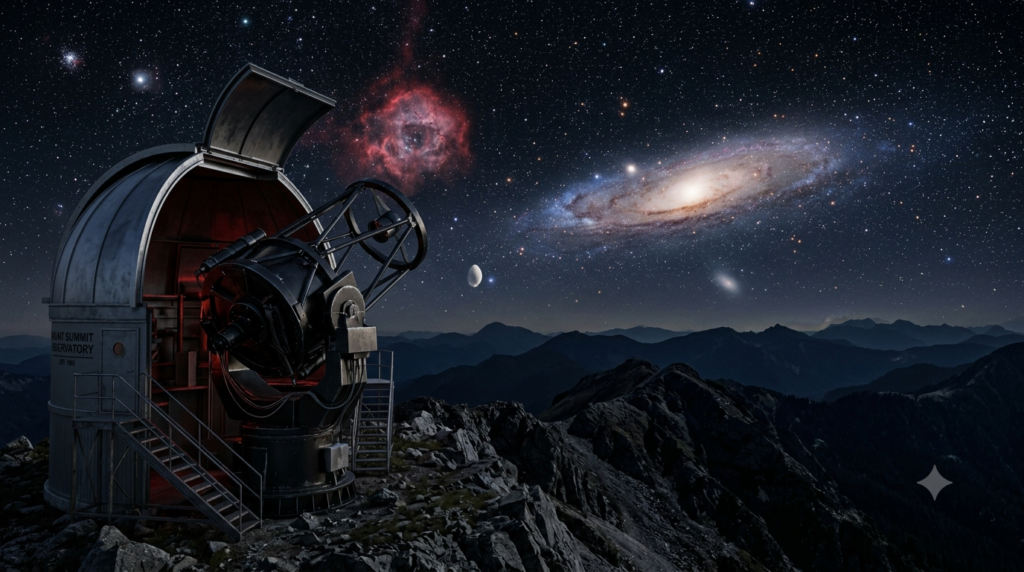
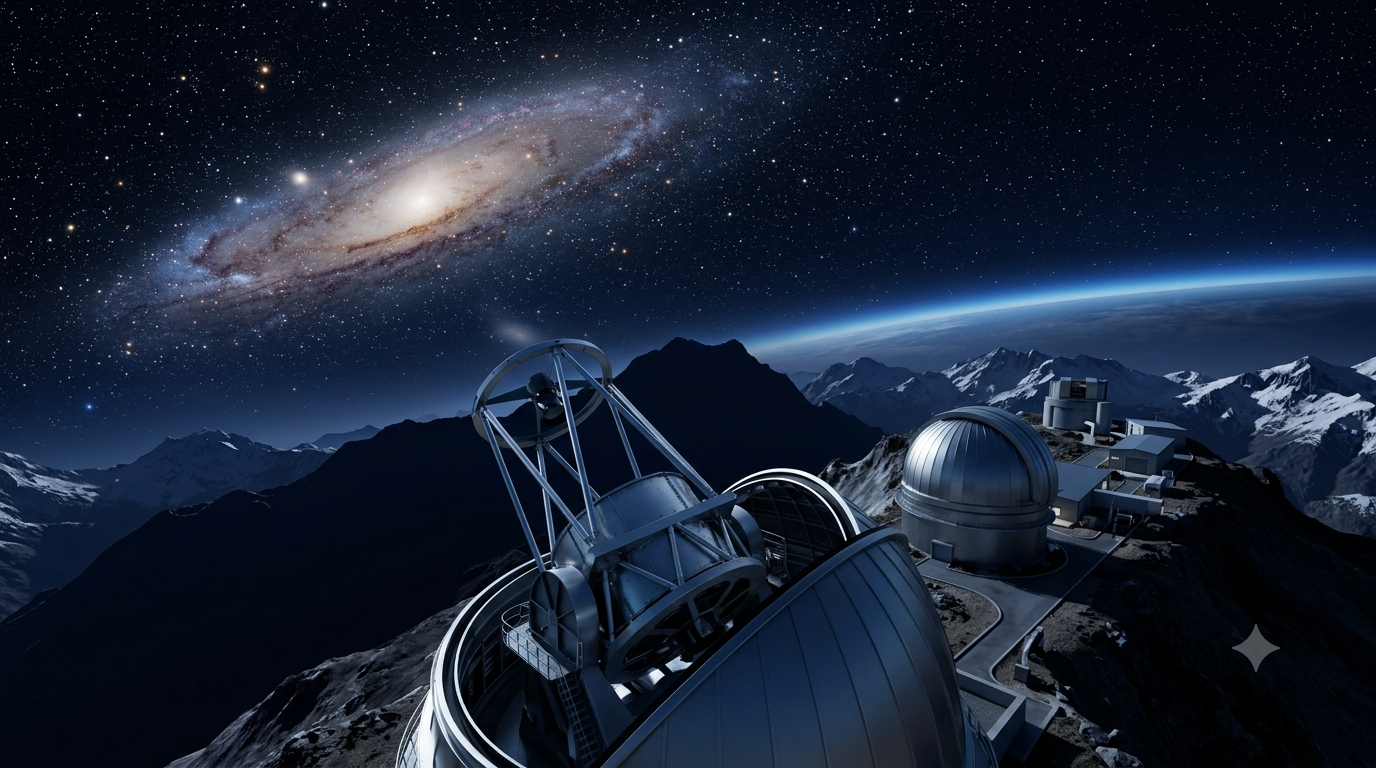
Optical telescopes collect visible light from celestial objects. They allow astronomers to observe planets, stars, nebulae, and galaxies.
Some telescopes use lenses to focus light, while others use mirrors. Large observatories often use mirror-based designs because they can collect substantial amounts of light.
Telescopes on Earth must account for atmospheric turbulence, clouds, and light pollution. Space telescopes avoid many of these limitations and can observe wavelengths that Earth’s atmosphere absorbs.
Radio Telescopes
Radio telescopes detect radio waves emitted by objects and processes in space.
They are useful for studying pulsars, clouds of gas, magnetic activity, and the cosmic microwave background. Networks of radio telescopes can work together to produce observations with very high angular resolution.
Radio astronomy reveals information that cannot always be obtained through visible-light observations.
Space Telescopes and Space Probes
Space telescopes observe the universe from above Earth’s atmosphere. Depending on their instruments, they can detect visible light, ultraviolet radiation, infrared radiation, X-rays, or other wavelengths.
Space probes travel to specific destinations to investigate planets, moons, asteroids, and comets. Some spacecraft orbit these objects, while others fly past them or land on their surfaces.
These missions provide close-up measurements that distant telescopes cannot always obtain.
Spectroscopy
Spectroscopy is the study of how light is distributed across different wavelengths.
When astronomers separate light into a spectrum, they can identify patterns associated with particular chemical elements and molecules. These patterns help reveal the composition, temperature, density, and movement of celestial objects.
For example, shifts in the wavelengths of spectral lines can provide information about whether an object is moving toward or away from an observer.
Spectroscopy allows astronomers to investigate the physical properties of distant objects without collecting samples directly.
Computer Models and Data Analysis
Modern astronomy produces enormous amounts of data. Scientists use computers and mathematical models to process observations, identify patterns, simulate physical processes, and compare predictions with measurements.
Computer simulations help researchers investigate events that unfold over millions or billions of years, such as galaxy formation and stellar evolution.
Statistical methods are also essential for distinguishing genuine discoveries from measurement errors or random patterns.
Astronomy therefore depends not only on telescopes but also on careful data analysis and scientific interpretation.
What Are the Main Branches of Astronomy?
Astronomy contains several specialized branches that focus on different objects, processes, or research methods.
Observational Astronomy
Observational astronomy involves collecting and analyzing information from celestial objects using telescopes, detectors, and other instruments.
Astronomers may observe visible light, radio waves, infrared radiation, X-rays, or other forms of electromagnetic radiation. Some research also uses neutrinos, cosmic rays, and gravitational waves to investigate cosmic events.
Theoretical Astronomy
Theoretical astronomy uses mathematical equations and physical principles to develop models of astronomical phenomena.
Theoretical researchers investigate questions such as how stars evolve, how galaxies form, and how gravity behaves under extreme conditions. Their models are compared with observations to determine how well they explain the evidence.
Solar Astronomy
Solar astronomy focuses on the Sun, including its magnetic field, atmosphere, surface features, and internal structure.
It helps scientists understand sunspots, solar flares, solar wind, and other forms of solar activity.
Planetary Astronomy
Planetary astronomy studies planets, moons, dwarf planets, asteroids, comets, and planetary systems.
It investigates how these objects form, what their surfaces and atmospheres are like, and how they change over time. It also overlaps with planetary science, which draws on geology, chemistry, atmospheric science, and other disciplines.
Stellar Astronomy
Stellar astronomy examines the formation, structure, evolution, and final stages of stars.
It helps scientists explain how stars produce energy, why their properties vary, and how stellar processes contribute to the chemical evolution of the universe.
Galactic and Extragalactic Astronomy
Galactic astronomy studies the Milky Way, while extragalactic astronomy investigates objects outside our galaxy.
Researchers in these fields examine the distribution of stars, gas, dark matter, and black holes, as well as interactions among galaxies.
Cosmology
Cosmology studies the universe on its largest scales, including its origin, expansion, structure, and evolution.
It draws heavily on astronomy, physics, mathematics, and observations of distant galaxies and the cosmic microwave background.
What Is the Difference Between Astronomy and Astrology?
Astronomy and astrology are sometimes confused because both have historical connections with observations of the sky. However, they are fundamentally different.
Astronomy is a scientific discipline that studies celestial objects and physical processes through observation, measurement, mathematical modelling, and evidence-based testing.
Astrology, by contrast, is a belief system that associates the positions of celestial bodies with human personality traits or events in people’s lives. Its claims have not been demonstrated to be reliable through scientific testing.
For example, astronomers can calculate when an eclipse will occur using the motions of the Sun, Earth, and Moon. Astrology may assign personal meaning to celestial positions, but its predictions about individual lives have not shown consistent scientific reliability.
Understanding this distinction helps people recognize the difference between a scientific explanation and a claim that lacks adequate empirical support.
How Is Astronomy Connected to Everyday Life?
Although many astronomical objects are extremely far away, astronomy has several connections to everyday life.
The Sun determines the natural day-night cycle through Earth’s rotation and provides the energy that drives much of Earth’s climate and weather systems. The Moon influences ocean tides through gravitational interactions with Earth.
Astronomical knowledge also contributes to accurate calendars and the measurement of time. Modern navigation systems depend on precise timing and satellite technology, although satellite navigation is an engineering application rather than a direct use of astronomical observation alone.
Astronomy-related research can support the development of imaging systems, sensors, and data-processing techniques. Space-weather research helps organizations understand possible disruptions to communication and navigation infrastructure.
Beyond these practical applications, astronomy encourages people to appreciate the natural world and think about Earth’s place in a much larger universe.
What Are the Challenges in Astronomy?
Despite major advances, astronomers face several important challenges.
Vast Distances
Many celestial objects are so distant that their light takes millions or billions of years to reach Earth. Sending spacecraft to even the nearest stars would be extremely difficult with current technology.
Scientists must therefore rely heavily on remote observations and indirect measurements.
Limited Observational Information
Astronomers cannot usually travel to distant stars or galaxies to collect samples. They must interpret signals such as light, radiation, and gravitational effects.
These measurements may be faint, incomplete, or affected by dust, background radiation, and instrumental limitations.
High Costs and Technical Complexity
Large telescopes, space observatories, and interplanetary missions require sophisticated equipment and substantial resources.
Researchers must design instruments that can operate reliably in demanding environments and collect measurements with sufficient accuracy.
Unanswered Scientific Questions
Many fundamental questions remain unresolved. Scientists are still investigating the nature of dark matter, the physical properties of dark energy, the formation of the first stars, and the possibility of life beyond Earth.
These unanswered questions make astronomy an active and continually developing field of research.
The Future of Astronomy
The future of astronomy will be shaped by increasingly powerful telescopes, improved detectors, advanced computer systems, and new space missions.
Next-generation observatories will help scientists study the atmospheres of exoplanets, investigate early galaxies, and examine the processes that govern the evolution of stars and black holes.
Artificial intelligence and machine-learning techniques can help researchers process large datasets and identify patterns that might otherwise be difficult to detect. However, discoveries still require careful verification, sound scientific methods, and independent evidence.
Future missions may also explore ocean-bearing moons, investigate the geology of Mars, and improve our understanding of potentially hazardous asteroids.
As instruments become more capable, astronomers will be able to investigate increasingly detailed questions about the universe. Some discoveries may answer long-standing questions, while others will introduce entirely new mysteries.
Conclusion
Astronomy is the scientific study of celestial objects, space, and the universe. It helps us understand stars, planets, galaxies, black holes, and the history of the cosmos. More importantly, it explains Earth’s place in space, supports technological development, contributes to planetary defense, and helps researchers investigate whether life could exist beyond our planet.
By combining observation, mathematics, physics, and advanced technology, astronomy transforms questions about the night sky into scientific knowledge. It also encourages curiosity, critical thinking, and cooperation among people around the world.
The universe remains full of unanswered questions, and every new observation can reveal something unexpected. Whether we are studying the Moon through a small telescope or examining distant galaxies with advanced observatories, astronomy reminds us that learning about the universe is also a way of understanding our own place within it.
FAQs
1. What is astronomy in simple words?
Astronomy is the scientific study of space, celestial objects, and the universe. It helps us understand the Sun, Moon, stars, planets, galaxies, black holes, and other objects beyond Earth. Astronomers use telescopes, satellites, spacecraft, and mathematical models to investigate how these objects form, move, and change over time. Astronomy also explores major questions about the origin and evolution of the universe. It combines subjects such as physics, mathematics, chemistry, and computer science to explain observations of the cosmos. In simple terms, astronomy helps us understand what exists in space and how the universe works.
2. Why is astronomy important?
Astronomy is important because it helps us understand the universe and Earth’s place within it. It explains natural phenomena such as seasons, lunar phases, and eclipses while expanding our knowledge of stars, planets, and galaxies. Astronomical research also supports space exploration, helps scientists monitor potentially hazardous asteroids, and improves our understanding of solar activity that can affect satellites and communication systems. In addition, astronomy encourages scientific curiosity, critical thinking, and technological innovation. By studying distant objects and cosmic history, scientists can investigate how the universe evolved and explore whether environments suitable for life exist beyond Earth.
3. What do astronomers study?
Astronomers study celestial objects and the physical processes that occur throughout the universe. Their research includes stars, planets, moons, asteroids, comets, galaxies, nebulae, black holes, and other cosmic structures. They also investigate how the universe began, how it expands, and how its contents change over time. Some astronomers focus on objects within our solar system, while others study distant galaxies or the earliest stages of cosmic history. Using telescopes, space missions, and computer simulations, astronomers analyze light and other signals to determine the properties, movements, and compositions of celestial objects that are often impossible to visit directly.
4. What is the difference between astronomy and astrology?
Astronomy is a scientific discipline that investigates celestial objects and the universe through observations, measurements, mathematical calculations, and evidence-based explanations. Astrology, in contrast, is a belief system that associates the positions of celestial bodies with human personalities, relationships, or future events. Although both have historical connections with observations of the sky, their methods and purposes are different. Astronomical predictions, such as the timing of eclipses, can be tested using physical laws and precise measurements. Astrology’s claims about individual lives have not demonstrated consistent scientific reliability. Therefore, astronomy is recognized as a science, whereas astrology is not considered a scientific discipline.
5. How do astronomers study distant objects in space?
Astronomers study distant objects using telescopes, satellites, space probes, and advanced scientific instruments. Optical telescopes collect visible light, while radio telescopes detect radio waves from celestial sources. Other instruments observe infrared radiation, ultraviolet light, X-rays, and different forms of electromagnetic radiation. By analyzing this information, scientists can estimate an object’s temperature, composition, distance, and movement. Spectroscopy helps identify chemical elements by examining patterns in light. Astronomers also use computer models and statistical techniques to interpret observations and test scientific explanations. These methods allow researchers to investigate stars and galaxies billions of light-years away without physically travelling to them.
6. What are the main branches of astronomy?
The main branches of astronomy include observational astronomy, theoretical astronomy, solar astronomy, planetary astronomy, stellar astronomy, galactic astronomy, extragalactic astronomy, and cosmology. Observational astronomy collects and analyzes data from celestial objects, while theoretical astronomy develops mathematical models to explain cosmic phenomena. Solar astronomy focuses on the Sun, and planetary astronomy investigates planets, moons, and smaller solar system bodies. Stellar astronomy examines the formation and evolution of stars. Galactic and extragalactic astronomy study our galaxy and objects beyond it. Cosmology investigates the origin, structure, expansion, and evolution of the universe. Together, these branches provide a broader understanding of space.
7. How does astronomy help us in everyday life?
Astronomy contributes to everyday life by improving our understanding of Earth’s relationship with the Sun and Moon, including day and night, seasons, and tides. Astronomical observations have historically helped people develop calendars and track time. Research connected with astronomy and space exploration has also encouraged advances in imaging, sensors, optical instruments, and data processing. Studying solar activity helps scientists understand space weather, which can affect satellites, navigation, radio communications, and electrical infrastructure. Astronomy also inspires interest in science and technology. Although many celestial objects are far away, research into them can provide knowledge and methods that benefit people on Earth.
8. What is the difference between astronomy and astrophysics?
Astronomy is the broad scientific study of celestial objects, space, and the universe. Astrophysics is a closely related field that emphasizes the physical principles governing these objects and phenomena. For example, astronomers may observe a star to determine its brightness, position, and movement. Astrophysicists may investigate the nuclear reactions that produce its energy or the physical processes that determine its temperature and lifespan. Both fields use observations, mathematics, and scientific models, and their work often overlaps. In modern research, the terms are frequently used together because understanding the universe requires both observing celestial objects and explaining the physical processes behind them.
9. Can astronomy help us find life beyond Earth?
Astronomy helps scientists investigate whether life could exist beyond Earth by identifying and studying planets orbiting other stars. These planets are called exoplanets. Researchers examine their sizes, orbits, temperatures, and atmospheres to determine whether some may have conditions suitable for life. Particular attention is given to planets where liquid water might exist under appropriate environmental conditions. Scientists also investigate chemical substances in planetary atmospheres that could potentially provide clues about biological activity. However, finding a potentially habitable planet does not prove that life exists there. So far, there is no confirmed scientific evidence of life beyond Earth, and research continues.
10. How can beginners start learning astronomy?
Beginners can start learning astronomy by observing the night sky and identifying familiar objects such as the Moon, bright planets, and prominent constellations. A simple sky map or astronomy application can help locate celestial objects and understand their apparent movements. Learning basic concepts about Earth’s rotation, the solar system, stars, and galaxies provides a useful foundation. Binoculars can offer rewarding views of the Moon and some star clusters, while a telescope can reveal additional details. Beginners can also visit planetariums, join astronomy clubs, and follow educational resources from scientific institutions. Regular observation and curiosity are excellent ways to develop astronomical knowledge.