
Formula for Finding the Average of Numbers

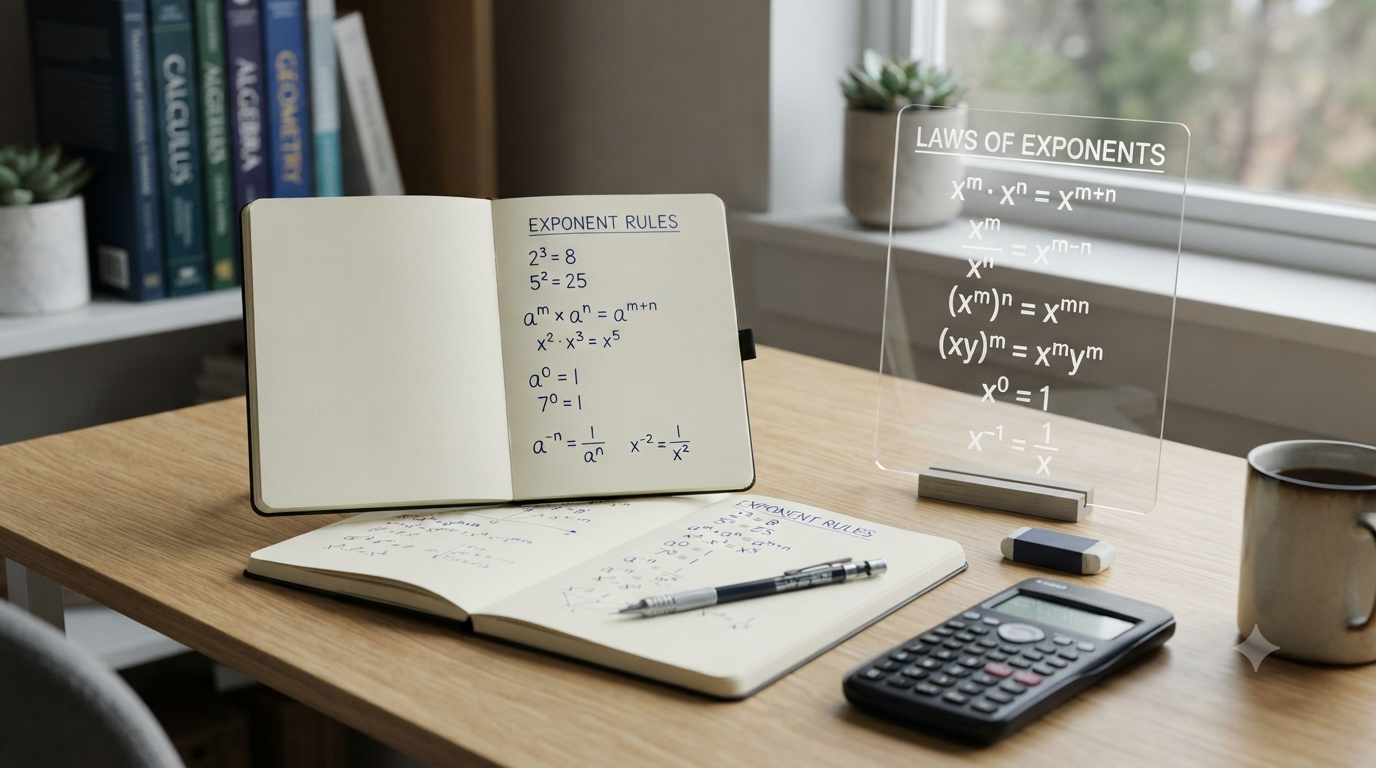
Mathematical calculation showing the formula for finding the average of numbers

The average is one of the most commonly used mathematical ideas in everyday life. We use averages to understand test scores, calculate monthly expenses, compare temperatures, analyze sports statistics, study measurements, and summarize groups of numbers. Instead of looking at every value separately, an average gives us a single number that represents the overall value of the group.

Finding an average is usually simple, but understanding what the formula means is just as important as knowing how to use it. The basic idea is to combine all the numbers and then share their total equally among the number of values. This article explains the formula for finding the average of numbers, how to apply it step by step, and how to handle different types of examples.

What Is the Average of Numbers?

The average of a group of numbers is a value that represents the central or typical value of those numbers. In basic mathematics, the average usually refers to the arithmetic mean.

For example, suppose five numbers are:

10, 20, 30, 40, 50

If we want to find their average, we first add all the numbers:

10 + 20 + 30 + 40 + 50 = 150

There are five numbers in the group. Dividing the total by 5 gives:

150 ÷ 5 = 30

Therefore, the average is 30.

The average does not necessarily have to be one of the original numbers. It can also be a decimal or fraction.

Formula for Finding the Average

The basic formula for finding the average of numbers is:

Average = Sum of all numbers ÷ Number of numbers

In symbols, it can be written as:

Average = Σx ÷ n

where:

  • Σx represents the sum of all the numbers.

  • n represents the total number of values.

So, whenever you need to find the average, there are two main things to determine:

  1. The sum of all the numbers.

  2. The total number of numbers.

Once these two quantities are known, divide the sum by the number of values.

How to Find the Average Step by Step

Finding an average becomes easy when the calculation is divided into simple steps.

Step 1: List the Numbers

First, identify all the numbers for which you want to find the average.

For example:

12, 18, 20, 25, 30

Step 2: Add All the Numbers

Add every value together.

12 + 18 + 20 + 25 + 30 = 105

So, the sum of the numbers is 105.

Step 3: Count the Numbers

Now count how many values are in the list.

There are 5 numbers.

Step 4: Divide the Sum by the Number of Values

Use the average formula:

Average = Sum ÷ Number of values

Therefore:

Average = 105 ÷ 5

Average = 21

So, the average of 12, 18, 20, 25, and 30 is 21.

Example of Finding the Average of Three Numbers

Consider the numbers:

8, 14, 18

First, find their sum:

8 + 14 + 18 = 40

There are three numbers.

Now divide:

Average = 40 ÷ 3

Average = 13.33…

Therefore, the average is approximately:

13.33

This example shows that the average does not always produce a whole number. It can be a decimal.

Example of Finding the Average of Five Numbers

Suppose the daily temperatures recorded over five days are:

24°C, 26°C, 25°C, 28°C, 27°C

First, add the temperatures:

24 + 26 + 25 + 28 + 27 = 130

There are five temperature values.

Therefore:

Average temperature = 130 ÷ 5

Average temperature = 26°C

So, the average temperature over the five days is 26°C.

Example With Larger Numbers

The same formula works for larger numbers.

Suppose a business records the following numbers of products sold over six days:

125, 150, 175, 140, 160, 190

First, calculate the total:

125 + 150 + 175 + 140 + 160 + 190 = 940

There are six values.

Now divide:

Average = 940 ÷ 6

Average = 156.67

Therefore, the average number of products sold per day was approximately 156.67.

The decimal does not mean that exactly 156.67 physical products were sold on one day. It represents the average when the total sales are distributed equally across the six days.

Average When the Numbers Include Decimals

The formula also works when the numbers contain decimal values.

Consider:

2.5, 3.5, 4.0, 5.0

First, add them:

2.5 + 3.5 + 4.0 + 5.0 = 15.0

There are four numbers.

Therefore:

Average = 15 ÷ 4

Average = 3.75

So, the average is 3.75.

The presence of decimal values does not change the process. Simply add all the values and divide by how many values there are.

Average of Numbers With Repeated Values

A number may appear more than once in a list. Each occurrence is counted as a separate value.

For example:

5, 5, 10, 10, 15

The sum is:

5 + 5 + 10 + 10 + 15 = 45

There are five numbers.

Therefore:

Average = 45 ÷ 5

Average = 9

The repeated values must be included in both the total and the count.

Why Do We Divide by the Number of Values?

Dividing by the number of values is what makes the average an equal-share value.

Suppose three people have:

  • Person A: 6 points

  • Person B: 9 points

  • Person C: 15 points

The total number of points is:

6 + 9 + 15 = 30

If those 30 points were shared equally among three people:

30 ÷ 3 = 10

Therefore, the average is 10.

This illustrates the basic meaning of an arithmetic average. It tells us what each value would be if the total were distributed equally.

Average and the Total Sum

The average formula can also be rearranged to find the total sum when the average and number of values are known.

The original formula is:

Average = Sum ÷ Number of values

If we want to find the sum:

Sum = Average × Number of values

For example, suppose the average of 8 numbers is 15.

Then:

Sum = 15 × 8

Sum = 120

Therefore, the total of the eight numbers is 120.

This relationship is useful when a problem gives you the average but does not provide the complete list of values.

Finding the Number of Values

The formula can also be rearranged to find the number of values.

Starting with:

Average = Sum ÷ Number of values

we can write:

Number of values = Sum ÷ Average

For example, suppose the total sum is 200 and the average is 25.

Then:

Number of values = 200 ÷ 25

Number of values = 8

Therefore, there are 8 values.

This shows that the average formula is not limited to finding the average itself. It can be rearranged depending on what information is missing.

Average in Real Life

Averages are used in many areas of everyday life.

School and Education

Teachers may calculate the average marks of a student across several tests. For example, if a student receives different scores in five tests, the average can provide a simple summary of overall performance.

Sports

Sports statistics often use averages. A player’s average score, runs, points, or other measurements can help summarize performance over multiple games.

Weather

Scientists and meteorologists use average temperatures and other measurements to describe weather patterns over periods of time.

Finance

People can calculate average monthly expenses, average income, or average spending to understand financial patterns.

Science

Scientists frequently collect multiple measurements and calculate averages to summarize experimental observations and reduce the effect of small variations between individual measurements.

Business

Businesses can calculate average sales, average revenue, average customer spending, and many other quantities to understand their operations.

Common Mistakes When Finding an Average

Although the formula is simple, several common mistakes can lead to incorrect answers.

Mistake 1: Forgetting to Count Every Number

If there are six numbers, you must divide the total by six. Counting only some of the values will produce an incorrect average.

Mistake 2: Adding the Numbers Incorrectly

An error in the addition will affect the final answer. It is useful to check the sum before performing the division.

Mistake 3: Dividing by the Wrong Number

The denominator should be the number of values, not the largest number, smallest number, or any other number in the list.

Mistake 4: Ignoring Repeated Values

If a number appears twice, both occurrences must be included in the sum and in the count.

For example, in:

4, 6, 6, 8

there are four values, not three.

Mistake 5: Rounding Too Early

When the division produces a decimal, rounding before completing other calculations can sometimes reduce accuracy. It is generally better to keep the required precision until the final answer.

How to Check an Average

There is a simple way to check whether an average is reasonable.

The average of a group of numbers should generally lie between the smallest and largest values.

For example, consider:

10, 20, 30, 40, 50

The average is 30, which lies between 10 and 50.

If you calculate an average of these numbers as 70, something has gone wrong because 70 is outside the range of the values.

This is a useful quick check, although it does not replace the actual calculation.

Average Formula in Different Forms

The basic average formula can be written in several equivalent ways.

Average = Sum of values ÷ Number of values

or:

Average = Σx ÷ n

The formula can also be rearranged:

Sum = Average × Number of values

and:

Number of values = Sum ÷ Average

These forms are useful for solving different types of mathematical problems.

Worked Example

Consider the following numbers:

16, 22, 18, 24, 20, 30

Find their average.

First, add all the values:

16 + 22 + 18 + 24 + 20 + 30 = 130

Next, count the values:

n = 6

Now apply the formula:

Average = 130 ÷ 6

Average = 21.666…

Therefore, the average is approximately:

21.67

We can check the answer by observing that the smallest value is 16 and the largest value is 30. The calculated average, approximately 21.67, falls within this range, so the result is reasonable.

Average Does Not Always Represent an Actual Value

An important point about averages is that the average does not have to be one of the numbers in the original group.

For example:

4, 7, 10

The sum is:

4 + 7 + 10 = 21

There are three values.

Therefore:

Average = 21 ÷ 3 = 7

In this case, the average happens to be one of the original values.

But consider:

4, 8, 10

The sum is:

22

There are three values.

So:

Average = 22 ÷ 3 = 7.33…

Here, 7.33… was not one of the original numbers.

The average is therefore a calculated representative value, not necessarily an observed value.

Conclusion

The formula for finding the average of numbers is simple and widely useful:

Average = Sum of all numbers ÷ Number of numbers

To find an average, first add all the values, then count how many values there are, and finally divide the total by that count. The result gives a single value that represents the equal distribution of the total among all the observations.

The same idea can be applied to marks, temperatures, measurements, expenses, sports statistics, business data, and scientific observations. Once the basic formula is understood, averages become much easier to calculate and interpret. Understanding the meaning behind the formula is also important because it helps you recognize mistakes and apply the concept correctly in different situations.

FAQs

1. What is the formula for finding the average of numbers?

The basic formula for finding the average of numbers is Average = Sum of all numbers ÷ Number of numbers. To use this formula, first add all the values in the given set. Then count how many values are present. Finally, divide the total sum by the number of values. For example, if the numbers are 10, 20, and 30, their sum is 60. There are three numbers, so the average is 60 ÷ 3 = 20. The average gives a single value that represents the equal sharing of the total among all the numbers.

2. How do you calculate the average of a set of numbers?

To calculate the average, follow three simple steps. First, add all the numbers together to find their total sum. Second, count the total number of values in the set. Third, divide the sum by the number of values. For example, consider 12, 18, 20, and 30. Their sum is 80, and there are four values. Therefore, the average is 80 ÷ 4 = 20. The same process works for whole numbers, decimals, and repeated values. The important point is to include every value in both the sum and the count before performing the division.

3. What is the average of 10, 20, 30, 40, and 50?

To find the average of 10, 20, 30, 40, and 50, first add all the numbers. Their sum is 10 + 20 + 30 + 40 + 50 = 150. Next, count the number of values. There are five numbers. Apply the average formula: Average = Sum ÷ Number of values. Therefore, the average is 150 ÷ 5 = 30. So, the average of these five numbers is 30. This example shows that the average can be calculated easily by finding the total and dividing it by the number of values in the group.

4. Can the average of numbers be a decimal?

Yes, the average of numbers can be a decimal. An average does not have to be a whole number because the total sum may not divide evenly by the number of values. For example, consider 5, 8, and 10. Their sum is 23, and there are three numbers. Therefore, the average is 23 ÷ 3 = 7.666…, or approximately 7.67. The decimal represents the equal-share value of the total. When calculating averages, you can keep the decimal as it is or round it to an appropriate number of decimal places depending on the purpose of the calculation.

5. Why do we divide the sum by the number of numbers?

We divide the sum by the number of numbers because an average represents an equal distribution of the total. Suppose three numbers are 6, 9, and 15. Their total is 30. If this total were shared equally among three values, each would receive 30 ÷ 3 = 10. Therefore, 10 is the average. Dividing by the number of values tells us how much of the total would belong to each value if everything were distributed equally. This is the basic idea behind the arithmetic mean and explains why counting the values correctly is essential.

6. How do you find the average when numbers are repeated?

Repeated numbers are treated as separate values when calculating an average. For example, consider 5, 5, 10, 10, and 15. Add all the values: 5 + 5 + 10 + 10 + 15 = 45. There are five numbers, including the repeated values. Therefore, the average is 45 ÷ 5 = 9. It would be incorrect to remove repeated values before calculating the average because each occurrence represents a separate observation. The same rule applies whether a number appears twice, three times, or many times. Every value should be included in both the sum and the count.

7. Can the average be one of the original numbers?

Yes, the average can be one of the original numbers, but it does not have to be. For example, consider 10, 20, and 30. Their sum is 60, and there are three numbers. The average is 60 ÷ 3 = 20. Here, 20 is one of the original values. However, consider 10, 20, and 25. Their sum is 55, so the average is 55 ÷ 3 = 18.33 approximately. In this case, 18.33 is not one of the original numbers. The average is a representative calculated value rather than necessarily an observed value.

8. What is the difference between average and sum?

The sum is the total obtained by adding all the numbers together, while the average is the sum divided by the number of values. For example, consider 10, 20, and 30. Their sum is 10 + 20 + 30 = 60. Since there are three numbers, their average is 60 ÷ 3 = 20. Therefore, the sum tells you the combined total, whereas the average tells you the equal-share value of that total. Both concepts are closely related, and the average can be calculated only after determining the sum and the number of values.

9. How can you check whether an average is reasonable?

A simple way to check an average is to compare it with the smallest and largest values in the original set. For example, if the numbers are 10, 20, 30, 40, and 50, the average is 30. The result lies between the smallest value, 10, and the largest value, 50. If your calculated average falls outside this range, there may be an error in the addition, counting, or division. This check does not replace the calculation, but it can help identify obvious mistakes. It is especially useful when working with larger groups of numbers.

10. How is the average formula useful in everyday life?

The average formula is useful in many everyday situations. Students can calculate average marks from several tests, while families can calculate average monthly expenses. Businesses may use average sales or average customer spending to understand their data. Scientists can calculate the average of repeated measurements to summarize observations. Sports statistics also frequently use averages to describe performance over several games or events. In each case, the basic formula remains the same: Average = Sum of all values ÷ Number of values. Learning this formula provides a simple way to summarize a group of numbers using one representative value.

Related Posts

Leave a Comment

Your email address will not be published. Required fields are marked *

Scroll to Top