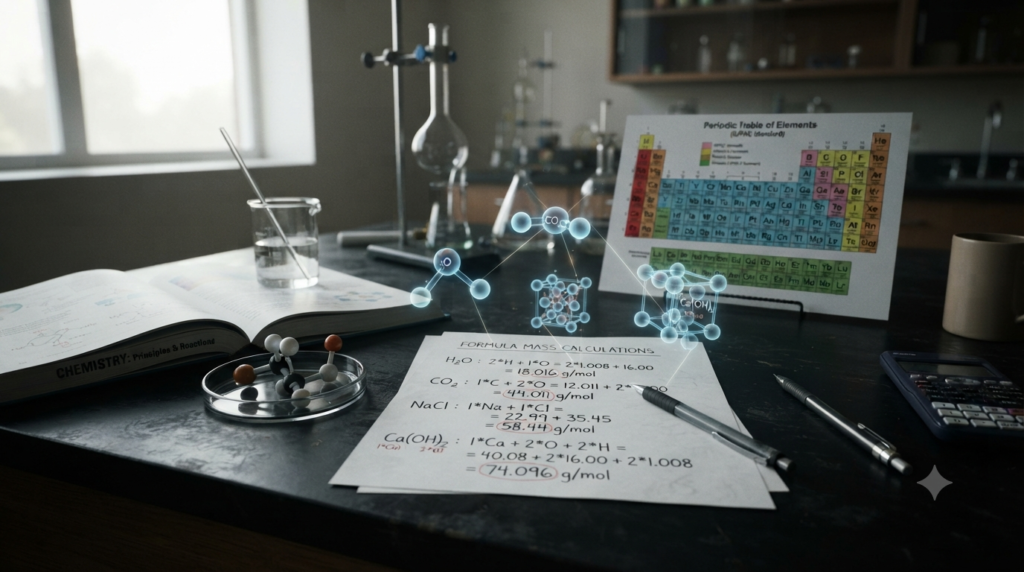
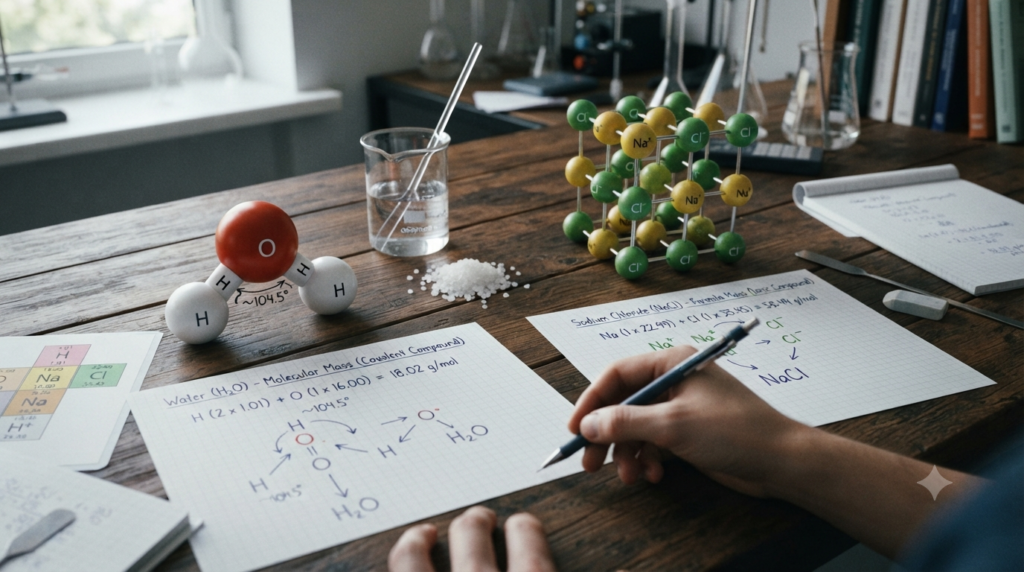
Chemistry involves many formulas, symbols, equations, ions, compounds, and numerical relationships. As the syllabus grows, simply memorizing formulas one after another can become confusing. A better approach is to organize chemistry formulas into clear groups so that each formula has a logical place and purpose. This makes revision faster and helps you remember formulas by understanding how they are connected.
A well-organized formula system can be useful before a test, during regular study, or when solving numerical problems. Instead of searching through scattered notes, you can quickly find formulas related to a particular topic. The goal is not to create the largest possible formula list, but to build a simple reference system that is easy to understand, update, and revise.
Why Should Chemistry Formulas Be Organized?
Chemistry formulas come from different areas of the subject. Some represent substances, while others describe relationships between quantities or show chemical reactions.
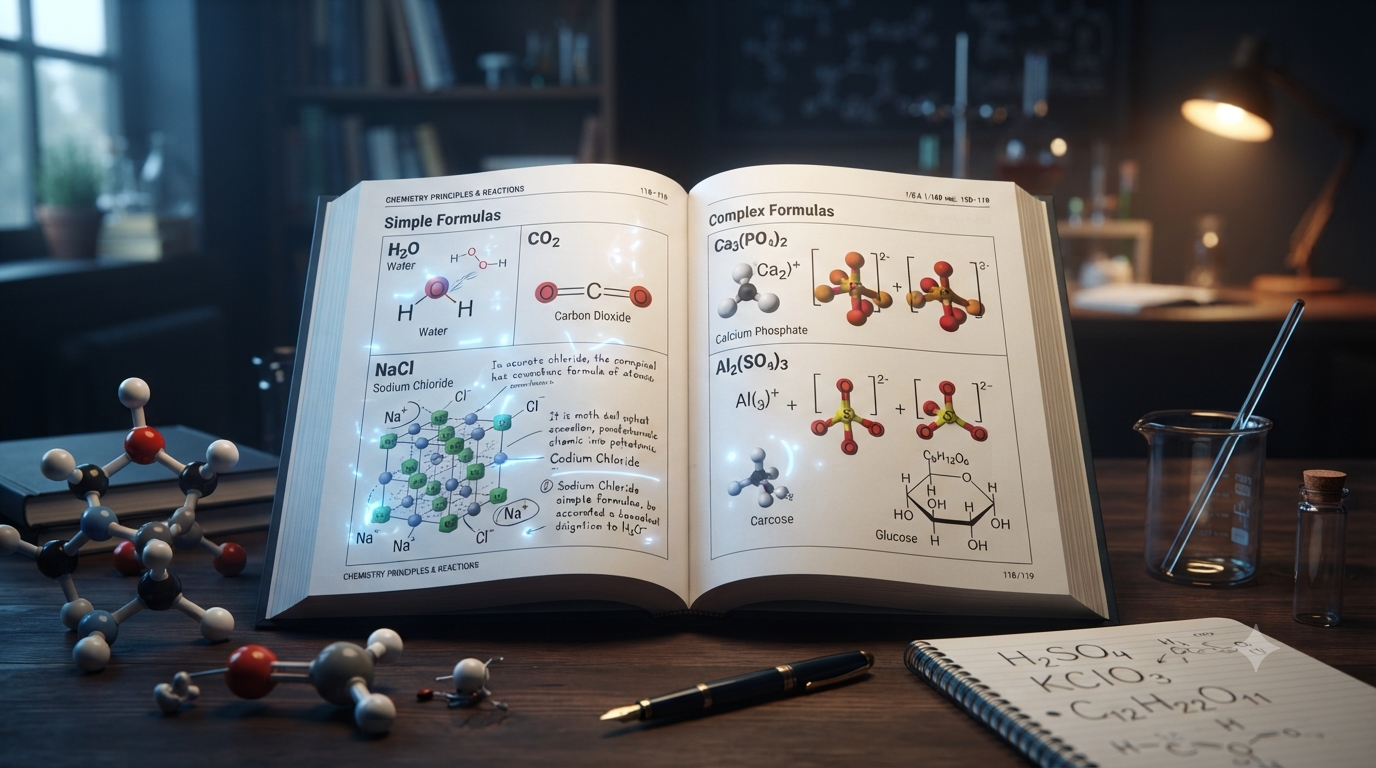
For example, H₂O represents water, NaCl represents sodium chloride, and CO₂ represents carbon dioxide. These are chemical formulas used to represent substances. On the other hand, formulas such as:
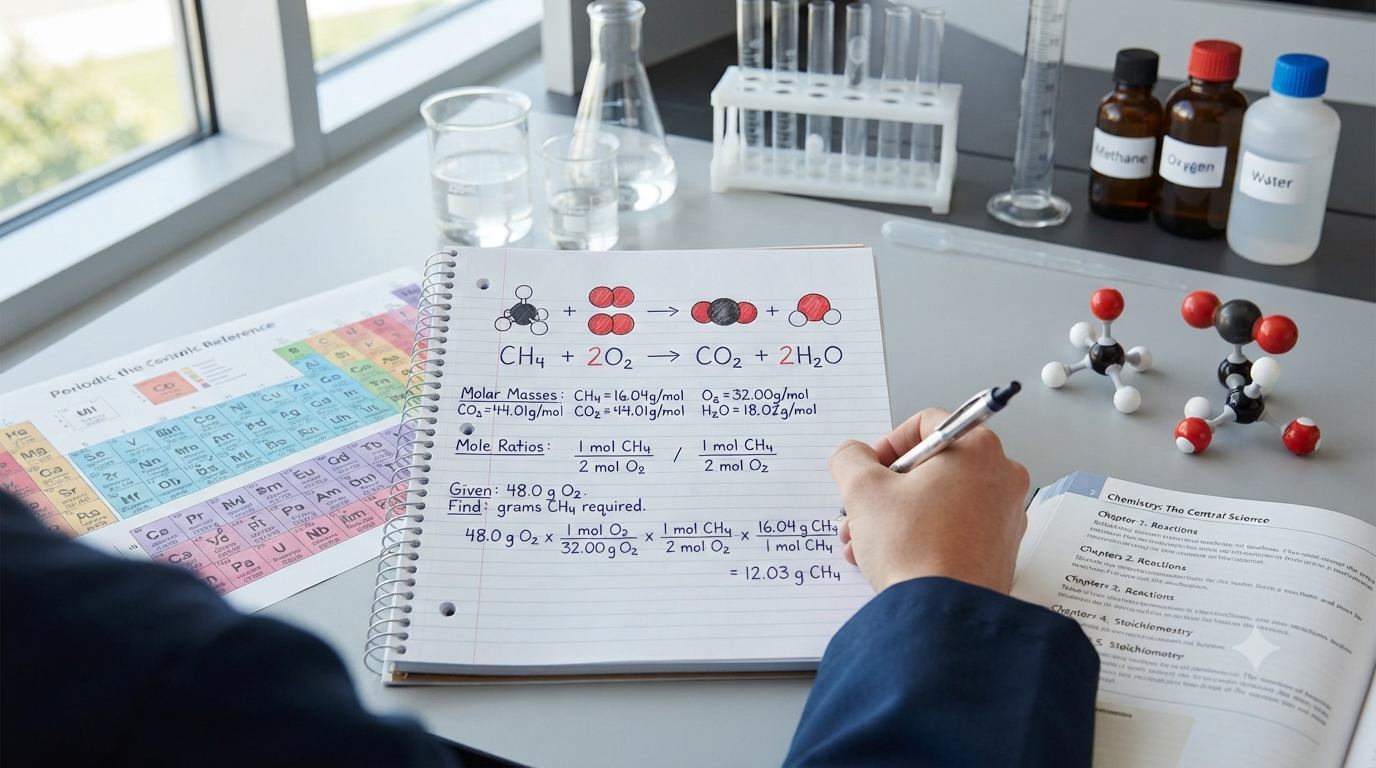
Moles = Given mass / Molar mass
Density = Mass / Volume
represent relationships used in calculations.
If all these formulas are written together without any structure, revision can become difficult. Organizing them into categories separates different types of information and makes recall easier.
An organized formula collection also helps identify patterns. For example, formulas involving acids, bases, salts, ions, and chemical reactions can be studied together. This allows you to connect formulas instead of treating every formula as an isolated fact.
Start With Major Chemistry Topics
The simplest way to organize chemistry formulas is to divide them according to major topics.
A basic formula notebook can have sections such as:
Basic chemical formulas
Atomic structure
Mole concept
Chemical reactions
Stoichiometry
Acids, bases, and salts
Solutions
Gas laws
Thermochemistry
Chemical equilibrium
Electrochemistry
Organic chemistry
Inorganic chemistry
The exact categories can change according to your syllabus. The important point is to avoid putting every formula on a single page.
For example, formulas related to the mole concept should remain together. When you revise the mole concept, you can review all its important relationships in one place rather than searching through several chapters.
Keep Chemical Formulas Separate From Calculation Formulas
One useful distinction is between chemical formulas and mathematical or quantitative formulas.
Chemical formulas identify substances.
Examples include:
H₂O — water
CO₂ — carbon dioxide
NH₃ — ammonia
CH₄ — methane
NaCl — sodium chloride
CaCO₃ — calcium carbonate
Calculation formulas are used to find quantities.
Examples include:
Moles = Given mass / Molar mass
Number of particles = Moles × Avogadro constant
Density = Mass / Volume
Keeping these two groups separate prevents confusion. A student can maintain one section for common chemical formulas and another for formulas used in numerical problems.
Organize Formulas According to Their Purpose
Another useful method is to classify formulas according to what they do.
Formulas That Represent Substances
These formulas show the composition of compounds or substances.
For example:
H₂O
CO₂
H₂SO₄
NaOH
CaCO₃
These formulas contain element symbols and subscripts that indicate the composition of a substance.
Formulas Used for Calculations
These formulas connect measurable quantities.
For example:
Moles = Given mass / Molar mass
Mass = Moles × Molar mass
Molarity = Moles of solute / Volume of solution in litres
Such formulas should be collected in a separate calculation section.
Formulas Used in Chemical Reactions
Some formulas appear as part of chemical equations.
For example:
2H₂ + O₂ → 2H₂O
CaCO₃ → CaO + CO₂
These should be studied along with the reaction type and conditions when relevant.
This organization makes it easier to understand not only what a formula represents but also how it is used.
Create a Chemistry Formula Notebook
A dedicated formula notebook can make revision much easier. It does not need to be large. The main purpose is to create a compact reference that contains the formulas you actually need.
Start each chapter on a new page. Write the chapter name clearly at the top. Under it, divide formulas into smaller groups.
For example:
Mole Concept
Moles = Given mass / Molar mass
Number of particles = Moles × Avogadro constant
Molar mass = Mass / Number of moles
Solutions
Molarity = Moles of solute / Volume of solution in litres
Mass concentration = Mass of solute / Volume of solution
This structure makes the notebook easier to scan during revision.
Write the Meaning of Every Symbol
A formula becomes much easier to use when the symbols are explained.
For example:
Density = Mass / Volume
Here:
Density = mass per unit volume
Mass = amount of matter in the substance
Volume = space occupied by the substance
Similarly, if you write:
n = m / M
you should record:
n = number of moles
m = given mass
M = molar mass
This small habit prevents mistakes caused by forgetting what a symbol represents.
Include Units With Formulas
Units are an important part of chemistry calculations. Therefore, do not write numerical formulas without recording their commonly used units.
For example:
Density = Mass / Volume
Mass may be measured in grams and volume may be measured in cubic centimetres or millilitres, depending on the situation.
For molarity:
Molarity = Moles of solute / Volume of solution in litres
The unit of molarity is mol/L or mol dm⁻³.
Writing units beside formulas reminds you to check whether the quantities in a problem are expressed in compatible units.
Keep Related Formulas Together
Many chemistry formulas are connected mathematically. Keeping related formulas together makes them easier to remember.
For example:
Moles = Given mass / Molar mass
Given mass = Moles × Molar mass
Molar mass = Given mass / Moles
Instead of memorizing three unrelated expressions, understand that they come from the same relationship.
This method is particularly helpful in numerical chemistry. When one form of a relationship is understood, the other forms can often be rearranged when needed.
Use Tables for Common Ions
Chemical formulas often depend on ions and their charges. A compact ion table can therefore be extremely useful.
For example:
| Ion | Formula | Charge |
|---|
| Sodium | Na⁺ | +1 |
| Potassium | K⁺ | +1 |
| Magnesium | Mg²⁺ | +2 |
| Calcium | Ca²⁺ | +2 |
| Aluminium | Al³⁺ | +3 |
| Chloride | Cl⁻ | −1 |
| Oxide | O²⁻ | −2 |
| Sulfate | SO₄²⁻ | −2 |
| Nitrate | NO₃⁻ | −1 |
| Hydroxide | OH⁻ | −1 |
Such a table can help when writing ionic formulas.
For example, calcium has a +2 charge and chloride has a −1 charge, so the compound is:
CaCl₂
The subscript ₂ is necessary to balance the charges.
Organize Acids, Bases, and Salts Separately
Acids, bases, and salts contain many commonly used formulas. Keeping them together creates a useful revision section.
Examples of common acids include:
HCl — hydrochloric acid
H₂SO₄ — sulfuric acid
HNO₃ — nitric acid
CH₃COOH — acetic acid
Common bases include:
NaOH — sodium hydroxide
KOH — potassium hydroxide
Ca(OH)₂ — calcium hydroxide
Common salts include:
NaCl — sodium chloride
Na₂CO₃ — sodium carbonate
CaCO₃ — calcium carbonate
CuSO₄ — copper sulfate
The purpose of this section is not simply memorization. Understanding the ions and composition of these substances helps explain how their formulas are constructed.
Create a Separate Section for Organic Chemistry
Organic chemistry can contain a large number of formulas, so it is useful to organize them according to functional groups and compound families.
For example:
Alkanes — CₙH₂ₙ₊₂
Alkenes — CₙH₂ₙ
Alkynes — CₙH₂ₙ₋₂
These general formulas can be studied together.
You can also create sections for alcohols, aldehydes, ketones, carboxylic acids, and other important organic families according to your syllabus.
Instead of writing dozens of compounds randomly, arrange them according to their structural patterns and functional groups.
Use a Formula Summary at the End of Each Chapter
After completing a chapter, create a small summary page containing only the most important formulas.
For example, a mole concept summary might contain:
Moles = Given mass / Molar mass
Number of particles = Moles × Avogadro constant
Molar mass = Mass / Number of moles
This summary should be shorter than your full chapter notes.
The purpose is quick revision. Before an examination, you should be able to review the chapter’s essential formulas in a few minutes.
Mark Frequently Used Formulas
Not every formula needs equal attention. Some formulas are used repeatedly in numerical problems, while others may appear less frequently.
You can mark important formulas with a simple symbol such as a star.
For example:
★ Moles = Given mass / Molar mass
★ Molarity = Moles of solute / Volume of solution in litres
Avoid marking almost every formula as important. If everything is highlighted, nothing stands out.
Add One Example Beside Difficult Formulas
A formula can sometimes be remembered more easily when accompanied by a short example.
For instance:
Moles = Given mass / Molar mass
If a substance has a mass of 18 g and its molar mass is 18 g/mol:
Moles = 18 / 18 = 1 mol
A small example demonstrates how the formula works. However, the formula notebook should not become a complete problem-solving notebook. Keep examples short and relevant.
Review Formulas Using Active Recall
Reading formulas repeatedly does not always lead to strong memory. A better method is to close the notebook and try to recall the formulas yourself.
For example, write:
Molarity = ?
Then try to complete the formula without looking at your notes.
You can also ask yourself:
What does this formula calculate?
What does each symbol represent?
What units should be used?
When is this formula applicable?
What related formulas can be obtained from it?
This turns formula revision into active practice.
Revise Formulas in Small Groups
Trying to memorize fifty or one hundred formulas at once can become overwhelming. Instead, divide them into smaller groups.
For example:
Day 1 — Basic chemical formulas
Day 2 — Mole concept formulas
Day 3 — Stoichiometry formulas
Day 4 — Solutions formulas
Day 5 — Gas law formulas
Day 6 — Acids and bases
Day 7 — Review
The exact schedule can be adjusted according to your syllabus and available time. The important principle is to revise manageable groups rather than attempting everything in one sitting.
Check Formulas While Solving Problems
Formula organization becomes much more useful when connected to problem solving. After learning a formula, solve a few problems that require it.
If you repeatedly make the same mistake, add a short note beside the formula.
For example:
Molarity = Moles of solute / Volume of solution in litres
Remember: Convert volume to litres before using the formula.
Such notes can prevent repeated errors during future revision.
Update Your Formula Notes Regularly
Your formula notebook should not be treated as a fixed document. Add important formulas when you encounter them during lessons, textbook exercises, or problem solving.
At the same time, avoid copying every equation you see. Ask whether the formula is useful for revision and whether you understand what it means.
A good formula collection should become more organized over time, not simply longer.
Keep a One Page Final Revision Sheet
Before an important examination, create a final one-page formula sheet containing the formulas that require the most attention.
It might include:
Important chemical formulas
Mole relationships
Concentration formulas
Gas laws
Thermochemistry relationships
Equilibrium expressions
Electrochemistry formulas
Important organic general formulas
Common ions and charges
The exact content depends on the syllabus.
This final sheet should be highly condensed. It is designed for quick revision rather than detailed learning.
Common Mistakes to Avoid
Memorizing Without Understanding
Knowing a formula but not knowing what it represents can cause problems when a question is presented differently.
Mixing Units
A formula may be correct, but incorrect units can produce an incorrect answer. Always check units before calculation.
Writing Similar Formulas Together Without Explanation
Some formulas look similar but have different meanings. Write the purpose of each formula clearly.
Making Notes Too Complicated
Too many colors, symbols, decorations, and separate sections can make revision slower. Keep the system simple.
Copying Formulas Without Checking Them
A formula copied incorrectly can create repeated mistakes. Verify important formulas using your textbook, teacher’s notes, or reliable reference material.
A Simple Formula Organization System
A practical chemistry formula system can follow this order:
1. Chemical formulas
Compounds, acids, bases, salts, and common substances.
2. Ions and charges
Common positive ions, negative ions, and polyatomic ions.
3. Chapter formulas
Formulas arranged according to chemistry topics.
4. Symbol meanings
Definitions of variables and symbols.
5. Units
Common units associated with each quantitative formula.
6. Short examples
One simple example for difficult formulas.
7. Formula relationships
Related formulas grouped together.
8. Final revision sheet
The most important formulas condensed into a quick-reference page.
This structure is simple enough to maintain and detailed enough to support regular revision.
Conclusion
Organizing chemistry formulas is more effective than simply collecting and memorizing them. A clear system allows you to group formulas by topic, purpose, chemical family, symbols, and units. It also helps you recognize relationships between formulas and understand how they are used in calculations and chemical equations.
A good chemistry formula notebook should be simple, accurate, and easy to revise. Keep chemical formulas separate from calculation formulas, organize related expressions together, record the meaning of symbols, include units, and use short examples where necessary. Regular active recall and problem solving can then turn the organized notes into useful long-term knowledge.
The aim is not to memorize the biggest list of formulas. The aim is to create a system in which every formula has a clear place and meaning. When formulas are organized logically, chemistry revision becomes faster, clearer, and much easier to manage.