Physics is the branch of science that helps us understand how the universe works, from the motion of everyday objects to the behavior of atoms, stars, and galaxies. The scientists who study these phenomena are called physicists. They investigate the fundamental laws of nature, explore the properties of matter and energy, and try to explain why physical events happen in particular ways. Physicists use experiments, mathematical models, observations, and scientific theories to answer questions about the natural world. Their work contributes to many areas of modern life, including electricity, communication, medical technology, space exploration, and computer development. Whether they are studying tiny particles or enormous cosmic structures, physicists help expand our understanding of the universe and develop knowledge that can lead to new discoveries and useful technologies.
What Is a Physicist?
A physicist is a scientist who studies physics, the science of matter, energy, motion, forces, space, and time. Physicists investigate how physical systems behave and identify the principles that explain natural phenomena.
For example, a physicist may study why objects fall toward Earth, how light travels through space, how electricity flows through a circuit, or how stars produce energy. Some physicists investigate extremely small particles, while others study planets, black holes, and the structure of the universe.
Physicists do not rely only on observations or assumptions. They use scientific methods to develop explanations, test predictions, and compare their results with evidence. When experimental results do not match an existing theory, physicists may investigate the problem and develop a better explanation.
The work of a physicist can be theoretical, experimental, computational, or a combination of these approaches. Some physicists concentrate on understanding the basic laws of nature, while others apply physical principles to solve practical problems.
What Do Physicists Study?
Physicists study a wide range of subjects because physics covers many aspects of the natural world. Their research can focus on the smallest building blocks of matter, the movement of objects, the behavior of energy, or the evolution of the universe.
1. Matter and Its Properties
Matter is anything that has mass and occupies space. Physicists study the structure, properties, and behavior of matter under different conditions.
They investigate questions such as how solids, liquids, and gases behave, how materials respond to heat, and how atoms combine to form different substances. They also explore the behavior of matter under extreme pressure, high temperatures, and very low temperatures.
At smaller scales, physicists examine atoms, electrons, protons, neutrons, and other particles. Understanding these structures helps scientists explain the properties of materials and develop technologies used in electronics, energy production, and advanced manufacturing.
2. Motion and Forces
Motion describes a change in the position of an object over time. Forces are interactions that can change an object’s motion or shape.
Physicists study how objects move, accelerate, collide, rotate, and respond to forces. They use these principles to explain everyday events, such as a ball falling to the ground or a vehicle slowing down when its brakes are applied.
Mechanics, the branch of physics concerned with motion and forces, is essential for understanding machines, buildings, vehicles, and many engineering systems.
By studying motion and forces, physicists can predict how objects will behave under particular conditions. These predictions are useful in transportation, robotics, sports science, and the design of mechanical systems.
3. Energy and Its Transformations
Energy is the capacity to produce change or do work. It appears in several forms, including kinetic energy, potential energy, thermal energy, chemical energy, electrical energy, and radiant energy.
Physicists study how energy moves between objects and changes from one form to another. For example, a moving bicycle has kinetic energy, while a raised object has gravitational potential energy. In a power station, other forms of energy are converted into electrical energy.
An important principle in physics is the conservation of energy. In an isolated system, energy is not created or destroyed; it changes form or transfers between different parts of the system.
Understanding energy is important for developing efficient machines, improving renewable energy technologies, designing electrical systems, and studying the energy processes that occur in stars.
4. Heat and Temperature
Heat and temperature are related concepts, but they do not mean the same thing. Temperature measures how hot or cold something is, while heat refers to energy transferred because of a temperature difference.
Physicists study how thermal energy moves through materials, how substances expand when heated, and how gases behave when their temperature or pressure changes.
They also investigate thermodynamics, which examines heat, work, energy, and the behavior of physical systems.
These studies have practical applications in refrigerators, air conditioners, engines, industrial equipment, and thermal power plants. They also help scientists understand the temperature of planets, the interiors of stars, and the behavior of matter under extreme conditions.
5. Light and Optics
Light is a form of electromagnetic radiation that allows us to see the world around us. Physicists study how light travels, reflects, refracts, interferes, and interacts with matter.
Optics is the branch of physics that focuses on the behavior and applications of light. Physicists working in this field investigate lenses, mirrors, lasers, optical fibers, and imaging systems.
Their research supports the development of cameras, microscopes, telescopes, medical imaging equipment, and fiber-optic communication networks.
Light also plays an important role in astronomy. By analyzing light received from distant objects, scientists can learn about the temperature, composition, motion, and distance of stars and galaxies.
6. Electricity and Magnetism
Electricity and magnetism are closely connected physical phenomena. Electricity involves electric charges and their interactions, while magnetism is associated with moving charges and certain properties of matter.
Physicists study electric fields, magnetic fields, electric circuits, electromagnetic waves, and the relationship between electricity and magnetism.
Their discoveries have helped make electric motors, generators, transformers, and many communication technologies possible.
Electromagnetism is also important in modern electronics, wireless communication, radar systems, and medical equipment. Physicists continue to investigate electromagnetic materials and devices to improve their performance and discover new applications.
7. Atoms and Subatomic Particles
Atoms are the basic units of chemical elements. They contain a nucleus surrounded by electrons, while the nucleus consists of protons and neutrons. Protons and neutrons are themselves made of smaller particles called quarks.
Physicists who study atomic and subatomic systems investigate the structure of matter and the fundamental interactions that govern particles.
Atomic physics focuses on the properties and behavior of atoms and their electrons. Nuclear physics studies atomic nuclei, including their structure, stability, and reactions. Particle physics explores fundamental particles and the forces through which they interact.
This research contributes to our understanding of the universe and has applications in medical imaging, radiation treatment, nuclear energy, and materials research.
8. Space, Stars, and the Universe
Some physicists study physical processes beyond Earth. They investigate stars, planets, galaxies, black holes, and the large-scale structure of the universe.
Astrophysics applies the principles of physics to astronomical objects and phenomena. Astrophysicists examine how stars form, how they produce energy, how galaxies evolve, and what happens near black holes.
Cosmology focuses on the origin, evolution, structure, and possible future of the universe as a whole.
Scientists use telescopes, satellites, mathematical models, and computer simulations to investigate these questions. Their work helps explain how the universe developed and how physical laws operate on enormous scales.
9. Space and Time
Physicists also investigate the fundamental nature of space and time. These concepts are central to classical mechanics, relativity, and modern theories of the universe.
Albert Einstein’s theory of special relativity showed that measurements of space and time depend on the relative motion of observers. His general theory of relativity explained gravity in terms of the curvature of spacetime caused by mass and energy.
Physicists use these ideas to understand phenomena such as gravitational waves, black holes, and the motion of objects under strong gravitational effects.
Research into space and time also helps scientists investigate fundamental questions about the structure and behavior of the universe.
What Does a Physicist Do?
The daily work of a physicist depends on their specialization, workplace, and research goals. However, most physicists use systematic methods to investigate questions and develop reliable explanations.
Conducting Experiments
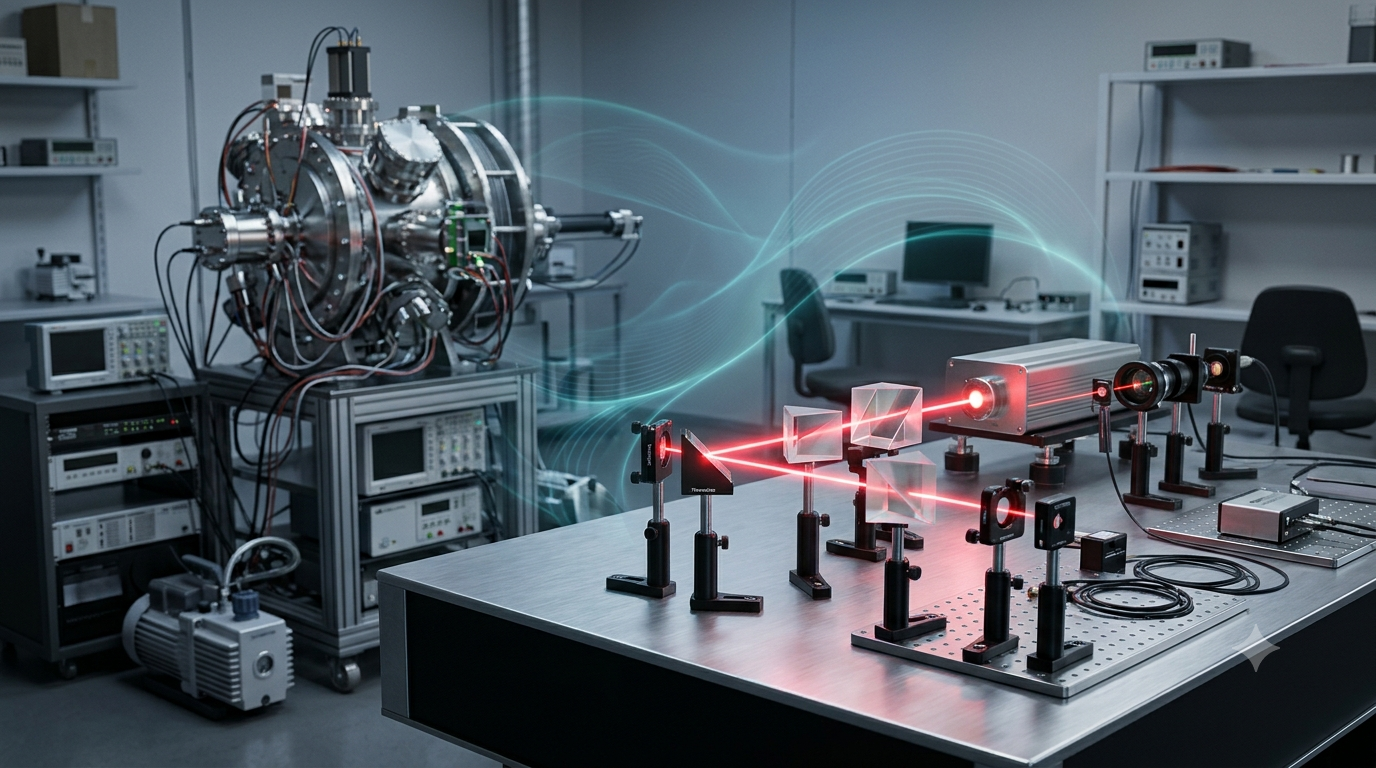
Experimental physicists design and perform experiments to observe physical phenomena. They may use lasers, particle detectors, vacuum chambers, electrical instruments, or specialized laboratory equipment.
For example, a physicist investigating the properties of a new material might expose it to different temperatures, measure its electrical conductivity, and compare the results under controlled conditions.
Careful measurements and repeated tests help physicists determine whether their findings are reliable.
Developing Mathematical Models
Physicists use mathematics to describe physical relationships and predict how systems behave.
A mathematical model may explain the motion of a falling object, the flow of electricity through a circuit, or the movement of planets around a star.
These models allow physicists to make predictions that can be compared with observations and experiments. If a model fails to explain the evidence, it may need to be revised.
Analyzing Data
Many physics experiments produce large amounts of data. Physicists analyze these measurements to identify patterns, test hypotheses, and estimate uncertainty.
They often use statistical methods and computer programs to process experimental results. In fields such as astronomy and particle physics, computational analysis is essential because the observations can be extremely complex.
Using Computer Simulations
Computer simulations allow physicists to study systems that may be difficult, expensive, or impossible to investigate directly.
For example, simulations can help scientists model the formation of galaxies, predict the behavior of fluids, investigate collisions between particles, or examine how materials respond to extreme conditions.
Simulations do not replace experiments in every situation. Instead, they complement observations, mathematical models, and laboratory investigations.
Publishing and Communicating Research
Physicists share their findings through scientific papers, conferences, presentations, and educational activities.
Communicating results allows other researchers to evaluate the methods, repeat experiments, and build on existing knowledge. Scientific collaboration is particularly important when research requires expensive equipment or teams with different areas of expertise.
Some physicists also teach students, explain scientific ideas to the public, or advise organizations that use scientific research.
Major Branches of Physics
Physics has several major branches, each focusing on particular physical systems or phenomena.
Classical Mechanics
Classical mechanics studies the motion of objects and the forces acting on them. It is useful for understanding machines, projectiles, planetary motion, and many everyday mechanical systems.
Thermodynamics
Thermodynamics investigates heat, temperature, work, and energy transformations. It helps explain the operation of engines, refrigerators, and industrial energy systems.
Electromagnetism
Electromagnetism studies electric charges, electric fields, magnetic fields, and electromagnetic waves. It forms the foundation of many electrical and communication technologies.
Quantum Mechanics
Quantum mechanics describes the behavior of matter and energy at atomic and subatomic scales. It explains phenomena that cannot be fully understood using classical physics alone.
Quantum principles are essential for understanding atoms, semiconductors, lasers, and many modern electronic devices.
Relativity
Relativity examines the relationships between space, time, motion, gravity, and energy. It is important for studying high-speed objects, strong gravitational fields, and the structure of the universe.
Nuclear and Particle Physics
Nuclear physics investigates atomic nuclei and nuclear reactions, while particle physics studies fundamental particles and their interactions.
These fields help scientists understand the composition of matter and the processes that occur in stars and particle accelerators.
Condensed Matter Physics
Condensed matter physics examines the physical properties of solids, liquids, and other systems containing large numbers of interacting particles.
Research in this field contributes to the development of semiconductors, superconductors, magnetic materials, sensors, and electronic devices.
Where Do Physicists Work?
Physicists work in a variety of professional environments. Their opportunities depend on their education, research interests, and technical skills.
Universities and colleges: Many physicists teach physics, supervise students, and conduct academic research.
Research laboratories: Physicists investigate fundamental scientific questions or develop new experimental methods and technologies.
Government institutions: Some work in national laboratories, space research organizations, scientific agencies, and other public research institutions.
Technology companies: Physicists contribute to semiconductor development, optical systems, advanced materials, computing technologies, and electronic devices.
Healthcare and medical research: Physicists specializing in medical physics help develop and improve radiation therapy, diagnostic imaging, and radiation safety practices.
Energy and environmental industries: Physicists work on renewable energy systems, energy efficiency, nuclear technology, and scientific methods for studying environmental processes.
Education and science communication: Some physicists become teachers, writers, science communicators, or educational content developers.
Not every physicist works in a laboratory. Many spend much of their time analyzing data, developing computer models, teaching, or collaborating with other professionals.
What Skills Does a Physicist Need?
Becoming a physicist requires scientific knowledge and the ability to investigate problems carefully. Several skills are particularly useful.
Mathematical Ability
Mathematics is an essential tool in physics. Physicists use algebra, geometry, calculus, statistics, and other mathematical methods to describe physical systems and interpret results.
Critical Thinking
Physicists must evaluate evidence, identify assumptions, and determine whether a proposed explanation is consistent with observations.
Critical thinking helps them distinguish between a reasonable hypothesis and a conclusion supported by reliable evidence.
Problem-Solving
Physics problems often require several steps. Physicists learn to identify the relevant principles, select suitable equations, make calculations, and evaluate whether their answers make physical sense.
Experimental and Technical Skills
Experimental research requires accurate measurements, careful equipment handling, and an understanding of laboratory procedures.
Depending on the field, physicists may also need programming, electronics, instrumentation, or data-analysis skills.
Curiosity and Patience
Scientific research does not always produce immediate answers. Experiments may fail, results may be unclear, and existing explanations may need to be reconsidered.
Curiosity encourages physicists to ask new questions, while patience helps them investigate problems systematically.
How Do You Become a Physicist?
The usual path to becoming a physicist begins with a strong foundation in mathematics and science.
1. Study Physics and Mathematics
At school, students should develop a clear understanding of physics, mathematics, and basic scientific principles. Topics such as motion, forces, energy, electricity, and waves provide a useful foundation.
2. Earn a Relevant Bachelor’s Degree
Students can pursue a bachelor’s degree in physics or a closely related field. Undergraduate study introduces them to mechanics, electromagnetism, thermodynamics, quantum physics, laboratory techniques, and mathematical methods.
3. Pursue Further Education When Needed
A master’s degree or PhD is often necessary for research-intensive careers, university positions, and many specialized scientific roles. The exact requirements depend on the position and country.
4. Gain Research Experience
Laboratory projects, internships, research placements, and computational projects help students develop practical skills and understand how scientific investigations are conducted.
5. Choose a Specialization
As their education progresses, students may focus on areas such as astrophysics, quantum physics, nuclear physics, materials science, medical physics, or theoretical physics.
Not every career involving physics requires a PhD. Some technical, industrial, educational, and applied positions may be available with a bachelor’s or master’s degree, depending on the employer and role.
Why Are Physicists Important?
Physicists contribute to society by improving scientific understanding and helping develop technologies that influence everyday life.
Research in electromagnetism supports electricity generation, electric motors, and communication systems. Quantum physics helps explain how semiconductors and many electronic devices work. Medical physics contributes to imaging systems and radiation-based treatments. Materials physics supports the development of stronger, lighter, and more efficient materials.
Physicists also help investigate major scientific questions, including how the universe began evolving, how stars produce energy, and what matter is made of at its most fundamental level.
Their work often forms part of a larger scientific and engineering effort. Discoveries in basic physics may not have an immediate practical application, but they can provide the foundation for technologies developed many years later.
Physics also encourages people to think logically, evaluate evidence, and understand the natural world through observation and experimentation.
What Is the Difference Between a Physicist and an Engineer?
Physicists and engineers often work together, but their main objectives can differ.
A physicist generally focuses on understanding physical principles, explaining natural phenomena, and investigating how systems behave. An engineer primarily applies scientific and mathematical knowledge to design, build, test, and improve practical systems or products.
For example, a physicist may investigate the electrical properties of a new semiconductor material. An electrical engineer may use that knowledge to design a more efficient electronic device.
The distinction is not absolute. Physicists can develop practical technologies, and engineers may conduct advanced scientific research. Both professions rely on mathematics, experimentation, problem-solving, and careful analysis.
Conclusion
A physicist is a scientist who investigates the fundamental principles governing matter, energy, motion, forces, space, and time. Physicists study subjects ranging from everyday motion and electricity to atoms, quantum phenomena, stars, and the structure of the universe. They use experiments, mathematics, observations, and computer simulations to test ideas and explain how the physical world behaves. Their work supports scientific discoveries and contributes to technologies used in communication, healthcare, energy, electronics, and space exploration. Although the field requires strong analytical skills and a willingness to solve challenging problems, it offers many opportunities for people interested in understanding nature. By asking questions and testing possible explanations, physicists continue to expand human knowledge of the universe.
FAQs
1. Who is a physicist?
A physicist is a scientist who studies the fundamental principles of nature, including matter, energy, motion, forces, space, and time. Physicists investigate how physical systems behave and develop explanations for natural phenomena using experiments, mathematical models, and observations. They may study anything from tiny subatomic particles to enormous galaxies. Some physicists focus on theoretical research, while others conduct laboratory experiments or develop new technologies. Their work helps improve our understanding of the universe and contributes to advancements in electronics, medicine, energy, communication, and space exploration.
2. What do physicists study?
Physicists study many aspects of the physical world, including matter, energy, motion, gravity, heat, light, electricity, magnetism, atoms, and subatomic particles. Some investigate the properties of materials, while others explore black holes, stars, galaxies, and the evolution of the universe. Their research may focus on understanding fundamental scientific principles or solving practical problems. Physicists use mathematics, experiments, observations, and computer simulations to investigate questions and test scientific explanations. Their specific subjects depend on their specialization, research interests, and professional responsibilities.
3. What are the main branches of physics studied by physicists?
The main branches of physics include classical mechanics, thermodynamics, electromagnetism, optics, quantum mechanics, relativity, nuclear physics, particle physics, and condensed matter physics. Classical mechanics studies motion and forces, while thermodynamics examines heat and energy transformations. Electromagnetism investigates electric and magnetic phenomena, and optics focuses on light. Quantum mechanics explains the behavior of matter and energy at very small scales. Relativity examines space, time, motion, and gravity. Each branch explores different physical phenomena, although many overlap and contribute to a broader understanding of nature.
4. What does a physicist do every day?
A physicist’s daily activities depend on their field of specialization and workplace. Some physicists conduct experiments, operate scientific instruments, collect measurements, and analyze results. Others develop mathematical models, write computer programs, or perform simulations to investigate physical systems. Physicists working at universities may teach students, supervise research projects, and publish scientific papers. Those employed in industries may help design materials, improve electronic devices, or solve technical problems. Many physicists collaborate with other scientists and engineers to investigate questions, test predictions, and communicate their findings.
5. Where do physicists work?
Physicists work in universities, research laboratories, government institutions, technology companies, healthcare organizations, and industrial research departments. Some work in astronomy observatories or space research organizations, studying celestial objects and the universe. Others contribute to semiconductor manufacturing, renewable energy, advanced materials, electronics, and medical imaging. Physicists with teaching qualifications or relevant experience may work in educational institutions. Their workplaces depend on their qualifications and areas of expertise. While some physicists spend considerable time in laboratories, others primarily work with mathematical models, computer simulations, experimental data, or scientific publications.
6. What qualifications are needed to become a physicist?
To become a physicist, students generally begin by studying physics and mathematics at school and then pursue a bachelor’s degree in physics or a related subject. Further education, such as a master’s degree or PhD, is often important for research positions and academic careers. Practical experience through laboratory projects, internships, and research opportunities can also be valuable. The qualifications required depend on the specific job and country. Some applied and technical positions may be available with an undergraduate or master’s degree, while independent research careers commonly require advanced specialization.
7. What skills are important for a physicist?
Physicists need strong mathematical ability, analytical thinking, problem-solving skills, and scientific curiosity. Mathematics helps them describe physical relationships, perform calculations, and develop models. Critical thinking allows them to evaluate evidence and determine whether an explanation agrees with experimental results. Experimental physicists also need measurement skills and knowledge of scientific instruments. Computer programming and data analysis are increasingly useful in many areas of physics. Communication and teamwork are important because physicists often collaborate with researchers from other disciplines. Patience and attention to detail help them conduct reliable investigations and interpret complex findings.
8. What is the difference between a physicist and an engineer?
A physicist generally focuses on understanding the laws of nature and explaining how physical systems behave. An engineer usually applies scientific knowledge and mathematical principles to design, build, test, and improve practical products or systems. For example, a physicist might investigate the properties of a new material, while an engineer might use that material to develop an electronic device. However, their responsibilities can overlap. Physicists may develop technologies, and engineers may conduct scientific research. Both professions require analytical thinking, mathematics, problem-solving, and an understanding of scientific principles.
9. How do physicists contribute to modern technology?
Physicists contribute to modern technology by discovering physical principles and applying scientific knowledge to practical challenges. Research in electromagnetism supports electric motors, generators, and communication systems. Quantum physics helps explain semiconductors, lasers, and many electronic devices. Medical physicists contribute to diagnostic imaging, radiation therapy, and radiation safety. Physicists also help improve solar cells, batteries, advanced materials, and energy systems. Their research supports space exploration, satellite technology, and scientific instruments. Many technologies result from collaboration among physicists, engineers, and other specialists who turn scientific discoveries into useful applications.
10. Why are physicists important for understanding the universe?
Physicists are important because they investigate the fundamental laws that govern the universe. Their research helps explain how objects move, how energy behaves, how matter is structured, and how celestial objects form and evolve. By studying stars, galaxies, black holes, and subatomic particles, physicists explore questions about the origin, structure, and behavior of the universe. They use observations, experiments, mathematical theories, and computer simulations to test explanations and make predictions. Their discoveries expand scientific knowledge and sometimes lead to technologies that benefit society. Physics also helps people develop a more evidence-based understanding of the natural world.