
How to Write Chemical Formulas From Chemical Names

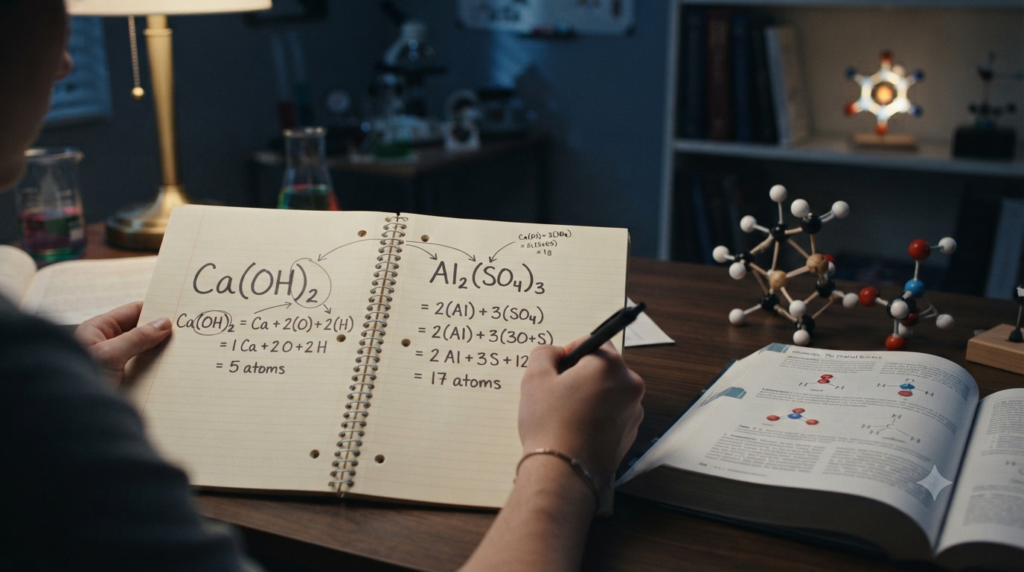
Chemistry study scene showing chemical names, ion charges, valency, and formulas such as NaCl, CaCl₂, Al₂O₃, and CO₂

Writing a chemical formula from a chemical name is one of the most useful basic skills in chemistry. A chemical name tells us what elements or ions are present in a substance, while a chemical formula tells us the exact ratio in which those particles are combined. For example, the name sodium chloride tells us that sodium and chlorine are present, while the formula NaCl shows that one sodium ion combines with one chloride ion.

At first, converting names into formulas can seem difficult because chemistry uses symbols, valencies, oxidation states, and polyatomic ions. However, the process becomes much easier when you follow a clear sequence. The key is to identify the ions or elements present, determine their charges or valencies, and then combine them in a ratio that gives an electrically neutral compound.

Understand What a Chemical Formula Represents

A chemical formula is a compact way of representing the composition of a substance. It uses chemical symbols and numerical subscripts to show how many atoms or ions are present.

For example:

  • Water → H₂O

  • Carbon dioxide → CO₂

  • Sodium chloride → NaCl

  • Calcium chloride → CaCl₂

  • Aluminium oxide → Al₂O₃

The small number written below and to the right of an element symbol is called a subscript. It tells us how many atoms of that element are present in the formula.

In H₂O, the subscript 2 means that two hydrogen atoms are present for every one oxygen atom.

When there is no subscript, the number is understood to be 1.

Step 1 Identify the Elements or Ions

The first step is to carefully read the chemical name and identify the particles that make up the compound.

For example, consider magnesium chloride.

Magnesium gives the magnesium ion:

Mg²⁺

Chloride gives the chloride ion:

Cl⁻

Therefore, the compound contains magnesium ions and chloride ions.

Another example is calcium oxide.

Calcium forms:

Ca²⁺

Oxygen forms the oxide ion:

O²⁻

Once the ions are identified, their charges can be used to determine the formula.

Step 2 Learn Common Chemical Symbols

Before writing formulas, it is important to recognize common element symbols.

Some frequently used symbols are:

  • Hydrogen → H

  • Oxygen → O

  • Nitrogen → N

  • Carbon → C

  • Sodium → Na

  • Potassium → K

  • Magnesium → Mg

  • Calcium → Ca

  • Aluminium → Al

  • Chlorine → Cl

  • Bromine → Br

  • Iodine → I

  • Sulfur → S

  • Iron → Fe

  • Copper → Cu

  • Zinc → Zn

  • Silver → Ag

The first letter of an element symbol is always capitalized. If an element symbol contains two letters, the second letter is lowercase.

For example, sodium is Na, not NA or na.

Iron is Fe, not IR.

Knowing element symbols makes the process of writing formulas much faster.

Step 3 Determine the Valency or Charge

For ionic compounds, the charges of the ions are extremely important.

A positive ion is called a cation, while a negative ion is called an anion.

Some common ions are:

IonCharge
Na⁺+1
K⁺+1
Mg²⁺+2
Ca²⁺+2
Al³⁺+3
Zn²⁺+2
Ag⁺+1
Cl⁻−1
Br⁻−1
I⁻−1
O²⁻−2
S²⁻−2
N³⁻−3

These charges help us determine how many ions are required to form a neutral compound.

For example, sodium has a charge of +1 and chloride has a charge of −1. Therefore, one sodium ion combines with one chloride ion.

Na⁺ + Cl⁻ → NaCl

Step 4 Make the Total Charge Zero

An ionic compound normally has no overall electrical charge. Therefore, the positive and negative charges must balance.

Consider magnesium chloride.

Magnesium:

Mg²⁺

Chloride:

Cl⁻

One Mg²⁺ ion has a charge of +2. One Cl⁻ ion has a charge of −1.

Therefore, two chloride ions are needed:

Mg²⁺ + 2Cl⁻ → MgCl₂

The total charge is:

+2 + (2 × −1) = 0

So the formula is:

MgCl₂

This idea of charge balance is one of the most important principles when writing ionic formulas.

Step 5 Use the Criss-Cross Method Carefully

A common shortcut for writing ionic formulas is the criss-cross method.

In this method, the numerical values of the charges are crossed over and used as subscripts.

For example, consider aluminium oxide.

Aluminium:

Al³⁺

Oxide:

O²⁻

Cross the charge numbers:

Al³⁺ O²⁻

The 3 becomes the subscript of oxygen, and the 2 becomes the subscript of aluminium.

Therefore:

Al₂O₃

The formula is Al₂O₃.

However, the criss-cross method should not be used blindly. The resulting formula should always be simplified if the subscripts have a common factor.

For example, suppose the charges are:

Ca²⁺ and O²⁻

Criss-crossing gives Ca₂O₂, but this is not the simplest ratio.

Both subscripts can be divided by 2:

Ca₂O₂ → CaO

Therefore, the correct formula is CaO.

Step 6 Write the Cation First

For most ionic compounds, the positively charged ion is written first, followed by the negatively charged ion.

For example:

  • Sodium chloride → NaCl

  • Magnesium oxide → MgO

  • Calcium chloride → CaCl₂

  • Aluminium oxide → Al₂O₃

  • Potassium sulfide → K₂S

This order is important because reversing the ions can change the meaning of the formula.

Step 7 Learn Common Polyatomic Ions

Not all ions consist of a single atom. Some ions contain several atoms bonded together and carry an overall charge. These are called polyatomic ions.

Some important polyatomic ions include:

Polyatomic ionFormulaCharge
HydroxideOH⁻−1
NitrateNO₃⁻−1
SulfateSO₄²⁻−2
CarbonateCO₃²⁻−2
PhosphatePO₄³⁻−3
AmmoniumNH₄⁺+1
Hydrogen carbonateHCO₃⁻−1

These ions should usually be treated as a single unit when writing a formula.

For example, calcium nitrate contains:

Ca²⁺

and

NO₃⁻

Two nitrate ions are required to balance one calcium ion:

Ca²⁺ + 2NO₃⁻ → Ca(NO₃)₂

The brackets are important because the subscript 2 applies to the entire nitrate ion.

When to Use Brackets in Chemical Formulas

Brackets, or parentheses, are needed when a polyatomic ion occurs more than once in a formula.

For example:

Calcium hydroxide:

Ca²⁺ + 2OH⁻ → Ca(OH)₂

Aluminium sulfate:

Al³⁺ + SO₄²⁻ → Al₂(SO₄)₃

Without brackets, formulas such as CaOH₂ or Al₂SO₄₃ would not correctly show the intended groups.

If only one polyatomic ion is present, brackets are generally unnecessary.

For example:

NaNO₃

Here, there is only one nitrate ion, so no brackets are needed.

Writing Formulas for Compounds With Variable Valency

Some metals can form ions with different charges. Iron is a common example.

Iron can form:

Fe²⁺

and

Fe³⁺

Chemical names often indicate the charge using Roman numerals.

For example:

Iron(II) chloride

Iron(II) means Fe²⁺.

Chloride is Cl⁻.

Therefore:

FeCl₂

Now consider:

Iron(III) chloride

Iron(III) means Fe³⁺.

Chloride is Cl⁻.

Therefore:

FeCl₃

The Roman numeral is therefore an important part of the name because it tells us which charge of the metal is being used.

Other metals that can have variable charges include copper and tin.

For example:

Copper(I) oxide → Cu₂O

Copper(II) oxide → CuO

Writing Formulas for Molecular Compounds

The process is slightly different for molecular or covalent compounds. These compounds are generally formed between nonmetals, and their names may contain prefixes that directly indicate the number of atoms.

Common prefixes include:

  • Mono → 1

  • Di → 2

  • Tri → 3

  • Tetra → 4

  • Penta → 5

  • Hexa → 6

  • Hepta → 7

  • Octa → 8

  • Nona → 9

  • Deca → 10

For example:

Carbon dioxide

Carbon → C

Di-oxide → O₂

Therefore:

CO₂

Another example is dinitrogen pentoxide.

Dinitrogen means two nitrogen atoms:

N₂

Pentoxide means five oxygen atoms:

O₅

Therefore:

N₂O₅

In these compounds, the prefixes tell you the number of atoms directly, so you do not use the ionic charge method in the same way.

Examples of Writing Chemical Formulas

Sodium oxide

Sodium:

Na⁺

Oxide:

O²⁻

Two sodium ions are needed for one oxide ion.

Formula:

Na₂O

Calcium bromide

Calcium:

Ca²⁺

Bromide:

Br⁻

Two bromide ions are required.

Formula:

CaBr₂

Aluminium chloride

Aluminium:

Al³⁺

Chloride:

Cl⁻

Three chloride ions are required.

Formula:

AlCl₃

Magnesium sulfide

Magnesium:

Mg²⁺

Sulfide:

S²⁻

The charges balance in a 1:1 ratio.

Formula:

MgS

Potassium sulfate

Potassium:

K⁺

Sulfate:

SO₄²⁻

Two potassium ions are required.

Formula:

K₂SO₄

Aluminium hydroxide

Aluminium:

Al³⁺

Hydroxide:

OH⁻

Three hydroxide ions are required.

Formula:

Al(OH)₃

A Simple Method to Follow Every Time

When converting a chemical name into a formula, use this sequence:

1. Identify the ions or elements.

Determine which particles are present in the compound.

2. Write their symbols.

Use the correct chemical symbols.

3. Determine their charges or valencies.

For ionic compounds, identify the charge of each ion.

4. Balance the charges.

Choose subscripts so that the total positive and negative charges are equal.

5. Use brackets when necessary.

If a polyatomic ion appears more than once, place it in brackets.

6. Simplify the ratio.

Do not leave unnecessary common factors in the subscripts.

7. Check the final formula.

Make sure the compound has the correct overall composition and charge balance.

Common Mistakes to Avoid

One common mistake is confusing the element symbol with its name. For example, sodium is Na, not S. Sulfur is S, while sodium is Na.

Another mistake is forgetting that the charge is not written in the final neutral ionic formula. For example, calcium chloride is CaCl₂, not Ca²⁺Cl₂⁻.

Students also sometimes write the charges as subscripts without balancing them correctly. Always check the total charge after writing the formula.

Another frequent error is forgetting brackets around repeated polyatomic ions. Calcium hydroxide is Ca(OH)₂, not CaOH₂.

It is also important not to change the subscripts randomly to balance a formula. The subscripts represent the actual ratio of particles in the compound.

Practice Makes Formula Writing Easier

The best way to become comfortable with chemical formulas is to practice systematically. Start with simple compounds involving ions with familiar charges. Then move to compounds containing polyatomic ions and metals with variable valencies.

Try converting these names into formulas:

  1. Potassium chloride

  2. Magnesium bromide

  3. Calcium oxide

  4. Aluminium sulfide

  5. Sodium carbonate

  6. Calcium nitrate

  7. Magnesium hydroxide

  8. Aluminium sulfate

  9. Iron(III) oxide

  10. Copper(II) sulfate

After writing each formula, check whether the total positive and negative charges balance.

Conclusion

Writing a chemical formula from a chemical name becomes much easier when the process is broken into clear steps. First identify the elements or ions, then write their symbols and determine their charges or valencies. For ionic compounds, balance the positive and negative charges so that the overall compound is electrically neutral. When polyatomic ions occur more than once, use brackets, and when a metal has more than one possible charge, pay close attention to the Roman numeral in its name.

For molecular compounds, prefixes such as mono, di, tri, and tetra can directly tell you how many atoms are present. With regular practice, these patterns become familiar, allowing you to move from a chemical name to its correct formula quickly and confidently.

FAQs

1. How do you write a chemical formula from a chemical name?

To write a chemical formula from a chemical name, first identify the elements or ions present in the compound. Write their chemical symbols and determine their valencies or charges. For an ionic compound, balance the positive and negative charges so the total charge becomes zero. For example, calcium chloride contains Ca²⁺ and Cl⁻. One calcium ion has a +2 charge, while chloride has a −1 charge, so two chloride ions are needed. The resulting formula is CaCl₂. For molecular compounds, prefixes in the name, such as di-, tri-, and tetra-, indicate the number of atoms present.

2. What is the first step when writing a chemical formula?

The first step is to identify the elements or ions mentioned in the chemical name. You should carefully separate the positive and negative components of an ionic compound. For example, in magnesium oxide, magnesium forms Mg²⁺ and oxide forms O²⁻. Once the particles are identified, write their correct chemical symbols and determine their charges. This information allows you to find the correct ratio of the ions. For molecular compounds, identify the elements and look for prefixes that indicate the number of atoms. Correctly identifying the components is essential because an incorrect symbol or ion can lead to an incorrect formula.

3. Why do chemical formulas need subscripts?

Subscripts show the number of atoms or ions of a particular element present in a chemical formula. They are essential because they indicate the ratio of particles in a compound. For example, H₂O contains two hydrogen atoms and one oxygen atom. In CaCl₂, one calcium ion is combined with two chloride ions. A missing subscript means that only one atom or ion is present. Subscripts should not be changed randomly because they represent the composition of the substance. Changing a subscript can produce a different compound. Therefore, subscripts must be determined according to charge balance or the prefixes used in molecular compound names.

4. What is the criss-cross method for writing chemical formulas?

The criss-cross method is a shortcut commonly used to determine the subscripts of ions in an ionic compound. First, write the positive and negative ions with their charges. Then cross the numerical values of the charges and use them as subscripts for the opposite ions. For example, aluminium oxide contains Al³⁺ and O²⁻. Criss-crossing the charge numbers gives Al₂O₃. However, the result should always be checked and simplified when necessary. For example, Ca²⁺ and O²⁻ would initially give Ca₂O₂, but the simplest ratio is CaO. The final formula must have balanced charges and the simplest whole-number ratio.

5. How do you balance charges in an ionic compound?

To balance charges, make sure the total positive charge equals the total negative charge. For example, magnesium chloride contains Mg²⁺ and Cl⁻. One Mg²⁺ ion contributes +2, so two Cl⁻ ions are needed to provide −2. Therefore, the formula is MgCl₂. Similarly, aluminium oxide contains Al³⁺ and O²⁻. Two aluminium ions provide +6, while three oxide ions provide −6, giving Al₂O₃. The goal is not necessarily to make the charges individually equal but to make their combined total zero. Checking the charge balance is one of the best ways to verify an ionic chemical formula.

6. When should brackets be used in a chemical formula?

Brackets are used when a polyatomic ion appears more than once in a chemical formula. A polyatomic ion is a group of atoms that behaves as a single charged unit. For example, calcium hydroxide contains Ca²⁺ and OH⁻. Two hydroxide ions are required, so the formula is Ca(OH)₂. The brackets show that the subscript 2 applies to the entire hydroxide group. Similarly, aluminium sulfate is Al₂(SO₄)₃. If only one polyatomic ion is present, brackets are usually unnecessary. For example, sodium nitrate is NaNO₃. Understanding when to use brackets prevents incorrect formulas involving repeated polyatomic ions.

7. What are polyatomic ions, and why are they important?

Polyatomic ions are charged groups containing two or more atoms that act as a single unit in a compound. Common examples include hydroxide (OH⁻), nitrate (NO₃⁻), sulfate (SO₄²⁻), carbonate (CO₃²⁻), phosphate (PO₄³⁻), and ammonium (NH₄⁺). They are important when converting chemical names into formulas because their overall charge determines how many groups are required. For example, calcium nitrate contains Ca²⁺ and NO₃⁻. Two nitrate ions are needed to balance one calcium ion, producing Ca(NO₃)₂. When a polyatomic ion is repeated, brackets are used to show that the subscript applies to the complete ion rather than only one element.

8. How do Roman numerals help when writing chemical formulas?

Roman numerals in chemical names indicate the charge or oxidation state of a metal that can form more than one type of ion. For example, iron can form Fe²⁺ and Fe³⁺. In iron(II) chloride, the Roman numeral II indicates Fe²⁺, so the formula is FeCl₂. In iron(III) chloride, III indicates Fe³⁺, giving FeCl₃. Without the Roman numeral, it may not be possible to determine which form of the metal is intended. Other metals, such as copper, can also have multiple oxidation states. Therefore, always pay attention to Roman numerals when writing formulas for compounds containing variable-valency metals.

9. How are formulas for molecular compounds different from ionic compounds?

Molecular compounds are generally formed between nonmetals and are named using prefixes that indicate the number of atoms. Common prefixes include mono-, di-, tri-, tetra-, and penta-. For example, carbon dioxide contains one carbon atom and two oxygen atoms, so its formula is CO₂. Dinitrogen pentoxide contains two nitrogen atoms and five oxygen atoms, giving N₂O₅. Ionic compounds, on the other hand, are usually written by balancing the charges of cations and anions. For example, calcium chloride is CaCl₂ because Ca²⁺ requires two Cl⁻ ions. Therefore, identifying whether a compound is ionic or molecular helps determine which method should be used.

10. How can you check whether a chemical formula is correct?

You can check a chemical formula by reviewing the element symbols, subscripts, ion charges, and overall ratio. For an ionic compound, calculate the total positive and negative charges and confirm that they add up to zero. For example, Al₂O₃ contains two Al³⁺ ions, giving +6, and three O²⁻ ions, giving −6. The charges therefore balance. Also check that polyatomic ions have been placed in brackets when repeated and that unnecessary common factors have been removed from the subscripts. For molecular compounds, compare the subscripts with the numerical prefixes in the name. These checks can catch many common formula-writing errors.

Related Posts

Leave a Comment

Your email address will not be published. Required fields are marked *

Scroll to Top