Trigonometry is an important branch of mathematics that helps us understand the relationships between angles and sides of triangles. It provides methods for calculating unknown distances, measuring heights, studying repeating patterns, and solving problems involving shapes and motion. Although trigonometry is often introduced in school mathematics, its applications extend far beyond the classroom. Engineers use it to design buildings and bridges, astronomers use it to study distant objects in space, and surveyors use it to measure land and map locations.
The word trigonometry comes from Greek words associated with triangles and measurement. At its foundation, trigonometry focuses on how the sides and angles of a triangle are related. As learners progress, they discover that these relationships also help explain waves, sound, light, circular motion, and many other natural phenomena. Understanding what trigonometry is and why it is important provides a strong foundation for learning mathematics and exploring the world through science.
What Is Trigonometry?
Trigonometry is the branch of mathematics that studies the relationships between the sides and angles of triangles. It is particularly useful for finding unknown measurements when some information about a triangle is already known.
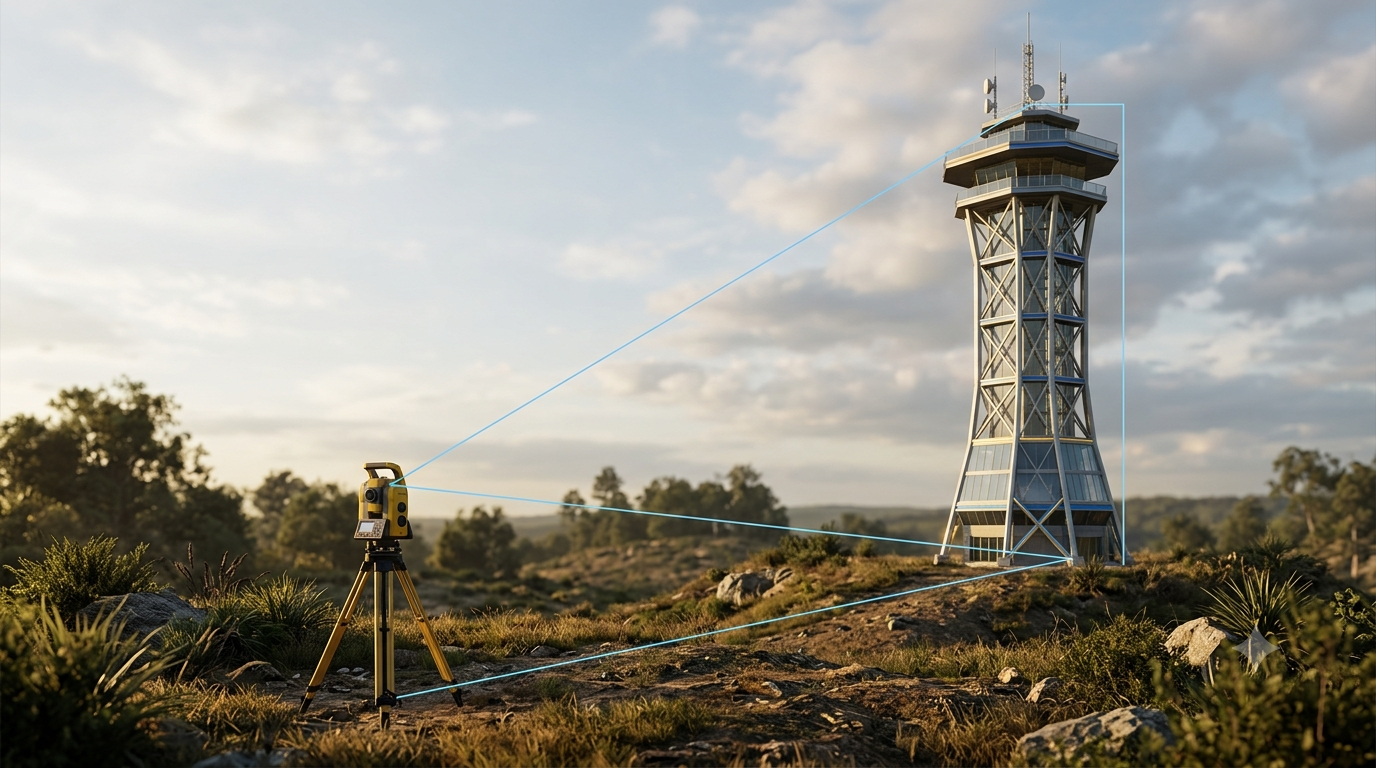
For example, imagine that you want to determine the height of a tall tree but cannot climb it to measure directly. By measuring your distance from the tree and the angle between the ground and your line of sight to its top, you can use trigonometry to estimate its height.
Trigonometry begins with simple geometric ideas, including triangles, angles, and side lengths. It then introduces mathematical functions that describe how these quantities relate to one another.
The three main trigonometric functions are sine, cosine, and tangent. These functions are commonly abbreviated as sin, cos, and tan. They allow us to calculate unknown sides or angles using known measurements.
Trigonometry is not limited to right-angled triangles. At more advanced levels, it also examines relationships involving other triangles, circles, periodic functions, and complex mathematical systems.
The Basic Concepts of Trigonometry
Before exploring the importance of trigonometry, it is helpful to understand its fundamental concepts.
1. Angles
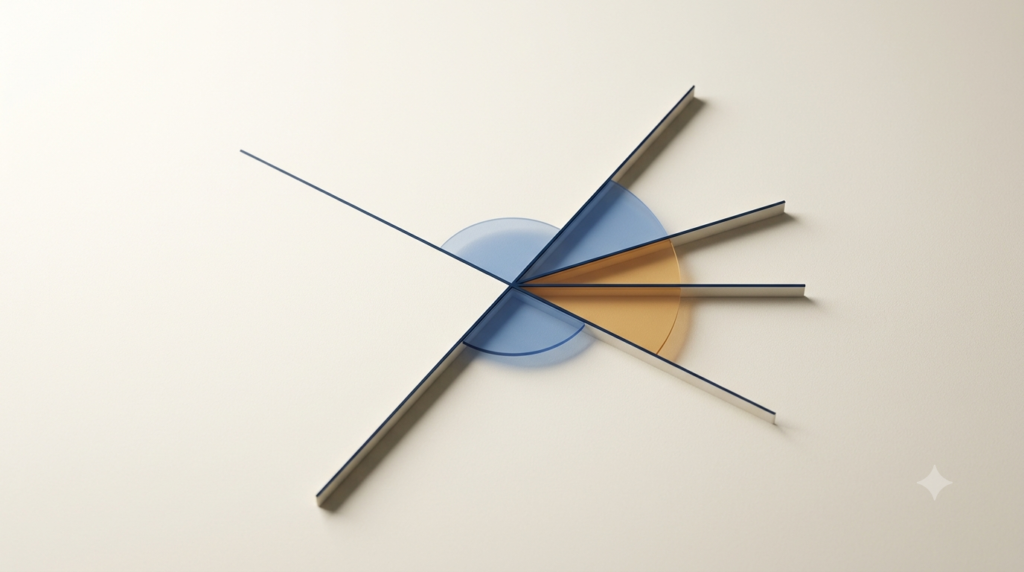
An angle is formed when two lines or rays meet at a common point. Angles help describe the amount of rotation between two directions and are essential to understanding triangles.
Angles are commonly measured in degrees or radians. A complete rotation measures 360 degrees, which is equivalent to 2π radians.
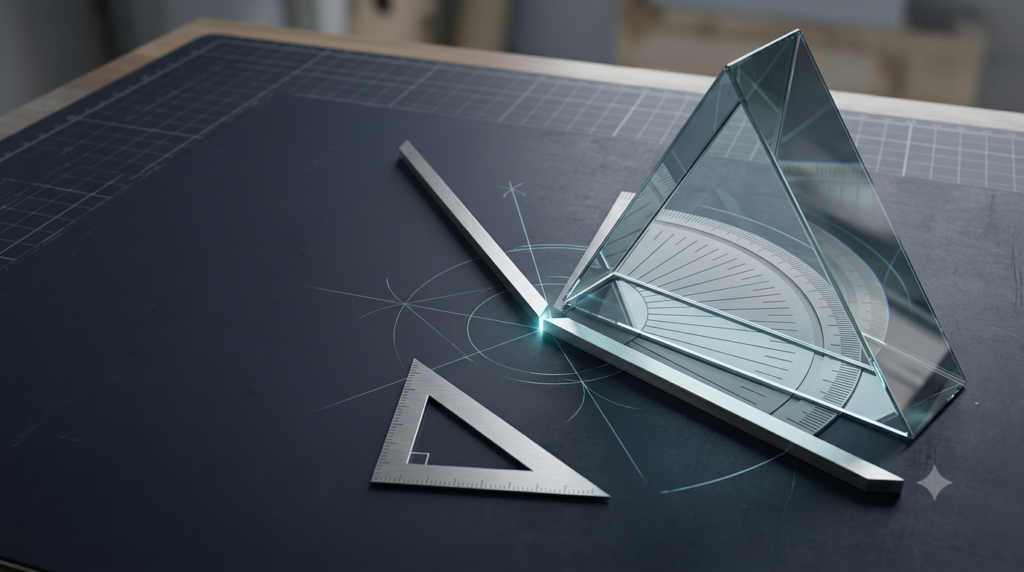
In a right-angled triangle, one angle is always 90 degrees. The other two angles are acute angles, meaning each is less than 90 degrees. The relationships between these angles and the triangle’s side lengths form the basis of introductory trigonometry.
2. Sides of a Right-Angled Triangle
A right-angled triangle contains three sides, each with a specific role when an angle is selected for a trigonometric calculation.
Hypotenuse: The longest side of a right-angled triangle, opposite the 90-degree angle.
Opposite side: The side directly opposite the selected angle.
Adjacent side: The side next to the selected angle that is not the hypotenuse.
The opposite and adjacent sides depend on which acute angle is being considered. The hypotenuse remains the same regardless of which acute angle is selected.
Recognizing these three sides is essential because sine, cosine, and tangent are defined using their ratios.
3. The Three Main Trigonometric Functions
The three basic trigonometric functions describe relationships between the sides of a right-angled triangle.
Sine (sin) compares the opposite side with the hypotenuse.
Cosine (cos) compares the adjacent side with the hypotenuse.
Tangent (tan) compares the opposite side with the adjacent side.
Text block — Basic Trigonometric Ratios
sin θ = Opposite ÷ Hypotenuse
cos θ = Adjacent ÷ Hypotenuse
tan θ = Opposite ÷ Adjacent
Here, θ (theta) represents the angle being considered.
These ratios make it possible to calculate an unknown side when an angle and another side are known. They can also help determine an unknown angle when suitable side measurements are available.
For example, if the opposite side of a right-angled triangle is 3 units and the hypotenuse is 5 units, the sine of the selected angle is 3 ÷ 5, or 0.6.
4. The Pythagorean Theorem
The Pythagorean theorem is another important concept associated with right-angled triangles. It explains the relationship between the lengths of the three sides.
Text block — Pythagorean Theorem
a² + b² = c²
In this formula, a and b represent the two shorter sides, while c represents the hypotenuse.
For example, if the shorter sides measure 3 units and 4 units, the hypotenuse can be calculated as follows:
Text block — Example
c² = 3² + 4²
c² = 9 + 16
c² = 25
c = 5 units
The Pythagorean theorem and trigonometric ratios are often used together to solve geometry and measurement problems.
Why Is Trigonometry Important?
Trigonometry is important because it provides a practical way to solve problems involving distances, heights, angles, direction, and repeating patterns. It connects mathematical calculations with real situations in science, engineering, technology, and everyday life.
1. Measuring Heights and Distances
One of the most useful applications of trigonometry is measuring distances that are difficult or impossible to measure directly.
For example, measuring the height of a mountain, the height of a building, or the distance to an object across a river can be challenging. Trigonometry helps estimate these measurements by using known distances and angles.
Suppose a person stands a certain distance from a building and measures the angle between the ground and the line of sight to the top. If the ground is level and the observer’s eye height is known, a trigonometric calculation can help determine the building’s height.
Text block — Height Calculation
tan θ = Opposite ÷ Adjacent
Height above eye level = Horizontal distance × tan θ
Total building height = Height above eye level + Eye height
This method is useful in surveying, construction, geography, and other fields that require accurate measurements.
2. Applications in Physics
Trigonometry is an essential mathematical tool in physics because many physical quantities involve direction, angles, and periodic changes.
For example, when a force acts at an angle, it can be divided into horizontal and vertical components. This helps physicists analyze motion, balance, and interactions between objects.
Text block — Force Components
Horizontal component = F × cos θ
Vertical component = F × sin θ
Here, F represents the magnitude of the force, and θ represents its angle relative to the horizontal direction.
Trigonometry is also used to study projectile motion, oscillations, circular motion, and waves. It helps describe how an object’s position changes and how forces act in different directions.
Without trigonometric relationships, many calculations in mechanics, electricity, optics, and wave physics would be more difficult to express and solve.
3. Engineering and Architecture
Engineers and architects use trigonometry when designing structures, machines, and systems that must meet specific measurements and safety requirements.
In architecture, trigonometry helps determine roof slopes, ramp angles, structural dimensions, and the lengths of diagonal supports. In civil engineering, it supports calculations involving bridges, roads, tunnels, and land elevations.
Mechanical engineers use trigonometric relationships to study rotating components, gear movements, and the positions of machine parts. Electrical engineers use sine and cosine functions to analyze alternating electrical signals.
Trigonometry can help professionals calculate important dimensions before construction or manufacturing begins. However, real engineering projects also require appropriate safety factors, material properties, testing, and other technical calculations.
4. Astronomy and Space Science
Astronomy uses trigonometry to investigate objects that are extremely far from Earth. Since astronomers cannot directly measure the distances to most celestial objects, they rely on observations and mathematical methods.
One important application is stellar parallax. As Earth moves around the Sun, a nearby star appears to shift slightly against the background of more distant stars. Astronomers use this apparent shift and the size of Earth’s orbital baseline to estimate the star’s distance.
Trigonometric methods are also used in celestial navigation, telescope positioning, and calculations involving the locations and movements of astronomical objects.
Space missions depend on precise measurements of angles, directions, and trajectories. Trigonometry contributes to these calculations and helps scientists understand the geometry of the solar system and the wider universe.
5. Computer Graphics and Game Development
Trigonometry plays an important role in computer graphics, animation, simulations, and video games.
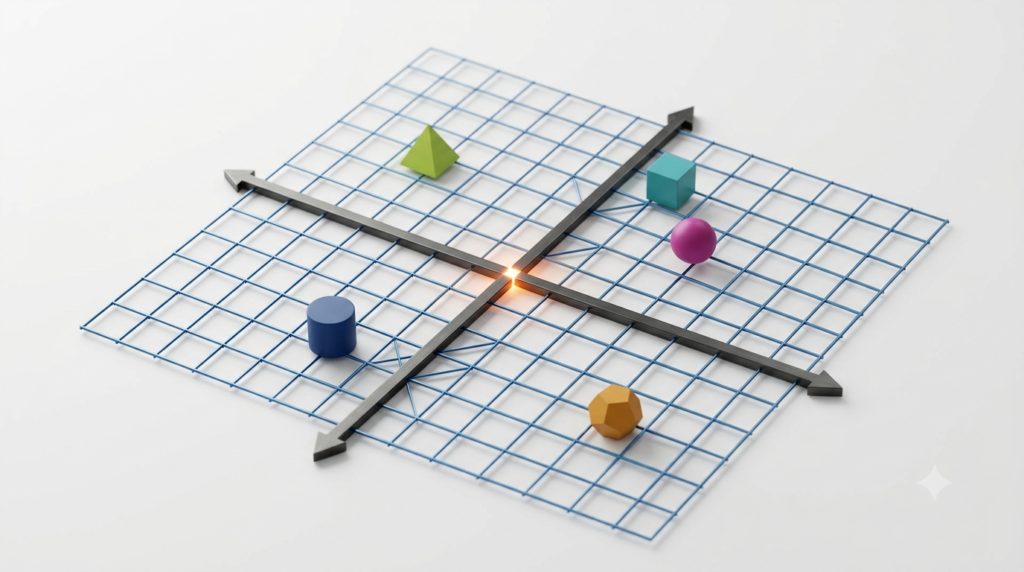
Digital objects are often represented using coordinates. When an object rotates, moves along a circular path, or changes its orientation, trigonometric functions help calculate its new position.
For example, sine and cosine can be used to determine the horizontal and vertical coordinates of a point moving around a circle.
Text block — Coordinates on a Circle
x = r × cos θ
y = r × sin θ
Here, r is the radius of the circle, and θ is the angle measured from the positive horizontal axis.
These relationships help developers create rotating objects, animated characters, camera movements, and realistic motion. Trigonometry is also useful in robotics, virtual reality, computer-aided design, and three-dimensional modelling.
6. Navigation and Surveying
Navigation involves determining positions, directions, and routes. Trigonometry helps sailors, pilots, surveyors, and other professionals solve problems involving angles and distances.
Surveyors use angular measurements and known reference points to determine land boundaries, elevations, and the positions of features across a landscape. This information supports mapmaking, road construction, and property measurement.
In aviation and maritime navigation, trigonometric calculations can help analyze bearings, distances, and movement in different directions. Modern navigation systems use additional technologies and computational methods, but the mathematical relationships underlying many positioning and measurement tasks remain important.
7. Electricity and Electronics
Trigonometry is especially useful for understanding alternating current (AC), which changes its magnitude and direction periodically.
Electrical engineers often represent alternating voltages and currents using sine and cosine functions. These mathematical descriptions help explain how electrical signals vary over time.
Text block — Sinusoidal Signal
V(t) = Vₘ × sin(ωt + φ)
Here, V(t) represents voltage at a particular time, Vₘ is the maximum voltage, ω is angular frequency, t is time, and φ is the phase angle.
This type of equation helps engineers analyze signal timing, phase differences, and electrical circuits. Trigonometry also supports the study of sound signals, radio waves, communication systems, and signal processing.
8. Understanding Waves and Sound
Waves are found throughout the natural world. Sound travels through air as pressure variations, while light and radio signals exhibit wave behaviour that can be described mathematically.
Sine and cosine functions are commonly used to model ideal periodic waves. They help describe how a wave’s amplitude changes with time or position.
Trigonometry is useful in acoustics, music technology, telecommunications, and the study of electromagnetic radiation. For example, audio engineers use mathematical methods involving periodic signals to analyze sound frequencies and combine audio signals.
Although real-world waves can be more complicated than simple sine waves, trigonometric functions provide a fundamental starting point for understanding their behaviour.
Trigonometry in Everyday Life
Trigonometry may appear to be a subject used mainly by scientists and engineers, but its applications can also be found in everyday activities.
1. Measuring Roofs and Ramps
Builders and homeowners may use trigonometric relationships to estimate roof slopes, stair dimensions, and ramp inclinations. These calculations help determine suitable angles and lengths before materials are cut or installed.
2. Photography and Camera Angles
Camera positioning involves direction, rotation, and perspective. Trigonometry helps explain fields of view, lens geometry, and the angles used in photography, animation, and image processing.
3. Sports and Physical Activities
In sports such as football, basketball, and cricket, the direction and angle of a moving ball affect its trajectory. Trigonometry helps analyze these movements, particularly when combined with physics.
4. Maps and Location Measurements
Maps represent locations using coordinates and directions. Trigonometric relationships help calculate distances and angles, particularly in surveying, geographic information systems, and navigation.
These examples demonstrate that trigonometry is not merely a collection of mathematical formulas. It is a practical method for understanding spatial relationships and solving measurement problems.
The Relationship Between Trigonometry and Other Branches of Mathematics
Trigonometry is closely connected to several other areas of mathematics. Learning these connections makes it easier to understand more advanced topics.
Trigonometry and Geometry
Geometry studies shapes, sizes, angles, and spatial relationships. Trigonometry extends these ideas by providing methods to calculate unknown measurements using angles and side lengths.
Trigonometry and Algebra
Algebra uses variables and equations to represent mathematical relationships. Trigonometry combines algebraic methods with trigonometric functions to solve equations and determine unknown values.
For example, an equation involving sin θ can be solved to find angles that satisfy a particular condition.
Trigonometry and Calculus
Calculus studies change and accumulation. Trigonometric functions are important in calculus because they describe periodic behaviour and appear in derivatives, integrals, and differential equations.
These connections make trigonometry valuable for learners preparing to study advanced mathematics, engineering, and physical sciences.
How to Begin Learning Trigonometry
Learning trigonometry becomes easier when its concepts are studied in a logical order. Beginners should first develop a strong understanding of basic geometry before moving to more complicated calculations.
A useful learning sequence includes:
Understand angles and their measurements in degrees and radians.
Learn the parts of a right-angled triangle.
Understand the sine, cosine, and tangent ratios.
Practise finding unknown sides and angles.
Study the Pythagorean theorem and its applications.
Explore trigonometric functions and their graphs.
Learn the unit circle and basic trigonometric identities.
Solve practical problems involving heights, distances, and motion.
Regular practice is more effective than memorizing formulas without understanding them. Drawing clear diagrams, identifying known values, and deciding which relationship applies are important problem-solving skills.
Beginners should also check whether their calculator is set to degrees or radians before performing calculations. Using the wrong angle mode can lead to incorrect answers even when the correct formula is selected.
Conclusion
Trigonometry is a fundamental branch of mathematics that explains the relationships between angles, sides, and periodic patterns. Its importance extends from basic geometric measurements to advanced applications in physics, engineering, astronomy, electronics, computer graphics, and navigation. It allows people to calculate heights and distances, analyze forces, model waves, and understand the movement of objects.
Learning trigonometry also strengthens logical thinking and problem-solving skills. By understanding its basic concepts and practising practical examples, learners can build a strong mathematical foundation for more advanced subjects. Whether used to estimate the height of a building or model the movement of a spacecraft, trigonometry demonstrates how mathematical relationships can help us understand and solve real-world problems.
FAQs
1. What is trigonometry in simple words?
Trigonometry is a branch of mathematics that studies the relationships between the angles and sides of triangles. It helps us calculate unknown heights, distances, and angles when some measurements are already known. The three main trigonometric functions are sine, cosine, and tangent. These functions compare different sides of a right-angled triangle and provide useful mathematical relationships. Trigonometry is also used to study circles, waves, and repeating patterns. It has many applications in physics, engineering, astronomy, architecture, computer graphics, and navigation. Understanding trigonometry helps learners solve mathematical problems and understand how mathematics applies to real-world situations.
2. Why is trigonometry important in mathematics?
Trigonometry is important because it provides methods for solving problems involving angles, distances, heights, and geometric relationships. It connects geometry with algebra and helps learners understand more advanced topics such as calculus and mathematical modelling. Trigonometric functions are also useful for describing periodic patterns, including waves and circular motion. In practical situations, they allow people to calculate measurements that cannot be obtained directly. Students who understand trigonometry can solve a wide range of mathematical and scientific problems more efficiently. It also develops logical reasoning, analytical thinking, and problem-solving skills that are valuable in education, technology, engineering, and scientific research.
3. What are the three main trigonometric functions?
The three main trigonometric functions are sine, cosine, and tangent. Each function represents a relationship between two sides of a right-angled triangle. Sine compares the opposite side with the hypotenuse, cosine compares the adjacent side with the hypotenuse, and tangent compares the opposite side with the adjacent side. Their formulas are sin θ = Opposite ÷ Hypotenuse, cos θ = Adjacent ÷ Hypotenuse, and tan θ = Opposite ÷ Adjacent. Here, θ represents the selected angle. These functions help calculate unknown side lengths and angles. They are also widely used in physics, engineering, navigation, computer graphics, and other technical fields.
4. Where is trigonometry used in everyday life?
Trigonometry is used in everyday activities that involve measuring heights, distances, angles, and directions. Builders may use it to calculate roof slopes and ramp inclinations. Surveyors apply trigonometric relationships to measure land and determine elevations. Navigation systems use related mathematical methods to calculate directions and distances. Trigonometry also contributes to photography, computer animation, sports analysis, and digital mapping. For example, the angle at which a ball is thrown influences its trajectory, which can be studied using trigonometry and physics. Although many people do not perform these calculations themselves, trigonometric principles support numerous technologies and professional activities used in everyday life.
5. How is trigonometry used in physics?
Trigonometry helps physicists describe motion, forces, waves, and other physical phenomena. When a force acts at an angle, sine and cosine can be used to calculate its horizontal and vertical components. Trigonometric functions also help describe circular motion, oscillations, sound waves, and alternating electrical signals. In projectile motion, angles influence the horizontal and vertical movement of an object. Scientists use these relationships to develop mathematical models and analyze experimental results. Trigonometry is particularly important in mechanics, optics, electricity, and wave physics. By combining trigonometric functions with physical laws, researchers can explain complex phenomena and predict how physical systems behave.
6. What is the difference between trigonometry and geometry?
Geometry is the branch of mathematics that studies shapes, sizes, angles, areas, volumes, and spatial relationships. Trigonometry focuses more specifically on relationships between angles and side lengths, particularly in triangles, and extends to circles and periodic functions. Geometry may help identify the properties of a triangle, while trigonometry can calculate an unknown side when an angle and another side are known. Both subjects are closely connected and frequently used together to solve mathematical problems. Geometry provides many of the fundamental concepts needed to understand trigonometry. Together, these branches support applications in architecture, engineering, surveying, physics, and computer-aided design.
7. Is trigonometry difficult for beginners to learn?
Trigonometry may seem difficult initially because it introduces unfamiliar functions, formulas, and mathematical symbols. However, beginners can understand it more easily by learning the concepts in a logical order. Start with angles, right-angled triangles, and the meanings of opposite, adjacent, and hypotenuse. Next, practise the sine, cosine, and tangent ratios using simple numerical examples. Drawing triangle diagrams and solving problems step by step can improve understanding. It is also important to distinguish between degrees and radians when using a calculator. With regular practice and a clear understanding of basic geometry, most learners can gradually develop confidence in trigonometry.
8. What is the role of trigonometry in engineering?
Trigonometry plays an important role in many branches of engineering. Civil engineers use it to calculate slopes, structural dimensions, and angles involved in bridges, roads, and buildings. Mechanical engineers apply trigonometric relationships to rotating machinery, moving components, and mechanical systems. Electrical engineers use sine and cosine functions to study alternating current, voltage, and signal behaviour. Engineers may also use trigonometry in robotics, computer-aided design, and measurement systems. These calculations help professionals understand the geometry and behaviour of technical systems. However, real engineering designs also require material properties, safety standards, and other calculations to ensure that structures and machines operate reliably.
9. How is trigonometry useful in astronomy?
Trigonometry helps astronomers calculate distances, positions, and angles involving celestial objects. One important application is stellar parallax, which measures the apparent shift of a nearby star against distant background stars as Earth moves around the Sun. Astronomers use this angular shift and the known orbital baseline to estimate the star’s distance. Trigonometric relationships also help determine the positions of celestial objects and support calculations involving spacecraft trajectories and telescope pointing. These methods allow scientists to study objects that are too distant for direct measurement. Trigonometry therefore contributes to our understanding of stars, planets, galaxies, and the structure of the universe.
10. What should I learn before studying trigonometry?
Before studying trigonometry, learners should understand basic arithmetic, fractions, ratios, algebra, and elementary geometry. It is particularly important to recognize different types of angles and triangles and understand how their sides are related. Beginners should learn how to identify the opposite side, adjacent side, and hypotenuse in a right-angled triangle. Familiarity with the Pythagorean theorem is also helpful. After reviewing these concepts, learners can study sine, cosine, and tangent, followed by practical problems involving unknown angles and distances. Later, they can explore the unit circle, trigonometric graphs, identities, and radians. A strong foundation makes advanced topics easier to understand.