Angles are an essential part of geometry and mathematics. They help us understand the shapes of objects, the directions of lines, and the relationships between different geometric figures. From the corners of a book and the hands of a clock to the design of buildings and the movement of planets, angles appear in many situations in everyday life. Learning about angles provides a strong foundation for understanding triangles, polygons, circles, and trigonometry.
An angle is formed when two rays share a common endpoint. The size of an angle depends on the amount of rotation between its two arms. Angles are commonly measured in degrees, although radians are also used in advanced mathematics. Based on their measurements, angles are classified into different types, including zero, acute, right, obtuse, straight, reflex, and complete angles. Each type has its own characteristics and properties. Understanding these differences makes it easier to identify angles, solve geometry problems, and explore more advanced mathematical concepts.
What Is an Angle?
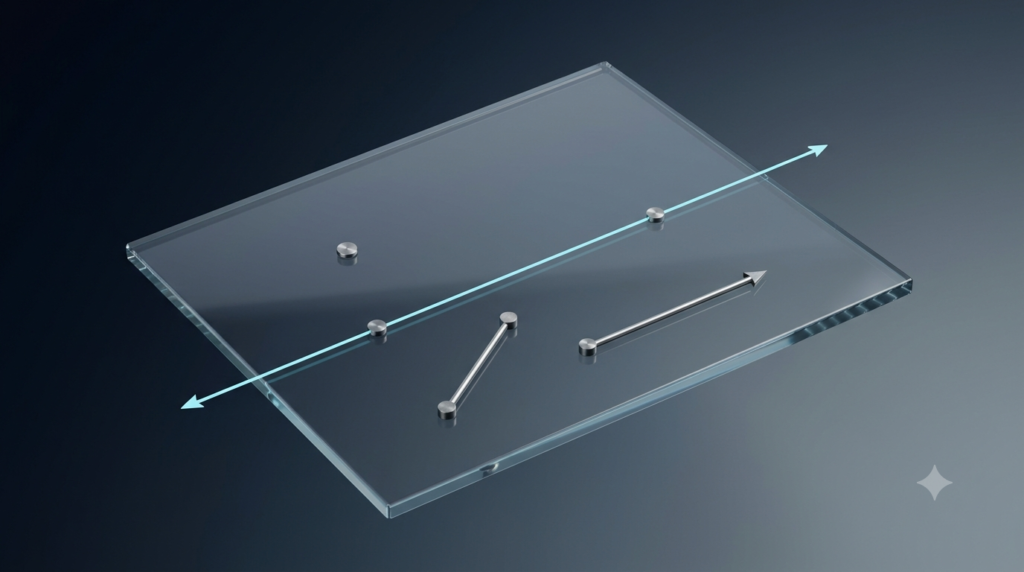
An angle is a geometric figure formed by two rays that begin at the same endpoint. This common endpoint is called the vertex, while the two rays are known as the arms or sides of the angle.
For example, imagine two rays starting from the same point. One ray extends horizontally to the right, while the other extends upward. The opening between these rays forms an angle. If one ray rotates away from the other, the angle changes according to the amount of rotation.
Angles are represented by the symbol ∠. For example, ∠ABC represents an angle with vertex B. When three letters are used to name an angle, the middle letter identifies the vertex.
Main Parts of an Angle
An angle has three important parts.
Vertex: The common endpoint where the two rays meet.
Arms: The two rays that form the angle.
Interior: The region between the two arms of the angle.
In ∠ABC, point B is the vertex, while BA and BC are the arms. The angle can also be written as ∠B when there is no confusion about which angle is being discussed.
How Are Angles Measured?
Angles are commonly measured in degrees, represented by the symbol °. The measurement describes the amount of rotation from one arm to the other.
A quarter-turn measures 90°, a half-turn measures 180°, and a complete turn measures 360°.
Text block — Basic Angle Measurements
A quarter-turn = 90°
A half-turn = 180°
A three-quarter turn = 270°
A complete turn = 360°
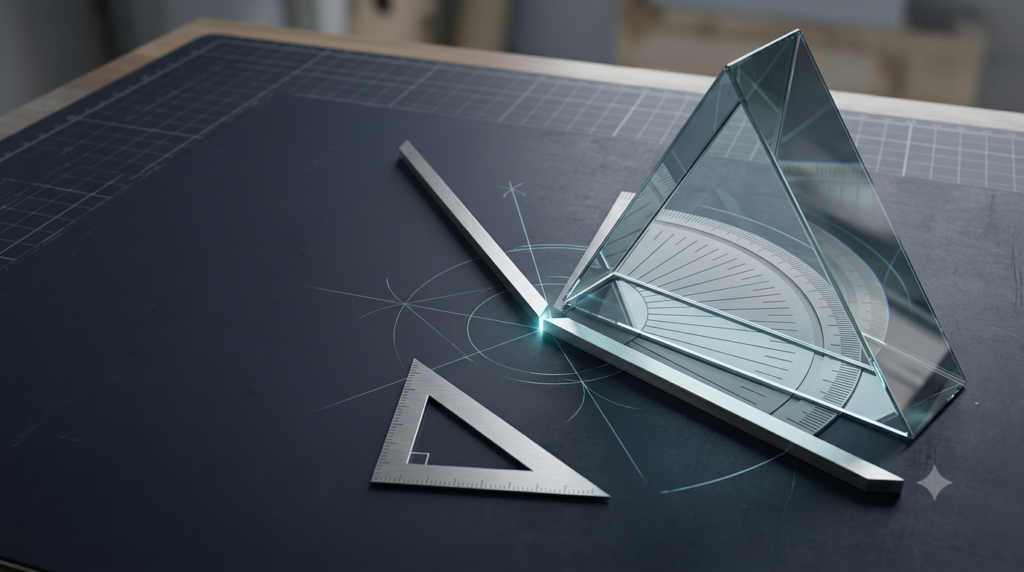
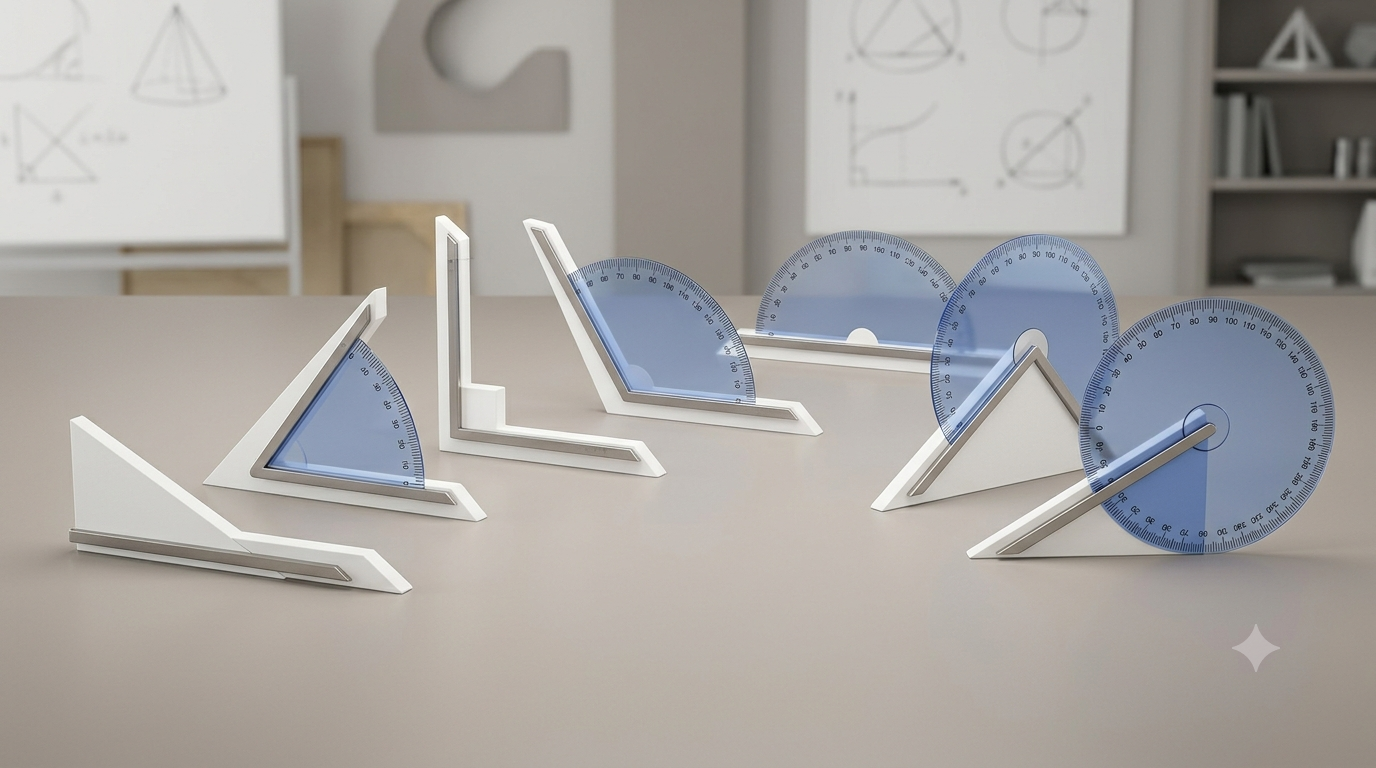
A protractor is a common instrument used to measure angles. To measure an angle, place the center of the protractor at the vertex, align one arm with the zero-degree line, and read the measurement where the other arm crosses the scale.
Types of Angles Based on Their Measurements
Angles are classified into different types according to their degree measurements. Each type has a particular range that helps distinguish it from the others.
1. Zero Angle
A zero angle measures exactly 0°. It is formed when two rays share a common vertex and extend in the same direction, overlapping each other. Since there is no rotation between the rays, the angle has no opening.
For example, imagine a pointer that has not moved from its initial position. Its angular displacement is 0°, which can be represented by a zero angle.
Although a zero angle does not have a visible opening, it is useful in geometry and mathematics when describing the starting position of a rotation.
Basic Properties:
A zero angle measures exactly 0°.
Both rays extend in the same direction.
The two rays overlap each other.
It represents no rotation from the initial position.
2. Acute Angle
An acute angle measures more than 0° but less than 90°. It is smaller than a right angle and has a relatively narrow opening.
Examples of acute angles include 15°, 30°, 45°, 60°, and 85°. All these measurements fall within the range of an acute angle.
Acute angles are common in everyday objects and geometric shapes. The pointed tip of a triangular sign may form an acute angle. The hands of a clock can also form an acute angle when the smaller angle between them measures less than 90°.
Acute angles are particularly important when studying triangles. An equilateral triangle, for example, contains three angles of 60°. Since each angle is smaller than 90°, all three are acute angles.
Basic Properties:
An acute angle is greater than 0°.
It is smaller than 90°.
It has a narrower opening than a right angle.
An equilateral triangle contains three acute angles.
3. Right Angle
A right angle measures exactly 90°. It represents a quarter-turn and is one of the most important angles in geometry.
Right angles can be found in the corners of books, square tiles, windows, doors, and rectangular screens. They are widely used in construction, architecture, engineering, and technical drawing.
A right angle is commonly identified by a small square drawn at its vertex. This symbol indicates that the angle measures precisely 90°.
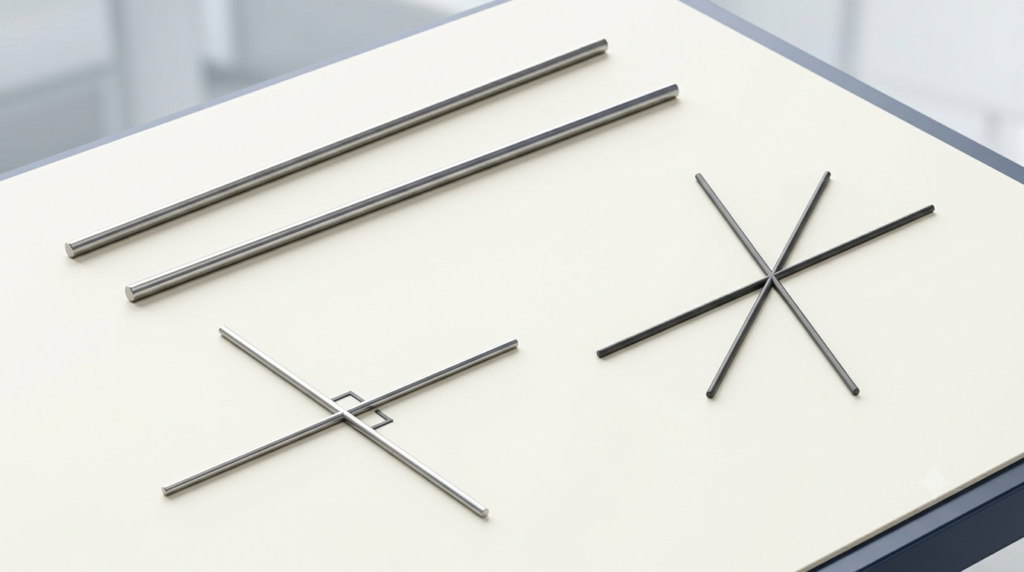
When two straight lines intersect at right angles, they are called perpendicular lines. Their intersection creates four right angles, each measuring 90°.
Basic Properties:
A right angle measures exactly 90°.
It represents one-quarter of a complete turn.
Perpendicular lines form four right angles at their intersection.
Every interior angle of a rectangle and a square is a right angle.
4. Obtuse Angle
An obtuse angle measures more than 90° but less than 180°. It is wider than a right angle but does not form a straight line.
Examples of obtuse angles include 100°, 110°, 120°, 135°, and 170°. As the measurement increases toward 180°, the angle becomes wider.
Obtuse angles occur in many geometric figures. For example, a triangle with one interior angle measuring 120° contains an obtuse angle. However, a triangle cannot have two obtuse interior angles because the sum of its interior angles is 180°.
Obtuse angles may also appear when a door opens wider than a right angle or when the hands of a clock form an angle greater than 90° but less than 180°.
Basic Properties:
An obtuse angle is greater than 90°.
It is smaller than 180°.
It is wider than a right angle.
A triangle can contain only one obtuse interior angle.
5. Straight Angle
A straight angle measures exactly 180°. It is formed when two rays share a common vertex and extend in opposite directions along the same straight line.
A straight angle represents half of a complete rotation. For example, if a pointer turns from its starting direction to the exact opposite direction, it completes a rotation of 180°.
Straight angles are important when studying lines, supplementary angles, and geometric relationships. When two adjacent angles lie on a straight line, their measurements add up to 180°.
A straight angle is different from an obtuse angle. An obtuse angle measures less than 180°, whereas a straight angle measures exactly 180°.
Basic Properties:
A straight angle measures exactly 180°.
Its arms point in opposite directions.
It forms a straight line.
It represents half of a complete turn.
6. Reflex Angle
A reflex angle measures more than 180° but less than 360°. It represents the larger angle around a point between two rays.
For example, two rays may form a smaller angle of 90°. The angle around the remaining part of the circle measures 270°, making it a reflex angle.
Reflex angles are useful when describing rotations, circular movement, and the direction of rotating objects. A pointer that turns through 270° completes three-quarters of a full rotation.
The measurement of a reflex angle can be calculated by subtracting the smaller angle from 360°.
Text block — Reflex Angle Formula
Reflex angle = 360° − Smaller angle
Example:
Smaller angle = 120°
Reflex angle = 360° − 120° = 240°
Therefore, the reflex angle measures 240°.
Basic Properties:
A reflex angle is greater than 180°.
It is smaller than 360°.
It represents the larger angle around a point.
The smaller angle and its corresponding reflex angle add up to 360°.
7. Complete Angle
A complete angle, also called a full angle, measures exactly 360°. It represents one complete rotation around a point.
Imagine the second hand of a clock moving around the entire dial and returning to its starting position. During this movement, it completes a full turn of 360°.
Complete angles are important in the study of circles, rotational motion, navigation, and trigonometry. They describe situations in which an object completes one full rotation and returns to its original direction.
Although the starting and ending rays overlap, a complete angle represents a full rotation rather than no rotation. This distinguishes a complete angle of 360° from a zero angle of 0°.
Basic Properties:
A complete angle measures exactly 360°.
It represents one full rotation.
Its final arm returns to the starting direction.
It is twice the measurement of a straight angle.
Summary of the Types of Angles
The following table compares the main types of angles according to their measurements.
| Type of Angle | Measurement | Example |
|---|---|---|
| Zero angle | Exactly 0° | 0° |
| Acute angle | Greater than 0° and less than 90° | 45° |
| Right angle | Exactly 90° | 90° |
| Obtuse angle | Greater than 90° and less than 180° | 120° |
| Straight angle | Exactly 180° | 180° |
| Reflex angle | Greater than 180° and less than 360° | 270° |
| Complete angle | Exactly 360° | 360° |
This classification makes it easier to identify an angle from its measurement. For example, an angle of 75° is acute, an angle of 145° is obtuse, and an angle of 225° is reflex.
Types of Angles Based on Their Relationships
Angles can also be classified according to their relationships with other angles. These relationships are particularly useful when solving geometry problems.
1. Complementary Angles
Two angles are complementary when their measurements add up to 90°. They do not need to be next to each other; their combined measurement is what matters.
For example, angles measuring 35° and 55° are complementary because their sum is 90°.
Text block — Complementary Angle Formula
Angle 1 + Angle 2 = 90°
Example:
Angle 1 = 35°
Angle 2 = 90° − 35° = 55°
Therefore, 35° and 55° are complementary angles.
Complementary angles commonly occur when a right angle is divided into two smaller angles. If one angle is known, the other can be calculated by subtracting the known measurement from 90°.
2. Supplementary Angles
Two angles are supplementary when their measurements add up to 180°. They may be adjacent or separate, provided their sum is 180°.
For example, angles measuring 125° and 55° are supplementary because their total is 180°.
Text block — Supplementary Angle Formula
Angle 1 + Angle 2 = 180°
Example:
Angle 1 = 125°
Angle 2 = 180° − 125° = 55°
Therefore, 125° and 55° are supplementary angles.
Supplementary angles frequently appear when a ray divides a straight angle into two parts. They are also useful when solving problems involving intersecting lines and parallel lines.
3. Adjacent Angles
Adjacent angles are two angles that share a common vertex and a common arm without overlapping interiors.
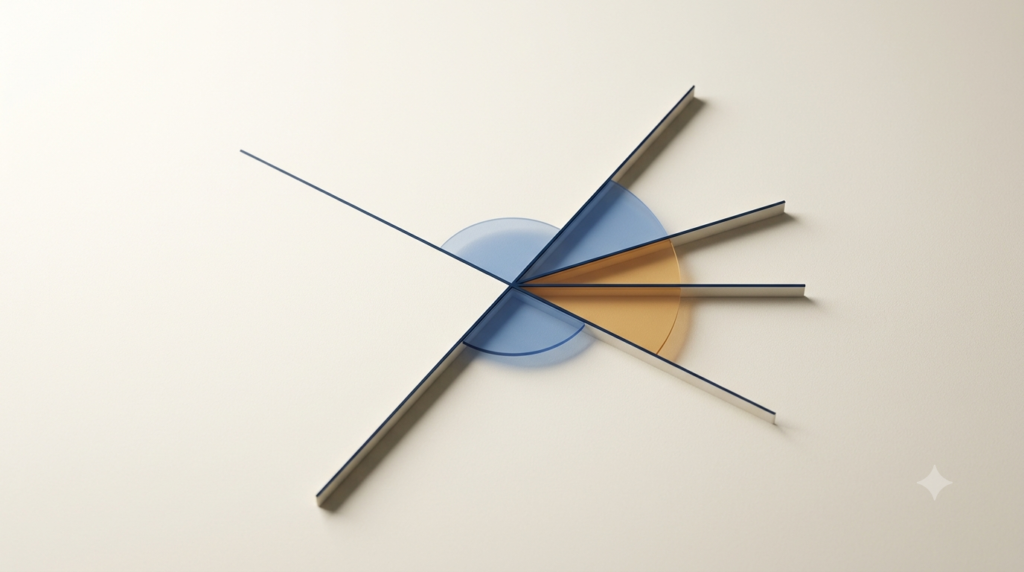
For example, when three rays extend from the same point, the angles between consecutive rays may form adjacent angles.
Adjacent angles are not necessarily equal, complementary, or supplementary. Their relationship depends on the arrangement of the rays. However, when the non-common arms form a straight line, the adjacent angles are supplementary.
Basic Properties:
They share a common vertex.
They share one common arm.
Their interiors do not overlap.
Their sum depends on their arrangement.
4. Vertically Opposite Angles
Vertically opposite angles are the pairs of opposite angles formed when two straight lines intersect.
When two lines cross, they create four angles. The angles directly opposite each other are called vertically opposite angles.
Vertically opposite angles are always equal. This property makes it possible to calculate unknown angles without measuring them directly.
For example, if one angle formed by two intersecting lines measures 65°, the angle directly opposite it also measures 65°. Each adjacent angle measures 115° because adjacent angles on a straight line add up to 180°.
Text block — Vertically Opposite Angle Property
Vertically opposite angles are equal.
If one angle = 65°
Opposite angle = 65°
Adjacent angle = 180° − 65° = 115°
This property is widely used in geometry exercises involving intersecting lines.
5. Angles Around a Point
Angles around a point are formed when two or more rays extend from the same point. Their measurements always add up to 360° because together they represent one complete rotation.
For example, if three angles around a point measure 100°, 140°, and x°, their total must equal 360°.
Text block — Angles Around a Point Formula
Angle 1 + Angle 2 + Angle 3 = 360°
Example:
100° + 140° + x = 360°
240° + x = 360°
x = 120°
Therefore, the missing angle measures 120°.
This property is useful when finding unknown angles in diagrams containing several rays or intersecting lines.
Basic Properties of Angles
Angles follow several mathematical rules that make calculations easier and help us understand geometric relationships.
1. Angles Are Measured in Degrees or Radians
Degrees are commonly used in basic geometry. In advanced mathematics, angles are also measured in radians.
A complete rotation measures 360° or 2π radians. A straight angle measures 180° or π radians, while a right angle measures 90° or π/2 radians.
Text block — Degree and Radian Relationships
360° = 2π radians
180° = π radians
90° = π/2 radians
These relationships are important in trigonometry, calculus, and the study of circular motion.
2. Angles Can Be Added and Subtracted
When an angle is divided into smaller parts, the measurements of those parts add up to the original angle.
For example, if a 90° angle is divided into two angles measuring 30° and 60°, their sum equals 90°.
Similarly, if an angle measures 150° and one part measures 70°, the remaining part measures 80°.
Text block — Angle Addition Formula
Total angle = Angle 1 + Angle 2
Unknown angle = Total angle − Known angle
This property is commonly used to find unknown angles in geometric diagrams.
3. Angles on a Straight Line Add Up to 180°
When two or more adjacent angles lie on the same side of a straight line, their measurements add up to 180°.
For example, if three adjacent angles on a straight line measure 40°, 60°, and x°, the missing angle can be calculated as follows.
Text block — Straight-Line Angle Calculation
40° + 60° + x = 180°
100° + x = 180°
x = 80°
Therefore, the missing angle measures 80°.
4. Angles Around a Point Add Up to 360°
All angles formed around a point together make a complete rotation. Their total measurement is always 360°, regardless of how many rays extend from the point.
This rule is particularly useful when solving problems involving multiple angles around a common vertex.
5. Vertically Opposite Angles Are Equal
When two straight lines intersect, opposite angles have equal measurements. If one angle measures 80°, its vertically opposite angle also measures 80°.
The two remaining angles each measure 100° because they are supplementary to the 80° angles.
6. Equal Angles Have the Same Measurement
Two angles are equal when they have the same measurement, even if their arms have different lengths or their orientations are different.
For example, an angle measuring 45° remains equal to another 45° angle whether it is drawn horizontally, vertically, or diagonally.
The length of the arms does not determine the size of an angle. The amount of rotation between the arms determines its measurement.
How to Identify and Calculate Angles
Identifying angles becomes easier when you follow a simple process.
First, locate the vertex where the two arms meet. Next, identify the angle’s measurement if it is provided. Compare that measurement with the classification ranges to determine the type of angle.
If the measurement is not given, look for known relationships in the diagram. A straight line indicates a total of 180°, a complete rotation around a point indicates 360°, and perpendicular lines form right angles of 90°.
Example 1: Identifying an Acute Angle
Suppose an angle measures 42°. Because 42° is greater than 0° and less than 90°, it is an acute angle.
Example 2: Finding a Complementary Angle
One angle measures 28°. Find its complementary angle.
Text block — Solution
Complementary angle = 90° − 28°
Complementary angle = 62°
The required angle measures 62°.
Example 3: Finding a Supplementary Angle
One angle measures 135°. Find its supplementary angle.
Text block — Solution
Supplementary angle = 180° − 135°
Supplementary angle = 45°
The required angle measures 45°.
Example 4: Finding an Unknown Angle Around a Point
Three angles around a point measure 90°, 125°, and x°. Find x.
Text block — Solution
90° + 125° + x = 360°
215° + x = 360°
x = 145°
The missing angle is 145°, which is an obtuse angle.
Example 5: Finding Angles Formed by Intersecting Lines
Two straight lines intersect. One angle measures 72°. Find the vertically opposite angle and an adjacent angle.
Text block — Solution
Vertically opposite angle = 72°
Adjacent angle = 180° − 72°
Adjacent angle = 108°
Therefore, the vertically opposite angle is 72°, and each adjacent angle is 108°.
Importance of Angles in Everyday Life
Angles are used in many practical situations, often without people noticing them.
In architecture and construction, angles help create accurate corners, roofs, staircases, bridges, and structural supports. Builders use right angles to check whether walls and frames are properly aligned.
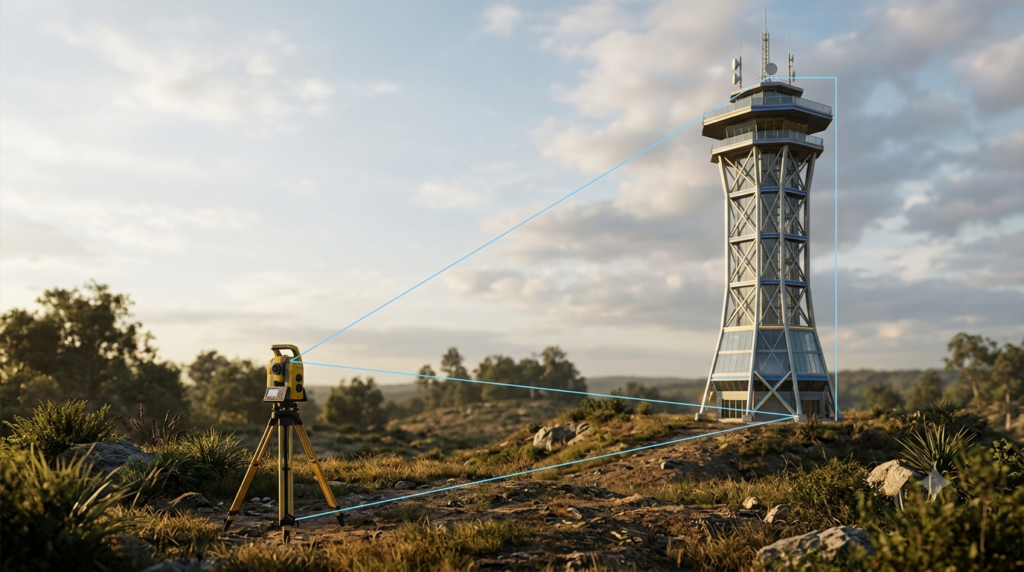
In navigation, angles help determine directions and describe the positions of objects. Maps, compasses, and navigation systems use angular measurements to represent orientation and movement.
In sports, angles influence the direction of a ball, the path of a shot, and the movement of players. Changing the angle of a throw or kick can affect the direction and distance travelled by the ball.
In engineering, angles are important in designing machines, gears, mechanical joints, and rotating components. Engineers use angular measurements to control movement and ensure that different parts fit together correctly.
Angles also appear in art and design. Artists use them to create perspective, patterns, and geometric compositions. Photographers adjust camera angles to change how a subject appears and how much depth an image seems to have.
In science, angles help describe light reflection, refraction, rotating objects, and the positions of celestial bodies. Their applications range from basic classroom experiments to advanced research in physics and astronomy.
Common Mistakes When Learning About Angles
Beginners sometimes confuse different types of angles or misunderstand how their measurements work. Recognizing these mistakes helps develop a stronger understanding of geometry.
Confusing angle size with arm length: Longer arms do not create larger angles. The size of an angle depends on the opening between its arms, not their lengths.
Mixing up complementary and supplementary angles: Complementary angles add up to 90°, while supplementary angles add up to 180°. Remembering these totals helps prevent calculation errors.
Calling a 90° angle obtuse: A right angle measures exactly 90°. An obtuse angle must be greater than 90° and less than 180°.
Confusing a straight angle with a complete angle: A straight angle measures 180°, while a complete angle measures 360°.
Assuming adjacent angles are always equal: Adjacent angles share a vertex and an arm, but they do not have to be equal. Their measurements depend on the positions of the rays.
Forgetting the total around a point: When solving a diagram involving several angles around one point, remember that their sum is 360°.
Avoiding these common mistakes makes angle identification and calculation more accurate.
Conclusion
Angles are fundamental elements of geometry that describe the amount of rotation between two rays sharing a common endpoint. The main types include zero, acute, right, obtuse, straight, reflex, and complete angles, each defined by its measurement. Angles can also be classified by their relationships, including complementary, supplementary, adjacent, and vertically opposite angles.
Several basic properties make angle calculations easier. Angles on a straight line add up to 180°, angles around a point total 360°, complementary angles add up to 90°, and vertically opposite angles are equal. These rules help solve geometry problems and understand the relationships between lines and shapes.
Learning the types and properties of angles provides a strong foundation for more advanced topics such as triangles, polygons, circles, and trigonometry. It also reveals how geometry is applied in construction, engineering, navigation, art, and science. With regular practice, identifying and calculating angles becomes a straightforward and useful mathematical skill.
FAQs
1. What is an angle in geometry?
An angle is a geometric figure formed by two rays that share a common endpoint called the vertex. The two rays are known as the arms of the angle. The size of an angle depends on the amount of rotation between its arms. Angles are commonly measured in degrees, represented by the symbol °, although radians are also used in advanced mathematics. Angles help describe the positions of lines, the shapes of geometric figures, and the direction of movement. They are important for understanding triangles, polygons, circles, trigonometry, and many practical applications in science and engineering.
2. What are the seven main types of angles?
The seven main types of angles are zero, acute, right, obtuse, straight, reflex, and complete angles. A zero angle measures 0°, while an acute angle measures more than 0° but less than 90°. A right angle measures exactly 90°, and an obtuse angle measures more than 90° but less than 180°. A straight angle measures 180°, a reflex angle measures more than 180° but less than 360°, and a complete angle measures 360°. These classifications help identify angles according to their measurements and provide a foundation for learning geometry and solving mathematical problems.
3. What is the difference between acute and obtuse angles?
The main difference between acute and obtuse angles is their measurement. An acute angle measures more than 0° but less than 90°, making it smaller than a right angle. Examples include 30°, 45°, and 60°. An obtuse angle measures more than 90° but less than 180°, making it wider than a right angle. Examples include 110°, 120°, and 150°. These angles can be identified by comparing their measurements with 90°. Acute and obtuse angles appear in triangles, architectural designs, everyday objects, and many other geometric figures.
4. What is a right angle, and where can it be found?
A right angle is an angle that measures exactly 90°. It represents one-quarter of a complete rotation and is commonly marked with a small square at its vertex in geometric diagrams. Right angles can be found in the corners of square tiles, books, tables, windows, and rectangular screens. They are also important in construction, architecture, engineering, and technical drawing. When two straight lines intersect at right angles, they are called perpendicular lines and form four right angles. Recognizing right angles helps people understand geometric shapes and check whether objects or structures are properly aligned.
5. What is the difference between a straight angle and a complete angle?
A straight angle measures exactly 180°, while a complete angle measures exactly 360°. A straight angle represents half of a full rotation, with its two arms pointing in opposite directions along a straight line. A complete angle represents one full rotation around a point, returning to the original direction. For example, a pointer that turns halfway around completes a rotation of 180°, whereas a pointer that makes one entire revolution completes 360°. Although both angles may have overlapping starting and ending directions, they represent different amounts of rotation. This distinction is important in geometry and circular motion.
6. What are complementary and supplementary angles?
Complementary angles are two angles whose measurements add up to 90°, while supplementary angles are two angles whose measurements add up to 180°. For example, 30° and 60° are complementary because their sum is 90°. Similarly, 110° and 70° are supplementary because their sum is 180°. Complementary angles are often associated with right angles, whereas supplementary angles commonly occur along a straight line. The angles do not always need to be adjacent. These relationships help calculate unknown angles and are frequently used in geometry problems involving triangles, intersecting lines, and other geometric figures.
7. What are adjacent angles?
Adjacent angles are two angles that share a common vertex and one common arm, with their interiors not overlapping. They are positioned next to each other and may be formed when three or more rays extend from the same point. Adjacent angles are not necessarily equal, complementary, or supplementary. Their relationship depends on the arrangement of the rays. However, if their non-common arms extend in opposite directions along a straight line, the two adjacent angles are supplementary and add up to 180°. Understanding adjacent angles helps solve problems involving straight lines, intersecting lines, and the division of larger angles into smaller parts.
8. What are vertically opposite angles, and what is their property?
Vertically opposite angles are pairs of opposite angles formed when two straight lines intersect. The intersection creates four angles, and each pair of angles directly opposite one another has the same measurement. For example, if one angle measures 70°, its vertically opposite angle also measures 70°. The two adjacent angles each measure 110° because angles on a straight line add up to 180°. Vertically opposite angles are useful because they allow unknown angles to be calculated without using a protractor. This property is commonly applied in geometry exercises involving intersecting lines and other related angle relationships.
9. How can an unknown angle be calculated?
An unknown angle can be calculated by using the known relationships between angles. Angles on a straight line add up to 180°, while angles around a point add up to 360°. Complementary angles total 90°, supplementary angles total 180°, and vertically opposite angles are equal. For example, if one angle on a straight line measures 125°, the adjacent angle is calculated by subtracting 125° from 180°. Therefore, the unknown angle measures 55°. Identifying the correct relationship is the first step in solving an angle problem. Writing the calculation clearly helps reduce mistakes and improves understanding.
10. Why are angles important in everyday life?
Angles are important because they help describe directions, shapes, rotations, and the positions of objects. In construction, they are used to design buildings, roofs, stairs, and bridges. In navigation, angles help determine directions and represent the orientation of objects. Engineers use angular measurements when designing machines, gears, and mechanical components. In sports, angles influence the direction of a ball and the path of a shot. Angles are also essential in art, photography, astronomy, and physics. Learning about angles improves spatial understanding and provides a foundation for advanced mathematical topics such as trigonometry, coordinate geometry, and circular motion.