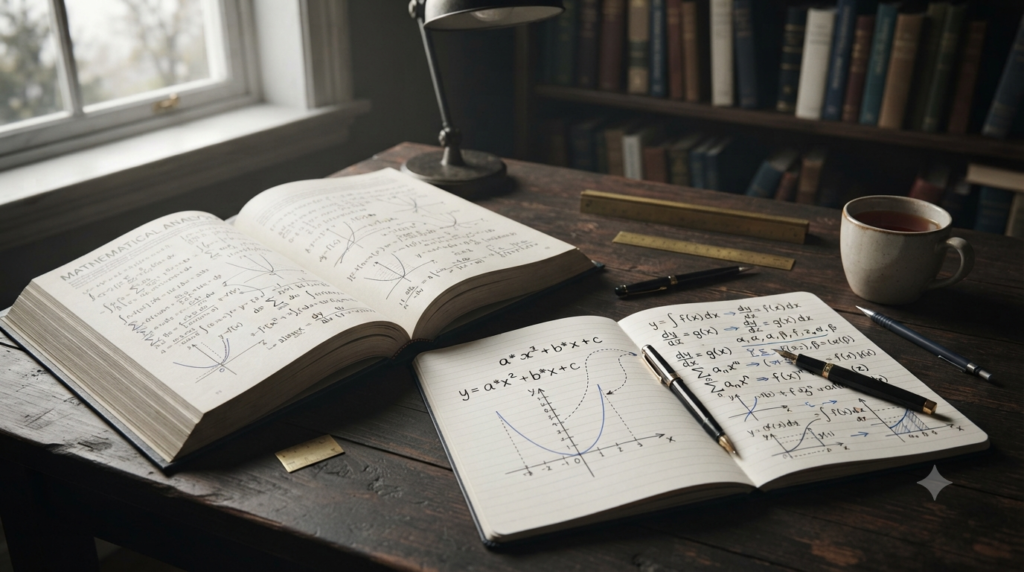
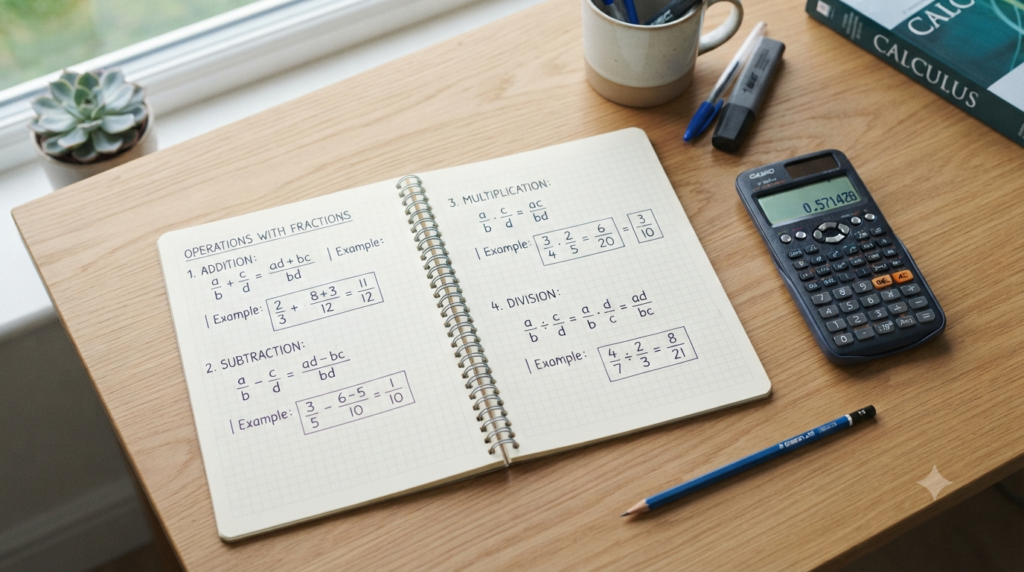
Mathematical formulas are built from different kinds of quantities, and each part of a formula has a specific role. Among these parts, constants are especially important because they provide fixed values that help describe relationships between changing quantities. Although the idea of a constant is simple, understanding how constants work makes it easier to read, interpret, and use mathematical formulas correctly.
A constant is a quantity whose value does not change within a particular mathematical situation. It may be represented by a number, a letter, or a special symbol. For example, in the formula (A = πr²), the value of π is a constant, while the radius (r) can change from one circle to another. Similarly, in the formula (y = 3x + 5), the numbers 3 and 5 are constants when considering this particular equation, while (x) and (y) are variables.
Constants appear throughout arithmetic, algebra, geometry, trigonometry, calculus, physics, and many other areas of mathematics. Learning to identify them and understand their role provides a strong foundation for working with formulas.
What Is a Constant?
A constant is a quantity that has a fixed value in a given mathematical expression, equation, or formula.
The word “constant” comes from the idea of something that remains unchanged. If a quantity has the same value throughout a particular problem or relationship, it can be treated as a constant.
Consider the expression:
x + 7
Here, (x) can take different values, but 7 remains fixed. Therefore, 7 is a constant.
For example:
If (x = 2), then (x + 7 = 9).
If (x = 10), then (x + 7 = 17).
If (x = 100), then (x + 7 = 107).
The value of (x) changes, but 7 does not.
Constants do not always have to be ordinary numbers. Some constants are represented by letters or special mathematical symbols because they have established fixed values.
Constants and Variables
Constants are often discussed together with variables because formulas commonly contain both.
A variable is a quantity whose value can change. A constant, in contrast, has a fixed value within the situation being considered.
For example:
y = 4x + 6
In this equation:
(x) is a variable.
(y) is a variable.
4 is a constant.
6 is a constant.
If (x) changes, the value of (y) changes, but the numbers 4 and 6 remain unchanged.
This distinction is one of the first important ideas in algebra. Once you can separate constants from variables, many formulas become easier to understand.
Constants in Mathematical Formulas
A mathematical formula describes a relationship between quantities. Constants help establish the specific nature of that relationship.
For example:
C = 2πr
This is the formula for the circumference of a circle.
Here:
(C) represents circumference.
(r) represents radius.
2 is a fixed numerical constant.
(π) is a mathematical constant.
The radius can change depending on the circle, but 2 and π remain fixed in the formula.
Another example is:
A = πr²
In this formula, π is a constant, while (r) is a variable quantity.
The constant π connects the radius to the area of every circle. Without this constant, the relationship between radius and area would not be correctly represented.
Numerical Constants
The simplest type of constant is a fixed number.
Examples include:
5, 12, −3, 0.5, 100
These numbers can act as constants in mathematical expressions.
Consider:
y = 5x
The number 5 is a constant multiplier. It tells us how the value of (y) changes in relation to (x).
If:
x = 1, then (y = 5)
x = 2, then (y = 10)
x = 10, then (y = 50)
The variable (x) changes, but the multiplier 5 remains fixed.
Numerical constants can also appear as terms that are added or subtracted.
For example:
y = 2x + 8
Here, 2 and 8 are constants.
The number 2 determines the multiplication relationship with (x), while 8 is a fixed amount added to the result.
Mathematical Constants
Some constants have special mathematical significance and appear repeatedly across different formulas.
One of the most familiar is π (pi).
π represents the ratio of the circumference of a circle to its diameter. Its approximate value is:
π ≈ 3.14159
Unlike an ordinary whole number, π is irrational, meaning its decimal representation continues indefinitely without repeating in a fixed pattern.
Another important mathematical constant is e, known as Euler’s number.
Its approximate value is:
e ≈ 2.71828
The constant (e) is especially important in exponential growth, logarithms, calculus, probability, and many scientific models.
Other well-known mathematical constants include:
(π), used extensively in geometry and trigonometry
(e), important in exponential and logarithmic functions
(√2), which appears in geometry and algebra
(φ), the golden ratio, approximately 1.618
(i), the imaginary unit, defined by (i² = -1)
These constants have fixed mathematical meanings and can appear in formulas across different fields.
Constants in Algebraic Expressions
In algebra, constants can appear in several positions within an expression.
Consider:
3x² + 7x − 4
This expression contains:
(3), a numerical coefficient
(7), a numerical coefficient
(4), a constant term
(x), a variable
It is useful to distinguish between a coefficient and a constant term.
A coefficient is a number multiplied by a variable. In (3x²), 3 is the coefficient of (x²).
A constant term is a term that contains no variable. In the expression above, −4 is the constant term.
The same number can sometimes serve different roles depending on how it appears in an expression.
Constants as Coefficients
A constant can act as a coefficient when it multiplies a variable.
For example:
y = 8x
Here, 8 is a constant coefficient.
In:
A = ½bh
the factor ½ is a constant coefficient. The base (b) and height (h) can change, but the factor ½ remains fixed.
Constants used as coefficients often describe how strongly one quantity is related to another.
For example:
F = ma
does not contain a numerical coefficient other than the implied 1, but in a formula such as:
y = 10x
the constant 10 determines the proportional relationship between (y) and (x).
Constants in Geometry
Geometry contains many formulas where constants play an essential role.
For the area of a circle:
A = πr²
π is a constant.
For the circumference:
C = 2πr
both 2 and π are constants.
For the area of a triangle:
A = ½bh
½ is a constant factor.
For the area of a rectangle:
A = lw
there is no visible numerical constant because the relationship has an implied coefficient of 1.
These examples show that constants can be present explicitly or implicitly.
Constants in Trigonometry
Constants also appear in trigonometric formulas.
For example:
sin²θ + cos²θ = 1
The number 1 is a constant. It remains unchanged regardless of the value of the angle (θ).
Another example is:
180° = π radians
The relationship between degrees and radians involves the mathematical constant π.
Trigonometric formulas often combine constants with variables and functions, so recognizing fixed quantities can make these relationships easier to interpret.
Constants in Exponential Formulas
Constants are particularly important in exponential functions.
A general exponential expression can be written as:
y = abˣ
Here:
(x) is the variable.
(y) is the dependent variable.
(a) is a constant.
(b) is a constant base, subject to the conditions of the particular exponential function.
For example:
y = 3(2ˣ)
The numbers 3 and 2 are constants, while (x) changes.
Changing a constant can significantly change the behavior of a formula. For example, changing 3 to 5 changes the initial value, while changing the base 2 to another positive value changes the rate of exponential change.
Constants in Physics and Scientific Formulas
Constants are not limited to pure mathematics. They are extremely important in science.
For example, the speed of light in vacuum is commonly represented by (c):
c ≈ 3.00 × 10⁸ m/s
In Einstein’s famous equation:
E = mc²
(c) is a physical constant, while (m) can vary depending on the mass being considered.
Another example is Newton’s law of universal gravitation:
F = Gm₁m₂/r²
Here, (G) is the gravitational constant. The masses and distance can change, while (G) has a fixed established value within the applicable physical framework.
Scientific constants often carry units as well as numerical values. This makes them different from many pure mathematical constants.
Constants Can Depend on Context
An important point is that whether a quantity is called a constant can depend on the context.
Suppose we write:
y = ax + b
In this expression, (a) and (b) are commonly treated as constants with respect to (x). However, in a different problem, (a) or (b) could themselves be variables.
For example, if:
a = t + 2
then (a) changes when (t) changes.
Therefore, a symbol is not automatically a constant simply because it is represented by a letter. Its role depends on the mathematical situation.
This is especially important when studying advanced mathematics, where quantities may be treated as constants in one calculation and variables in another.
Constant Terms in Equations
A constant term is a term without a variable.
Consider:
2x + 9 = 15
Here, 9 and 15 are constants.
In polynomial expressions, the constant term is the term with no variable.
For example:
4x³ − 2x² + 7x + 11
The constant term is 11.
The constant term is important because it represents the value remaining when the variable is zero.
If:
f(x) = 4x + 11
then setting (x = 0) gives:
f(0) = 11
Thus, the constant term can also provide useful information about a function.
Constants and Proportional Relationships
Constants are also used to express proportional relationships.
If two quantities are directly proportional, we can write:
y = kx
Here, (k) is called the constant of proportionality.
The value of (k) remains fixed for that particular relationship.
For example, if:
y = 4x
then:
y/x = 4
for every nonzero value of (x).
The constant 4 tells us how the two quantities are related.
This idea appears in many areas of mathematics and science, including geometry, physics, economics, and statistics.
Why Constants Matter in Formulas
Constants may look like small parts of a formula, but they often determine important features of the relationship.
A constant can:
Set a fixed scale.
Establish a proportional relationship.
Provide a fixed starting value.
Determine the shape or behavior of a function.
Connect different quantities through a mathematical relationship.
Represent a universal mathematical or physical value.
For example, removing π from the circle-area formula would completely change the relationship between radius and area. Similarly, changing the constant of proportionality can change the entire relationship between two quantities.
How to Identify Constants in a Formula
When looking at a formula, you can identify constants by asking a few simple questions.
Step 1: Look for Fixed Numbers
Numbers that remain unchanged in the expression are often constants.
For example:
y = 6x + 4
The numbers 6 and 4 are constants in this equation.
Step 2: Identify the Variables
Look for symbols whose values can change.
In:
A = πr²
(r) is the variable quantity, while π is a mathematical constant.
Step 3: Check Special Symbols
Some symbols represent established constants.
Examples include:
π, e, φ
Their exact roles depend on the formula.
Step 4: Consider the Context
Do not decide that a symbol is a constant simply because it is a letter.
In:
y = ax + b
(a) and (b) may be constants with respect to (x). But in another equation, they may vary.
Always consider what the formula is describing.
Common Mistakes About Constants
One common mistake is assuming that every number in a formula has the same role.
For example:
A = πr²
The 2 is not a variable, and π is not an ordinary variable. Both are fixed in this formula, but they have different mathematical roles.
Another common mistake is assuming that every letter represents a variable. Mathematical notation often uses letters for constants, such as (π), (e), and physical constants such as (G).
A third mistake is forgetting that constants can depend on context. A quantity may be fixed for one problem but allowed to change in another.
Understanding the context prevents these misunderstandings.
Constants Versus Variables
The difference can be summarized simply:
| Feature | Constant | Variable |
|---|
| Value | Fixed within the given context | Can change |
| Purpose | Establishes a fixed part of a relationship | Represents a changing quantity |
| Example | 5, π, e | x, y, r |
| Can be represented by a letter? | Yes | Yes |
| Depends on context? | Yes | Yes |
The key difference is not whether the quantity is a number or a letter. The key difference is whether its value is being held fixed in the situation being studied.
Constants in Real-World Mathematical Models
Mathematical models often combine constants and variables to represent real-world situations.
Suppose the cost of a product is represented by:
C = 50 + 20n
Here, (n) could represent the number of items purchased. The value 20 could represent the fixed cost per item, while 50 could represent a fixed initial charge.
As (n) changes, the total cost changes. The constants establish the underlying structure of the cost model.
Similar ideas appear in population models, financial calculations, engineering equations, scientific laws, and statistical formulas.
Conclusion
Constants are fundamental building blocks of mathematical formulas. They represent quantities that remain fixed within a particular mathematical context and help establish the relationships described by formulas. They can appear as ordinary numbers, coefficients, constant terms, mathematical symbols, or physical constants.
Understanding constants also requires understanding variables and context. A number such as 5 may clearly be a constant in one expression, while a symbol such as (a) may act as a constant in one equation and a variable in another situation.
By learning to identify constants, distinguish them from variables, and understand their role in different formulas, you can read mathematical expressions more confidently. Whether you are working with algebraic equations, geometric formulas, trigonometric identities, exponential functions, or scientific equations, recognizing constants is an essential step toward understanding how mathematical relationships work.