Work and energy are two of the most important ideas in physics. We use the word “work” in everyday life to describe activities such as studying, lifting, walking, or carrying something. In physics, however, work has a more specific meaning. Energy is also more than simply the ability to “do something.” It is a measurable physical quantity that can be transferred and transformed.
The connection between work and energy is one of the fundamental ideas of mechanics. When work is done on an object, energy can be transferred to or from that object. This relationship helps explain why objects speed up, slow down, rise, fall, bend, heat up, or change their motion.
What Is Work in Physics?
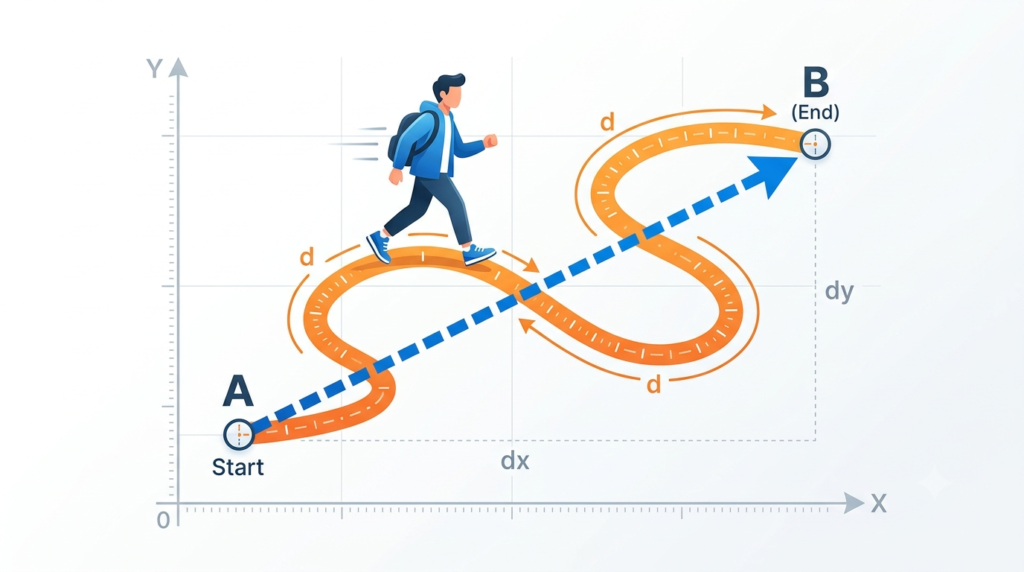
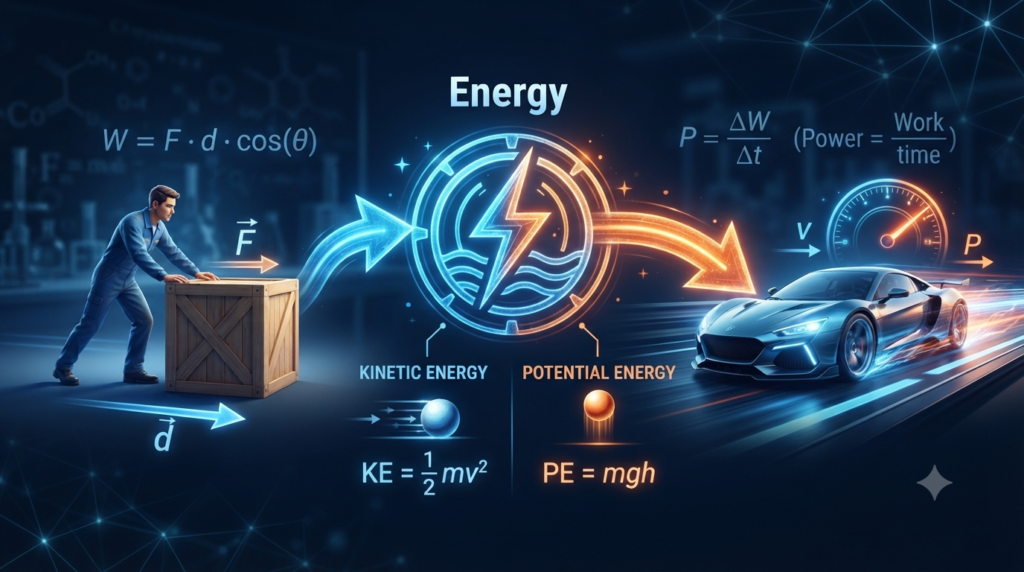
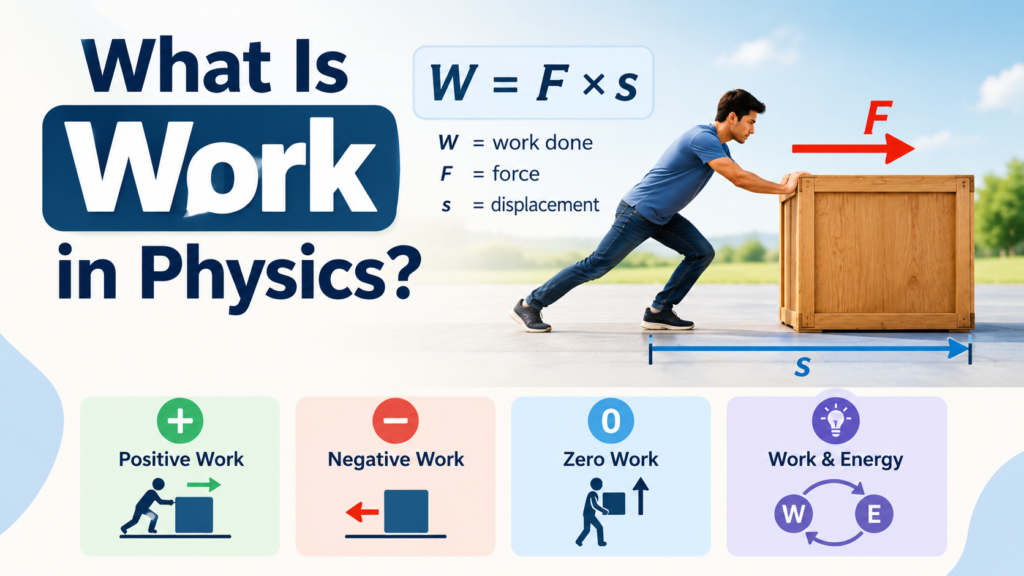
In physics, work is done when a force causes an object to move through a displacement. For a constant force acting in the same direction as the displacement, work is calculated using:
W = Fd
where W is work, F is force, and d is displacement.
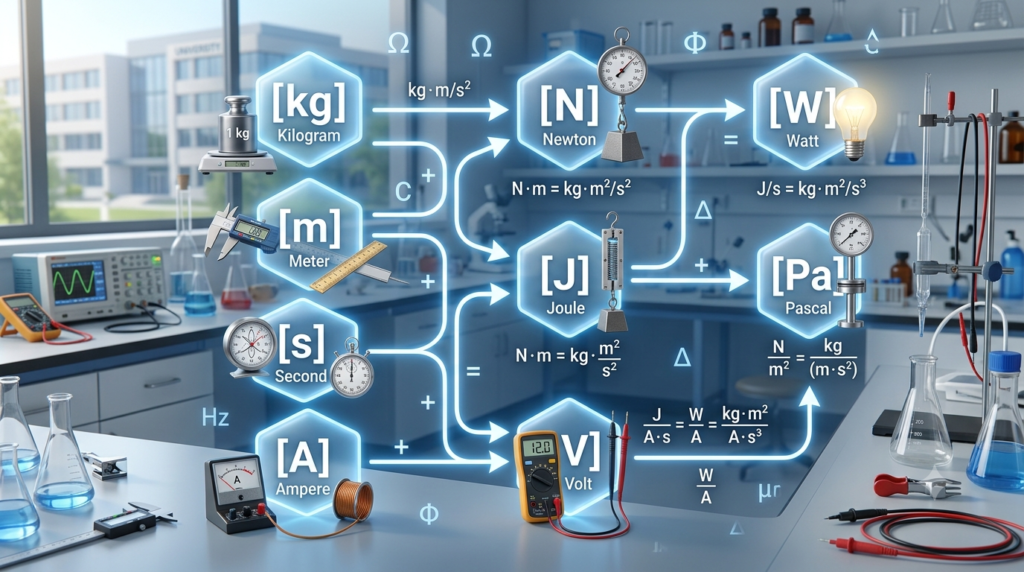
The SI unit of work is the joule (J).
One joule of work is done when a force of one newton moves an object through a distance of one metre in the direction of the force.
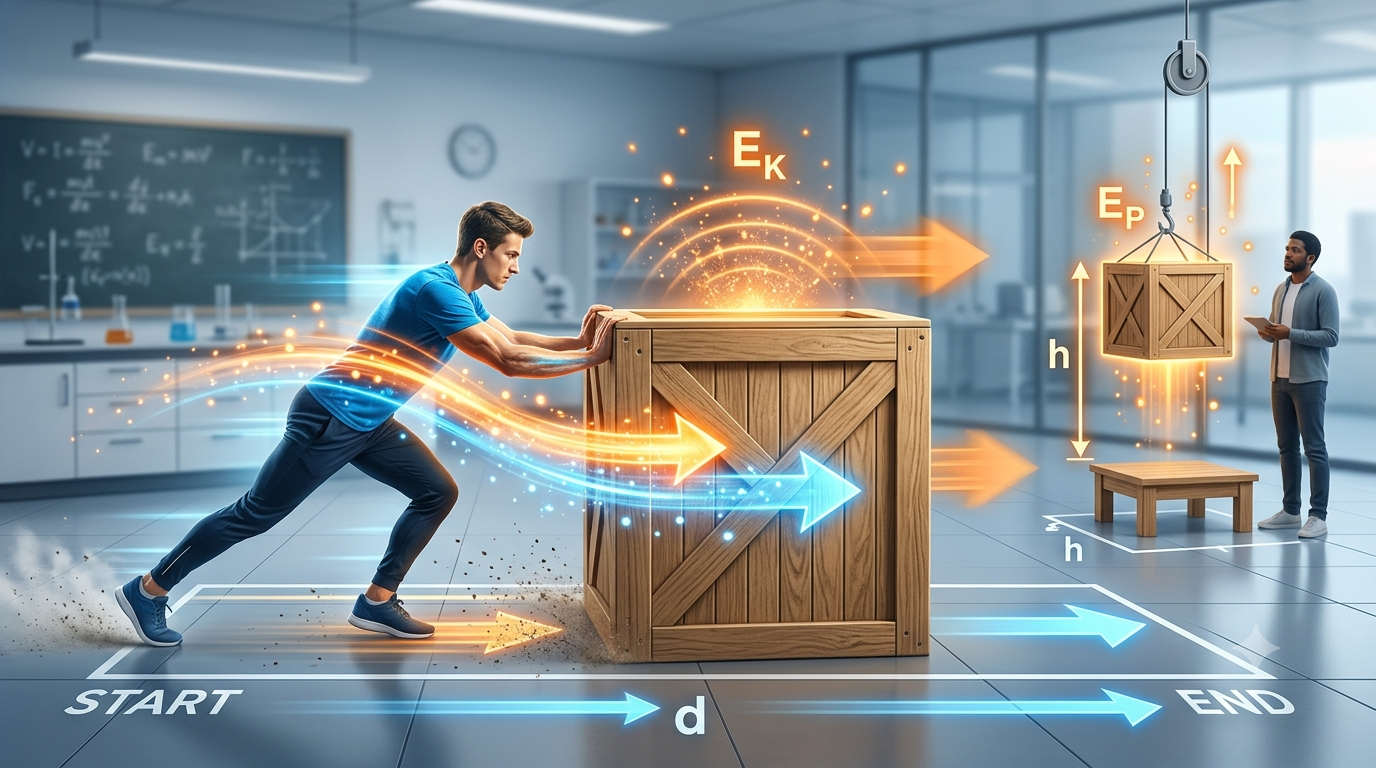
For example, suppose you push a box with a force of 20 newtons and it moves 3 metres in the direction of the push. The work done is:
W = 20 × 3 = 60 J
So, 60 joules of work are done on the box.
However, force and movement alone do not always mean that work is being done. The direction of the force matters. If a force acts at an angle to the displacement, only the component of the force in the direction of displacement contributes to the work.
The more general equation is:
W = Fd cos θ
where θ is the angle between the force and displacement.
What Is Energy?
Energy is the capacity of a system to cause change or perform work. It appears in many forms, including kinetic energy, gravitational potential energy, elastic potential energy, chemical energy, thermal energy, electrical energy, and nuclear energy.
Like work, energy is measured in joules.
An object can possess energy even when no work is currently being done on it. For example, a book resting on a high shelf has gravitational potential energy because of its position. A moving car has kinetic energy because of its motion.
Energy allows us to describe what can happen to a system and how physical changes occur.
The Fundamental Connection Between Work and Energy
The most important connection is that work is a way of transferring energy.
When you push an object and make it move, the work you do transfers energy to the object. If the object speeds up, some of that transferred energy becomes kinetic energy.
This idea is expressed by the work-energy theorem:
Net work = change in kinetic energy
or:
Wₙₑₜ = ΔK
This means that when the net work done on an object is positive, its kinetic energy increases. When the net work is negative, its kinetic energy decreases.
For an object of mass m moving with speed v, kinetic energy is:
K = ½mv²
Therefore, if work causes an object to accelerate, the work changes its kinetic energy.
How Work Changes Kinetic Energy
Imagine pushing a shopping cart that is initially at rest. When you apply a force and the cart begins moving, you transfer energy to the cart.
If you continue pushing in the direction of motion, positive work is done on the cart. Its kinetic energy increases, and its speed increases.
If another force, such as friction, acts against the cart’s motion, friction does negative work. It removes kinetic energy from the cart and converts much of that energy into thermal energy.
The final change in kinetic energy depends on the net work done by all the forces acting on the object.
This explains why simply knowing that one force does work is not always enough to determine whether an object speeds up or slows down.
Work and Potential Energy
Work is also closely connected to potential energy.
Consider lifting a book from the floor to a table. You apply an upward force and move the book upward. Your force does positive work on the book. The energy transferred through this work becomes gravitational potential energy.
The gravitational potential energy near Earth’s surface is:
U = mgh
where m is mass, g is gravitational acceleration, and h is height.
If you lift a 2-kilogram object through a height of 5 metres, ignoring energy losses, you increase its gravitational potential energy by approximately:
ΔU = mgh
ΔU = 2 × 9.8 × 5 = 98 J
So approximately 98 joules of energy are transferred into gravitational potential energy.
When the object falls, gravity does positive work on it. Its gravitational potential energy decreases while its kinetic energy increases.
Negative Work and Energy Removal
Work does not always add energy to an object. A force can also remove energy through negative work.
Friction is a common example. Suppose a moving block slides across a rough surface. Friction acts opposite to the block’s displacement. Therefore, friction does negative work.
As a result, the block loses kinetic energy and slows down.
The energy does not simply disappear. It is mainly transferred into thermal energy in the surfaces and surrounding environment.
This demonstrates an important principle: energy is transferred and transformed rather than simply disappearing.
Work, Energy, and Energy Conservation
The connection between work and energy becomes even more powerful when combined with the law of conservation of energy.
Energy cannot be created or destroyed in an isolated system. It can only be transferred from one object or system to another or transformed from one form into another.
For example, consider a ball held above the ground. It has gravitational potential energy. When released, gravity does work on the ball. Its potential energy decreases while its kinetic energy increases.
If air resistance is ignored, the total mechanical energy remains constant.
At the highest point:
Potential energy is high, kinetic energy is low.
During the fall:
Potential energy decreases, kinetic energy increases.
Just before reaching the ground:
Kinetic energy is high, potential energy is low.
The work done by gravity is responsible for transferring energy between these forms.
Work Done by Different Forces
Several forces can act on an object at the same time, and each force may do different amounts of work.
Consider a box being pushed across a rough floor. The applied force does positive work because it acts partly in the direction of displacement. Friction does negative work because it acts opposite to displacement. The normal force from the floor may do zero work if it acts perpendicular to the horizontal displacement.
The total effect is determined by the net work:
Net work = work by all forces combined
If positive work is greater than negative work, the object’s kinetic energy increases. If negative work is greater, its kinetic energy decreases.
When No Work Is Done
There are situations where a force acts on an object but does no work.
For example, imagine carrying a bag horizontally at constant height. Your hand applies an upward force, while the bag moves horizontally. Since the force and displacement are perpendicular, the work done by your upward force on the bag is zero in the idealized physics model.
Similarly, if you push against a rigid wall and the wall does not move, the displacement is zero. Therefore, the mechanical work done on the wall is zero, even though you may become tired.
This distinction shows why the physics definition of work is different from its everyday meaning.
Real-Life Examples of Work and Energy
The relationship between work and energy appears everywhere.
When a cyclist pedals uphill, chemical energy from the cyclist’s body is transferred through muscular work and eventually becomes gravitational potential energy and thermal energy.
When a car accelerates, chemical energy stored in fuel or electrical energy stored in a battery is transformed into mechanical energy. The engine or motor performs work that changes the car’s kinetic energy.
When a compressed spring launches an object, elastic potential energy is transformed into kinetic energy through the forces acting during the release.
In a hydroelectric power plant, gravitational potential energy of stored water is converted into kinetic energy and then into mechanical and electrical energy. Work performed by moving water on turbine blades is part of this energy-transfer process.
Why the Work-Energy Relationship Matters
The connection between work and energy gives physicists a powerful way to analyze motion without always tracking acceleration and forces at every moment.
For complicated systems, calculating energy changes can be easier than solving directly for the motion. If the work done by forces is known, the change in kinetic energy can be determined.
This principle is used in mechanics, engineering, transportation, machines, power systems, and many other areas of science.
It also provides a simple way to understand everyday physical events. A force acting through a distance transfers energy. That transferred energy can increase an object’s motion, raise its position, stretch or compress something, or become another form of energy.
Conclusion
Work and energy are deeply connected because work is one of the main ways energy is transferred. When work is done on an object, its energy can change. Positive net work increases kinetic energy, while negative net work decreases it.
Work can also transfer energy into potential energy or other forms. Through the work-energy theorem and conservation of energy, physicists can understand how forces produce changes in motion and how energy moves between different parts of a system.
Understanding this relationship makes many physical processes easier to explain. From pushing a box and lifting a book to accelerating a car and generating electricity, the same fundamental idea appears again and again: work transfers energy, and energy changes reveal what work has accomplished.