
Common Formulas of Important Inorganic Compounds

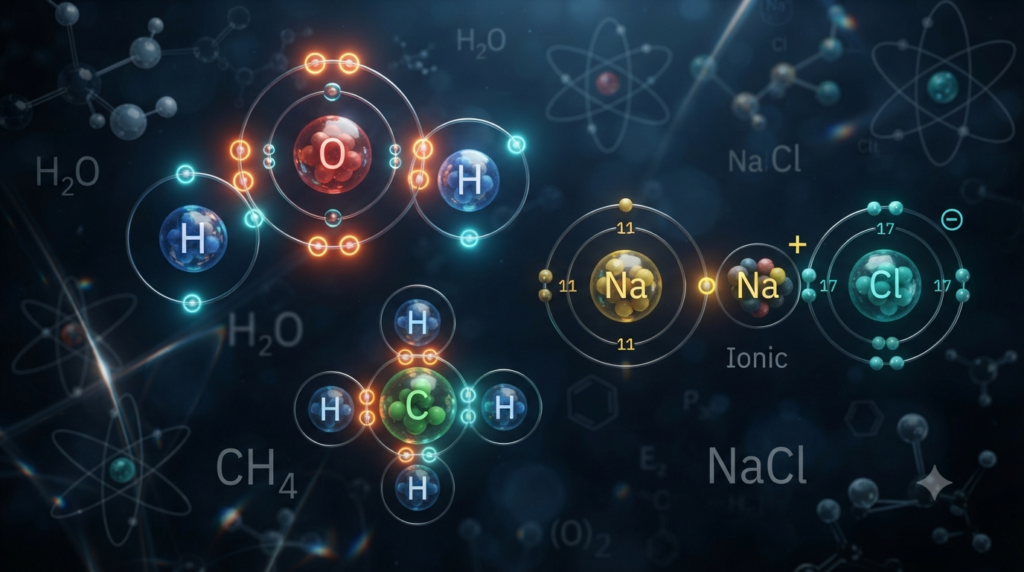
Chemistry laboratory scene showing common inorganic compounds, molecular structures, salts, acids, bases, oxides, sulfates, nitrates, and hydroxides.

Inorganic compounds are found everywhere around us, from table salt and baking soda to fertilizers, minerals, medicines, cleaning products, and industrial materials. Learning the chemical formulas of common inorganic compounds is an important part of understanding chemistry because a formula tells us which elements are present and how their atoms or ions are combined. Some compounds are made from metals and nonmetals, while others contain polyatomic ions such as sulfate, nitrate, carbonate, hydroxide, and ammonium. Knowing these formulas makes it easier to write chemical equations, identify substances, understand chemical reactions, and solve numerical problems. This article presents the formulas of important inorganic compounds in a simple and organized way, along with their common names and uses.

What Are Inorganic Compounds?

Inorganic compounds are chemical substances that generally do not have carbon-hydrogen bonds characteristic of most organic compounds. They include salts, acids, bases, oxides, hydroxides, and many minerals. Examples include sodium chloride (NaCl), calcium carbonate (CaCO₃), sulfuric acid (H₂SO₄), and sodium hydroxide (NaOH).

Inorganic compounds can be classified into several groups depending on their composition and chemical properties.

1. Acids

Acids are substances that can release hydrogen ions (H⁺) in aqueous solution. Many common inorganic acids are widely used in laboratories and industries.

2. Bases

Bases generally produce hydroxide ions (OH⁻) in water or accept hydrogen ions. Many metal hydroxides are common inorganic bases.

3. Salts

Salts are ionic compounds generally formed when the hydrogen ions of an acid are replaced by metal ions or ammonium ions. Sodium chloride and calcium carbonate are examples.

4. Oxides

Oxides are compounds in which oxygen is combined with another element. Examples include carbon dioxide, calcium oxide, and iron(III) oxide.

Common Inorganic Acids and Their Formulas

Acids are among the most important inorganic compounds. Their formulas are frequently used in chemical equations and laboratory calculations.

Common NameChemical Formula
Hydrochloric acidHCl
Sulfuric acidH₂SO₄
Nitric acidHNO₃
Phosphoric acidH₃PO₄
Carbonic acidH₂CO₃
Sulfurous acidH₂SO₃
Nitrous acidHNO₂
Hydrofluoric acidHF
Hydrobromic acidHBr
Hydriodic acidHI
Perchloric acidHClO₄
Boric acidH₃BO₃

Hydrochloric acid (HCl) is widely used in chemical processing and laboratory work. Sulfuric acid (H₂SO₄) is an important industrial chemical used in fertilizer production, batteries, and many chemical processes. Nitric acid (HNO₃) is used in fertilizer production and chemical manufacturing.

Common Inorganic Bases and Their Formulas

Many important bases are metal hydroxides. Their formulas contain a metal ion combined with hydroxide ions.

Common NameChemical Formula
Sodium hydroxideNaOH
Potassium hydroxideKOH
Calcium hydroxideCa(OH)₂
Magnesium hydroxideMg(OH)₂
Aluminium hydroxideAl(OH)₃
Ammonium hydroxideNH₄OH
Barium hydroxideBa(OH)₂
Lithium hydroxideLiOH
Strontium hydroxideSr(OH)₂
Iron(II) hydroxideFe(OH)₂
Iron(III) hydroxideFe(OH)₃
Copper(II) hydroxideCu(OH)₂

Sodium hydroxide (NaOH), commonly called caustic soda, is used in soap making, paper production, and many industrial processes. Calcium hydroxide [Ca(OH)₂], commonly known as slaked lime, is used in construction, water treatment, and agriculture.

Common Chlorides

Chlorides are compounds containing the chloride ion (Cl⁻). Many metal chlorides are ionic compounds.

Common NameChemical Formula
Sodium chlorideNaCl
Potassium chlorideKCl
Calcium chlorideCaCl₂
Magnesium chlorideMgCl₂
Aluminium chlorideAlCl₃
Ammonium chlorideNH₄Cl
Iron(II) chlorideFeCl₂
Iron(III) chlorideFeCl₃
Copper(II) chlorideCuCl₂
Zinc chlorideZnCl₂
Silver chlorideAgCl
Lead(II) chloridePbCl₂

Sodium chloride (NaCl) is common table salt. Calcium chloride (CaCl₂) is used for moisture control, de-icing, and some industrial applications. Ammonium chloride (NH₄Cl) has applications in fertilizers and metalworking.

Common Sulfates

Sulfates contain the sulfate ion (SO₄²⁻). They form many important salts.

Common NameChemical Formula
Sodium sulfateNa₂SO₄
Potassium sulfateK₂SO₄
Calcium sulfateCaSO₄
Magnesium sulfateMgSO₄
Copper(II) sulfateCuSO₄
Zinc sulfateZnSO₄
Iron(II) sulfateFeSO₄
Iron(III) sulfateFe₂(SO₄)₃
Aluminium sulfateAl₂(SO₄)₃
Ammonium sulfate(NH₄)₂SO₄
Barium sulfateBaSO₄

Copper(II) sulfate (CuSO₄) is an important laboratory and industrial compound. Magnesium sulfate (MgSO₄) is commonly known as Epsom salt when encountered in its hydrated form. Calcium sulfate occurs naturally in minerals such as gypsum.

Common Nitrates

Nitrates contain the nitrate ion (NO₃⁻). Many nitrate compounds are soluble in water.

Common NameChemical Formula
Sodium nitrateNaNO₃
Potassium nitrateKNO₃
Calcium nitrateCa(NO₃)₂
Magnesium nitrateMg(NO₃)₂
Silver nitrateAgNO₃
Copper(II) nitrateCu(NO₃)₂
Zinc nitrateZn(NO₃)₂
Lead(II) nitratePb(NO₃)₂
Ammonium nitrateNH₄NO₃
Aluminium nitrateAl(NO₃)₃
Iron(III) nitrateFe(NO₃)₃

Potassium nitrate (KNO₃) and ammonium nitrate (NH₄NO₃) are important nitrogen-containing compounds used in fertilizers and other applications. Silver nitrate (AgNO₃) is commonly used in laboratory chemistry and analytical applications.

Common Carbonates

Carbonates contain the carbonate ion (CO₃²⁻). Many naturally occurring minerals contain carbonate compounds.

Common NameChemical Formula
Sodium carbonateNa₂CO₃
Potassium carbonateK₂CO₃
Calcium carbonateCaCO₃
Magnesium carbonateMgCO₃
Zinc carbonateZnCO₃
Copper(II) carbonateCuCO₃
Iron(II) carbonateFeCO₃
Barium carbonateBaCO₃
Ammonium carbonate(NH₄)₂CO₃

Sodium carbonate (Na₂CO₃), commonly called washing soda in its hydrated form, is used in glass manufacture, detergents, and water treatment. Calcium carbonate (CaCO₃) is found in limestone, marble, chalk, and many shells.

Common Bicarbonates or Hydrogen Carbonates

Hydrogen carbonates, commonly called bicarbonates, contain the HCO₃⁻ ion.

Common NameChemical Formula
Sodium bicarbonateNaHCO₃
Potassium bicarbonateKHCO₃
Calcium bicarbonateCa(HCO₃)₂
Magnesium bicarbonateMg(HCO₃)₂
Ammonium bicarbonateNH₄HCO₃

Sodium bicarbonate (NaHCO₃), commonly known as baking soda, is widely used in cooking and several household applications. Calcium and magnesium bicarbonates commonly occur dissolved in natural water.

Common Oxides

Oxides are compounds formed when oxygen combines with another element. They can be acidic, basic, amphoteric, or neutral depending on their chemical properties.

Common NameChemical Formula
Carbon dioxideCO₂
Carbon monoxideCO
Sulfur dioxideSO₂
Sulfur trioxideSO₃
Nitrogen dioxideNO₂
Nitric oxideNO
Calcium oxideCaO
Magnesium oxideMgO
Aluminium oxideAl₂O₃
Zinc oxideZnO
Iron(II) oxideFeO
Iron(III) oxideFe₂O₃
Copper(II) oxideCuO
Silicon dioxideSiO₂
Manganese dioxideMnO₂

Carbon dioxide (CO₂) is produced during respiration and many combustion processes. Calcium oxide (CaO), known as quicklime, is widely used in construction and industrial processes. Silicon dioxide (SiO₂) is an important component of sand, quartz, glass, and many minerals.

Common Sulfides

Sulfides contain the sulfide ion (S²⁻). They occur naturally in many minerals.

Common NameChemical Formula
Sodium sulfideNa₂S
Potassium sulfideK₂S
Calcium sulfideCaS
Magnesium sulfideMgS
Zinc sulfideZnS
Iron(II) sulfideFeS
Copper(II) sulfideCuS
Lead(II) sulfidePbS
Silver sulfideAg₂S
Aluminium sulfideAl₂S₃

Zinc sulfide (ZnS) occurs naturally as the mineral zinc blende and has applications in materials and optical technologies. Iron sulfide compounds are also found in naturally occurring minerals.

Common Phosphates

Phosphates contain the phosphate ion (PO₄³⁻). They are particularly important in biological systems, agriculture, and mineral chemistry.

Common NameChemical Formula
Sodium phosphateNa₃PO₄
Potassium phosphateK₃PO₄
Calcium phosphateCa₃(PO₄)₂
Ammonium phosphate(NH₄)₃PO₄
Aluminium phosphateAlPO₄
Iron(III) phosphateFePO₄

Calcium phosphate is an important component of bones and teeth. Phosphate salts are also important sources of phosphorus in fertilizers.

Common Hydroxides

Hydroxides contain the hydroxide ion (OH⁻). They are commonly associated with basic substances.

CompoundFormula
Sodium hydroxideNaOH
Potassium hydroxideKOH
Calcium hydroxideCa(OH)₂
Magnesium hydroxideMg(OH)₂
Aluminium hydroxideAl(OH)₃
Barium hydroxideBa(OH)₂
Copper(II) hydroxideCu(OH)₂
Iron(II) hydroxideFe(OH)₂
Iron(III) hydroxideFe(OH)₃
Zinc hydroxideZn(OH)₂

An important point is that the number of hydroxide ions depends on the charge of the metal ion. For example, calcium forms Ca²⁺, so two hydroxide ions are needed to balance its charge, giving Ca(OH)₂.

Common Ammonium Compounds

Ammonium compounds contain the polyatomic ammonium ion (NH₄⁺). They are especially important in fertilizers and laboratory chemistry.

Common NameChemical Formula
Ammonium chlorideNH₄Cl
Ammonium nitrateNH₄NO₃
Ammonium sulfate(NH₄)₂SO₄
Ammonium carbonate(NH₄)₂CO₃
Ammonium bicarbonateNH₄HCO₃
Ammonium phosphate(NH₄)₃PO₄

The ammonium ion behaves as a positively charged polyatomic ion and can combine with negatively charged ions to form electrically neutral compounds.

Common Permanganates, Chromates and Dichromates

Some inorganic compounds contain polyatomic ions with oxygen and another element.

Common NameChemical Formula
Potassium permanganateKMnO₄
Sodium permanganateNaMnO₄
Potassium chromateK₂CrO₄
Sodium chromateNa₂CrO₄
Potassium dichromateK₂Cr₂O₇
Sodium dichromateNa₂Cr₂O₇

Potassium permanganate (KMnO₄) is a strong oxidizing agent and is used in various chemical and water-treatment applications. Chromate and dichromate compounds are important in inorganic and analytical chemistry, although many chromium(VI) compounds require careful handling because of their hazardous properties.

Common Hydrated Inorganic Compounds

Some inorganic compounds can incorporate water molecules into their crystal structures. These are called hydrates.

Common NameFormula
Copper(II) sulfate pentahydrateCuSO₄·5H₂O
Sodium carbonate decahydrateNa₂CO₃·10H₂O
Magnesium sulfate heptahydrateMgSO₄·7H₂O
Calcium sulfate dihydrateCaSO₄·2H₂O
Sodium tetraborate decahydrateNa₂B₄O₇·10H₂O

The dot in a formula such as CuSO₄·5H₂O indicates that water molecules are incorporated into the crystal structure rather than simply being mixed with the compound.

How to Write Inorganic Compound Formulas

Writing a chemical formula usually requires balancing the positive and negative charges of the ions.

For example, sodium has the ion Na⁺ and chloride has Cl⁻. Their charges balance in a 1:1 ratio:

Na⁺ + Cl⁻ → NaCl

Calcium has the ion Ca²⁺, while chloride has Cl⁻. Two chloride ions are therefore required:

Ca²⁺ + 2Cl⁻ → CaCl₂

For aluminium oxide, aluminium forms Al³⁺ and oxygen forms O²⁻. The smallest combination that balances the total charge is two aluminium ions and three oxide ions:

2Al³⁺ + 3O²⁻ → Al₂O₃

When a polyatomic ion occurs more than once, parentheses are usually needed. For example, calcium hydroxide contains Ca²⁺ and OH⁻. Two hydroxide ions are required:

Ca²⁺ + 2OH⁻ → Ca(OH)₂

Why Learning Inorganic Formulas Is Important

Knowing common inorganic formulas makes chemistry easier to understand and practice. Chemical formulas provide information about the elements present in a compound and their relative proportions. They are essential when balancing chemical equations, calculating molar masses, studying reactions, identifying ions, and understanding acids, bases, and salts.

A strong knowledge of common formulas also helps learners recognize patterns. For example, compounds containing NO₃⁻ are nitrates, compounds containing SO₄²⁻ are sulfates, and compounds containing CO₃²⁻ are carbonates. Recognizing these ions makes it easier to construct formulas for unfamiliar compounds.

Conclusion

Common inorganic compounds form an important foundation of chemistry. Acids such as HCl, H₂SO₄, and HNO₃, bases such as NaOH and Ca(OH)₂, salts such as NaCl and CuSO₄, and oxides such as CO₂, CaO, and Fe₂O₃ appear frequently in chemistry, industry, nature, and everyday life. Learning their formulas becomes much easier when compounds are organized into groups such as chlorides, sulfates, nitrates, carbonates, hydroxides, phosphates, and oxides. Understanding ionic charges and polyatomic ions also helps in writing formulas correctly. With regular practice, these common formulas become familiar and provide a strong foundation for studying chemical reactions and more advanced inorganic chemistry.

FAQs

1. What are inorganic compounds?

Inorganic compounds are chemical substances that generally do not contain carbon-hydrogen bonds typical of most organic compounds. They include acids, bases, salts, oxides, hydroxides, sulfates, nitrates, carbonates, and many minerals. Examples include sodium chloride (NaCl), sulfuric acid (H₂SO₄), calcium carbonate (CaCO₃), and sodium hydroxide (NaOH). Inorganic compounds are found naturally in rocks, minerals, water, and the atmosphere and are also widely used in laboratories, agriculture, medicine, construction, manufacturing, and household products. Learning their formulas helps in identifying substances, writing chemical equations, understanding reactions, calculating molar masses, and studying the properties of different chemical compounds.

2. What are the most common inorganic compounds?

Some common inorganic compounds include sodium chloride (NaCl), water (H₂O), carbon dioxide (CO₂), calcium carbonate (CaCO₃), sodium hydroxide (NaOH), hydrochloric acid (HCl), sulfuric acid (H₂SO₄), nitric acid (HNO₃), calcium oxide (CaO), and magnesium oxide (MgO). Other important compounds include copper sulfate (CuSO₄), sodium carbonate (Na₂CO₃), potassium nitrate (KNO₃), and calcium hydroxide [Ca(OH)₂]. These compounds belong to different groups such as acids, bases, salts, and oxides. Their formulas are commonly encountered in school and university chemistry, laboratory experiments, industrial processes, environmental chemistry, and everyday applications.

3. How are inorganic compound formulas written?

Inorganic compound formulas are generally written by combining positively charged ions, called cations, with negatively charged ions, called anions, so that the total charge becomes zero. For example, sodium forms Na⁺ and chloride forms Cl⁻, giving NaCl. Calcium forms Ca²⁺, while chloride forms Cl⁻, so two chloride ions are required to form CaCl₂. When polyatomic ions are present, parentheses may be necessary. For example, calcium hydroxide contains Ca²⁺ and OH⁻, giving Ca(OH)₂. Understanding ionic charges is therefore essential for writing the correct formulas of many inorganic compounds.

4. What is the formula of common table salt?

The chemical formula of common table salt is NaCl, which represents sodium chloride. It consists of sodium ions (Na⁺) and chloride ions (Cl⁻) arranged in an ionic crystal structure. Because the positive and negative charges are equal in magnitude, one sodium ion combines with one chloride ion to produce an electrically neutral compound. Sodium chloride is naturally present in seawater and underground salt deposits. It is widely used as a food seasoning and preservative and also has many industrial applications. NaCl is one of the most familiar examples of an inorganic ionic compound.

5. What are the formulas of common inorganic acids?

Several important inorganic acids have simple and widely used formulas. Hydrochloric acid is HCl, sulfuric acid is H₂SO₄, nitric acid is HNO₃, and phosphoric acid is H₃PO₄. Other examples include carbonic acid (H₂CO₃), sulfurous acid (H₂SO₃), nitrous acid (HNO₂), hydrofluoric acid (HF), hydrobromic acid (HBr), and perchloric acid (HClO₄). These acids have different chemical properties and uses. Their formulas indicate the elements present and, in many cases, help show how many hydrogen ions can potentially be released during acid-base reactions.

6. What are the formulas of common inorganic bases?

Common inorganic bases include sodium hydroxide (NaOH), potassium hydroxide (KOH), calcium hydroxide [Ca(OH)₂], magnesium hydroxide [Mg(OH)₂], aluminium hydroxide [Al(OH)₃], and barium hydroxide [Ba(OH)₂]. These compounds contain hydroxide ions (OH⁻), although some substances can behave as bases through other chemical mechanisms. Sodium hydroxide is widely used in industrial chemical processes, while calcium hydroxide has applications in construction, water treatment, and agriculture. Learning the formulas of common bases is useful for understanding neutralization reactions, acid-base chemistry, chemical equations, and the formation of salts.

7. Why are polyatomic ions important when writing formulas?

Polyatomic ions are groups of atoms that carry an overall electric charge and behave as a unit in many chemical compounds. Common examples include sulfate (SO₄²⁻), nitrate (NO₃⁻), carbonate (CO₃²⁻), hydroxide (OH⁻), and phosphate (PO₄³⁻). They are important because their charges determine how many ions are required to form a neutral compound. For example, calcium sulfate is CaSO₄, while aluminium sulfate is Al₂(SO₄)₃. Parentheses are used when more than one polyatomic ion is needed. Knowing common polyatomic ions makes writing inorganic formulas much easier.

8. What is the difference between an oxide and a hydroxide?

An oxide is a compound containing oxygen combined with another element, while a hydroxide contains the hydroxide ion (OH⁻). Examples of oxides include calcium oxide (CaO), magnesium oxide (MgO), carbon dioxide (CO₂), and iron(III) oxide (Fe₂O₃). Examples of hydroxides include sodium hydroxide (NaOH), calcium hydroxide [Ca(OH)₂], and aluminium hydroxide [Al(OH)₃]. Their structures and chemical properties are different. Many metal oxides can react with acids, while many metal hydroxides behave as bases. Understanding this distinction helps in classifying inorganic compounds and predicting their chemical reactions.

9. What are the common formulas of inorganic salts?

Common inorganic salts include sodium chloride (NaCl), potassium chloride (KCl), calcium chloride (CaCl₂), sodium sulfate (Na₂SO₄), copper sulfate (CuSO₄), potassium nitrate (KNO₃), sodium carbonate (Na₂CO₃), calcium carbonate (CaCO₃), and ammonium chloride (NH₄Cl). Salts can contain different ions and therefore have many different formulas and properties. They are widely found in minerals, natural water, fertilizers, laboratory chemicals, and industrial materials. Learning common salt formulas helps students recognize ions, write chemical equations, calculate molar masses, and understand reactions such as precipitation, neutralization, and double displacement.

10. Why is it important to learn inorganic compound formulas?

Learning inorganic compound formulas provides a foundation for understanding chemistry. Chemical formulas identify the elements present in a compound and show their relative proportions. They are used when writing and balancing chemical equations, calculating molar masses, identifying ions, predicting reaction products, and studying acids, bases, salts, and oxides. Familiarity with common formulas also helps learners recognize groups such as sulfates, nitrates, carbonates, chlorides, and hydroxides. Once common ions and their charges are understood, many unfamiliar formulas can be constructed logically instead of being memorized individually. Regular practice makes these formulas easier to recognize and use.

Related Posts

Leave a Comment

Your email address will not be published. Required fields are marked *

Scroll to Top