Ratio and Proportion Formulas Explained

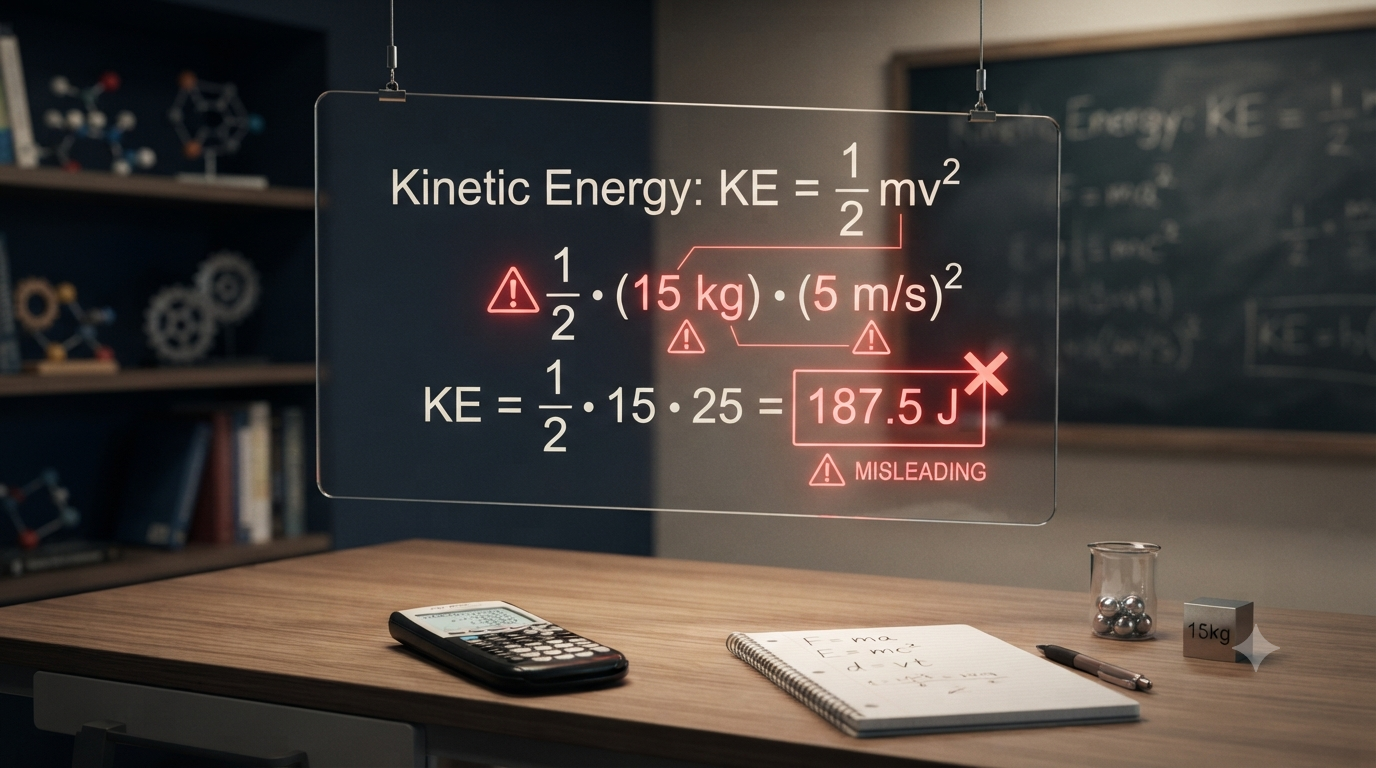
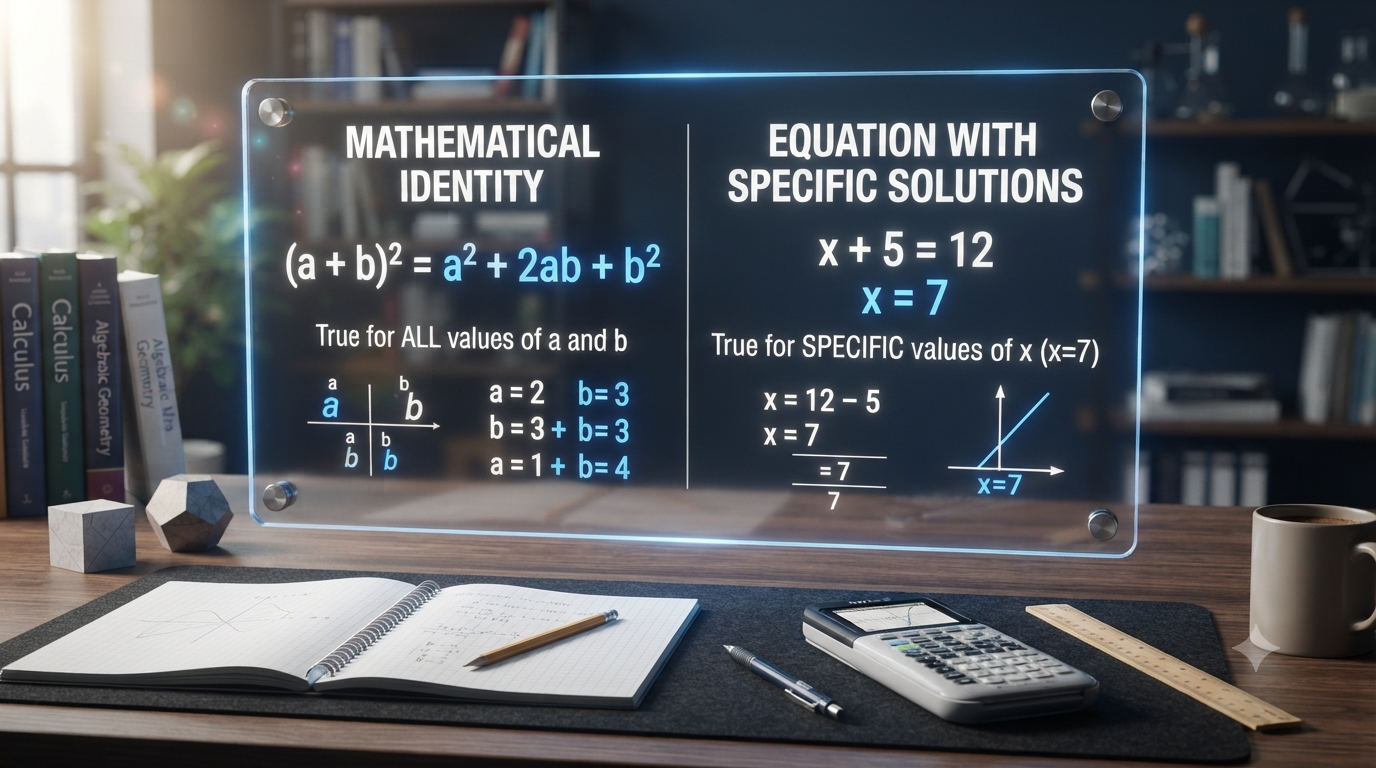
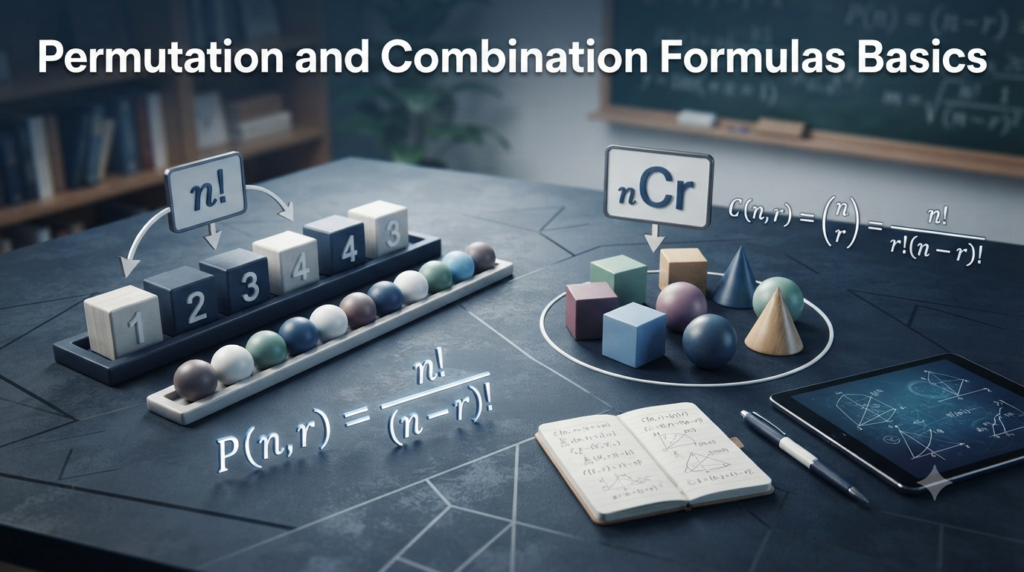
Ratio and proportion formulas with mathematical equations and comparison diagrams

Ratio and proportion are basic mathematical concepts used to compare quantities and understand how different values are related to each other. They appear in everyday situations such as comparing prices, adjusting recipes, calculating distances, working with maps, mixing ingredients, and understanding rates. In mathematics, ratio provides a way to compare two quantities, while proportion tells us when two ratios are equal.

Understanding the formulas of ratio and proportion makes many problems easier to solve. Instead of memorizing separate methods for every question, you can use a few fundamental formulas and apply them to different situations. This article explains the important ratio and proportion formulas, their meanings, and how they are used with simple examples.

What Is a Ratio?

A ratio is a comparison between two quantities of the same kind. It shows how much of one quantity exists in relation to another.

A ratio can be written in three common forms:

a : b

a/b

a to b

Here, a is the first term or antecedent, and b is the second term or consequent.

For example, if a class has 20 boys and 30 girls, the ratio of boys to girls is:

20 : 30

Dividing both terms by their common factor 10 gives:

20 : 30 = 2 : 3

Therefore, the simplified ratio of boys to girls is 2 : 3.

Basic Ratio Formula

The basic ratio can be expressed as:

Ratio = First Quantity : Second Quantity

or

Ratio = First Quantity / Second Quantity

The quantities being compared should generally have the same units before forming the ratio.

For example, comparing 2 meters with 50 centimeters requires converting them to the same unit first.

2 meters = 200 centimeters

Therefore:

200 : 50 = 4 : 1

So, the ratio is 4 : 1.

Important Terms in a Ratio

Consider the ratio:

a : b

The first number, a, is called the antecedent.

The second number, b, is called the consequent.

For example, in:

5 : 8

5 is the antecedent and 8 is the consequent.

Both terms can be multiplied or divided by the same non-zero number without changing the value of the ratio.

For example:

3 : 5 = 6 : 10 = 9 : 15

This property is useful when simplifying ratios or finding equivalent ratios.

Simplifying a Ratio

A ratio is in its simplest form when its terms have no common factor other than 1.

The formula for simplifying a ratio is:

a : b = (a ÷ k) : (b ÷ k)

where k is a common factor of a and b.

For example:

24 : 36

The greatest common factor of 24 and 36 is 12.

Therefore:

24 : 36 = (24 ÷ 12) : (36 ÷ 12)

= 2 : 3

So, the simplest form is 2 : 3.

Ratio of Three Quantities

A ratio can also compare three quantities.

For example:

a : b : c

Suppose a group contains 10 red balls, 15 blue balls, and 20 green balls.

The ratio is:

10 : 15 : 20

Dividing all terms by 5:

2 : 3 : 4

Therefore, the simplified ratio is 2 : 3 : 4.

When simplifying a ratio with three or more terms, the same common factor must be used for all terms.

Finding a Missing Quantity Using a Ratio

Ratios can be used to find an unknown quantity when the relationship between quantities is known.

Suppose the ratio of boys to girls is 2 : 3, and there are 10 boys. To find the number of girls, write:

2 : 3 = 10 : x

Using the ratio relationship:

2/3 = 10/x

Cross-multiplying:

2x = 30

Therefore:

x = 15

So, there are 15 girls.

What Is a Proportion?

A proportion is a statement that two ratios are equal.

For example:

2 : 3 = 4 : 6

Both ratios have the same value because:

2/3 = 4/6

Therefore, they form a proportion.

A proportion can generally be written as:

a : b = c : d

or:

a/b = c/d

Here, a, b, c, and d are numbers, with b and d not equal to zero.

Fundamental Formula of Proportion

The most important formula for a proportion is:

a/b = c/d

Cross-multiplication gives:

ad = bc

This is known as the fundamental property of proportion.

For example:

3/5 = 12/20

Cross-multiplying:

3 × 20 = 5 × 12

60 = 60

Since both sides are equal, the ratios form a proportion.

Finding a Missing Term in a Proportion

The cross-multiplication formula can be used to find an unknown term.

Suppose:

4/7 = x/21

Cross-multiply:

4 × 21 = 7 × x

84 = 7x

Therefore:

x = 12

So, the missing term is 12.

The same method works when the unknown is in any position.

Fourth Proportional

If three numbers a, b, and c are given and we need to find a fourth number d such that:

a : b = c : d

then d is called the fourth proportional.

The formula is:

d = (b × c) / a

For example:

Find the fourth proportional to 3, 5, and 12.

Set up the proportion:

3 : 5 = 12 : d

Using the formula:

d = (5 × 12) / 3

d = 20

Therefore, the fourth proportional is 20.

Third Proportional

If three numbers are related as:

a : b = b : c

then c is called the third proportional to a and b.

The formula is:

c = b²/a

For example, find the third proportional to 4 and 8.

Using the formula:

c = 8²/4

c = 64/4

c = 16

Therefore, the third proportional is 16.

Mean Proportional

The mean proportional between two positive numbers a and b is a number x such that:

a : x = x : b

Using the proportion formula:

a/x = x/b

Cross-multiplying:

x² = ab

Therefore:

x = √(ab)

For example, find the mean proportional between 4 and 9.

x = √(4 × 9)

x = √36

x = 6

Therefore, the mean proportional is 6.

Direct Proportion

Two quantities are in direct proportion when an increase in one quantity causes a corresponding increase in the other, or a decrease in one causes a corresponding decrease in the other.

For example, if one notebook costs $5, then two notebooks cost $10, and three notebooks cost $15, assuming the price per notebook remains constant.

The direct proportion formula is:

y ∝ x

This can also be written as:

y = kx

where k is the constant of proportionality.

Therefore:

k = y/x

For example, if 4 books cost $20:

k = 20/4 = 5

So, the cost per book is $5.

For 7 books:

y = 5 × 7

y = 35

Therefore, 7 books cost $35.

Inverse Proportion

Two quantities are in inverse proportion when an increase in one quantity causes a corresponding decrease in the other.

For example, if more workers are assigned to the same task, the time required to complete the task may decrease, assuming the workers have equal productivity and other conditions remain constant.

The inverse proportion formula is:

y ∝ 1/x

This can be written as:

y = k/x

or:

xy = k

where k is the constant of proportionality.

For example, if:

x = 4

and

y = 12

then:

k = xy

k = 4 × 12 = 48

If x becomes 8:

y = 48/8

y = 6

So, when x doubles from 4 to 8, y decreases from 12 to 6.

Direct Proportion vs Inverse Proportion

Direct and inverse proportions describe different relationships.

In direct proportion:

y = kx

The ratio y/x remains constant.

In inverse proportion:

y = k/x

The product xy remains constant.

For example, the amount paid for a fixed-price item is directly proportional to the number of items purchased. On the other hand, the time required to complete a fixed amount of work can be inversely proportional to the number of workers when the work rate per worker is constant.

Recognizing which relationship applies is an important part of solving proportion problems.

Dividing a Quantity in a Given Ratio

A quantity can be divided into parts according to a given ratio.

Suppose $60 is divided in the ratio 2 : 3.

First, add the ratio terms:

2 + 3 = 5

The value of one part is:

60/5 = 12

Therefore:

First part:

2 × 12 = 24

Second part:

3 × 12 = 36

So, $60 divided in the ratio 2 : 3 gives $24 and $36.

General Formula

If a quantity Q is divided in the ratio:

a : b

then the two parts are:

First Part = Q × a/(a + b)

Second Part = Q × b/(a + b)

For three parts in the ratio a : b : c:

First Part = Q × a/(a + b + c)

Second Part = Q × b/(a + b + c)

Third Part = Q × c/(a + b + c)

Combining Two Ratios

Sometimes two related ratios must be combined to form a single ratio.

Suppose:

A : B = 2 : 3

and:

B : C = 4 : 5

The common term B has different values, so we first make the B terms equal.

The least common multiple of 3 and 4 is 12.

Multiply the first ratio by 4:

A : B = 8 : 12

Multiply the second ratio by 3:

B : C = 12 : 15

Therefore:

A : B : C = 8 : 12 : 15

This method is useful when three quantities are connected through two different ratios.

Important Properties of Proportion

Proportions have several useful properties.

Invertendo

If:

a/b = c/d

then:

b/a = d/c

For example:

2/3 = 4/6

Therefore:

3/2 = 6/4

Alternendo

If:

a/b = c/d

then:

a/c = b/d

For example:

2/3 = 4/6

Therefore:

2/4 = 3/6

Componendo

If:

a/b = c/d

then:

(a + b)/b = (c + d)/d

Dividendo

If:

a/b = c/d

then:

(a – b)/b = (c – d)/d

These properties can simplify some proportion problems, although cross-multiplication is often the most straightforward method for basic calculations.

Ratio and Proportion in Everyday Life

Ratio and proportion are not limited to textbook problems. They are used in many practical situations.

Recipes use ratios to maintain the correct relationship between ingredients. Maps use scales to represent large distances in a smaller form. Speed, distance, and time calculations often involve proportional relationships. Businesses use ratios to compare costs, profits, quantities, and other measurements. Scientists and engineers also use proportional relationships when studying physical quantities and mathematical models.

For example, if a recipe requires flour and sugar in a ratio of 3 : 2, increasing the recipe requires both ingredients to be increased while keeping the same ratio.

If the original amounts are 300 g of flour and 200 g of sugar, doubling the recipe gives:

600 g : 400 g = 3 : 2

The relationship remains unchanged.

Common Mistakes in Ratio and Proportion

One common mistake is comparing quantities with different units without converting them first. For example, meters should not be directly compared with centimeters without converting one of them.

Another mistake is simplifying only one term of a ratio. Both terms must be divided by the same non-zero number.

When solving proportions, it is also important to cross-multiply correctly. For:

a/b = c/d

the cross products are:

a × d

and

b × c

Therefore:

ad = bc

It is also important to identify whether a problem represents direct or inverse proportion. Simply seeing two changing quantities does not automatically mean that they are directly proportional.

Quick Reference to Ratio and Proportion Formulas

The most useful formulas can be summarized as follows:

Basic Ratio = a : b

Equivalent Ratio = ka : kb

Simplified Ratio = (a ÷ k) : (b ÷ k)

Proportion = a/b = c/d

Cross-Multiplication = ad = bc

Fourth Proportional = (b × c)/a

Third Proportional = b²/a

Mean Proportional = √(ab)

Direct Proportion = y = kx

Direct Proportion Constant = k = y/x

Inverse Proportion = y = k/x

Inverse Proportion Constant = k = xy

First Part when Q is divided in a : b = Q × a/(a + b)

Second Part when Q is divided in a : b = Q × b/(a + b)

Conclusion

Ratio and proportion provide a simple way to describe relationships between quantities. A ratio compares two or more quantities, while a proportion shows that two ratios are equal. The basic formulas, such as a : b, a/b = c/d, and ad = bc, form the foundation for solving many mathematical problems.

Other formulas, including the fourth proportional, third proportional, mean proportional, direct proportion, and inverse proportion, extend these ideas to more specific situations. Once these relationships are understood, ratio and proportion problems become much easier to organize and solve.

The key is not simply to memorize formulas but to understand what each formula represents. By identifying the quantities involved, keeping units consistent, and recognizing the relationship between values, you can apply ratio and proportion formulas confidently in mathematics and everyday situations.

FAQs

1. What is a ratio in mathematics?

A ratio is a mathematical way of comparing two quantities of the same kind. It shows the relationship between one quantity and another and can be written as a : b, a/b, or “a to b.” For example, if there are 10 apples and 15 oranges, the ratio of apples to oranges is 10 : 15, which simplifies to 2 : 3. Ratios are useful for comparing quantities, dividing amounts, and describing relationships. Before forming a ratio, quantities should normally be expressed in the same units. Ratios can also compare three or more quantities, such as 2 : 3 : 4.

2. What is the basic formula for a ratio?

The basic ratio formula is a : b, where a represents the first quantity and b represents the second quantity. It can also be written as a/b. For example, if a car travels 120 kilometers while another travels 80 kilometers, their distance ratio is 120 : 80. Dividing both terms by 40 gives 3 : 2. A ratio can be simplified by dividing both terms by their common factor. Both quantities must use the same unit before comparison. The basic idea of a ratio is to show how one quantity relates to another rather than simply finding their difference.

3. What is a proportion in mathematics?

A proportion is a mathematical statement that two ratios are equal. It can be written as a : b = c : d or a/b = c/d. For example, 2 : 3 = 4 : 6 represents a proportion because both ratios have the same value. Proportions are commonly used to find unknown quantities when the relationship between values is known. The most important property of a proportion is cross multiplication. If a/b = c/d, then ad = bc. This relationship provides a simple method for checking whether two ratios are proportional and for finding a missing term.

4. How do you solve a proportion using cross multiplication?

To solve a proportion, first write the two ratios as equal fractions. For example, consider 4/7 = x/21. Cross multiplication means multiplying the numerator of one fraction by the denominator of the other. Therefore, 4 × 21 = 7 × x. This gives 84 = 7x. Dividing both sides by 7 gives x = 12. Thus, the missing value is 12. The general rule is a/b = c/d → ad = bc. Cross multiplication is one of the simplest methods for solving basic proportion problems and works when the denominators are non-zero.

5. What is the formula for the fourth proportional?

The fourth proportional is the fourth number in a proportion such as a : b = c : d. If three numbers a, b, and c are known, the fourth proportional d can be found using the formula d = (b × c)/a. For example, suppose we need the fourth proportional to 3, 5, and 12. We write 3 : 5 = 12 : d. Cross multiplication gives 3d = 60, so d = 20. Therefore, 20 is the fourth proportional. This formula is useful when one unknown quantity must be determined from three known values.

6. What is the mean proportional formula?

The mean proportional between two positive numbers a and b is a number x that satisfies a : x = x : b. Starting with a/x = x/b, cross multiplication gives x² = ab. Therefore, the mean proportional formula is x = √(ab). For example, the mean proportional between 4 and 9 is √(4 × 9) = √36 = 6. Therefore, 6 is the mean proportional. The concept is important because the same number appears as the second term of the first ratio and the first term of the second ratio.

7. What is direct proportion and its formula?

Direct proportion describes a relationship in which two quantities change in the same direction while their ratio remains constant. If one quantity increases, the other increases proportionally. If one decreases, the other also decreases proportionally. The formula is y = kx, where k is the constant of proportionality. The constant can be calculated using k = y/x. For example, if 4 notebooks cost $20, the cost per notebook is 20/4 = 5. Therefore, the cost of 7 notebooks is 5 × 7 = $35. Direct proportion is commonly used for quantities with a constant rate or price.

8. What is inverse proportion and its formula?

Inverse proportion describes a relationship in which one quantity increases while the other decreases in such a way that their product remains constant. The formula can be written as y = k/x, or xy = k, where k is the constant of proportionality. For example, if 4 workers complete a particular task in 12 days, the product is 4 × 12 = 48 under ideal constant-work-rate conditions. If 8 workers perform the same task at the same rate, the required time is 48/8 = 6 days. Inverse proportion is commonly used when increasing one quantity reduces the other proportionally.

9. How do you divide a quantity in a given ratio?

To divide a quantity according to a ratio, first add all the parts of the ratio. For example, suppose $60 must be divided in the ratio 2 : 3. Add the ratio terms: 2 + 3 = 5. The value of one part is 60/5 = 12. The first share is 2 × 12 = $24, and the second share is 3 × 12 = $36. Therefore, $60 divided in the ratio 2 : 3 gives $24 and $36. The general formulas are First Part = Q × a/(a+b) and Second Part = Q × b/(a+b).

10. What are the most important ratio and proportion formulas?

The most important formulas include Ratio = a : b, Proportion = a/b = c/d, and the cross-multiplication rule ad = bc. Other useful formulas include Fourth Proportional = (b × c)/a, Third Proportional = b²/a, and Mean Proportional = √(ab). For direct proportion, use y = kx, with k = y/x. For inverse proportion, use y = k/x, with k = xy. When dividing a quantity in the ratio a : b, the shares are Q × a/(a+b) and Q × b/(a+b). Understanding these formulas helps solve many common mathematical problems.

Related Posts

Leave a Comment

Your email address will not be published. Required fields are marked *

Scroll to Top