A formula is a mathematical relationship between numbers, variables, and operations. When one of the variables becomes negative, the result of the formula can change in an important way. Sometimes the negative value simply changes the direction or sign of the result. In other cases, it can change the meaning of the quantity, make a result smaller, or even make a formula undefined. Understanding what happens when a variable becomes negative is therefore an important part of using formulas correctly.
Negative values are common in mathematics and science. Temperature can be below zero, velocity can be negative when an object moves in a chosen opposite direction, and coordinates can be negative when a point lies to the left or below an origin. A negative variable is not automatically an error. Its effect depends on where the variable appears in the formula and what the variable represents.
What Does a Negative Variable Mean?
A negative variable is simply a variable whose value is less than zero. For example, if a variable is represented by x, then x = -5 means that the value of x is five units below zero.
The negative sign carries mathematical information. It can indicate a value in the opposite direction, a quantity below a reference point, or a value that has the opposite sign of another quantity.
Consider the simple formula:
y = x + 3
If x = 5, then:
y = 5 + 3 = 8
If x = -5, then:
y = -5 + 3 = -2
The formula itself has not changed. Only the value of the variable has changed. The negative value is substituted into the formula and the normal mathematical rules are followed.
A Negative Variable Does Not Always Make the Final Answer Negative
One of the most common misunderstandings is that if a variable becomes negative, the entire answer must become negative. This is not true.
The final result depends on the mathematical operation involving the variable.
For example:
y = x²
If:
x = 4
then:
y = 4² = 16
But if:
x = -4
then:
y = (-4)² = 16
The result remains positive because multiplying a negative number by itself produces a positive number.
This shows why it is important to look at the position and power of a variable rather than simply looking for a negative sign.
What Happens When a Negative Variable Is Added?
When a negative variable is added to another number, it effectively reduces that number.
Consider:
y = a + x
Suppose:
a = 10
Then:
y = 10 + (-4)
Adding a negative number is equivalent to subtracting its positive magnitude.
In general:
a + (-b) = a - b
Therefore, if a variable in an addition formula becomes negative, the result may decrease.
This is useful in real-world situations. For example, if a bank balance changes according to a formula and a transaction is represented by a negative value, adding that negative amount reduces the balance.
What Happens When a Negative Variable Is Subtracted?
Subtraction involving a negative variable requires particular attention because two negative signs can appear together.
Consider:
y = a - x
If:
a = 10
then:
y = 10 - (-4)
Subtracting a negative number is equivalent to adding the corresponding positive number:
y = 10 + 4
This is why replacing a positive variable with a negative value can sometimes increase the result rather than decrease it.
The important rule is:
a - (-b) = a + b
The negative sign belongs to the value of the variable, while the other negative sign comes from the subtraction operation.
What Happens When a Negative Variable Is Multiplied?
Multiplication follows the rules of signs.
If a formula contains:
y = ax
and a is positive while x becomes negative, then the result becomes negative.
For example:
a = 5
Therefore:
y = 5(-3)
If both factors are negative, the result becomes positive:
(-5)(-3) = 15
The basic sign rules are:
positive × positive = positive
These rules apply whenever multiplication is performed inside a formula.
What Happens When a Negative Variable Is Divided?
Division follows similar sign rules.
Consider:
y = x/a
If x is negative and a is positive:
y = -12/3
If both the numerator and denominator are negative:
y = -12/-3
The sign rules for division are:
positive ÷ positive = positive
However, there is one important restriction: the denominator cannot be zero.
For example:
y = x/a
is undefined when:
a = 0
Whether the numerator is positive or negative does not change this restriction.
What Happens When a Negative Variable Is Squared?
Squaring a negative number makes the result positive.
For example:
x = -6
Then:
x² = (-6)² = 36
This happens because:
(-6)(-6) = 36
Therefore, formulas involving even powers often remove the negative sign from the result.
For example:
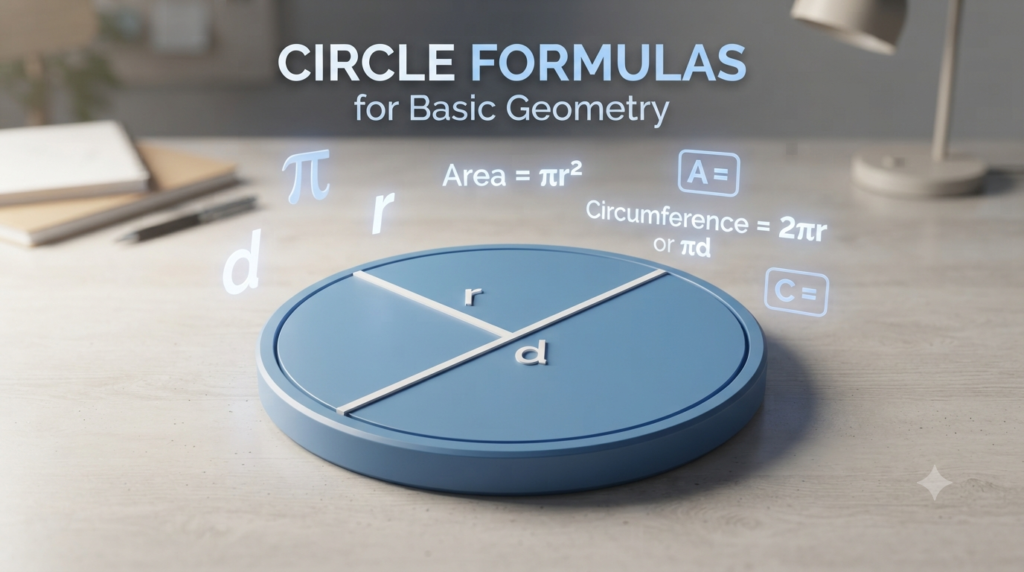
A = πr²
A radius normally represents a positive length, so a negative radius may not have a meaningful physical interpretation even though mathematically squaring it would produce a positive number.
This distinction is important: a mathematical operation can produce a result even when the original value does not make physical sense.
What Happens When a Negative Variable Is Raised to an Odd Power?
Odd powers preserve the negative sign.
For example:
x = -3
Then:
x³ = (-3)³ = -27
Similarly:
x⁵ = -243
In general, for a negative value:
(-a)² = a²
Even powers produce positive results, while odd powers retain the negative sign.
What Happens When a Negative Variable Appears Under a Square Root?
A negative value under a square root creates a special situation.
Consider:
y = √x
If:
x = 9
then:
y = √9 = 3
But if:
x = -9
then:
y = √(-9)
There is no real-number result for this expression.
In complex-number mathematics, the result can be written using the imaginary unit:
√(-9) = 3i
where:
i = √(-1)
Therefore, when a variable becomes negative under an even root, the formula may no longer produce a real number.
What Happens When a Negative Variable Appears in a Fraction?
A negative variable in a fraction changes the sign of the fraction depending on where it appears.
For example:
y = 5/x
If:
x = -2
then:
y = 5/(-2) = -2.5
If the numerator is negative instead:
y = -5/x
and:
x = 2
then:
y = -5/2 = -2.5
If both numerator and denominator are negative:
y = -5/-2 = 2.5
A useful general rule is that a fraction is positive when the numerator and denominator have the same sign and negative when they have opposite signs.
A Negative Variable Can Represent Direction
In science, negative values often have a specific meaning rather than simply representing a smaller number.
For example, velocity can be represented as:
v = -20 m/s
The negative sign can indicate that the object is moving in the direction opposite to the direction chosen as positive.
Consider the displacement formula:
s = ut + ½at²
If the initial velocity is:
u = -10 m/s
the negative value may indicate motion in the negative direction.
The formula does not become wrong. Instead, the negative value provides information about direction.
This idea is widely used with velocity, acceleration, displacement, force, electric charge, electric potential, and coordinates.
Negative Coordinates Are Completely Normal
In coordinate geometry, negative variables are essential.
A point can have coordinates such as:
(x, y) = (-4, 3)
Here, the negative x coordinate means the point lies to the left of the origin, while the positive y coordinate means it lies above the origin.
Distance from the origin can be calculated using:
d = √(x² + y²)
Substituting the coordinates:
d = √((-4)² + 3²)
Although x is negative, its square becomes positive. The negative coordinate still has important positional meaning.
Negative Values in Physics Formulas
Many physics formulas naturally allow negative variables.
For example, temperature can be below a chosen zero point:
T = -10°C
Similarly, electric charge can be negative:
q = -2 C
In an equation such as:
F = qE
a negative charge produces a force in the direction opposite to the electric field direction, depending on the chosen sign convention.
This illustrates an important principle: the negative sign can carry physical meaning.
It may represent direction, charge, energy relative to a reference level, displacement, or another property.
Negative Values Can Change the Meaning of a Formula
Sometimes substituting a negative number is mathematically possible but physically inappropriate.
For example, consider the area of a circle:
A = πr²
Mathematically, if r = -5, the calculation gives:
A = π(-5)²
However, a physical radius is a distance and is normally defined as non-negative.
The formula produces a numerical result because the algebra permits the substitution, but the interpretation of a negative radius is not physically meaningful.
This is why formulas should not be treated as simple machines that accept every number. The domain and physical meaning of each variable must also be considered.
What If the Negative Variable Makes a Formula Undefined?
A negative value can sometimes cause a formula to become undefined, depending on the operation.
For example:
y = 1/(x + 4)
If:
x = -4
then:
y = 1/(-4 + 4)
Division by zero is undefined.
Another example is:
y = √(x + 2)
For a real-valued result, the expression inside the square root must satisfy:
x + 2 ≥ 0
Therefore:
x ≥ -2
If x = -5, then:
y = √(-5 + 2)
which is not a real number.
So a negative variable does not automatically cause a problem. The problem occurs when its value violates the mathematical conditions required by the formula.
How to Substitute a Negative Variable Correctly
The safest way to substitute a negative value is to place the value inside parentheses.
Suppose:
x = -4
and the formula is:
y = x² + 3x
Write:
y = (-4)² + 3(-4)
Then calculate each part:
y = 16 - 12
Therefore:
y = 4
Parentheses make the negative value clear and reduce mistakes.
Compare:
-4²
with:
(-4)²
According to the usual order of operations, the first expression is interpreted as:
-(4²) = -16
while the second is:
(-4)² = 16
This small difference can completely change the answer.
Does a Negative Variable Always Mean Something Is Wrong?
No. A negative value is often completely valid.
Whether it is appropriate depends on the variable and the context.
For example:
Negative temperature can be valid.
Negative velocity can indicate direction.
Negative coordinates can identify a position.
Negative electric charge is valid.
Negative displacement can indicate direction.
Negative profit can represent a loss.
Negative time may or may not make sense depending on the reference system.
Negative length is generally not physically meaningful.
Therefore, the correct question is not simply, “Can this variable be negative?” The better question is, “What does a negative value mean for this variable?”
A Simple Method for Handling Negative Variables
Whenever a variable in a formula becomes negative, follow these steps.
Identify the Variable
First, determine which variable has become negative.
For example:
x = -6
Substitute Carefully
Place the negative value in parentheses:
f(x) = (-6)² + 2(-6)
Follow the Order of Operations
Calculate powers first, then multiplication or division, and finally addition or subtraction.
Check the Sign
Determine whether the mathematical operations make the final result positive, negative, or zero.
Check the Domain
Make sure the substitution does not create an invalid operation such as division by zero or a square root of a negative number when working with real numbers.
Consider the Meaning
Finally, ask whether the negative value makes sense in the context of the problem.
This last step is especially important in physics and other sciences.
Final Thoughts
When a variable in a formula becomes negative, the formula itself usually does not change. The negative value is simply substituted into the formula, and the normal rules of mathematics determine the result. Depending on the operation, the negative sign may remain, disappear through an even power, reverse a direction, change a subtraction into addition, or cause the expression to become undefined.
The meaning of a negative value also depends strongly on context. In mathematics, negative numbers can represent values below zero or positions on the opposite side of a reference point. In physics, they can represent direction, charge, displacement, or other physical properties. A negative value is therefore not automatically an error.
The key is to substitute negative values carefully, use parentheses, follow the order of operations, check mathematical restrictions, and understand what the variable represents. Once these habits become familiar, negative variables become a useful part of formulas rather than a source of confusion.
FAQs
1. What happens when a variable in a formula becomes negative?
When a variable becomes negative, its value is substituted into the formula with its negative sign. The effect on the final answer depends on the mathematical operation involving that variable. For example, adding a negative value usually decreases the result, while multiplying a positive number by a negative number produces a negative result. A negative number raised to an even power becomes positive, while an odd power remains negative. In science, a negative value may also represent direction, such as negative velocity or displacement. Therefore, a negative variable is not automatically an error; its meaning depends on the formula and context.
2. Does a negative variable always make the final answer negative?
No, a negative variable does not always make the final answer negative. The mathematical operation determines the final sign. For example, if x = -4, then x² = 16, which is positive. Similarly, multiplying two negative values produces a positive result. However, multiplying a negative value by a positive value produces a negative result. Addition and subtraction can also produce either positive or negative answers depending on the numbers involved. Therefore, you should not determine the final sign simply by seeing a negative variable. Substitute the value carefully and perform each mathematical operation according to the rules of signs.
3. What happens when a negative variable is squared?
When a negative variable is squared, the result is positive. For example, if x = -5, then x² = (-5)² = 25. This happens because squaring means multiplying the number by itself, and the product of two negative numbers is positive. The same principle applies to any real negative number. In general, (-a)² = a². However, parentheses are important when writing a negative value with an exponent. The expression (-5)² equals 25, while -5² is interpreted as -(5²), which equals -25 under standard order of operations. Correct notation prevents confusion.
4. What happens when a negative variable is multiplied by a positive number?
When a negative variable is multiplied by a positive number, the result is negative. For example, consider the formula y = 4x. If x = -3, substitution gives y = 4(-3) = -12. This follows the sign rule that a positive number multiplied by a negative number produces a negative result. The magnitude of the answer depends on the values being multiplied, while the sign indicates the result’s direction or relationship. In science, this negative result can have an important meaning, such as indicating motion in an opposite direction or a quantity below a chosen reference point.
5. What happens when two negative variables are multiplied?
When two negative variables are multiplied, their product is positive. For example, consider y = xy, where x = -4 and y = -3. Their product is (-4)(-3) = 12. The two negative signs cancel because the product of two negative numbers is positive. This rule also applies to division: a negative number divided by another negative number produces a positive result. It is important to remember that the positive result does not mean the original variables were positive. Their individual values remain negative; only the result of the operation becomes positive because of the mathematical rules governing multiplication.
6. Can a negative variable represent direction in physics?
Yes. In physics, a negative variable often represents direction relative to a chosen positive direction. For example, if an object has a velocity of v = -20 m/s, the negative sign can indicate that it is moving opposite to the direction defined as positive. Similarly, negative displacement or acceleration can represent direction. The negative sign does not mean that the object has an impossible velocity or acceleration. Instead, it provides information about its orientation or motion. The meaning always depends on the coordinate system and sign convention chosen for the particular physical problem being solved.
7. What happens when a negative variable appears under a square root?
A negative value under a square root generally produces no real-number result. For example, if x = -9, then √x = √(-9). There is no real number whose square is -9. However, complex numbers allow this expression to be written as 3i, where i = √(-1). Whether this is a problem depends on the mathematical context. Some formulas are specifically designed to produce real values, so a negative value under a square root may indicate that the input is outside the formula’s allowed domain. Always check the conditions of the formula before accepting the result.
8. Why should negative values be placed in parentheses when substituting into formulas?
Parentheses make it clear that the negative sign belongs to the value being substituted. For example, if x = -4 and the formula contains x², write (-4)², which equals 16. Without parentheses, -4² is normally interpreted as -(4²), giving -16. The difference comes from the order of operations, where exponents are evaluated before a leading negative sign. Parentheses therefore prevent common calculation errors. They are especially useful when negative variables appear in powers, multiplication, subtraction, or longer formulas. Writing substitutions clearly makes the calculation easier to check and understand.
9. Can a negative value be mathematically possible but physically meaningless?
Yes. A formula may accept a negative value mathematically even though that value does not make physical sense for a particular quantity. For example, the formula for the area of a circle is A = πr². Substituting r = -5 mathematically produces 25π, but a physical radius is a distance and is normally non-negative. Similarly, some formulas may accept negative values algebraically while the physical quantity has a restricted range. This is why solving a formula requires more than performing calculations. You should also understand the variable’s definition, allowed values, units, and physical meaning.
10. How can you safely use a negative variable in a formula?
To safely use a negative variable, first identify its value and meaning. Then substitute it using parentheses, such as x = -6 becoming (-6) in the formula. Follow the order of operations carefully and apply the correct rules for positive and negative numbers. Next, check whether the calculation creates an invalid operation, such as division by zero or a square root of a negative number when only real numbers are allowed. Finally, consider whether the result makes sense in context. This method helps prevent sign errors and ensures that the mathematical answer also has a meaningful interpretation.