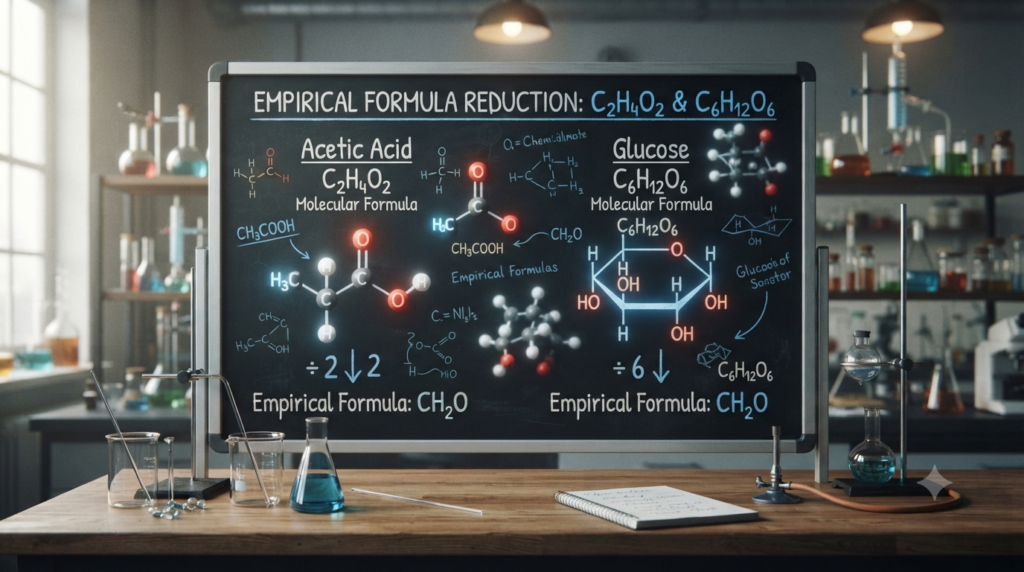

A condensed chemical formula is a convenient way of writing the structure of an organic compound without drawing every bond between its atoms. It shows how atoms are grouped together within a molecule, making the structure easier to read and write than a full structural formula. Condensed formulas are especially useful for organic compounds because many molecules contain long chains of carbon and hydrogen atoms.
For example, ethanol can be written as CH₃CH₂OH. This condensed formula tells us that ethanol contains a CH₃ group connected to a CH₂ group, which is connected to an OH group. Although the individual carbon-hydrogen bonds are not drawn, the arrangement of the groups provides useful information about the molecule.
What Does a Condensed Chemical Formula Show?
A condensed chemical formula groups atoms that are directly connected to one another. Instead of drawing each bond separately, atoms are written together in groups.
For example:
CH₃CH₂CH₃
This represents propane. The formula can be understood as three connected groups:
CH₃–CH₂–CH₃
The condensed form removes the need to draw the individual C–H and C–C bonds while still showing the order of the groups.
This makes condensed formulas particularly useful when molecules become larger and their complete structural formulas would take much more space.
How Is a Condensed Formula Different From a Molecular Formula?
A molecular formula tells us the total number of each type of atom in a compound, but it does not normally show how those atoms are arranged.
For example, the molecular formula of ethanol is:
C₂H₆O
This tells us that one molecule contains two carbon atoms, six hydrogen atoms, and one oxygen atom.
Its condensed formula is:
CH₃CH₂OH
The condensed formula provides additional information about how the atoms are connected.
This distinction is important because different compounds can have the same molecular formula but different structures. Such compounds are called structural isomers.
For example, C₂H₆O can represent ethanol, CH₃CH₂OH, or dimethyl ether, CH₃OCH₃. Their molecular formulas are the same, but their atoms are arranged differently.
How Do You Read a Condensed Chemical Formula?
Reading a condensed formula involves identifying the groups of atoms and understanding their order.
Consider:
CH₃CH₂CH₂OH
Start from the left and read the groups in sequence:
CH₃ → CH₂ → CH₂ → OH
This represents a chain containing three carbon atoms followed by a hydroxyl group. The compound is propan-1-ol.
The numbers written after an element indicate how many atoms of that element are present in that group. For example, CH₃ means one carbon atom bonded to three hydrogen atoms, while CH₂ means one carbon atom bonded to two hydrogen atoms.
A group such as OH contains one oxygen atom and one hydrogen atom.
Common Groups in Condensed Formulas
Several groups appear frequently in organic condensed formulas.
Methyl Group
The methyl group is written as:
CH₃
It contains one carbon atom and three hydrogen atoms. It commonly appears at the end of an organic carbon chain.
Methylene Group
The methylene group is:
CH₂
It contains one carbon atom and two hydrogen atoms. It commonly occurs between two other atoms or groups in a carbon chain.
Methine Group
A methine group can be written as:
CH
The carbon atom is connected to one hydrogen atom and three other bonds.
Hydroxyl Group
The hydroxyl group is:
OH
It is an important functional group found in alcohols and some other organic compounds.
Carbonyl Group
A carbonyl group contains carbon and oxygen connected by a double bond:
C=O
It appears in many organic compounds, including aldehydes, ketones, carboxylic acids, and esters.
Examples of Condensed Chemical Formulas
Condensed formulas can represent simple as well as complex organic compounds.
Methane:
CH₄
Ethane:
CH₃CH₃
Propane:
CH₃CH₂CH₃
Butane:
CH₃CH₂CH₂CH₃
Ethanol:
CH₃CH₂OH
Propan-2-ol:
CH₃CH(OH)CH₃
Ethanoic acid:
CH₃COOH
These formulas provide information about the arrangement of atoms without requiring a complete structural drawing.
Condensed Formula and Structural Formula
A structural formula shows the bonds between atoms more explicitly, while a condensed formula groups atoms to make the representation shorter.
For example, ethanol can be represented structurally as:
CH₃–CH₂–OH
The same compound can be written in condensed form as:
CH₃CH₂OH
The condensed version does not show the bond lines, but the sequence of groups indicates the connectivity.
For simple molecules, the difference may seem small. However, for larger molecules, condensed formulas can make chemical structures much easier to write.
Condensed Formulas With Branches
Condensed formulas can also show branches in carbon chains by placing groups inside parentheses.
For example:
CH₃CH(CH₃)CH₃
The CH₃ group inside parentheses represents a branch attached to the central CH group.
This formula represents 2-methylpropane.
Another example is:
CH₃CH₂CH(CH₃)CH₂CH₃
Here, the CH₃ group in parentheses represents a branch attached to the carbon chain.
Parentheses are therefore useful for showing groups that are attached to a particular atom without drawing the complete structural formula.
Condensed Formulas With Repeating Groups
Condensed formulas can also be shortened further when the same group occurs repeatedly.
For example, butane can be written as:
CH₃CH₂CH₂CH₃
A longer chain can sometimes be represented using parentheses. For example:
CH₃(CH₂)₄CH₃
This represents hexane. The expression (CH₂)₄ means that the CH₂ group occurs four times in sequence.
This method becomes especially useful for long carbon chains.
Why Are Condensed Chemical Formulas Useful?
Condensed chemical formulas are useful because they provide a balance between simplicity and structural information.
First, they save space. Drawing every bond in a large molecule can require considerable space, while a condensed formula can represent the same connectivity in a much shorter form.
Second, they make long carbon chains easier to write. Instead of drawing dozens of individual bonds, chemists can group repeating units.
Third, condensed formulas are useful for recognizing functional groups. Groups such as OH, COOH, and C=O can often be identified quickly from the formula.
Finally, condensed formulas are convenient in textbooks, laboratory notes, chemical databases, equations, and scientific writing.
Limitations of Condensed Chemical Formulas
Although condensed formulas are useful, they do not provide all the information contained in a complete structural formula.
They may not clearly show the three-dimensional arrangement of atoms. They can also become difficult to interpret when molecules have many branches, rings, or complex functional groups.
For complicated molecules, structural formulas, skeletal formulas, or three-dimensional molecular models may provide a clearer representation.
Therefore, the most suitable representation depends on the purpose and complexity of the molecule.
Condensed Formula vs Molecular Formula vs Structural Formula
These three types of formulas provide different levels of information.
Molecular formula: Shows the total number of each type of atom.
Example:
C₂H₆O
Condensed formula: Shows groups of connected atoms in a compact form.
Example:
CH₃CH₂OH
Structural formula: Shows the bonding arrangement more explicitly.
Example:
CH₃–CH₂–OH
The molecular formula is useful for determining composition, while the condensed formula gives more information about connectivity. A structural formula provides an even clearer representation of the bonds.
Conclusion
A condensed chemical formula is a compact way of representing the arrangement of atoms in a molecule. Instead of showing every individual bond, it groups connected atoms into units such as CH₃, CH₂, OH, and COOH. This makes organic chemical structures easier to write, read, and compare.
Condensed formulas are especially valuable for carbon-based compounds because they can represent long chains and branched structures without requiring large structural diagrams. Although they do not show every bond or the three-dimensional shape of a molecule, they provide more structural information than a molecular formula. Understanding condensed chemical formulas is therefore an important step toward reading and interpreting organic chemical structures.
FAQs
What is a condensed chemical formula?
A condensed chemical formula is a shortened way of representing the structure of a chemical compound. Instead of drawing every bond between individual atoms, it groups atoms that are connected together. For example, ethanol can be written as CH₃CH₂OH. This shows that a CH₃ group is connected to a CH₂ group, which is connected to an OH group. Condensed formulas are commonly used for organic compounds because they make long and complicated structures easier to write and read. They provide more structural information than a molecular formula while using less space than a complete structural formula.
What is the difference between a molecular formula and a condensed formula?
A molecular formula shows only the total number of each type of atom present in a compound, while a condensed formula gives some information about how those atoms are connected. For example, ethanol has the molecular formula C₂H₆O. Its condensed formula is CH₃CH₂OH. The molecular formula tells us that ethanol contains two carbon atoms, six hydrogen atoms, and one oxygen atom. The condensed formula additionally shows the order of the connected groups. This difference is important because compounds can have the same molecular formula but different arrangements of atoms. Such compounds are called structural isomers.
How do you read a condensed chemical formula?
To read a condensed chemical formula, identify the groups of atoms and examine their order from left to right. For example, CH₃CH₂CH₂OH contains the groups CH₃, CH₂, CH₂, and OH. These groups are connected in that sequence. The numbers written after elements show how many atoms are present in that particular group. CH₃ contains one carbon and three hydrogen atoms, while CH₂ contains one carbon and two hydrogen atoms. By recognizing common groups and functional groups, you can understand the basic structure represented by a condensed chemical formula without drawing every individual chemical bond.
Why are condensed chemical formulas used in organic chemistry?
Condensed chemical formulas are widely used in organic chemistry because organic molecules often contain long carbon chains and many hydrogen atoms. Drawing every bond can make their structures large and difficult to read. A condensed formula provides a shorter representation while still showing important information about how groups of atoms are connected. For example, a long carbon chain can be represented using repeated CH₂ groups rather than drawing every carbon-hydrogen bond. Condensed formulas are therefore convenient in textbooks, laboratory notes, chemical equations, scientific articles, and databases where compact representations of organic compounds are useful.
What does CH₃ mean in a condensed formula?
CH₃ represents a methyl group. It contains one carbon atom bonded to three hydrogen atoms. In a condensed chemical formula, CH₃ commonly appears at the end of a carbon chain or as a branch attached to another group. For example, propane can be written as CH₃CH₂CH₃. The two CH₃ groups occur at the ends of the carbon chain, while CH₂ occurs between them. A methyl group can also appear inside parentheses when it represents a branch. Understanding groups such as CH₃ is useful because they frequently occur in the condensed formulas of organic compounds.
What does CH₂ mean in a condensed chemical formula?
CH₂ represents a methylene group containing one carbon atom and two hydrogen atoms. It commonly occurs between other atoms or groups in an organic carbon chain. For example, butane can be written as CH₃CH₂CH₂CH₃. The two CH₂ groups are located between the two terminal CH₃ groups. CH₂ can also appear repeatedly inside parentheses to simplify the representation of longer carbon chains. For example, CH₃(CH₂)₄CH₃ represents hexane. In this notation, the subscript 4 means that the CH₂ group occurs four consecutive times. This makes long organic structures easier to write.
Can condensed formulas show branches?
Yes, condensed chemical formulas can show branches using parentheses. Parentheses identify a group that is attached to a particular atom in the main chain. For example, CH₃CH(CH₃)CH₃ represents 2-methylpropane. The CH₃ group inside parentheses is a branch attached to the central CH group. This method allows branched organic compounds to be represented without drawing a complete structural diagram. For larger molecules, parentheses can make the formula considerably shorter and easier to read. However, highly complicated structures may be better represented using structural or skeletal formulas for greater visual clarity.
Can condensed formulas represent functional groups?
Yes, condensed formulas can clearly represent many common functional groups. For example, OH represents a hydroxyl group, COOH represents a carboxyl group, and C=O represents a carbonyl group. Ethanol can be written as CH₃CH₂OH, where the OH group identifies the alcohol functional group. Ethanoic acid can be written as CH₃COOH, where COOH identifies the carboxylic acid group. Recognizing functional groups in condensed formulas helps identify important chemical properties and reactions. However, some complex structures may require additional notation or a structural formula to make the bonding arrangement completely clear.
Are condensed chemical formulas the same as structural formulas?
No. Condensed chemical formulas and structural formulas represent chemical structures in different ways. A structural formula generally shows chemical bonds more explicitly, while a condensed formula groups connected atoms together to create a shorter representation. For example, ethanol may be written as CH₃–CH₂–OH in a simple structural representation and CH₃CH₂OH in condensed form. Both represent the same compound, but the structural representation makes the bonds more visually apparent. Condensed formulas are therefore more compact, while structural formulas can provide clearer information about individual bonding relationships, especially when a molecule has a complicated arrangement.
What are the limitations of condensed chemical formulas?
Condensed chemical formulas are useful, but they do not show every detail of a molecule. They generally do not display the three-dimensional shape of the molecule or clearly show every individual bond. Complicated molecules containing many branches, rings, stereochemical arrangements, or unusual bonding patterns can become difficult to interpret in condensed form. In such situations, structural formulas, skeletal formulas, molecular models, or three-dimensional representations may provide more information. Therefore, condensed formulas are best viewed as a compact representation of molecular connectivity rather than a complete picture of the molecule’s geometry and three-dimensional structure.
Related Posts
Engineering Notation Converter
Engineering Notation Converter Convert numbers to and from engineering notation quickly and accurately. Conversion Mode Number to Engineering NotationEngineering Notation […]
Read MoreStandard Form to Scientific Notation Converter

Standard Form to Scientific Notation Converter Convert ordinary numbers into scientific notation using a coefficient and a power of 10. […]
Read MoreScientific Notation Converter

Scientific Notation Converter Convert decimal numbers into scientific notation and scientific notation into standard decimal form quickly and accurately. Conversion […]
Read MoreNumber Comparison Calculator

Number Comparison Calculator Enter two numbers to find out which number is greater, smaller, or whether both numbers are equal. […]
Read MoreSum of Geometric Series Calculator

Sum of Geometric Series Calculator Calculate the sum of finite and infinite geometric series with step-by-step solutions. Select Series Type […]
Read MoreSum of Arithmetic Series Calculator

Sum of Arithmetic Series Calculator Calculate the sum of an arithmetic series by entering its first term, common difference, and […]
Read MoreNumber Sequence Generator

Number Sequence Generator Generate number sequences easily using arithmetic, geometric, Fibonacci, or custom patterns. Sequence Type Arithmetic SequenceGeometric SequenceFibonacci SequenceCustom […]
Read MoreOdd or Even Number Checker

Odd or Even Number Checker Enter any whole number to find out whether it is odd or even. Enter a […]
Read MoreDivisibility Checker

Divisibility Checker Check whether a number is divisible by another number without leaving a remainder. Enter Number Enter a positive […]
Read MorePhysical States of Elements in the Periodic Table

The periodic table contains 118 known chemical elements, and each element has its own physical and chemical properties. One important […]
Read MoreRelative Atomic Mass and Its Significance in the Periodic Table
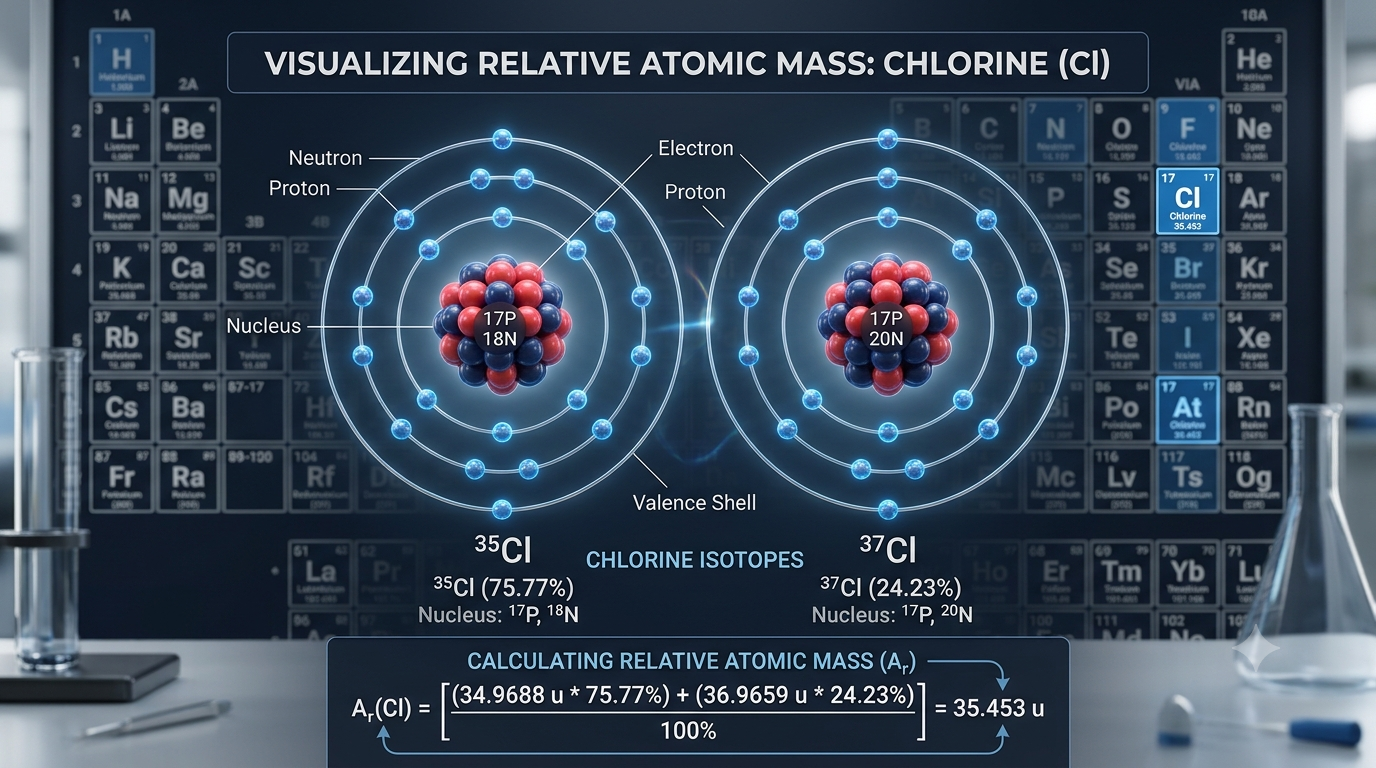
Every element in the periodic table has a unique atomic number and an atomic mass. While the atomic number tells […]
Read MoreIsotopes and Their Relationship with the Periodic Table
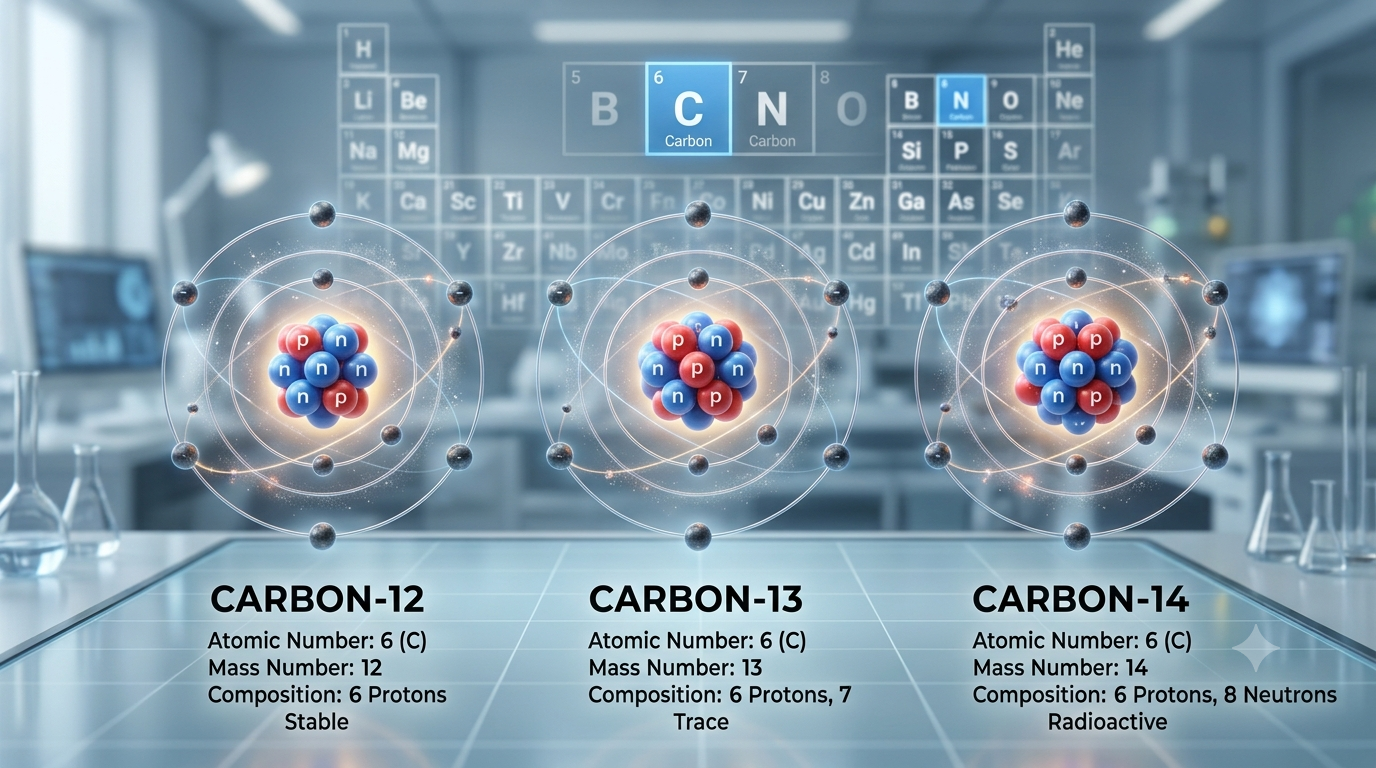
Atoms are the basic building blocks of all matter. Every chemical element consists of atoms that contain protons, neutrons, and […]
Read MoreOxidation States of Elements in the Periodic Table
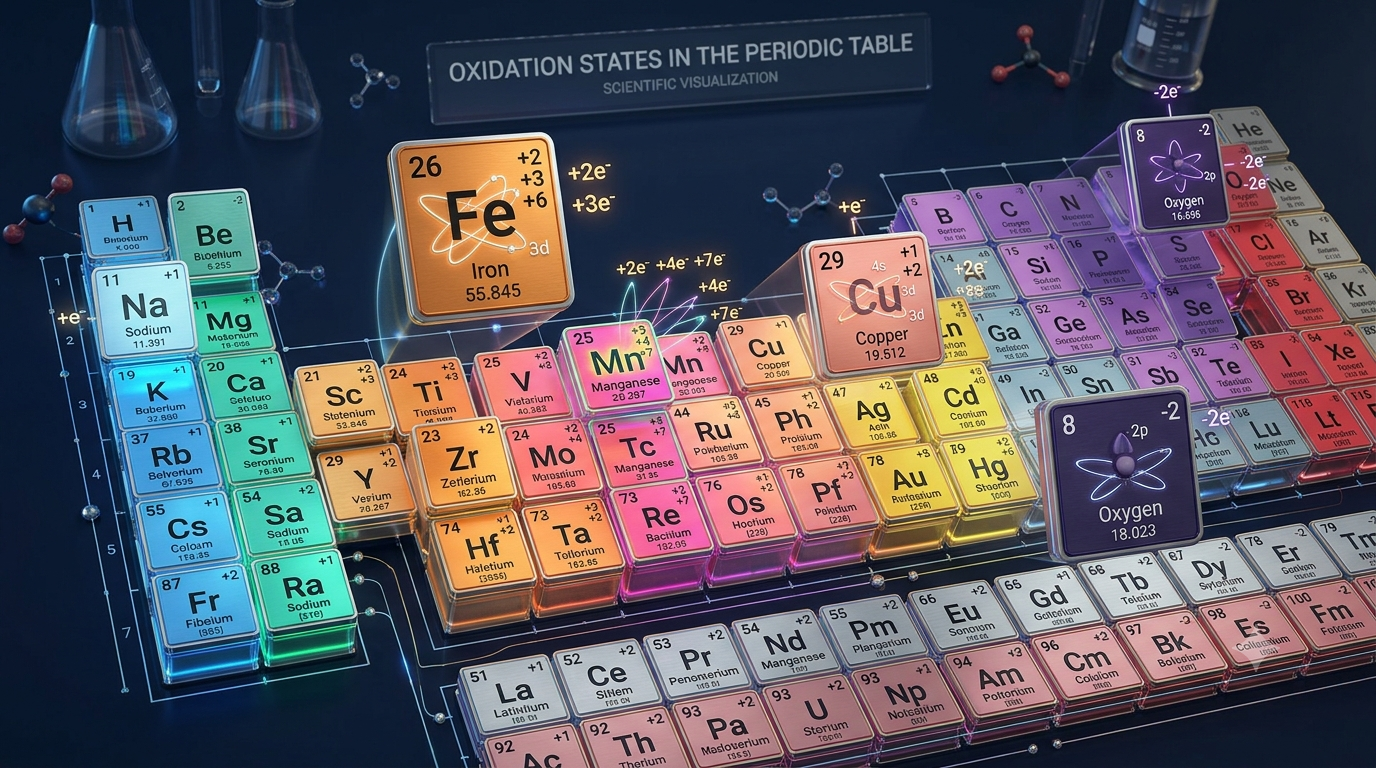
Oxidation state is an important concept in chemistry that helps us understand how atoms behave when they form chemical compounds […]
Read MoreNature of Oxides Across the Periodic Table

Oxides are among the most common and important compounds in chemistry. They are formed when oxygen combines with another element, […]
Read MorePeriodic Trends in the Chemical Reactivity of Elements
The periodic table is one of the most important tools in chemistry because it helps us understand and predict the […]
Read MoreNonmetallic Character and Its Periodic Trend
Elements in the periodic table are generally classified into three major categories: metals, nonmetals, and metalloids. Metals usually lose electrons […]
Read MoreMetallic Character and Its Periodic Trend

The periodic table organizes elements according to their atomic numbers and chemical properties. One of the important properties used to […]
Read MoreElectronegativity and Its Periodic Variation
Electronegativity is one of the most important concepts in chemistry because it helps explain how atoms attract shared electrons when […]
Read MoreElectron Affinity and Its Periodic Trend

Atoms are constantly involved in chemical reactions, and their ability to gain or lose electrons plays an important role in […]
Read MoreIonization Energy and Its Periodic Trend
Ionization energy is one of the most important concepts in chemistry because it helps explain how atoms lose electrons and […]
Read MoreIonic Radius and Its Periodic Variation
Atoms are made up of protons, neutrons, and electrons. When an atom gains or loses electrons, it becomes an electrically […]
Read MoreAtomic Radius and Its Periodic Variation
Atomic radius is an important concept in chemistry that helps us understand the size of atoms and how their sizes […]
Read MoreIntroduction to Periodic Trends in the Periodic Table
The periodic table is one of the most important tools in chemistry. It organizes all known chemical elements according to […]
Read MoreElectron Shells and Their Arrangement in Elements

Atoms are the basic building blocks of matter. Every atom consists of three main subatomic particles: protons, neutrons, and electrons. […]
Read MoreValency and Its Role in Understanding Elements
Every element in the periodic table has its own chemical properties and behaviour. Some elements combine easily with other elements, […]
Read MoreValence Electrons and Their Importance in Chemical Behaviour

Atoms are the basic building blocks of all matter. Every substance around us, including water, air, metals, minerals, and living […]
Read MoreElectron Configuration and Its Relationship with the Periodic Table
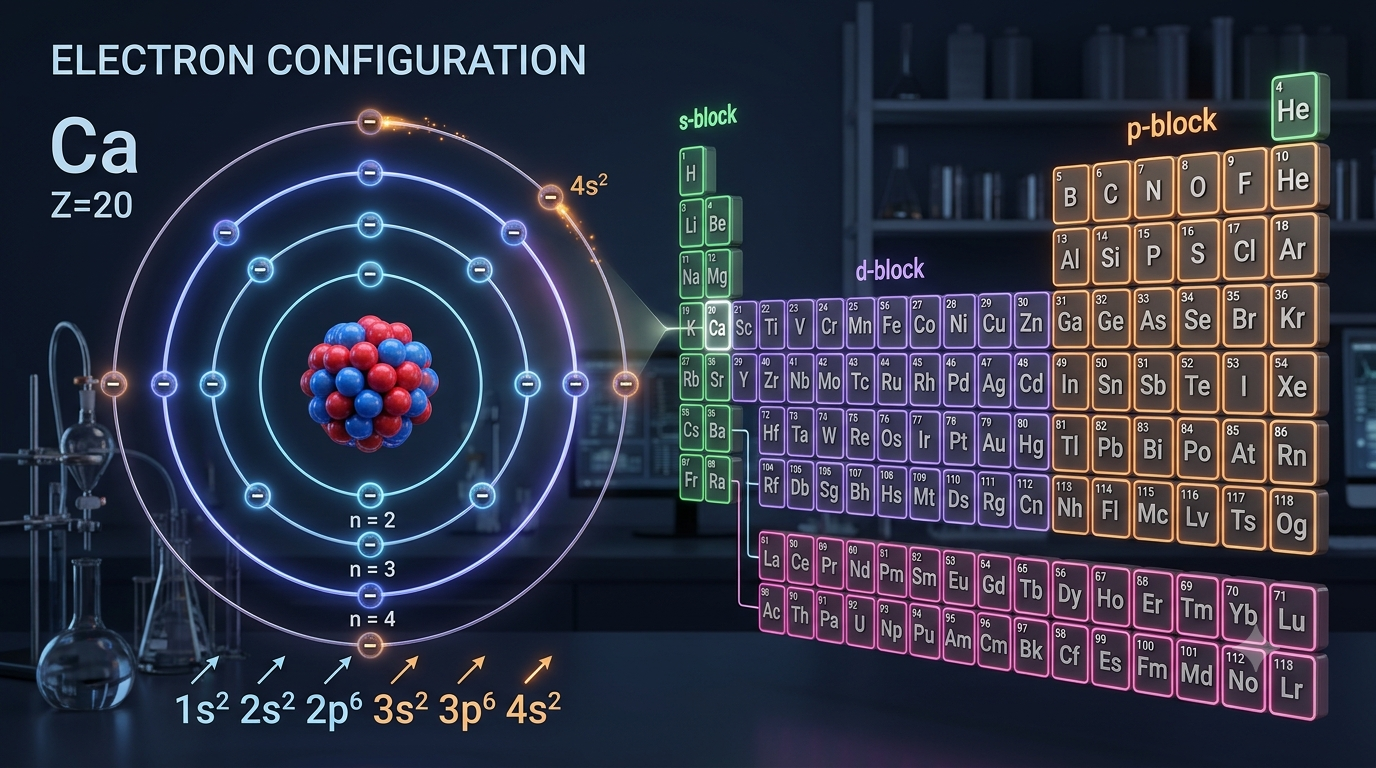
Every atom consists of three main subatomic particles: protons, neutrons, and electrons. While protons determine the identity of an element, […]
Read MoreThe f-Block Elements and Their General Properties
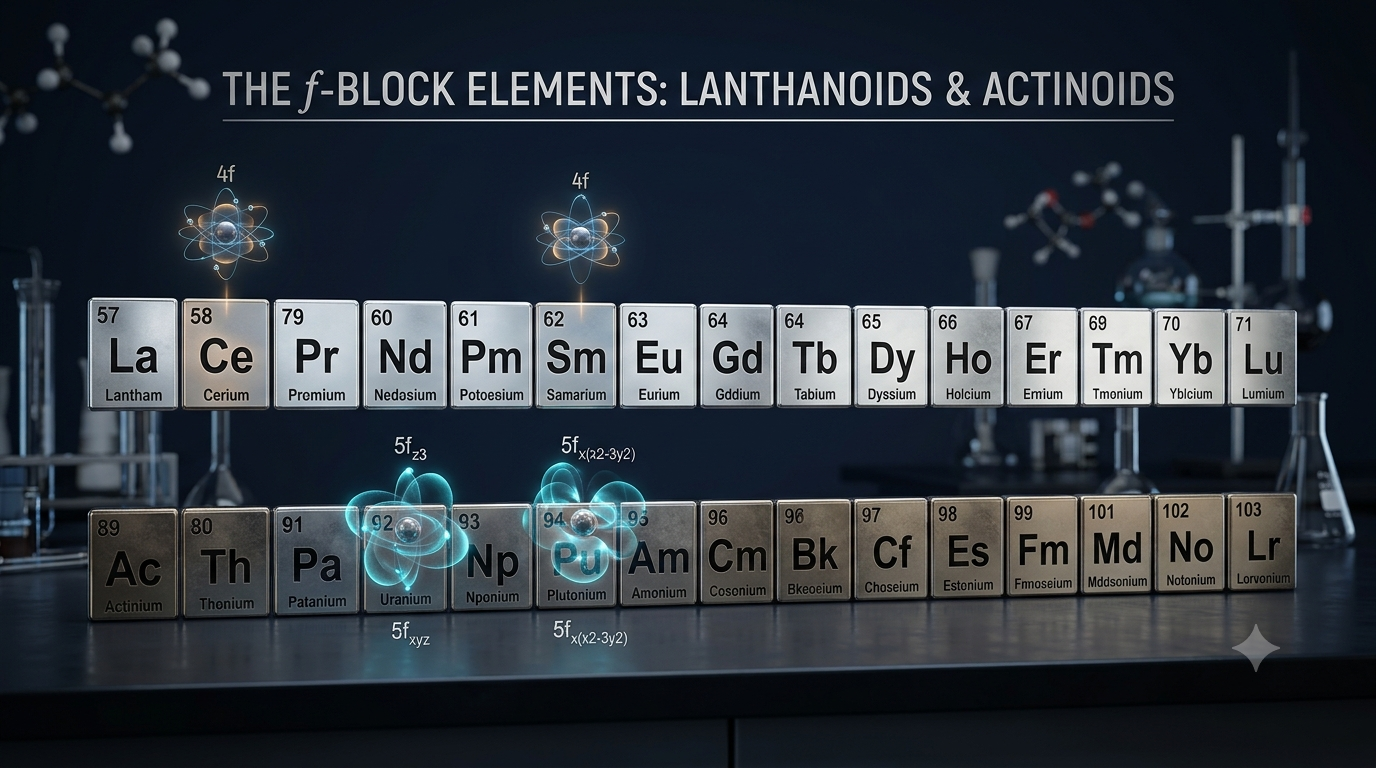
The periodic table is divided into different blocks based on the type of atomic orbital into which the last electron […]
Read MoreThe d-Block Elements and Their General Properties
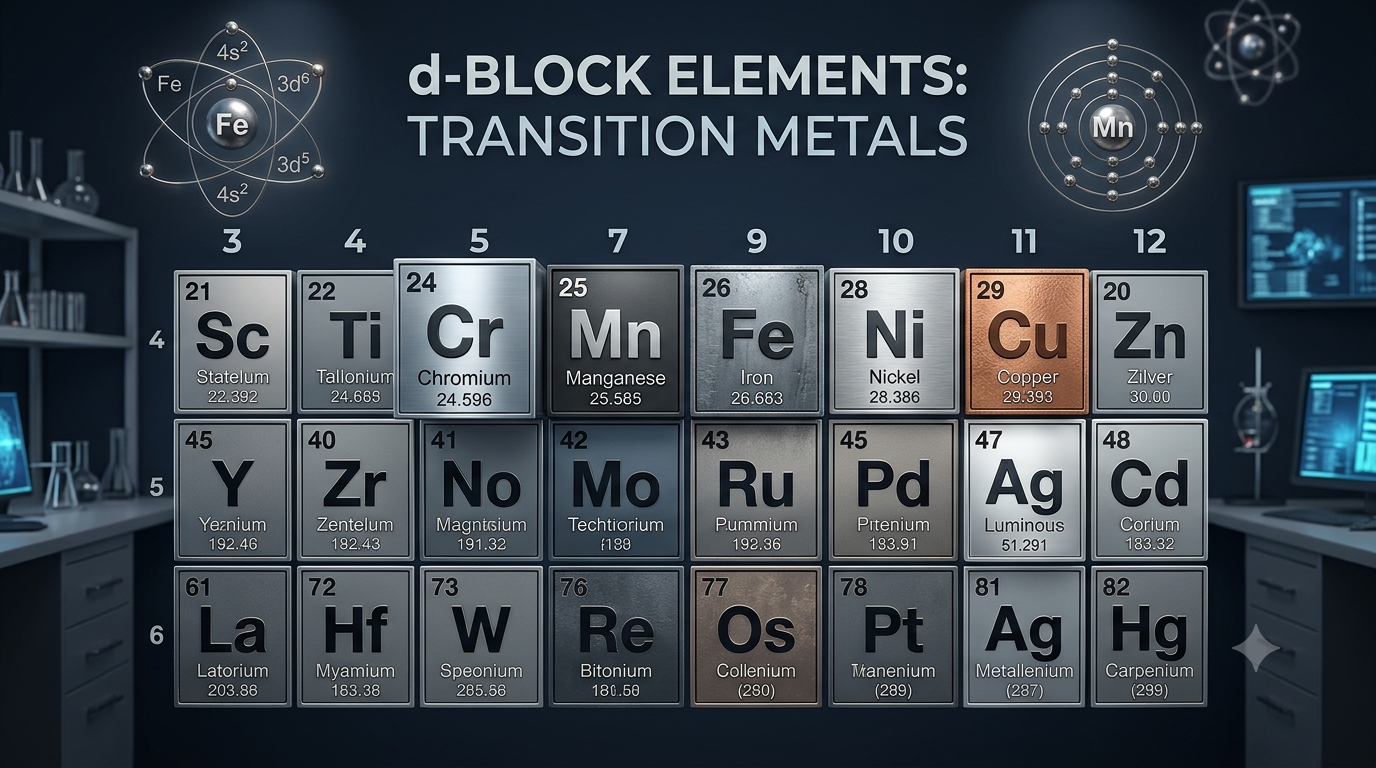
The periodic table is divided into four main blocks: s-block, p-block, d-block, and f-block. These blocks are classified according to […]
Read MoreThe p-Block Elements and Their General Properties

The periodic table is divided into different blocks based on the electronic configuration of elements. These blocks include the s-block, […]
Read More