Scientific knowledge helps us understand the natural world, explain everyday events, and solve problems through evidence and logical reasoning. From understanding why objects fall to discovering distant galaxies, science has continuously expanded human knowledge. However, scientific knowledge does not develop all at once, nor does it remain completely unchanged forever. It grows through observations, experiments, discussions, new discoveries, and improvements in technology. Scientists often begin with questions about something they do not understand, develop possible explanations, and test those explanations using evidence. When new information becomes available, existing explanations may be improved, expanded, or replaced. This continuous process makes science a dynamic and self-correcting way of understanding the world. Learning how scientific knowledge develops and changes over time helps us understand not only scientific discoveries but also the importance of evidence, critical thinking, and open-mindedness.
What Is Scientific Knowledge?
Scientific knowledge refers to the organized understanding of the natural world developed through systematic observation, experimentation, measurement, and reasoning. It includes facts supported by evidence, scientific concepts, models, principles, laws, and theories that help explain how different natural processes work.
For example, scientific knowledge explains how plants use sunlight to make food, how electricity flows through a circuit, why earthquakes occur, and how diseases can spread between people. These explanations are developed by collecting evidence and examining whether proposed ideas agree with observed results.
Scientific knowledge differs from an unsupported opinion because scientific claims must be open to investigation and testing. A person may believe that a particular material conducts electricity, but scientists can test that claim using suitable equipment and repeatable experiments.
Scientific knowledge is also provisional, meaning that explanations can be revised when strong new evidence becomes available. This does not mean that all scientific findings are uncertain or unreliable. Many scientific principles have been tested repeatedly and are supported by extensive evidence. Instead, science remains open to refinement whenever better evidence provides a more complete understanding.
How Scientific Knowledge Begins
Scientific knowledge often begins with curiosity about an observation, event, or unexplained problem. People notice patterns in nature and ask questions about why they occur. These questions provide the starting point for scientific investigation.
1. Observation of Natural Phenomena
Observation is one of the basic foundations of scientific discovery. Scientists carefully examine objects, events, and processes to identify patterns or unusual results.
For example, an observer may notice that some plants grow faster in sunny locations than in shaded areas. This observation can lead to questions about the role of sunlight in plant growth.
Observations may involve the senses, but scientific investigations frequently use instruments such as microscopes, telescopes, thermometers, sensors, and cameras. These tools allow scientists to examine phenomena that are too small, distant, fast, or complex to study directly.
Accurate observations help scientists identify problems worth investigating. However, an observation alone may not explain why something happens. Further investigation is needed to distinguish between possible explanations.
2. Asking Scientific Questions
After observing a phenomenon, scientists develop questions that can be investigated using evidence.
For example, after noticing differences in plant growth, a scientist might ask, “How does the amount of sunlight affect plant growth?”
A useful scientific question is sufficiently clear to guide an investigation. It identifies the phenomenon being studied and, where possible, the factors that may influence it.
Questions can also emerge from gaps in existing knowledge. Scientists may discover that a well-known theory does not fully explain a new observation. Such gaps encourage further research and can eventually lead to important discoveries.
3. Developing a Hypothesis
A hypothesis is a proposed explanation or prediction that can be tested through investigation. It is usually based on existing knowledge, observations, and logical reasoning.
For example, a scientist might hypothesize that plants receiving more suitable light will grow faster than similar plants receiving insufficient light, provided other important conditions remain the same.
A hypothesis must be testable. Scientists should be able to identify evidence that supports it or shows that it needs revision.
A hypothesis is not automatically accepted as scientific truth simply because it sounds reasonable. It must be examined through appropriate investigations and compared with the results.
The Role of Experiments and Evidence
Scientific knowledge becomes more reliable when proposed explanations are tested against observations and experimental results. Evidence allows scientists to evaluate whether an idea accurately describes the phenomenon being studied.
1. Designing Experiments
An experiment is a planned investigation used to test a scientific question or hypothesis. Scientists identify the factors they want to study and decide how to measure the results.
In a plant-growth experiment, researchers might grow similar plants under different light conditions while keeping water, soil type, temperature, and plant species as consistent as possible.
Controlling relevant factors helps scientists determine whether differences in growth are associated with the amount of light rather than another variable.
Not every scientific question can be investigated through a laboratory experiment. Astronomers, geologists, and evolutionary biologists often study natural events that cannot be directly controlled. They may rely on field observations, historical records, computer models, or comparisons of naturally occurring evidence.
2. Collecting and Analyzing Data
During an investigation, scientists collect data through measurements, observations, surveys, or other suitable methods. Data may be numerical, such as temperature and mass, or descriptive, such as the visible characteristics of a rock.
Scientists organize and analyze the collected information to identify patterns, relationships, and unexpected results.
For example, measurements of plant height over several weeks may reveal that plants receiving moderate light grow more successfully than plants receiving very little light. Statistical analysis can help researchers determine whether the observed differences are meaningful or could reasonably result from random variation.
Data must be interpreted carefully. A relationship between two variables does not automatically prove that one causes the other. Scientists consider alternative explanations, possible measurement errors, sample size, and the limitations of their methods.
3. Drawing Conclusions
After analyzing the evidence, scientists determine whether the results support their original hypothesis, contradict it, or leave the question unresolved.
If the results contradict a hypothesis, scientists may revise the hypothesis, improve their methods, or conduct additional experiments. Negative or unexpected results can still provide valuable knowledge by eliminating possible explanations or revealing overlooked factors.
Scientific conclusions are strongest when they are consistent with multiple independent lines of evidence. A single experiment may offer useful information, but repeated investigations generally provide a more dependable foundation for scientific understanding.
How Scientific Theories and Models Develop
Scientific explanations become more developed as evidence accumulates. Scientists use theories and models to organize observations and explain relationships between different phenomena.
Scientific Theories
A scientific theory is a well-supported explanatory framework that accounts for a broad range of observations and experimental findings.
For example, the theory of evolution explains how populations of living organisms change across generations and how species share common ancestry. Germ theory explains the role of microorganisms in many infectious diseases. Atomic theory provides a framework for understanding the structure and behavior of matter.
A scientific theory is not simply a guess. It is supported by substantial evidence and can generate predictions that researchers investigate.
Theories may become more detailed as new evidence emerges. Sometimes, scientists revise aspects of a theory to explain observations that were previously poorly understood. In other cases, a theory’s central ideas remain strongly supported while researchers improve their understanding of particular mechanisms.
Scientific Models
A scientific model is a simplified representation of an object, system, or process. Models help scientists visualize structures, explain relationships, and predict how systems may behave.
Examples include models of atoms, the structure of the Earth, climate systems, and the formation of galaxies.
Models are useful because many natural systems are too complex to examine in every detail. However, a model does not represent every feature of reality. Its usefulness depends on the question being investigated and the evidence supporting its assumptions.
When scientists discover new information, they may improve a model by adding important details or changing its assumptions. For instance, models of the atom have developed significantly as experiments have revealed more about its internal structure.
Why Scientific Knowledge Changes Over Time
Scientific knowledge changes when new observations, improved methods, or stronger evidence provide a better understanding of a phenomenon. These changes are an essential part of scientific progress.
1. New Evidence Becomes Available
Earlier explanations are often based on the evidence and instruments available at the time. When scientists collect additional evidence, they may discover that an existing explanation is incomplete.
For example, early explanations of infectious diseases often lacked an accurate understanding of microorganisms. Improvements in microscopy and experimental methods helped researchers identify microbes and establish their role in many diseases.
The new evidence transformed medical understanding and supported the development of better hygiene practices, diagnostic methods, and treatments.
2. Technology Improves Scientific Investigation
Technological advances allow scientists to observe phenomena with greater precision and investigate questions that were previously difficult or impossible to study.
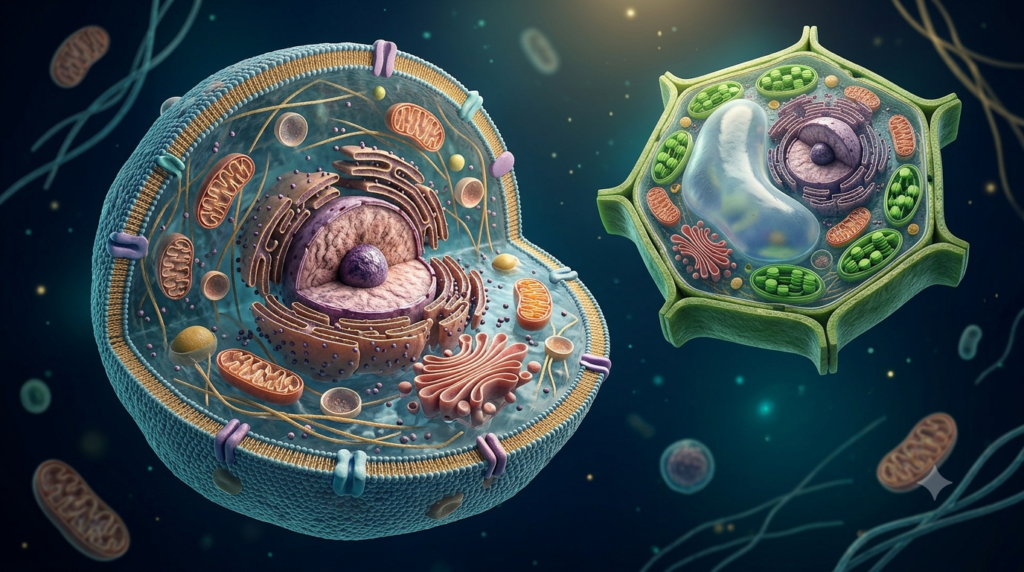
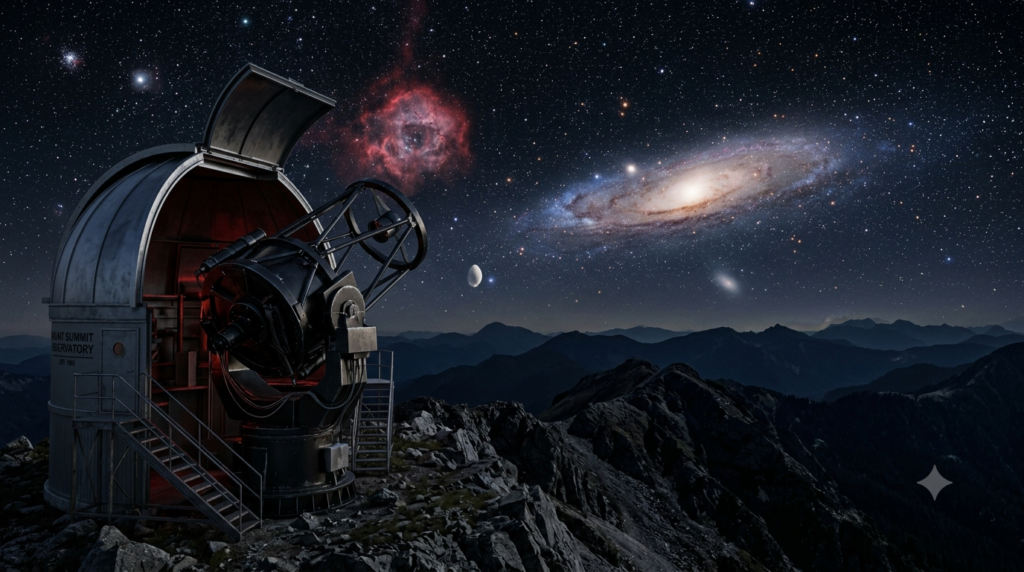
Telescopes reveal distant objects in space, electron microscopes help researchers examine extremely small structures, and satellites collect information about Earth’s atmosphere, oceans, and surface.
Computer simulations and advanced analytical tools also help scientists study complex systems, including weather patterns, genetic relationships, and the behavior of materials.
When technology provides more accurate measurements or reveals previously hidden details, scientific explanations may need to be updated.
3. Earlier Explanations Have Limitations
Scientific explanations are developed to account for particular observations, but some explanations work better under certain conditions than others.
For example, Newton’s laws of motion explain a wide range of everyday movements and remain essential in engineering. However, Einstein’s theory of relativity provides a more comprehensive description of gravity and motion under conditions involving very high speeds or strong gravitational fields.
Relativity did not make Newtonian mechanics useless. Instead, it clarified the conditions under which Newton’s laws provide accurate approximations and expanded scientific understanding to situations where those laws alone are insufficient.
This example shows that scientific progress does not always involve completely discarding older knowledge. Sometimes, a newer explanation includes the useful parts of an earlier one while accounting for a wider range of evidence.
4. Scientists Identify Errors and Biases
Scientific investigations can be affected by measurement errors, unsuitable methods, limited samples, or mistaken assumptions. Scientists improve the reliability of knowledge by identifying and correcting these problems.
Repeating experiments, checking calculations, comparing independent results, and examining research methods help identify weaknesses in scientific claims.
Bias can also influence how evidence is collected or interpreted. Researchers therefore use methods such as blinded experiments, appropriate controls, transparent reporting, and independent evaluation to reduce the influence of personal expectations.
The possibility of error is one reason scientific claims must remain open to careful testing and criticism.
Important Examples of Scientific Knowledge Changing
The history of science contains many examples of explanations changing as new evidence becomes available. These examples show how scientists build on earlier discoveries while correcting limitations.
1. The Changing Understanding of the Solar System
For centuries, many scholars accepted a geocentric model in which Earth occupied the central position in the universe and the Sun and planets moved around it.
As astronomical observations improved, scientists developed and evaluated alternative explanations. Nicolaus Copernicus presented a mathematical model in which Earth and the other planets orbit the Sun. Later, observations by Galileo Galilei and the mathematical work of Johannes Kepler strengthened the developing understanding of planetary motion.
Galileo’s observations of Jupiter’s moons showed that not every celestial object orbits Earth. Kepler’s laws described planetary orbits more accurately, and Isaac Newton later explained planetary motion through his laws of motion and universal gravitation.
Modern astronomy has expanded this understanding through space telescopes, spacecraft, and advanced physical theories. This history demonstrates how scientific knowledge develops through a combination of observation, mathematical reasoning, and new evidence.
2. The Development of Atomic Theory
The idea that matter is made of tiny particles has a long history. Early philosophical proposals suggested that matter might consist of indivisible units, but these ideas were not based on modern experimental methods.
During the nineteenth century, John Dalton developed an atomic theory that helped explain chemical reactions and the relationships between elements. Later discoveries showed that atoms contain smaller components.
J. J. Thomson’s experiments provided evidence for the electron. Ernest Rutherford’s experiments revealed a small, dense atomic nucleus, and subsequent research established the importance of protons, neutrons, and the quantum description of electrons.
Modern atomic theory is far more detailed than early models. The development of this knowledge illustrates how scientific models change when experiments reveal structures that earlier explanations could not adequately describe.
3. The Development of Germ Theory
Before microorganisms were understood, people often explained infectious diseases through ideas that did not accurately identify their causes. The development of microscopy and experimental microbiology changed this situation.
Researchers such as Louis Pasteur and Robert Koch contributed important evidence connecting microorganisms with particular diseases and biological processes.
Over time, scientists established that different infectious diseases can be caused by different agents, including bacteria, viruses, fungi, and parasites. Researchers also learned that some microorganisms are harmless or beneficial.
Modern medical science continues to refine knowledge about infections through genetics, molecular biology, epidemiology, and clinical research.
This example shows how better evidence can replace inaccurate explanations and improve practical decisions in public health and medicine.
4. The Expanding Understanding of the Universe
Early astronomical models were limited by the observations and instruments available. The development of powerful telescopes allowed astronomers to study distant stars, galaxies, and other celestial objects in greater detail.
During the twentieth century, observations of distant galaxies helped establish that the universe is expanding. Evidence from cosmic microwave background radiation and the measured abundance of light elements further supported the hot Big Bang model of the universe’s early development.
Scientists continue to investigate questions about dark matter, dark energy, the earliest stages of cosmic history, and the ultimate evolution of the universe.
Although the broad framework of modern cosmology is strongly supported by evidence, important questions remain unresolved. This illustrates how science can establish reliable conclusions while continuing to investigate unanswered questions.
The Scientific Community and the Development of Knowledge
Scientific knowledge is rarely developed by one person working in complete isolation. It often grows through cooperation, debate, independent investigation, and the exchange of information among researchers.
Peer Review and Scientific Publications
Scientists communicate their findings through research papers, conferences, reports, and other forms of scientific communication.
Peer review allows other researchers with relevant expertise to evaluate a submitted study’s methods, evidence, reasoning, and conclusions before publication in many scholarly journals.
Peer review can help identify weaknesses, but it does not guarantee that a study is correct. Published research may still contain errors, and some findings may not be confirmed by later investigations.
For this reason, scientific knowledge develops through continuing evaluation rather than publication alone.
Replication and Reproducibility
Replication involves repeating a study or conducting an independent investigation to determine whether its findings are supported by further evidence.
When researchers obtain consistent results using suitable methods, confidence in the findings can increase. When results differ, scientists investigate possible reasons, including differences in methods, samples, instruments, or environmental conditions.
Not every scientific study can be repeated in exactly the same way. Historical events, astronomical phenomena, and certain natural processes may be impossible to reproduce directly. In such cases, scientists use independent observations, alternative methods, and converging evidence.
Replication and reproducibility are important because they help distinguish dependable findings from results that may depend on unusual circumstances or methodological problems.
Scientific Debate and Collaboration
Scientists sometimes disagree about how evidence should be interpreted. Such disagreements can encourage additional experiments, alternative explanations, and more precise predictions.
Healthy scientific debate depends on evidence and reasoning rather than personal authority. Researchers may challenge an established explanation, but a new proposal gains scientific acceptance only when it successfully accounts for relevant evidence and withstands critical evaluation.
Collaboration also brings together people with different expertise. Physicists, chemists, biologists, mathematicians, engineers, and computer scientists may work together to solve complex problems that no single discipline can fully address.
The Difference Between Scientific Facts, Laws, and Theories
Understanding the different forms of scientific knowledge helps explain how science develops.
A scientific fact is an observation or finding that is well established through reliable evidence. For example, under ordinary conditions, liquid water freezes at approximately 0°C at standard atmospheric pressure.
A scientific law describes a consistent relationship or pattern observed in nature. Newton’s law of universal gravitation describes the gravitational attraction between objects, while other scientific laws express relationships in chemistry, physics, and other fields.
A scientific theory explains how or why particular natural phenomena occur. Evolutionary theory, germ theory, and the theory of relativity are examples.
Facts, laws, and theories serve different purposes. A theory does not become a law simply by receiving more evidence, because laws and theories answer different kinds of scientific questions. Laws generally describe relationships or patterns, while theories explain them.
All these forms of knowledge contribute to scientific understanding, and each may be refined as research progresses.
How Scientific Knowledge Influences Everyday Life
Changes in scientific knowledge affect how people live, work, communicate, and make decisions. Scientific discoveries often lead to new technologies, improved healthcare, and better methods of managing natural resources.
Medicine and Public Health
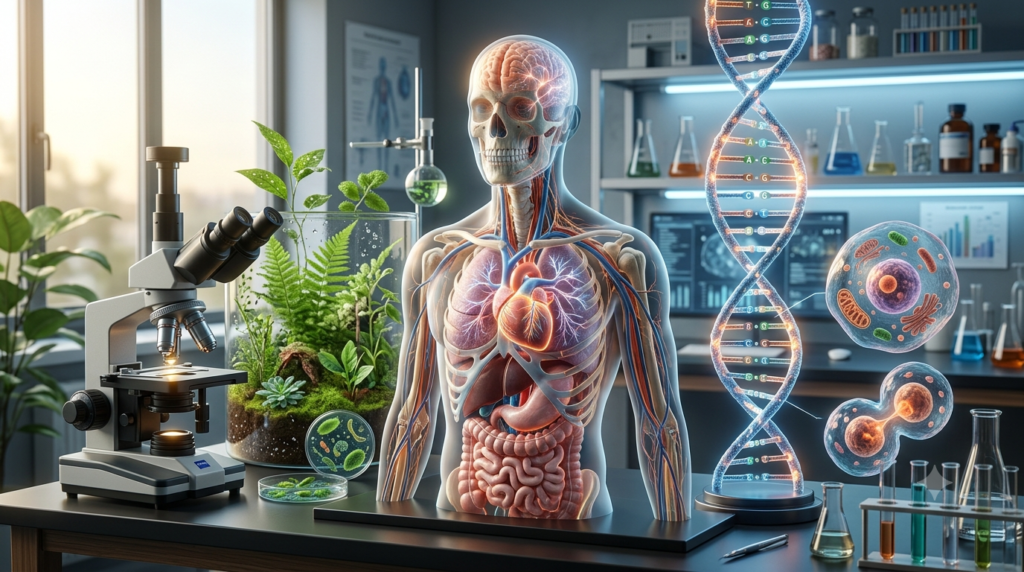
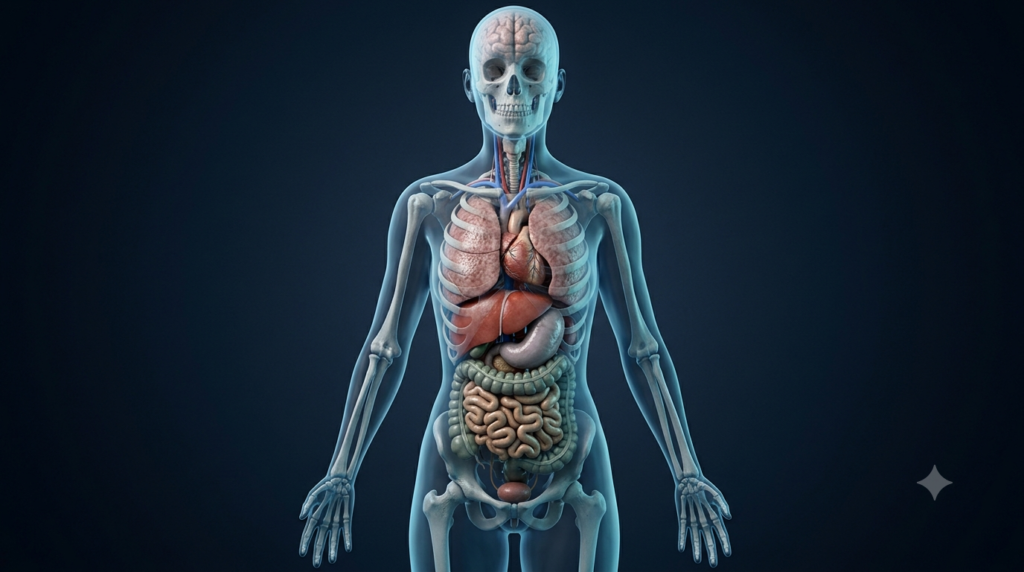
Research into microorganisms, genetics, human physiology, and pharmacology has improved the prevention, diagnosis, and treatment of many diseases.
As scientific evidence develops, medical guidelines may change. Researchers evaluate new treatments, identify possible risks, and investigate whether existing practices remain effective.
Such changes should be based on the quality of available evidence, not simply on the appearance of a new idea or product.
Technology and Engineering
Scientific discoveries provide the foundation for many modern technologies, including computers, telecommunications, renewable energy systems, and advanced materials.
Engineers apply scientific principles to design and test practical solutions. When scientific understanding improves, existing technologies can become safer, more efficient, and more reliable.
For example, developments in semiconductor physics made modern electronic devices possible, while advances in materials science continue to influence batteries, construction materials, and medical equipment.
Environmental Understanding
Scientific research has improved understanding of climate systems, biodiversity, pollution, and the movement of energy and materials through ecosystems.
As researchers collect long-term measurements and develop better models, they can identify environmental trends and evaluate possible solutions.
Scientific knowledge does not automatically determine every public decision because environmental issues may also involve economic, ethical, and social considerations. However, reliable evidence helps people understand the likely consequences of different choices.
The Limitations of Scientific Knowledge
Although science is a powerful way to investigate the natural world, it has limitations. Scientific conclusions depend on available evidence, the quality of research methods, and the assumptions used in analysis.
Some questions are difficult to investigate because the relevant events occur over extremely long periods, at inaccessible distances, or under conditions that cannot be reproduced.
Scientific models may also simplify complex systems, and measurements always have some degree of uncertainty. Researchers must therefore explain the limitations of their methods and avoid claiming more than the evidence supports.
Science also does not independently settle every moral, philosophical, or personal question. Scientific evidence can inform decisions about the likely effects of different actions, but values and ethical reasoning may be needed to determine what people ought to do.
Recognizing these limitations does not weaken science. Instead, it helps people use scientific knowledge responsibly and distinguish well-supported conclusions from unresolved questions.
Why Scientific Knowledge Must Remain Open to Revision
The willingness to revise explanations is one of the defining strengths of science. If scientists treated every existing explanation as permanently unquestionable, new discoveries would be difficult to incorporate into human understanding.
Being open to revision does not mean accepting every new claim. A proposed change must be supported by reliable evidence and should explain existing observations at least as successfully as the previous explanation.
For example, an alternative theory that contradicts a well-established scientific principle must provide convincing evidence and account for the observations that originally supported that principle. Extraordinary claims generally require particularly strong evidence because they challenge a large body of established knowledge.
Scientific progress therefore combines two important attitudes: confidence in conclusions that are strongly supported by evidence and willingness to reconsider them when convincing new evidence appears.
This balance allows scientific knowledge to remain dependable without becoming rigid.
Conclusion
Scientific knowledge develops through observation, questioning, experimentation, evidence, reasoning, and communication among researchers. It changes when new discoveries, improved technologies, or more accurate methods reveal the strengths and limitations of existing explanations. Historical developments in astronomy, atomic theory, medicine, and cosmology demonstrate that scientific understanding grows through continuous investigation rather than a single final discovery. Established scientific knowledge can remain highly reliable while still being refined to explain new situations. By recognizing uncertainty, examining evidence, correcting errors, and welcoming justified revisions, science provides an effective method for understanding the natural world. Learning how scientific knowledge develops and changes over time also encourages curiosity, critical thinking, and informed decision-making in everyday life.
FAQs
1. What is scientific knowledge?
Scientific knowledge is the understanding of the natural world developed through observation, experimentation, measurement, and logical reasoning. It helps explain natural phenomena, including planetary motion, chemical reactions, biological processes, and environmental changes. Scientists collect evidence, test possible explanations, and evaluate whether their conclusions agree with observed results. Scientific knowledge includes facts, laws, theories, and models, each serving a different purpose. It is generally reliable when supported by strong and repeated evidence. However, scientific explanations can be improved when new discoveries provide a more complete understanding of a phenomenon.
2. How does scientific knowledge develop?
Scientific knowledge develops through a continuous process of investigation. Scientists begin by observing a phenomenon or identifying a problem. They ask questions, propose testable explanations, and collect evidence through experiments, measurements, or field studies. After analyzing the results, they draw conclusions and communicate their findings to other researchers. Further investigations help determine whether those conclusions are reliable. When new evidence appears, scientists may revise their explanations or develop better models. This process gradually expands human understanding and helps scientists explain natural events more accurately than before.
3. Why does scientific knowledge change over time?
Scientific knowledge changes because new evidence, improved technology, and better research methods can reveal limitations in existing explanations. An idea that explains available observations may not account for every newly discovered phenomenon. For example, improvements in astronomical instruments have allowed scientists to study distant galaxies and investigate the early universe in greater detail. Similarly, advances in microscopy have improved understanding of cells and microorganisms. When reliable evidence challenges an existing explanation, scientists investigate the findings and revise their understanding when necessary. These changes demonstrate how science continuously improves through evidence-based investigation.
4. What role do experiments play in developing scientific knowledge?
Experiments help scientists test hypotheses and investigate relationships between different variables. During an experiment, researchers plan procedures, collect measurements, and examine whether the results support their predictions. They often control relevant factors to reduce the influence of alternative explanations. For example, an experiment investigating plant growth may compare plants receiving different amounts of light while keeping other conditions similar. Scientists analyze the results carefully before drawing conclusions. Experiments are important because they provide evidence that can support, challenge, or refine scientific explanations. However, some scientific questions require observations, historical evidence, or computer models instead.
5. What is the difference between a scientific theory and a hypothesis?
A hypothesis is a proposed explanation or prediction that can be tested through investigation. It usually addresses a specific question and helps guide an experiment or observation. A scientific theory is a broader explanatory framework supported by substantial evidence and capable of explaining many related observations. For example, a hypothesis might predict how temperature affects the growth of a particular organism, while evolutionary theory explains how populations change across generations. A hypothesis does not automatically become a theory simply by being tested repeatedly. Both serve important roles in science, but they differ in scope, purpose, and explanatory power.
6. How do scientists know when an established scientific explanation needs revision?
Scientists consider revising an established explanation when reliable evidence repeatedly conflicts with its predictions or reveals limitations in its ability to explain observations. They examine the quality of the evidence, repeat investigations where possible, and compare alternative explanations. A single unexpected result does not automatically invalidate an established theory because measurement errors or unusual conditions may influence the outcome. However, consistent findings from independent studies may justify further investigation and revision. A successful revised explanation should account for the new evidence while also explaining observations that supported the earlier understanding. This process helps maintain the reliability of scientific knowledge.
7. How does technology help scientific knowledge develop?
Technology allows scientists to observe, measure, and analyze phenomena with greater accuracy and detail. Telescopes reveal distant celestial objects, microscopes help examine tiny structures, and satellites collect information about Earth’s atmosphere and surface. Computers help researchers analyze large datasets, simulate complex systems, and identify patterns that might otherwise remain difficult to detect. Improved instruments can also reveal evidence that older technologies could not capture. These discoveries sometimes require scientists to update existing explanations or develop new models. Technology therefore supports scientific progress by expanding the range of questions researchers can investigate and improving the quality of available evidence.
8. What is the importance of peer review in scientific research?
Peer review is a process in which researchers with relevant expertise evaluate a scientific study before it is published in many scholarly journals. Reviewers examine the research methods, evidence, reasoning, and conclusions to identify weaknesses or areas requiring clarification. This process can improve research quality and help readers assess a study’s reliability. However, peer review does not guarantee that every published finding is correct. Research may still contain errors, and later investigations may produce different results. Independent verification, replication, and continued scientific discussion remain important for determining whether findings are dependable and contribute meaningfully to scientific knowledge.
9. Does changing scientific knowledge mean that science is unreliable?
No, changes in scientific knowledge do not mean that science is unreliable. They demonstrate that scientific explanations can improve when stronger evidence or better methods become available. Many scientific findings have been tested repeatedly and remain highly reliable. Sometimes, new discoveries refine an existing explanation rather than completely replacing it. For example, Newton’s laws of motion continue to work accurately in many everyday situations, even though Einstein’s theories provide a more comprehensive understanding under certain extreme conditions. Science becomes more dependable when researchers identify errors, acknowledge limitations, and revise explanations according to reliable evidence.
10. How does scientific knowledge affect everyday life?
Scientific knowledge influences healthcare, communication, transportation, agriculture, environmental protection, and many other aspects of daily life. Medical research supports the development of vaccines, diagnostic methods, and treatments. Physics and engineering contribute to electrical systems, vehicles, and electronic devices, while agricultural science helps improve crop production and resource management. Scientific research also provides evidence for understanding pollution, climate change, and biodiversity loss. As knowledge develops, technologies and public practices can be improved to address emerging challenges. Understanding how science works helps people evaluate information critically, recognize unsupported claims, and make more informed decisions about everyday issues.