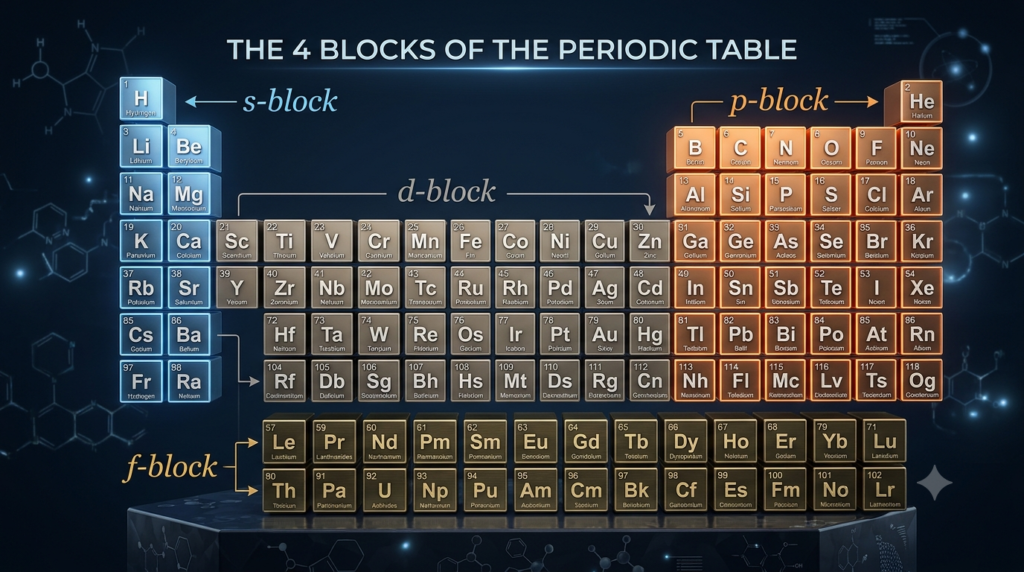
Every chemical element has a name and a unique symbol that scientists use to identify it. Some element names come from ancient languages, while others are inspired by planets, scientists, minerals, geographical locations, or important scientific discoveries. Similarly, chemical symbols may look like the first one or two letters of an element’s English name, but this is not always the case.
For example, the symbol for oxygen is O, hydrogen is H, and carbon is C. However, sodium has the symbol Na, iron has Fe, and gold has Au. These differences are connected to the history and origins of element names.
Have you ever wondered who decides the names of chemical elements? Why do some elements have symbols that do not match their English names? The naming of chemical elements follows internationally accepted scientific rules. These rules help scientists around the world communicate clearly and avoid confusion.
In this article, we will explore how chemical element names and symbols are assigned, who is responsible for approving them, the history behind different element names, and the rules used to create their symbols.
What Are Chemical Element Names and Symbols?
A chemical element is a pure substance made up of atoms that have the same number of protons in their nuclei. Each element is identified by its atomic number, which represents the number of protons in its atoms.
Every officially recognized chemical element has a unique name and a chemical symbol.
Element Name: The official word used to identify a particular chemical element.
Chemical Symbol: A short abbreviation, usually consisting of one or two letters, used to represent an element in chemical formulas, equations, and scientific writing.
For example:
| Element Name | Chemical Symbol | Atomic Number |
|---|---|---|
| Hydrogen | H | 1 |
| Helium | He | 2 |
| Lithium | Li | 3 |
| Carbon | C | 6 |
| Oxygen | O | 8 |
| Sodium | Na | 11 |
| Iron | Fe | 26 |
| Copper | Cu | 29 |
| Silver | Ag | 47 |
| Gold | Au | 79 |
Chemical symbols are internationally standardized. This means that scientists in different countries use the same symbols, even when they speak different languages.
For example, the symbol Au represents gold in scientific writing worldwide, regardless of the language used for the element’s name.
Who Assigns Names and Symbols to Chemical Elements?
The International Union of Pure and Applied Chemistry (IUPAC) is the international organization responsible for maintaining standards for chemical nomenclature, symbols, terminology, and related chemical information.
IUPAC plays an important role in approving the names and symbols of newly discovered chemical elements.
When scientists discover a possible new element, they cannot simply choose any name and begin using it officially. The discovery must first be evaluated and confirmed through an established scientific process. After confirmation, the discoverers are invited to propose a name and symbol according to IUPAC recommendations.
IUPAC reviews the proposed name and symbol before officially accepting them.
This international process ensures that every recognized element has a standardized name and symbol that can be used consistently in scientific communication.
How Are New Chemical Elements Discovered Before Naming?
Before an element receives an official name, scientists must establish that it is a new chemical element.
Most naturally occurring elements were identified through the study of minerals, chemical reactions, and the properties of matter. However, many elements heavier than uranium have been produced artificially in laboratories.
Scientists create some new elements by accelerating atomic nuclei and making them collide with the nuclei of other atoms. If the collision produces a nucleus with a previously unknown number of protons, it may represent a new element.
However, producing a possible new element is not enough. Scientists must collect reliable experimental evidence and demonstrate that the element’s existence is scientifically supported.
The International Union of Pure and Applied Chemistry and the International Union of Pure and Applied Physics (IUPAP) work together in evaluating claims of discovery for new chemical elements.
Once a discovery is recognized, the discoverers are invited to suggest an official name and symbol.
What Are the Main Sources of Chemical Element Names?
Chemical element names come from several different sources. Some reflect the properties of the element, while others recognize important people, places, or historical traditions.
The accepted naming traditions allow elements to have meaningful names connected to science, history, mythology, and geography.
1. Names Based on Mythology and Astronomical Objects
Some chemical elements are named after figures from ancient mythology or objects in space.
These names often reflect the historical and cultural influences on scientific discoveries.
Examples include:
Helium (He): Named after Helios, the Greek god associated with the Sun. Helium was first identified through observations of sunlight during a solar eclipse in 1868.
Selenium (Se): Named after Selene, the Greek goddess of the Moon.
Tellurium (Te): Derived from the Latin word tellus, meaning Earth.
Uranium (U): Named after the planet Uranus.
Neptunium (Np): Named after the planet Neptune.
Plutonium (Pu): Named after Pluto, which was classified as a planet when the element was named.
These examples demonstrate how mythology and astronomy have influenced chemical element naming.
2. Names Based on Scientists
Several chemical elements are named in honour of scientists who made important contributions to physics, chemistry, or other scientific fields.
This practice recognizes the achievements of individuals who helped advance scientific knowledge.
Examples include:
Curium (Cm): Named after Marie Curie and Pierre Curie, who made important contributions to the study of radioactivity.
Einsteinium (Es): Named after physicist Albert Einstein.
Fermium (Fm): Named after physicist Enrico Fermi.
Mendelevium (Md): Named after Dmitri Mendeleev, who developed the periodic table.
Nobelium (No): Named after Alfred Nobel, the inventor of dynamite and founder of the Nobel Prizes.
Lawrencium (Lr): Named after physicist Ernest O. Lawrence, who developed the cyclotron.
Rutherfordium (Rf): Named after physicist Ernest Rutherford.
Seaborgium (Sg): Named after chemist Glenn T. Seaborg.
Naming elements after scientists is a way of permanently recognizing their contributions to scientific development.
3. Names Based on Geographical Locations
Some elements are named after countries, cities, regions, or other geographical locations associated with their discovery or scientific history.
Examples include:
Polonium (Po): Named after Poland, the homeland of Marie Curie.
Francium (Fr): Named after France.
Germanium (Ge): Named after Germany.
Americium (Am): Named after the Americas.
Europium (Eu): Named after Europe.
Scandium (Sc): Named after Scandinavia.
Hafnium (Hf): Named after Hafnia, the Latin name for Copenhagen.
Holmium (Ho): Named after Holmia, the Latin name for Stockholm.
Lutetium (Lu): Named after Lutetia, the ancient Roman name for Paris.
Dubnium (Db): Named after Dubna, a city in Russia associated with nuclear research.
These names connect chemical discoveries with the geographical locations that played a role in scientific history.
4. Names Based on Minerals and Natural Materials
Some element names are derived from minerals, ores, or substances in which the elements were discovered.
Examples include:
Beryllium (Be): Named after the mineral beryl, in which the element occurs.
Boron (B): Derived from borax, a naturally occurring boron-containing mineral.
Lithium (Li): Derived from the Greek word lithos, meaning stone, because it was discovered in a mineral.
Zirconium (Zr): Named after zircon, a mineral containing zirconium.
Bromine (Br): Named from a Greek word associated with a strong or unpleasant smell.
These names often describe the natural sources or characteristics associated with an element’s discovery.
5. Names Based on Properties
Some elements are named after their physical or chemical properties, such as colour, smell, or appearance.
Examples include:
Chlorine (Cl): Derived from the Greek word chloros, meaning greenish-yellow, referring to its characteristic colour.
Bromine (Br): Derived from the Greek word bromos, meaning stench, referring to its strong and unpleasant smell.
Iodine (I): Derived from the Greek word iodes, meaning violet, referring to the colour of its vapour.
Argon (Ar): Derived from the Greek word argos, meaning inactive or lazy, referring to its low chemical reactivity.
Chromium (Cr): Derived from the Greek word chroma, meaning colour, because many chromium compounds have distinctive colours.
These names provide clues about the properties that attracted the attention of early chemists.
How Are Chemical Symbols Assigned?
Chemical symbols are standardized abbreviations used to represent chemical elements. Their assignment follows internationally accepted conventions.
Most chemical symbols contain one or two letters, although temporary systematic symbols have been used for elements before their official names and symbols were approved.
The first letter of a chemical symbol is always written as a capital letter. If there is a second letter, it is always written in lowercase.
For example:
H represents Hydrogen.
He represents Helium.
Li represents Lithium.
Na represents Sodium.
Mg represents Magnesium.
Fe represents Iron.
Au represents Gold.
The capitalization rule is important because changing the capitalization can change the meaning of a chemical symbol.
For example, Co represents cobalt, while CO represents a chemical formula containing one carbon atom and one oxygen atom (carbon monoxide).
1. Symbols Based on the First Letter of the Element Name
Many chemical elements have symbols consisting of the first letter of their English names.
Examples include:
| Element | Symbol |
|---|---|
| Hydrogen | H |
| Boron | B |
| Carbon | C |
| Nitrogen | N |
| Oxygen | O |
| Fluorine | F |
| Phosphorus | P |
| Sulfur | S |
| Vanadium | V |
| Yttrium | Y |
When the first letter is available and does not create confusion with another element, it is often used as the symbol.
2. Symbols Based on the First Two Letters
Many elements use their first two letters to form their chemical symbols.
Examples include:
| Element | Symbol |
|---|---|
| Helium | He |
| Lithium | Li |
| Beryllium | Be |
| Neon | Ne |
| Aluminium | Al |
| Silicon | Si |
| Calcium | Ca |
| Chromium | Cr |
| Manganese | Mn |
| Cobalt | Co |
In these symbols, the first letter is capitalized, and the second letter is lowercase.
Using two letters allows scientists to represent more elements without repeating the same symbol.
3. Symbols Derived from Latin Names
One interesting feature of chemical symbols is that some do not match the English names of their elements.
This happens because several symbols were derived from the Latin or older historical names of elements.
Examples include:
| English Name | Chemical Symbol | Latin or Historical Name |
|---|---|---|
| Sodium | Na | Natrium |
| Potassium | K | Kalium |
| Iron | Fe | Ferrum |
| Copper | Cu | Cuprum |
| Silver | Ag | Argentum |
| Tin | Sn | Stannum |
| Antimony | Sb | Stibium |
| Tungsten | W | Wolfram |
| Gold | Au | Aurum |
| Mercury | Hg | Hydrargyrum |
| Lead | Pb | Plumbum |
These symbols preserve the historical terminology used in chemistry.
For example, the English name is sodium, but its chemical symbol is Na because it comes from the Latin name natrium.
Similarly, the symbol for iron is Fe because its Latin name is ferrum.
4. Symbols Must Be Unique
Every officially recognized chemical element must have its own unique symbol.
Two different elements cannot share the same official chemical symbol.
For example, the symbol C represents carbon, while Ca represents calcium. Similarly, N represents nitrogen, while Ne represents neon.
The use of distinct symbols helps prevent confusion in chemical formulas, equations, laboratory records, and scientific publications.
5. Symbols Are Usually One or Two Letters
Most officially named chemical elements have one-letter or two-letter symbols.
However, before a newly discovered element receives an official name, scientists may use a temporary systematic name and symbol based on its atomic number.
These temporary symbols help scientists identify newly reported elements while the discovery and naming process is completed.
How Are Names and Symbols of Newly Discovered Elements Approved?
The naming process for a newly discovered chemical element follows an organized international procedure.
It generally includes the following stages.
Step 1: Discovery of a New Element
Scientists conduct experiments to produce or identify an element that has not previously been confirmed.
For many superheavy elements, this involves nuclear reactions in specialized laboratories.
Step 2: Confirmation of the Discovery
The experimental evidence is examined carefully to establish whether the new element has genuinely been produced.
IUPAC and IUPAP evaluate discovery claims through a formal process involving scientific experts.
Step 3: Invitation to Propose a Name
After a discovery is officially recognized, the scientists responsible for the discovery are invited to propose a name and symbol.
The proposed name must follow the established IUPAC naming recommendations.
Step 4: Selection According to Naming Rules
Under IUPAC recommendations, newly named elements may be named after:
A mythological concept or character, including an astronomical object.
A mineral or similar substance.
A place or geographical region.
A property of the element.
A scientist.
The proposed symbol must also follow the accepted chemical symbol conventions.
Step 5: Public Review
IUPAC publishes the proposed name and symbol for public review.
This gives the international scientific community an opportunity to examine the proposal and provide feedback.
Step 6: Official Approval
After the review period, IUPAC considers the comments and formally approves the name and symbol.
The element can then be referred to by its officially recognized name and symbol in the periodic table and scientific literature.
Examples of Recently Named Chemical Elements
Some of the heaviest elements in the periodic table were discovered and officially named during the twenty-first century.
Their names provide excellent examples of how modern element naming works.
| Element | Symbol | Atomic Number | Named After |
|---|---|---|---|
| Nihonium | Nh | 113 | Japan |
| Moscovium | Mc | 115 | Moscow region |
| Tennessine | Ts | 117 | Tennessee |
| Oganesson | Og | 118 | Yuri Oganessian |
These four elements received their official names and symbols in 2016.
Nihonium (Nh): Its name comes from Nihon, one of the Japanese words for Japan. It recognizes the country’s contribution to the discovery.
Moscovium (Mc): Named after the Moscow region, where the Joint Institute for Nuclear Research is located.
Tennessine (Ts): Named in recognition of the contributions of Tennessee-based research institutions to the discovery of superheavy elements.
Oganesson (Og): Named in honour of nuclear physicist Yuri Oganessian for his contributions to superheavy element research.
These examples show that modern element names can recognize countries, regions, and individual scientists.
What Were Temporary Systematic Element Names?
When scientists report a possible new element, its discovery may not yet have been officially confirmed. During this period, a temporary systematic name and symbol can be used.
IUPAC developed a systematic naming method based on the element’s atomic number.
In this system, numerical roots represent the digits of the atomic number. The roots are combined to form a temporary name, and the symbol is created using the first letters of those roots.
For example, the numerical roots include:
| Digit | Root |
|---|---|
| 0 | Nil |
| 1 | Un |
| 2 | Bi |
| 3 | Tri |
| 4 | Quad |
| 5 | Pent |
| 6 | Hex |
| 7 | Sept |
| 8 | Oct |
| 9 | Enn |
Consider an element with atomic number 120.
Its temporary systematic name is formed from the roots for 1, 2, and 0:
Un + bi + nil + ium = Unbinilium.
Its temporary symbol is Ubn.
This naming system allows scientists to refer to an element systematically before its permanent name and symbol are approved.
Why Are Chemical Element Names and Symbols Important?
Chemical element names and symbols are essential for the organization and communication of scientific knowledge.
They provide a universal method for identifying elements and describing chemical substances.
1. International Scientific Communication
Scientists from different countries may speak different languages, but they use the same chemical symbols.
For example, H₂O represents water throughout the world. This makes scientific communication easier and more consistent.
2. Writing Chemical Formulas
Chemical symbols are used to represent the elements present in compounds.
For example:
H₂O represents water.
CO₂ represents carbon dioxide.
NaCl represents sodium chloride.
NH₃ represents ammonia.
CaCO₃ represents calcium carbonate.
Without standardized symbols, writing and understanding chemical formulas would be much more difficult.
3. Understanding the Periodic Table
Every element in the periodic table is represented by its official name, symbol, and atomic number.
These identifiers help students, teachers, researchers, and chemists locate elements and study their properties.
4. Avoiding Scientific Confusion
Standardized symbols prevent different elements from being represented by the same abbreviation.
They also help distinguish between elements and chemical formulas through consistent capitalization.
For example, Co represents cobalt, while CO represents carbon monoxide.
5. Supporting Scientific Research
Chemical symbols are widely used in scientific papers, laboratory experiments, chemical equations, databases, and industrial processes.
A standardized naming system makes scientific information easier to record, compare, and share.
Are Chemical Element Names the Same in Every Language?
Chemical element names may differ depending on the language, but their official chemical symbols remain the same.
For example, the element oxygen has different names in different languages. However, its chemical symbol is always O.
Similarly, iron may be called fer in French and Eisen in German, but its chemical symbol remains Fe.
This is one of the most useful features of the international chemical naming system.
Scientists do not need to translate chemical symbols when communicating with researchers from other countries.
However, the pronunciation and spelling of element names can vary according to the language and its writing conventions.
Conclusion
Chemical element names and symbols are assigned according to internationally accepted scientific standards. The International Union of Pure and Applied Chemistry (IUPAC) plays the central role in approving official element names and symbols after the discovery of a new element has been evaluated and recognized.
Element names may come from mythology, astronomical objects, scientists, geographical locations, minerals, or distinctive properties. Chemical symbols are generally formed using one or two letters, although some are derived from historical Latin names rather than their modern English names.
These naming conventions make the periodic table a universal scientific reference. By providing every element with a unique name and symbol, they help scientists communicate accurately, write chemical formulas, and organize chemical knowledge across the world.
FAQs
1. Who decides the names and symbols of chemical elements?
The International Union of Pure and Applied Chemistry (IUPAC) is responsible for approving the official names and symbols of chemical elements. When scientists discover a new element, its discovery must first be evaluated and officially recognized. After confirmation, the discoverers are invited to propose a suitable name and symbol according to IUPAC recommendations. The proposed name is reviewed through an international process before final approval. This system ensures that every recognized chemical element has a unique and internationally accepted name and symbol.
2. How are chemical element names chosen?
Chemical element names are selected from several sources, including mythology, astronomical objects, scientists, geographical locations, minerals, and distinctive properties. For example, Uranium is named after the planet Uranus, while Curium honours scientists Marie Curie and Pierre Curie. Polonium is named after Poland, and Chlorine gets its name from a Greek word meaning greenish-yellow. The naming process follows IUPAC recommendations, which provide guidelines for selecting appropriate names. These rules help maintain consistency and recognize important scientific, historical, and geographical contributions.
3. Why do some chemical symbols differ from their English element names?
Some chemical symbols come from the Latin or historical names of elements rather than their modern English names. For example, Sodium has the symbol Na from its Latin name Natrium, while Iron has the symbol Fe from Ferrum. Similarly, Gold uses Au from Aurum, Silver uses Ag from Argentum, and Potassium uses K from Kalium. These symbols have been retained because of their historical use in chemistry. They are internationally accepted and help scientists communicate consistently regardless of the language they speak.
4. Why do chemical symbols have one or two letters?
Chemical symbols use one or two letters to provide short and convenient representations of chemical elements. A single letter is used when it can uniquely identify an element, such as H for Hydrogen and O for Oxygen. When a single letter is already assigned to another element, an additional lowercase letter is generally used. For example, Carbon is C, while Calcium is Ca. This system allows scientists to represent all recognized elements without creating duplicate symbols. It also makes chemical formulas and equations easier to write and understand.
5. What are the rules for writing chemical symbols?
Chemical symbols follow a standard capitalization rule. The first letter must always be uppercase, while the second letter, when present, must be lowercase. For example, Hydrogen is written as H, Helium as He, and Sodium as Na. Writing the letters incorrectly can change the meaning of a chemical expression. For instance, Co represents the element Cobalt, whereas CO represents a molecule of Carbon Monoxide. These capitalization rules are important in chemical formulas, equations, laboratory records, and scientific publications.
6. Can scientists name a newly discovered element anything they want?
No, scientists cannot choose any name they wish for a newly discovered element. The proposed name must follow the naming recommendations established by IUPAC. It may be based on a mythological concept, astronomical object, mineral, geographical location, characteristic property, or scientist. The discovery must also be evaluated and officially recognized before the permanent naming process begins. After the discoverers propose a name and symbol, IUPAC reviews the proposal and allows a public review period before making the final decision.
7. What are temporary systematic names of chemical elements?
Temporary systematic names are used to identify newly reported elements before their official names are approved. They are created using numerical roots that correspond to the digits of an element’s atomic number. For example, the temporary systematic name for element 120 is Unbinilium, with the symbol Ubn. This naming method provides a consistent way to identify elements without requiring scientists to invent unofficial names. Once the discovery is confirmed and IUPAC approves a permanent name and symbol, the temporary designation is replaced.
8. Which chemical elements are named after scientists?
Several chemical elements are named in honour of scientists who made important contributions to scientific knowledge. Examples include Curium (Cm), named after Marie Curie and Pierre Curie; Einsteinium (Es), named after Albert Einstein; Fermium (Fm), named after Enrico Fermi; and Mendelevium (Md), named after Dmitri Mendeleev. Other examples include Nobelium (No), Rutherfordium (Rf), and Seaborgium (Sg). These names recognize the achievements of influential researchers and preserve their contributions in the history of chemistry.
9. Are chemical element symbols the same in every country?
Yes, official chemical element symbols are internationally standardized and remain the same regardless of the language spoken in a country. For example, the symbol Fe represents Iron worldwide, even though the element has different names in English, French, and German. Similarly, O always represents Oxygen, and Au represents Gold. This international standard makes scientific communication easier because researchers do not need to translate chemical symbols. It also ensures that chemical formulas, scientific equations, textbooks, and research publications can be understood consistently around the world.
10. Why are chemical element names and symbols important in the periodic table?
Chemical element names and symbols help identify and organize all the elements in the periodic table. Each element has a unique symbol and atomic number, allowing scientists to distinguish it from other elements. Symbols are also used to write chemical formulas, represent chemical reactions, and communicate scientific information. For example, NaCl represents sodium chloride, while CO₂ represents carbon dioxide. Without standardized names and symbols, studying chemistry and sharing scientific information would be more complicated. They provide a common language for chemistry worldwide.