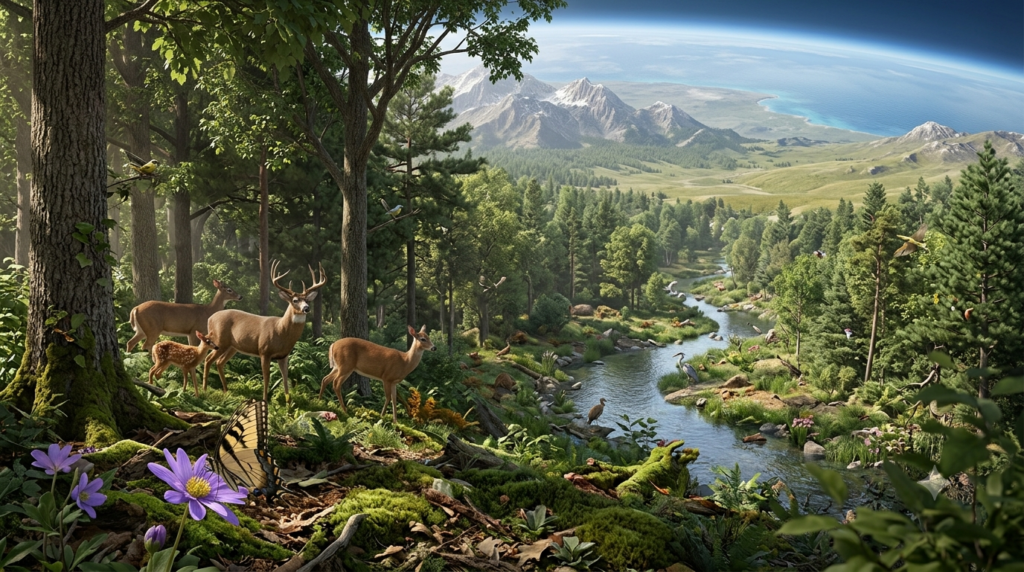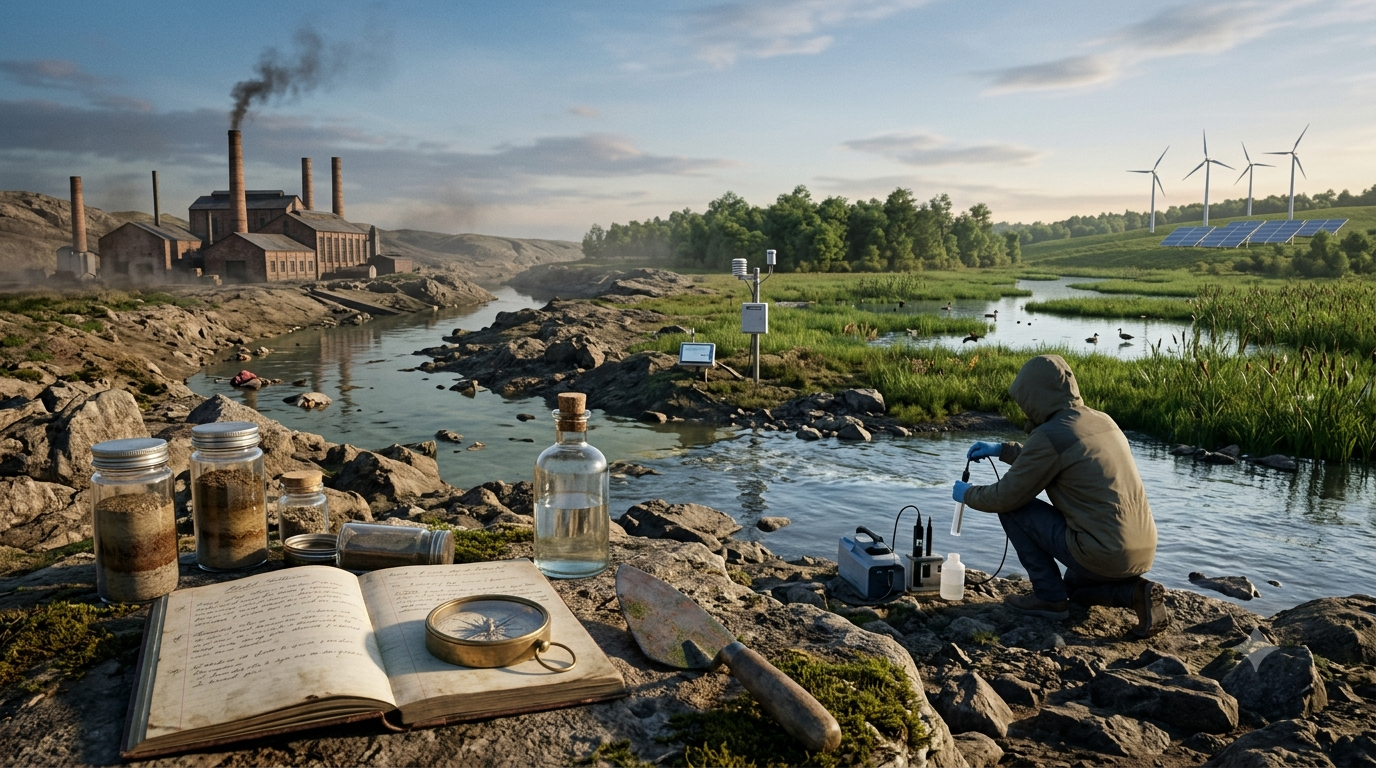
Environmental science is the study of the natural world and the relationships between living organisms and their surroundings. It combines knowledge from biology, chemistry, physics, geology, geography, ecology, and other scientific fields to understand environmental problems and find practical solutions. Although environmental science became a recognized academic discipline during the twentieth century, human interest in nature and environmental protection dates back thousands of years. Early civilizations developed methods to manage water, soil, forests, and agricultural land because their survival depended on natural resources. Over time, scientific discoveries, industrial development, population growth, and increasing pollution changed how people understood the environment. Today, environmental science plays an important role in addressing climate change, biodiversity loss, waste management, and resource conservation. Understanding its history helps explain how environmental awareness developed and why scientific knowledge is essential for protecting the planet.
1. Early Human Understanding of the Environment
The history of environmental science began long before the discipline received its modern name. Early human communities depended directly on nature for food, water, shelter, fuel, and medicine. Their survival required an understanding of seasonal changes, animal behavior, soil conditions, rainfall, and the availability of natural resources.
Ancient communities gradually developed practical knowledge about their surroundings. Farmers learned which crops grew well in particular soils, while fishing communities observed changes in water conditions and fish populations. Many societies also developed traditional practices for protecting forests, conserving water, and maintaining agricultural productivity.
However, early environmental knowledge was mainly based on observation, experience, and cultural traditions rather than systematic scientific investigation. People often understood individual natural processes without recognizing the complex connections between ecosystems, human activities, and long-term environmental change.
Environmental Practices in Ancient Civilizations
Ancient civilizations developed several practices that reflected an understanding of environmental conditions.
Mesopotamia: Communities constructed irrigation systems to supply water to agricultural fields. However, poorly managed irrigation sometimes caused soil salinity, reducing agricultural productivity.
Ancient Egypt: Agriculture depended heavily on the annual flooding of the Nile River, which deposited nutrient-rich sediments on farmland.
Indus Valley Civilization: Cities such as Harappa and Mohenjo-daro developed organized drainage systems and water-management structures.
Ancient China: Farmers developed methods of irrigation, soil management, and agricultural production suited to local conditions.
Ancient India: Traditional water-harvesting systems, tanks, ponds, and stepwells helped communities collect and store water in different climatic regions.
These examples demonstrate that environmental management has a long history. Nevertheless, the scientific discipline of environmental science emerged much later, when researchers began systematically studying ecological relationships, pollution, and the effects of human activities on natural systems.
2. Environmental Thinking in Ancient Philosophy
Ancient philosophers and naturalists contributed to the development of environmental thinking by studying nature and attempting to explain natural processes.
Greek thinkers such as Hippocrates examined relationships between human health, climate, water, and geographical conditions. In his work commonly known as On Airs, Waters, and Places, Hippocrates discussed how environmental factors could influence human health.
Aristotle studied animals, plants, and the natural world through observation and classification. His work helped establish early approaches to biological investigation, although many of his explanations differed from modern scientific understanding.
In ancient India, philosophical traditions discussed relationships between human beings, other living organisms, and the natural world. Texts and cultural practices associated with water, forests, plants, and animals reflected the importance of nature in human life.
Similar ideas developed in other parts of the world, including China, where philosophical traditions emphasized relationships between people and their surroundings.
Although these early approaches were not environmental science in the modern sense, they encouraged people to observe nature and consider the connections between environmental conditions and human well-being.
3. Environmental Knowledge During the Middle Ages
During the Middle Ages, environmental knowledge continued to develop through agriculture, medicine, geography, and natural history. Farmers improved irrigation and land-management techniques, while scholars studied plants, animals, minerals, and weather patterns.
In many regions, communities modified landscapes by clearing forests, expanding agriculture, constructing settlements, and building irrigation networks. These activities increased food production and supported population growth, but they also contributed to deforestation, soil erosion, and changes in local water systems.
Urban settlements faced environmental challenges such as poor sanitation, contaminated water, and the accumulation of household waste. These problems sometimes contributed to the spread of infectious diseases.
Scholars in the Islamic Golden Age made important contributions to medicine, geography, agriculture, and the study of natural resources. Their work helped preserve and expand scientific knowledge inherited from earlier civilizations.
During this period, however, people generally lacked the scientific instruments and ecological theories needed to understand environmental systems comprehensively. Environmental knowledge remained distributed across different fields rather than forming a unified scientific discipline.
4. The Scientific Revolution and the Growth of Natural Science
The Scientific Revolution, which developed mainly between the sixteenth and seventeenth centuries, changed how people investigated the natural world. Scientists increasingly relied on observation, experimentation, measurement, and mathematical reasoning to explain natural phenomena.
Researchers began examining the atmosphere, oceans, rocks, plants, animals, and physical processes with greater precision. Improvements in scientific instruments, including microscopes and telescopes, expanded the range of natural phenomena that could be studied.
The development of modern geology, chemistry, physics, and biology eventually provided important foundations for environmental science.
For example, advances in chemistry made it possible to investigate the composition of air and water. Improvements in geological research helped explain the formation and changing structure of Earth’s surface. Biological studies provided greater understanding of organisms and their relationships with their surroundings.
The Scientific Revolution did not immediately create environmental science, but it established methods that later researchers would use to investigate environmental problems systematically.
5. The Industrial Revolution and Emerging Environmental Problems
The Industrial Revolution, which began in Britain during the eighteenth century and spread to other regions, was a major turning point in environmental history.
The development of steam engines, factories, coal-powered machinery, railways, and large-scale manufacturing transformed economies and societies. Industrial production increased rapidly, cities expanded, and millions of people moved from rural areas to urban centers.
These changes improved transportation, manufacturing, and economic productivity. At the same time, they created serious environmental problems.
Major Environmental Effects of Industrialization
Air pollution: Factories, steam engines, and domestic coal burning released smoke, soot, and other pollutants into the atmosphere.
Water pollution: Industrial waste and untreated sewage entered rivers and streams, contaminating water supplies and damaging aquatic ecosystems.
Deforestation: Expanding industries, settlements, agriculture, and transportation networks increased demand for timber and land.
Resource depletion: Coal, metals, and other raw materials were extracted on a growing scale to support industrial production.
Urban waste: Rapid population growth created sanitation problems as many cities struggled to manage sewage and household waste.
Industrial pollution demonstrated that human activities could alter environmental conditions on a large scale. Public health problems and visible environmental damage gradually encouraged governments, scientists, and communities to investigate pollution and develop protective measures.
During the nineteenth century, some industrial cities introduced sanitation improvements, water-treatment measures, and pollution-control regulations. These early responses helped establish the idea that environmental problems required organized public action.
6. The Development of Ecology in the Nineteenth Century
Ecology became one of the most important foundations of modern environmental science during the nineteenth century.
Ecology is the scientific study of relationships among organisms and between organisms and their physical surroundings. It helps explain how living things depend on factors such as water, sunlight, temperature, soil, and other organisms.
In 1866, German biologist Ernst Haeckel introduced the term ecology, derived from the Greek word oikos, meaning household or home. His work helped establish ecology as a distinct area of biological study.
Another important contribution came from Alexander von Humboldt, whose investigations during the late eighteenth and early nineteenth centuries explored relationships among climate, vegetation, geography, and altitude. His work encouraged scientists to study nature as an interconnected system rather than as a collection of unrelated objects.
Charles Darwin’s theory of evolution by natural selection, published in 1859, also influenced biological understanding. It helped explain how organisms adapt to environmental conditions and how relationships between organisms and their surroundings change over time.
Later, researchers developed ideas about ecological communities, populations, nutrient cycles, and energy flow. These concepts eventually became central to environmental science because they helped explain how changes in one part of an ecosystem could affect many other parts.
7. The Conservation Movement and Environmental Protection
During the nineteenth century, industrial expansion and the exploitation of natural resources increased concern about the destruction of forests, wildlife habitats, and landscapes.
The conservation movement developed in response to these concerns. Its supporters argued that natural resources should be managed responsibly and that important landscapes and wildlife populations needed protection.
In the United States, the establishment of Yellowstone National Park in 1872 marked an important milestone in the history of protected areas. The park was created to preserve its remarkable natural features and landscapes.
In India, forest administration expanded during British colonial rule, including the establishment of the Imperial Forest Department in 1864. Forest policies were often designed to support state control and commercial timber production, and they also restricted many traditional community uses of forests. Nevertheless, forest administration became an important part of the region’s later debates about conservation, resource rights, and sustainable management.
John Muir became an influential advocate for wilderness preservation in the United States during the late nineteenth and early twentieth centuries. Gifford Pinchot, meanwhile, promoted the scientific management of forests and natural resources.
These approaches reflected two important conservation perspectives: protecting nature for its ecological and cultural value, and managing resources to support long-term human needs.
Conservation helped establish the principle that environmental protection required more than individual choices. It also required institutions, scientific knowledge, public policies, and collective responsibility.
8. Environmental Science in the Early Twentieth Century
During the early twentieth century, environmental research became increasingly systematic. Scientists investigated soil erosion, forest management, water resources, wildlife populations, air quality, and the effects of industrial activities.
Advances in microbiology and chemistry improved the understanding of drinking-water safety, sewage treatment, and the movement of pollutants through the environment. Research in soil science helped explain how farming practices influenced fertility and erosion.
Ecologists increasingly examined interactions between organisms and their habitats. These investigations helped establish concepts such as ecological succession, food relationships, and the structure of biological communities.
At the same time, population growth, urban expansion, and industrial production continued to increase pressure on natural resources.
Large-scale environmental changes also demonstrated the consequences of poor land management. The Dust Bowl of the 1930s in North America, for example, involved severe drought and extensive soil erosion across agricultural regions. Unsuitable farming practices, including the removal of natural vegetation and intensive cultivation, contributed to the damage.
The disaster highlighted the importance of soil conservation, appropriate agricultural methods, and the relationship between climate and land use.
Environmental research during this period remained spread across several scientific disciplines, but the need to combine these areas of knowledge was becoming increasingly clear.
9. The Environmental Movement After World War II
After World War II, rapid industrial growth, technological development, chemical production, and expanding consumer economies created new environmental challenges.
Synthetic pesticides, plastics, fertilizers, and industrial chemicals became widely used. Although these products offered economic and practical benefits, some also caused harmful environmental effects when improperly managed or released into ecosystems.
The growing use of pesticides attracted particular attention. In 1962, American biologist Rachel Carson published Silent Spring, a book that examined the environmental effects of pesticides, especially DDT.
Carson explained how certain chemicals could persist in the environment, accumulate in food chains, and harm wildlife. Her work helped bring scientific research about pesticide risks to a broad public audience and strengthened public debate about chemical regulation.
Other environmental concerns included smog, polluted rivers, oil spills, habitat destruction, and the loss of wildlife.
In 1969, the Cuyahoga River in Ohio attracted national attention after polluted water caught fire. Although industrial pollution of the river had a longer history, the incident became a powerful symbol of the need for stronger environmental protection.
These events increased public awareness that environmental damage could threaten human health, wildlife, and the natural resources needed by future generations.
10. The Emergence of Environmental Science as a Modern Discipline
Environmental science developed into a more clearly defined interdisciplinary field during the 1960s and 1970s.
Scientists and policymakers increasingly recognized that environmental problems could not be fully understood through a single subject. Air pollution, for example, involves atmospheric chemistry, industrial processes, public health, weather conditions, and government policy.
Similarly, water pollution requires knowledge of chemistry, microbiology, hydrology, ecology, and waste management.
Environmental science brought these different areas together to investigate environmental conditions and identify practical solutions.
The first Earth Day, held in the United States on April 22, 1970, became a major milestone in public environmental awareness. It brought attention to pollution, resource conservation, and the need for environmental responsibility.
The United States established the Environmental Protection Agency (EPA) in 1970 to coordinate federal efforts to protect human health and the environment. Several major environmental laws and regulatory initiatives were also developed or strengthened during this period.
Universities expanded environmental studies and environmental science programs, while governments invested more heavily in pollution monitoring, environmental research, and conservation.
Environmental impact assessment also gained importance as a method of evaluating the likely environmental consequences of proposed projects before they were approved or implemented.
These developments helped transform environmental science from a collection of related scientific interests into a recognized interdisciplinary field with academic, practical, and policy applications.
11. International Environmental Cooperation
By the 1970s, many environmental problems were recognized as international concerns. Air pollution, marine pollution, wildlife decline, and the movement of hazardous substances could affect multiple countries.
The United Nations Conference on the Human Environment, held in Stockholm in 1972, was a landmark in international environmental cooperation. It brought environmental protection to the center of global political discussion and helped establish a framework for international action.
The United Nations Environment Programme (UNEP) was established later in 1972 to coordinate environmental activities and support international cooperation.
Another important milestone came in 1987 with the publication of the Brundtland Commission’s report, Our Common Future. It popularized the concept of sustainable development, commonly understood as development that meets present needs without compromising the ability of future generations to meet their own needs.
The report emphasized that environmental protection, economic development, and social well-being are closely connected.
In 1992, the United Nations Conference on Environment and Development, also known as the Rio Earth Summit, took place in Rio de Janeiro, Brazil. The summit helped advance international discussions about biodiversity, climate change, forests, and sustainable development.
The Convention on Biological Diversity and the United Nations Framework Convention on Climate Change were opened for signature at the summit.
International environmental cooperation continued through later agreements, research programs, and policy initiatives. These efforts demonstrated that many environmental challenges require coordinated action among governments, scientific institutions, businesses, and communities.
12. The Development of Climate Science
Climate science has become one of the most important areas of modern environmental science.
Scientists have long studied weather and climate, but advances in atmospheric chemistry, oceanography, geology, and computer modeling have significantly improved understanding of the Earth’s climate system.
Researchers established that gases such as carbon dioxide and methane absorb and emit infrared radiation, influencing the temperature of the atmosphere. Scientific investigations also showed that burning fossil fuels and changing land use increase the concentration of greenhouse gases in the atmosphere.
In 1988, the Intergovernmental Panel on Climate Change (IPCC) was established by the World Meteorological Organization and UNEP. Its role is to assess scientific knowledge about climate change, its impacts, and possible responses.
The IPCC has produced major assessment reports that inform governments and the public about climate risks and mitigation and adaptation strategies.
In 1997, countries adopted the Kyoto Protocol, which established emission-reduction commitments for participating developed countries under the agreement’s framework.
In 2015, the Paris Agreement was adopted under the United Nations Framework Convention on Climate Change. Its central temperature goal is to hold the increase in global average temperature to well below 2°C above pre-industrial levels and pursue efforts to limit it to 1.5°C.
Climate science illustrates how environmental science combines observations, laboratory investigations, historical records, satellite measurements, and computer models to understand complex global processes.
13. Environmental Science in the Twenty-First Century
In the twenty-first century, environmental science has expanded rapidly as societies face increasingly complex environmental challenges.
Researchers now investigate climate change, biodiversity loss, plastic pollution, freshwater scarcity, soil degradation, ocean acidification, and the environmental effects of energy production and consumption.
Modern technologies have made environmental monitoring more accurate and efficient.
Remote Sensing and Satellite Technology
Satellites provide information about forest cover, land use, ocean conditions, atmospheric pollution, and changing temperatures. Researchers use these observations to monitor environmental changes across large regions and identify patterns that may be difficult to detect through ground-based measurements alone.
Geographic Information Systems
Geographic Information Systems (GIS) allow scientists to collect, organize, analyze, and display information linked to geographical locations. GIS is useful for mapping flood-prone areas, tracking deforestation, managing natural resources, and planning urban development.
Environmental DNA and Biodiversity Monitoring
Environmental DNA, often called eDNA, refers to genetic material that organisms leave behind in water, soil, air, and other environmental samples. Scientists can analyze this material to detect species and monitor biodiversity without always needing to observe or capture the organisms directly.
Artificial Intelligence and Data Analysis
Artificial intelligence and machine learning can help researchers analyze large environmental datasets, identify patterns in satellite images, forecast some environmental conditions, and improve certain pollution-monitoring systems. These tools support scientific work but still require reliable data, careful validation, and human interpretation.
Renewable Energy and Sustainable Technologies
Environmental science also supports the development and evaluation of solar power, wind energy, energy storage, cleaner transportation, water-treatment systems, and waste-reduction technologies.
Researchers examine not only the benefits of these technologies but also their environmental costs, including material extraction, manufacturing, land use, and disposal.
Modern environmental science therefore focuses on both understanding environmental problems and evaluating practical approaches to reducing harm.
14. Environmental Science in India
India’s environmental science development reflects the country’s diverse ecosystems, large population, rapid urbanization, and dependence on natural resources.
Environmental challenges include air pollution, water contamination, deforestation, waste management, land degradation, biodiversity loss, and climate-related risks such as heat waves, droughts, floods, and changing rainfall patterns.
Several developments have shaped environmental protection and scientific research in India.
The establishment of the Indian Board for Wildlife in 1952 marked an early institutional step toward organized wildlife conservation. The Wildlife (Protection) Act was enacted in 1972 to provide a legal framework for protecting wild animals, plants, and their habitats.
The Water (Prevention and Control of Pollution) Act was enacted in 1974, followed by the Air (Prevention and Control of Pollution) Act in 1981. These laws helped establish regulatory mechanisms for addressing water and air pollution.
The Department of Environment was established in 1980, and the Ministry of Environment and Forests was formed in 1985. The ministry is now known as the Ministry of Environment, Forest and Climate Change.
The Environment (Protection) Act, 1986, provided a broad legal framework for environmental protection following the Bhopal gas disaster of December 1984, which exposed the severe risks associated with hazardous industrial operations.
India has also developed environmental research institutions, pollution-monitoring programs, protected areas, biodiversity initiatives, and environmental education programs.
Universities and research organizations investigate the country’s forests, wetlands, rivers, coastlines, mountains, deserts, and agricultural landscapes. Their findings help inform conservation, public health, urban planning, and climate adaptation.
Environmental science is particularly important in India because environmental decisions must consider ecological protection alongside public health, economic development, livelihoods, and social needs.
15. The Future of Environmental Science
The future of environmental science will depend on improving scientific knowledge while developing practical solutions to environmental problems.
Climate change is expected to remain a major research priority. Scientists will continue studying rising temperatures, extreme weather, sea-level rise, changing rainfall patterns, and the effects of climate change on ecosystems and human communities.
Biodiversity conservation will also remain essential. Protecting habitats, restoring degraded ecosystems, controlling invasive species, and reducing pollution can help maintain the ecological processes on which living organisms depend.
Another major priority is the development of a circular economy. Instead of following a pattern of extracting resources, manufacturing products, and discarding waste, a circular economy aims to reduce waste by designing durable products, reusing materials, repairing goods, and recycling resources wherever practical.
Environmental scientists will also contribute to sustainable agriculture, water conservation, cleaner industrial processes, and more resilient cities.
Advances in biotechnology, satellite monitoring, artificial intelligence, and environmental modeling may improve the ability to detect environmental changes and evaluate possible solutions. At the same time, scientists will need to consider data quality, uncertainty, ethical concerns, and the social consequences of new technologies.
Environmental education will remain important because effective environmental protection requires informed decisions by individuals, communities, industries, and governments.
Future progress will depend not only on scientific discoveries but also on cooperation, responsible resource use, effective policies, and the willingness to apply reliable scientific evidence.
Conclusion
The history and development of environmental science reflect humanity’s growing understanding of the relationship between people and the natural world. Early civilizations developed practical methods for managing water, soil, and agricultural land, while ancient philosophers encouraged the observation of nature. The Scientific Revolution introduced systematic methods of investigation, and the Industrial Revolution revealed the environmental costs of rapid economic growth. Later advances in ecology, conservation, pollution research, and climate science helped establish environmental science as an interdisciplinary field. International agreements and national environmental laws strengthened efforts to protect ecosystems and human health. Today, modern technologies allow scientists to monitor environmental changes and evaluate possible solutions with greater precision. As challenges such as climate change, pollution, and biodiversity loss continue, environmental science will remain essential for making informed decisions and building a healthier, more sustainable future.
References for Further Reading
Rachel Carson, Silent Spring (1962).
World Commission on Environment and Development, Our Common Future (1987).
United Nations Environment Programme (UNEP).
Intergovernmental Panel on Climate Change (IPCC).
United Nations Framework Convention on Climate Change (UNFCCC).
Ministry of Environment, Forest and Climate Change, Government of India.
FAQs
1. What is environmental science?
Environmental science is an interdisciplinary field that studies the natural environment and the relationships between living organisms and their surroundings. It combines knowledge from biology, chemistry, physics, geology, geography, ecology, and other subjects to understand environmental processes and solve environmental problems. It examines issues such as air pollution, water contamination, climate change, deforestation, and biodiversity loss. Environmental science also investigates how human activities affect natural resources and ecosystems. Its main purpose is to develop scientific knowledge that supports environmental protection, sustainable resource management, and human well-being. Today, it plays an important role in addressing global environmental challenges.
2. When did environmental science begin to develop?
Environmental science began developing as a modern scientific discipline during the twentieth century, particularly in the 1960s and 1970s. However, its foundations are much older. Ancient civilizations practiced water management, agriculture, and natural resource conservation to meet their needs. During the nineteenth century, advances in ecology, geology, chemistry, and biology improved scientific understanding of nature. Industrialization also increased awareness of pollution and environmental damage. Publications such as Rachel Carson’s Silent Spring, released in 1962, encouraged public concern about pesticides and their ecological effects. These developments helped establish environmental science as an interdisciplinary field.
3. How did the Industrial Revolution influence environmental science?
The Industrial Revolution significantly influenced the development of environmental science by increasing pollution and the exploitation of natural resources. Factories, coal-powered machinery, and expanding cities released pollutants into the atmosphere and water bodies. Industrial growth also increased deforestation, mining, and waste production. These problems affected human health and damaged ecosystems, encouraging scientists to investigate the environmental consequences of industrial activities. Governments and communities gradually recognized the need for pollution control, sanitation improvements, and resource conservation. The environmental problems associated with industrialization helped create demand for scientific research and environmental regulations, contributing to the emergence of modern environmental science.
4. Who introduced the term ecology, and why is it important to environmental science?
German biologist Ernst Haeckel introduced the term ecology in 1866. Ecology is the scientific study of relationships among organisms and between organisms and their physical surroundings. It is important to environmental science because it explains how living things interact with air, water, soil, climate, and other organisms. Ecological knowledge helps scientists understand food chains, nutrient cycles, population changes, habitat destruction, and biodiversity loss. It also supports conservation planning and ecosystem restoration. Since environmental problems frequently involve changes in relationships between living organisms and their surroundings, ecology provides one of the essential scientific foundations of environmental science.
5. Why is Rachel Carson important in the history of environmental science?
Rachel Carson was an American biologist and environmental writer who made an important contribution to modern environmental awareness. Her influential book Silent Spring, published in 1962, examined the harmful effects of pesticides, particularly DDT, on wildlife and ecosystems. She explained how certain chemicals could persist in the environment and move through food chains, affecting birds and other organisms. Her work brought scientific concerns about pesticide use to a wider audience and encouraged public debate about chemical safety and environmental regulation. Carson’s contribution helped strengthen the environmental movement and demonstrated how scientific research and public communication could influence environmental protection policies.
6. What major events helped establish environmental science as a modern discipline?
Several important events contributed to the establishment of environmental science as a modern discipline. Rachel Carson’s Silent Spring in 1962 increased awareness of chemical pollution. The first Earth Day, celebrated on April 22, 1970, encouraged public participation in environmental protection. The United States Environmental Protection Agency was established in 1970 to coordinate environmental protection efforts. The 1972 United Nations Conference on the Human Environment in Stockholm strengthened international environmental cooperation. Later, the 1987 report Our Common Future popularized sustainable development. These milestones helped connect scientific research, environmental policies, public awareness, and international cooperation.
7. What role did the United Nations play in the development of environmental science?
The United Nations has played an important role in promoting international environmental research, cooperation, and policy development. The 1972 United Nations Conference on the Human Environment in Stockholm brought environmental protection to the center of global discussions. The United Nations Environment Programme (UNEP) was established in the same year to coordinate environmental activities and support international cooperation. The United Nations also helped advance agreements addressing climate change and biodiversity. The Intergovernmental Panel on Climate Change (IPCC), established in 1988 by UNEP and the World Meteorological Organization, assesses scientific knowledge about climate change. These efforts help governments use scientific evidence when developing environmental policies.
8. How has technology changed environmental science?
Technology has made environmental science more accurate, efficient, and comprehensive. Satellites and remote sensing help scientists monitor deforestation, land-use changes, atmospheric pollution, and ocean conditions over large areas. Geographic Information Systems (GIS) allow researchers to map environmental risks and analyze spatial data. Computer models help scientists study climate patterns, water resources, and pollution movement. Environmental DNA techniques can assist in identifying species from samples collected from water or soil. Artificial intelligence can also help analyze large datasets and recognize environmental patterns. These technologies support scientific investigations, although reliable results still depend on accurate data, appropriate methods, and careful interpretation.
9. How did environmental science develop in India?
Environmental science in India developed through growing awareness of pollution, wildlife conservation, natural resource management, and public health. The Wildlife (Protection) Act was enacted in 1972, followed by the Water (Prevention and Control of Pollution) Act in 1974. The Air (Prevention and Control of Pollution) Act was enacted in 1981, and the Environment (Protection) Act followed in 1986. Environmental research institutions, universities, and government agencies have contributed to studying India’s forests, rivers, biodiversity, and pollution problems. Today, environmental science supports conservation, waste management, climate adaptation, and sustainable development while addressing the environmental challenges associated with urbanization and population growth.
10. Why is the history of environmental science important for the future?
The history of environmental science helps us understand how human activities influence natural systems and how scientific knowledge can address environmental problems. Past experiences with industrial pollution, pesticide use, deforestation, and poor land management demonstrate the consequences of ignoring environmental risks. Historical developments also show how scientific research, public awareness, and government policies can contribute to environmental protection. Understanding this history helps researchers and policymakers learn from earlier successes and failures. In the future, environmental science will be essential for addressing climate change, biodiversity loss, water scarcity, and waste management. Its continued development can support responsible resource use and a more sustainable world.