Stoichiometry is one of the most useful parts of chemistry because it helps us understand the quantitative relationships between substances in a chemical reaction. Whether we are calculating how much reactant is needed, how much product can form, or which reactant will run out first, stoichiometry provides a systematic way to work with chemical quantities.
At the center of stoichiometry are chemical formulas and balanced chemical equations. A chemical formula tells us what elements are present in a substance and how many atoms of each element are represented. A balanced equation then shows the ratio in which substances react and form products. By reading these formulas correctly and connecting them with mole relationships, we can solve a wide range of chemical problems.
What Is Stoichiometry?
Stoichiometry is the quantitative study of the relationships between reactants and products in a chemical reaction. The word may sound complicated, but the basic idea is simple: chemicals react according to definite ratios.
For example, consider the reaction between hydrogen and oxygen:
2H₂ + O₂ → 2H₂O
This equation tells us that two molecules of hydrogen react with one molecule of oxygen to produce two molecules of water. At the mole level, the same relationship applies:
2 mol H₂ + 1 mol O₂ → 2 mol H₂O
These coefficients provide the foundation for stoichiometric calculations.
Why Chemical Formulas Matter in Stoichiometry
Chemical formulas provide essential information about the substances involved in a reaction. Consider the formula H₂O. The subscript 2 tells us that each water molecule contains two hydrogen atoms and one oxygen atom.
Chemical formulas help us determine:
Which elements are present in a compound
The number of atoms of each element
The molar mass of a substance
The mole ratio between elements in a compound
The quantities needed for stoichiometric calculations
However, it is important to distinguish between subscripts and coefficients.
In 2H₂O, the coefficient 2 means there are two water molecules or two moles of water, while the subscript 2 means each water molecule contains two hydrogen atoms.
Changing a subscript changes the identity of a substance. Changing a coefficient changes only the amount of that substance.
Reading Chemical Formulas Correctly
Before solving a stoichiometry problem, you need to read chemical formulas accurately.
For example:
H₂SO₄
This formula represents sulfuric acid. It contains:
2 hydrogen atoms
1 sulfur atom
4 oxygen atoms
Now consider:
Al₂(SO₄)₃
The subscript outside the brackets applies to everything inside them. Therefore, this compound contains:
2 aluminum atoms
3 sulfur atoms
12 oxygen atoms
The three sulfate groups each contain four oxygen atoms, giving 3 × 4 = 12 oxygen atoms.
Understanding brackets, parentheses, subscripts, and coefficients is essential because mistakes at this stage can affect every later calculation.
Finding Molar Mass From a Chemical Formula
One of the most common uses of a chemical formula in stoichiometry is calculating molar mass.
Molar mass is the mass of one mole of a substance and is expressed in grams per mole (g/mol).
To calculate molar mass, multiply the atomic mass of each element by the number of atoms represented in the formula and then add the results.
For example, consider water:
H₂O
Using approximate atomic masses:
Therefore:
Molar mass of H₂O = (2 × 1) + (1 × 16) = 18 g/mol
So one mole of water has a mass of approximately 18 g.
Now consider carbon dioxide:
CO₂
Molar mass = 12 + (2 × 16) = 44 g/mol
Therefore, one mole of CO₂ has a mass of approximately 44 g.
These molar masses allow us to convert between mass and moles, which is a major step in stoichiometric calculations.
Balancing Chemical Equations
Chemical formulas alone are not enough to determine the quantities involved in a reaction. The chemical equation must first be balanced.
A balanced equation follows the law of conservation of mass. The number of atoms of each element must be the same on both sides of the equation.
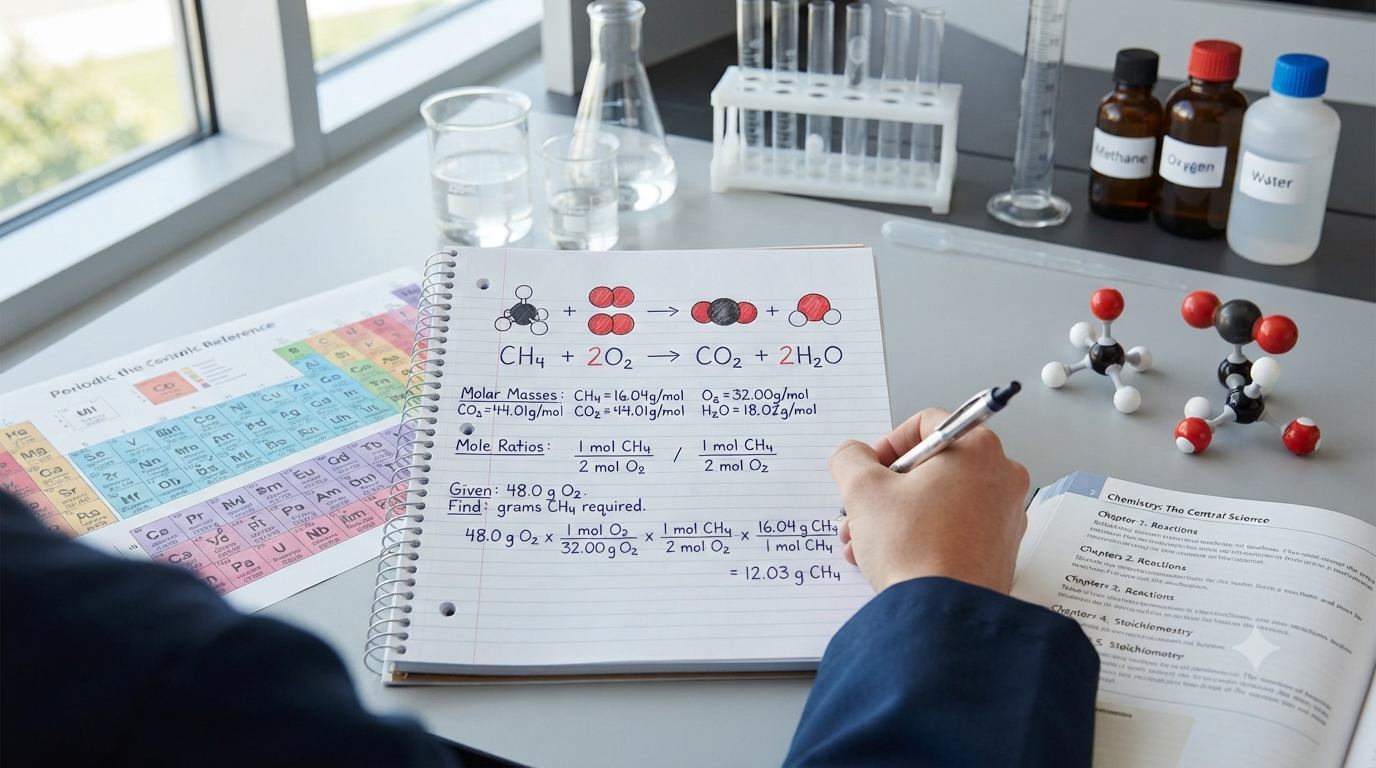
For example, the unbalanced combustion of methane can be written as:
CH₄ + O₂ → CO₂ + H₂O
There is one carbon atom on each side, so carbon is already balanced. There are four hydrogen atoms on the left, so we need 2H₂O on the right:
CH₄ + O₂ → CO₂ + 2H₂O
Now there are four oxygen atoms on the right. Therefore, we need 2O₂ on the left:
CH₄ + 2O₂ → CO₂ + 2H₂O
The equation is now balanced.
The coefficients 1, 2, 1, and 2 provide the stoichiometric ratios needed for calculations.
Using Coefficients as Mole Ratios
The coefficients in a balanced chemical equation represent mole ratios.
Consider:
N₂ + 3H₂ → 2NH₃
This means:
1 mol N₂ reacts with 3 mol H₂ to produce 2 mol NH₃.
Therefore, useful mole ratios include:
1 mol N₂ / 3 mol H₂
3 mol H₂ / 2 mol NH₃
1 mol N₂ / 2 mol NH₃
These ratios act like conversion factors.
For example, if a reaction uses 3 moles of hydrogen for every 1 mole of nitrogen, then 6 moles of hydrogen require:
6 mol H₂ × (1 mol N₂ / 3 mol H₂) = 2 mol N₂
The unwanted unit, mol H₂, cancels, leaving mol N₂.
The Mole as the Central Unit
The mole is the bridge connecting chemical formulas, balanced equations, and measurable quantities.
A stoichiometry problem may give you grams, liters, particles, or moles, but chemical equations primarily provide relationships between moles.
A common pathway is:
Mass → Moles → Mole Ratio → Moles → Mass
For example, if a problem gives the mass of one reactant and asks for the mass of a product, you normally need to:
Convert the given mass into moles.
Use the balanced equation to obtain the mole ratio.
Convert the resulting moles of product into grams.
This approach works for many basic stoichiometry problems.
Using Chemical Formulas to Convert Mass to Moles
Suppose you are given 36 g of water and want to determine how many moles of water this represents.
The formula is H₂O, and its molar mass is approximately 18 g/mol.
Use:
Moles = Given mass / Molar mass
Therefore:
Moles of H₂O = 36 g / 18 g/mol = 2 mol
The chemical formula was necessary for determining the molar mass.
Using Stoichiometry to Calculate Product Amounts
Consider the reaction:
2H₂ + O₂ → 2H₂O
Suppose we have 4 moles of H₂ and enough oxygen.
The balanced equation tells us:
2 mol H₂ → 2 mol H₂O
Therefore:
4 mol H₂ × (2 mol H₂O / 2 mol H₂) = 4 mol H₂O
So 4 moles of hydrogen can produce 4 moles of water when oxygen is available in sufficient quantity.
The important point is that the chemical formula H₂O identifies the product, while the coefficients in the balanced equation provide the quantitative relationship.
Mass-to-Mass Stoichiometry
Many real chemistry problems provide masses rather than moles.
Consider:
CaCO₃ → CaO + CO₂
Suppose we want to determine the amount of CO₂ produced from 100 g of CaCO₃.
First, calculate the molar mass of CaCO₃:
Molar mass of CaCO₃ ≈ 100 g/mol
Therefore:
100 g CaCO₃ × (1 mol CaCO₃ / 100 g CaCO₃) = 1 mol CaCO₃
The balanced equation has a 1:1 ratio between CaCO₃ and CO₂:
1 mol CaCO₃ → 1 mol CO₂
Therefore, 1 mole of CaCO₃ produces 1 mole of CO₂.
Since CO₂ has a molar mass of approximately 44 g/mol:
1 mol CO₂ × 44 g/mol = 44 g CO₂
Thus, under the conditions assumed by the stoichiometric calculation, 100 g of CaCO₃ can theoretically produce approximately 44 g of CO₂.
Limiting Reactants and Chemical Formulas
Sometimes a reaction contains more than one reactant, and one reactant is present in a smaller amount relative to what the balanced equation requires. This substance is called the limiting reactant because it limits how much product can form.
For example:
N₂ + 3H₂ → 2NH₃
The equation requires 1 mole of nitrogen for every 3 moles of hydrogen.
If we have 2 moles of N₂ and 3 moles of H₂, the available hydrogen is enough to react with only 1 mole of nitrogen.
Therefore, hydrogen is the limiting reactant in this example.
Chemical formulas identify the substances, while the balanced equation tells us the required proportions.
Percent Yield and Chemical Formulas
Stoichiometry can also be used to compare the amount of product predicted by a chemical equation with the amount actually obtained in an experiment.
The theoretical yield is the maximum amount of product expected from stoichiometric calculations.
The actual yield is the amount of product obtained experimentally.
Percent yield is calculated as:
Percent yield = (Actual yield / Theoretical yield) × 100
Chemical formulas are involved in determining molar masses and identifying the substances used in the calculation.
Common Mistakes in Using Chemical Formulas
Several mistakes can make a stoichiometry calculation incorrect.
Changing Subscripts
A common mistake is changing a chemical formula while trying to balance an equation.
For example, changing H₂O into H₂O₂ is not balancing. It creates a different substance.
Balance equations by changing coefficients, not subscripts.
Ignoring Parentheses
In Ca(OH)₂, the subscript 2 applies to both O and H.
Therefore, the formula contains:
1 Ca, 2 O, and 2 H
Ignoring the parentheses can lead to an incorrect molar mass.
Using an Unbalanced Equation
Mole ratios come from coefficients in the balanced equation. Using an unbalanced equation produces incorrect ratios and therefore incorrect results.
Mixing Up Mass and Moles
Chemical equations give mole relationships, not direct mass relationships. You generally need to convert mass into moles before applying the mole ratio.
Forgetting Units
Units help track each step of a calculation. Writing units such as g, mol, and g/mol makes it easier to identify mistakes.
A Simple Stoichiometry Strategy
A useful method for solving chemical formula and stoichiometry problems is:
Step 1: Write the chemical equation.
Identify the reactants and products.
Step 2: Balance the equation.
Make sure each element has the same number of atoms on both sides.
Step 3: Identify the given quantity.
Determine whether the problem provides grams, moles, particles, volume, or another quantity.
Step 4: Convert to moles if necessary.
Use molar mass or another appropriate conversion.
Step 5: Apply the mole ratio.
Take the ratio from the coefficients of the balanced equation.
Step 6: Convert to the required unit.
If the question asks for mass, convert moles into grams. If it asks for particles, use Avogadro’s number.
Step 7: Check the answer.
Look at the units, significant figures, and whether the result is chemically reasonable.
Chemical Formulas Connect Chemistry With Mathematics
Stoichiometry demonstrates how chemical information can be expressed mathematically. A chemical formula describes the composition of a substance, while a balanced chemical equation describes the quantitative relationship between substances.
For example:
2H₂ + O₂ → 2H₂O
From this single equation, we can determine relationships between hydrogen, oxygen, and water at the molecular and molar levels. With molar masses, these relationships can then be connected to measurable masses.
This is why chemical formulas are much more than labels. They are numerical descriptions of matter that allow chemists to move between atoms, molecules, moles, and grams.
Conclusion
Chemical formulas are fundamental tools in stoichiometry. They tell us which elements make up a substance, how many atoms are present, and provide the information needed to calculate molar mass. When chemical formulas are combined with balanced chemical equations, they allow us to determine mole ratios and calculate the amounts of reactants and products involved in chemical reactions.
The most reliable approach is to read formulas carefully, balance the equation, convert quantities into moles when necessary, use the correct coefficient ratio, and finally convert the answer into the requested unit. Once these steps become familiar, stoichiometry becomes a logical process rather than a collection of difficult formulas.
FAQs
How Does Measurement Uncertainty Affect a Physics Experiment?
Every physics experiment involves measurement. We measure length, time, mass, temperature, voltage, current, speed, or other physical quantities to understand […]
Read MoreHow to Remember Important Physics Formulas
Physics formulas are an important part of learning physics, but remembering them does not always mean simply memorizing long equations. […]
Read MoreWhat Are SI Units and Why Are They Important?
Imagine trying to measure the length of a table without using centimeters or meters. One person might say the table […]
Read MoreHow to Read Subscripts in Chemical Formulas
Chemical formulas are a simple way to represent substances using symbols and numbers. When you look at a formula such […]
Read MoreSI Unit of Electric Current Ampere Explained

Electric current is one of the most important physical quantities in electricity and magnetism. Whenever electric charge moves through a […]
Read MoreWhat Are Chemistry Formulas and Why Are They Important?

Chemistry is the science of substances, their properties, and the changes they undergo. To describe these substances clearly, chemists use […]
Read MoreCommon Formulas of Important Inorganic Compounds

Inorganic compounds are found everywhere around us, from table salt and baking soda to fertilizers, minerals, medicines, cleaning products, and […]
Read MoreWhat Are Scalars and Vectors in Physics?
Physics is all about describing how things behave. We talk about the mass of an object, its speed, the distance […]
Read MoreWork, Energy and Power: Understanding Their Relationship

Work, energy, and power are three closely connected concepts in physics that help us understand how objects move, how forces […]
Read MoreMolecular Formula vs Empirical Formula

Chemical formulas give us a simple way to represent substances using the symbols of elements and numbers. However, not all […]
Read MoreHow to Write Formulas for Ionic Compounds

Writing formulas for ionic compounds is an important skill in chemistry because a chemical formula tells us which ions are […]
Read MoreHow to Count Atoms From a Chemical Formula

Chemical formulas provide a compact way to describe what a substance is made of. A formula tells us which elements […]
Read MoreHow to Avoid Sign Errors in Physics Calculations
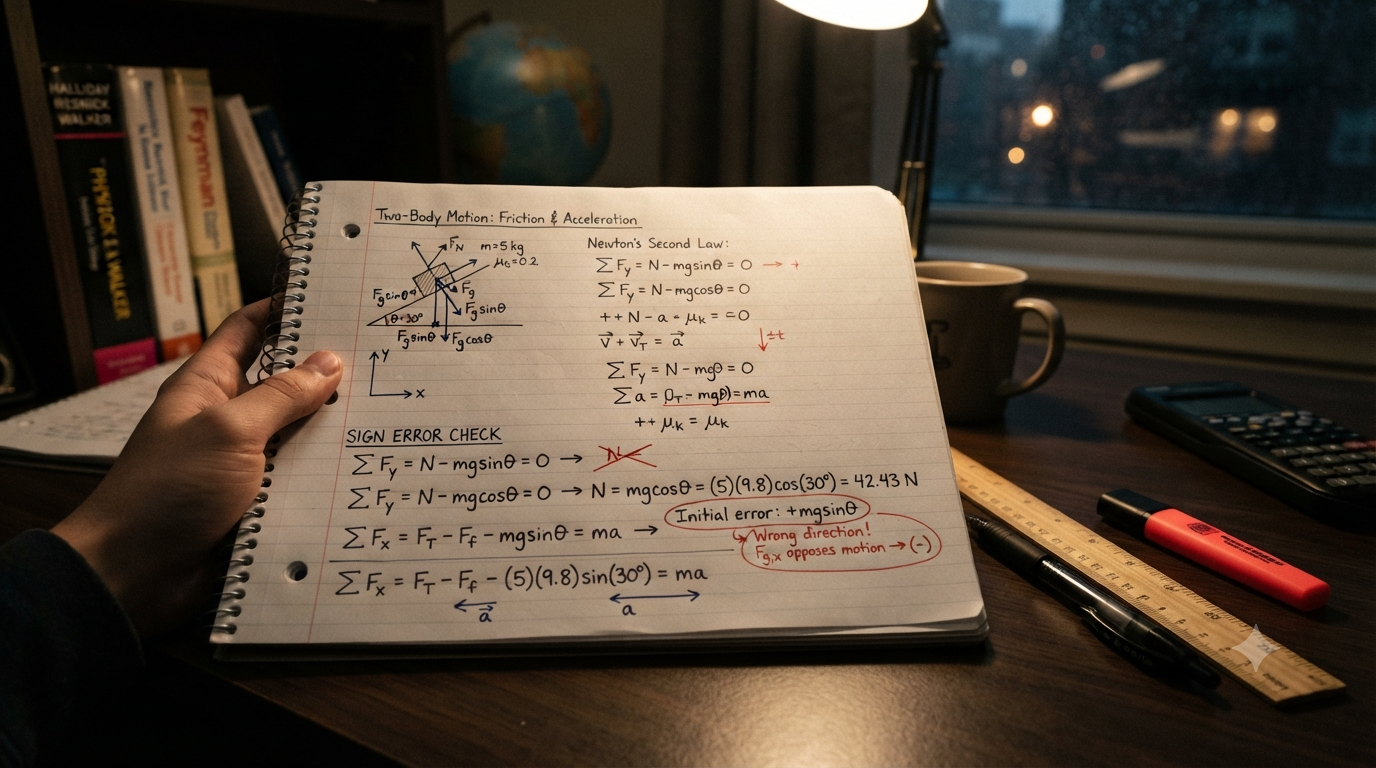
Physics calculations are not only about choosing the correct formula and putting numbers into it. The signs of physical quantities […]
Read MoreWhy the SI System Has Exactly Seven Base Units
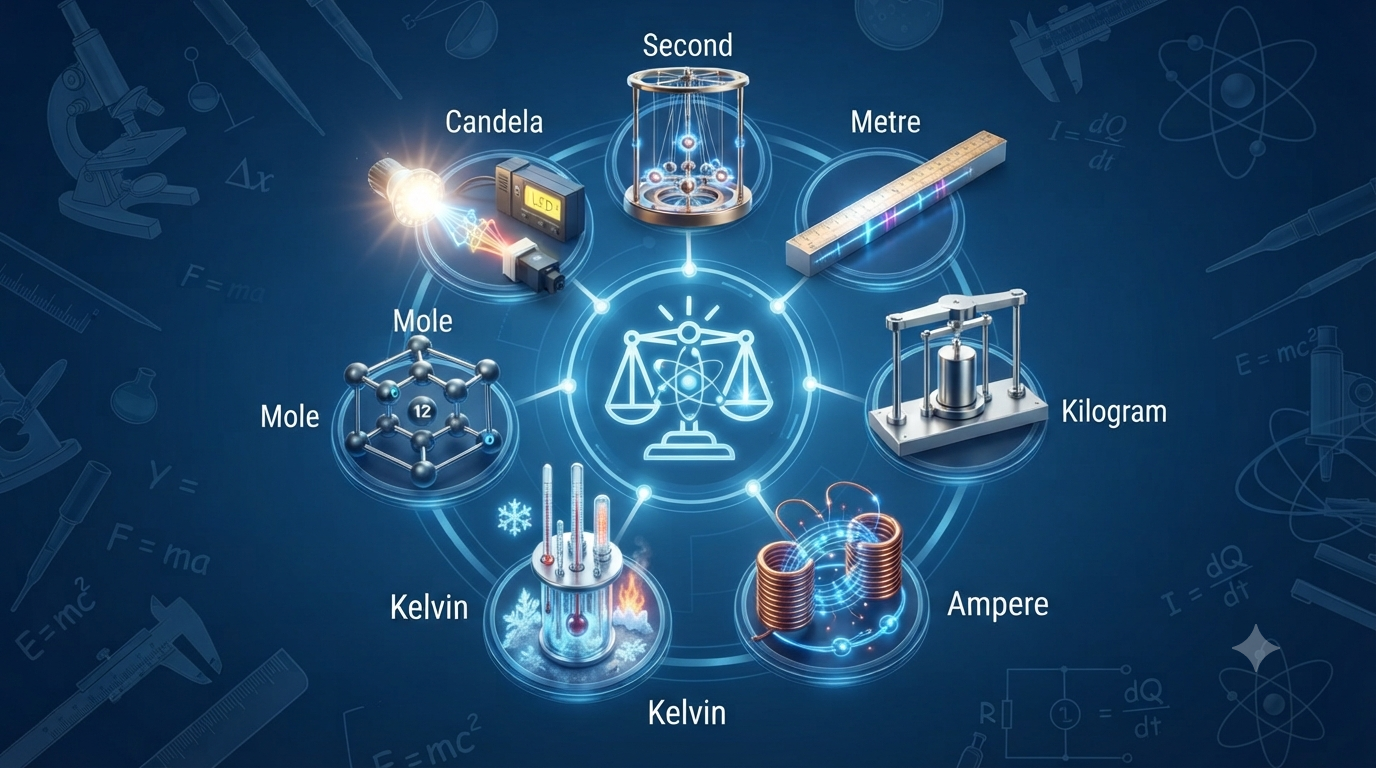
When scientists measure the world, they need a common language for describing quantities such as time, length, mass, temperature, and […]
Read MoreHow to Use Chemical Formulas to Balance Chemical Equations
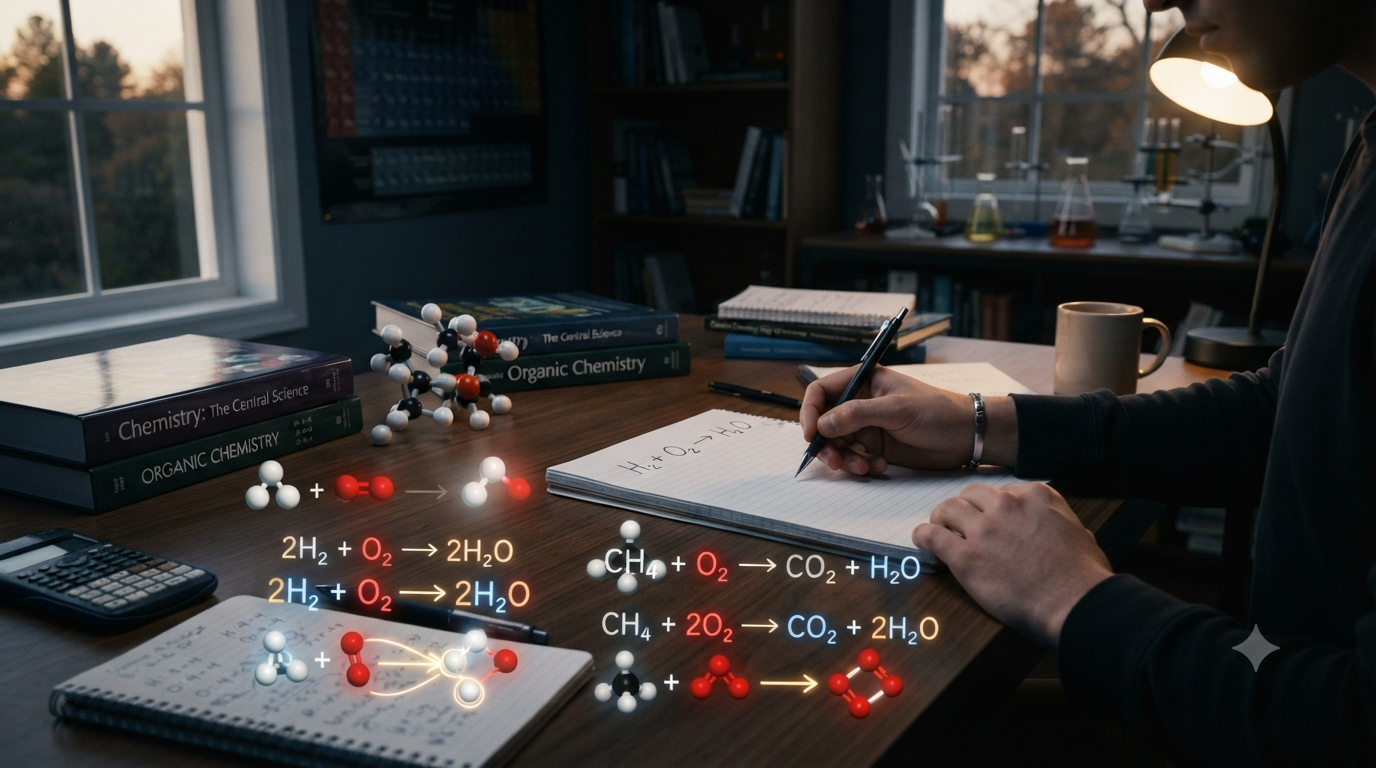
Chemical reactions describe how substances change into new substances. In chemistry, these changes are written using chemical equations. A chemical […]
Read MoreHow Chemical Formulas Connect Atoms, Molecules, and Compounds

Chemistry becomes much easier to understand when we know how atoms are connected and how their combinations are represented. Everything […]
Read MoreWhy Can Experimental Results Differ From Theoretical Values?

In science, theoretical values and experimental results are expected to agree closely. After all, theories are developed to explain observations […]
Read MoreHow to Write Physics Formulas Correctly

Physics formulas are a powerful way to express relationships between physical quantities. A single equation can describe motion, force, energy, […]
Read MoreKinetic and Potential Energy: Basic Concepts
Energy is one of the most important ideas in physics. It helps us understand how objects move, how machines work, […]
Read MoreHow to Calculate Percentage Composition From a Formula
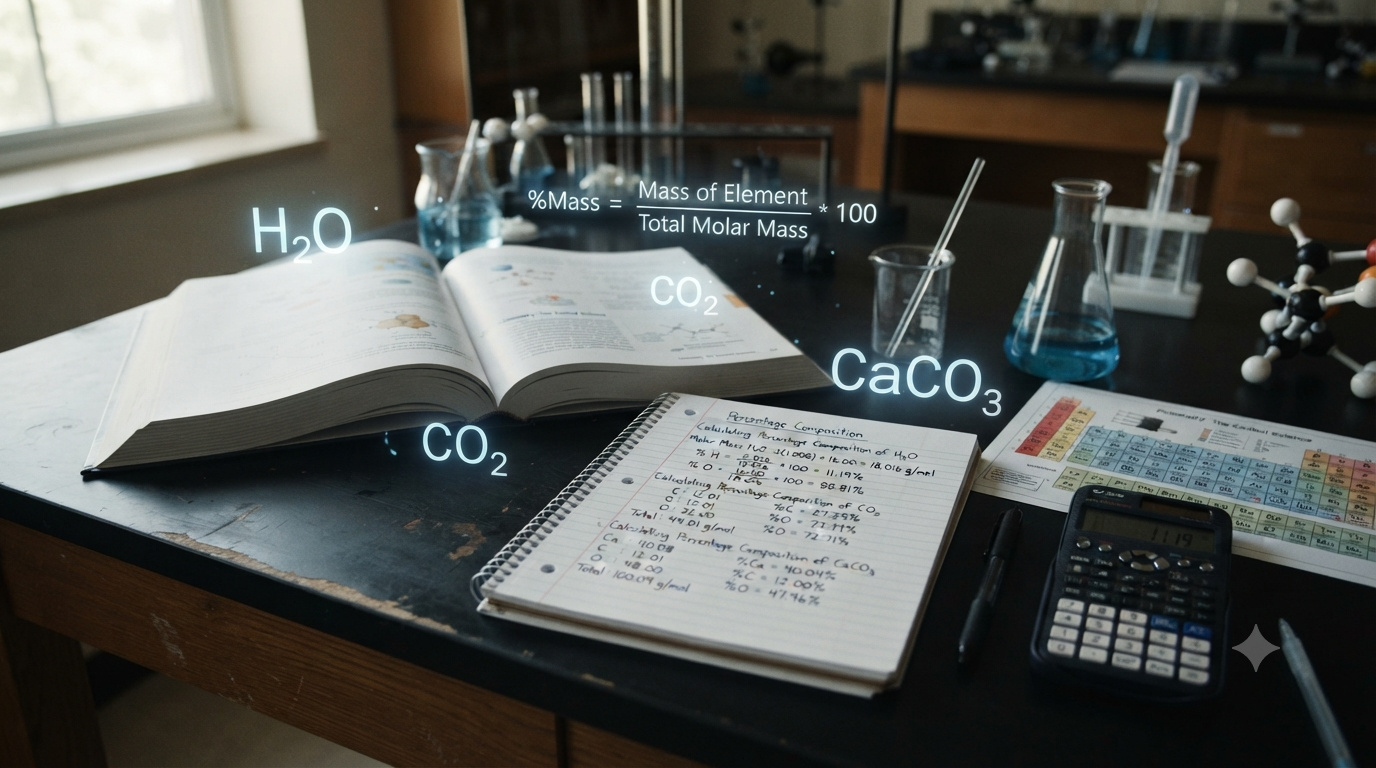
Percentage composition is a useful concept in chemistry that tells us how much of each element is present in a […]
Read MoreHow to Write Simple Chemical Formulas
Chemical formulas are a simple way to represent substances using symbols and numbers. Instead of writing the full name of […]
Read MoreHow should a student organize chemistry formulas for easy revision?

Chemistry involves many formulas, symbols, equations, ions, compounds, and numerical relationships. As the syllabus grows, simply memorizing formulas one after […]
Read MoreSpeed and Velocity: Understanding the Difference
When we describe how fast something is moving, we often use the word “speed.” In everyday conversation, speed and velocity […]
Read MoreChemical Symbols and Their Role in Chemistry Formulas

Chemistry is often described as the science of matter, but understanding chemistry also means learning how scientists communicate information about […]
Read MoreAccuracy, Precision and Errors in Physics Measurements
Measurement is one of the most important parts of physics. Almost every physical law, formula, and experiment depends on measurements. […]
Read MoreHow to Calculate the Total Number of Atoms in a Formula
Chemical formulas provide a compact way to show which elements are present in a substance and how many atoms of […]
Read MoreWhat Is Momentum in Physics?
Momentum is one of the fundamental concepts in physics used to describe the motion of an object. It helps us […]
Read MoreWhat Is Motion in Physics?
Motion is one of the most basic and important ideas in physics. Everything around us is in some form of […]
Read MoreHow to Use SI Units in Physics Formulas
Physics formulas connect different physical quantities through mathematical relationships. But a formula can give a wrong answer if the quantities […]
Read MoreHow does physics connect mathematics with reality?
Physics is often described as the science of matter, energy, motion, space, and time. But behind almost every physical idea […]
Read More