

Writing chemical formulas becomes slightly more challenging when a compound contains a polyatomic ion. Unlike a single-atom ion, a polyatomic ion is a group of two or more atoms that carries an overall electrical charge and behaves as a single unit in many chemical compounds. Examples include sulfate (SO₄²⁻), nitrate (NO₃⁻), hydroxide (OH⁻), carbonate (CO₃²⁻), and ammonium (NH₄⁺).
To write the correct formula, you need to identify the ions, understand their charges, and combine them in a ratio that makes the total charge equal to zero. The most important idea is simple: the positive and negative charges in an ionic compound must balance.
Once this principle is understood, writing formulas for compounds containing polyatomic ions becomes a logical process rather than something that depends only on memorization.
What Are Polyatomic Ions?
A polyatomic ion is a charged group of two or more covalently bonded atoms that acts as a single ion.
For example, the sulfate ion contains one sulfur atom and four oxygen atoms:
SO₄²⁻
The entire group has a charge of 2−. Although it contains several atoms, it is treated as one ion when forming an ionic compound.
Some common polyatomic ions are:
| Polyatomic Ion | Formula | Charge |
|---|---|---|
| Ammonium | NH₄⁺ | 1+ |
| Hydroxide | OH⁻ | 1− |
| Nitrate | NO₃⁻ | 1− |
| Nitrite | NO₂⁻ | 1− |
| Sulfate | SO₄²⁻ | 2− |
| Sulfite | SO₃²⁻ | 2− |
| Carbonate | CO₃²⁻ | 2− |
| Phosphate | PO₄³⁻ | 3− |
| Acetate | C₂H₃O₂⁻ | 1− |
| Cyanide | CN⁻ | 1− |
Learning the formulas and charges of common polyatomic ions makes formula writing much easier.
Why Do Polyatomic Ions Need Special Attention?
When a compound contains a single-atom ion, the formula can often be written directly from the ion charges. For example, sodium ion is Na⁺ and chloride ion is Cl⁻. Their charges balance in a 1:1 ratio, giving:
NaCl
With polyatomic ions, the same charge-balancing rule applies, but there is one additional detail. If more than one polyatomic ion is needed, the entire ion must be kept together using parentheses.
For example, calcium is Ca²⁺ and nitrate is NO₃⁻. One calcium ion has a 2+ charge, while one nitrate ion has a 1− charge. Two nitrate ions are therefore needed:
Ca(NO₃)₂
The parentheses show that the subscript 2 applies to the entire nitrate ion.
Step 1: Identify the Ions
The first step is to determine which positive and negative ions are present.
In most ionic compounds, the positive ion is written first and the negative ion second.
For example, consider calcium sulfate.
Calcium forms:
Ca²⁺
Sulfate is:
SO₄²⁻
So the ions are:
Ca²⁺ + SO₄²⁻
Now their charges can be balanced.
Step 2: Write the Charges
Always determine the charge of each ion before deciding on the subscripts.
For example:
Al³⁺ and SO₄²⁻
Aluminum has a charge of 3+, while sulfate has a charge of 2−.
The final compound must have no overall charge.
This means we need enough aluminum ions and sulfate ions to make the positive and negative charges equal.
Three Al³⁺ ions give:
3 × (+3) = +9
Three sulfate ions give:
3 × (−2) = −6
That does not balance. Instead, two aluminum ions give +6 and three sulfate ions give −6.
Therefore:
Al₂(SO₄)₃
The total charge is:
2(+3) + 3(−2) = 0
Step 3: Find the Smallest Ratio That Balances the Charges
The subscripts in an ionic formula represent the simplest whole-number ratio of ions.
Consider magnesium hydroxide.
Magnesium ion:
Mg²⁺
Hydroxide ion:
OH⁻
One Mg²⁺ needs two OH⁻ ions to balance its charge.
Therefore:
Mg(OH)₂
The total charge is:
(+2) + 2(−1) = 0
The formula is neutral.
Step 4: Use the Criss-Cross Method Carefully
A common shortcut for balancing ionic charges is the criss-cross method.
Suppose we have:
Ca²⁺ and PO₄³⁻
Take the numerical value of the charge on calcium and use it as the subscript for phosphate. Then take the numerical value of the phosphate charge and use it as the subscript for calcium.
This gives:
Ca₃(PO₄)₂
The charges can be checked:
3(+2) = +6
2(−3) = −6
Therefore, the overall charge is zero.
The criss-cross method is useful, but it should not replace understanding. Always check the final formula to make sure the charges actually balance.
When Should You Use Parentheses?
Parentheses are necessary when more than one polyatomic ion is present in the formula.
For example, calcium nitrate contains:
Ca²⁺
and
NO₃⁻
Two nitrate ions are needed, so the formula is:
Ca(NO₃)₂
The parentheses indicate that there are two complete nitrate ions.
Without parentheses, writing:
CaNO₃₂
would not correctly represent two nitrate ions.
However, if only one polyatomic ion is needed, parentheses are not used.
For example, sodium nitrate is:
NaNO₃
not:
Na(NO₃)
Similarly, calcium sulfate is:
CaSO₄
because one sulfate ion is sufficient to balance one calcium ion.
Examples of Writing Formulas
Sodium Carbonate
Sodium ion:
Na⁺
Carbonate ion:
CO₃²⁻
Two sodium ions are required for every carbonate ion.
Formula:
Na₂CO₃
Charge check:
2(+1) + (−2) = 0
Aluminum Nitrate
Aluminum ion:
Al³⁺
Nitrate ion:
NO₃⁻
Three nitrate ions are required for one aluminum ion.
Formula:
Al(NO₃)₃
Charge check:
(+3) + 3(−1) = 0
Potassium Sulfate
Potassium ion:
K⁺
Sulfate ion:
SO₄²⁻
Two potassium ions are required.
Formula:
K₂SO₄
Charge check:
2(+1) + (−2) = 0
Ammonium Chloride
Ammonium is an important polyatomic ion because it is positively charged.
Ammonium:
NH₄⁺
Chloride:
Cl⁻
The charges balance in a 1:1 ratio.
Formula:
NH₄Cl
No parentheses are needed because only one ammonium ion is present.
Ammonium Sulfate
Ammonium:
NH₄⁺
Sulfate:
SO₄²⁻
Two ammonium ions are required for one sulfate ion.
Formula:
(NH₄)₂SO₄
The parentheses are necessary because the subscript 2 applies to the entire ammonium ion.
Charge check:
2(+1) + (−2) = 0
How to Write Formulas When Both Ions Are Polyatomic
Sometimes both the positive and negative ions are polyatomic.
A common example is ammonium carbonate.
Ammonium:
NH₄⁺
Carbonate:
CO₃²⁻
Two ammonium ions are needed for one carbonate ion.
The formula is:
(NH₄)₂CO₃
Another example is ammonium phosphate.
Ammonium:
NH₄⁺
Phosphate:
PO₄³⁻
Three ammonium ions are required for one phosphate ion.
Formula:
(NH₄)₃PO₄
This demonstrates why knowing both the formula and charge of common polyatomic ions is important.
Do Not Change the Formula of the Polyatomic Ion
When writing an ionic compound, the atoms inside a polyatomic ion should not be changed individually.
For example, sulfate is:
SO₄²⁻
If two sulfate ions are required, write:
(SO₄)₂
Do not change it to something such as SO₈. The subscript outside the parentheses represents two separate sulfate ions.
Similarly, if three nitrate ions are needed, write:
(NO₃)₃
The subscript 3 applies to the complete nitrate ion.
Reduce Subscripts to the Simplest Ratio
The final formula should always represent the simplest whole-number ratio of ions.
For example, suppose the charges are:
Ca²⁺ and SO₄²⁻
Because both ions have charges of equal magnitude, only one of each is required.
The formula is:
CaSO₄
There is no need to write Ca₂(SO₄)₂ because those subscripts can be reduced to a 1:1 ratio.
The goal is always to produce an electrically neutral compound using the smallest possible whole-number ratio.
A Simple Method to Follow Every Time
When writing formulas for compounds containing polyatomic ions, use this sequence:
Identify the positive ion.
Identify the negative ion.
Write the formula and charge of each ion.
Determine the smallest ratio that balances the charges.
Use subscripts to show that ratio.
Put parentheses around a polyatomic ion if more than one of that ion is required.
Do not change the internal formula of the polyatomic ion.
Check that the total positive and negative charges equal zero.
Reduce the subscripts if they have a common factor.
For example, to write the formula for aluminum sulfate:
Al³⁺ + SO₄²⁻
Balance the charges:
2 Al³⁺ = +6
3 SO₄²⁻ = −6
Therefore:
Al₂(SO₄)₃
Final check:
2(+3) + 3(−2) = 0
The formula is correct.
Common Mistakes to Avoid
Forgetting the Charge
Knowing only the name of a polyatomic ion is not enough. Its charge is essential for determining the formula.
For example, sulfate is SO₄²⁻, while nitrate is NO₃⁻. Their different charges lead to different formulas when combined with the same metal.
Forgetting Parentheses
If more than one polyatomic ion is required, parentheses are usually necessary.
Correct:
Ca(OH)₂
Incorrect:
CaOH₂
Changing the Inside of the Ion
The atoms within a polyatomic ion should remain together.
Correct:
Al₂(SO₄)₃
The sulfate group remains SO₄.
Ignoring the Overall Charge
A formula is not complete until its total charge is zero for a neutral ionic compound.
Always perform a final charge check.
Practice Examples
Try writing the formulas for these compounds:
Sodium sulfate
Calcium carbonate
Magnesium nitrate
Aluminum phosphate
Potassium hydroxide
Ammonium sulfate
Calcium phosphate
Aluminum hydroxide
The answers are:
Na₂SO₄
CaCO₃
Mg(NO₃)₂
AlPO₄
KOH
(NH₄)₂SO₄
Ca₃(PO₄)₂
Al(OH)₃
Checking the charges is the best way to confirm each answer.
Why Learning Polyatomic Ion Formulas Matters
Polyatomic ions appear throughout chemistry. They are found in acids, bases, salts, minerals, biological molecules, fertilizers, household substances, and many laboratory compounds. Understanding how they combine also makes chemical equations and chemical nomenclature easier to understand.
Instead of memorizing every compound separately, it is more useful to learn a set of common polyatomic ions and understand how their charges determine the formulas of compounds.
The same charge-balancing principle works again and again. Whether you are combining calcium with nitrate, aluminum with sulfate, or ammonium with phosphate, the goal remains the same: create a neutral compound using the smallest whole-number ratio of ions.
Conclusion
Writing formulas for polyatomic ions becomes much easier once the charge-balancing principle is clear. First identify the positive and negative ions, write their charges, and find the smallest ratio that makes the total charge zero. When more than one polyatomic ion is required, use parentheses to keep the group together. Most importantly, never change the atoms inside a polyatomic ion simply to balance a charge.
With practice, formulas such as Ca(NO₃)₂, Al₂(SO₄)₃, (NH₄)₂CO₃, and Ca₃(PO₄)₂ become straightforward. Learning common polyatomic ions, remembering their charges, and checking the final charge will give you a reliable method for writing chemical formulas accurately.
FAQs
1. What is a polyatomic ion?
A polyatomic ion is a group of two or more atoms that are chemically bonded together and carry an overall electrical charge. Although the group contains several atoms, it behaves as a single ion in many ionic compounds. Common examples include sulfate (SO₄²⁻), nitrate (NO₃⁻), hydroxide (OH⁻), carbonate (CO₃²⁻), phosphate (PO₄³⁻), and ammonium (NH₄⁺). When writing a chemical formula, the entire polyatomic ion is treated as one unit. Knowing the formula and charge of common polyatomic ions helps you correctly combine them with positive or negative ions and produce electrically neutral compounds.
2. How do you write a formula containing a polyatomic ion?
To write a formula containing a polyatomic ion, first identify the positive and negative ions and write their charges. Next, determine the smallest whole-number ratio that makes the total positive and negative charges equal. Use subscripts to show this ratio. If more than one polyatomic ion is needed, place the polyatomic ion in parentheses before adding the subscript. For example, calcium nitrate contains Ca²⁺ and NO₃⁻. Two nitrate ions are needed to balance one calcium ion, giving the formula Ca(NO₃)₂. Finally, check that the overall charge of the compound is zero.
3. Why are parentheses used with polyatomic ions?
Parentheses are used when more than one complete polyatomic ion is required in a chemical formula. They show that the subscript applies to the entire group rather than only to the last atom. For example, calcium hydroxide is written as Ca(OH)₂. The subscript 2 means there are two complete hydroxide ions. Without parentheses, CaOH₂ could be misinterpreted because the subscript would appear to apply only to hydrogen. Parentheses are not needed when only one polyatomic ion is present. For example, sodium hydroxide is written as NaOH, while calcium hydroxide requires Ca(OH)₂.
4. How do you balance charges when writing ionic formulas?
Charge balancing means choosing the smallest number of positive and negative ions so that their total charges equal zero. For example, aluminum has a charge of 3+, while sulfate has a charge of 2−. Two aluminum ions produce a total charge of +6, and three sulfate ions produce −6. Therefore, the formula is Al₂(SO₄)₃. You can determine the ratio by finding the smallest common multiple of the charge magnitudes. After writing the formula, multiply each ion’s charge by its subscript and confirm that the positive and negative totals cancel each other completely.
5. What are some common polyatomic ions and their charges?
Several polyatomic ions appear frequently in chemistry. Ammonium is NH₄⁺, hydroxide is OH⁻, nitrate is NO₃⁻, nitrite is NO₂⁻, sulfate is SO₄²⁻, sulfite is SO₃²⁻, carbonate is CO₃²⁻, phosphate is PO₄³⁻, and cyanide is CN⁻. Acetate is commonly written as C₂H₃O₂⁻. Learning these common ions along with their charges makes formula writing much easier. The charge is especially important because it determines how many ions are required to form a neutral compound. Building familiarity with these common formulas is more useful than trying to memorize every possible compound individually.
6. When should you use the criss-cross method?
The criss-cross method can be used as a quick way to determine subscripts when combining ions with different charges. The numerical values of the charges are crossed over and used as subscripts for the opposite ions. For example, Ca²⁺ and PO₄³⁻ produce Ca₃(PO₄)₂. However, the method should be followed by a charge check because the resulting subscripts may sometimes have a common factor that needs to be reduced. It is also important to remember that parentheses are required when the criss-cross method gives a subscript greater than one for a polyatomic ion.
7. Do you need parentheses when there is only one polyatomic ion?
No. Parentheses are generally unnecessary when only one polyatomic ion is present in the formula. For example, sodium nitrate contains one nitrate ion, so its formula is NaNO₃. Similarly, calcium sulfate contains one sulfate ion and is written as CaSO₄. Parentheses become necessary when two or more complete polyatomic ions are present. For example, calcium nitrate is Ca(NO₃)₂ because two nitrate ions are required. The parentheses make it clear that the subscript applies to the entire nitrate group. Therefore, always check the number of polyatomic ions before deciding whether parentheses are needed.
8. Can both ions in a compound be polyatomic ions?
Yes, a compound can contain both a polyatomic positive ion and a polyatomic negative ion. Ammonium compounds are common examples because ammonium, NH₄⁺, is a polyatomic cation. For example, ammonium sulfate contains NH₄⁺ and SO₄²⁻. Two ammonium ions are needed to balance one sulfate ion, so the formula is (NH₄)₂SO₄. Another example is ammonium phosphate, which contains NH₄⁺ and PO₄³⁻. Three ammonium ions are needed, giving (NH₄)₃PO₄. Parentheses are used because more than one ammonium ion is present in both formulas.
9. What is the most common mistake when writing polyatomic ion formulas?
One common mistake is forgetting to use parentheses when more than one polyatomic ion is required. For example, calcium hydroxide should be written as Ca(OH)₂, not CaOH₂. Another mistake is changing the internal formula of a polyatomic ion to balance charges. The atoms inside an ion such as SO₄²⁻ should remain together. Students may also forget to check whether the subscripts can be reduced to a simpler ratio. The best way to avoid these mistakes is to identify the ions and their charges first, write the formula carefully, and then verify that the total charge is zero.
10. How can you become better at writing formulas for polyatomic ions?
The best way to improve is to combine memorization of common polyatomic ions with regular practice. Start by learning frequently used ions such as nitrate, sulfate, carbonate, phosphate, hydroxide, and ammonium along with their charges. Then practice combining them with common metal ions. For every formula, identify the charges, determine the smallest whole-number ratio, use parentheses when necessary, and check the total charge. For example, practice problems involving Mg(NO₃)₂, Al(OH)₃, Na₂CO₃, and (NH₄)₂SO₄ can strengthen your understanding. With repeated practice, charge balancing and formula writing become much more automatic.
Related Posts
How to Determine Atomic Ratios From Chemical Formulas
Chemical formulas provide much more information than simply telling us which elements are present in a substance. The symbols and […]
Read MoreHow Atomic Ratios Differ From Mass Ratios in Compounds
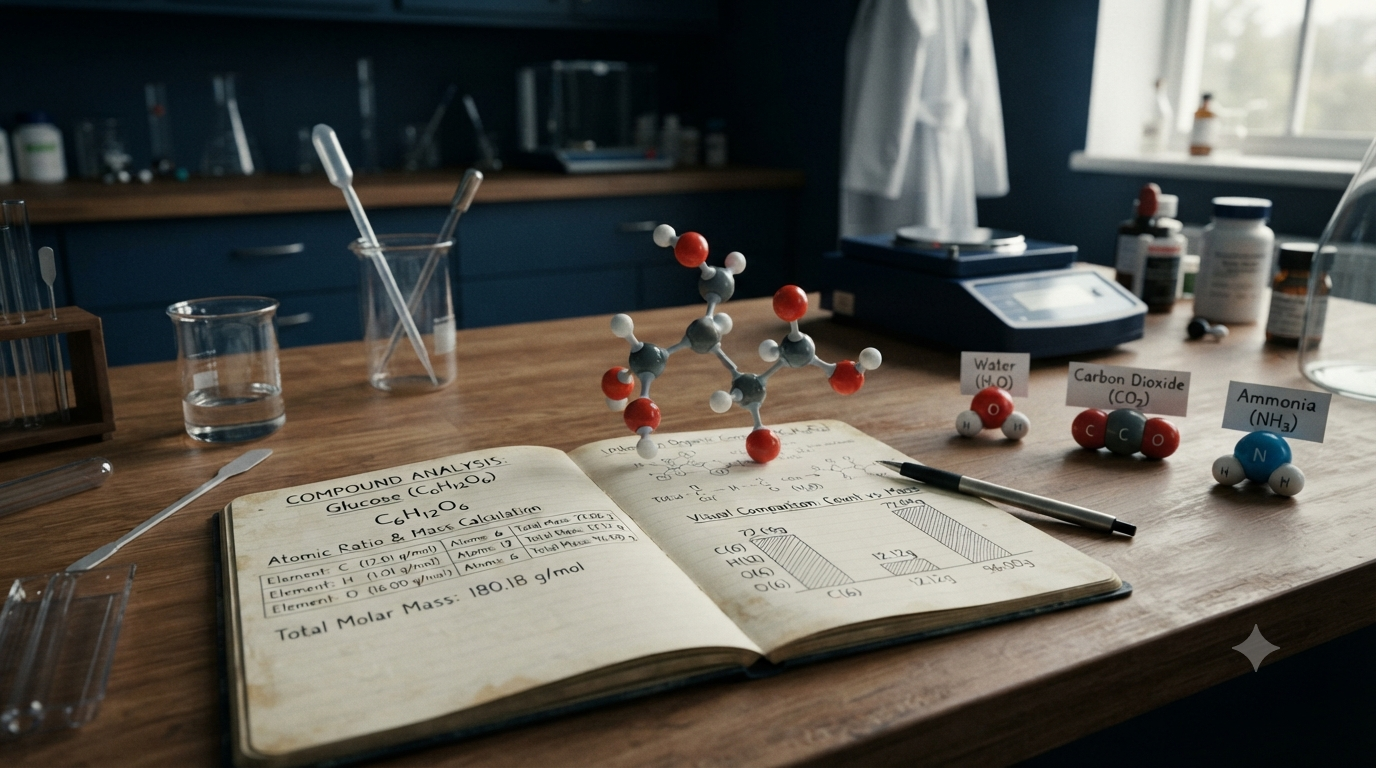
When we study chemical compounds, we often use ratios to describe how their elements are combined. Two important types of […]
Read MoreWhy Chemical Formulas Use Whole Number Subscripts

Chemical formulas are one of the simplest ways scientists communicate information about substances. A formula such as H₂O tells us […]
Read MoreHow Whole Number Ratios Are Used in Chemical Formulas

Chemical formulas are a simple way of showing what a substance is made of. A formula tells us which elements […]
Read MoreHow to Identify the Simplest Ratio in a Chemical Formula

Chemical formulas do more than identify substances. They also show how atoms of different elements are combined. By looking carefully […]
Read MoreFormula Units vs Molecules in Chemistry

Chemistry uses formulas to describe the substances that make up the world around us. When we see formulas such as […]
Read MoreWhat Is the Meaning of Formula Units in Chemistry?
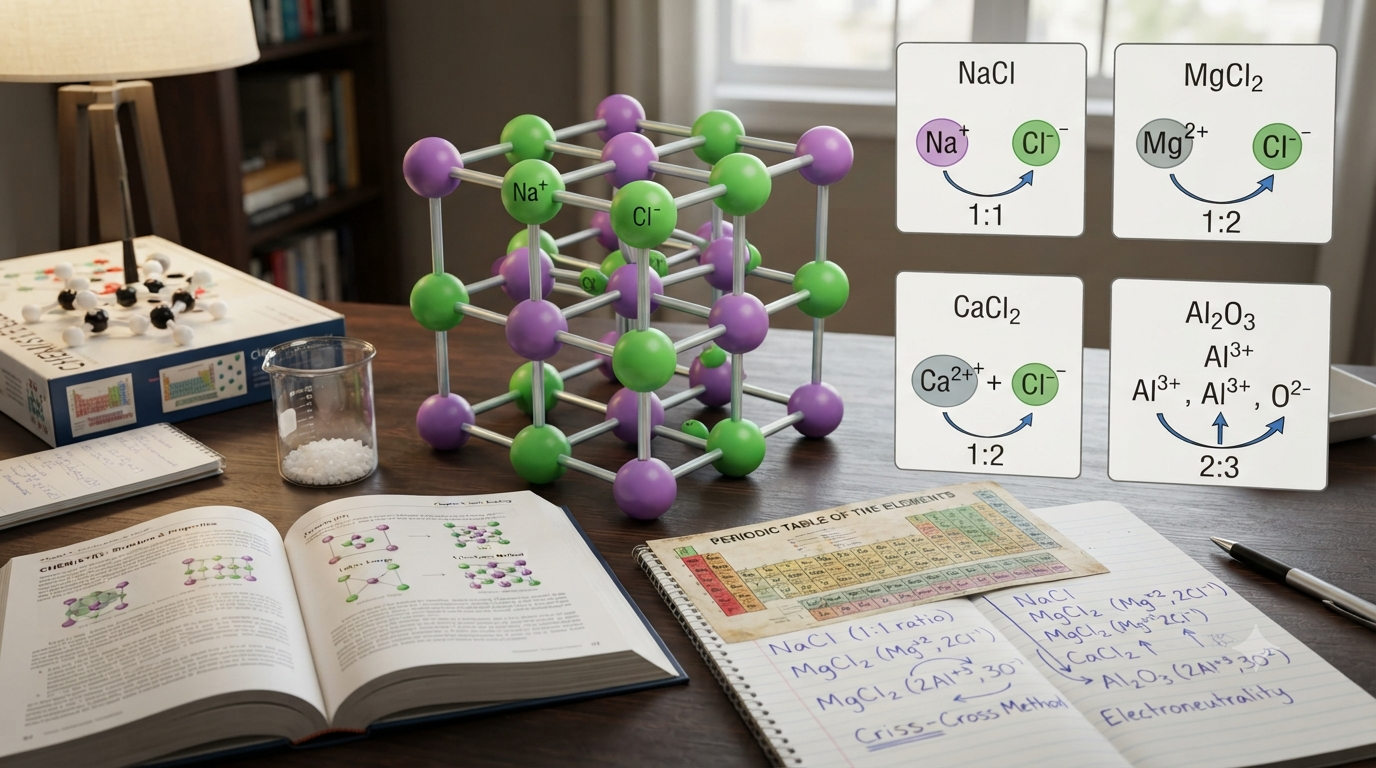
In chemistry, substances are often represented using chemical formulas. A chemical formula tells us which elements are present and, in […]
Read MoreHow Chemical Formulas Represent Fixed Composition
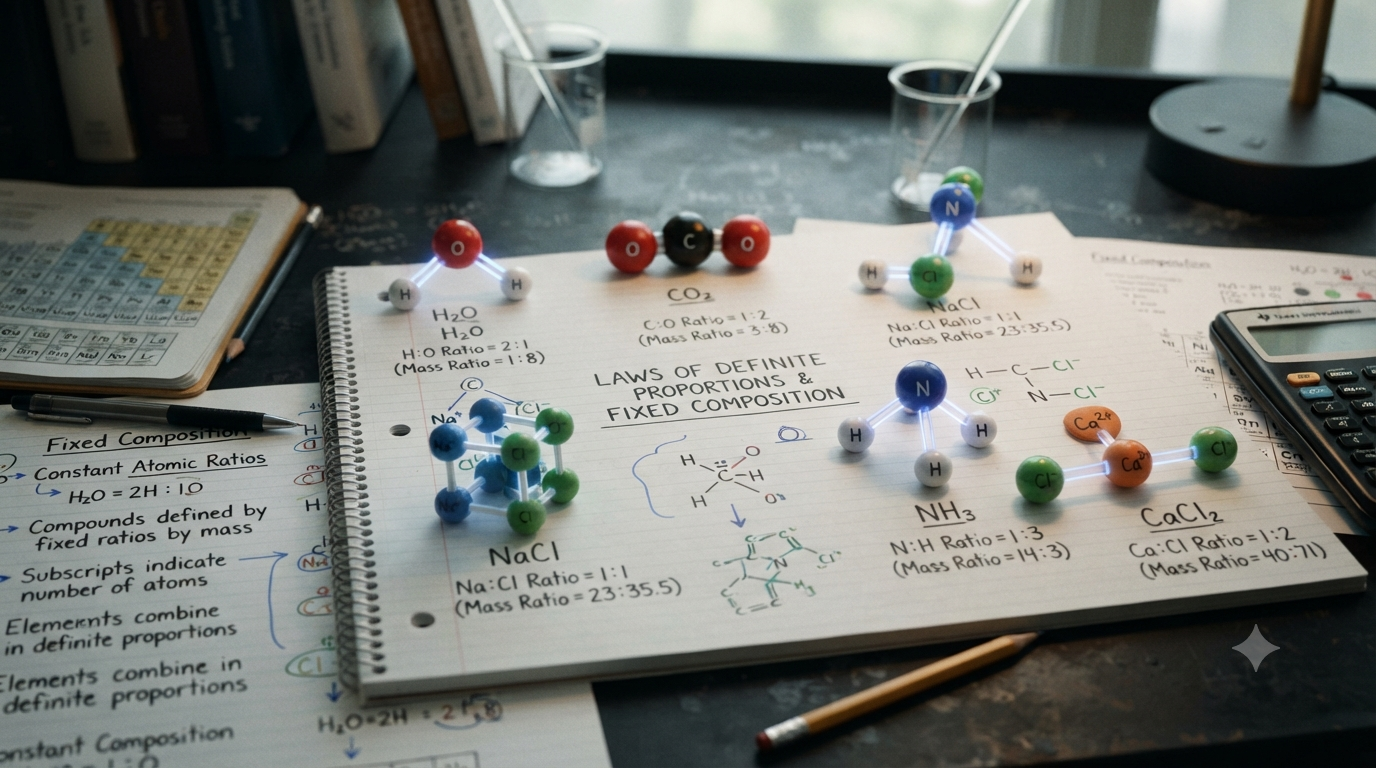
A chemical formula is much more than a short name for a substance. It gives important information about what a […]
Read MoreHow to Interpret the Ratio of Elements in a Compound

When a chemical compound is represented by a chemical formula, the symbols and numbers in that formula contain important information […]
Read MoreHow Chemical Formula Ratios Describe Compound Composition
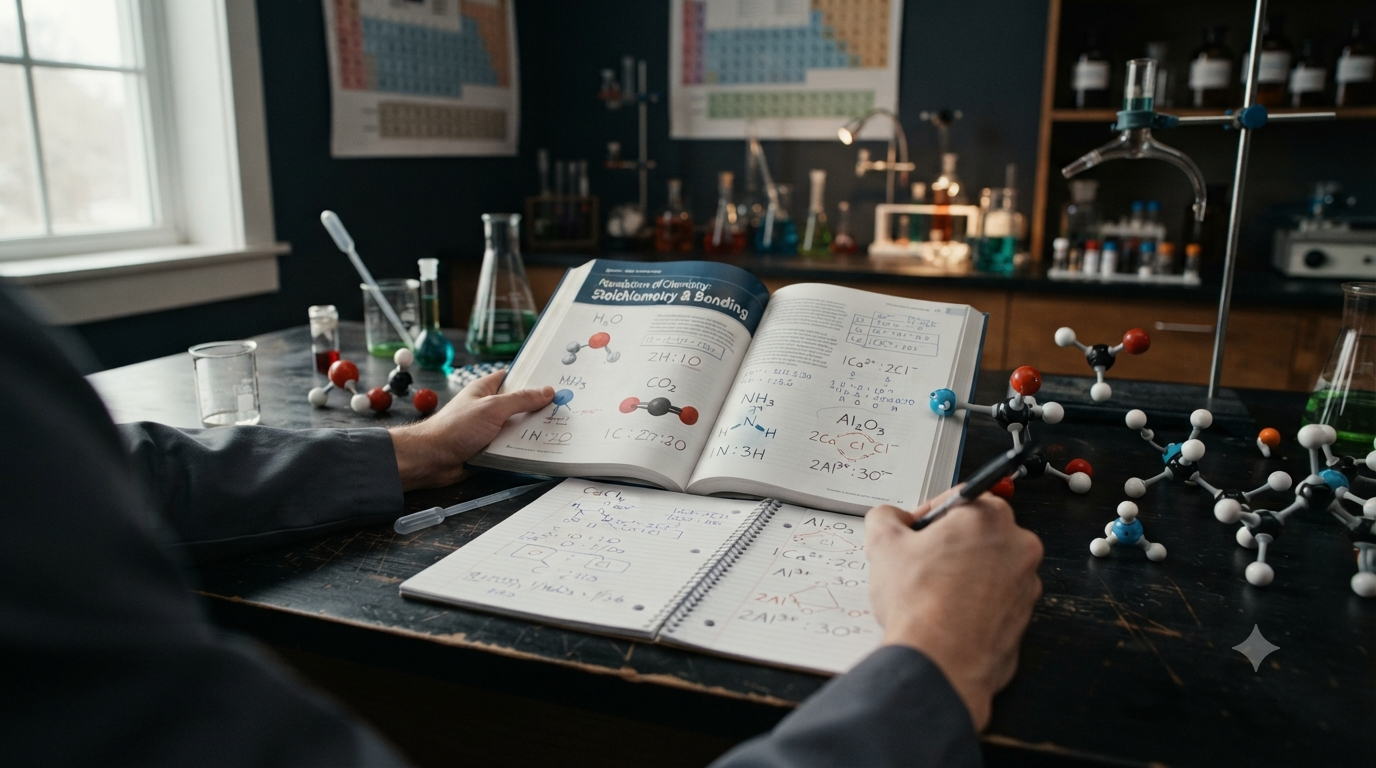
A chemical formula is much more than a short way of naming a compound. It provides important information about what […]
Read MoreHow are chemical formulas used in stoichiometric calculations?

Chemical formulas are one of the most important tools used in chemistry. They tell us which elements are present in […]
Read MoreHow can chemical formulas be used to understand chemical reactions?

Chemical reactions are processes in which substances change into new substances. We can observe some reactions through changes in color, […]
Read MoreWhy do some substances have simple formulas while others have complex formulas?
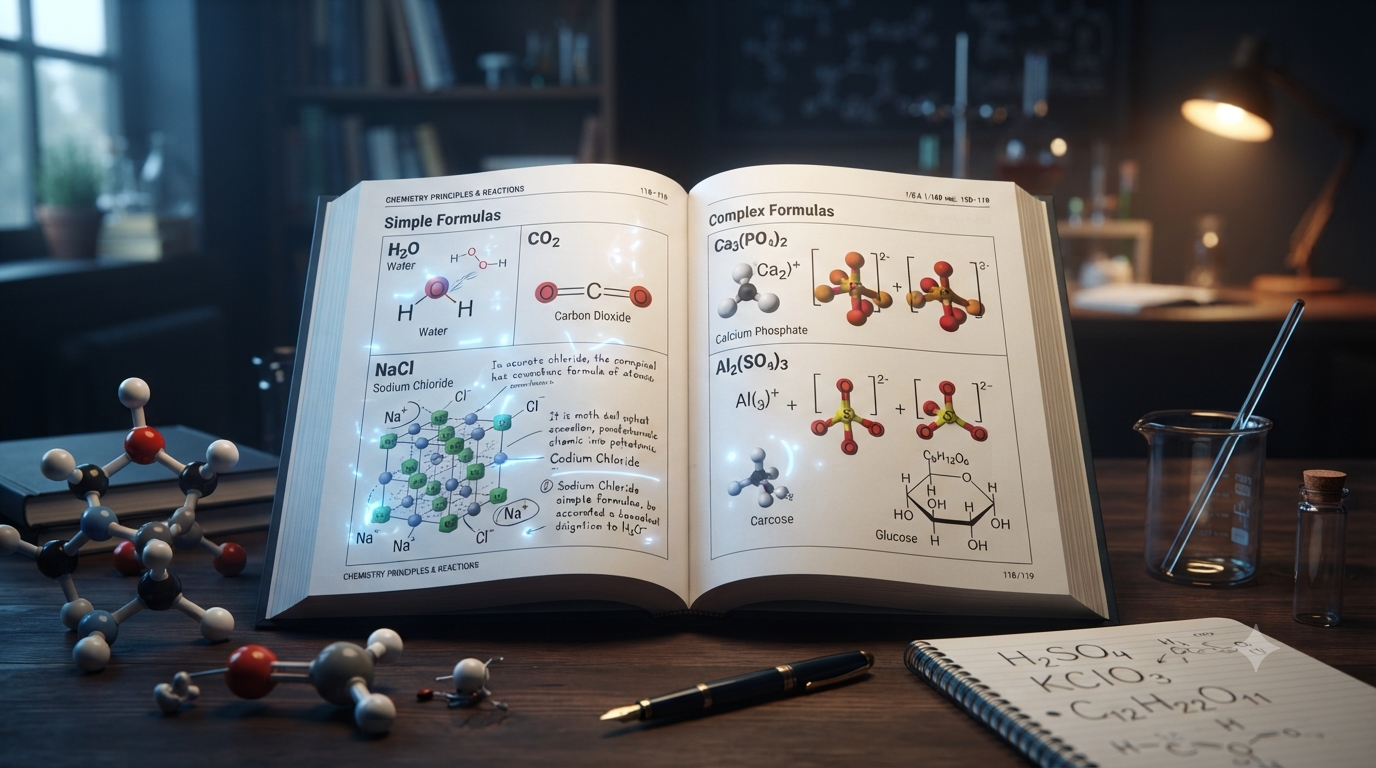
Chemical formulas are one of the simplest ways to describe what a substance is made of. A formula such as […]
Read MoreHow can beginners memorize important chemical formulas without confusion?

Learning chemical formulas can feel confusing when you are just starting chemistry. There may be many formulas to remember, different […]
Read MoreWhich chemistry formulas are essential for beginners to learn first?

Chemistry becomes much easier when you understand the formulas used to represent substances, reactions, quantities, and relationships between different chemical […]
Read MoreHow should a student organize chemistry formulas for easy revision?

Chemistry involves many formulas, symbols, equations, ions, compounds, and numerical relationships. As the syllabus grows, simply memorizing formulas one after […]
Read MoreWhat is the difference between molecular and empirical formulas?
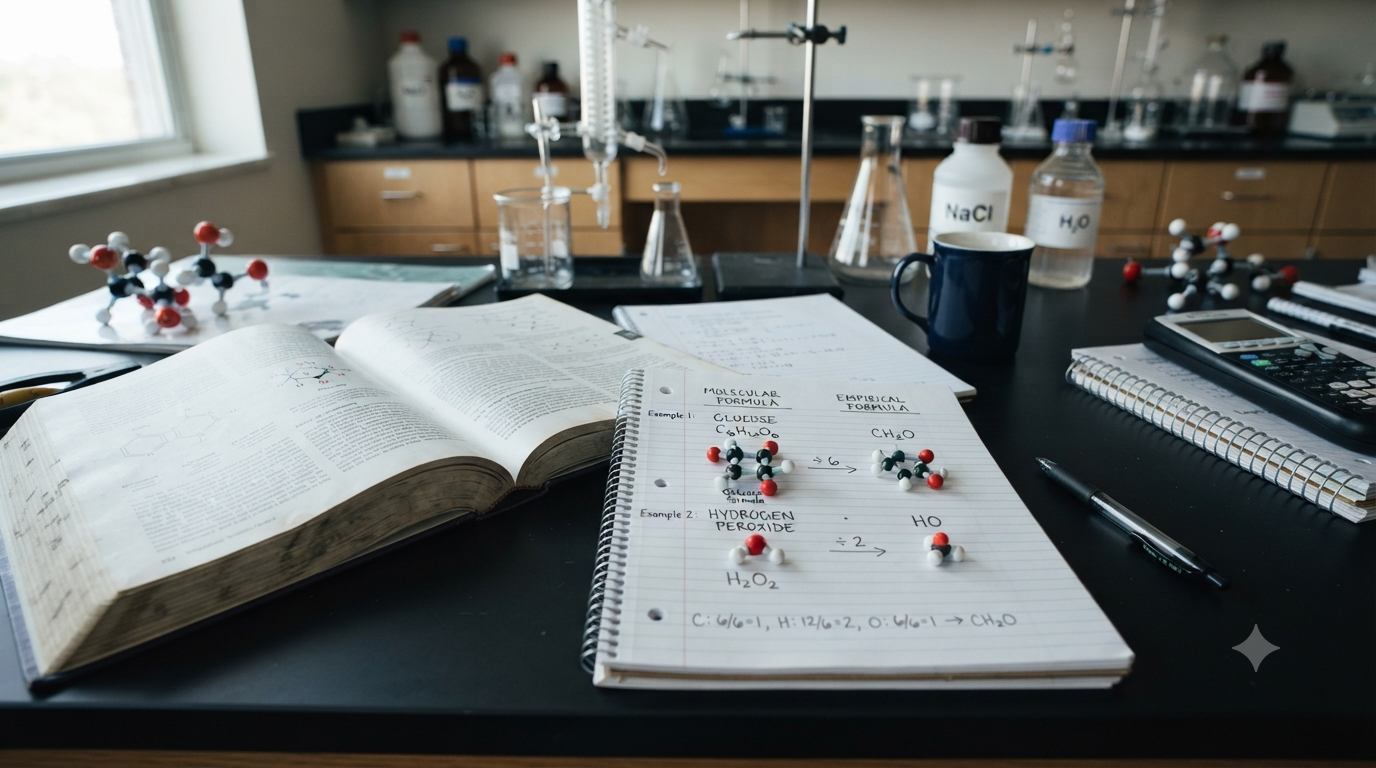
Chemical formulas give us a compact way to describe the composition of substances. Instead of writing the names and numbers […]
Read MoreWhy can different compounds have the same empirical formula?
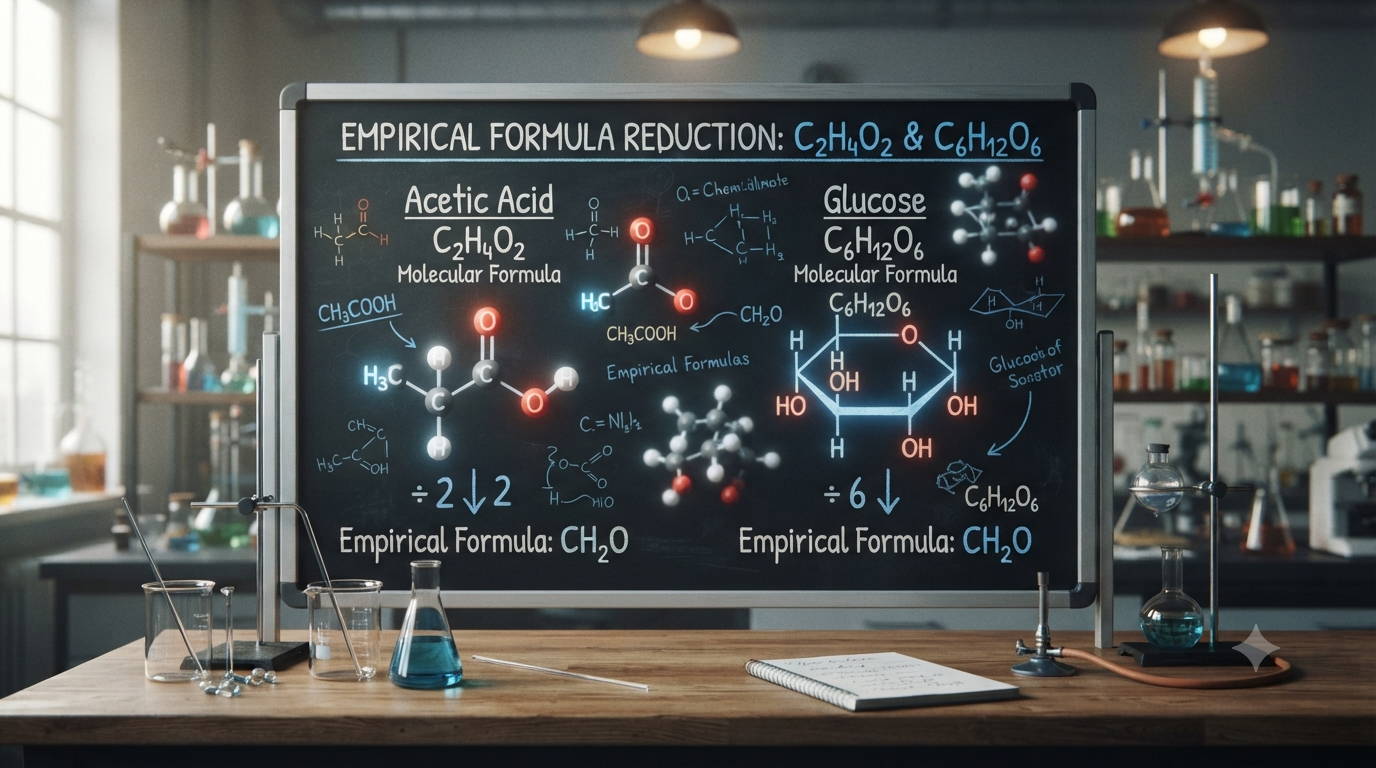
An empirical formula gives the simplest whole-number ratio of atoms present in a compound. It is useful because it tells […]
Read MoreHow do parentheses affect the number of atoms in a formula?
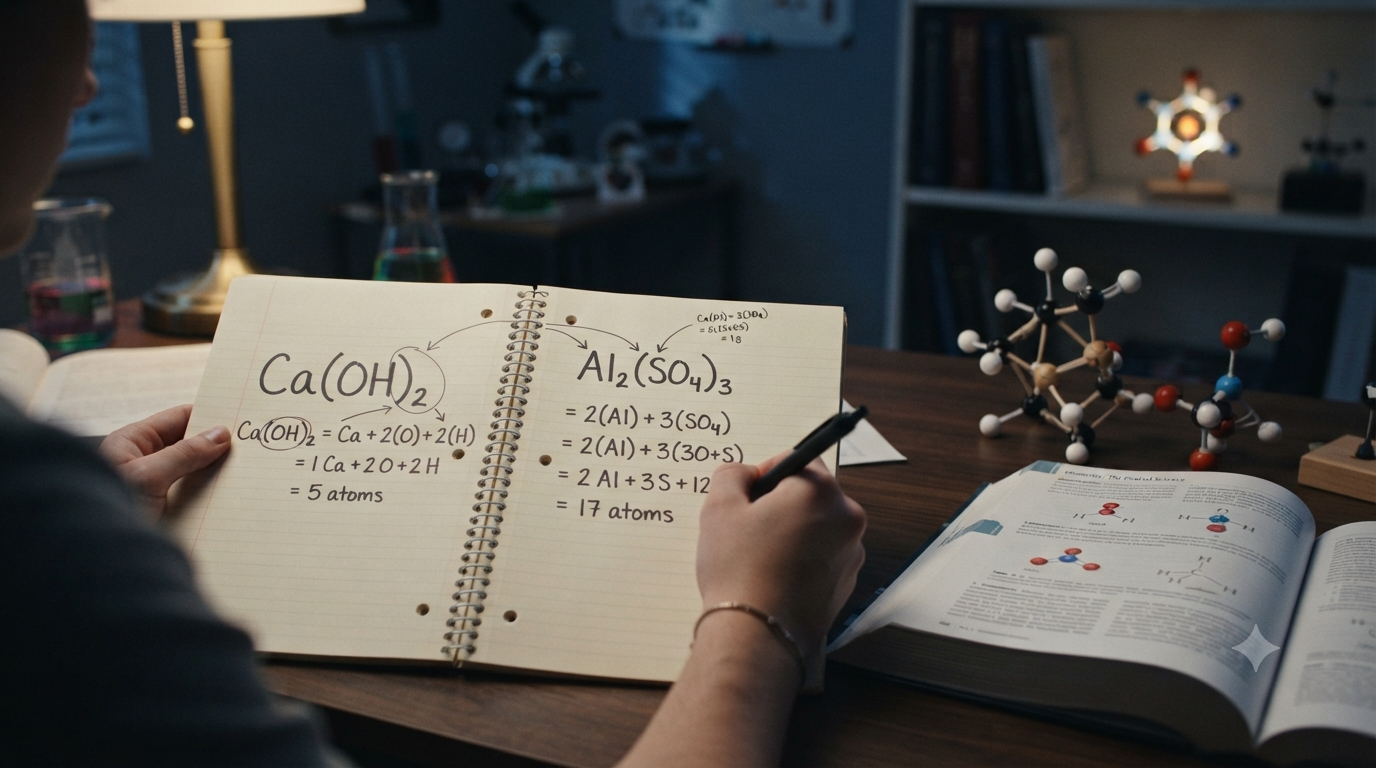
Chemical formulas tell us which elements are present in a substance and how many atoms of each element are included. […]
Read MoreHow can you count atoms from a chemical formula?

A chemical formula tells us much more than the name of a substance. It also gives information about the types […]
Read MoreWhy is a subscript different from a coefficient?
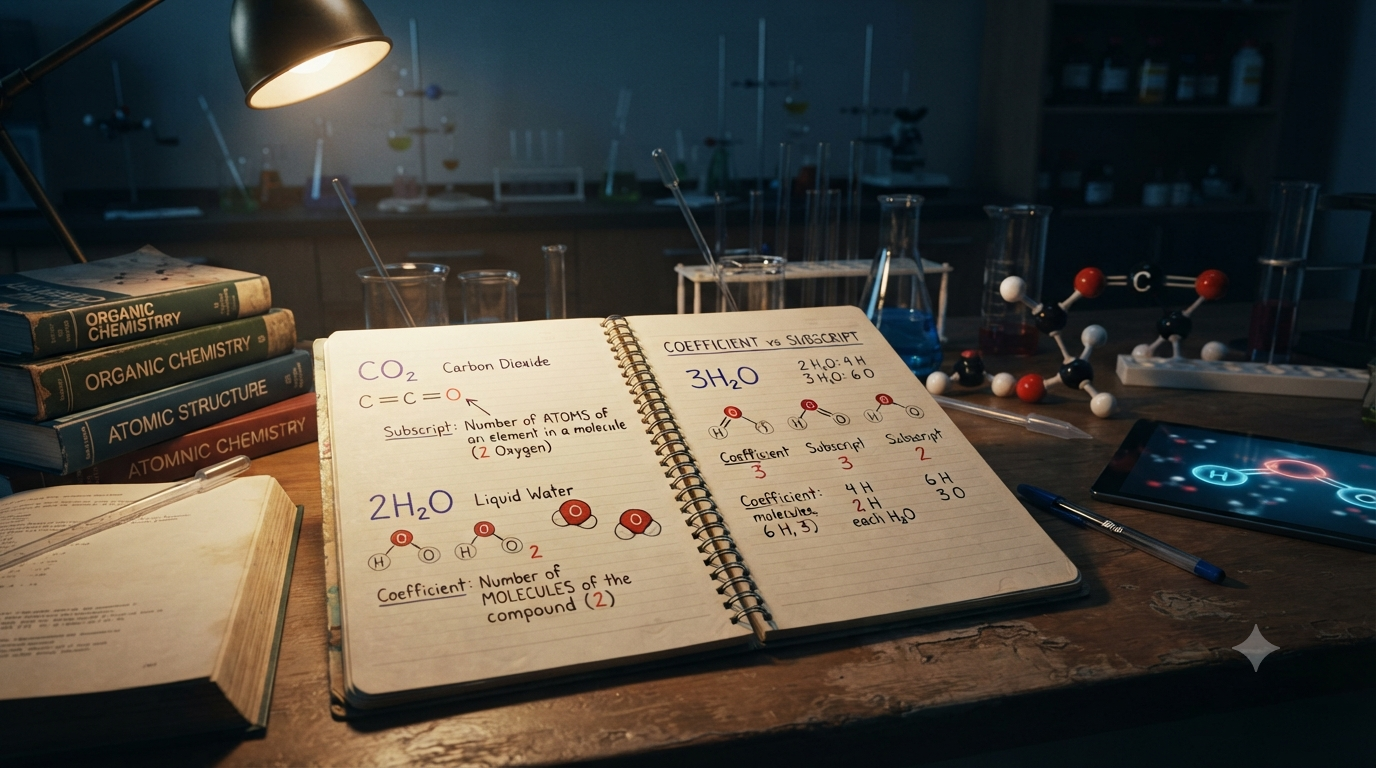
When learning chemical formulas, two small numbers can appear next to chemical symbols and look surprisingly similar. One is called […]
Read MoreWhat does a coefficient mean in a chemical equation?

A chemical equation is a compact way of representing a chemical reaction. It tells us which substances take part in […]
Read MoreWhat does a subscript mean in a chemical formula?
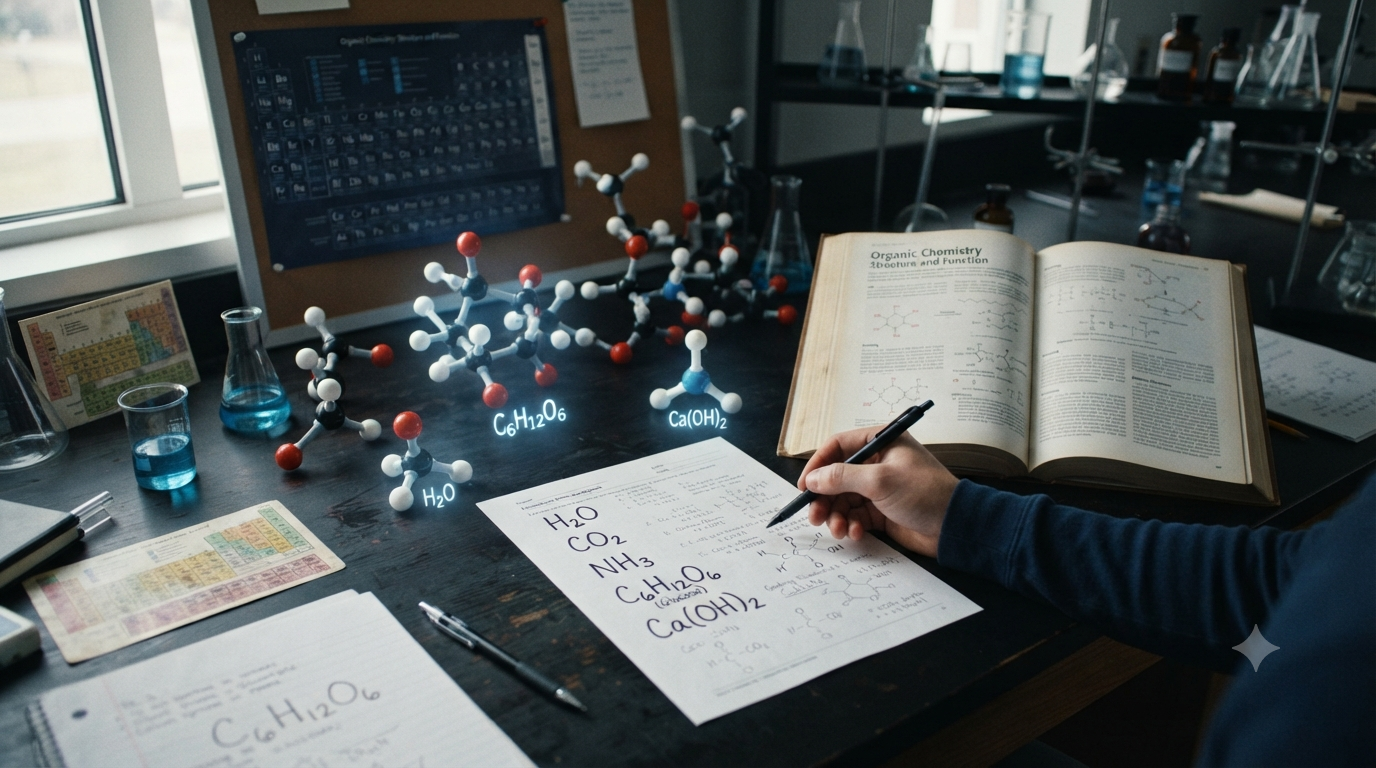
A chemical formula is a short way of showing what a substance is made of. Instead of writing the names […]
Read MoreHow can you identify the elements present in a formula?

A chemical formula is a short way of showing what a substance is made of. Instead of writing the complete […]
Read MoreHow are element symbols used to write chemical formulas?
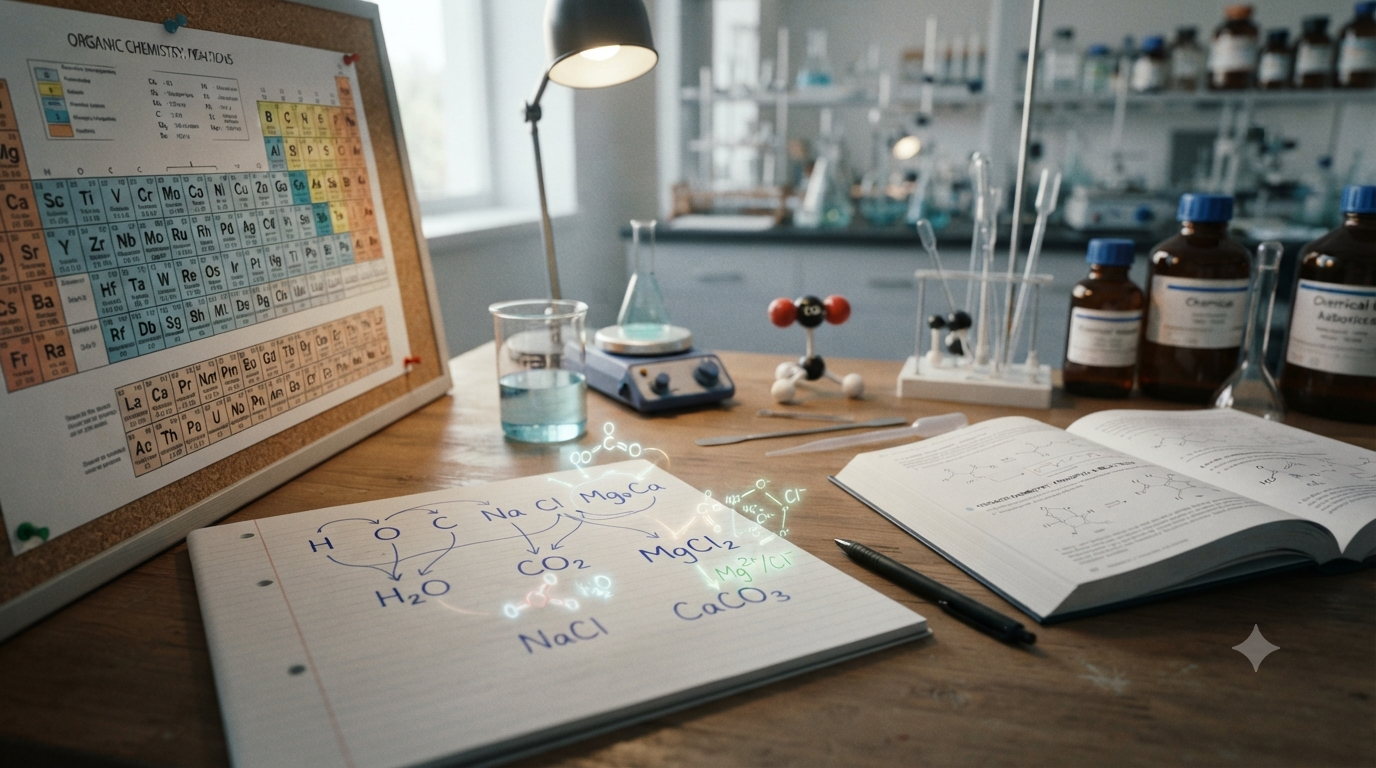
Chemical formulas are one of the simplest and most useful ways to represent substances in chemistry. Instead of writing the […]
Read MoreWhat is the difference between a chemical symbol and a chemical formula?

Chemistry uses a special language to describe elements, atoms, compounds, and chemical substances. Two of the most basic parts of […]
Read MoreWhat information can be obtained from a chemical formula?

A chemical formula is a short and powerful way of representing a substance. It uses chemical symbols and numbers to […]
Read MoreHow does a chemical formula represent a substance?
A chemical formula is a short and precise way of representing a substance using chemical symbols and numbers. Instead of […]
Read MoreWhy are chemical formulas important in chemistry?

Chemistry is the study of matter, its properties, composition, and the changes it undergoes. To understand and communicate these ideas […]
Read MoreWhat exactly is a chemical formula?

A chemical formula is a short way of representing a chemical substance using symbols and numbers. Instead of writing the […]
Read More