
Common Formulas of Bases in Chemistry

Common bases in chemistry including sodium hydroxide, potassium hydroxide, calcium hydroxide, magnesium hydroxide, and ammonia

Bases are an important group of chemical substances that we encounter in laboratories, industries, medicines, agriculture, and everyday life. They are commonly associated with a bitter taste, a slippery or soapy feel, and the ability to change certain indicators. Some bases are strong and highly reactive, while others are weak and react more gently. Understanding their chemical formulas helps us identify their composition, properties, reactions, and uses.

A chemical formula gives important information about the elements present in a compound and the ratio in which their atoms or ions are combined. Common bases such as sodium hydroxide, potassium hydroxide, calcium hydroxide, magnesium hydroxide, and ammonium hydroxide have different formulas and properties. Learning these formulas provides a strong foundation for understanding acids, bases, salts, neutralization reactions, and many other concepts in chemistry.

What Is a Base in Chemistry?

A base is a substance that can react with an acid to form salt and water in a neutralization reaction. In the Arrhenius definition, a base is a substance that produces hydroxide ions (OH⁻) when dissolved in water. For example, sodium hydroxide dissolves in water and produces sodium ions and hydroxide ions.

NaOH → Na⁺ + OH⁻

The hydroxide ion is responsible for many of the characteristic properties of aqueous bases. However, not every base contains OH⁻ directly in its formula. For example, ammonia (NH₃) acts as a base in water by accepting a proton and producing ammonium and hydroxide ions.

NH₃ + H₂O ⇌ NH₄⁺ + OH⁻

Therefore, the idea of a base is broader than simply looking for OH⁻ in a chemical formula.

Why Are Chemical Formulas of Bases Important?

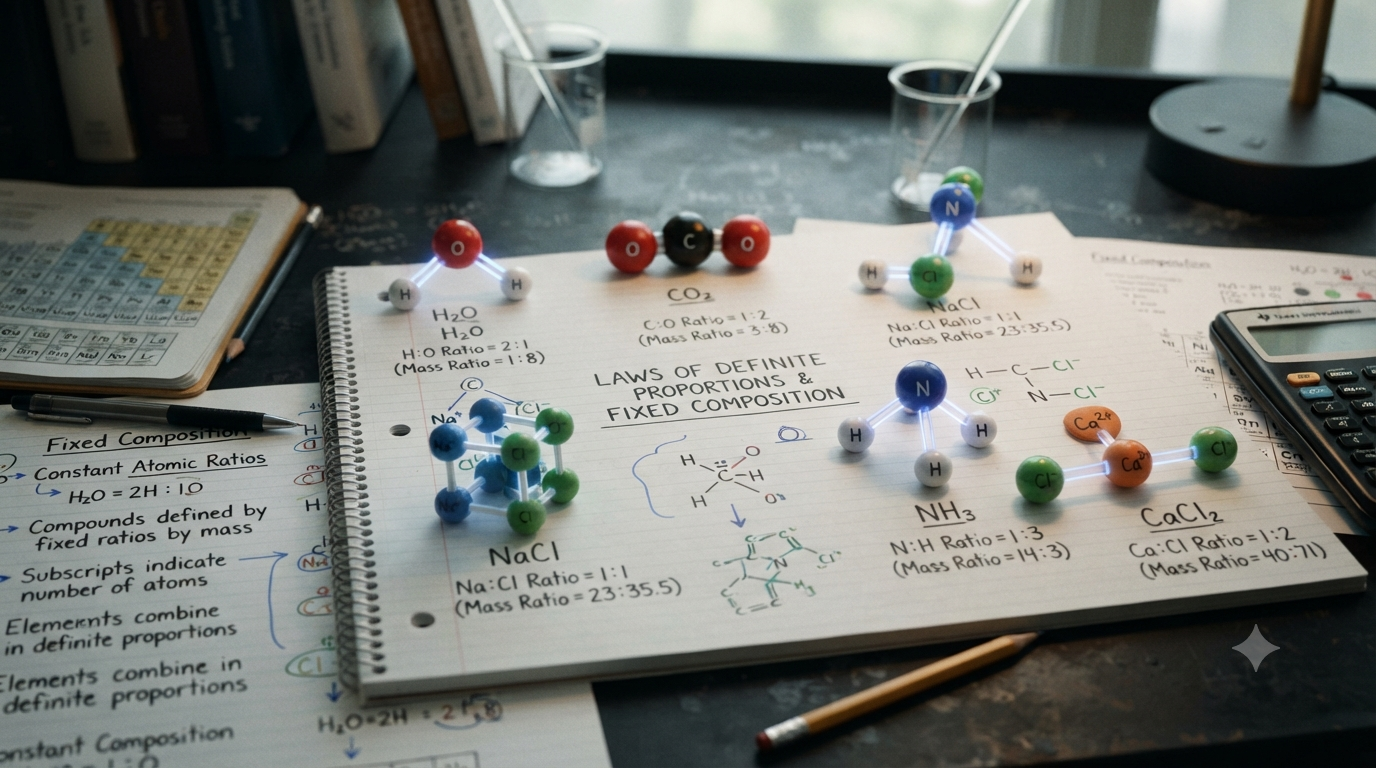
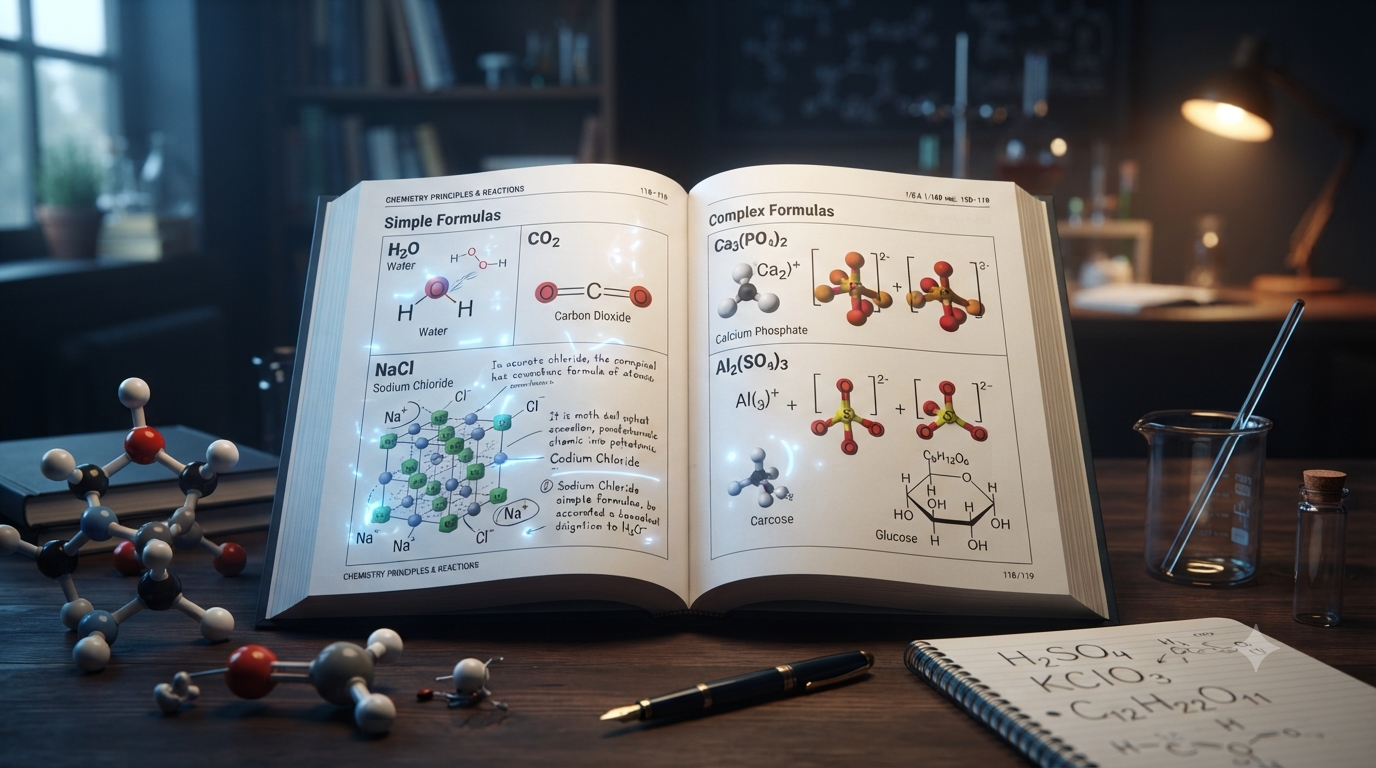
Chemical formulas allow chemists to identify substances quickly and accurately. They show which elements or ions make up a compound and help predict how that substance may behave in a chemical reaction.

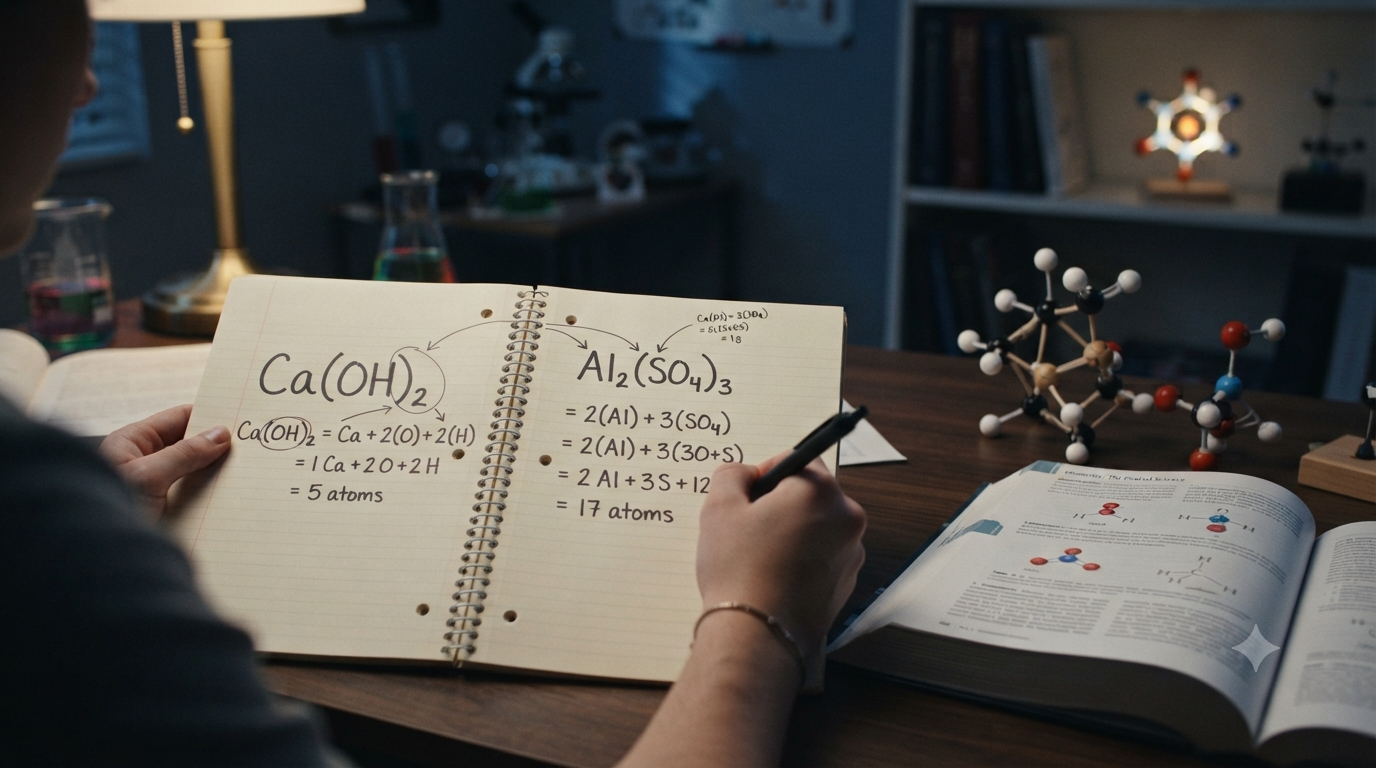
For example, the formula NaOH tells us that sodium hydroxide contains sodium, oxygen, and hydrogen. Similarly, Ca(OH)₂ shows that calcium hydroxide contains one calcium ion associated with two hydroxide ions.

Knowing formulas is particularly useful when writing chemical equations. It also helps in calculating molar mass, determining the amount of a substance required for a reaction, and understanding the ions produced when a base dissolves in water.

Common Formulas of Bases

Many bases are encountered in school and college chemistry. Some are strong bases, while others are weak bases. The following are among the most common examples.

Sodium Hydroxide

Formula: NaOH

Sodium hydroxide is one of the most familiar strong bases. It is commonly known as caustic soda. When dissolved in water, it separates into sodium ions and hydroxide ions.

NaOH → Na⁺ + OH⁻

Sodium hydroxide is widely used in the manufacture of soaps, detergents, paper, textiles, and various chemicals. It is also used to remove grease and in some industrial cleaning processes.

Because sodium hydroxide is highly corrosive, it must be handled carefully.

Potassium Hydroxide

Formula: KOH

Potassium hydroxide is another strong base. It is commonly called caustic potash. In water, it dissociates into potassium ions and hydroxide ions.

KOH → K⁺ + OH⁻

Potassium hydroxide is used in the production of soft soaps, alkaline batteries, and various chemical products. It is also useful in laboratory reactions where a strong alkaline substance is required.

Like sodium hydroxide, potassium hydroxide is corrosive and requires careful handling.

Calcium Hydroxide

Formula: Ca(OH)₂

Calcium hydroxide is commonly called slaked lime or hydrated lime. It is an important base used in construction, agriculture, water treatment, and several chemical processes.

In water, calcium hydroxide can produce calcium ions and hydroxide ions.

Ca(OH)₂ ⇌ Ca²⁺ + 2OH⁻

Calcium hydroxide is only slightly soluble in water compared with sodium hydroxide and potassium hydroxide. Its aqueous solution is known as limewater.

Limewater is especially important in chemistry because it can be used to test for carbon dioxide. When carbon dioxide is passed through limewater, calcium carbonate forms and makes the solution appear milky.

CO₂ + Ca(OH)₂ → CaCO₃ + H₂O

Magnesium Hydroxide

Formula: Mg(OH)₂

Magnesium hydroxide is a base that is only slightly soluble in water. It is commonly found in some antacid preparations because it can react with excess stomach acid.

Mg(OH)₂ + 2HCl → MgCl₂ + 2H₂O

This reaction is an example of neutralization. Magnesium hydroxide reacts with hydrochloric acid to produce magnesium chloride and water.

Because magnesium hydroxide has low solubility in water, it behaves differently from highly soluble strong bases such as sodium hydroxide.

Ammonium Hydroxide

Formula: NH₄OH

Ammonium hydroxide is commonly used as a name for aqueous ammonia. It represents ammonia dissolved in water and is often written as NH₄OH in basic chemistry.

A simplified representation is:

NH₃ + H₂O ⇌ NH₄⁺ + OH⁻

Ammonia is a weak base because it reacts only partially with water. Ammonia solutions are used in cleaning products, laboratories, agriculture, and industrial processes.

It is important to distinguish between ammonia (NH₃) and the aqueous ammonia solution commonly called ammonium hydroxide.

Barium Hydroxide

Formula: Ba(OH)₂

Barium hydroxide is a strong base that can dissociate in water to produce barium ions and hydroxide ions.

Ba(OH)₂ → Ba²⁺ + 2OH⁻

It is used in certain laboratory and industrial chemical processes. Soluble barium compounds require particular care because many barium compounds can be toxic.

Lithium Hydroxide

Formula: LiOH

Lithium hydroxide is a strong base that contains lithium ions and hydroxide ions.

LiOH → Li⁺ + OH⁻

It has applications in chemical manufacturing and has also been used in systems designed to remove carbon dioxide from air, including some closed environments.

Aluminum Hydroxide

Formula: Al(OH)₃

Aluminum hydroxide is an important compound with amphoteric behavior. This means it can react with both acids and strong bases under appropriate conditions.

With an acid, it can behave as a base:

Al(OH)₃ + 3HCl → AlCl₃ + 3H₂O

Its properties make it useful in several applications, including some pharmaceutical preparations and water-treatment processes.

Common Bases and Their Formulas at a Glance

BaseChemical FormulaCommon Name
Sodium hydroxideNaOHCaustic soda
Potassium hydroxideKOHCaustic potash
Calcium hydroxideCa(OH)₂Slaked lime
Magnesium hydroxideMg(OH)₂Milk of magnesia
AmmoniaNH₃Ammonia
Ammonium hydroxideNH₄OHAqueous ammonia
Barium hydroxideBa(OH)₂—
Lithium hydroxideLiOH—
Aluminum hydroxideAl(OH)₃—

How to Understand the Formula of a Hydroxide Base

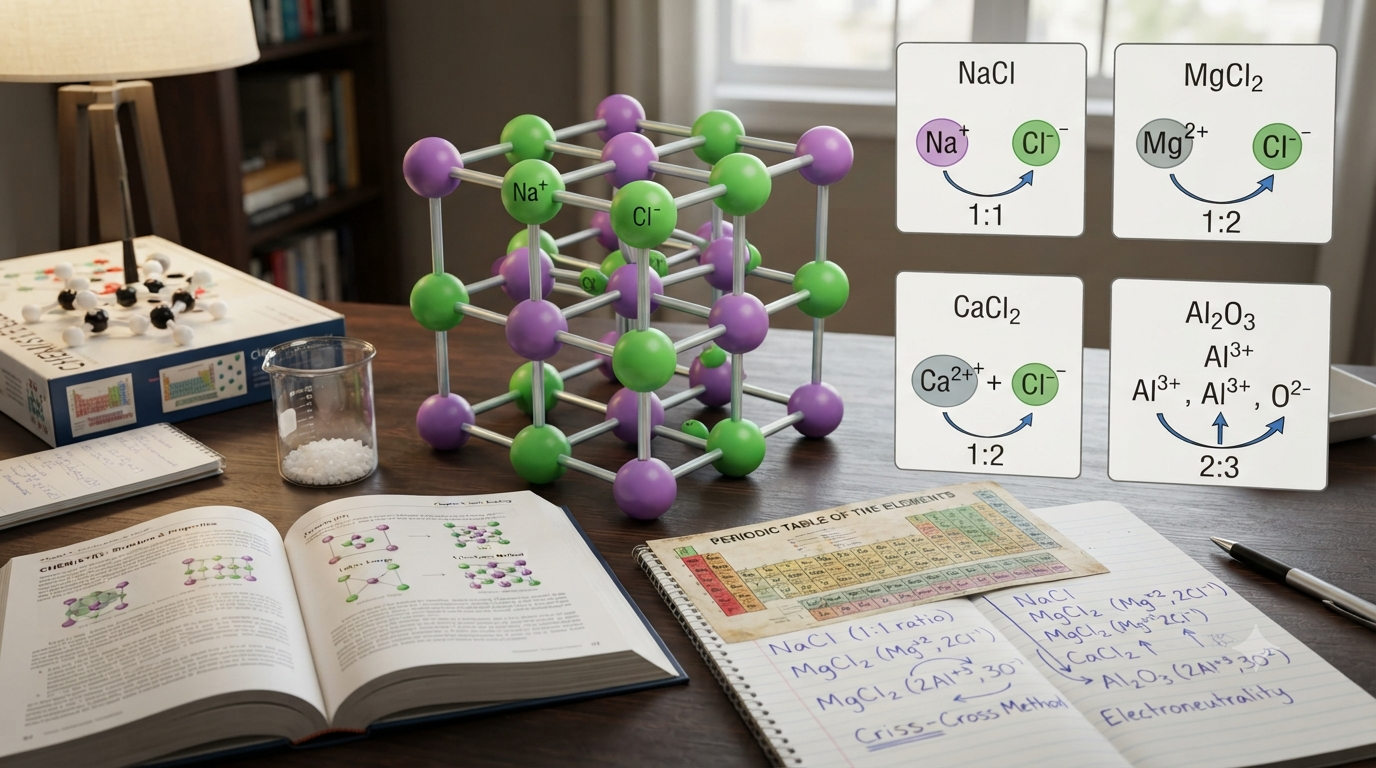
Many common bases are metal hydroxides. Their formulas can often be understood by looking at the charge of the metal ion and the hydroxide ion.

The hydroxide ion has a charge of −1:

OH⁻

Sodium forms a +1 ion:

Na⁺

Therefore, one sodium ion combines with one hydroxide ion:

Na⁺ + OH⁻ → NaOH

Calcium forms a +2 ion:

Ca²⁺

Two hydroxide ions are needed to balance the +2 charge:

Ca²⁺ + 2OH⁻ → Ca(OH)₂

Similarly, aluminum forms Al³⁺, so three hydroxide ions are needed:

Al³⁺ + 3OH⁻ → Al(OH)₃

This charge-balancing method is useful for understanding why different bases have different formulas.

Strong Bases and Weak Bases

Bases can also be classified according to how completely they produce ions in water.

Strong bases dissociate extensively in aqueous solution. Sodium hydroxide and potassium hydroxide are common examples.

NaOH → Na⁺ + OH⁻

KOH → K⁺ + OH⁻

Weak bases do not ionize completely in water. Ammonia is a common example.

NH₃ + H₂O ⇌ NH₄⁺ + OH⁻

The double arrow indicates that the reaction reaches an equilibrium rather than proceeding completely in one direction.

It is important to remember that strength and concentration are different concepts. A strong base can be present at low concentration, while a weak base can be present at a higher concentration. Strength describes the extent of ionization or reaction, whereas concentration describes the amount of dissolved substance.

Bases and Neutralization Reactions

One of the most important reactions involving bases is neutralization. When a base reacts with an acid, salt and water are commonly produced.

For example:

NaOH + HCl → NaCl + H₂O

Here, sodium hydroxide reacts with hydrochloric acid to produce sodium chloride and water.

Another example is:

Ca(OH)₂ + 2HCl → CaCl₂ + 2H₂O

The number of acid molecules required depends on the number of hydroxide ions available from the base. This is why understanding the chemical formula is important when balancing chemical equations.

Bases in Everyday Life

Bases are not limited to chemistry laboratories. They have many practical uses in everyday life and industry.

Sodium hydroxide is important in soap and chemical manufacturing. Calcium hydroxide is used in construction and agriculture. Magnesium hydroxide is used in some antacid products. Ammonia solutions are used in cleaning and industrial applications.

Baking soda, whose chemical formula is NaHCO₃, is also commonly described as a basic salt rather than a typical hydroxide base. It can react with acids and is widely used in cooking and household applications.

These examples show that basic substances play an important role in many areas of daily life.

How to Remember Common Base Formulas

Memorizing formulas becomes easier when they are grouped logically rather than learned as isolated facts.

Start with the common metal hydroxides:

NaOH — sodium hydroxide

KOH — potassium hydroxide

LiOH — lithium hydroxide

Then focus on metals that form ions with higher charges:

Ca(OH)₂ — calcium hydroxide

Mg(OH)₂ — magnesium hydroxide

Ba(OH)₂ — barium hydroxide

Al(OH)₃ — aluminum hydroxide

The subscripts in these formulas are related to the charge of the metal ion. Understanding this relationship makes formulas easier to reconstruct instead of simply memorizing them.

Difference Between a Base and an Alkali

The terms base and alkali are related but are not exactly the same.

A base is a substance that can neutralize an acid. An alkali is a base that is soluble in water and produces hydroxide ions in solution.

For example, sodium hydroxide is both a base and an alkali because it dissolves readily in water. Calcium hydroxide is also considered an alkali because the portion that dissolves produces hydroxide ions, although its solubility is relatively low.

Therefore, every alkali is a base, but not every base is necessarily an alkali.

Importance of Learning Base Formulas

Learning common base formulas helps build a foundation for many areas of chemistry. Chemical formulas are used when studying ionic compounds, chemical equations, neutralization, pH, molarity, titration, solubility, and acid-base reactions.

Once students understand how formulas are constructed from ions and charges, many chemical equations become easier to interpret. Instead of memorizing every formula separately, they can use the charges of ions to understand why a compound has a particular composition.

This approach also helps when predicting products in simple acid-base reactions.

Conclusion

Common bases such as sodium hydroxide (NaOH), potassium hydroxide (KOH), calcium hydroxide [Ca(OH)₂], magnesium hydroxide [Mg(OH)₂], ammonia (NH₃), barium hydroxide [Ba(OH)₂], lithium hydroxide (LiOH), and aluminum hydroxide [Al(OH)₃] are important compounds in chemistry. Their formulas reveal the elements or ions present and help us understand how they behave in chemical reactions. Some bases are strong, while others are weak, and their solubility can also vary considerably. By learning the formulas and understanding how ionic charges determine their composition, it becomes much easier to study neutralization reactions, salts, pH, and other important concepts in acid-base chemistry.

FAQs

1. What is a base in chemistry?

A base is a substance that can react with an acid to form salt and water in a neutralization reaction. According to the Arrhenius concept, a base produces hydroxide ions (OH⁻) when dissolved in water. Common examples include sodium hydroxide (NaOH), potassium hydroxide (KOH), and calcium hydroxide [Ca(OH)₂]. Some bases, such as ammonia (NH₃), do not contain hydroxide ions in their formula but produce OH⁻ by reacting with water. Bases generally have a pH greater than 7 in aqueous solutions. Their properties and strength depend on their chemical composition and behavior in water.

2. What are the common formulas of bases?

Common base formulas include sodium hydroxide (NaOH), potassium hydroxide (KOH), calcium hydroxide [Ca(OH)₂], magnesium hydroxide [Mg(OH)₂], barium hydroxide [Ba(OH)₂], lithium hydroxide (LiOH), and aluminum hydroxide [Al(OH)₃]. Ammonia (NH₃) is also an important base, although it does not contain OH⁻ in its formula. These compounds differ in solubility, strength, and chemical behavior. Learning their formulas makes it easier to identify bases and understand their reactions with acids. Chemical formulas also show the elements or ions present and help when writing and balancing acid-base chemical equations.

3. What is the chemical formula of sodium hydroxide?

The chemical formula of sodium hydroxide is NaOH. It consists of sodium (Na⁺) and hydroxide (OH⁻) ions in a one-to-one ratio. Sodium hydroxide is a strong base and dissociates extensively when dissolved in water.

NaOH → Na⁺ + OH⁻

It is commonly known as caustic soda and has many industrial applications, including the manufacture of soaps, detergents, paper, and chemicals. Sodium hydroxide is highly corrosive, so it must be handled carefully. Its formula is one of the most important base formulas to remember because NaOH frequently appears in acid-base reactions, neutralization equations, and chemistry calculations.

4. What is the chemical formula of potassium hydroxide?

The chemical formula of potassium hydroxide is KOH. It contains potassium ions (K⁺) and hydroxide ions (OH⁻). Potassium hydroxide is a strong base that dissociates in water.

KOH → K⁺ + OH⁻

It is commonly called caustic potash. Potassium hydroxide is used in the production of soft soaps, alkaline batteries, and various chemical products. Like sodium hydroxide, it is highly corrosive and should be handled with appropriate safety precautions. The formula KOH is relatively simple because potassium has a +1 charge and hydroxide has a −1 charge, so one ion of each is required to form a neutral compound.

5. Why does calcium hydroxide have the formula Ca(OH)₂?

Calcium hydroxide has the formula Ca(OH)₂ because calcium forms a calcium ion with a +2 charge, while each hydroxide ion has a −1 charge. Two hydroxide ions are therefore needed to balance one calcium ion.

Ca²⁺ + 2OH⁻ → Ca(OH)₂

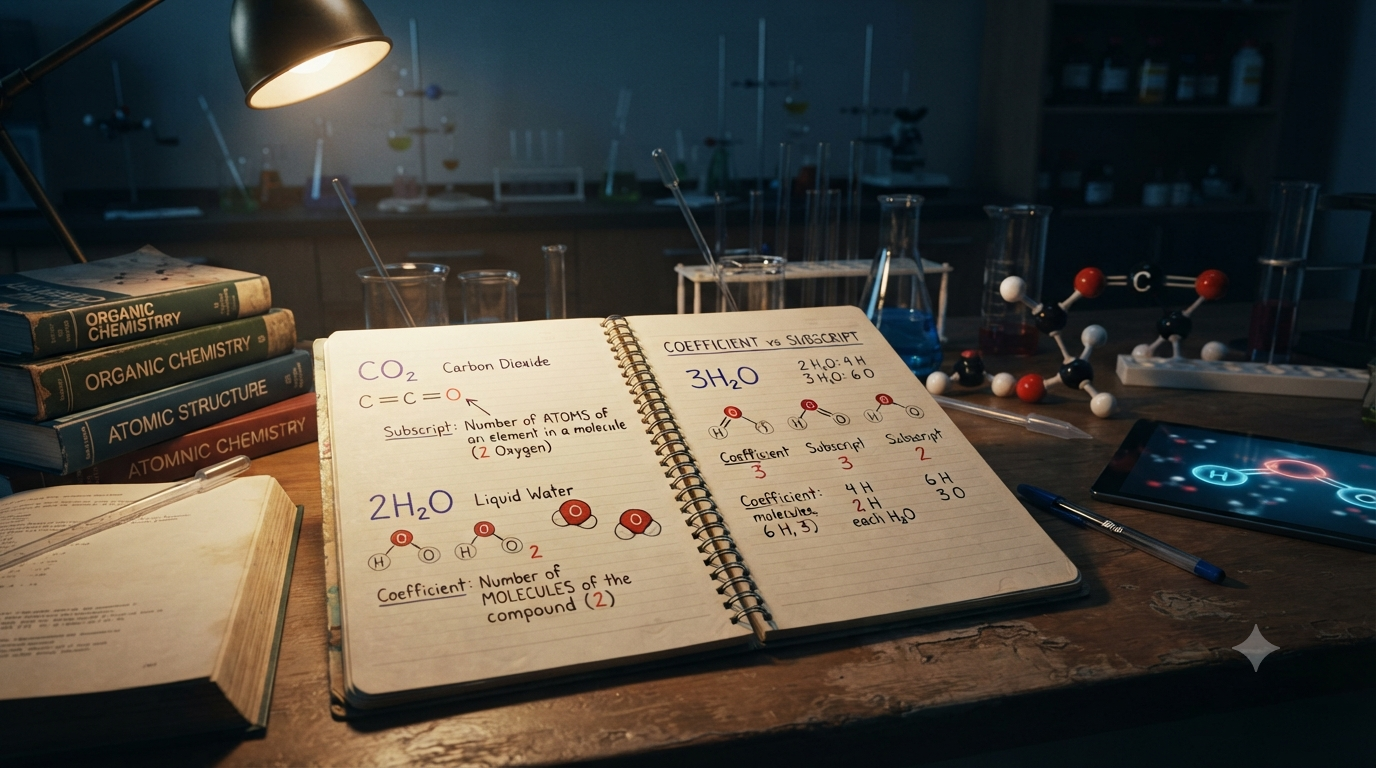
The subscript 2 applies to the entire hydroxide group, which is why parentheses are used. Calcium hydroxide is commonly called slaked lime or hydrated lime. It is used in construction, agriculture, water treatment, and other chemical processes. Its aqueous solution, known as limewater, is also commonly used to test for carbon dioxide.

6. Is ammonia a base even though its formula does not contain OH⁻?

Yes. Ammonia (NH₃) is a base even though its chemical formula does not contain hydroxide ions. When ammonia dissolves in water, it reacts with water molecules and accepts a proton.

NH₃ + H₂O ⇌ NH₄⁺ + OH⁻

This reaction produces hydroxide ions, making the solution basic. Ammonia is classified as a weak base because only a fraction of ammonia molecules react with water. Ammonia solutions are used in cleaning products, agriculture, laboratories, and industrial processes. This example shows why identifying a base cannot always be done simply by looking for OH⁻ in its chemical formula.

7. What is the difference between a strong base and a weak base?

A strong base dissociates or ionizes extensively in water, producing a relatively high proportion of hydroxide ions. Sodium hydroxide (NaOH) and potassium hydroxide (KOH) are common strong bases. A weak base reacts only partially with water and establishes an equilibrium. Ammonia (NH₃) is a common example.

NaOH → Na⁺ + OH⁻

NH₃ + H₂O ⇌ NH₄⁺ + OH⁻

The terms strong and weak describe the extent of ionization or reaction, not simply how concentrated a solution is. Therefore, strength and concentration are different concepts. A weak base can still be present at a relatively high concentration.

8. What is the formula of magnesium hydroxide?

The chemical formula of magnesium hydroxide is Mg(OH)₂. Magnesium forms Mg²⁺ ions, while hydroxide has a −1 charge. Therefore, two hydroxide ions are required to balance one magnesium ion.

Mg²⁺ + 2OH⁻ → Mg(OH)₂

Magnesium hydroxide is only slightly soluble in water and is commonly known as milk of magnesia when used as a suspension. It can react with acids and is used in some antacid preparations. For example:

Mg(OH)₂ + 2HCl → MgCl₂ + 2H₂O

This reaction demonstrates the neutralization of an acid by a base.

9. What is the difference between a base and an alkali?

A base is a substance that can neutralize an acid, while an alkali is a base that is soluble in water and produces hydroxide ions in aqueous solution. Sodium hydroxide (NaOH) and potassium hydroxide (KOH) are common examples of alkalis because they dissolve readily in water and produce OH⁻ ions. Some bases have very low solubility in water. Therefore, the terms base and alkali should not always be used interchangeably. A useful way to remember the relationship is that alkalis are bases, but not all bases are necessarily alkalis. The distinction mainly concerns solubility and behavior in water.

10. Why is it important to learn the formulas of common bases?

Learning common base formulas provides a foundation for understanding many chemistry topics. Formulas such as NaOH, KOH, Ca(OH)₂, Mg(OH)₂, and NH₃ are frequently used when studying acids, bases, salts, pH, neutralization, chemical equations, and laboratory reactions. Understanding formulas also helps learners identify the ions present in compounds and determine how those ions combine to produce electrically neutral substances. Instead of memorizing every formula separately, learners can understand how ionic charges determine formulas. This makes it easier to write chemical equations, balance reactions, calculate molar masses, and understand the behavior of bases in different chemical processes.

Related Posts

Leave a Comment

Your email address will not be published. Required fields are marked *

Scroll to Top