
Common Chemical Formulas Every Student Should Know

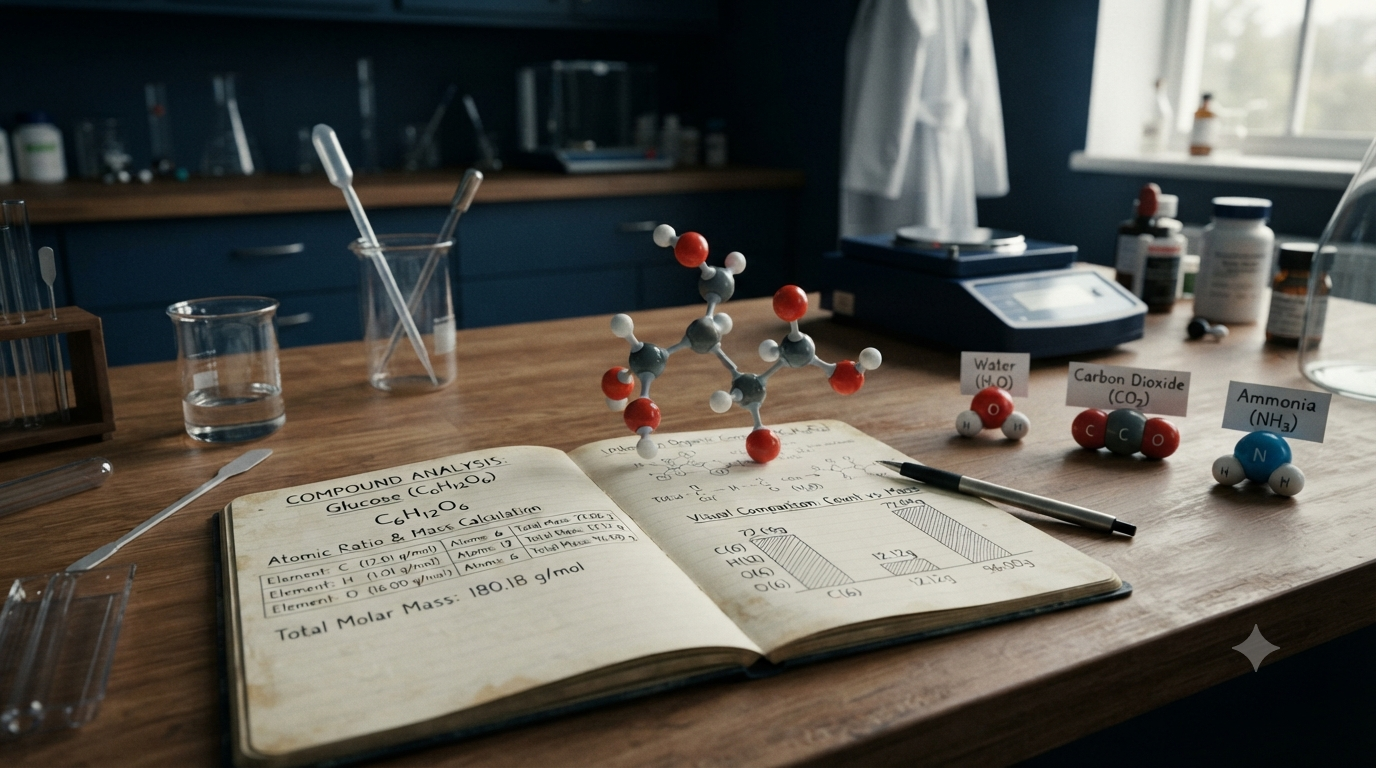
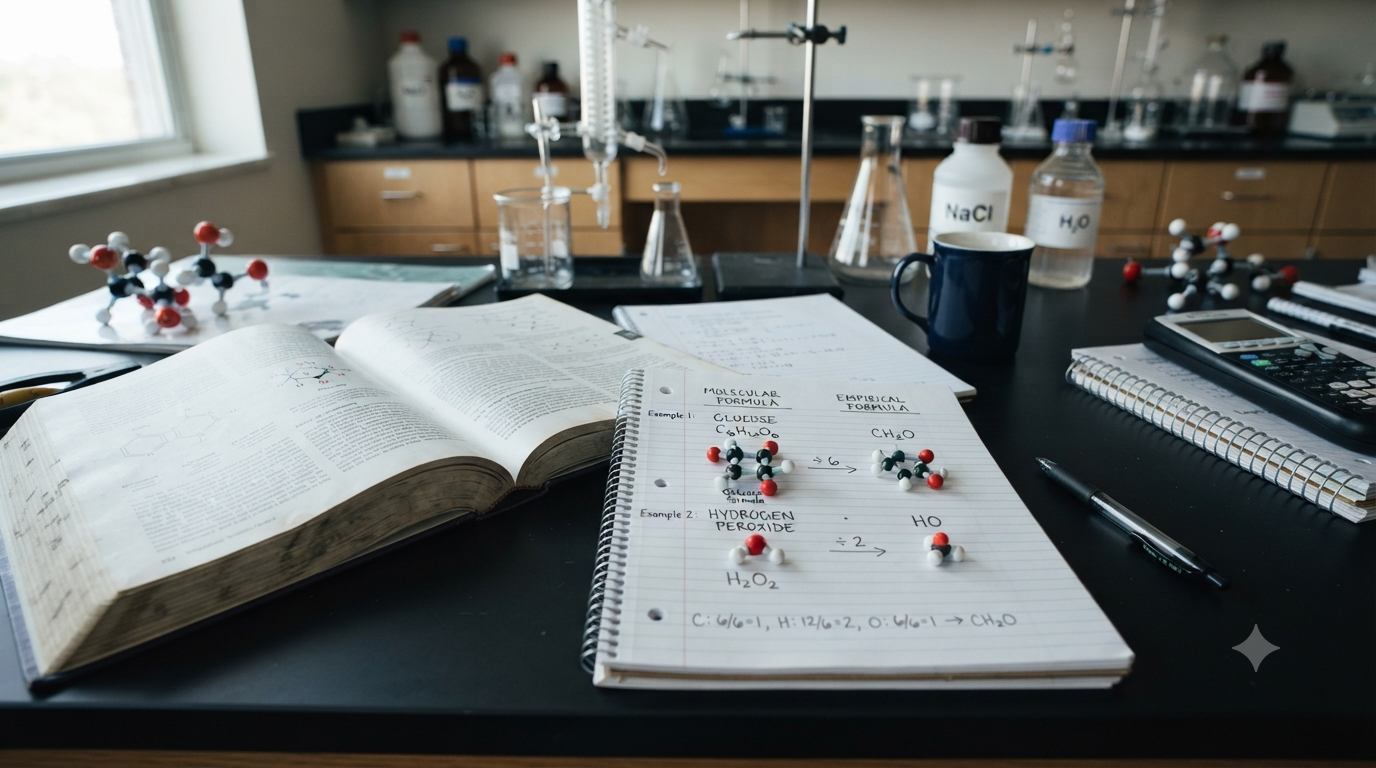
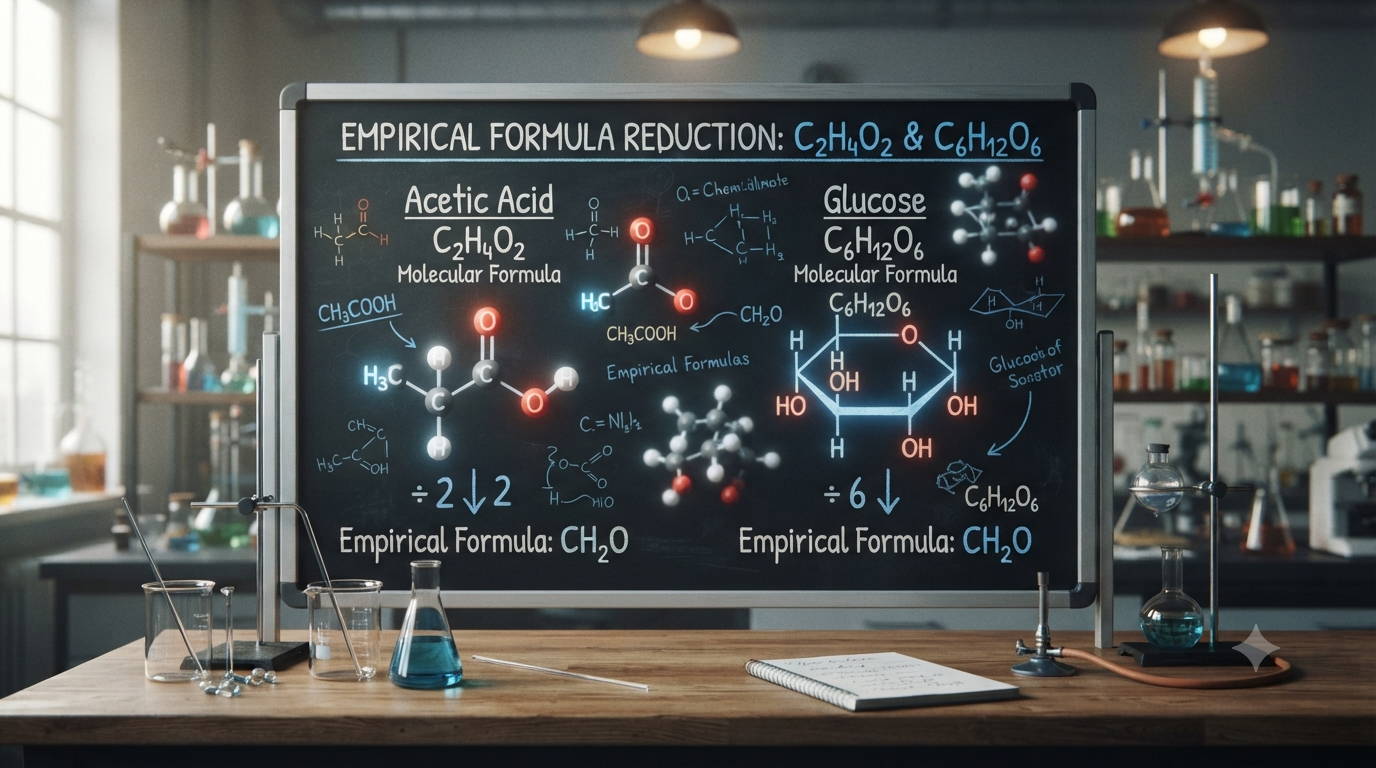
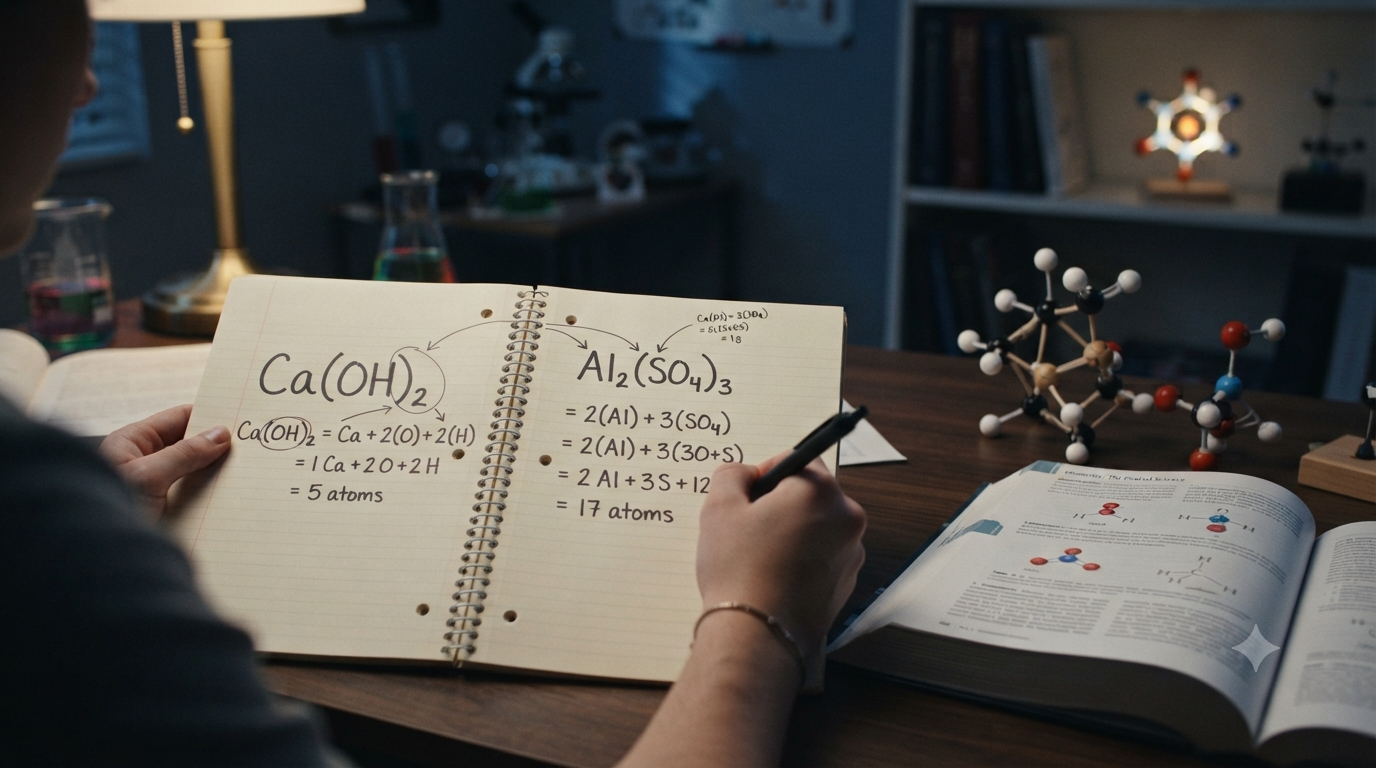
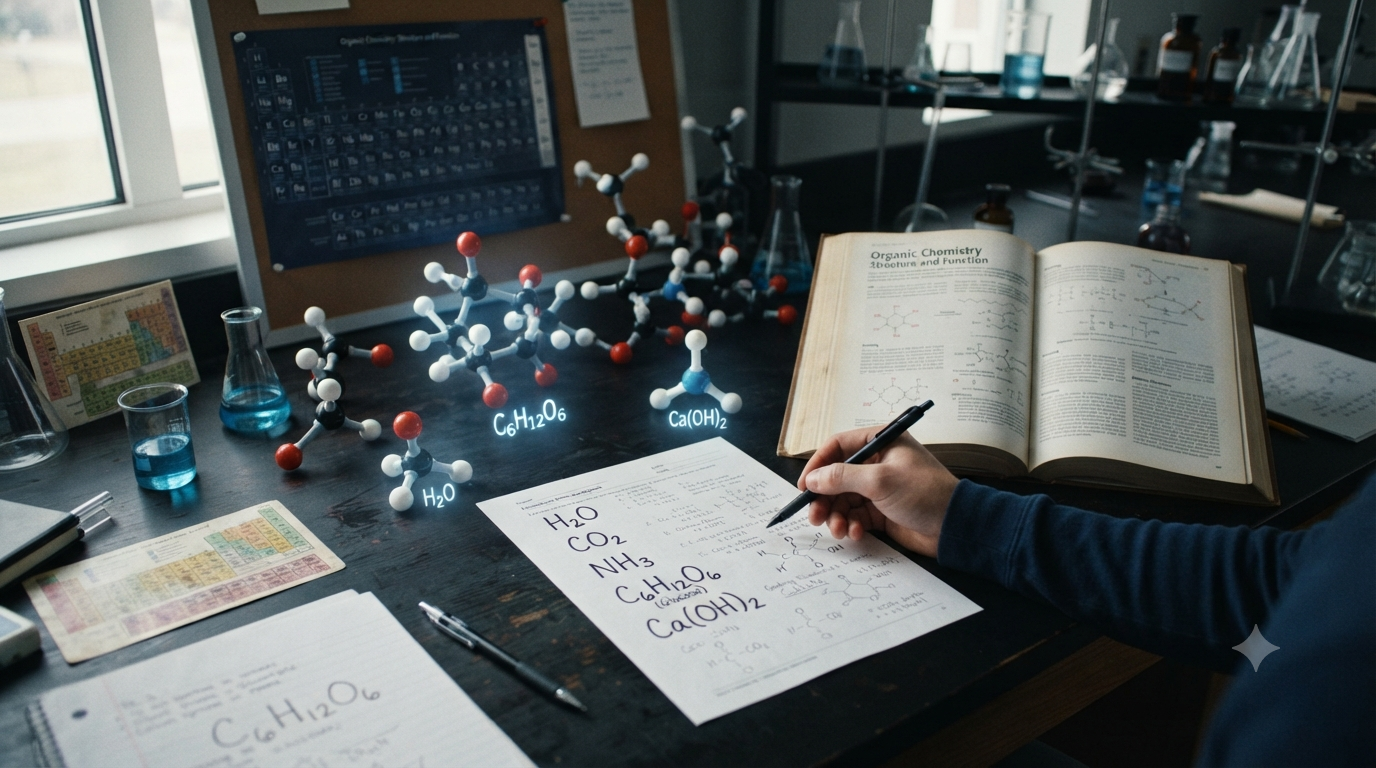
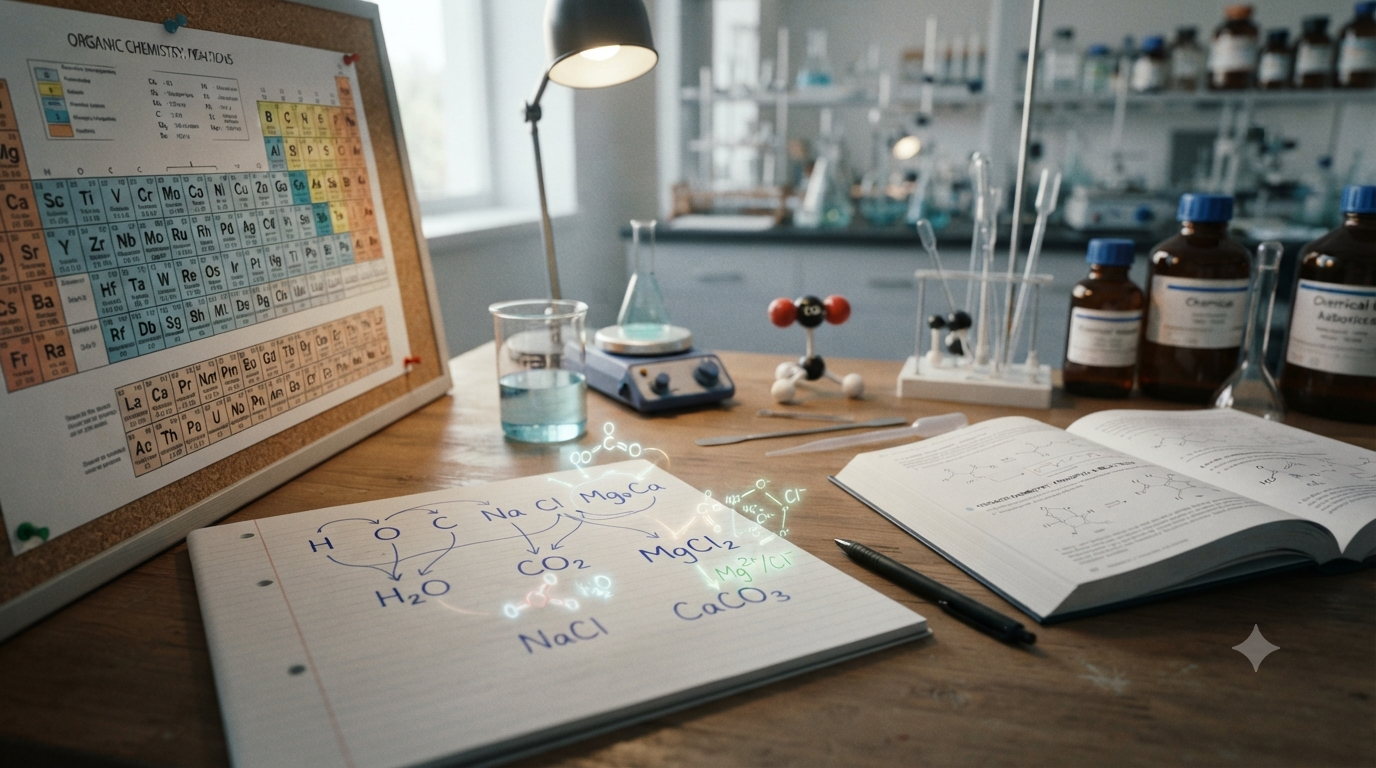
Chemistry study desk showing common chemical formulas, molecular structures, textbooks, laboratory glassware, and science notes.

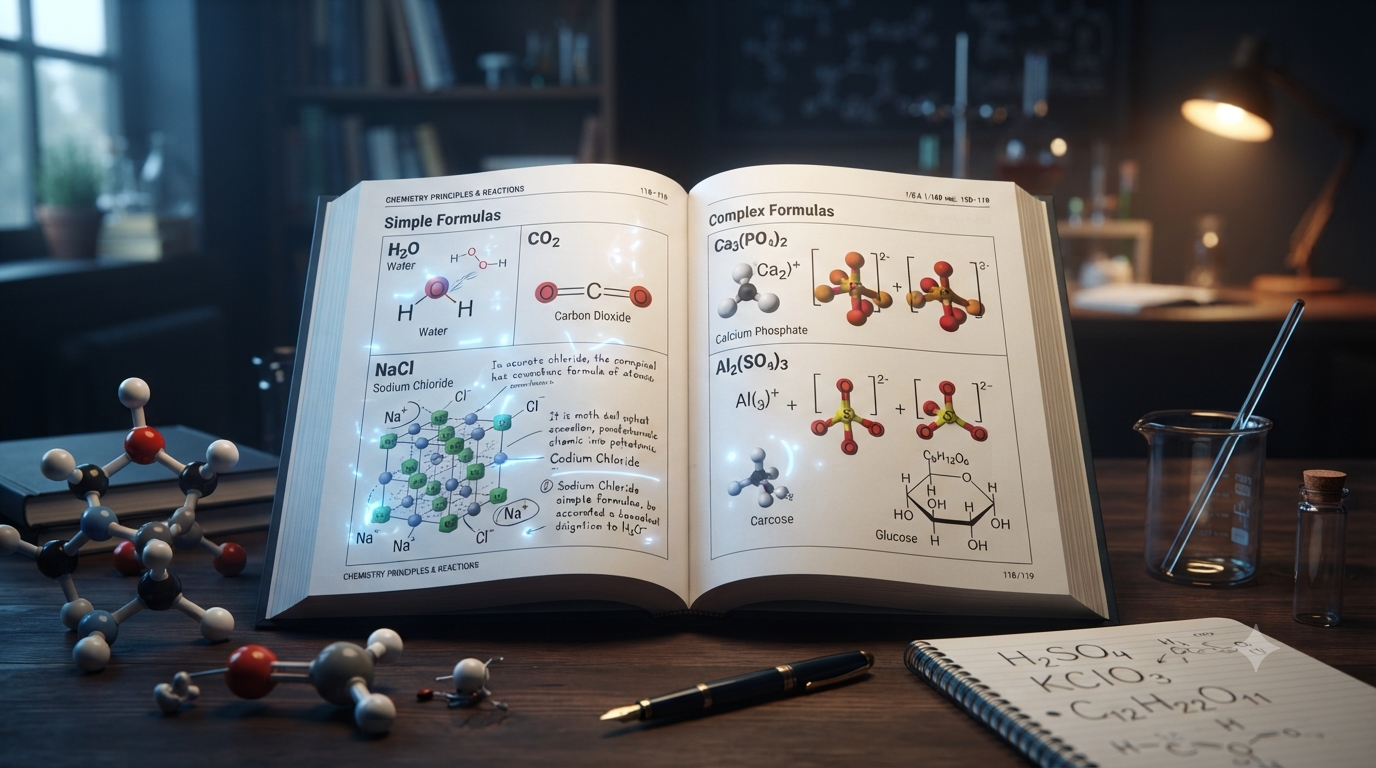
Chemistry becomes much easier when you understand the formulas behind common substances, compounds, acids, bases, salts, and gases. A chemical formula is a short way of showing which elements are present in a substance and how many atoms of each element are involved. For example, H₂O represents water, showing that each molecule contains two hydrogen atoms and one oxygen atom.

Learning common chemical formulas is useful for solving equations, identifying substances, understanding reactions, and connecting chemistry with everyday life. However, memorizing formulas without understanding what they represent can make chemistry confusing. The better approach is to learn the most frequently used formulas along with the names and basic uses of the substances.

This article covers common chemical formulas that students encounter in basic chemistry, school laboratories, science textbooks, and everyday situations.

What Is a Chemical Formula?

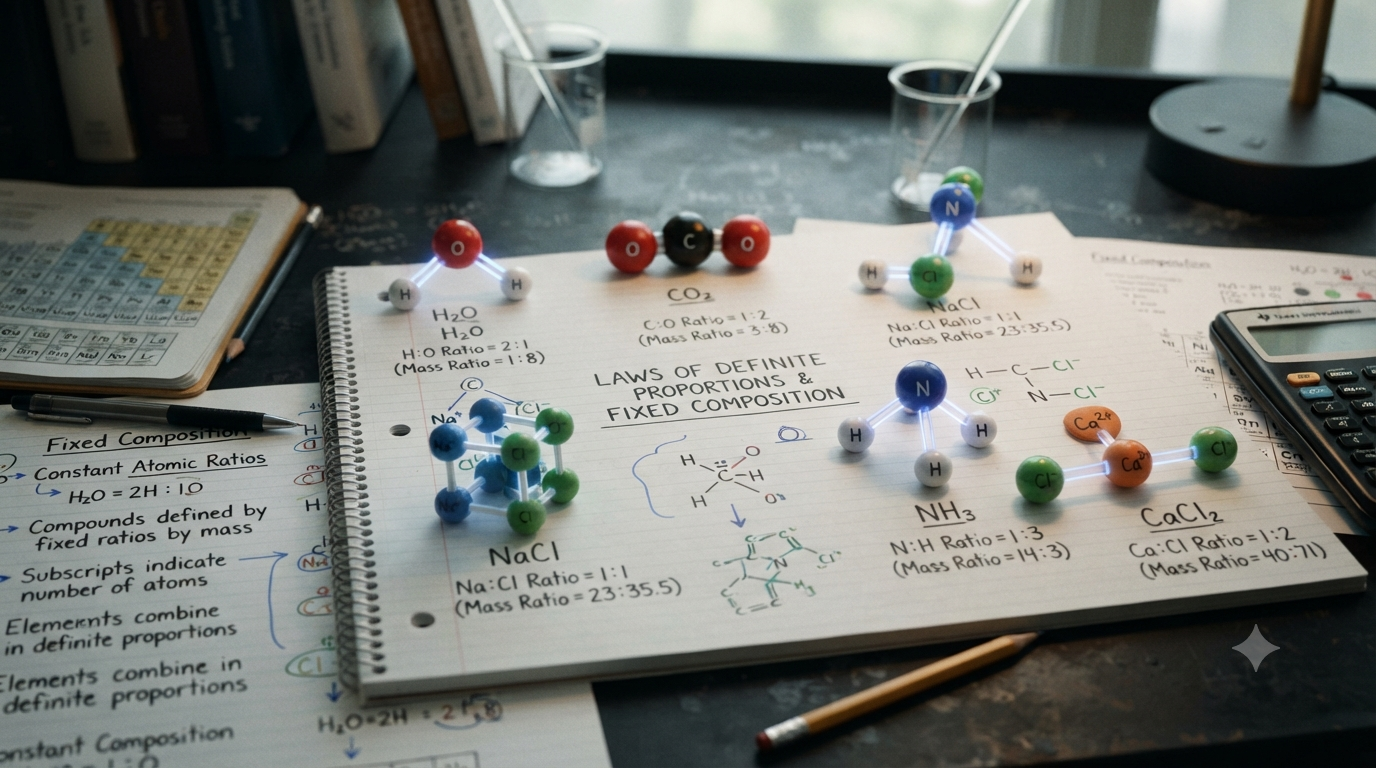
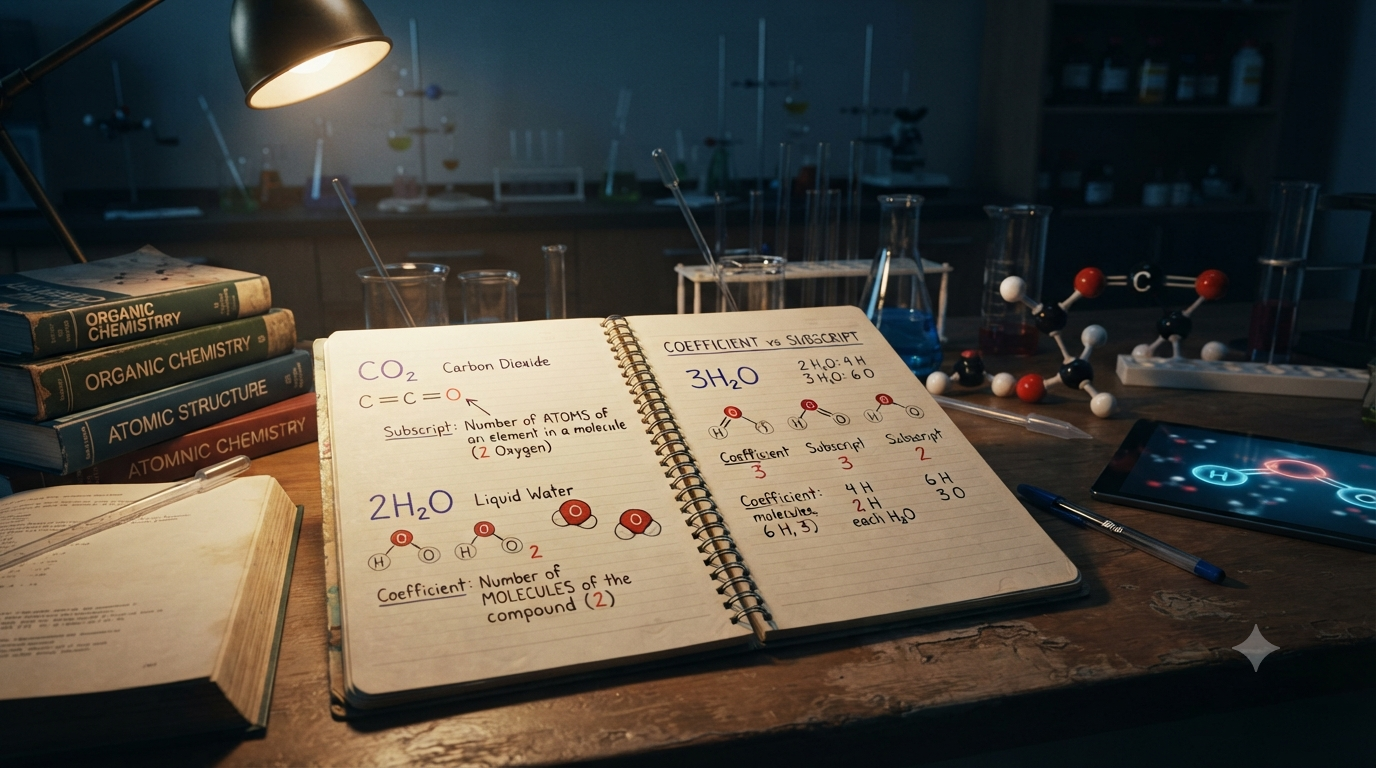
A chemical formula represents the composition of a chemical substance using symbols of elements and numerical subscripts. The symbols tell us which elements are present, while the subscripts tell us the number of atoms of each element in a molecule or formula unit.

For example:

H₂O = Water

The formula contains two hydrogen atoms and one oxygen atom.

Similarly:

CO₂ = Carbon dioxide

The formula contains one carbon atom and two oxygen atoms.

A formula such as NaCl represents sodium chloride. It contains sodium and chlorine in a 1:1 ratio.

Chemical formulas are important because they provide information in a compact form. Instead of writing the complete chemical name every time, scientists can use a formula to represent the substance.

Common Formulas of Elements

Some elements exist naturally as individual atoms, while several non-metal elements commonly occur as molecules containing two atoms. These are often called diatomic molecules.

ElementSymbol or Formula
HydrogenH₂
OxygenO₂
NitrogenN₂
ChlorineCl₂
FluorineF₂
BromineBr₂
IodineI₂
CarbonC
SulfurS
PhosphorusP₄

Hydrogen, oxygen, nitrogen, chlorine, fluorine, bromine, and iodine are commonly represented as diatomic molecules under ordinary elemental conditions.

Knowing these formulas is particularly important when writing chemical equations. For example, hydrogen reacts with oxygen to form water:

2H₂ + O₂ → 2H₂O

Understanding the elemental formulas helps you balance such equations correctly.

Common Chemical Formulas of Water and Simple Compounds

Some of the most familiar chemical formulas represent substances that we encounter every day.

SubstanceChemical Formula
WaterH₂O
Hydrogen peroxideH₂O₂
Carbon monoxideCO
Carbon dioxideCO₂
AmmoniaNH₃
MethaneCH₄
EthaneC₂H₆
PropaneC₃H₈
EtheneC₂H₄
AcetyleneC₂H₂

Water is one of the most important compounds in chemistry. Hydrogen peroxide contains an additional oxygen atom compared with water and is commonly used as an oxidizing and disinfecting agent.

Carbon monoxide and carbon dioxide are both made from carbon and oxygen, but their properties are very different. This demonstrates why the number and arrangement of atoms matter in chemistry.

Common Acids and Their Formulas

Acids are an important group of chemical substances. Many acids are found in laboratories, foods, industrial processes, and biological systems.

AcidChemical Formula
Hydrochloric acidHCl
Sulfuric acidH₂SO₄
Nitric acidHNO₃
Carbonic acidH₂CO₃
Phosphoric acidH₃PO₄
Acetic acidCH₃COOH
Formic acidHCOOH
Citric acidC₆H₈O₇

Hydrochloric acid is commonly encountered in laboratory chemistry and is also present in the stomach as part of gastric acid. Sulfuric acid is widely used in industrial chemistry. Nitric acid is important in chemical manufacturing and laboratory work.

Acetic acid is the main acid associated with vinegar. Citric acid occurs naturally in citrus fruits such as lemons and oranges.

Students should pay attention to the difference between formulas such as HCl and H₂SO₄. The subscripts indicate how many atoms of each element are present.

Common Bases and Alkalis

Bases react with acids and are another major group of substances studied in chemistry. Some bases dissolve in water and are called alkalis.

Base or AlkaliChemical Formula
Sodium hydroxideNaOH
Potassium hydroxideKOH
Calcium hydroxideCa(OH)₂
Magnesium hydroxideMg(OH)₂
Ammonium hydroxideNH₄OH

Sodium hydroxide is commonly known as caustic soda, while potassium hydroxide is called caustic potash. Calcium hydroxide is also known as slaked lime.

Magnesium hydroxide is used in some antacid preparations. The formula Mg(OH)₂ shows that one magnesium ion is associated with two hydroxide groups.

Common Salts and Ionic Compounds

Salts are formed in many chemical reactions, particularly acid-base reactions. Sodium chloride is perhaps the most familiar example.

CompoundChemical Formula
Sodium chlorideNaCl
Potassium chlorideKCl
Calcium chlorideCaCl₂
Sodium carbonateNa₂CO₃
Sodium bicarbonateNaHCO₃
Calcium carbonateCaCO₃
Magnesium sulfateMgSO₄
Copper sulfateCuSO₄
Sodium sulfateNa₂SO₄
Potassium nitrateKNO₃
Ammonium chlorideNH₄Cl

Sodium chloride is common table salt. Sodium bicarbonate is commonly called baking soda, while sodium carbonate is known as washing soda.

Calcium carbonate occurs in materials such as limestone, marble, and chalk. Copper sulfate is a commonly studied compound in school chemistry experiments.

Common Oxides

Oxides are compounds in which oxygen is chemically combined with another element.

OxideChemical Formula
Carbon monoxideCO
Carbon dioxideCO₂
Sulfur dioxideSO₂
Sulfur trioxideSO₃
Calcium oxideCaO
Magnesium oxideMgO
Copper(II) oxideCuO
Iron(III) oxideFe₂O₃
Silicon dioxideSiO₂
Aluminium oxideAl₂O₃

Calcium oxide is commonly called quicklime. Silicon dioxide is a major component of sand and many types of glass. Iron oxides are important in the formation of rust and other iron-containing materials.

The formulas also show how different elements can combine with oxygen in different ratios. For example, iron can form several oxides, so the chemical formula is essential for identifying the particular compound.

Common Gases and Their Formulas

Several gases are especially important in basic chemistry.

GasFormula
OxygenO₂
HydrogenH₂
NitrogenN₂
Carbon dioxideCO₂
Carbon monoxideCO
ChlorineCl₂
AmmoniaNH₃
MethaneCH₄
Sulfur dioxideSO₂
OzoneO₃

Oxygen is essential for aerobic respiration and supports combustion. Nitrogen makes up most of Earth’s atmosphere. Carbon dioxide is involved in photosynthesis and the carbon cycle.

Ozone has the formula O₃, meaning each molecule contains three oxygen atoms. Its properties differ significantly from ordinary oxygen, O₂, even though both consist only of oxygen atoms.

Common Organic Compounds

Organic chemistry focuses mainly on carbon-containing compounds. Students often encounter several simple organic compounds during introductory chemistry.

CompoundFormula
MethaneCH₄
EthaneC₂H₆
PropaneC₃H₈
ButaneC₄H₁₀
EtheneC₂H₄
EthyneC₂H₂
MethanolCH₃OH
EthanolC₂H₅OH
Acetic acidCH₃COOH
GlucoseC₆H₁₂O₆

Methane, ethane, propane, and butane are hydrocarbons known as alkanes. Ethene and ethyne belong to different classes of unsaturated hydrocarbons.

Ethanol is an important organic compound used in many chemical and industrial applications. Glucose is a simple sugar and an important source of energy in living organisms.

Common Biological Molecules

Chemistry is closely connected to biology because living organisms contain many important chemical substances.

SubstanceFormula
GlucoseC₆H₁₂O₆
FructoseC₆H₁₂O₆
SucroseC₁₂H₂₂O₁₁
LactoseC₁₂H₂₂O₁₁
UreaCO(NH₂)₂
GlycineC₂H₅NO₂

Glucose is produced during photosynthesis and plays an important role in cellular respiration. Sucrose is commonly known as table sugar. Urea is an important nitrogen-containing compound found in biological systems and is also widely used as a fertilizer.

An interesting point is that glucose and fructose have the same molecular formula, C₆H₁₂O₆, but they have different structures. This shows that a molecular formula does not always provide complete information about how atoms are arranged.

Common Minerals and Everyday Compounds

Many substances used in daily life have simple chemical formulas.

Common NameChemical NameFormula
Common saltSodium chlorideNaCl
Baking sodaSodium bicarbonateNaHCO₃
Washing sodaSodium carbonateNa₂CO₃
QuicklimeCalcium oxideCaO
Slaked limeCalcium hydroxideCa(OH)₂
LimestoneCalcium carbonateCaCO₃
Bleaching powderCalcium hypochlorite mixtureCommonly represented as Ca(OCl)₂
Plaster of ParisCalcium sulfate hemihydrateCaSO₄·½H₂O
GypsumCalcium sulfate dihydrateCaSO₄·2H₂O

These substances demonstrate how chemistry appears in everyday materials. Their formulas help students connect textbook concepts with real-world substances.

Common Chemical Formulas Students Should Memorize

For quick revision, the following formulas are especially useful:

  • Water — H₂O

  • Hydrogen — H₂

  • Oxygen — O₂

  • Nitrogen — N₂

  • Carbon dioxide — CO₂

  • Ammonia — NH₃

  • Methane — CH₄

  • Hydrochloric acid — HCl

  • Sulfuric acid — H₂SO₄

  • Nitric acid — HNO₃

  • Sodium hydroxide — NaOH

  • Calcium hydroxide — Ca(OH)₂

  • Sodium chloride — NaCl

  • Sodium bicarbonate — NaHCO₃

  • Sodium carbonate — Na₂CO₃

  • Calcium carbonate — CaCO₃

  • Copper sulfate — CuSO₄

  • Potassium nitrate — KNO₃

  • Glucose — C₆H₁₂O₆

  • Sucrose — C₁₂H₂₂O₁₁

  • Ethanol — C₂H₅OH

  • Acetic acid — CH₃COOH

How to Learn Chemical Formulas Effectively

Memorizing a long list of formulas can be difficult if you study them randomly. A better method is to organize them into groups.

First, learn the formulas of common elements and ions. Understanding symbols such as H, O, C, Na, K, Ca, Cl, and S makes compound formulas easier to recognize.

Next, group compounds into acids, bases, salts, oxides, gases, and organic compounds. This gives the formulas a logical structure in your memory.

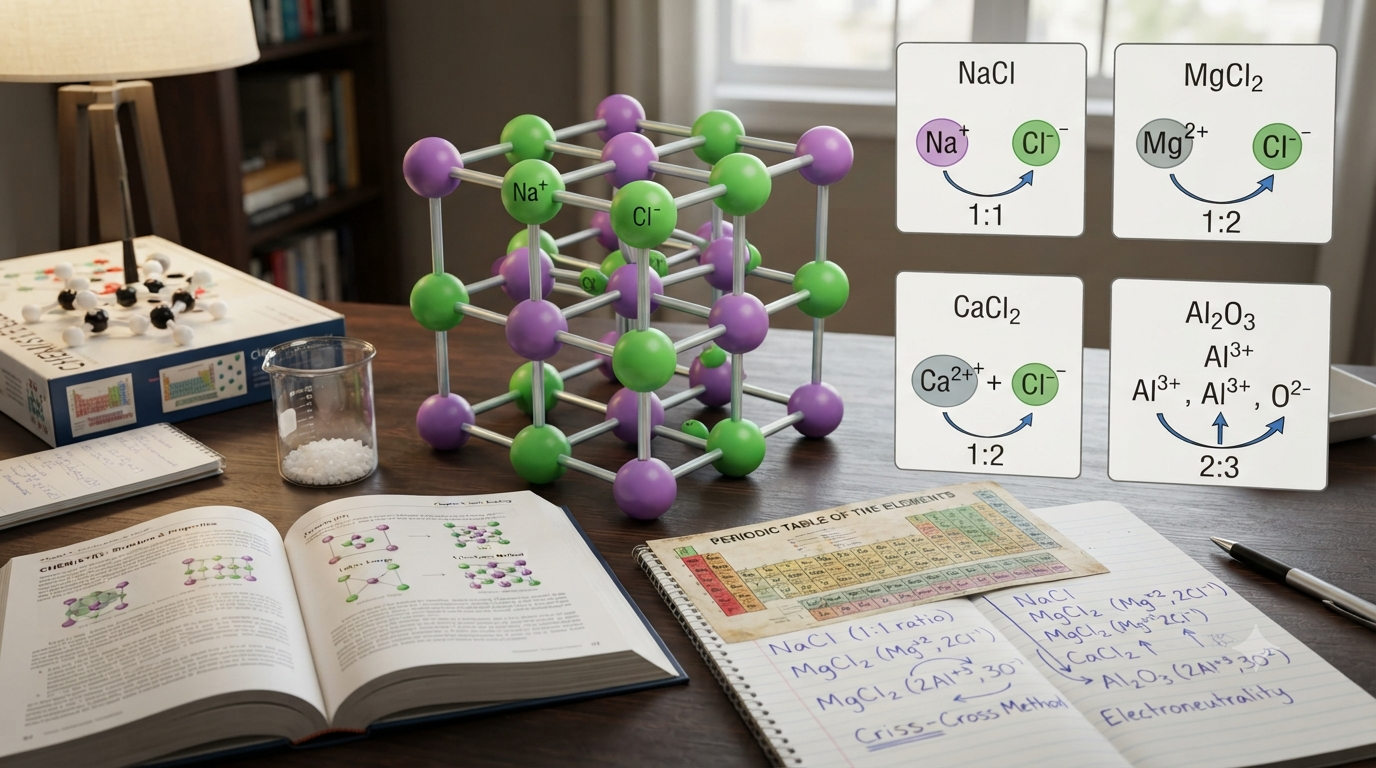
It is also useful to understand common ion charges. For example, sodium commonly forms Na⁺, while chloride forms Cl⁻. They combine in a 1:1 ratio to form NaCl. Calcium forms Ca²⁺, while chloride forms Cl⁻, so calcium chloride has the formula CaCl₂.

Practice writing formulas from names and names from formulas. For example:

Sodium chloride → NaCl

Na₂CO₃ → Sodium carbonate

Ca(OH)₂ → Calcium hydroxide

Regular practice is more effective than trying to memorize everything at once.

Why Chemical Formulas Matter in Chemistry

Chemical formulas are not simply lists that students need to memorize for exams. They are a language used to describe matter.

A formula can tell us which elements make up a substance and, in molecular substances, how many atoms of each element are present in a molecule. Formulas are also essential when writing and balancing chemical equations.

For example:

CH₄ + 2O₂ → CO₂ + 2H₂O

This equation represents the combustion of methane. The formulas show which substances take part in the reaction and which substances are produced.

Chemical formulas also help in calculations involving molar mass, percentage composition, stoichiometry, and chemical quantities. Therefore, having a strong foundation in common formulas makes many later chemistry topics easier.

Conclusion

Learning common chemical formulas gives students a strong foundation for understanding chemistry. Formulas such as H₂O, CO₂, NaCl, HCl, H₂SO₄, NaOH, CaCO₃, and C₆H₁₂O₆ appear frequently in chemistry lessons and help describe substances found in laboratories, nature, living organisms, and everyday materials.

The goal should not be to memorize formulas blindly. Students should learn what the symbols mean, recognize common elements and ions, understand how atoms combine, and practice connecting chemical names with their formulas. Once these basics become familiar, writing chemical equations, understanding reactions, and solving chemistry problems become much more manageable.

FAQs

1. What is a chemical formula?

A chemical formula is a short scientific representation of a substance. It shows which elements are present and, in molecular substances, how many atoms of each element are present. For example, H₂O represents water and contains two hydrogen atoms and one oxygen atom. Similarly, CO₂ represents carbon dioxide, containing one carbon atom and two oxygen atoms. Chemical formulas make it easier to identify substances, write chemical equations, and perform chemical calculations. Learning common formulas also helps students understand how elements combine to form compounds. Instead of memorizing formulas randomly, students should understand element symbols, subscripts, and common ion charges.

2. Why are chemical formulas important for students?

Chemical formulas are important because they provide a simple way to represent chemical substances. Students use formulas when studying chemical reactions, equations, acids, bases, salts, gases, and organic compounds. Formulas also help with calculations involving molar mass, chemical quantities, and stoichiometry. For example, knowing that sodium chloride is NaCl allows students to identify its constituent elements, sodium and chlorine. Similarly, understanding H₂SO₄ helps students recognize sulfuric acid and its composition. A strong knowledge of common formulas makes chemistry easier to understand and helps students interpret equations and scientific information more confidently.

3. What is the chemical formula of water?

The chemical formula of water is H₂O. It shows that each water molecule contains two hydrogen atoms chemically bonded to one oxygen atom. Water is one of the most familiar and important chemical compounds and is essential for life. Its formula is also frequently used when students learn about chemical reactions, molecular composition, and balancing equations. The small number written below hydrogen is called a subscript, and it indicates that there are two hydrogen atoms. Because there is no subscript after oxygen, only one oxygen atom is represented. H₂O is therefore an important formula for every chemistry student to know.

4. What are the common formulas of acids?

Some common acids and their formulas include hydrochloric acid (HCl), sulfuric acid (H₂SO₄), nitric acid (HNO₃), carbonic acid (H₂CO₃), phosphoric acid (H₃PO₄), acetic acid (CH₃COOH), and citric acid (C₆H₈O₇). These acids are encountered in school chemistry, laboratory experiments, food chemistry, and industrial processes. Learning their formulas helps students identify acids and write chemical equations involving them. Students should also understand that the formula represents the composition of the substance. For example, H₂SO₄ contains hydrogen, sulfur, and oxygen. Grouping acid formulas together can make revision easier than trying to memorize each formula separately.

5. What are the common formulas of bases?

Common bases include sodium hydroxide (NaOH), potassium hydroxide (KOH), calcium hydroxide [Ca(OH)₂], magnesium hydroxide [Mg(OH)₂], and ammonium hydroxide (NH₄OH). Bases are important in acid-base chemistry and are frequently used when studying neutralization reactions. Their formulas show the elements or groups present in each compound. For example, Ca(OH)₂ contains one calcium atom and two hydroxide groups. Students should pay attention to brackets and subscripts because changing these symbols can change the meaning of a chemical formula. Learning common bases alongside common acids makes it easier to understand neutralization and salt formation.

6. What is the chemical formula of common salt?

The chemical formula of common salt is NaCl, which represents sodium chloride. It is made from sodium and chlorine in a one-to-one ratio. Sodium chloride is widely encountered in everyday life as table salt and is also an important compound in chemistry. The formula NaCl is relatively simple, making it a useful example when learning about ionic compounds. Sodium forms a positively charged ion, Na⁺, while chlorine forms a negatively charged ion, Cl⁻. Their charges balance in a one-to-one ratio, giving the formula NaCl. Understanding this example helps students learn how ionic compounds are represented.

7. What are some common chemical formulas found in everyday life?

Many everyday substances have familiar chemical formulas. Water is H₂O, carbon dioxide is CO₂, oxygen is O₂, common salt is NaCl, baking soda is NaHCO₃, calcium carbonate is CaCO₃, and glucose is C₆H₁₂O₆. Vinegar contains acetic acid, commonly represented as CH₃COOH, while household fuels may contain hydrocarbons such as methane, CH₄. Learning these examples helps students connect chemistry with familiar materials instead of treating formulas as abstract symbols. Recognizing everyday compounds can also make chemistry lessons more interesting because students begin to see chemical substances in food, air, water, household materials, and biological systems.

8. How can students memorize chemical formulas easily?

Students can learn chemical formulas more effectively by organizing them into logical groups. Start with common elements and their symbols, then learn formulas for acids, bases, salts, gases, oxides, and organic compounds. Understanding common ion charges is also helpful when determining formulas of ionic compounds. Students should practice both directions: converting a chemical name into a formula and identifying a compound from its formula. Writing formulas repeatedly, using flashcards, and solving simple chemistry problems can reinforce memory. It is better to understand why a formula has a particular composition than to memorize a large list without understanding the underlying chemistry.

9. What do subscripts in chemical formulas mean?

Subscripts are small numbers written at the lower right of an element symbol in a chemical formula. They indicate how many atoms of that element are present in a molecule or formula unit. For example, H₂O contains two hydrogen atoms and one oxygen atom. In CO₂, the subscript 2 means there are two oxygen atoms. If an element symbol has no subscript, it generally represents one atom. Subscripts are important because changing them can produce a different substance. For example, H₂O and H₂O₂ have different compositions and properties. Students should carefully read subscripts when interpreting chemical formulas.

10. Which chemical formulas should every student learn first?

Students should begin with formulas that appear frequently in basic chemistry. Important examples include H₂O for water, O₂ for oxygen, H₂ for hydrogen, N₂ for nitrogen, CO₂ for carbon dioxide, NH₃ for ammonia, CH₄ for methane, HCl for hydrochloric acid, H₂SO₄ for sulfuric acid, HNO₃ for nitric acid, NaOH for sodium hydroxide, NaCl for sodium chloride, NaHCO₃ for sodium bicarbonate, CaCO₃ for calcium carbonate, and C₆H₁₂O₆ for glucose. After learning these, students can gradually expand their knowledge to more complex compounds. Understanding the formulas is more useful than memorizing them without context.

Related Posts

Leave a Comment

Your email address will not be published. Required fields are marked *

Scroll to Top