
An empirical formula is a simple way of representing the composition of a chemical compound. It shows the simplest whole-number ratio of the atoms of each element present in a substance. Unlike a molecular formula, which tells us the actual number of atoms in a molecule, an empirical formula focuses only on the relative ratio between the elements.
For example, the molecular formula of glucose is C₆H₁₂O₆. It contains six carbon atoms, twelve hydrogen atoms, and six oxygen atoms. When these numbers are reduced to their simplest whole-number ratio, the result is CH₂O. Therefore, CH₂O is the empirical formula of glucose.
Understanding empirical formulas is important in chemistry because they help scientists determine the basic composition of compounds, interpret experimental data, and establish relationships between elements.
What Does an Empirical Formula Show?
An empirical formula shows the simplest whole-number ratio of atoms in a compound. It does not necessarily show the actual number of atoms present in one molecule.
Consider hydrogen peroxide, which has the molecular formula H₂O₂. This means each molecule contains two hydrogen atoms and two oxygen atoms. The ratio of hydrogen to oxygen is 2:2, which can be simplified to 1:1. Therefore, its empirical formula is HO.
The empirical formula tells us that hydrogen and oxygen are present in hydrogen peroxide in a 1:1 ratio. However, it does not tell us that a hydrogen peroxide molecule actually contains only one hydrogen atom and one oxygen atom.
This distinction is important when interpreting chemical formulas.
Empirical Formula vs Molecular Formula
Empirical and molecular formulas provide related but different information.
A molecular formula gives the actual number of atoms of each element in one molecule of a molecular compound. An empirical formula gives the simplest ratio of those atoms.
For example:
Molecular formula of glucose: C₆H₁₂O₆
Empirical formula of glucose: CH₂O
Another example is benzene:
Molecular formula: C₆H₆
Empirical formula: CH
In both cases, the molecular formula can be obtained by multiplying every subscript in the empirical formula by a whole number.
The molecular formula of glucose is six times its empirical formula:
CH₂O × 6 = C₆H₁₂O₆
Similarly, benzene is represented by:
CH × 6 = C₆H₆
Therefore, the empirical formula provides the simplest chemical relationship, while the molecular formula provides the actual atomic composition of a molecule.
How Is an Empirical Formula Determined?
An empirical formula is often determined from experimental data. Scientists may know the percentage composition or masses of different elements in a compound and use those values to calculate the simplest ratio of atoms.
The general process involves several steps.
Step 1: Identify the Elements
First, identify all the elements present in the compound. For example, suppose a compound contains carbon, hydrogen, and oxygen.
Step 2: Convert Masses or Percentages Into Moles
The masses of the elements are converted into moles using their atomic masses.
The basic relationship is:
moles = mass ÷ atomic mass
If percentage composition is given, the percentages can usually be treated as grams in a 100-gram sample.
For example, if a compound contains 40% carbon, 6.7% hydrogen, and 53.3% oxygen, we can assume a 100-gram sample containing:
40 g carbon
6.7 g hydrogen
53.3 g oxygen
These masses are then converted into moles.
Step 3: Find the Simplest Mole Ratio
After calculating the number of moles of each element, divide every mole value by the smallest mole value.
This produces a ratio that can usually be converted into small whole numbers.
Step 4: Write the Empirical Formula
The resulting whole-number ratios become the subscripts in the chemical formula.
For example, if the calculated ratio is:
C : H : O = 1 : 2 : 1
the empirical formula is:
CH₂O
This method allows experimental measurements to be converted into a meaningful chemical formula.
A Simple Example of an Empirical Formula
Suppose a compound contains 12 g of carbon and 32 g of oxygen.
The atomic mass of carbon is approximately 12 g/mol, while oxygen has an atomic mass of approximately 16 g/mol.
For carbon:
12 ÷ 12 = 1 mol
For oxygen:
32 ÷ 16 = 2 mol
The mole ratio is therefore:
C : O = 1 : 2
Since the ratio is already in its simplest whole-number form, the empirical formula is:
CO₂
This example shows why mole calculations are important. The masses of elements do not directly give the atomic ratio. Converting them into moles reveals the relative number of atoms.
Why Are Empirical Formulas Important?
Empirical formulas are useful in many areas of chemistry. They provide a straightforward way to describe the elemental composition of a compound.
Understanding Chemical Composition
An empirical formula quickly shows the relative amounts of different elements. For example, CH₂O indicates that carbon, hydrogen, and oxygen occur in a 1:2:1 ratio.
Analyzing Experimental Results
Scientists can determine the composition of an unknown compound through laboratory experiments. Once the masses or percentages of the elements are measured, an empirical formula can be calculated.
Determining Molecular Formulas
The empirical formula is often the first step toward finding a molecular formula. If the molar mass of the compound is known, the molecular formula can be determined by comparing the molar mass with the mass of the empirical formula.
The relationship is:
Molecular formula = Empirical formula × n
where n is a whole number.
The value of n can be calculated using:
n = molecular molar mass ÷ empirical formula mass
For example, if the empirical formula is CH₂O and its empirical formula mass is approximately 30 g/mol, while the compound has a molar mass of approximately 180 g/mol:
n = 180 ÷ 30 = 6
Therefore:
CH₂O × 6 = C₆H₁₂O₆
The molecular formula is C₆H₁₂O₆.
Can Ionic Compounds Have Empirical Formulas?
Yes. In fact, empirical formulas are especially useful for ionic compounds because ionic substances generally do not consist of separate molecules.
For example, sodium chloride is represented as NaCl. The formula indicates a 1:1 ratio of sodium ions to chloride ions.
Calcium chloride is represented as CaCl₂, showing a 1:2 ratio of calcium ions to chloride ions.
For ionic compounds, the formula represents the simplest whole-number ratio of ions in the compound.
Therefore, the concept of an empirical formula applies not only to molecular substances but also to many ionic compounds.
Empirical Formula and Percentage Composition
Percentage composition describes how much of each element is present in a compound by mass. Empirical formulas can be obtained from percentage composition by converting the percentages into moles and finding the simplest ratio.
For example, suppose experimental analysis gives approximately:
Carbon: 40%
Hydrogen: 6.7%
Oxygen: 53.3%
Assuming a 100-g sample, these values correspond to 40 g carbon, 6.7 g hydrogen, and 53.3 g oxygen. Converting these masses into moles and simplifying the resulting ratio gives approximately:
C : H : O = 1 : 2 : 1
Thus, the empirical formula is CH₂O.
This demonstrates how laboratory measurements can be transformed into a chemical formula.
Common Mistakes When Finding Empirical Formulas
Several mistakes can make an empirical formula calculation incorrect.
One common mistake is using mass ratios directly instead of converting the masses into moles. Chemical formulas represent ratios of atoms, so the number of moles must be considered.
Another mistake is forgetting to simplify the mole ratio. If the calculated ratio is 2:4:2, it should be divided by 2 to obtain 1:2:1.
Sometimes the calculated ratios are close to fractions such as 1.5, 1.33, or 1.25. These may need to be multiplied by a suitable small whole number to obtain whole-number subscripts.
It is also important to distinguish between an empirical formula and a molecular formula. A molecular formula may contain subscripts that can be reduced, while the empirical formula always represents the simplest ratio.
Conclusion
An empirical formula represents the simplest whole-number ratio of the elements in a compound. It provides essential information about chemical composition without necessarily showing the actual number of atoms in each molecule. Empirical formulas can be determined from experimental masses or percentage compositions by converting the values into moles and simplifying the resulting mole ratio. They are also useful for finding molecular formulas when the molar mass of a compound is known. By understanding empirical formulas, we can connect experimental measurements with the symbolic language of chemistry and better understand how different elements combine to form compounds.
FAQs
1. What is an empirical formula?
An empirical formula represents the simplest whole-number ratio of the atoms of each element present in a compound. It does not always show the actual number of atoms in a molecule. For example, glucose has the molecular formula C₆H₁₂O₆, but its empirical formula is CH₂O because the subscripts 6, 12, and 6 can all be divided by 6. The empirical formula therefore focuses on the relative proportion of elements rather than the exact molecular structure. It is useful for describing chemical composition and is often calculated from experimental data such as masses or percentage compositions of elements.
2. What is the difference between an empirical formula and a molecular formula?
An empirical formula shows the simplest whole-number ratio of elements in a compound, while a molecular formula shows the actual number of atoms of each element in one molecule. For example, glucose has the molecular formula C₆H₁₂O₆ and the empirical formula CH₂O. The molecular formula can sometimes be the same as the empirical formula, but it can also be a whole-number multiple of it. The empirical formula provides information about relative composition, whereas the molecular formula provides the complete atomic composition of a molecule. Both formulas are important for understanding chemical substances and their composition.
3. How do you calculate an empirical formula?
To calculate an empirical formula, first identify the mass or percentage of each element in the compound. Convert each value into moles by dividing the mass by the element’s atomic mass. Next, divide every mole value by the smallest number of moles to obtain the simplest ratio. If necessary, multiply all ratios by a small whole number to convert fractional values into whole numbers. Finally, use these whole numbers as subscripts in the chemical formula. For example, a ratio of carbon, hydrogen, and oxygen of 1:2:1 produces the empirical formula CH₂O.
4. Why are empirical formulas important in chemistry?
Empirical formulas are important because they provide a simple representation of the elemental composition of a compound. They allow chemists to understand the relative proportions in which different elements are present. Empirical formulas are also useful when analyzing experimental data because percentage composition can be converted into an empirical formula through mole calculations. In addition, an empirical formula can be used to determine a molecular formula when the compound’s molar mass is known. They are particularly useful for describing ionic compounds, where the formula represents the simplest ratio of ions rather than the composition of an individual molecule.
5. Can an empirical formula be the same as a molecular formula?
Yes, an empirical formula can be exactly the same as a molecular formula. This happens when the subscripts in the molecular formula are already in their simplest whole-number ratio. For example, water has the molecular formula H₂O. The subscripts 2 and 1 cannot be reduced by a common whole number greater than 1, so H₂O is also its empirical formula. Similarly, carbon dioxide has the molecular formula CO₂, which is already in its simplest ratio. Therefore, not every compound has different empirical and molecular formulas.
6. Can empirical formulas be used for ionic compounds?
Yes, empirical formulas are commonly used to represent ionic compounds. Ionic compounds generally do not consist of individual molecules, so their formulas indicate the simplest whole-number ratio of positive and negative ions. For example, sodium chloride is represented by NaCl, showing a 1:1 ratio of sodium ions to chloride ions. Calcium chloride is represented by CaCl₂, showing a 1:2 ratio of calcium ions to chloride ions. These formulas provide the simplest ratio required to maintain electrical neutrality in the ionic compound. Therefore, the concept of empirical formulas is highly relevant to ionic substances.
7. How is an empirical formula found from percentage composition?
When percentage composition is given, the percentages can usually be treated as grams in a hypothetical 100-gram sample. Each percentage is converted into grams and then divided by the element’s atomic mass to calculate moles. The mole values are then divided by the smallest mole value to determine the simplest ratio. If the results contain fractions, they may need to be multiplied by an appropriate small whole number. Once whole-number ratios are obtained, they become the subscripts in the empirical formula. This method connects experimental percentage data with the atomic composition of a compound.
8. Can an empirical formula contain decimal numbers?
A final empirical formula should normally contain whole-number subscripts rather than decimal numbers. During calculations, however, the mole ratio may produce decimal values such as 1.5, 1.33, or 1.25. These values can often be converted into whole numbers by multiplying every ratio by a suitable small whole number. For example, a ratio of 1:1.5 can be multiplied by 2 to obtain 2:3. The resulting empirical formula would then use 2 and 3 as subscripts. This step is necessary because chemical formulas represent whole atoms and therefore require whole-number ratios.
9. How does an empirical formula help find a molecular formula?
An empirical formula provides the simplest ratio needed to determine a molecular formula. First, calculate the mass of the empirical formula by adding the atomic masses of all its atoms. Then divide the compound’s actual molar mass by the empirical formula mass. The resulting value should normally be a whole number represented by n. Multiply every subscript in the empirical formula by n to obtain the molecular formula. For example, if the empirical formula is CH₂O and n equals 6, multiplying every subscript by 6 gives C₆H₁₂O₆, the molecular formula of glucose.
10. What is the simplest way to remember an empirical formula?
A simple way to remember an empirical formula is to think of it as the simplest whole-number ratio of elements in a compound. When calculating one, remember the basic sequence: convert masses or percentages into moles, divide by the smallest mole value, convert the ratio into whole numbers, and then write the formula. For example, if the final ratio is C:H = 1:2:1, the empirical formula is CH₂O. The key idea is that an empirical formula does not necessarily show the actual number of atoms in a molecule; it shows only their simplest relative ratio.
Related Posts
Engineering Notation Converter
Engineering Notation Converter Convert numbers to and from engineering notation quickly and accurately. Conversion Mode Number to Engineering NotationEngineering Notation […]
Read MoreStandard Form to Scientific Notation Converter

Standard Form to Scientific Notation Converter Convert ordinary numbers into scientific notation using a coefficient and a power of 10. […]
Read MoreScientific Notation Converter

Scientific Notation Converter Convert decimal numbers into scientific notation and scientific notation into standard decimal form quickly and accurately. Conversion […]
Read MoreNumber Comparison Calculator

Number Comparison Calculator Enter two numbers to find out which number is greater, smaller, or whether both numbers are equal. […]
Read MoreSum of Geometric Series Calculator

Sum of Geometric Series Calculator Calculate the sum of finite and infinite geometric series with step-by-step solutions. Select Series Type […]
Read MoreSum of Arithmetic Series Calculator

Sum of Arithmetic Series Calculator Calculate the sum of an arithmetic series by entering its first term, common difference, and […]
Read MoreNumber Sequence Generator

Number Sequence Generator Generate number sequences easily using arithmetic, geometric, Fibonacci, or custom patterns. Sequence Type Arithmetic SequenceGeometric SequenceFibonacci SequenceCustom […]
Read MoreOdd or Even Number Checker
Odd or Even Number Checker Enter any whole number to find out whether it is odd or even. Enter a […]
Read MoreDivisibility Checker
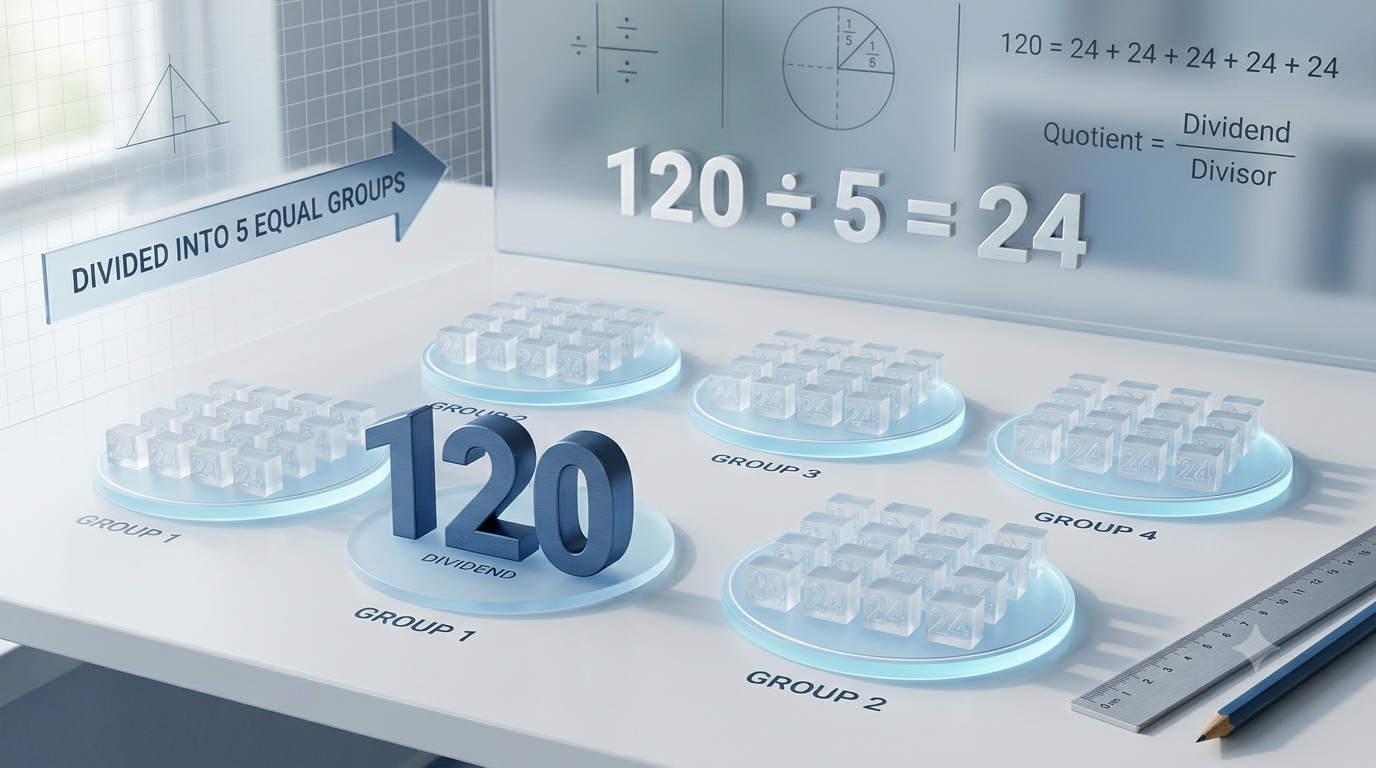
Divisibility Checker Check whether a number is divisible by another number without leaving a remainder. Enter Number Enter a positive […]
Read MorePhysical States of Elements in the Periodic Table

The periodic table contains 118 known chemical elements, and each element has its own physical and chemical properties. One important […]
Read MoreRelative Atomic Mass and Its Significance in the Periodic Table
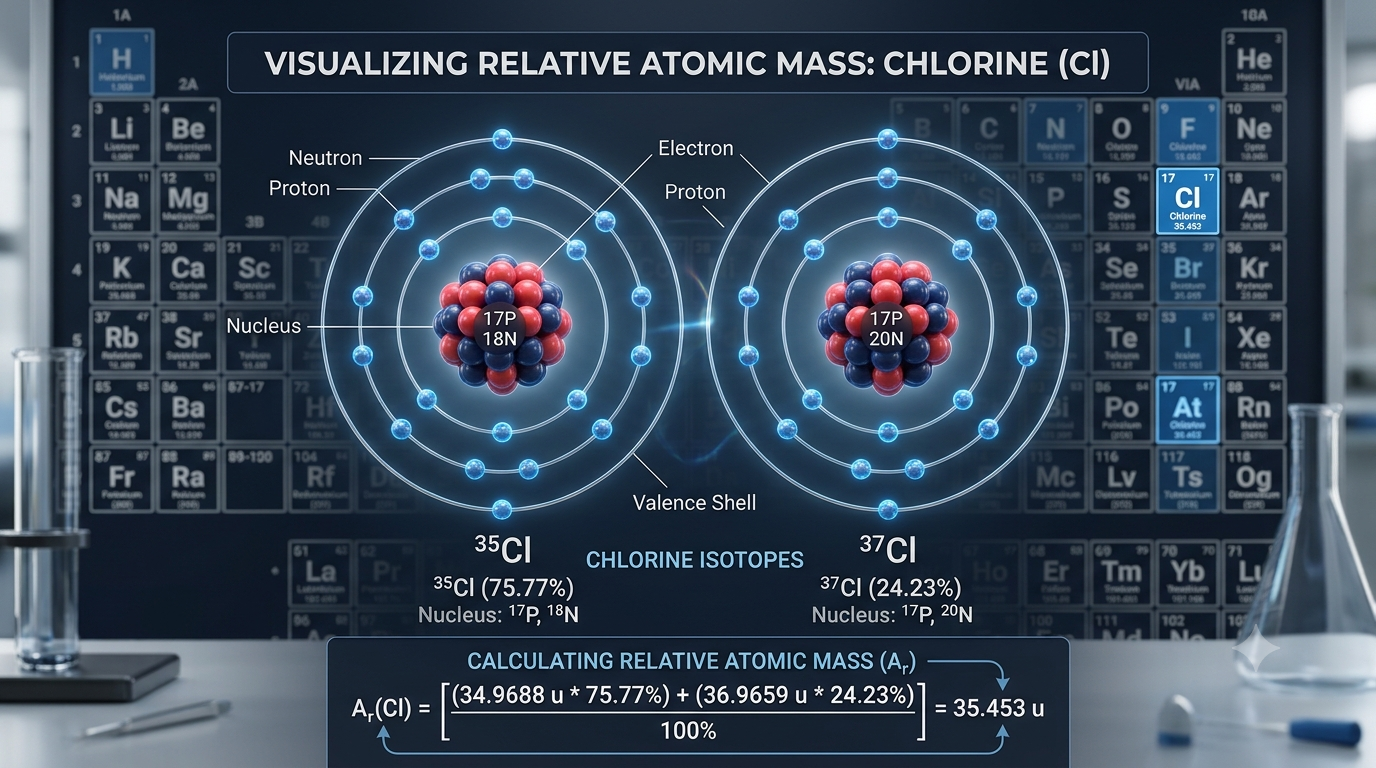
Every element in the periodic table has a unique atomic number and an atomic mass. While the atomic number tells […]
Read MoreIsotopes and Their Relationship with the Periodic Table
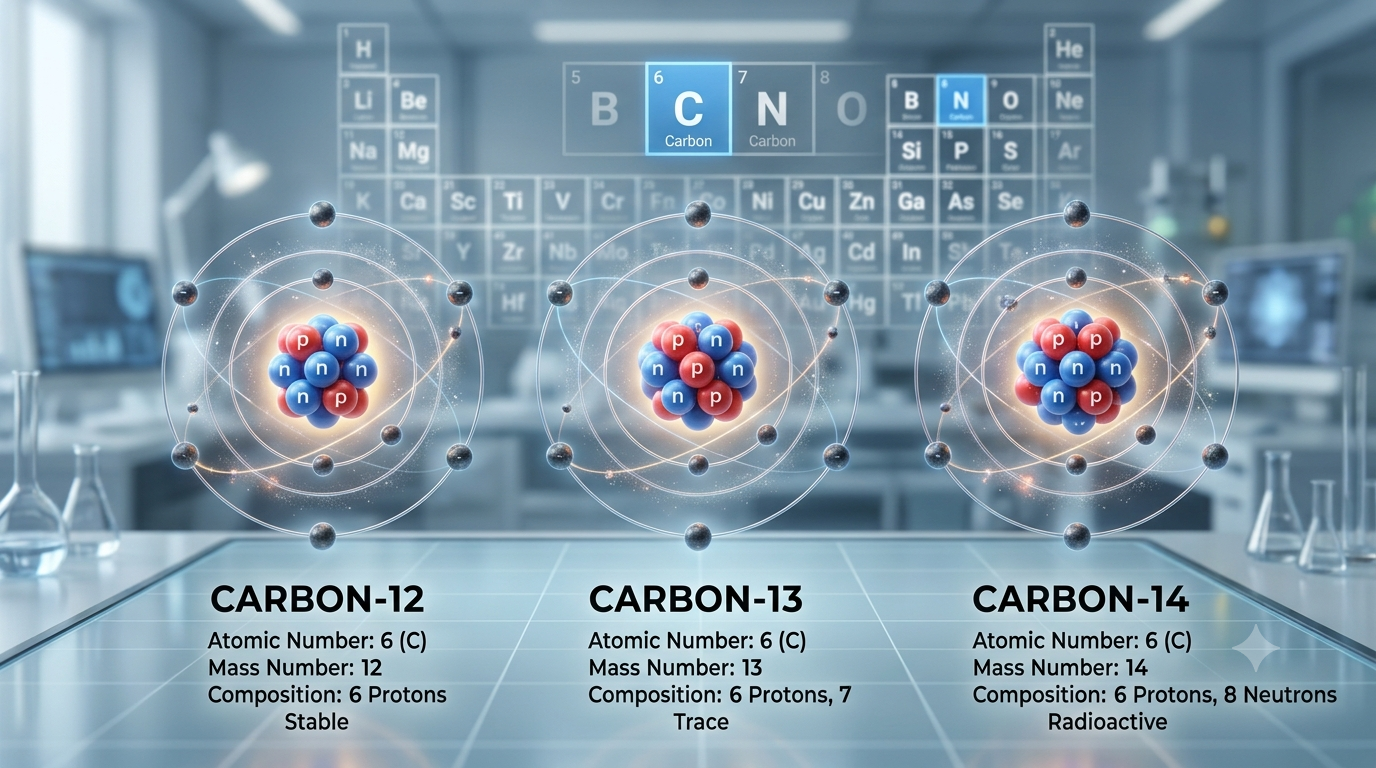
Atoms are the basic building blocks of all matter. Every chemical element consists of atoms that contain protons, neutrons, and […]
Read MoreOxidation States of Elements in the Periodic Table
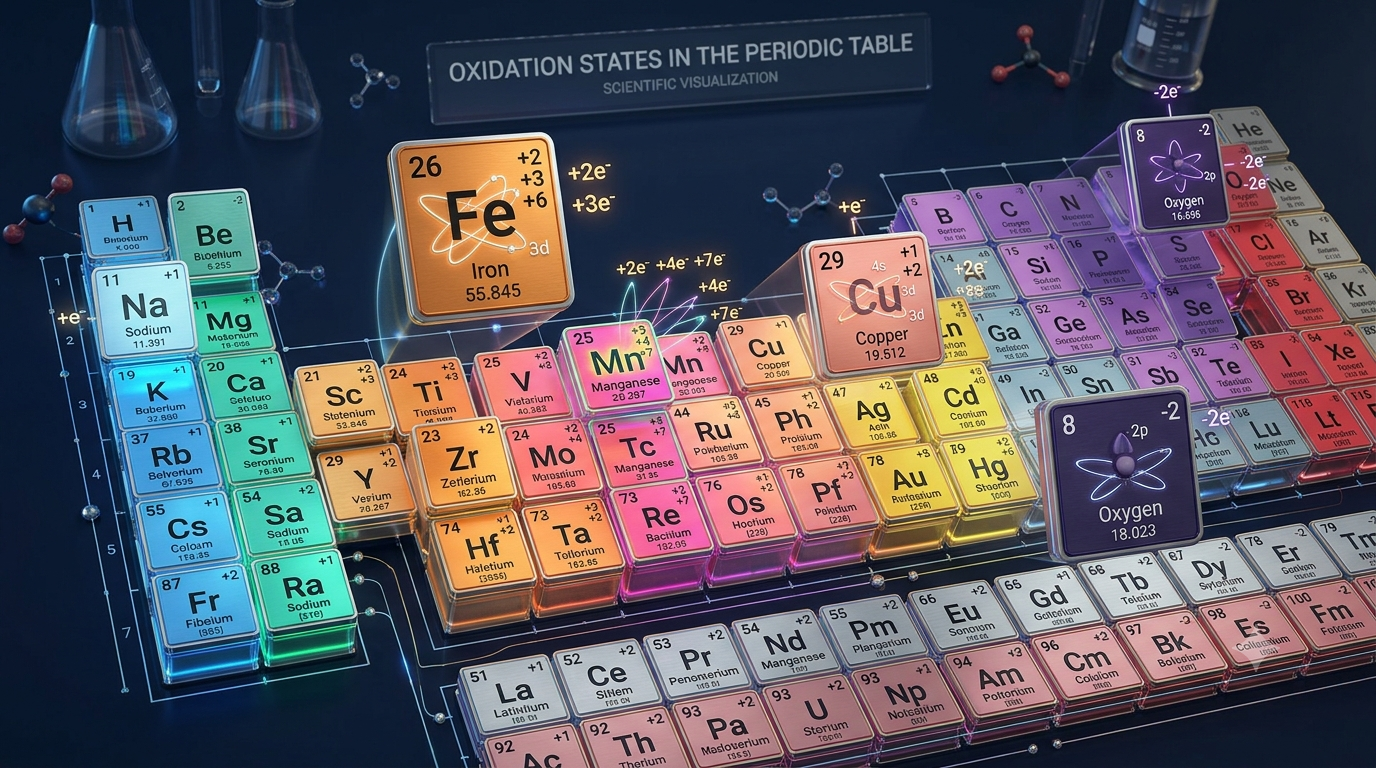
Oxidation state is an important concept in chemistry that helps us understand how atoms behave when they form chemical compounds […]
Read MoreNature of Oxides Across the Periodic Table
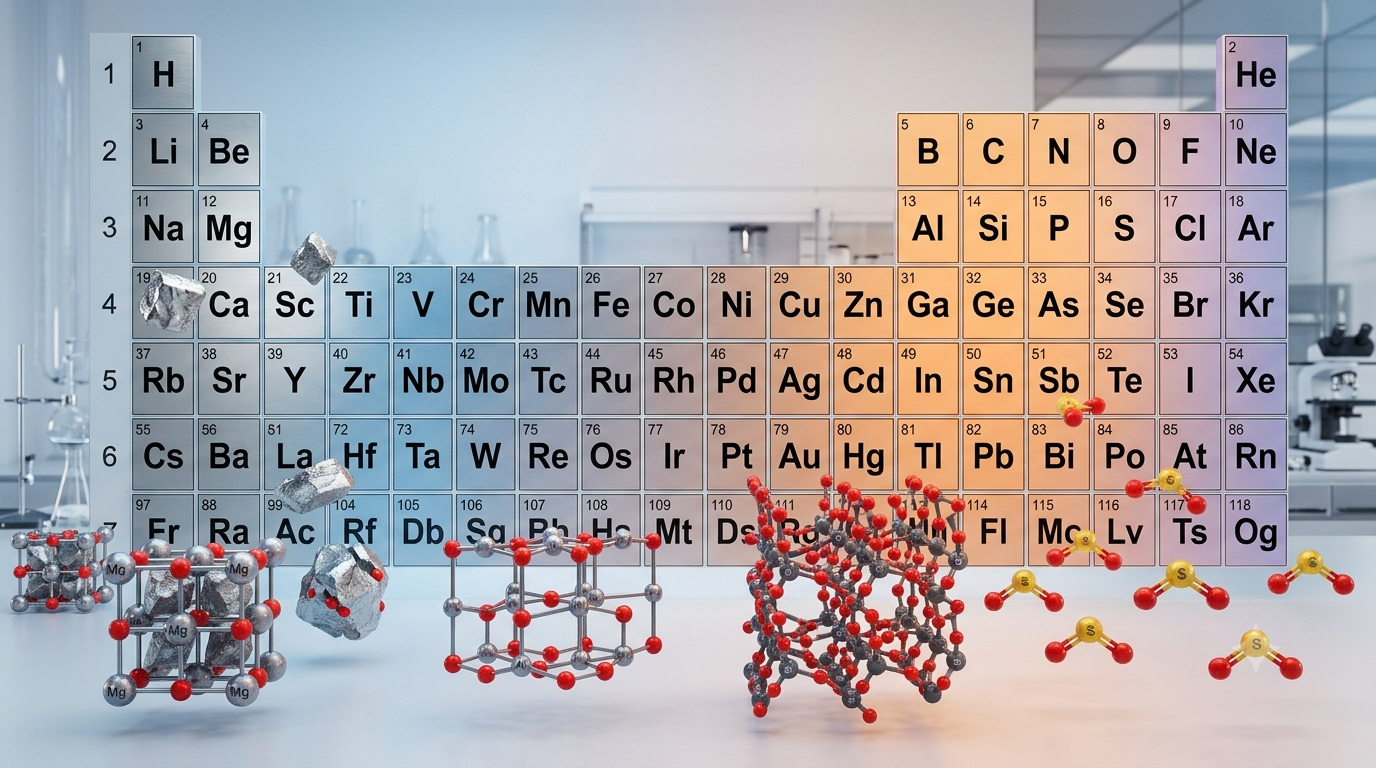
Oxides are among the most common and important compounds in chemistry. They are formed when oxygen combines with another element, […]
Read MorePeriodic Trends in the Chemical Reactivity of Elements
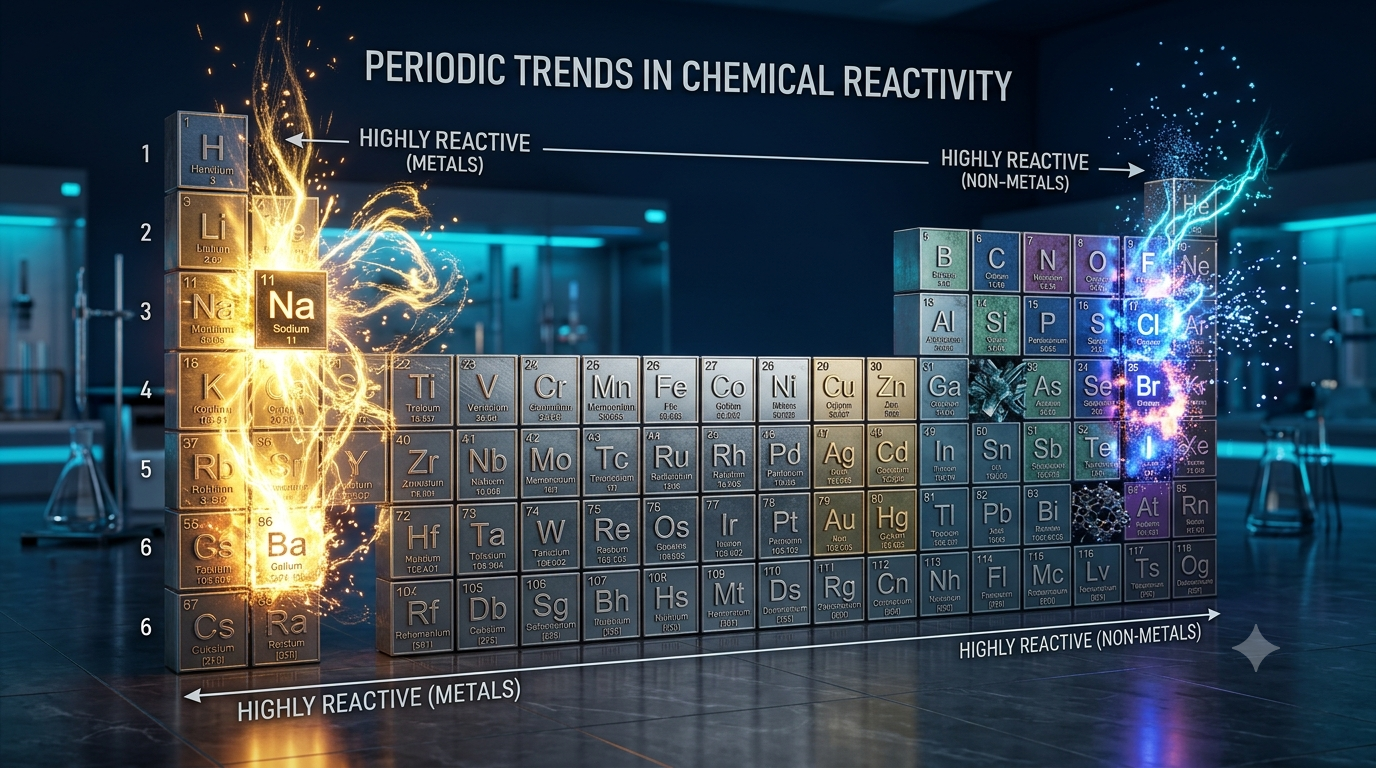
The periodic table is one of the most important tools in chemistry because it helps us understand and predict the […]
Read MoreNonmetallic Character and Its Periodic Trend
Elements in the periodic table are generally classified into three major categories: metals, nonmetals, and metalloids. Metals usually lose electrons […]
Read MoreMetallic Character and Its Periodic Trend

The periodic table organizes elements according to their atomic numbers and chemical properties. One of the important properties used to […]
Read MoreElectronegativity and Its Periodic Variation
Electronegativity is one of the most important concepts in chemistry because it helps explain how atoms attract shared electrons when […]
Read MoreElectron Affinity and Its Periodic Trend

Atoms are constantly involved in chemical reactions, and their ability to gain or lose electrons plays an important role in […]
Read MoreIonization Energy and Its Periodic Trend
Ionization energy is one of the most important concepts in chemistry because it helps explain how atoms lose electrons and […]
Read MoreIonic Radius and Its Periodic Variation
Atoms are made up of protons, neutrons, and electrons. When an atom gains or loses electrons, it becomes an electrically […]
Read MoreAtomic Radius and Its Periodic Variation
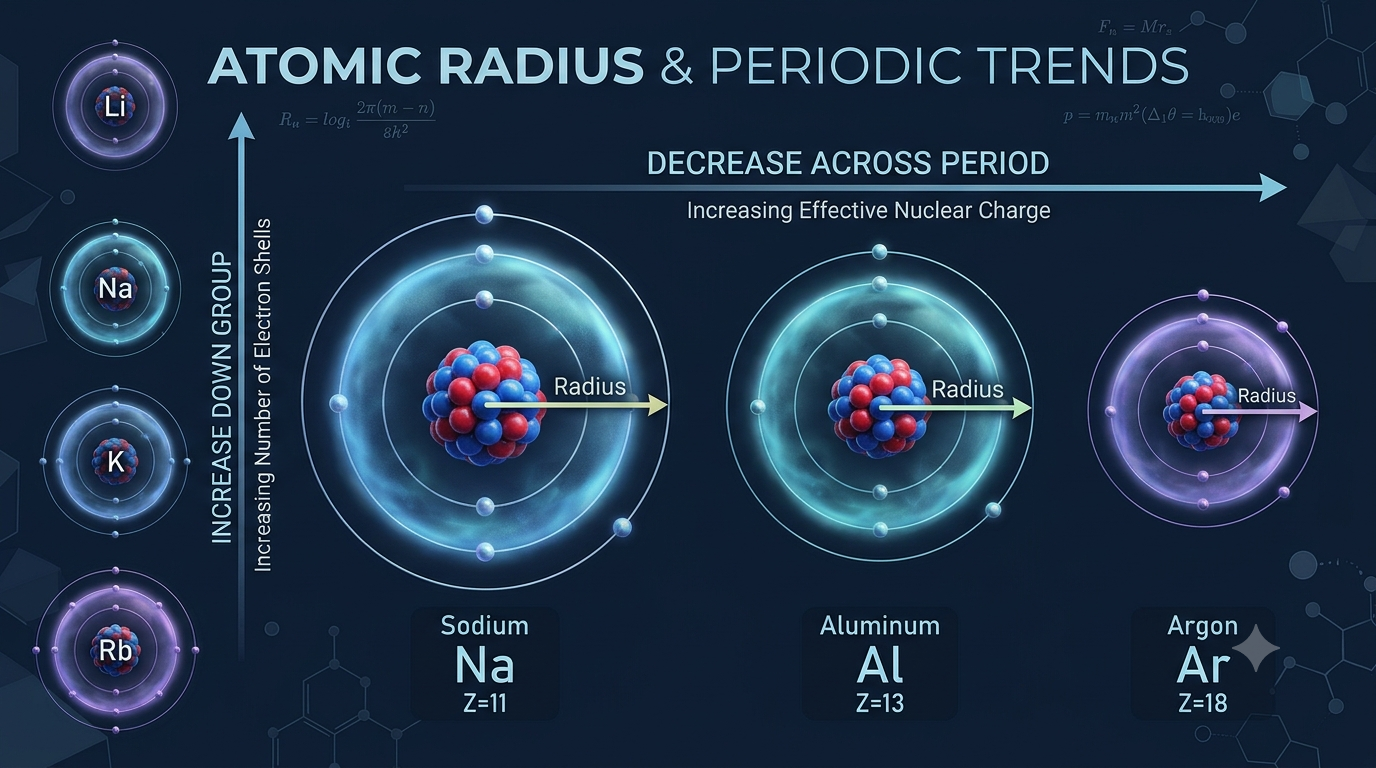
Atomic radius is an important concept in chemistry that helps us understand the size of atoms and how their sizes […]
Read MoreIntroduction to Periodic Trends in the Periodic Table
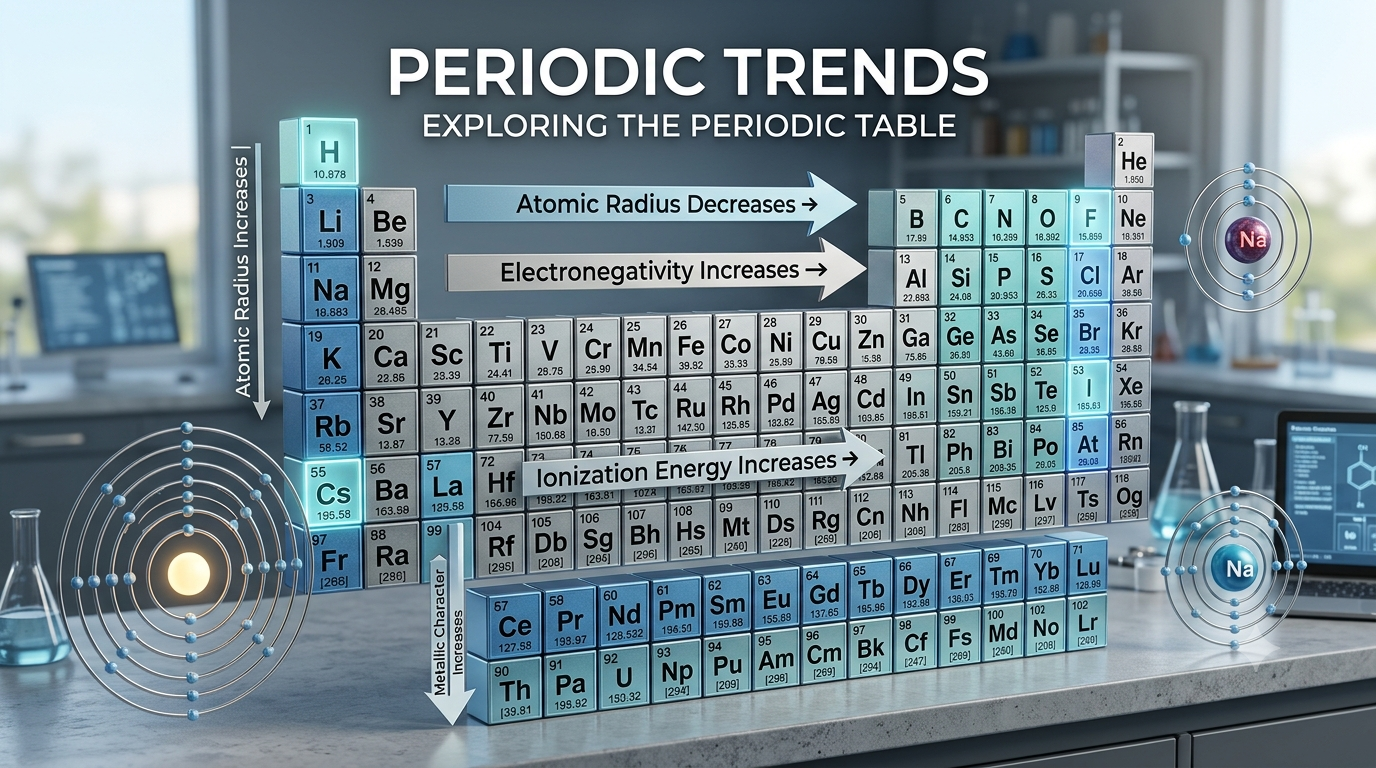
The periodic table is one of the most important tools in chemistry. It organizes all known chemical elements according to […]
Read MoreElectron Shells and Their Arrangement in Elements
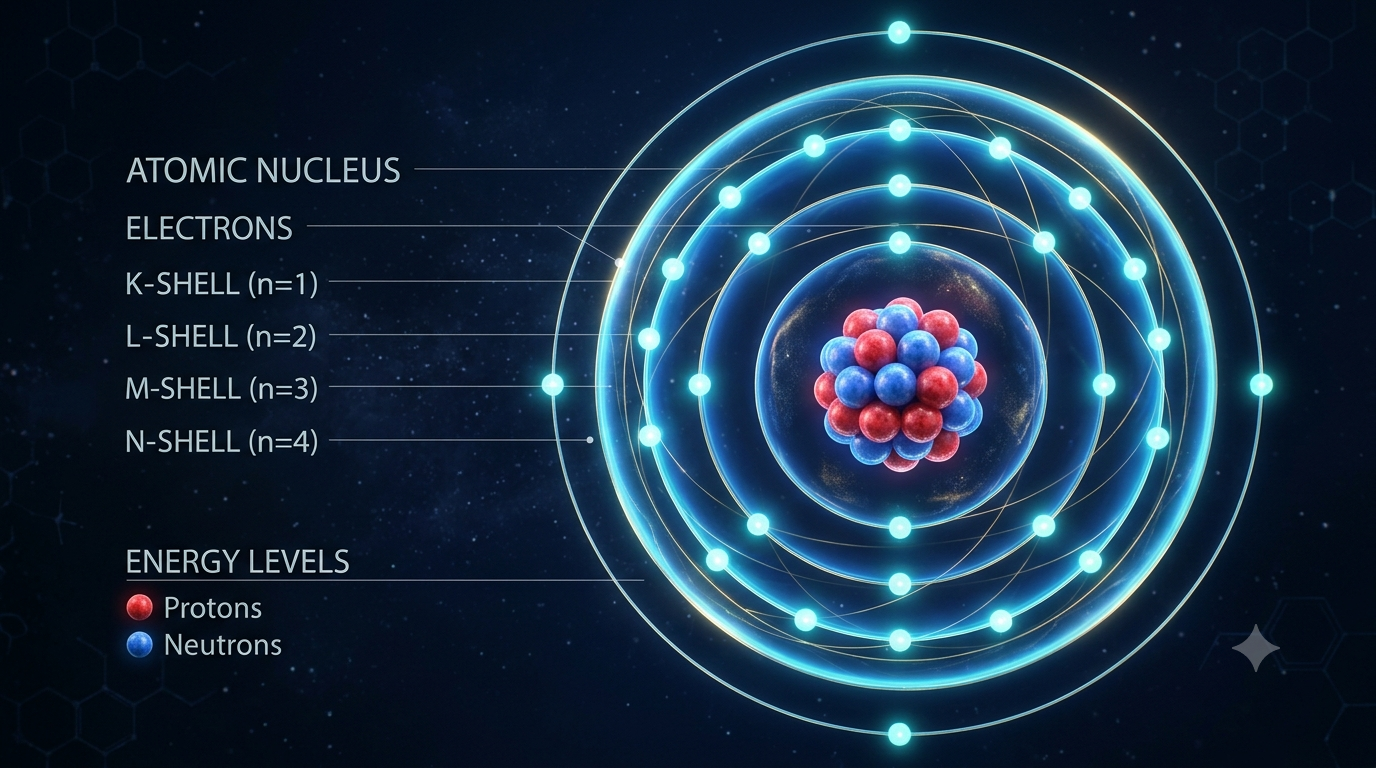
Atoms are the basic building blocks of matter. Every atom consists of three main subatomic particles: protons, neutrons, and electrons. […]
Read MoreValency and Its Role in Understanding Elements

Every element in the periodic table has its own chemical properties and behaviour. Some elements combine easily with other elements, […]
Read MoreValence Electrons and Their Importance in Chemical Behaviour

Atoms are the basic building blocks of all matter. Every substance around us, including water, air, metals, minerals, and living […]
Read MoreElectron Configuration and Its Relationship with the Periodic Table
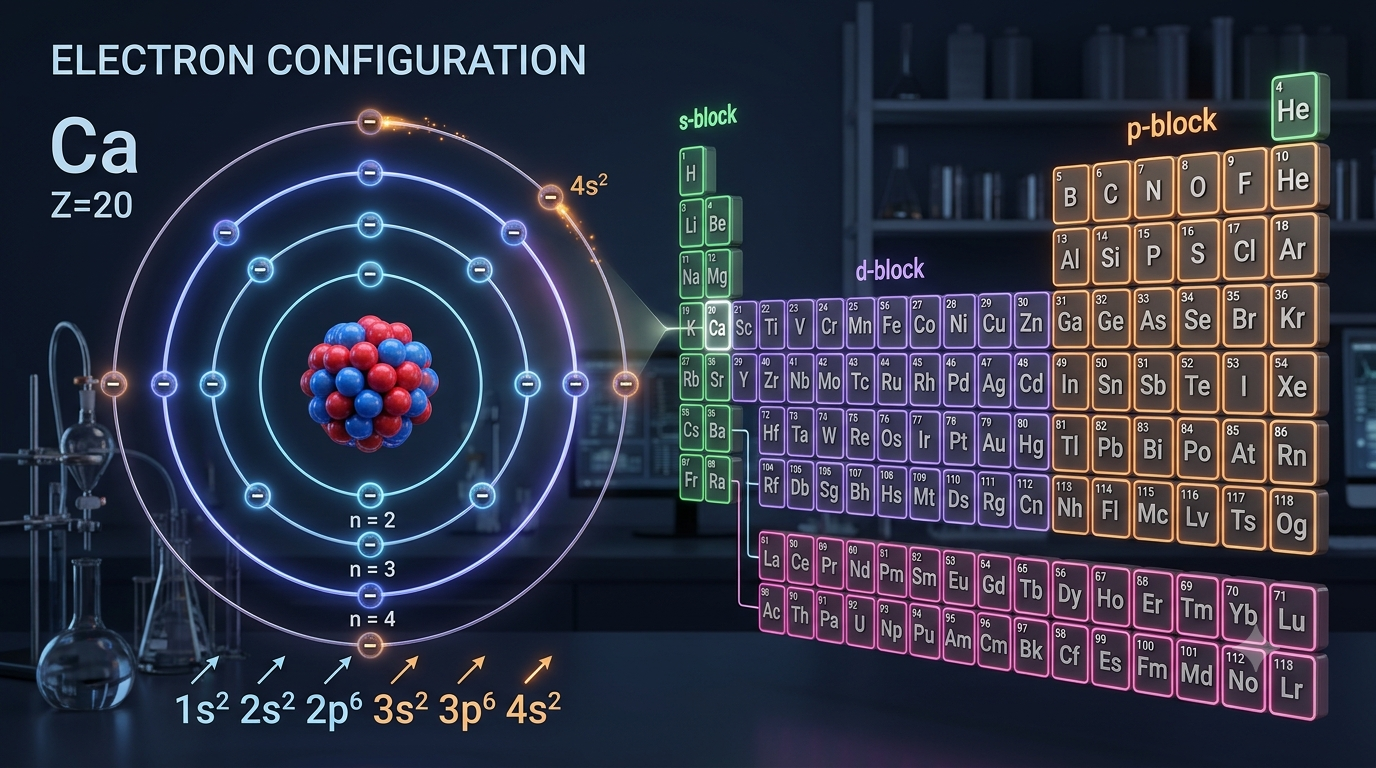
Every atom consists of three main subatomic particles: protons, neutrons, and electrons. While protons determine the identity of an element, […]
Read MoreThe f-Block Elements and Their General Properties
The periodic table is divided into different blocks based on the type of atomic orbital into which the last electron […]
Read MoreThe d-Block Elements and Their General Properties
The periodic table is divided into four main blocks: s-block, p-block, d-block, and f-block. These blocks are classified according to […]
Read MoreThe p-Block Elements and Their General Properties

The periodic table is divided into different blocks based on the electronic configuration of elements. These blocks include the s-block, […]
Read More