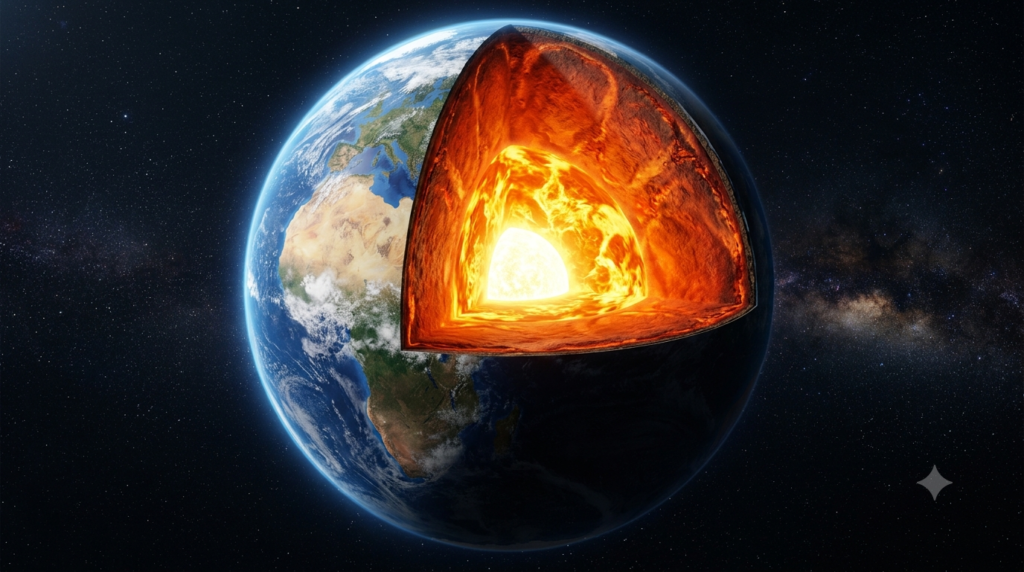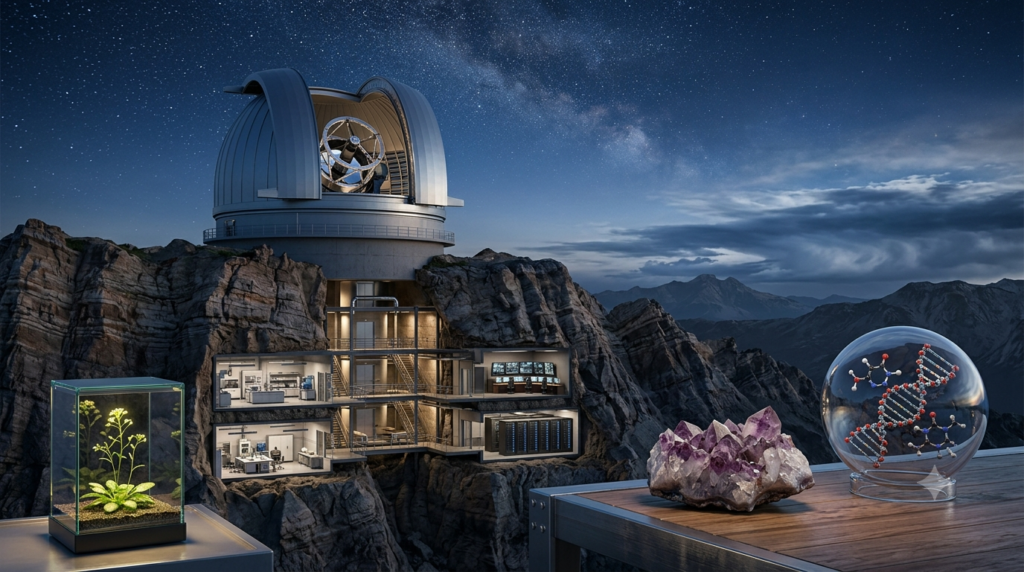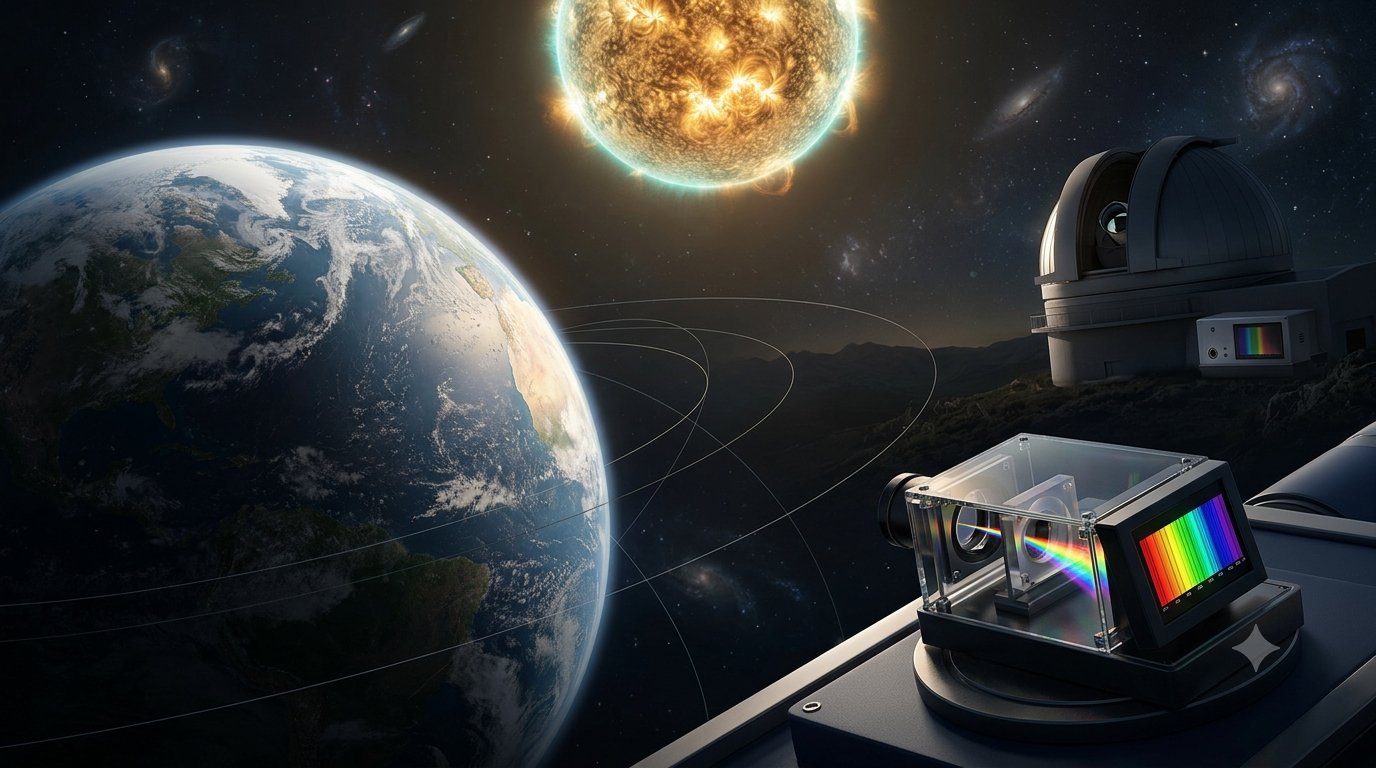
Astronomy is the scientific study of the universe, including stars, planets, moons, galaxies, black holes, and other celestial objects. It helps us understand how the universe began, how it changes over time, and how different objects in space interact with one another. However, astronomy is not an isolated field of science. It depends on several other disciplines to explain the complex processes occurring throughout the universe.
Physics helps astronomers understand gravity, light, motion, energy, and the behavior of matter in space. Mathematics provides the calculations and models needed to measure distances, predict planetary movements, and study the evolution of galaxies. Chemistry explains the composition of stars and planets, while biology explores the possibility of life beyond Earth. Geology, computer science, engineering, and environmental science also contribute to modern astronomical research.
These connections make astronomy an excellent example of how different scientific disciplines work together. By combining their methods and discoveries, scientists can develop a more complete understanding of the universe and our place within it.
1. The Connection Between Astronomy and Physics
Physics is one of the most important foundations of astronomy. Almost every astronomical observation involves physical processes, from the movement of planets to the formation of stars and the behavior of distant galaxies.
Astronomers use the principles of physics to explain observations that cannot be investigated directly because of the enormous distances involved.
Gravity and the Motion of Celestial Objects
Gravity is the force that governs the motion of many objects throughout the universe. It keeps planets in orbit around stars, moons around planets, and stars within galaxies.
Newton’s law of universal gravitation helps scientists calculate the gravitational attraction between two objects. It also provides a foundation for understanding planetary motion and predicting the paths of spacecraft.
Einstein’s general theory of relativity provides a deeper explanation of gravity by describing how mass and energy curve spacetime. This theory becomes especially important when studying black holes, neutron stars, gravitational waves, and the behavior of objects in extremely strong gravitational fields.
Without physics, astronomers would struggle to explain why planets follow particular orbits or how massive objects influence the structure of the universe.
Light and Electromagnetic Radiation
Astronomers receive much of their information about distant objects through electromagnetic radiation. Visible light is only a small part of this radiation, which also includes radio waves, infrared radiation, ultraviolet radiation, X-rays, and gamma rays.
Physics explains how electromagnetic waves travel, interact with matter, and carry information across space.
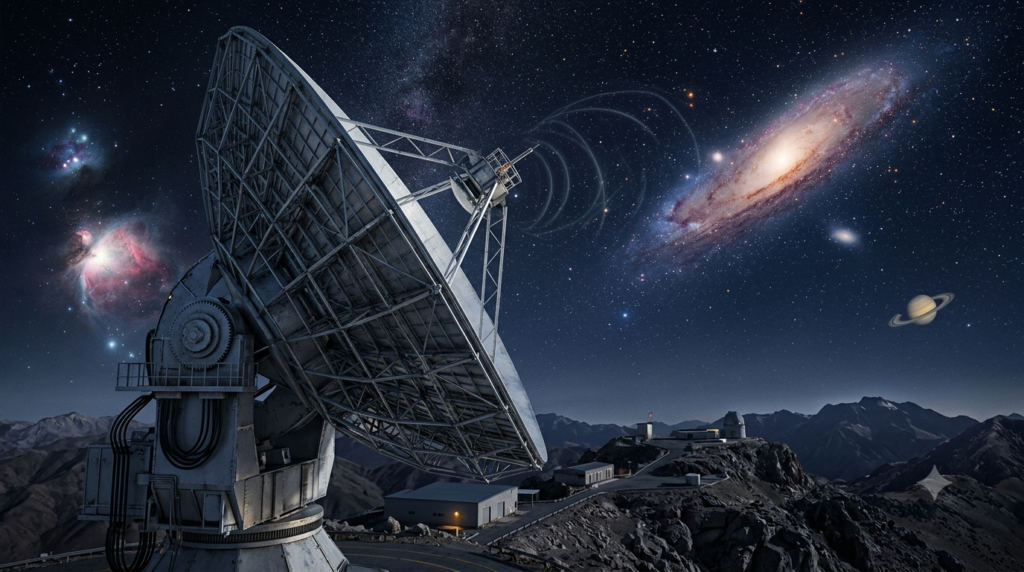
For example, radio telescopes detect radio waves emitted by astronomical objects, while X-ray telescopes reveal extremely energetic environments around black holes and neutron stars. Infrared observations help scientists investigate cool objects, dusty regions, and the formation of stars.
By studying different wavelengths, astronomers can discover details that would remain invisible to the human eye.
Energy and the Life Cycle of Stars
Physics also explains how stars produce energy and change throughout their lifetimes.
Most stars generate energy through nuclear fusion, a process in which light atomic nuclei combine to form heavier nuclei. In the Sun, hydrogen nuclei ultimately combine to produce helium, releasing enormous amounts of energy.
The balance between inward gravitational forces and outward pressure from the hot interior helps maintain a star’s structure during much of its life.
As a star uses its nuclear fuel, its internal structure changes. Depending on its mass, it may eventually become a white dwarf, a neutron star, or a black hole.
These processes demonstrate how the laws of physics explain the birth, evolution, and final stages of stars.
2. The Connection Between Astronomy and Mathematics
Mathematics is the language that allows astronomers to describe, measure, and predict astronomical phenomena. Space is so vast that ordinary measurements and everyday intuition are often insufficient. Mathematical methods help scientists turn observations into meaningful scientific conclusions.
Measuring Distances in Space
Distances between astronomical objects are enormous. The distance between Earth and the Sun is approximately 150 million kilometres, while the nearest star system beyond the Sun is more than four light-years away.
Astronomers use mathematical methods to calculate these distances. One important technique is parallax, which measures the apparent change in a nearby star’s position against more distant background objects as Earth moves around the Sun.
For more distant objects, astronomers use methods involving standard candles, redshift measurements, and relationships between observable properties and distance.
Mathematics helps scientists combine these measurements and estimate the scale of the universe.
Predicting Planetary Orbits
The movement of planets, moons, asteroids, and comets can be described using mathematical equations.
Kepler’s laws of planetary motion explain important features of planetary orbits, including their elliptical shapes and the relationship between orbital periods and orbital sizes. Newtonian mechanics provides a physical framework for calculating these movements.
Astronomers use these principles to predict eclipses, identify planetary positions, calculate comet trajectories, and determine suitable paths for spacecraft.
More complicated systems may require numerical simulations because several gravitational forces can influence an object’s motion at the same time.
Statistics and Probability in Astronomy
Astronomical observations often contain uncertainty. Telescopes have limited sensitivity, measurements may contain noise, and distant objects may be too faint for precise observations.
Statistics helps astronomers estimate measurement uncertainties, identify patterns, and determine whether an apparent discovery is supported by evidence.
Probability is especially important when searching for exoplanets, studying populations of galaxies, and investigating signals that might indicate previously unknown astronomical phenomena.
Statistical methods also help scientists distinguish genuine signals from random variations or instrumental errors.
Mathematical Models of the Universe
Mathematical models allow scientists to investigate how the universe changes over time. Cosmologists use equations to study the expansion of the universe, the behavior of matter and energy, and the formation of large-scale cosmic structures.
These models can be compared with observations of distant galaxies, the cosmic microwave background, and other astronomical evidence.
Mathematics does not replace observation. Instead, it provides a framework for testing whether a proposed explanation agrees with what telescopes and scientific instruments actually measure.
3. The Connection Between Astronomy and Chemistry
Chemistry helps astronomers understand what celestial objects are made of and how their materials interact. Although stars and planets may appear as points of light or distant shapes, their chemical properties can be investigated through the radiation they emit, absorb, or reflect.
Discovering the Elements in Stars
One of the most important techniques in astronomy is spectroscopy. When light is separated into its component wavelengths, it produces a spectrum that can contain characteristic patterns associated with particular atoms and ions.
Different elements absorb or emit light at specific wavelengths because their electrons occupy particular energy levels.
By examining these spectral patterns, astronomers can identify elements such as hydrogen, helium, sodium, calcium, and iron in stars and other astronomical objects.
Spectroscopy can also reveal information about temperature, density, and the motion of celestial objects. A shift in spectral lines may indicate whether an object is moving toward or away from an observer.
Understanding Planetary Atmospheres
Chemistry is essential for studying the atmospheres of planets and moons.
Scientists analyze the light passing through or interacting with an atmosphere to identify gases and investigate atmospheric conditions. These measurements can reveal the presence of water vapour, carbon dioxide, methane, and other molecules.
For example, observations of Venus help scientists investigate its dense carbon dioxide atmosphere and intense greenhouse effect. Studies of Mars reveal evidence of a thin atmosphere, seasonal changes, and interactions between atmospheric gases and the surface.
Understanding atmospheric chemistry also helps researchers evaluate whether distant planets might have conditions suitable for life.
The Formation of Stars and Planets
Stars and planetary systems develop from clouds of gas and dust. Chemistry influences how these materials cool, combine, and form more complex structures.
Dust grains can provide surfaces on which molecules form. As material gathers into a developing planetary system, chemical and physical processes influence the composition of planets, moons, asteroids, and comets.
Astronomers also study molecules in interstellar clouds to investigate the chemical pathways that occur before stars and planets form.
These discoveries connect the chemistry of space with the materials found on Earth.
4. The Connection Between Astronomy and Biology
Biology connects astronomy with one of humanity’s most fascinating questions: Does life exist beyond Earth?
Although scientists have not confirmed extraterrestrial life, biological knowledge helps them identify environments where life might be possible and determine what evidence to search for.
Astrobiology and the Search for Life
Astrobiology is an interdisciplinary field that studies the origin, evolution, distribution, and future of life in the universe.
It combines astronomy, biology, chemistry, geology, and planetary science to investigate whether life could develop beyond Earth.
Researchers study organisms that survive in extreme environments on our planet, including hot springs, deep-sea ecosystems, acidic environments, and regions with very low temperatures. Such organisms help scientists understand the range of conditions under which life can survive.
However, life elsewhere may differ significantly from life on Earth, so researchers must avoid assuming that every living system would require exactly the same conditions.
Searching for Habitable Worlds
Astronomers have discovered thousands of confirmed planets beyond our solar system. Some orbit within the habitable zone of their host stars, where conditions could allow liquid water to exist on a planet’s surface if other necessary conditions are present.
Being in the habitable zone does not automatically mean a planet is inhabited or even habitable. Atmospheric composition, planetary geology, magnetic properties, and stellar activity can all affect its environment.
Biology helps researchers identify potentially important conditions for life, while astronomy provides observations of distant planetary systems.
Together, these disciplines guide the search for worlds that may support living organisms.
Biosignatures and the Evidence of Life
Scientists are investigating whether certain atmospheric gases or other planetary features could provide evidence of biological activity.
A biosignature is a substance, structure, or pattern that may indicate the presence of life. However, many potential biosignatures can also arise through nonbiological processes.
For this reason, researchers must examine the planetary environment as a whole and consider alternative explanations before claiming evidence of extraterrestrial life.
The connection between astronomy and biology makes the search for life a scientific investigation rather than simply a matter of speculation.
5. The Connection Between Astronomy and Geology
Geology is the study of Earth’s materials, structure, processes, and history. Planetary geology applies similar principles to other planets, moons, asteroids, and related bodies.
Since scientists cannot directly examine every distant world, geological knowledge helps them interpret surface features observed by telescopes and spacecraft.
Studying the Surfaces of Planets and Moons
Planetary surfaces preserve evidence of geological activity and past environmental conditions.
Craters can reveal the history of impacts, while volcanoes, mountains, valleys, and channels provide clues about the processes that shaped a surface.
For example, the large volcanoes of Mars demonstrate that volcanic activity has played an important role in its geological history. Images of the Moon reveal extensive impact craters and ancient lava plains.
By comparing these features with geological formations on Earth, scientists can develop explanations for how other worlds evolved.
Rocks, Minerals, and Planetary History
Meteorites provide valuable physical samples from space. Some originated from asteroids, while others have been identified as fragments of the Moon or Mars.
Scientists examine their minerals, chemical compositions, and radioactive isotopes to estimate ages and investigate the conditions under which they formed.
These studies help researchers understand the early solar system and the processes that produced planets and smaller celestial bodies.
Geology also contributes to the study of potentially habitable environments, including ancient water systems on Mars and the icy surfaces of moons such as Europa.
6. The Connection Between Astronomy and Computer Science
Modern astronomy produces enormous quantities of data. Large telescopes, space observatories, and automated surveys may collect millions of measurements and images. Computer science makes it possible to organize, analyze, and interpret this information efficiently.
Processing Astronomical Images
Astronomical images often contain faint objects, background noise, and instrumental distortions. Computer algorithms help scientists process these images, identify celestial objects, and measure their properties.
Image-processing techniques can reveal faint galaxies, detect moving asteroids, and compare observations taken at different times.
Careful processing is important because an algorithm can introduce errors or overlook unusual objects if it is poorly designed.
Artificial Intelligence and Machine Learning
Artificial intelligence and machine learning are increasingly useful in astronomical research.
These methods can help classify galaxies, identify patterns in stellar data, detect possible exoplanet signals, and locate unusual objects in large datasets.
For example, machine-learning systems can analyze changes in a star’s brightness to help identify potential planetary transits. Astronomers must still examine the results carefully because similar signals can arise from other astronomical or instrumental effects.
AI supports scientific investigation, but reliable discoveries require validation, physical interpretation, and independent evidence.
Simulating the Universe
Computer simulations help scientists investigate processes that are difficult or impossible to reproduce in laboratories.
Researchers use simulations to study galaxy formation, the movement of stars within galaxies, the evolution of planetary systems, and the large-scale structure of the universe.
These simulations combine mathematical equations, physical laws, and numerical calculations. Their results can then be compared with astronomical observations to evaluate scientific theories.
7. The Connection Between Astronomy and Engineering
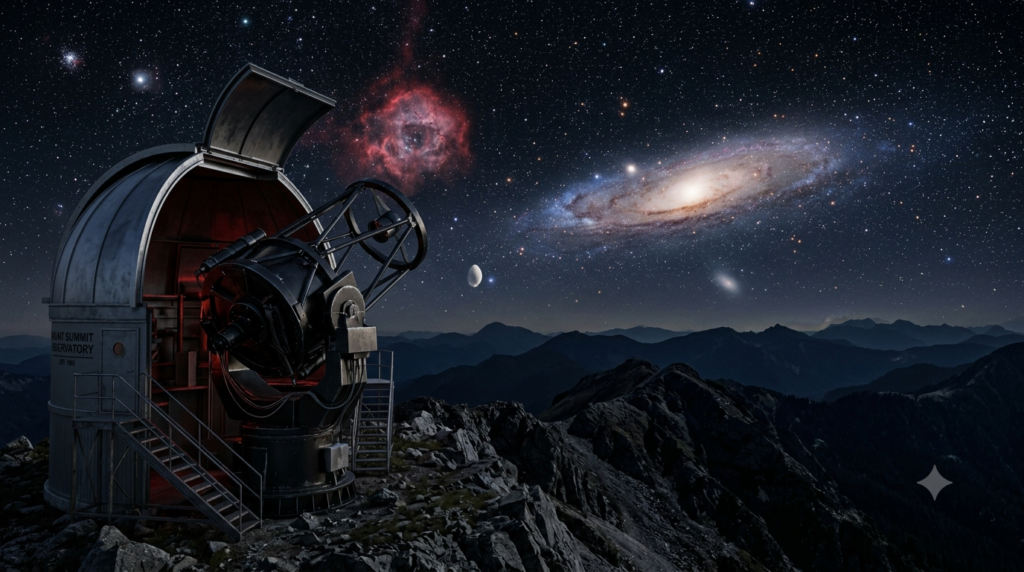
Engineering transforms scientific ideas into the instruments and technologies needed to explore the universe.
Astronomers depend on carefully designed telescopes, spacecraft, detectors, communication systems, and scientific instruments to collect reliable information.
Designing Telescopes and Space Observatories
Engineering principles determine how telescopes collect light, maintain stability, and operate under different environmental conditions.
Ground-based observatories must account for atmospheric disturbances, weather, and temperature changes. Space telescopes must operate in demanding conditions, often far from direct human assistance.
Engineers design mirrors, lenses, detectors, cooling systems, and control mechanisms to meet these challenges.
The quality of astronomical observations depends not only on scientific ideas but also on the performance of the instruments used to test them.
Spacecraft and Planetary Exploration
Spacecraft allow scientists to study planets, moons, comets, and asteroids at close range. Their design requires knowledge of propulsion, orbital mechanics, materials science, electronics, and communication technology.
Engineers must calculate trajectories, manage limited power supplies, protect equipment from radiation, and ensure that spacecraft can function under extreme temperatures.
Robotic landers and rovers also need systems that can operate across unfamiliar terrain. These technologies have expanded our knowledge of planetary environments and made it possible to collect measurements that telescopes alone cannot provide.
8. The Connection Between Astronomy and Environmental Science
Astronomy and environmental science are closely connected through the study of Earth as a planet and the investigation of climate-related processes.
Observations of Earth from space provide information about atmospheric conditions, oceans, vegetation, ice cover, and changes in the planet’s surface.
Understanding Earth’s Climate
Satellites measure important environmental variables, including surface temperatures, cloud patterns, atmospheric gases, and the distribution of water and ice.
These observations help scientists monitor climate change, track storms, investigate droughts, and assess changes in ecosystems.
Astronomical knowledge also helps researchers understand the role of the Sun in Earth’s energy balance. Variations in solar activity can influence the space environment, although recent global warming is primarily driven by human-caused greenhouse gas emissions.
Combining satellite observations with atmospheric physics and climate models provides a broader understanding of Earth’s changing environment.
Comparing Earth with Other Planets
Studying other planets helps scientists investigate why planetary climates differ.
Venus has an extremely hot surface associated with its dense carbon dioxide atmosphere and powerful greenhouse effect. Mars, by comparison, has a much thinner atmosphere and a colder surface.
Earth provides another example, with oceans, an atmosphere, and geological and biological processes that interact in complex ways.
Comparing these worlds helps scientists investigate atmospheric evolution, energy balance, and the conditions that influence planetary habitability.
9. Why Interdisciplinary Research Is Important in Astronomy
The connections between astronomy and other sciences are important because no single discipline can fully explain every astronomical phenomenon.
Consider the discovery and study of a potentially habitable exoplanet. Astronomers first use observational techniques to identify the planet and measure its orbit. Physics helps explain its gravitational interactions and radiation environment. Mathematics supports calculations of its size, mass, and orbital properties.
Chemistry helps scientists investigate the planet’s atmosphere, while biology provides ideas about possible requirements for life. Computer science processes the observations, and engineering makes the necessary instruments possible.
Even after all these methods are combined, scientists must carefully evaluate uncertainties and alternative explanations.
Interdisciplinary research also encourages technological progress. Improvements in detectors, computational methods, materials, and statistical techniques often make new discoveries possible.
Astronomy therefore demonstrates how scientific knowledge develops through cooperation among different fields rather than through isolated investigations.
10. How Astronomy Improves Our Understanding of the Universe
The combination of astronomy with other sciences has transformed our understanding of the cosmos.
Physics explains the forces and energy processes that govern celestial objects. Mathematics helps scientists measure the universe and test predictive models. Chemistry reveals the elements and molecules present in space. Biology supports the search for life beyond Earth, while geology uncovers the histories of planets and moons.
Computer science allows researchers to analyze increasingly large datasets, and engineering creates the technologies required to observe and explore distant environments. Environmental science helps place Earth within a broader planetary context.
Together, these disciplines have helped scientists investigate the origins of stars, the evolution of galaxies, the diversity of planetary systems, and the history of the universe.
Astronomy also encourages scientists to ask new questions. Each discovery may reveal unexpected connections and create opportunities for further research.
Conclusion
Astronomy is much more than the observation of stars and planets. It is an interdisciplinary science that combines physics, mathematics, chemistry, biology, geology, computer science, engineering, and environmental science to explain the universe.
Physics reveals how gravity, light, and energy influence celestial objects, while mathematics provides the tools to measure distances and predict motion. Chemistry explains the composition of stars and planetary atmospheres, and biology guides the search for life beyond Earth. Geology reveals the histories of planetary surfaces, computer science makes large-scale data analysis possible, and engineering builds the instruments that extend our view into space.
These connections show that scientific disciplines become more powerful when they work together. By combining different methods and perspectives, astronomers can investigate complex questions, test scientific theories, and improve our understanding of the cosmos. The study of astronomy therefore demonstrates how cooperation between sciences helps humanity explore the universe and better understand our place within it.
FAQs
1. How does astronomy connect with physics?
Astronomy and physics are closely connected because physics explains the natural laws that govern celestial objects. Astronomers use physics to understand gravity, light, energy, motion, and the behavior of matter in space. For example, Newton’s laws help explain planetary orbits, while Einstein’s theory of general relativity describes gravity in extreme environments, such as near black holes. Physics also explains how stars produce energy through nuclear fusion and how electromagnetic radiation travels across the universe. By applying physical principles to astronomical observations, scientists can investigate distant objects and understand the processes responsible for the structure and evolution of the universe.
2. Why is mathematics important in astronomy?
Mathematics is essential in astronomy because it allows scientists to calculate distances, predict celestial movements, analyze observations, and develop models of the universe. Astronomers use mathematical equations to determine planetary orbits, estimate the masses of stars, and calculate the distances to galaxies. Geometry and trigonometry help measure astronomical distances, while calculus describes changing motion and physical processes. Statistics and probability are used to analyze observational data and evaluate uncertainty. Mathematical models also help scientists test theories about cosmic expansion and the formation of galaxies. Without mathematics, astronomers would find it difficult to make accurate predictions or interpret complex astronomical measurements.
3. How does chemistry help astronomers study stars?
Chemistry helps astronomers determine the composition of stars and understand the materials present throughout the universe. One important technique is spectroscopy, which examines the wavelengths of light emitted or absorbed by atoms and molecules. Each chemical element produces characteristic spectral patterns that scientists can identify. By analyzing these patterns, astronomers can detect elements such as hydrogen, helium, iron, and calcium in stars. Chemistry also helps explain the formation of molecules in interstellar clouds and the development of planetary systems. These discoveries reveal how matter behaves in space and provide important information about the origin and evolution of stars, planets, and other celestial objects.
4. What is the relationship between astronomy and biology?
Astronomy and biology are connected through astrobiology, a scientific field that investigates the origin, evolution, and possibility of life beyond Earth. Astronomers discover planets around other stars, while biologists help scientists understand the environmental conditions that may support living organisms. Researchers study extreme environments on Earth to investigate how life survives under unusual conditions. They also examine distant planetary atmospheres for possible biosignatures, which are substances or patterns that may indicate biological activity. However, detecting a potential biosignature does not automatically prove that life exists. Scientists must consider nonbiological explanations and gather additional evidence before drawing conclusions about extraterrestrial life.
5. How does geology contribute to astronomy?
Geology contributes to astronomy through planetary geology, which studies the surfaces, structures, materials, and histories of planets, moons, asteroids, and other celestial bodies. Scientists examine craters, mountains, volcanoes, valleys, and rock samples to understand how these objects formed and changed over time. Meteorites provide valuable information about the early solar system and the materials from which planets developed. Space missions also collect images and measurements that help researchers investigate ancient volcanic activity, impact events, and evidence of past water on Mars. By combining geological principles with astronomical observations, scientists can reconstruct planetary histories and better understand the formation and evolution of the solar system.
6. What role does computer science play in modern astronomy?
Computer science plays a major role in modern astronomy because telescopes and space observatories generate enormous quantities of data. Computers help scientists process astronomical images, identify celestial objects, analyze radiation, and detect changes in the brightness of stars. Artificial intelligence and machine learning can assist in classifying galaxies, identifying possible exoplanets, and finding unusual patterns in large datasets. Computer simulations also allow researchers to investigate galaxy formation, planetary systems, and the evolution of cosmic structures. These tools make astronomical research faster and more efficient. However, computer-generated results must be checked carefully to ensure that the findings are scientifically reliable and consistent with observations.
7. How does engineering support astronomical discoveries?
Engineering supports astronomy by providing the instruments, technologies, and systems needed to observe and explore the universe. Engineers design telescopes, space observatories, spacecraft, detectors, and communication equipment that collect information from distant celestial objects. They must account for extreme temperatures, radiation, limited power supplies, and the challenges of operating equipment in space. Engineers also develop propulsion systems and navigation technologies that allow spacecraft to reach planets, moons, and asteroids. Improvements in optical instruments and detector technology enable astronomers to observe increasingly faint and distant objects. Without engineering, many modern astronomical discoveries would not be possible because scientists would lack the necessary tools to gather reliable data.
8. How are astronomy and environmental science connected?
Astronomy and environmental science are connected through the study of Earth as a planet and the investigation of processes that influence its climate and environment. Satellites use instruments to monitor atmospheric gases, surface temperatures, oceans, forests, glaciers, and changing weather patterns. These observations help scientists investigate climate change, natural disasters, and environmental degradation. Astronomy also contributes to understanding the Sun’s influence on Earth’s energy balance and space environment. Comparing Earth with planets such as Venus and Mars helps researchers examine how atmospheric composition affects planetary temperatures. By combining astronomical observations with environmental science, scientists gain valuable information about Earth’s changing conditions and its place among other planets.
9. Why do astronomers use multiple scientific disciplines together?
Astronomers use multiple scientific disciplines because the universe contains complex phenomena that cannot be fully explained by one field alone. For example, studying an exoplanet requires astronomy to detect the planet, physics to understand its orbit, mathematics to calculate its properties, and chemistry to investigate its atmosphere. Biology helps researchers assess whether its environment might support life, while computer science processes the collected data. Engineering provides the instruments needed to make these observations possible. Combining these disciplines allows scientists to compare different types of evidence, test scientific explanations, and reduce uncertainty. Interdisciplinary research therefore leads to a more complete and reliable understanding of astronomical phenomena.
10. How do the connections between astronomy and other sciences benefit humanity?
The connections between astronomy and other sciences benefit humanity by expanding scientific knowledge and encouraging technological innovation. Research in astronomy has contributed to advances in imaging, sensors, data processing, materials science, and communication technologies. Satellite observations help scientists monitor weather, track environmental changes, and study Earth’s climate. Mathematical models and physical theories improve our understanding of natural processes, while planetary research provides insights into the formation and evolution of Earth. Astronomy also encourages cooperation among scientists from different fields and countries. By investigating questions about stars, galaxies, planets, and the origins of the universe, interdisciplinary research helps humanity develop new technologies and gain a deeper understanding of our place in the cosmos.