
SI Unit of Luminous Intensity Candela Explained

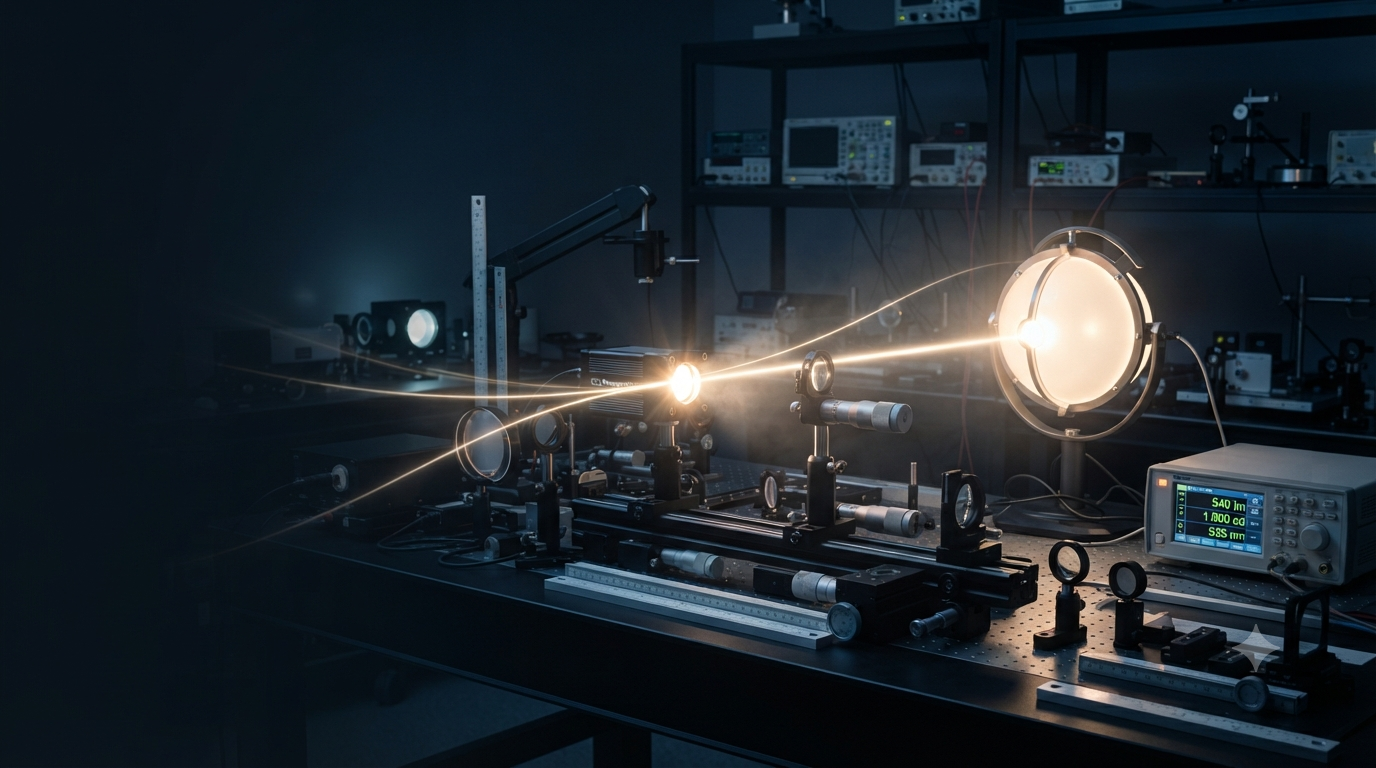
Scientific illustration showing luminous intensity and the SI unit candela with a focused beam of visible light

Luminous intensity is an important physical quantity used to describe how strongly a light source emits visible light in a particular direction. Unlike quantities such as mass, length, or time, luminous intensity is related specifically to human vision and the way the eye responds to visible radiation. The SI unit of luminous intensity is the candela, represented by the symbol cd.

The candela is one of the seven SI base units and plays an important role in photometry, the science of measuring visible light. It is used in areas such as lighting technology, photography, optical instruments, display design, automotive lighting, and scientific measurements. Understanding the candela helps explain how scientists and engineers describe the brightness of light sources in a standardized way.

What Is Luminous Intensity?

Luminous intensity describes the amount of visible light emitted by a light source in a particular direction. The important point is that luminous intensity is directional. A source may emit different amounts of light in different directions, so its luminous intensity can vary depending on where the measurement is made.

For example, consider a flashlight. Its reflector concentrates light into a narrow beam. The flashlight may have a high luminous intensity in the direction of the beam but much lower intensity in other directions.

Luminous intensity is different from the total amount of visible light produced by a source. The total visible light output is measured using luminous flux, whose SI unit is the lumen. Luminous intensity, on the other hand, tells us how strongly that light is emitted in a specific direction.

What Is the SI Unit of Luminous Intensity?

The SI unit of luminous intensity is the candela.

Symbol: cd

Candela is one of the seven SI base units, along with the metre, kilogram, second, ampere, kelvin, and mole. Because it is a base unit, it is not defined as a combination of other SI base units.

The word “candela” comes from the Latin word for candle. Historically, candles were used as references for measuring light. Modern measurement is much more precise and is based on a carefully defined physical standard.

What Does One Candela Mean?

The modern SI definition of the candela is based on the power of visible radiation at a particular frequency and a specified direction.

A candela is defined as the luminous intensity, in a given direction, of a source that emits monochromatic radiation of frequency 540 × 10¹² hertz and has a radiant intensity in that direction of 1/683 watt per steradian.

This definition connects photometric measurements with physical radiation measurements. The frequency used in the definition corresponds to greenish visible light near the region where human vision is particularly sensitive under daylight conditions.

The definition can be written conceptually as:

1 cd = 1/683 W/sr at a frequency of 540 × 10¹² Hz

Here, W represents watt and sr represents steradian, the SI unit of solid angle.

Why Is Candela a Base SI Unit?

The candela is a base SI unit because photometry requires a standardized way to relate physical radiation to human visual perception.

Human eyes do not respond equally to every wavelength of visible light. Green light, for example, produces a stronger visual response than some other wavelengths for the same amount of radiant power under standard daylight vision conditions.

The candela provides a defined reference that allows measurements of visible light to be made consistently. This is especially important when scientists, engineers, and manufacturers need to compare different light sources or lighting systems.

Candela and Human Vision

One interesting feature of the candela is that it is connected to the sensitivity of the human eye.

Photometry measures light according to its perceived visual effect under standardized conditions. This makes it different from radiometry, which measures electromagnetic radiation based purely on physical energy.

For example, two light sources can emit the same amount of radiant energy but appear to have different brightness levels because the human eye responds differently to their wavelengths.

The candela therefore provides a bridge between physical radiation and the visual response of a standard human observer.

Candela vs Lumen

Candela and lumen are closely related, but they measure different quantities.

Candela (cd) measures luminous intensity in a particular direction.

Lumen (lm) measures luminous flux, or the total amount of visible light emitted by a source.

The relationship between them can be expressed as:

1 lm = 1 cd·sr

This means that a light source with a luminous intensity of one candela emitting uniformly into a solid angle of one steradian produces one lumen of luminous flux within that solid angle.

A simple example is a focused lamp. If most of its light is concentrated into a small region, its luminous intensity in that direction can be high even if its total luminous flux is not extremely large.

Candela vs Lux

Candela is also different from lux.

Candela describes the intensity of a light source in a particular direction.

Lux (lx) describes illuminance, or how much luminous flux falls on a surface per unit area.

The basic relationship is:

1 lx = 1 lm/m²

For example, a desk lamp may have a certain luminous intensity, but the illuminance on a book depends on factors such as the distance from the lamp, the direction of the light, and the area receiving the light.

Therefore, candela tells us about the source, while lux tells us about the light arriving at a surface.

Where Is the Candela Used?

The candela is important in many practical and scientific applications.

Lighting Technology

Manufacturers use luminous intensity measurements when designing lamps, LED lights, streetlights, and other lighting systems. The intensity distribution of a lamp helps determine where its light will be concentrated.

Automotive Lighting

Headlights, fog lights, signal lamps, and other vehicle lighting systems are designed using photometric measurements. Candela values help engineers understand how strongly light is emitted in particular directions.

Photography and Cameras

Lighting conditions affect exposure, image quality, and color perception. Photometric measurements are useful when designing and evaluating photographic and imaging systems.

Displays and Screens

Phones, televisions, monitors, and other displays require controlled brightness and light distribution. Photometric quantities help manufacturers characterize the visible output of displays.

Optical Instruments

Scientific instruments that work with visible light often require accurate measurements of light intensity. Standardized units such as the candela make these measurements comparable.

Why Is the Candela Important?

Without standardized units, measurements of light would be difficult to compare between laboratories, countries, and manufacturers. The candela provides a common reference for luminous intensity.

It also allows engineers to design lighting systems with predictable performance. Whether a person is designing a streetlight, measuring an LED, testing a vehicle headlamp, or studying optical systems, standardized photometric measurements are essential.

The candela also demonstrates an interesting feature of modern measurement science. SI units are not simply arbitrary labels. They are carefully defined so that measurements can be reproduced consistently and connected to fundamental physical phenomena.

Common Misunderstandings About Candela

A common mistake is to think that candela directly means the overall brightness of a light source. It does not. Candela measures luminous intensity in a particular direction.

Another misunderstanding is to treat candela and lumen as interchangeable. They are related, but they describe different quantities. A lumen measures total luminous flux, while a candela measures luminous intensity per unit solid angle.

It is also important to remember that luminous intensity is a photometric quantity. It considers the standardized response of human vision rather than simply measuring the physical energy carried by electromagnetic radiation.

Conclusion

The candela (cd) is the SI base unit of luminous intensity. It describes how strongly a light source emits visible light in a particular direction. Its modern definition is connected to monochromatic radiation at a frequency of 540 × 10¹² hertz and a specified radiant intensity.

Understanding the candela also helps distinguish luminous intensity from related quantities such as luminous flux, measured in lumens, and illuminance, measured in lux. From LEDs and vehicle headlights to displays and scientific instruments, the candela provides a standardized foundation for measuring visible light. It is therefore an important SI unit for understanding both the physics of light and its interaction with human vision.

FAQs

What is the SI unit of luminous intensity?

The SI unit of luminous intensity is the candela, represented by the symbol cd. It is one of the seven SI base units. Luminous intensity describes how strongly a light source emits visible light in a particular direction. Unlike luminous flux, which measures the total visible light produced by a source, luminous intensity is directional. For example, a focused flashlight can have high luminous intensity in the direction of its beam. The candela provides a standardized way to measure and compare the intensity of visible light from different sources under defined conditions.

What does one candela mean?

One candela represents a specific amount of luminous intensity in a given direction. In the modern SI definition, one candela corresponds to a source emitting monochromatic radiation at a frequency of 540 × 10¹² Hz, with a radiant intensity of 1/683 watt per steradian in that direction. This definition connects visible-light measurements with physical radiation. The chosen frequency lies in the visible region where human vision has high sensitivity under standard daylight conditions. The candela therefore provides a precise and reproducible reference for measuring luminous intensity.

Why is candela an SI base unit?

The candela is an SI base unit because luminous intensity requires a standardized fundamental reference connected to visible radiation and human visual sensitivity. It is not expressed as a combination of other SI base units. The candela allows scientists and engineers to make consistent photometric measurements around the world. It is especially important in lighting technology, optical instruments, displays, automotive lighting, and scientific research. By defining the candela precisely, the SI system provides a reliable foundation for comparing the directional visible-light output of different sources.

What is the difference between candela and lumen?

Candela and lumen measure different aspects of visible light. Candela (cd) measures luminous intensity in a particular direction, while lumen (lm) measures luminous flux, or the total amount of visible light emitted by a source. Their relationship is expressed as 1 lm = 1 cd·sr, where sr represents steradian, the SI unit of solid angle. A light source can therefore have a high luminous intensity if it concentrates its light into a narrow direction, even when its total luminous flux is relatively limited.

What is the difference between candela and lux?

Candela and lux describe different photometric quantities. Candela measures luminous intensity emitted by a source in a particular direction. Lux, represented by lx, measures illuminance on a surface. One lux is equal to one lumen per square metre, written as 1 lx = 1 lm/m². For example, a lamp has a certain luminous intensity, but the illuminance on a desk depends on the lamp’s distance, direction, and the amount of light reaching the desk. Thus, candela concerns the light source, while lux concerns the illuminated surface.

Is candela a measure of brightness?

Candela is related to perceived brightness, but it should not simply be considered a direct measure of brightness. It measures luminous intensity, which describes the visible-light output of a source in a particular direction under standardized photometric conditions. Human vision responds differently to different wavelengths of light, and photometric measurements account for this standardized visual response. Perceived brightness can also depend on surrounding conditions, contrast, distance, and the observer. Therefore, candela is a precise physical measurement of luminous intensity rather than a complete description of how bright something appears to a person.

The candela belongs to photometry, which measures visible radiation according to the standardized sensitivity of human vision. The human eye does not respond equally to all wavelengths of visible light. Some wavelengths produce a stronger visual response than others for the same amount of physical radiation. The modern definition of the candela therefore connects radiant power with the standardized visual response of the eye. This makes the candela especially useful for lighting applications, where the goal is often to understand how much visible light a source produces rather than simply measuring its physical electromagnetic energy.

Where is the candela used?

The candela is used in many areas involving visible light. Lighting engineers use it to describe the directional intensity of lamps, LEDs, streetlights, and other lighting systems. Automotive engineers use photometric measurements when designing headlights, signal lamps, and other vehicle lights. It is also relevant to displays, cameras, optical instruments, photography, and scientific measurement systems. The candela helps manufacturers and researchers compare light sources consistently. Whenever the directional output of visible light needs to be measured accurately, luminous intensity and the candela provide an important standardized measurement.

What is the symbol of candela?

The official SI symbol for candela is cd. It is written using lowercase letters and does not need a period. For example, the luminous intensity of a light source may be described as 100 cd. Candela is one of the seven SI base units, so its symbol is standardized internationally. Using the correct symbol helps scientists, engineers, students, and manufacturers communicate measurements clearly. The symbol should be written after the numerical value with a space, such as 50 cd, rather than being written as “50cd” in formal scientific notation.

Why is the candela important in physics?

The candela is important because it provides a standardized unit for measuring luminous intensity, connecting the physics of electromagnetic radiation with standardized human visual perception. It allows light sources to be compared consistently across experiments, laboratories, industries, and countries. The unit is particularly useful in lighting engineering, optics, display technology, automotive lighting, and photometry. Understanding the candela also helps distinguish luminous intensity from related quantities such as luminous flux and illuminance. As one of the seven SI base units, the candela forms an important part of the international measurement system used throughout modern science and technology.

Related Post

Leave a Comment

Your email address will not be published. Required fields are marked *

Scroll to Top