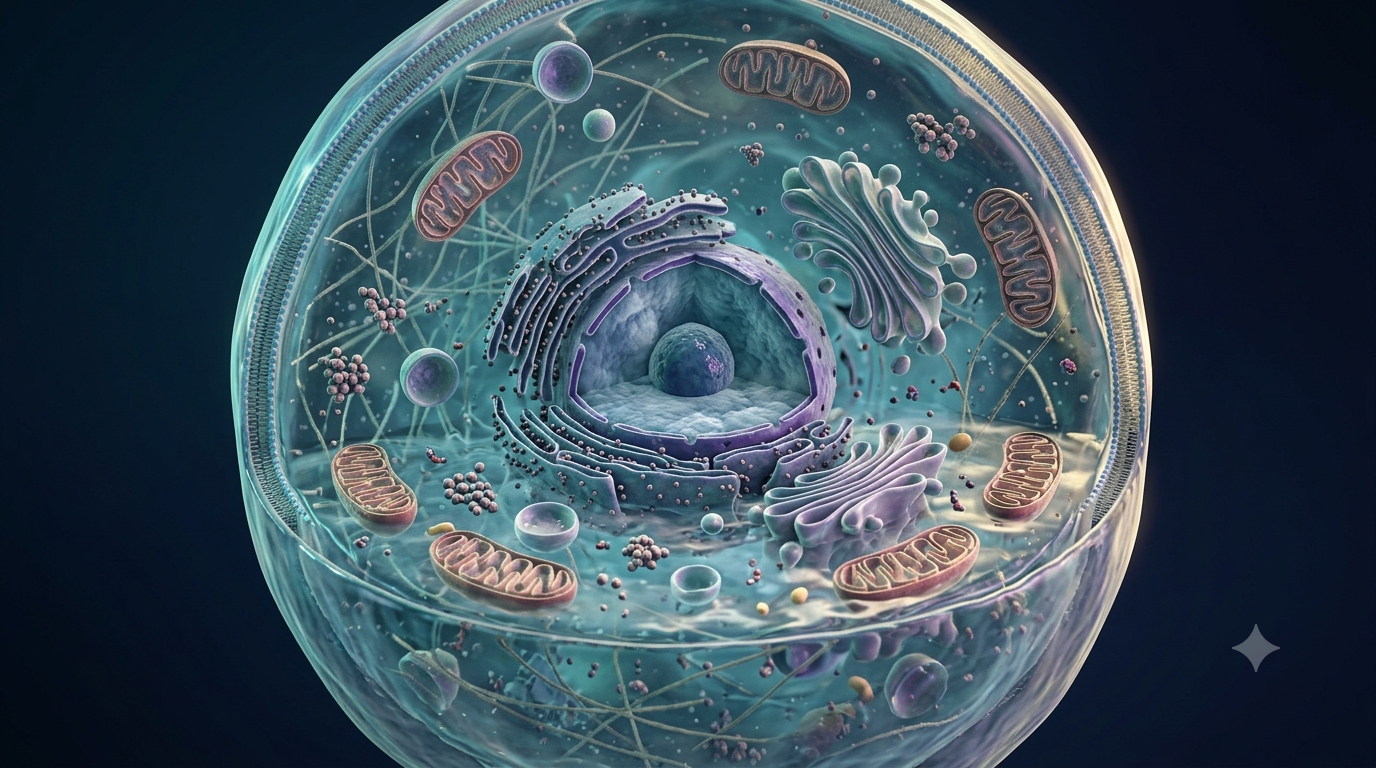
Every living organism is made up of cells, which are the basic structural and functional units of life. Inside each cell, different components work together to perform essential activities such as obtaining energy, producing proteins, transporting materials, removing waste, and maintaining normal cellular functions. One of the most important parts of a cell is the cytoplasm. It provides the internal environment in which many of these activities take place and helps different cellular components function efficiently.
The cytoplasm is a complex, gel-like substance located between the cell membrane and the nucleus in a typical eukaryotic cell. It contains water, dissolved substances, proteins, salts, and various cell organelles. Although it may appear to be a simple material under a microscope, the cytoplasm is highly organized and constantly active. Understanding the cytoplasm helps explain how cells maintain their structure, carry out chemical reactions, and support the survival and growth of living organisms.
What Is Cytoplasm?
The cytoplasm is the material found inside the cell membrane but outside the nucleus in eukaryotic cells. It consists of the cytosol, suspended organelles, and other cellular structures. In prokaryotic cells, such as bacteria, the cytoplasm occupies the region inside the cell membrane because these cells do not have a membrane-bound nucleus.
The cytoplasm is not merely a space filled with fluid. It is a dynamic environment where numerous biological processes occur. Enzymes and other molecules interact within it, organelles perform specialized functions, and materials move from one part of the cell to another.
The composition and consistency of the cytoplasm can vary depending on the type of cell and its activities. Some cells contain large amounts of stored materials, while others have a cytoplasm rich in organelles needed for energy production, protein synthesis, or secretion.
Structure and Composition of the Cytoplasm
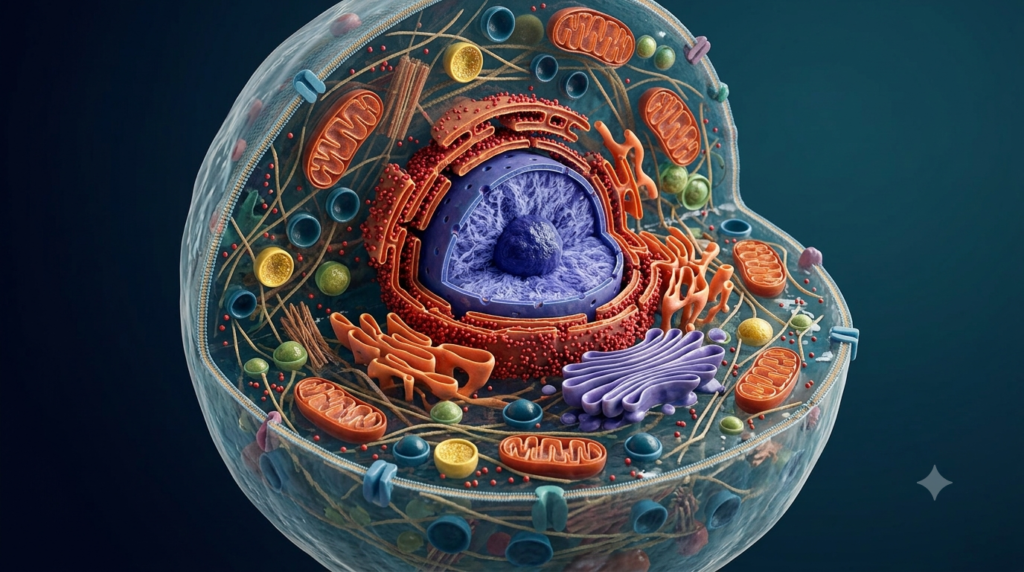
The cytoplasm contains several components that work together to maintain cellular activities. Its major components include the cytosol, cell organelles, the cytoskeleton, and various dissolved substances.
Cytosol
The cytosol is the fluid portion of the cytoplasm in which many cellular components are suspended. It contains mostly water along with dissolved ions, sugars, amino acids, proteins, and other molecules.
Water provides a medium in which substances can dissolve and interact. Many metabolic reactions take place in the cytosol because it contains the enzymes and raw materials required for these processes.
For example, glycolysis, an important stage of cellular respiration, occurs in the cytosol. During glycolysis, glucose is broken down through a series of chemical reactions, releasing energy that the cell can use.
Cell Organelles
Organelles are specialized structures that perform particular functions within a cell. Many organelles are located in the cytoplasm of eukaryotic cells.
Important organelles include:
Mitochondria: Produce most of the ATP generated during aerobic cellular respiration.
Ribosomes: Build proteins by joining amino acids according to genetic instructions.
Endoplasmic reticulum: Helps synthesize and process proteins and lipids.
Golgi apparatus: Modifies, sorts, and packages proteins and lipids for transport.
Lysosomes: Contain digestive enzymes that break down waste materials and damaged cellular components, particularly in animal cells.
Peroxisomes: Participate in fatty acid breakdown and the processing of certain harmful substances.
Chloroplasts: Carry out photosynthesis in plants and many algae.
These structures are distributed within the cytoplasm and work together to maintain the cell’s normal functioning. Their presence and abundance depend on the cell type.
Cytoskeleton
The cytoskeleton is a network of protein filaments extending throughout the cytoplasm. It helps maintain cell shape, organize organelles, and support movement within and around the cell.
The cytoskeleton consists mainly of microfilaments, intermediate filaments, and microtubules. Each type contributes to the structural organization of the cell in different ways.
Microtubules, for example, help transport materials inside cells and form important structures involved in chromosome separation during cell division. Microfilaments contribute to cell movement and changes in cell shape.
Dissolved Substances
The cytoplasm contains numerous dissolved substances required for cellular activities. These include glucose, amino acids, fatty acids, mineral ions, enzymes, and nucleotides.
These substances serve as raw materials, energy sources, and regulators of chemical reactions. Their concentrations must remain within suitable ranges for the cell to function properly.
Major Functions of the Cytoplasm
The cytoplasm performs several essential functions that support the survival, growth, and reproduction of cells.
1. Provides a Medium for Biochemical Reactions
One of the most important functions of the cytoplasm is to provide a suitable environment for biochemical reactions. Living cells depend on thousands of chemical reactions to obtain energy, build molecules, repair structures, and maintain internal balance.
The cytosol contains enzymes that accelerate these reactions. Without enzymes and an appropriate environment, many biological reactions would occur too slowly to support life.
For example, glycolysis takes place in the cytosol and converts glucose into smaller molecules while producing ATP and other useful products. ATP, or adenosine triphosphate, acts as an energy carrier that powers many cellular processes.
Other reactions in the cytoplasm help produce amino acids and other molecules required for cellular growth and maintenance.
2. Supports Cell Organelles
The cytoplasm provides the environment in which organelles are positioned and function. These organelles perform specialized tasks, but their activities are closely connected.
For example, ribosomes synthesize proteins, the endoplasmic reticulum helps process certain proteins, and the Golgi apparatus modifies and packages them. The cytoplasm supports the movement of materials between these structures.
It also helps maintain the internal organization of the cell. The cytoskeleton provides structural support and helps position organelles where they are needed.
This organization allows the cell to perform several activities at the same time without losing coordination.
3. Helps Transport Materials Within the Cell
Cells constantly move materials from one location to another. Nutrients, proteins, chemical signals, and waste products must reach the appropriate destinations for the cell to function efficiently.
The cytoplasm provides a medium for the movement of many dissolved substances. Small molecules may move through diffusion, while other materials are transported with the assistance of proteins and the cytoskeleton.
Motor proteins can carry vesicles and other cellular cargo along cytoskeletal filaments. This process is particularly important in large or highly specialized cells, such as nerve cells, where materials may need to travel considerable distances.
The cytoplasm therefore contributes to the distribution of substances required for cellular activities.
4. Participates in Energy Production
Energy is essential for nearly every activity performed by a living cell. Cells require energy to synthesize molecules, transport substances, divide, and respond to changes in their environment.
The cytoplasm plays an important role in energy metabolism. Glycolysis occurs in the cytosol, where glucose is broken down into pyruvate. This process produces a small amount of ATP and transfers energy to electron carriers.
In eukaryotic cells, pyruvate can enter the mitochondria when conditions support aerobic respiration. Further reactions in the mitochondria generate much more ATP.
Although mitochondria are the main sites of most ATP production during aerobic respiration, the cytoplasm contributes directly to the initial stages of glucose breakdown.
5. Supports Protein Synthesis
Proteins are essential for the structure and functioning of cells. They act as enzymes, transporters, receptors, structural materials, and signaling molecules.
Ribosomes located in the cytoplasm synthesize proteins by joining amino acids in the order specified by messenger RNA. Free ribosomes commonly produce proteins that function in the cytosol or certain other internal locations.
Other ribosomes are attached to the rough endoplasmic reticulum and produce many proteins destined for membranes, secretion, or particular cellular compartments.
The cytoplasm provides the environment in which ribosomes, messenger RNA, transfer RNA, amino acids, and other molecules interact during protein synthesis.
6. Helps Maintain Cell Shape and Internal Organization
The cytoplasm, together with the cytoskeleton and cell membrane, helps maintain the shape and organization of a cell.
Different cells have different shapes according to their functions. Muscle cells are adapted for contraction, nerve cells have extensions for communication, and many plant cells have relatively firm shapes supported by their cell walls.
The cytoskeleton helps cells maintain their structure while also allowing controlled changes in shape. These changes are important during cell movement, cell division, and the engulfing of particles.
The cytoplasm also helps position organelles and maintain an organized internal environment.
7. Stores and Distributes Materials
Cells sometimes store substances for future use. Depending on the cell type, these materials may include nutrients, pigments, lipid droplets, glycogen granules, or other storage structures.
For example, animal cells may store glycogen as an energy reserve, while plant cells can contain starch grains in specialized storage tissues and plastids.
Many of these materials are found within the cytoplasm or in structures located there. When the cell requires them, stored substances can be broken down or transported to the appropriate locations.
This ability to store and distribute materials helps cells respond to changing energy demands and environmental conditions.
8. Supports Cell Growth and Division
Cell growth requires the production of new proteins, membranes, organelles, and other cellular components. The cytoplasm contains many of the molecules and structures needed for these processes.
Before a cell divides, it typically grows and duplicates important components. During cell division, the cytoplasm is eventually divided between the resulting daughter cells through a process called cytokinesis.
In animal cells, cytokinesis generally involves a contractile ring that helps separate the cell into two. In plant cells, a cell plate develops between the daughter nuclei and contributes to the formation of a new dividing wall.
The cytoplasm must be distributed appropriately so that the daughter cells receive the materials necessary to begin functioning independently.
9. Helps Remove and Recycle Waste
Cellular activities produce waste materials and damaged components that must be processed or removed. If these substances accumulate excessively, they can interfere with normal cellular functions.
The cytoplasm supports waste management by allowing materials to move toward the structures responsible for their processing. Lysosomes digest many unwanted materials in animal cells, while other cellular systems break down damaged proteins and organelles.
Peroxisomes help process certain molecules and participate in reactions that manage potentially harmful substances, including hydrogen peroxide.
Cells also transport waste products toward the cell membrane or other appropriate destinations. These activities help maintain a stable internal environment.
10. Contributes to Cell Signaling
Cells must respond to chemical signals from their surroundings and coordinate their activities with other cells. Hormones, growth factors, and other signaling molecules can activate pathways that involve proteins and chemical messengers in the cytoplasm.
These signaling pathways may regulate gene expression, metabolism, cell growth, movement, and division.
For example, when a signaling molecule binds to a receptor on the cell membrane, it can activate a sequence of reactions involving cytoplasmic proteins. These reactions transmit information from the cell surface to internal targets.
The cytoplasm therefore plays an important role in converting external signals into changes in cellular activity.
Difference Between Cytoplasm and Cytosol
The terms cytoplasm and cytosol are closely related, but they do not mean exactly the same thing.
The cytoplasm refers to the material inside the cell membrane and outside the nucleus in a typical eukaryotic cell. It includes the cytosol, organelles, and other structures.
The cytosol is the fluid component of the cytoplasm. It contains water, dissolved ions, proteins, metabolites, and other molecules.
For example, a mitochondrion is part of the cytoplasm, but it is not part of the cytosol. The fluid surrounding the mitochondrion belongs to the cytosol.
Understanding this distinction is useful when studying cell biology because some processes occur in the cytosol, while others take place inside specialized organelles.
Difference Between Cytoplasm in Plant and Animal Cells
Plant and animal cells both contain cytoplasm, but their internal organization differs in several ways.
Plant cells usually contain a large central vacuole that occupies much of the cell’s interior. This vacuole pushes the cytoplasm toward the cell’s outer region in many mature plant cells. Plant cells also contain chloroplasts in photosynthetic tissues, where photosynthesis occurs.
Animal cells generally lack a large central vacuole and do not contain chloroplasts. Their cytoplasm may contain numerous vesicles, lysosomes, and other structures associated with their specific functions.
Both plant and animal cells contain cytosol, ribosomes, mitochondria, and a cytoskeleton. In both types, the cytoplasm supports chemical reactions, internal transport, protein synthesis, and cell organization.
Despite their differences, the cytoplasm performs many fundamental functions that are shared across eukaryotic cells.
Cytoplasmic Streaming
Cytoplasmic streaming, also called cyclosis, is the directed movement of cytoplasm and its contents within certain cells. It is particularly noticeable in some plant cells.
This movement can help distribute nutrients, organelles, and other materials throughout the cell. Cytoplasmic streaming is often driven by interactions between actin filaments and myosin motor proteins.
In large plant cells, streaming can improve the movement of materials across regions that would otherwise depend heavily on slower diffusion. It demonstrates that the cytoplasm is not always stationary but can undergo coordinated movement.
Cytoplasmic streaming is different from the random movement of individual molecules caused by diffusion. It involves more organized movement of the cytoplasm and associated cellular components.
What Happens If the Cytoplasm Is Damaged?
The proper functioning of the cytoplasm is essential for cell survival. If its chemical composition or organization is seriously disturbed, several cellular processes may be affected.
Changes in ion concentrations can interfere with enzyme activity and cellular signaling. Damage to the cytoskeleton can disrupt cell shape, internal transport, and cell division. Problems with protein processing or waste management can lead to the accumulation of damaged molecules.
Severe damage to the cell membrane may also cause important substances to leak out and disrupt the balance of water and ions inside the cell.
Cells have mechanisms that help repair damage and maintain internal stability. However, when the damage becomes too extensive, the cell may stop functioning properly or die.
These effects demonstrate why maintaining the structure and chemical environment of the cytoplasm is vital for healthy cellular activity.
Conclusion
The cytoplasm is an essential component of every cell, providing the environment in which many important biological processes occur. It contains the cytosol, organelles, structural networks, and dissolved substances that support cellular life. Its functions include facilitating biochemical reactions, supporting protein synthesis, helping transport materials, contributing to energy metabolism, maintaining cell organization, and assisting in waste processing and cell division.
Although different cells have specialized structures and functions, the cytoplasm remains a fundamental part of their internal organization. Its activities are closely connected with those of the cell membrane, nucleus, and organelles. By understanding the cytoplasm and its importance in cellular activities, we gain a clearer understanding of how cells maintain life, respond to their surroundings, grow, and reproduce.
FAQs
1. What is cytoplasm?
Cytoplasm is the material found inside the cell membrane and outside the nucleus in a typical eukaryotic cell. It consists of the cytosol, cell organelles, and other cellular structures. The cytosol is the fluid portion containing water, dissolved salts, proteins, enzymes, and other molecules. The cytoplasm provides an environment where many important cellular activities take place, including metabolic reactions, protein synthesis, and the movement of substances. It also helps maintain the internal organization of the cell. In prokaryotic cells, which lack a membrane-bound nucleus, the cytoplasm occupies the region inside the cell membrane.
2. What are the main components of the cytoplasm?
The main components of the cytoplasm are the cytosol, cell organelles, the cytoskeleton, and various dissolved substances. The cytosol is a water-based fluid containing ions, proteins, enzymes, and nutrients. Organelles such as mitochondria, ribosomes, the endoplasmic reticulum, and Golgi apparatus perform specialized functions. The cytoskeleton is a network of protein filaments that supports cell shape and internal organization. Dissolved substances, including glucose, amino acids, and mineral ions, provide materials for cellular reactions. Together, these components help cells produce energy, synthesize proteins, transport materials, remove waste, and maintain normal cellular functions.
3. What is the difference between cytoplasm and cytosol?
Cytoplasm and cytosol are related terms, but they have different meanings. Cytoplasm refers to the material inside the cell membrane and outside the nucleus in a typical eukaryotic cell. It includes the cytosol, organelles, and other cellular structures. Cytosol refers specifically to the fluid portion of the cytoplasm, which contains water, dissolved ions, proteins, enzymes, and other molecules. For example, mitochondria are components of the cytoplasm, but they are not part of the cytosol. Understanding this difference is important because some cellular reactions occur in the cytosol, while others take place inside specialized organelles.
4. Why is the cytoplasm important for cellular activities?
The cytoplasm is important because it supports many activities necessary for cell survival. It provides a medium for biochemical reactions, helps distribute nutrients, supports organelles, and facilitates the movement of materials within the cell. Important processes, such as glycolysis and protein synthesis on free ribosomes, occur in the cytosol. The cytoplasm also contributes to maintaining cell shape, organizing internal structures, and supporting cell growth and division. In addition, it helps cells respond to chemical signals and manage waste materials. Without a properly functioning cytoplasm, cells would struggle to coordinate their activities and maintain the internal conditions required for life.
5. Does cellular respiration occur in the cytoplasm?
Yes, one important stage of cellular respiration occurs in the cytoplasm, specifically in the cytosol. This process is called glycolysis, during which one glucose molecule is broken down into two pyruvate molecules through a series of enzyme-controlled reactions. Glycolysis produces a net gain of two ATP molecules and transfers energy to NADH. In eukaryotic cells, when aerobic respiration proceeds, pyruvate can enter the mitochondria for further processing. Most ATP production during aerobic respiration occurs through mitochondrial processes. Therefore, the cytoplasm contributes directly to energy production, while the mitochondria perform the major remaining stages of aerobic respiration.
6. How does the cytoplasm help in protein synthesis?
The cytoplasm provides an environment where ribosomes and the molecules required for protein synthesis can interact. Ribosomes read the information carried by messenger RNA and join amino acids in a specific sequence to form proteins. Free ribosomes in the cytosol commonly produce proteins that function within the cytosol or certain other cellular locations. Ribosomes attached to the rough endoplasmic reticulum produce many proteins destined for secretion, membranes, or particular organelles. The cytoplasm contains amino acids, transfer RNA, enzymes, and other molecules needed for these processes. Protein synthesis supports cell growth, repair, metabolism, and the production of essential cellular structures.
7. How does the cytoplasm support the movement of materials inside a cell?
The cytoplasm supports internal transport by providing a medium through which substances can move. Small molecules may spread through diffusion, while larger materials and cellular cargo often require specialized transport mechanisms. The cytoskeleton forms pathways along which motor proteins can carry vesicles, proteins, and other components. This movement helps deliver materials to the correct locations inside the cell. For example, proteins may be transported between cellular compartments, while nutrients and signaling molecules are distributed where they are needed. Efficient intracellular transport is especially important in large or specialized cells, such as nerve cells, where materials must travel over considerable distances.
8. What is the role of the cytoplasm in cell division?
The cytoplasm supports cell division by providing materials, organelles, proteins, and other components needed to form new cells. Before division, a cell generally grows and duplicates important structures. During cytokinesis, the cytoplasm is divided between the two daughter cells. In animal cells, a contractile ring helps pinch the cell into two separate cells. In plant cells, a cell plate develops between the daughter nuclei and contributes to forming a new dividing wall. Proper distribution of cytoplasmic contents helps daughter cells begin functioning. Therefore, the cytoplasm plays an important role in cell reproduction, growth, tissue development, and the replacement of damaged cells.
9. What is cytoplasmic streaming, and why is it important?
Cytoplasmic streaming, also known as cyclosis, is the directed movement of cytoplasm and its contents within certain cells. It is particularly noticeable in some plant cells. This movement helps distribute nutrients, organelles, and other substances throughout the cell. Cytoplasmic streaming is often driven by interactions between actin filaments and myosin motor proteins. It can improve the movement of materials across large cells, where diffusion alone may be relatively slow. Unlike random molecular movement, cytoplasmic streaming involves organized movement of the cytoplasm. This process demonstrates that the cytoplasm is a dynamic environment that contributes to efficient intracellular transport.
10. What happens if the cytoplasm stops functioning properly?
If the cytoplasm stops functioning properly, several essential cellular activities may become disrupted. Changes in its chemical composition can affect enzyme activity, metabolism, and cellular signaling. Damage to the cytoskeleton may interfere with cell shape, internal transport, and cell division. Problems with the movement or processing of substances can also cause waste materials to accumulate or essential nutrients to become unavailable. Severe disturbances in water and ion balance can damage cellular structures and affect normal function. Cells have repair and regulatory mechanisms that help maintain cytoplasmic conditions, but extensive damage may lead to cell death. A healthy cytoplasm is therefore essential for cellular survival.