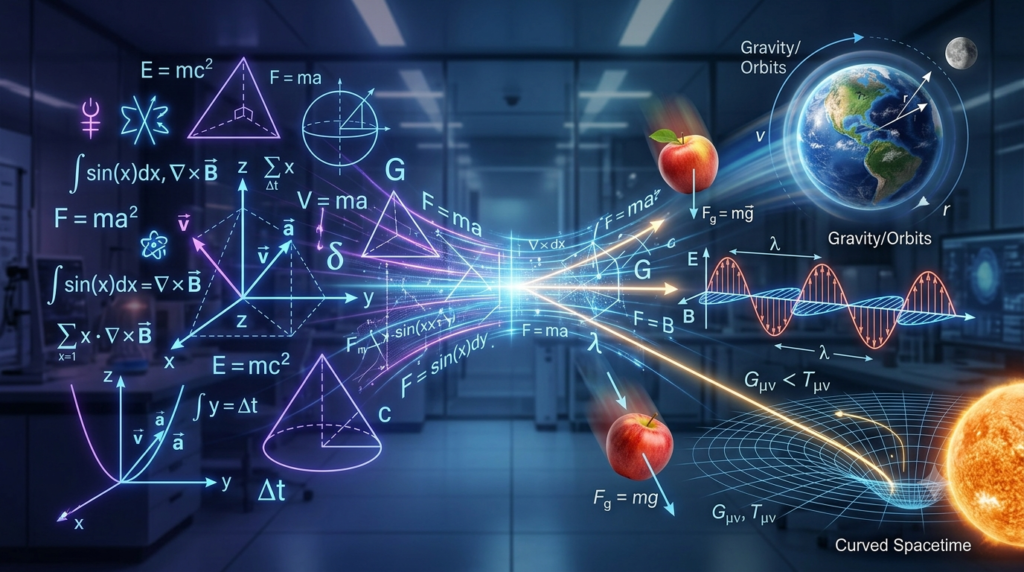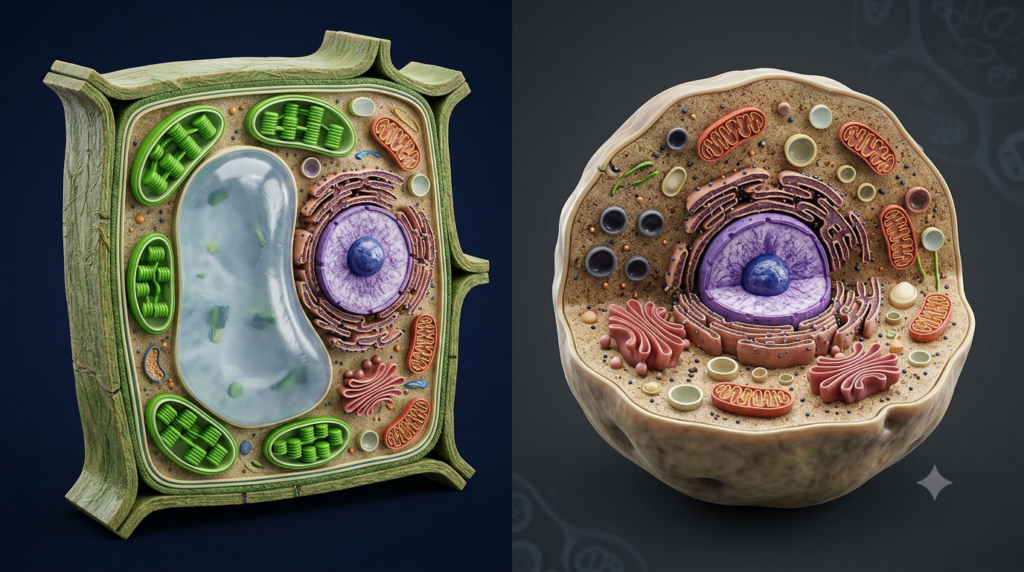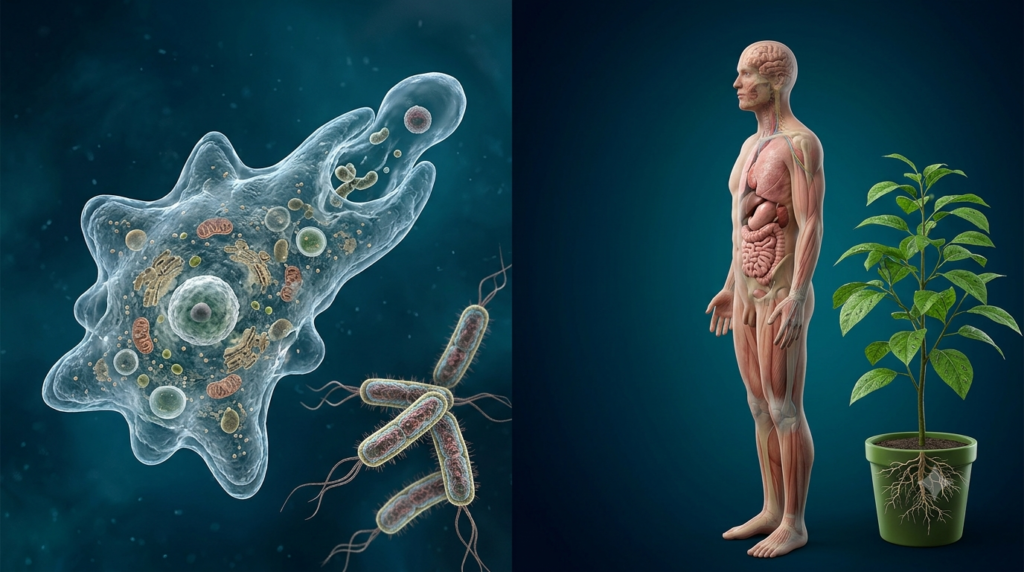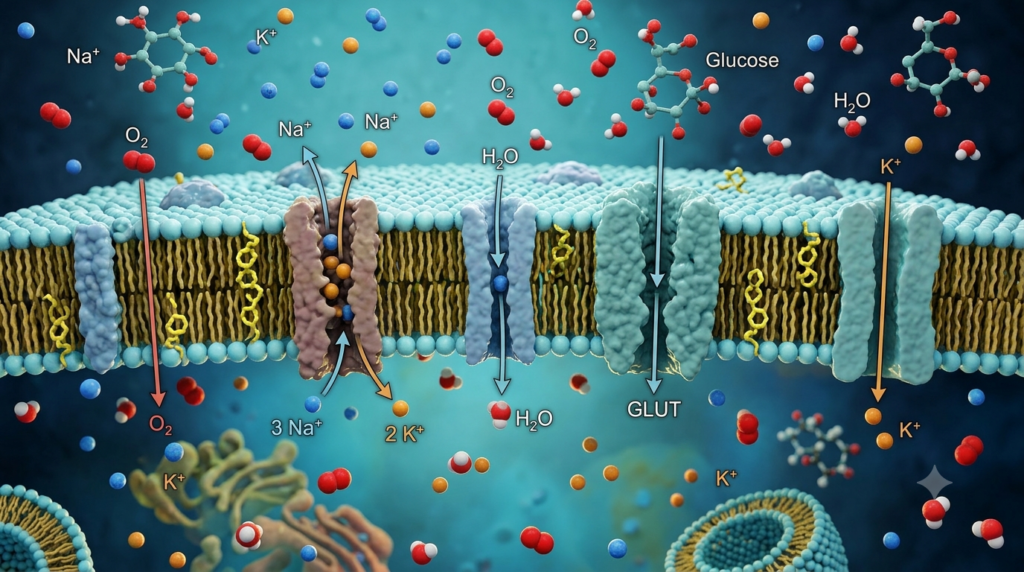
Science helps us understand the world around us, from the smallest particles inside an atom to the largest structures in the universe. It explains natural phenomena, reveals the principles behind everyday events, and provides knowledge that can improve human life. However, not all scientific research has the same purpose. Some scientists focus on understanding how nature works, while others use scientific knowledge to solve practical problems. These two approaches are commonly known as pure science and applied science.
Pure science aims to expand our understanding of the natural world, even when the results have no immediate practical use. Applied science, on the other hand, uses scientific knowledge to develop solutions, technologies, products, and methods that address real-world needs. Both approaches are important for scientific progress. Understanding their differences helps us recognize how scientific discoveries lead to technological developments and how practical challenges can inspire new scientific investigations.
What Is Pure Science?
Pure science, also called basic science or fundamental science, is the systematic study of natural phenomena to gain knowledge and understand the principles that govern the universe. Its primary goal is to discover new facts, explain observations, test scientific theories, and develop a deeper understanding of how things work.
Pure science does not necessarily aim to produce an immediate product, machine, or commercial application. Instead, researchers investigate questions because the answers can improve scientific understanding. They may study the behavior of subatomic particles, the structure of distant galaxies, the evolution of living organisms, or the fundamental laws of motion.
For example, a physicist studying the properties of electrons may not be trying to develop a new electronic device. The immediate objective may simply be to understand how electrons behave under particular conditions. However, this knowledge could eventually contribute to the development of advanced computers, sensors, and electronic materials.
Main Objectives of Pure Science
The main objectives of pure science include:
Expanding knowledge: Discovering new facts and improving our understanding of natural phenomena.
Developing theories: Creating and testing explanations for observations and experimental results.
Understanding fundamental principles: Investigating the basic laws that govern matter, energy, life, and the universe.
Exploring unanswered questions: Studying scientific problems even when their practical benefits are uncertain.
Supporting future discoveries: Producing foundational knowledge that other researchers can use in later investigations.
Examples of Pure Science
Pure science is found across several scientific disciplines.
Physics: A physicist investigating the fundamental properties of elementary particles is conducting pure scientific research when the main purpose is to understand the behavior of matter and energy.
Chemistry: A chemist studying how atoms form chemical bonds may be seeking to understand the fundamental principles of molecular structure rather than create a particular commercial product.
Biology: A biologist researching how genes are inherited across generations may focus on understanding the mechanisms of heredity and evolution.
Astronomy: An astronomer studying the formation of distant galaxies may aim to explain how the universe develops and changes over time.
Mathematics: A mathematician proving a new theorem may be expanding mathematical knowledge without intending to solve an immediate practical problem.
These examples demonstrate that pure science is driven mainly by curiosity, observation, experimentation, and the desire to understand fundamental principles.
What Is Applied Science?
Applied science is the use of scientific knowledge, theories, and research findings to solve practical problems or achieve specific objectives. It connects scientific understanding with real-world applications, including medicine, engineering, agriculture, environmental protection, manufacturing, and information technology.
Applied scientists use established scientific principles, experimental results, and technical methods to develop solutions for human needs. Their work may involve designing medical treatments, improving crop production, creating efficient energy systems, developing new materials, or improving industrial processes.
For example, researchers who use knowledge about electrical conductivity to develop a more efficient battery are working in applied science. Their research is directed toward improving a practical technology.
Applied science does not always produce an immediate commercial product. Some projects focus on improving existing methods, testing potential treatments, or developing solutions that may require years of further research before they become useful.
Main Objectives of Applied Science
The main objectives of applied science include:
Solving practical problems: Using scientific principles to address specific challenges.
Developing technology: Creating or improving machines, devices, materials, and systems.
Improving human health: Applying scientific knowledge to diagnosis, prevention, and treatment of diseases.
Increasing efficiency: Improving industrial processes, energy use, transportation, and agricultural production.
Addressing environmental challenges: Developing methods to reduce pollution, conserve resources, and manage waste.
Supporting innovation: Transforming scientific findings into useful methods, products, and services.
Examples of Applied Science
Applied science plays a major role in modern society.
Medical science: Researchers apply knowledge of human biology, chemistry, and disease mechanisms to develop medicines, diagnostic tests, and treatment methods.
Engineering: Engineers use principles of physics and mathematics to design bridges, aircraft, electrical systems, and machines.
Agricultural science: Scientists apply knowledge of plant biology, genetics, soil science, and chemistry to improve crop yields and manage agricultural pests.
Environmental science: Researchers use scientific knowledge to develop water purification systems, monitor pollution, and improve waste management.
Computer science: Specialists apply mathematical and computational principles to develop software, cybersecurity systems, artificial intelligence tools, and data-processing technologies.
These examples show that applied science focuses on using scientific knowledge to achieve practical outcomes.
Key Differences Between Pure Science and Applied Science
Pure science and applied science are closely related, but they differ in their primary objectives, research approaches, and expected outcomes.
1. Purpose
The most important difference is the purpose of the research.
Pure science aims to understand natural phenomena and discover new knowledge. Researchers investigate questions to explain how and why something happens.
Applied science aims to use scientific knowledge to solve a particular problem or improve an existing process. Its research is generally directed toward a defined practical objective.
For example, studying how bacteria reproduce to understand their biological mechanisms is an example of pure science. Using that knowledge to develop an effective method of controlling a bacterial infection is an example of applied science.
2. Research Approach
Pure science often begins with curiosity, an unexplained observation, or a theoretical question. Researchers develop hypotheses, conduct experiments, analyze evidence, and construct or revise scientific explanations.
Applied science often begins with a practical challenge. Researchers identify the problem, determine which scientific principles are relevant, and test possible solutions. They may compare different designs, materials, treatments, or procedures to find an effective approach.
Both approaches use scientific methods, careful observation, experimentation, and evidence-based reasoning. The main difference lies in the question guiding the investigation.
3. Expected Outcomes
Pure science generally produces new knowledge, theories, explanations, and experimental findings. Its success is often measured by how much it improves scientific understanding.
Applied science generally produces practical methods, improved technologies, working prototypes, treatments, or other solutions. Its success may be evaluated through effectiveness, reliability, safety, cost, and performance.
However, these outcomes are not completely separate. Pure research can produce unexpected technologies, while applied research can reveal new scientific principles.
4. Time Required for Results
Pure science may require a long period before its findings lead to practical applications. Some discoveries remain primarily theoretical for decades, while others quickly influence new technologies.
Applied science often works toward a specific goal, but practical results are not always immediate. Developing a new medicine, for example, can require years of laboratory research, clinical testing, safety evaluation, and regulatory review.
Therefore, neither approach guarantees quick results. Both may involve uncertainty, repeated experiments, and unexpected difficulties.
5. Practical Applications
Pure science does not require immediate practical applications. Its value lies primarily in developing a reliable understanding of the world.
Applied science is directly concerned with using scientific knowledge in practical situations. Its results may improve healthcare, communication, transportation, agriculture, energy production, and manufacturing.
Nevertheless, pure science can eventually have enormous practical value, even if its original purpose was simply to understand a natural phenomenon.
6. Relationship With Technology
Pure science provides fundamental knowledge that helps explain the behavior of matter, energy, organisms, and physical systems.
Applied science uses this knowledge to design and improve technologies. For example, fundamental research into the properties of semiconductors helped establish the scientific basis for modern electronic devices.
Technology can also create new opportunities for pure science. Advanced microscopes, space telescopes, and particle detectors allow scientists to investigate questions that were previously impossible to study.
7. Evaluation of Success
Pure scientific research is often evaluated through the quality of its evidence, the reliability of its methods, the originality of its findings, and its contribution to scientific understanding.
Applied scientific research may also be evaluated using these criteria, along with practical measures such as efficiency, affordability, durability, usability, and safety.
A pure science study can be successful by explaining a phenomenon more accurately. An applied science project can be successful by developing a reliable solution to a defined problem.
Comparison Table: Pure Science vs Applied Science
| Basis of Comparison | Pure Science | Applied Science |
|---|---|---|
| Main purpose | To expand scientific knowledge | To solve practical problems |
| Primary focus | Understanding natural phenomena | Using scientific knowledge |
| Starting point | Curiosity or unanswered questions | A specific need or challenge |
| Research direction | Fundamental investigation | Practical investigation |
| Typical outcomes | Theories, explanations, and discoveries | Technologies, methods, and solutions |
| Immediate application | Not necessary | Usually an important objective |
| Success criteria | Scientific understanding and reliable evidence | Scientific reliability and practical effectiveness |
| Examples | Studying atomic structure | Developing improved electronic materials |
| Role in innovation | Provides foundational knowledge | Applies knowledge to practical developments |
| Long-term value | Supports future discoveries and applications | Improves products, processes, and services |
How Pure Science and Applied Science Work Together
Pure science and applied science should not be viewed as completely separate activities. They are interconnected parts of scientific progress. Pure science provides fundamental knowledge, while applied science uses that knowledge to develop practical solutions. In return, applied research can reveal unanswered questions that encourage further fundamental investigation.
Consider the development of modern medical imaging. Research into the physical properties of matter, electromagnetic radiation, and magnetic fields helped scientists understand principles that could later be used in imaging technologies. Applied researchers and engineers used these principles to develop systems that allow healthcare professionals to examine structures inside the human body.
Another example is semiconductor technology. Fundamental studies of atomic structure and the behavior of electrons helped scientists understand how certain materials conduct electricity. Applied research transformed this knowledge into transistors, integrated circuits, and the electronic components used in computers and smartphones.
The relationship also works in the opposite direction. When applied scientists encounter unexpected results while testing a new material or designing a machine, they may discover that existing scientific explanations are incomplete. This can lead to new questions and further basic research.
Scientific progress therefore often follows a continuous cycle: researchers develop knowledge, apply it to practical challenges, evaluate the results, and use new observations to improve scientific understanding.
Real-Life Examples of Pure Science and Applied Science
Example 1: Understanding Electricity and Developing Electrical Devices
A scientist studying the movement of electric charges and the fundamental properties of electrical forces is investigating pure science when the primary objective is to understand these phenomena.
An engineer using electrical principles to design a safer household circuit, an efficient motor, or a reliable power distribution system is applying scientific knowledge.
The fundamental understanding of electricity supports the development of practical electrical technologies.
Example 2: Studying Genetics and Developing Medical Treatments
A biologist investigating how genes control inherited characteristics may be conducting pure scientific research. The goal is to understand the relationship between genes, biological processes, and inherited traits.
Researchers who apply genetic knowledge to develop diagnostic tests or investigate gene-based treatments are working in applied science.
The basic understanding of genetics helps provide a foundation for medical advances, although the development of a safe and effective treatment requires additional research and testing.
Example 3: Studying Plant Growth and Improving Agriculture
A scientist investigating how plants respond to light, water, temperature, and nutrients may be conducting pure science if the main purpose is to understand plant physiology.
An agricultural scientist who uses this knowledge to improve irrigation methods, develop crop management practices, or increase productivity under particular environmental conditions is applying scientific principles.
Both activities contribute to a better understanding of plants and more effective agricultural practices.
Example 4: Studying Materials and Developing Better Batteries
A materials scientist investigating the atomic structure and chemical properties of substances may be conducting fundamental research.
Applied researchers can use the resulting knowledge to develop battery materials that improve energy storage, durability, charging performance, or safety.
The practical success of a battery depends on many factors, including cost, environmental impact, reliability, and performance under real operating conditions.
Advantages and Limitations of Pure Science
Pure science provides several important benefits.
First, it expands human knowledge and helps explain natural phenomena. Discoveries about matter, energy, life, and the universe improve our understanding of the world.
Second, it creates a foundation for future innovation. Scientific findings that have no immediate application may later become essential to new technologies or medical treatments.
Third, pure science encourages curiosity, critical thinking, and the development of reliable scientific theories.
However, pure science also has limitations. Its practical benefits may be uncertain, and the time required to achieve meaningful discoveries can be difficult to predict. Some research may not lead to an immediate application, and investigating complex scientific questions can require expensive equipment and long-term funding.
These limitations do not mean that pure science lacks value. Its main contribution is the development of knowledge that may benefit society in direct or indirect ways.
Advantages and Limitations of Applied Science
Applied science offers practical benefits by using scientific knowledge to address real-world problems. It contributes to medical treatments, safer infrastructure, improved communication, efficient energy systems, and better agricultural methods.
It can also support economic development by encouraging innovation, improving productivity, and creating new technologies and services.
However, applied science also faces challenges. A solution that works in a laboratory may not perform equally well under real-world conditions. Practical development can involve high costs, technical difficulties, safety concerns, and environmental consequences.
Furthermore, applied research depends on reliable scientific knowledge. If the underlying principles are incomplete or incorrectly understood, a proposed solution may fail or produce unexpected results.
For these reasons, applied science requires careful testing, evaluation, and continued improvement.
Is Pure Science More Important Than Applied Science?
Neither pure science nor applied science is universally more important than the other. Their importance depends on the scientific question, the practical challenge, and the needs of society.
Pure science is essential because it develops the fundamental knowledge needed to explain natural phenomena. Without a strong scientific foundation, many technological advances would be difficult or impossible to achieve.
Applied science is equally important because it transforms scientific understanding into practical benefits. It helps address challenges related to health, energy, agriculture, communication, infrastructure, and environmental protection.
A society that invests only in applied science may miss important fundamental discoveries that could enable future breakthroughs. Similarly, a society that supports only pure science may fail to develop available knowledge into useful solutions.
A balanced approach supports both fundamental research and practical innovation. It allows scientists to investigate important questions while also helping society benefit from scientific discoveries.
Careers in Pure Science and Applied Science
Pure science and applied science offer different but overlapping career opportunities.
Careers associated with pure science often include physicists, theoretical mathematicians, astronomers, molecular biologists, research chemists, and scientists working in fundamental research laboratories. These professionals investigate scientific questions, conduct experiments, develop theories, and publish research findings.
Applied science careers may include biomedical researchers, materials scientists, food scientists, environmental scientists, agricultural researchers, and specialists who develop or test technologies. Engineers and medical professionals also use scientific principles extensively, although engineering and clinical practice are distinct professional fields rather than simply synonyms for applied science.
The educational path depends on the chosen field. Many research positions require a bachelor’s or master’s degree, while independent scientific research roles often require a doctoral degree or specialized training. Some technical and laboratory positions are available through diploma or undergraduate programs.
Students and other learners interested in pure science may enjoy investigating why natural phenomena occur. Those interested in applied science may prefer using scientific principles to design, test, or improve practical solutions. Both paths require analytical thinking, curiosity, accuracy, and a willingness to learn.
Conclusion
Pure science and applied science represent two closely connected approaches to understanding and using scientific knowledge. Pure science focuses on discovering fundamental principles and explaining how the natural world works. Applied science uses that knowledge to solve practical problems, improve existing methods, and develop useful technologies.
Although their immediate objectives differ, both contribute to scientific progress. Fundamental discoveries often provide the foundation for practical innovations, while applied research can reveal new questions that inspire further scientific investigation. From understanding electricity to developing electronic devices, and from studying genetics to improving medical treatments, the relationship between these approaches is clear. Pure science helps us understand the world, while applied science helps us use that understanding to improve it. Together, they support discovery, innovation, and the continued advancement of human knowledge.
FAQs
1. What is the main difference between pure science and applied science?
The main difference between pure science and applied science is their primary purpose. Pure science focuses on expanding scientific knowledge and understanding the fundamental principles of nature. Applied science uses scientific knowledge to solve practical problems and develop useful technologies, products, or methods. For example, studying the properties of electrons to understand their behavior is pure science, while using that knowledge to improve electronic devices is applied science. Both approaches are important because pure science provides fundamental knowledge, and applied science transforms scientific understanding into practical solutions that can benefit individuals, industries, and society.
2. What is pure science with an example?
Pure science is the systematic investigation of natural phenomena to gain knowledge and understand how the world works. Its main objective is to discover scientific principles rather than produce an immediate practical application. For example, a physicist studying the fundamental properties of atoms to understand their structure and behavior is conducting pure scientific research. Similarly, an astronomer investigating the formation of galaxies may aim to understand the evolution of the universe. Such research increases scientific knowledge and can provide the foundation for future technological developments, even when researchers cannot predict its practical applications at the beginning of the investigation.
3. What is applied science with an example?
Applied science involves using scientific knowledge to solve specific problems or achieve practical objectives. It combines scientific principles with experimentation, technical methods, and problem-solving approaches. For example, researchers applying knowledge of chemistry and materials science to develop more efficient batteries are working in applied science. Similarly, medical researchers use biological knowledge to investigate treatments for diseases, while agricultural scientists apply plant biology to improve crop production. Applied science contributes to technological innovation, healthcare, environmental protection, and industrial development. Its results may include improved products, practical methods, diagnostic tools, and technologies designed to meet particular human needs.
4. What are the five major differences between pure science and applied science?
Five major differences distinguish pure science from applied science. First, pure science aims to expand knowledge, whereas applied science focuses on practical problem-solving. Second, pure science often begins with curiosity or an unanswered question, while applied science frequently begins with a specific challenge. Third, pure science commonly produces theories and explanations, whereas applied science may produce technologies, methods, or useful products. Fourth, immediate practical application is not essential to pure science but is generally important in applied science. Fifth, pure research is often evaluated by its scientific contribution, while applied research is also assessed by effectiveness, reliability, safety, and practical usefulness.
5. Is pure science more important than applied science?
Neither pure science nor applied science is always more important than the other. Both contribute to scientific progress in different ways. Pure science develops fundamental knowledge that helps explain natural phenomena and provides a foundation for future discoveries. Applied science uses that knowledge to address practical challenges and improve human life. For example, fundamental research into electricity helped establish the principles needed for modern electrical technologies. Applied research then helped transform those principles into useful devices and systems. Without pure science, many applications would lack a reliable foundation. Without applied science, many discoveries might remain underused in practical situations.
6. How are pure science and applied science related?
Pure science and applied science are closely connected because scientific discoveries often support practical developments, while practical challenges can inspire further research. Pure science investigates fundamental questions and develops scientific explanations. Applied science uses those findings to create or improve technologies, treatments, and processes. For example, research into the properties of semiconductors helped scientists understand how certain materials conduct electricity. Applied research used this knowledge to develop transistors and electronic circuits. In return, advanced electronic instruments help scientists conduct new fundamental experiments. This relationship creates a continuous cycle of discovery, application, evaluation, and further investigation that supports scientific and technological progress.
7. What are the main branches of pure science?
Pure science includes several major fields that investigate fundamental questions about the natural world. Physics studies matter, energy, motion, forces, and the basic laws of nature. Chemistry investigates the composition, properties, and transformations of substances. Biology examines living organisms, their structures, functions, and evolution. Astronomy explores celestial objects and the universe. Mathematics develops abstract concepts, patterns, structures, and logical relationships that support scientific reasoning. These fields often overlap, creating areas such as biophysics, physical chemistry, and mathematical astronomy. Researchers in pure science primarily seek to improve fundamental understanding, although their discoveries may eventually support practical applications and technological advances.
8. What are the main branches of applied science?
Applied science includes diverse fields that use scientific knowledge to address practical needs. Medical and biomedical sciences apply biological and chemical principles to understand diseases, improve diagnosis, and investigate treatments. Agricultural science uses knowledge of plants, soil, genetics, and ecosystems to improve farming practices. Environmental science applies scientific methods to monitor pollution, manage natural resources, and protect ecosystems. Materials science supports the development of stronger, lighter, and more durable materials. Computer science applies mathematical and computational principles to information processing and software development. These fields often combine multiple scientific disciplines to develop effective solutions for healthcare, agriculture, industry, energy, and environmental challenges.
9. Can pure science lead to practical applications?
Yes, pure science can lead to important practical applications, sometimes many years after the original discovery. Researchers may investigate a scientific question without knowing whether the findings will have immediate commercial or technological value. Later, other scientists and engineers may discover ways to apply that knowledge. For example, fundamental research into quantum mechanics contributed to the scientific principles behind semiconductors, lasers, and several modern electronic technologies. Similarly, research into microorganisms and genetics has supported developments in biotechnology and medicine. These examples demonstrate why fundamental research is valuable: discoveries made to improve understanding can eventually produce unexpected benefits for society.
10. What is the difference between pure science, applied science, and technology?
Pure science focuses on understanding fundamental principles and discovering new knowledge. Applied science uses scientific knowledge to solve practical problems or develop improved methods. Technology involves the tools, devices, systems, and processes created or used to achieve particular objectives. For example, studying the properties of light is pure science when the goal is fundamental understanding. Applying optical principles to design a laser is applied science. The laser device and the systems that use it are examples of technology. These concepts are closely connected but have different roles. Together, they support scientific discovery, engineering development, industrial innovation, and improvements in everyday life.