Every living organism is made up of cells, and each cell requires a stable internal environment to function properly. Nutrients must enter the cell, waste products must leave, and water and dissolved substances must remain within suitable limits. The structure responsible for controlling many of these movements is the cell membrane. Also known as the plasma membrane, it forms the outer boundary of the cell and separates the internal contents from the surrounding environment. However, the cell membrane is much more than a simple protective covering. It selectively controls the movement of substances, receives chemical signals, helps cells communicate, and contributes to maintaining a stable internal environment. This process is closely connected to homeostasis, which allows cells to carry out essential life processes even when external conditions change.
What Is the Cell Membrane?
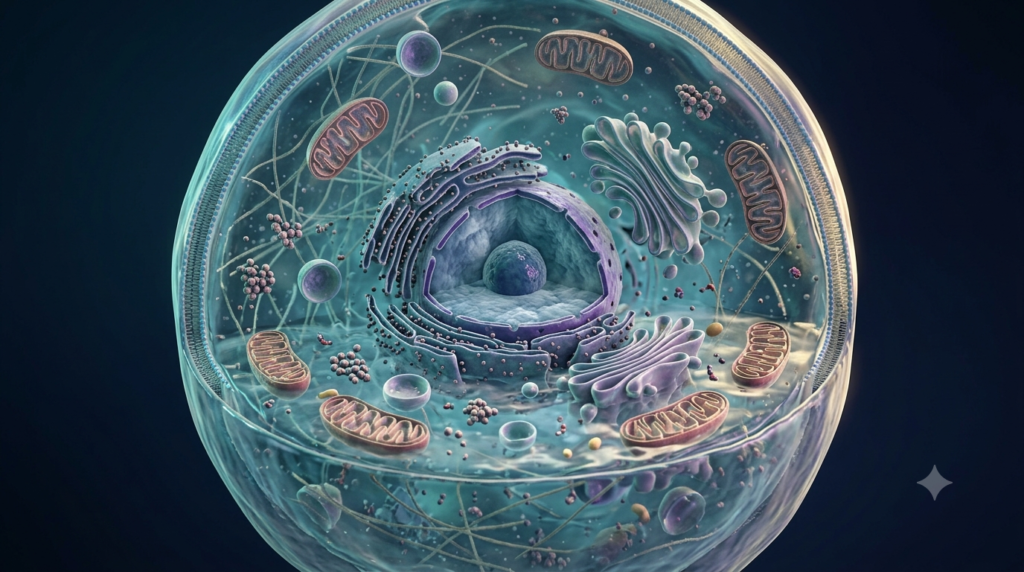
The cell membrane is a thin, flexible, selectively permeable boundary that surrounds the cytoplasm of a cell. It is present in both prokaryotic cells, such as bacteria, and eukaryotic cells, including plant and animal cells.
The term selectively permeable means that the membrane allows certain substances to pass through more easily than others. Some small molecules can cross the membrane directly, while other substances require specialized proteins. Certain particles cannot pass through without specific transport mechanisms.
The cell membrane performs several important functions:
It separates the internal environment of the cell from the external environment.
It regulates the movement of water, ions, nutrients, and waste products.
It helps maintain appropriate concentrations of substances inside the cell.
It receives signals from hormones and other chemical messengers.
It supports cell recognition and communication.
It helps cells maintain their shape and respond to changes in their surroundings.
Without a properly functioning cell membrane, a cell would be unable to regulate its internal conditions effectively.
Structure of the Cell Membrane
The structure of the cell membrane is closely related to its functions. It is mainly composed of phospholipids, proteins, cholesterol in many animal cell membranes, and carbohydrate-containing molecules.
1. Phospholipid Bilayer
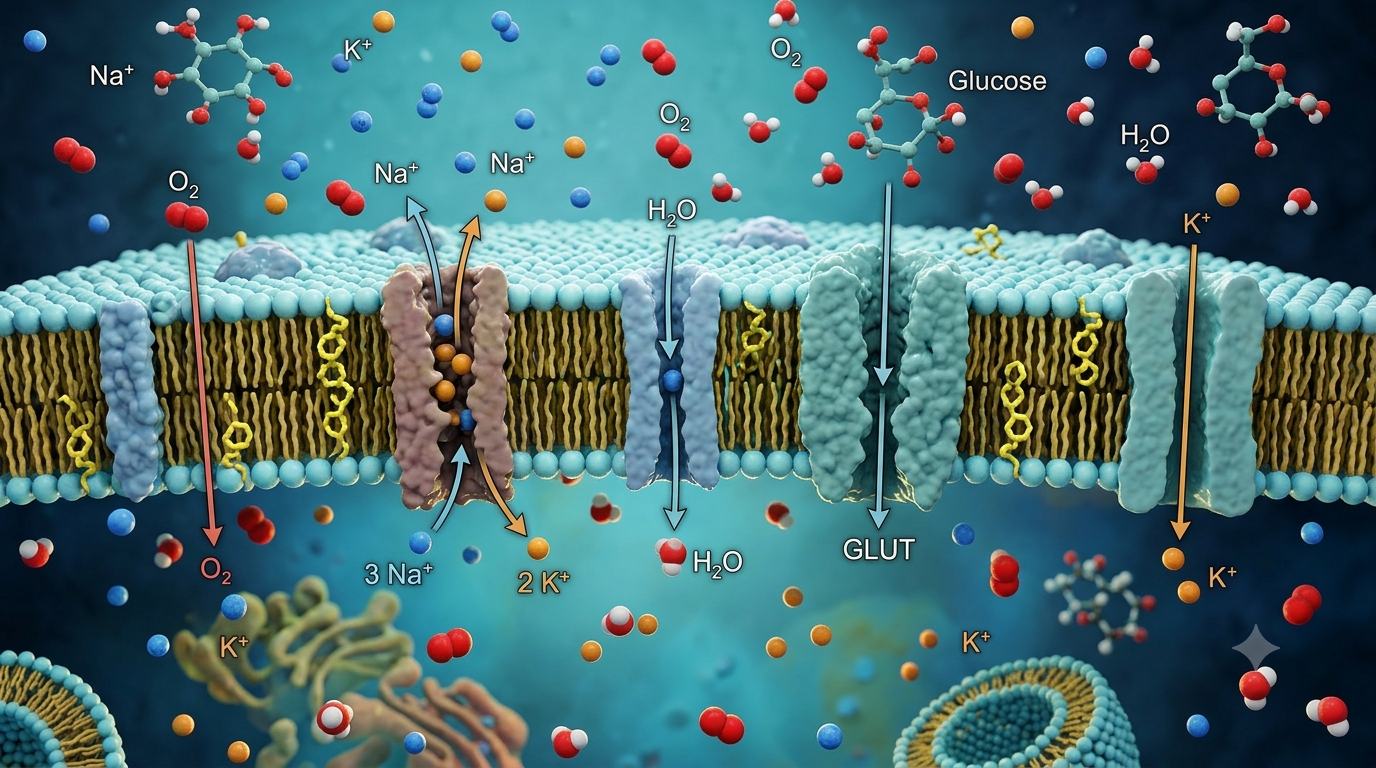
The basic framework of the cell membrane is a phospholipid bilayer. Phospholipids are special molecules with two different regions: a water-attracting head and water-repelling tails.
The hydrophilic heads interact with water, while the hydrophobic tails avoid it. Because the inside and outside of a cell are generally watery environments, phospholipids arrange themselves into two layers. Their heads face the watery environments on either side, while their tails point toward the center of the membrane.
This arrangement creates a barrier that restricts the movement of many water-soluble substances, including charged particles and large polar molecules.
Small nonpolar molecules, such as oxygen and carbon dioxide, can generally cross the lipid bilayer more easily than ions or large polar molecules.
2. Membrane Proteins
Proteins are essential components of the cell membrane. Some extend across the entire membrane, while others are attached to one side.
Membrane proteins perform several functions:
Channel proteins: Form pathways through which particular ions or molecules can move.
Carrier proteins: Bind specific substances and help transport them across the membrane.
Receptor proteins: Recognize chemical signals and trigger cellular responses.
Enzymatic proteins: Help carry out chemical reactions associated with the membrane.
Adhesion proteins: Help cells attach to neighboring cells or surrounding structures.
These proteins allow the membrane to regulate substances that cannot easily cross the phospholipid bilayer on their own.
3. Cholesterol
Cholesterol is an important component of many animal cell membranes. It helps regulate membrane fluidity and stability.
At higher temperatures, cholesterol helps prevent phospholipids from moving too freely. At lower temperatures, it can prevent phospholipids from packing too closely together. This helps the membrane maintain suitable physical properties under changing conditions.
Plant membranes contain different sterols, while bacterial membranes generally lack cholesterol, although there are exceptions and related membrane-stabilizing molecules in some organisms.
4. Carbohydrates
Carbohydrates may be attached to membrane proteins or lipids, forming glycoproteins and glycolipids. These molecules are especially important for cell recognition, communication, and interactions between cells.
For example, certain carbohydrate patterns on the surfaces of human cells help the immune system distinguish between different cell types.
The Fluid Mosaic Model
The structure of the cell membrane is commonly explained by the fluid mosaic model. According to this model, phospholipids and many membrane proteins can move sideways within the membrane, making it flexible and dynamic.
The word fluid refers to the movement of membrane components, while mosaic describes the arrangement of different proteins and other molecules within the lipid bilayer.
This flexible structure allows the membrane to repair small disruptions, change shape, transport substances, and participate in cellular communication.
What Is Cellular Balance?
Cellular balance refers to maintaining internal conditions within suitable limits so that the cell can perform its normal activities. In biology, this regulation is part of a broader process called homeostasis.
Cells require appropriate levels of water, ions, nutrients, oxygen, and other substances. They must also control waste accumulation, acidity, and other chemical conditions.
For example, many human cells need a suitable concentration of potassium ions inside the cell and sodium ions outside it. These differences are essential for electrical signaling, nutrient transport, and other cellular processes.
Similarly, cells must regulate water movement to prevent excessive swelling or shrinking.
The cell membrane contributes to this balance by controlling what enters and leaves the cell. However, cellular balance also depends on other structures and processes, including metabolic reactions, enzymes, organelles, and regulatory systems.
How the Cell Membrane Maintains Cellular Balance
The cell membrane maintains cellular balance through several transport mechanisms and regulatory functions.
1. Selective Permeability
Selective permeability is one of the most important properties of the cell membrane. It allows the cell to control which substances enter or leave and how quickly they move.
For example, oxygen can enter many cells by diffusion because its concentration is often higher outside than inside. Cells use oxygen during aerobic cellular respiration to help release energy from nutrients.
Carbon dioxide produced during cellular respiration can move out of cells when conditions favor its diffusion.
In contrast, charged ions cannot freely cross the hydrophobic interior of the membrane. They usually require ion channels or transport proteins.
This selective control helps the cell obtain useful substances, remove certain waste products, and maintain appropriate chemical conditions.
2. Diffusion
Diffusion is the movement of particles from a region of higher concentration to a region of lower concentration because of their random motion.
It is a passive process, meaning that the cell does not need to supply energy directly for the particles to move down their concentration gradient.
For example, when oxygen concentration is higher outside a cell than inside it, oxygen molecules tend to move into the cell. Once inside, oxygen can be used in cellular respiration.
Diffusion also helps carbon dioxide leave cells when its concentration is higher inside than outside.
However, diffusion does not move every substance across the membrane. The ability of a molecule to cross depends on its size, charge, chemical properties, and the presence of suitable transport pathways.
3. Osmosis and Water Balance
Osmosis is the net movement of water across a selectively permeable membrane in response to differences in water potential. In many biological examples, water moves toward the side with a higher effective concentration of nonpenetrating dissolved substances.
Osmosis is essential for maintaining the proper water content of cells.
When an animal cell is placed in a hypotonic solution, the surrounding solution has a lower effective solute concentration than the cell. Water tends to enter the cell, causing it to swell. If too much water enters, the cell may burst.
When an animal cell is placed in a hypertonic solution, the surrounding solution has a higher effective solute concentration. Water tends to leave the cell, causing it to shrink.
In an isotonic solution, there is no net movement of water across the membrane, although water molecules continue moving in both directions.
Plant cells respond differently because they have a rigid cell wall. Water entering a plant cell increases turgor pressure, which helps support the plant. Excessive water loss can cause the cell membrane and cytoplasm to pull away from the cell wall, a condition known as plasmolysis.
These examples show why controlling water movement is essential for cellular stability.
4. Facilitated Diffusion
Some substances cannot cross the phospholipid bilayer easily but can move down their concentration or electrochemical gradients through membrane proteins. This process is called facilitated diffusion.
Channel proteins provide pathways for specific ions or other suitable substances. Carrier proteins bind to particular molecules and change shape to transport them across the membrane.
For example, glucose enters many cells through glucose transporter proteins. The movement of glucose through these transporters can occur without direct energy input when the concentration gradient favors inward movement.
Facilitated diffusion allows cells to obtain necessary substances while maintaining selective control over membrane transport.
5. Active Transport
Some substances must move across the membrane against their concentration or electrochemical gradients. This requires energy and is called active transport.
One important example is the sodium-potassium pump, also known as the Na⁺/K⁺-ATPase, which is found in many animal cell membranes.
For each ATP molecule it uses, this pump typically moves three sodium ions out of the cell and two potassium ions into the cell.
This process helps maintain the differences in sodium and potassium concentrations across the membrane. These differences are important for nerve impulses, muscle function, cell volume regulation, and the operation of several other transport systems.
Active transport allows cells to maintain internal conditions that would not be possible through passive movement alone.
6. Endocytosis and Exocytosis
Some substances are too large to cross the membrane through ordinary channels or transport proteins. Cells can move such materials using vesicles.
Endocytosis is the process by which a cell takes in material by enclosing it within a portion of the cell membrane. The membrane folds inward and forms a vesicle containing the material.
Cells use endocytosis to take up certain nutrients, internalize membrane proteins, and capture particles. For example, some immune cells engulf microorganisms through a specialized form of endocytosis called phagocytosis.
Exocytosis is the process by which vesicles fuse with the cell membrane and release their contents outside the cell. It is important for the secretion of hormones, enzymes, and neurotransmitters.
Both processes help cells regulate their contents, communicate with other cells, and manage substances that cannot pass directly through the lipid bilayer.
The Role of the Cell Membrane in Ion Balance
Ions are electrically charged particles that play essential roles in cellular activities. Examples include sodium, potassium, calcium, and chloride ions.
The cell membrane regulates ion movement through selective channels, pumps, and transporters. These mechanisms help maintain differences in ion concentrations between the inside and outside of cells.
In nerve cells, the distribution of sodium and potassium ions contributes to the resting membrane potential. When a nerve impulse occurs, the opening and closing of specific ion channels produce changes in electrical potential that allow the signal to travel along the cell.
Calcium ions also act as important signaling molecules. Cells tightly regulate their calcium concentrations because changes in calcium levels can trigger muscle contraction, secretion, and other cellular responses.
If ion balance is seriously disrupted, normal electrical signaling, enzyme activity, and cell volume regulation can be affected.
The Cell Membrane and pH Regulation
The pH of a cell describes how acidic or alkaline its environment is. Many cellular reactions work properly only within a suitable pH range.
The cell membrane contributes to pH regulation by controlling the movement of hydrogen ions and other substances involved in acid-base balance. Certain membrane transport proteins move hydrogen ions directly, while others exchange hydrogen ions for different ions or transport bicarbonate and related substances.
For example, some cells use proton pumps to move hydrogen ions across membranes. These pumps help establish chemical gradients that support transport and other biological processes.
The regulation of pH also involves intracellular buffers, chemical reactions, and organelles. Therefore, the cell membrane is an important part of pH control, but it does not maintain pH independently of the rest of the cell.
The Cell Membrane in Cell Communication
Maintaining cellular balance requires cells to respond to information from their surroundings. The cell membrane makes this possible through receptor proteins and other signaling molecules.
Receptor proteins recognize specific chemical messengers, such as hormones or signaling molecules released by neighboring cells. When a suitable messenger binds to its receptor, it can trigger a series of reactions inside the cell.
These reactions may change enzyme activity, gene expression, membrane transport, or other cellular processes.
For example, insulin binds to its receptor on target cells and initiates signaling pathways that help regulate glucose metabolism. In many tissues, insulin also promotes the movement of glucose transporter proteins to the cell surface, increasing glucose uptake.
By responding to signals, cells can adjust their activities according to the body’s needs and changing environmental conditions.
What Happens When the Cell Membrane Is Damaged?
The cell membrane must remain sufficiently intact to regulate transport and maintain the internal environment. Damage to the membrane can interfere with several essential processes.
When membrane integrity is compromised, substances may move across the membrane in an uncontrolled manner. Important ions can leak out or enter the cell, water balance may be disturbed, and unwanted substances may reach the cytoplasm.
Severe membrane damage can cause the loss of essential cellular contents and eventually lead to cell death.
Membrane damage can occur because of physical injury, harmful chemicals, toxins, extreme environmental conditions, or certain infections. Cells have mechanisms that can repair some forms of membrane damage, but these mechanisms have limits.
In human tissues, widespread membrane damage may contribute to inflammation and tissue injury. The consequences depend on the cell type, the extent of damage, and the body’s ability to repair the affected cells.
Differences Between the Cell Membranes of Plant and Animal Cells
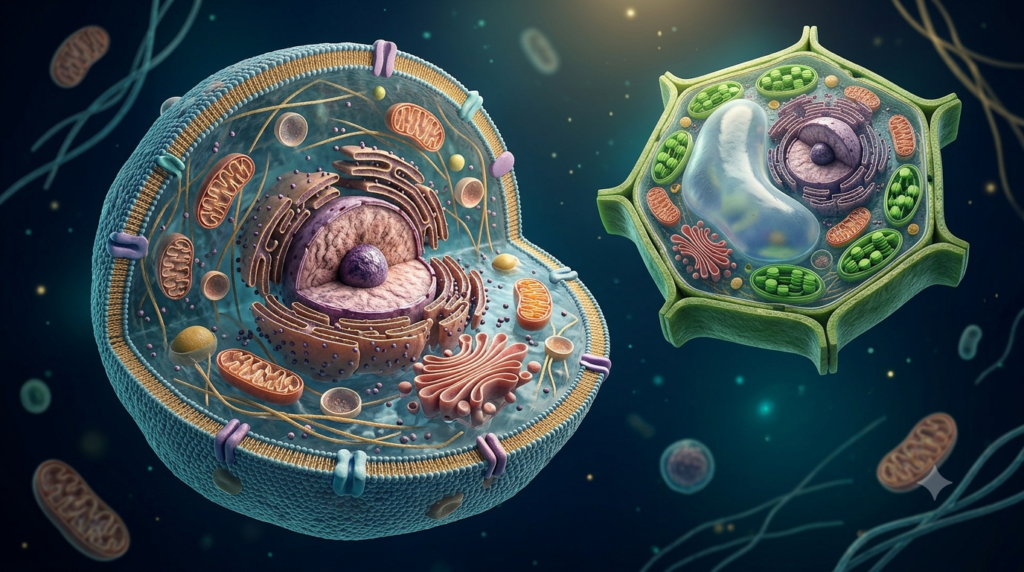
Plant and animal cells both have cell membranes, but their surrounding structures differ.
Plant cells possess a rigid cell wall outside the cell membrane. The cell wall provides structural support and helps prevent excessive expansion when water enters the cell. The cell membrane remains responsible for selectively controlling the movement of substances into and out of the cytoplasm.
Animal cells do not have a cell wall. Their cell membranes provide the outer boundary of the cells and allow them to change shape more readily. As a result, animal cells can be particularly sensitive to major changes in the surrounding solution’s concentration.
Despite these differences, the basic functions of selective permeability, transport, communication, and cellular regulation are shared by both plant and animal cells.
Everyday Examples of Cellular Balance
The role of the cell membrane can be understood through several examples from everyday life and human biology.
1. Water Absorption in Plant Roots
Root cells absorb water from the soil through processes involving water potential differences and membrane transport. Water movement supports cell turgor and helps maintain the structure of leaves and stems.
2. Nerve Signal Transmission
Nerve cells maintain differences in sodium and potassium concentrations across their membranes. Changes in ion movement through membrane channels produce electrical signals that allow the nervous system to communicate.
3. Glucose Uptake
Many cells use membrane transport proteins to take up glucose. In certain tissues, insulin signaling helps increase glucose uptake after a meal, supporting energy production and storage.
4. Removal of Cellular Waste
Carbon dioxide produced during cellular respiration can diffuse out of cells. Other waste products may be processed inside cells and transported across membranes through specialized mechanisms.
5. Maintenance of Red Blood Cell Shape
Red blood cells must maintain appropriate water and ion balance to preserve their normal shape and function. Major changes in the surrounding solution can cause them to swell or shrink, affecting their ability to transport oxygen efficiently.
These examples demonstrate that membrane function is essential to many biological processes, from plant growth to human movement and energy metabolism.
Conclusion
The cell membrane is an essential structure that protects the cell and helps maintain a stable internal environment. Its phospholipid bilayer, membrane proteins, and other molecular components work together to regulate the movement of water, ions, nutrients, and waste products. Through diffusion, osmosis, facilitated diffusion, active transport, endocytosis, and exocytosis, the membrane supports the conditions required for normal cellular activity. It also contributes to cell communication, electrical signaling, pH regulation, and the recognition of neighboring cells. Although other cellular structures and processes also participate in homeostasis, the cell membrane plays a central role in connecting the cell with its surroundings. Without its selective permeability and transport mechanisms, cells would struggle to maintain the balance necessary for life.
FAQs
1. What Is the Cell Membrane?
The cell membrane is a thin, flexible covering that surrounds every cell and separates its internal contents from the external environment. It is also called the plasma membrane. Its primary function is to control the movement of substances into and out of the cell. The membrane is mainly composed of a phospholipid bilayer containing proteins and other molecules. It allows essential substances, such as nutrients and oxygen, to enter while helping remove waste products. The cell membrane also participates in cell communication, recognition, and signaling. Its selective permeability is essential for maintaining the internal conditions required for normal cellular activities.
2. What Is the Role of the Cell Membrane in Maintaining Cellular Balance?
The cell membrane helps maintain cellular balance by regulating the movement of water, ions, nutrients, and waste products. This regulation supports homeostasis, the process through which cells maintain suitable internal conditions despite changes in their surroundings. The membrane uses different mechanisms, including diffusion, osmosis, facilitated diffusion, and active transport. These processes help maintain appropriate concentrations of substances inside the cell. Membrane proteins also support communication and respond to chemical signals. Without these regulatory mechanisms, essential ions could become imbalanced, water could move excessively across the membrane, and harmful substances could accumulate, interfering with normal cellular functions and potentially causing cell damage.
3. Why Is the Cell Membrane Called Selectively Permeable?
The cell membrane is called selectively permeable because it allows certain substances to cross while restricting or controlling the movement of others. Small nonpolar molecules, such as oxygen and carbon dioxide, can generally pass directly through the phospholipid bilayer. However, charged particles, including sodium and potassium ions, usually require specialized membrane proteins. Large polar molecules may also need transport proteins to cross efficiently. The membrane’s selectivity depends on molecular size, electrical charge, chemical properties, and the availability of suitable transport pathways. This property allows cells to obtain necessary materials, remove waste products, and maintain a stable internal environment.
4. What Is the Difference Between Diffusion and Osmosis?
Diffusion is the net movement of particles from a region of higher concentration to a region of lower concentration. It can involve gases and dissolved substances and does not require direct energy input from the cell. Osmosis is the net movement of water across a selectively permeable membrane in response to differences in water potential. In many biological situations, water moves toward the side with a higher effective concentration of nonpenetrating solutes. Both processes are passive transport mechanisms. Diffusion helps exchange substances such as oxygen and carbon dioxide, while osmosis is particularly important for maintaining cell volume, water balance, and normal cellular function.
5. What Happens When a Cell Is Placed in a Hypertonic Solution?
When a cell is placed in a hypertonic solution, the surrounding solution has a higher effective solute concentration than the cell. Water therefore tends to move out of the cell through osmosis. As water leaves, an animal cell shrinks, and its normal functions may become disturbed. In plant cells, water loss can reduce turgor pressure and cause the cell membrane and cytoplasm to pull away from the cell wall, a process called plasmolysis. The severity of these effects depends on the concentration difference and exposure time. Maintaining suitable water balance is essential for cell survival and normal physiological activity.
6. How Does Active Transport Help Maintain Cellular Balance?
Active transport moves substances across the cell membrane against their concentration or electrochemical gradients. Unlike passive transport, this process requires energy, either directly or indirectly. A major example is the sodium-potassium pump found in many animal cells. Using energy from ATP, it typically moves three sodium ions out of the cell and two potassium ions into it. This helps maintain ion concentration differences that support nerve impulses, muscle activity, and cell volume regulation. Active transport also enables cells to accumulate certain nutrients and regulate internal chemical conditions. Without it, many essential concentration gradients would gradually weaken, disrupting normal cellular processes.
7. What Is the Fluid Mosaic Model of the Cell Membrane?
The fluid mosaic model describes the cell membrane as a flexible phospholipid bilayer containing proteins and other molecules. The phospholipids form the basic structure, with their water-attracting heads facing the watery environments and their water-repelling tails pointing inward. Many membrane proteins can move sideways within this structure, making the membrane dynamic rather than rigid. Cholesterol helps regulate fluidity in many animal cell membranes, while carbohydrates attached to proteins and lipids contribute to cell recognition and communication. This model explains how the membrane can remain flexible while performing essential functions, including selective transport, signaling, cell adhesion, and maintaining cellular balance.
8. How Do Membrane Proteins Help Maintain Homeostasis?
Membrane proteins help maintain homeostasis by transporting substances, receiving signals, and supporting communication between cells. Channel proteins allow specific ions or molecules to cross the membrane, while carrier proteins bind substances and change shape to transport them. Pump proteins use energy to move certain particles against their concentration gradients. Receptor proteins recognize hormones and other chemical messengers, triggering responses inside the cell. These functions help regulate ion concentrations, nutrient uptake, waste removal, and cellular responses to environmental changes. For example, ion channels are essential for electrical signaling in nerve cells. Without properly functioning membrane proteins, cells would struggle to maintain stable internal conditions.
9. What Happens If the Cell Membrane Is Damaged?
Damage to the cell membrane can interfere with its ability to control the movement of substances. Ions may leak across the membrane, water balance may become disturbed, and essential cellular components may escape. Harmful substances may also enter the cell, disrupting chemical reactions and other vital processes. Minor membrane damage can sometimes be repaired by cellular mechanisms, but severe damage may lead to cell death. Membrane injury can result from physical trauma, harmful chemicals, toxins, infections, or extreme environmental conditions. The consequences depend on the extent of the damage and the type of cell affected. Maintaining membrane integrity is essential for cellular survival.
10. Why Is the Cell Membrane Important for Living Organisms?
The cell membrane is important because it enables cells to interact with their surroundings while maintaining suitable internal conditions. It regulates the movement of nutrients, water, ions, and waste products, supporting metabolism and other life processes. Membrane proteins also help cells receive signals, recognize neighboring cells, and communicate with other parts of an organism. In nerve cells, membrane transport mechanisms contribute to electrical signaling, while in plant cells, membrane regulation supports water balance and growth. These functions are essential for individual cells and the tissues they form. Without a properly functioning cell membrane, organisms could not maintain the cellular stability required for life.