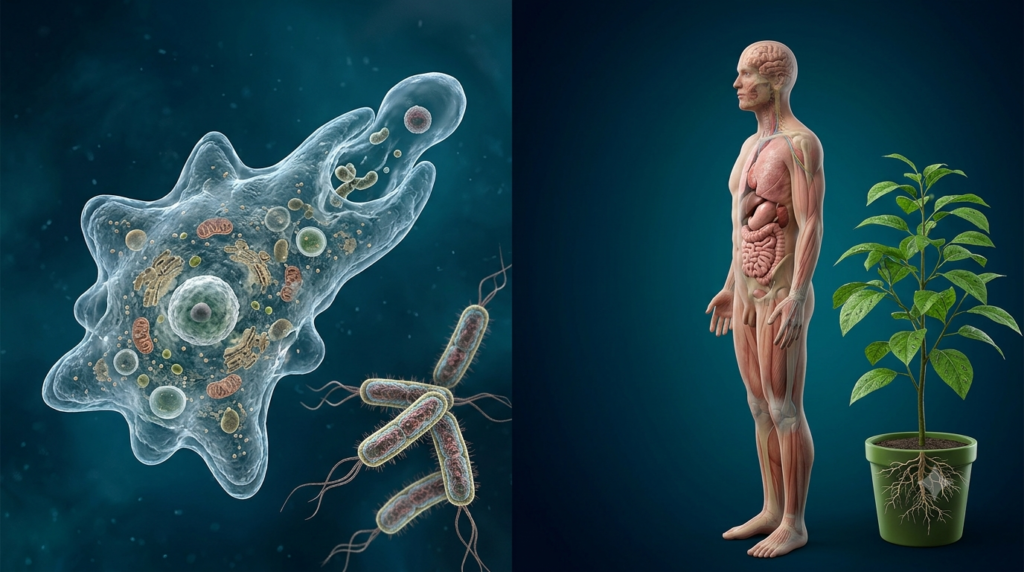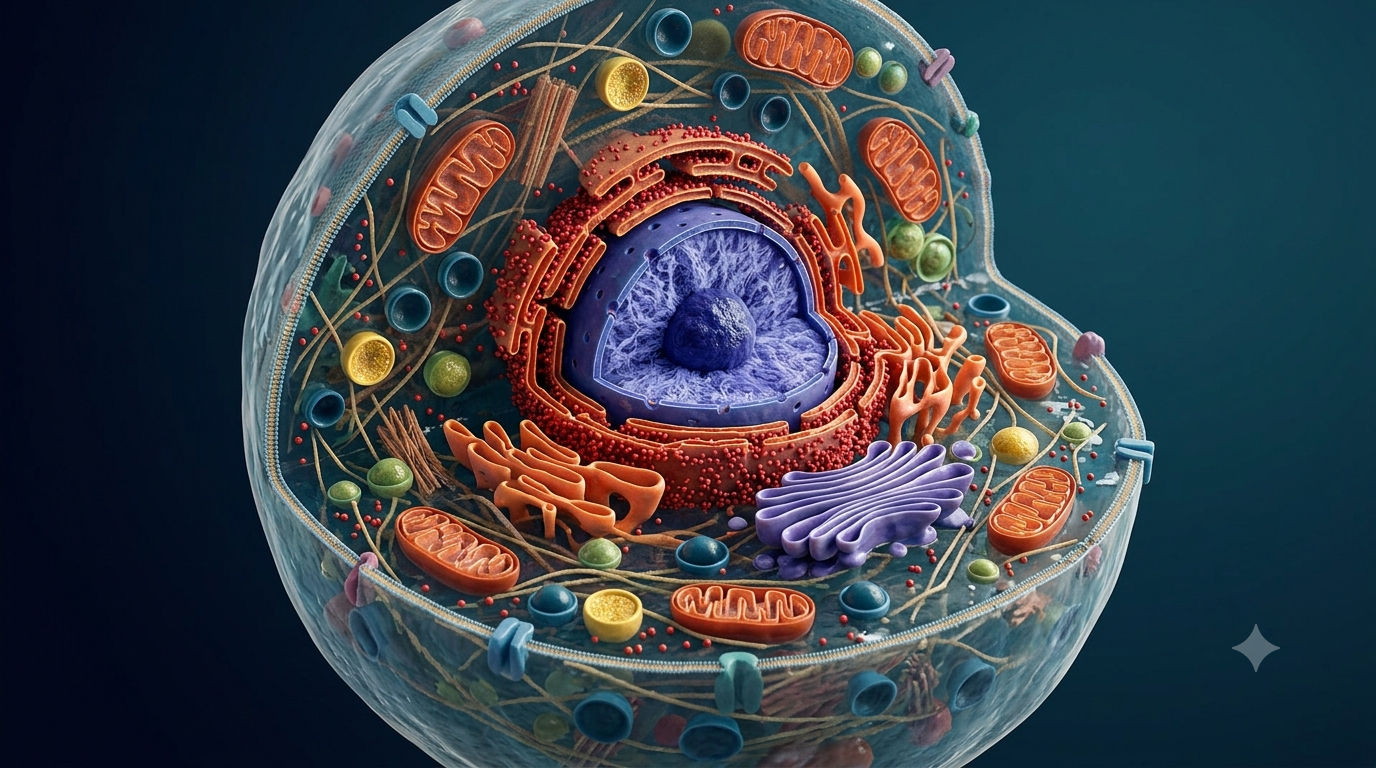
Cells are the basic structural and functional units of all living organisms. Every living thing, from microscopic bacteria to large plants and animals, depends on cells to perform essential life processes. Inside many cells, different structures work together to produce energy, manufacture proteins, transport materials, remove waste, and maintain normal cellular activities. These specialized structures are called cell organelles.
Cell organelles are found mainly in eukaryotic cells, such as plant and animal cells. Each organelle has a particular structure that helps it perform specific functions. Some organelles are surrounded by membranes, while others are not. For example, the nucleus stores genetic information, mitochondria produce most of the energy used by the cell, and ribosomes manufacture proteins.
Understanding the structure and functions of the major cell organelles helps explain how cells remain alive, grow, reproduce, and respond to their surroundings. Although individual organelles have different responsibilities, they work together as an organized system to maintain the life of the cell.
What Are Cell Organelles?
Cell organelles are specialized structures within cells that perform particular functions necessary for cellular survival and activity. The term organelle refers to a small organ or functional component within a cell.
Some organelles have their own surrounding membranes, such as mitochondria, chloroplasts, and the Golgi apparatus. Others, including ribosomes and the nucleolus, are not enclosed by separate membranes.
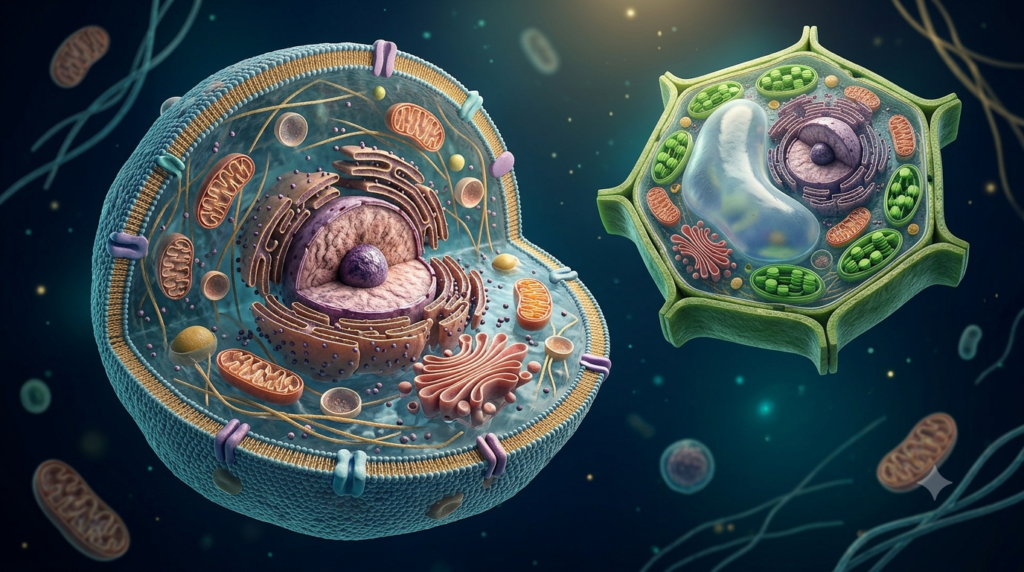
The number and types of organelles vary depending on the type of cell. Plant cells contain chloroplasts and a large central vacuole, whereas typical animal cells do not contain chloroplasts and generally have smaller vacuoles or vesicles. Both plant and animal cells contain structures such as the nucleus, mitochondria, endoplasmic reticulum, Golgi apparatus, and ribosomes.
Prokaryotic cells, such as bacteria, lack a membrane-bound nucleus and most membrane-bound organelles. However, they still possess essential structures, including ribosomes, a cell membrane, and genetic material.
1. Nucleus
The nucleus is one of the most important organelles in a typical eukaryotic cell. It contains most of the cell’s genetic material in the form of DNA and helps regulate gene expression, cellular growth, metabolism, and reproduction.
Structure of the Nucleus
The nucleus is usually surrounded by a double membrane called the nuclear envelope. This envelope separates the contents of the nucleus from the cytoplasm. It contains nuclear pores that allow selected molecules, including RNA and proteins, to move between the nucleus and cytoplasm.
Inside the nucleus is a fluid-like substance called nucleoplasm. The nucleus also contains chromatin, which consists of DNA associated with proteins. During cell division, chromatin becomes more condensed and forms visible chromosomes.
A structure called the nucleolus is present inside the nucleus. It plays an important role in producing ribosomal RNA and assembling ribosomal subunits.
Functions of the Nucleus
Stores and protects most of the cell’s genetic information.
Regulates gene expression and coordinates many cellular activities.
Controls the production of RNA from DNA during transcription.
Helps coordinate cell growth and division.
Supports the inheritance of genetic information from one cell generation to the next.
The nucleus is often described as the control center of a eukaryotic cell because genetic instructions stored in DNA guide many cellular processes.
2. Mitochondria
Mitochondria are membrane-bound organelles that produce most of the ATP used to power many activities in typical eukaryotic cells. ATP, or adenosine triphosphate, is a molecule that stores and transfers usable energy within cells.
Structure of Mitochondria
A mitochondrion has two membranes. The outer membrane forms its external boundary, while the inner membrane is folded into structures called cristae. These folds increase the surface area available for important reactions involved in ATP production.
The space enclosed by the inner membrane is called the mitochondrial matrix. It contains enzymes, mitochondrial DNA, and ribosomes. Between the inner and outer membranes is the intermembrane space.
Mitochondria contain their own DNA and ribosomes and can produce some of their own proteins. However, many mitochondrial proteins are encoded by nuclear DNA and imported into the organelle.
Functions of Mitochondria
Produce ATP through cellular respiration.
Support the breakdown of energy-rich molecules and the transfer of energy into usable forms.
Participate in the regulation of programmed cell death, known as apoptosis.
Help regulate cellular calcium levels and metabolic processes.
Support energy-demanding activities such as muscle contraction and active transport.
Cells with high energy requirements, such as many muscle cells, often contain numerous mitochondria. Although mitochondria are commonly called the powerhouses of the cell, they also perform important functions in cellular signaling and metabolism.
3. Ribosomes
Ribosomes are small structures responsible for protein synthesis. They translate genetic instructions carried by messenger RNA into chains of amino acids that form proteins.
Structure of Ribosomes
Ribosomes are made of ribosomal RNA (rRNA) and proteins. Each ribosome consists of a small subunit and a large subunit, which work together during protein synthesis.
Unlike mitochondria and the Golgi apparatus, ribosomes are not surrounded by a membrane. They may float freely in the cytoplasm or attach to the surface of the rough endoplasmic reticulum.
Free ribosomes generally produce proteins that function within the cytosol or certain internal compartments. Ribosomes attached to the rough endoplasmic reticulum commonly produce proteins destined for secretion, membranes, or particular cellular compartments.
Functions of Ribosomes
Manufacture proteins according to instructions carried by messenger RNA.
Join amino acids in the correct sequence to form polypeptide chains.
Support the production of enzymes, structural proteins, and other essential molecules.
Contribute to cellular growth, repair, and maintenance.
Without ribosomes, cells would be unable to produce the proteins required for their structure and activities.
4. Endoplasmic Reticulum
The endoplasmic reticulum (ER) is an extensive network of interconnected membranes found in eukaryotic cells. It is involved in protein production, lipid synthesis, and the processing and transport of cellular materials.
The endoplasmic reticulum has two main types: rough endoplasmic reticulum and smooth endoplasmic reticulum.
Rough Endoplasmic Reticulum
The rough endoplasmic reticulum has ribosomes attached to its outer surface, giving it a rough appearance under an electron microscope.
It is especially important for producing proteins that will be secreted from the cell, inserted into cellular membranes, or delivered to certain organelles. Newly produced proteins enter the ER, where they begin folding and may undergo chemical modifications and quality control.
Functions of the rough ER:
Produces many secreted and membrane proteins.
Helps proteins fold into appropriate three-dimensional shapes.
Supports protein modification and quality control.
Transports newly produced proteins toward the Golgi apparatus.
Smooth Endoplasmic Reticulum
The smooth endoplasmic reticulum lacks attached ribosomes. Its structure consists mainly of interconnected membrane tubules.
Functions of the smooth ER:
Synthesizes many lipids, including phospholipids and certain steroid-related molecules.
Participates in detoxification of some drugs and harmful substances, particularly in liver cells.
Helps regulate calcium storage and release.
Contributes to membrane formation and cellular metabolism.
Together, the rough and smooth ER help maintain the cell’s internal organization and supply essential materials for growth and function.
5. Golgi Apparatus
The Golgi apparatus is a membrane-bound organelle that modifies, sorts, and packages proteins and lipids received from the endoplasmic reticulum. It functions as an important processing and distribution center within the cell.
Structure of the Golgi Apparatus
The Golgi apparatus consists of stacks of flattened, membrane-bound sacs called cisternae. It has a receiving side, known as the cis face, and a shipping side, known as the trans face.
Materials generally arrive from the endoplasmic reticulum at the cis face. As they pass through the Golgi apparatus, they may undergo further modifications before leaving from the trans face in transport vesicles.
Functions of the Golgi Apparatus
Modifies certain proteins and lipids after their initial production.
Sorts molecules according to their destinations.
Packages cellular materials into transport vesicles.
Helps direct proteins toward the cell membrane, lysosomes, or other destinations.
Contributes to the production and processing of some complex carbohydrates.
The Golgi apparatus is essential for delivering molecules to the correct locations. A protein may be produced correctly but fail to perform its intended function if it is not properly processed or transported.
6. Lysosomes
Lysosomes are membrane-bound organelles that contain digestive enzymes. They break down unwanted materials, damaged cellular components, and certain substances taken into the cell.
They are especially prominent in many animal cells. Plants and other organisms may use different specialized compartments, including lytic vacuoles, to perform many comparable digestive functions.
Structure of Lysosomes
Lysosomes are usually small, membrane-enclosed compartments containing enzymes that work effectively in an acidic environment. Their surrounding membrane helps separate these enzymes from the cytoplasm and protects the cell from uncontrolled digestion.
The acidic interior is maintained by membrane proteins that help transport hydrogen ions into the lysosome.
Functions of Lysosomes
Break down damaged or worn-out cellular components.
Digest certain particles and microorganisms taken into the cell.
Recycle useful molecules, including amino acids and other building blocks.
Participate in autophagy, a process through which cells deliver components for degradation and recycling.
Help maintain cellular health by removing unwanted materials.
Lysosomes support cellular recycling. Rather than allowing damaged structures to accumulate, the cell can break them down and reuse some of their components.
7. Peroxisomes
Peroxisomes are small, membrane-bound organelles involved in important metabolic reactions. They help break down certain fatty acids and participate in reactions that produce and remove hydrogen peroxide.
Structure of Peroxisomes
A peroxisome is surrounded by a single membrane and contains various enzymes. One important enzyme is catalase, which helps convert hydrogen peroxide into water and oxygen.
Hydrogen peroxide can damage cellular components if it accumulates. Peroxisomes therefore help control its levels while allowing useful chemical reactions to occur.
Functions of Peroxisomes
Break down certain fatty acids through oxidation.
Participate in the production and breakdown of hydrogen peroxide.
Help protect cells from oxidative damage.
Support the metabolism of certain lipids.
Contribute to specialized metabolic processes in different tissues.
Peroxisomes are particularly important in tissues such as the liver, where many metabolic and detoxification-related reactions occur.
8. Vacuoles
Vacuoles are membrane-bound compartments that store water, nutrients, ions, pigments, and waste products. Their size and functions vary considerably among different organisms and cell types.
Structure of Vacuoles
Plant cells commonly contain a large central vacuole surrounded by a membrane called the tonoplast. This membrane controls the movement of substances into and out of the vacuole.
Animal cells generally have smaller storage compartments and vesicles rather than the large central vacuole typical of mature plant cells.
Functions of Vacuoles
Store water, dissolved substances, and certain nutrients.
Maintain internal water balance.
Help maintain turgor pressure in plant cells, supporting the firmness of leaves and stems.
Store pigments and certain waste products.
Support the breakdown and recycling of materials in some cells.
The central vacuole is particularly important in plants because it allows cells to maintain their shape and firmness. When plant cells lose too much water, turgor pressure decreases, and the plant may begin to wilt.
9. Chloroplasts
Chloroplasts are specialized organelles found in plants and many algae. They carry out photosynthesis, the process by which light energy is converted into chemical energy stored in organic molecules.
Structure of Chloroplasts
Chloroplasts are surrounded by an outer membrane and an inner membrane. Inside is a fluid-filled region called the stroma, which contains enzymes, DNA, and ribosomes.
Within the stroma are flattened membrane sacs called thylakoids. Thylakoids are arranged in stacks known as grana. Chlorophyll and other photosynthetic pigments are present in the thylakoid membranes, where light-dependent reactions take place.
The stroma is the site of the Calvin cycle, which uses carbon dioxide and chemical energy generated by the light-dependent reactions to produce carbohydrates and related organic compounds.
Functions of Chloroplasts
Absorb light energy using chlorophyll and other pigments.
Convert light energy into chemical energy during photosynthesis.
Release oxygen as a result of the splitting of water during the light-dependent reactions.
Support the production of carbohydrates from carbon dioxide.
Contribute to the formation of organic molecules needed for plant growth.
Chloroplasts help plants produce the organic matter that supports their growth. Through photosynthesis, plants also contribute significantly to the supply of oxygen and the movement of carbon through ecosystems.
10. Cytoskeleton
The cytoskeleton is a network of protein filaments that provides structural support and helps organize the interior of eukaryotic cells. Unlike many organelles, it is not enclosed by a membrane.
Structure of the Cytoskeleton
The cytoskeleton consists mainly of three types of components:
Microfilaments: Made primarily of actin, these thin filaments support cell movement, changes in cell shape, and muscle contraction.
Intermediate filaments: These provide mechanical strength and help cells resist physical stress.
Microtubules: These hollow structures made of tubulin help organize the cell, transport materials, and form the spindle used during cell division.
Functions of the Cytoskeleton
Maintains cell shape and provides mechanical support.
Helps position organelles within the cell.
Supports the movement of vesicles and other materials.
Enables certain types of cell movement.
Helps separate chromosomes during cell division.
Forms the structural basis of cilia and flagella in many eukaryotic cells.
The cytoskeleton is a dynamic system. Its components can assemble, disassemble, and reorganize according to the cell’s needs.
11. Centrosome and Centrioles
The centrosome is an important microtubule-organizing center in many animal cells. It helps organize the microtubules that support cellular structure and cell division.
Structure of the Centrosome
A typical animal-cell centrosome contains a pair of centrioles surrounded by a protein-rich region called the pericentriolar material. Centrioles are cylindrical structures made of microtubules.
Centrioles are involved in organizing structures needed for cell division and can also help form basal bodies, which organize cilia and flagella.
Functions of the Centrosome and Centrioles
Help organize microtubules within many animal cells.
Support the formation of the mitotic spindle during cell division.
Help establish the organization of microtubule-based structures.
Contribute to the formation of basal bodies for cilia and flagella.
Centrioles are not present in every eukaryotic cell. For example, most higher plant cells lack the typical centriole-containing centrosomes found in animal cells, yet they can still organize microtubules and divide successfully.
12. Nucleolus
The nucleolus is a dense region inside the nucleus that plays a central role in ribosome production. It is not surrounded by its own membrane.
Structure of the Nucleolus
The nucleolus forms around regions of DNA that contain genes for ribosomal RNA. It contains ribosomal RNA, proteins, and other molecules involved in the production and assembly of ribosomal subunits.
The number and size of nucleoli can vary depending on the type of cell and its level of activity.
Functions of the Nucleolus
Produces much of the ribosomal RNA required for ribosome formation.
Helps assemble ribosomal proteins with ribosomal RNA.
Produces ribosomal subunits that are transported to the cytoplasm.
Supports the cell’s capacity to manufacture proteins.
Cells that produce large amounts of protein often have prominent nucleoli because they require substantial quantities of ribosomes.
13. Cell Membrane
The cell membrane, also called the plasma membrane, forms the boundary between the cell’s internal environment and its surroundings. Although it is not always classified as an organelle in the strictest sense, it is an essential cellular structure.
Structure of the Cell Membrane
The cell membrane consists mainly of a phospholipid bilayer containing proteins, cholesterol in many animal cells, and carbohydrate-containing molecules. The hydrophilic heads of phospholipids face the watery environments, while their hydrophobic tails face inward.
Membrane proteins perform functions such as transporting substances, receiving chemical signals, and helping cells attach to one another.
Functions of the Cell Membrane
Separates the cytoplasm from the external environment.
Regulates the movement of substances into and out of the cell.
Maintains suitable internal conditions.
Receives and transmits chemical signals.
Supports cell recognition and communication.
Helps cells interact with surrounding cells and tissues.
The cell membrane is selectively permeable, meaning that some substances cross it more easily than others. This property allows cells to regulate their internal chemical composition.
14. Cytoplasm
The cytoplasm is the region inside the cell membrane but outside the nucleus in a typical eukaryotic cell. It includes the cytosol, organelles, and many other cellular structures and substances.
Structure of the Cytoplasm
The cytosol is the fluid-like component of the cytoplasm. It contains water, ions, proteins, nutrients, and many other molecules. Organelles are suspended or positioned within this environment.
The cytoplasm is not simply an empty fluid. It contains an organized network of structures and molecules that support numerous chemical reactions.
Functions of the Cytoplasm
Provides an environment for many metabolic reactions.
Suspends and supports cellular components.
Allows materials to move between different regions of the cell.
Helps distribute nutrients and other molecules.
Supports communication and coordination among cellular structures.
Many important biochemical reactions occur in the cytosol, including glycolysis, an early stage of cellular respiration.
How Cell Organelles Work Together
Although each organelle performs specialized functions, the activities of a cell depend on cooperation among its different components. The production and transport of a protein provide a useful example of this coordination.
First, genetic information in the nucleus is transcribed into messenger RNA. The messenger RNA then moves through a nuclear pore into the cytoplasm. A ribosome reads its instructions and assembles a chain of amino acids.
If the protein is destined for secretion or a cellular membrane, its production commonly occurs on a ribosome associated with the rough endoplasmic reticulum. The protein enters the ER, where it begins folding and processing. Transport vesicles then carry it to the Golgi apparatus, where it may undergo further modification and sorting.
Finally, another vesicle transports the protein to its destination, such as the cell membrane, a lysosome, or the exterior of the cell. Throughout this process, the cell membrane regulates transport, while ATP produced largely by mitochondria supports many energy-requiring steps.
Other examples of cooperation include mitochondria supplying energy for active transport, lysosomes recycling damaged organelles, and the cytoskeleton moving vesicles to specific locations.
This coordination demonstrates that a cell functions as an integrated biological system rather than as a collection of independent structures.
Differences Between Plant and Animal Cell Organelles
Plant and animal cells share many major organelles because both are eukaryotic cells. However, they also have important structural differences.
Plant cells commonly contain:
Chloroplasts in photosynthetic cells.
A large central vacuole.
A rigid cell wall outside the cell membrane.
Plasmodesmata that connect the cytoplasm of neighboring cells.
Animal cells commonly contain:
Lysosomes that perform many intracellular digestive functions.
Centrosomes with centrioles in many cell types.
Smaller membrane-bound storage and transport compartments.
No chloroplasts or rigid cell wall.
Both plant and animal cells contain a nucleus, mitochondria, ribosomes, endoplasmic reticulum, Golgi apparatus, cytoplasm, and a cell membrane. These shared structures perform many of the same basic functions, although their abundance and organization can differ.
It is also important to remember that not every plant cell contains chloroplasts. For example, most mature root cells do not perform photosynthesis and generally lack chloroplasts.
Conclusion
Cell organelles are specialized structures that allow cells to perform the complex processes necessary for life. The nucleus stores genetic information, ribosomes manufacture proteins, mitochondria supply most cellular ATP, and the endoplasmic reticulum and Golgi apparatus help produce, process, and transport essential molecules. Lysosomes and peroxisomes support the breakdown of materials and important metabolic reactions, while vacuoles provide storage and help maintain water balance. Chloroplasts carry out photosynthesis in plants and many algae, and the cytoskeleton maintains cellular organization and supports movement.
Other structures, including the cell membrane, cytoplasm, centrosome, and nucleolus, also contribute to the cell’s overall functioning. Each component has a specialized role, but no major organelle works entirely independently. Their coordinated activities allow cells to grow, respond to their environment, repair damage, and reproduce. Understanding the structure and functions of cell organelles therefore provides a foundation for studying biology, genetics, physiology, and the organization of living organisms.
FAQs
1. What are cell organelles?
Cell organelles are specialized structures inside cells that perform specific functions necessary for survival. Each organelle contributes to the organization and functioning of the cell. For example, the nucleus stores genetic information, mitochondria produce most of the ATP used by the cell, and ribosomes manufacture proteins. Some organelles, such as mitochondria and chloroplasts, are surrounded by membranes, while others, including ribosomes, are not. Most membrane-bound organelles are found in eukaryotic cells, such as plant and animal cells. Together, these structures help cells grow, obtain energy, produce essential molecules, remove waste, and maintain normal cellular activities.
2. What is the main function of the nucleus in a cell?
The nucleus stores most of a eukaryotic cell’s genetic information in the form of DNA. This genetic material contains instructions for producing proteins and regulating many cellular activities. The nucleus helps control gene expression, cellular growth, metabolism, and reproduction. It is surrounded by a double membrane called the nuclear envelope, which contains pores that regulate the movement of molecules between the nucleus and cytoplasm. Inside the nucleus, the nucleolus produces ribosomal RNA and helps assemble ribosomal subunits. Because it coordinates many activities through genetic information, the nucleus is commonly described as the control center of a eukaryotic cell.
3. Why are mitochondria called the powerhouses of the cell?
Mitochondria are called the powerhouses of the cell because they produce most of the ATP used to supply energy for many cellular activities. ATP provides usable energy for processes such as active transport, muscle contraction, and the synthesis of biological molecules. Mitochondria have an outer membrane and a folded inner membrane. These folds, called cristae, provide a large surface area for important reactions involved in ATP production. Mitochondria also participate in metabolism, calcium regulation, and programmed cell death. Cells with high energy requirements, such as many muscle cells, often contain numerous mitochondria to support their activities.
4. What is the function of ribosomes in a cell?
Ribosomes are responsible for protein synthesis, the process through which cells produce proteins using genetic instructions carried by messenger RNA. They consist of ribosomal RNA and proteins arranged into large and small subunits. During protein synthesis, a ribosome reads the messenger RNA sequence and joins amino acids in the correct order to form a polypeptide chain. These chains fold and may undergo further modifications to become functional proteins. Ribosomes can be found freely in the cytoplasm or attached to the rough endoplasmic reticulum. Their activity is essential for producing enzymes, hormones, structural proteins, and many other molecules required for cellular growth and maintenance.
5. What is the difference between rough and smooth endoplasmic reticulum?
The endoplasmic reticulum is a network of membranes that helps produce and process important cellular materials. The rough endoplasmic reticulum has ribosomes attached to its surface and mainly supports the production and processing of proteins destined for secretion, membranes, or certain organelles. The smooth endoplasmic reticulum lacks attached ribosomes and performs different functions. It synthesizes many lipids, participates in detoxification reactions, and helps regulate calcium storage and release. Both types contribute to cellular metabolism and membrane formation. Although their functions differ, the rough and smooth endoplasmic reticulum work together to maintain the cell’s internal organization and supply essential molecules.
6. What is the role of the Golgi apparatus in a cell?
The Golgi apparatus modifies, sorts, and packages proteins and lipids received from the endoplasmic reticulum. It consists of stacks of flattened membrane-bound sacs called cisternae. As molecules move through the Golgi apparatus, they may undergo chemical modifications that help determine their final functions or destinations. The Golgi then packages these materials into transport vesicles. These vesicles deliver molecules to locations such as the cell membrane, lysosomes, or other cellular compartments. Some materials are also transported outside the cell through secretion. By ensuring that molecules reach the correct destinations, the Golgi apparatus supports communication, membrane maintenance, digestion, and many other essential cellular processes.
7. What are lysosomes, and why are they important?
Lysosomes are membrane-bound organelles containing digestive enzymes that break down unwanted materials and damaged cellular components. Their interior is acidic, allowing many of these enzymes to function effectively. Lysosomes help digest certain substances taken into the cell and recycle components from worn-out organelles. This recycling process allows the cell to recover useful molecules instead of allowing damaged materials to accumulate. Lysosomes also participate in autophagy, a process through which cellular components are delivered for degradation. They are especially prominent in many animal cells. Their digestive activities contribute to cellular cleanliness, nutrient recovery, and normal functioning. Plants often use lytic vacuoles for comparable functions.
8. What is the function of chloroplasts in plant cells?
Chloroplasts are specialized organelles that carry out photosynthesis in plants and many algae. They contain chlorophyll and other pigments that absorb light energy. Inside a chloroplast, the light-dependent reactions occur in the thylakoid membranes, while the Calvin cycle takes place in the surrounding fluid called the stroma. During photosynthesis, light energy is converted into chemical energy, which supports the production of carbohydrates from carbon dioxide. Oxygen is released when water is split during the light-dependent reactions. Chloroplasts help plants produce the organic molecules needed for growth and development. They also contribute to oxygen production and support the flow of energy through ecosystems.
9. What are the main differences between plant and animal cell organelles?
Plant and animal cells share several major organelles, including the nucleus, mitochondria, ribosomes, endoplasmic reticulum, Golgi apparatus, cytoplasm, and cell membrane. However, they differ in some important structures. Plant cells commonly contain chloroplasts in photosynthetic tissues, a large central vacuole, and a rigid cell wall outside the cell membrane. Animal cells lack chloroplasts and cell walls and generally contain smaller storage compartments. Many animal cells also have centrosomes containing centrioles. Plant cells can organize microtubules without typical centriole-containing centrosomes. These differences reflect the distinct requirements of plants and animals, including photosynthesis, structural support, movement, and water balance.
10. How do cell organelles work together to keep a cell alive?
Cell organelles work together by coordinating essential biological processes. For example, the nucleus provides genetic instructions for protein production. Ribosomes use these instructions to manufacture proteins, while the rough endoplasmic reticulum helps process many proteins destined for membranes or secretion. The Golgi apparatus modifies, sorts, and packages them for delivery. Mitochondria supply much of the ATP required for energy-demanding activities, while the cell membrane regulates the movement of substances. Lysosomes break down damaged components, and the cytoskeleton supports internal transport and organization. This cooperation allows cells to maintain balance, grow, repair damage, respond to their environment, and perform the functions necessary for life.