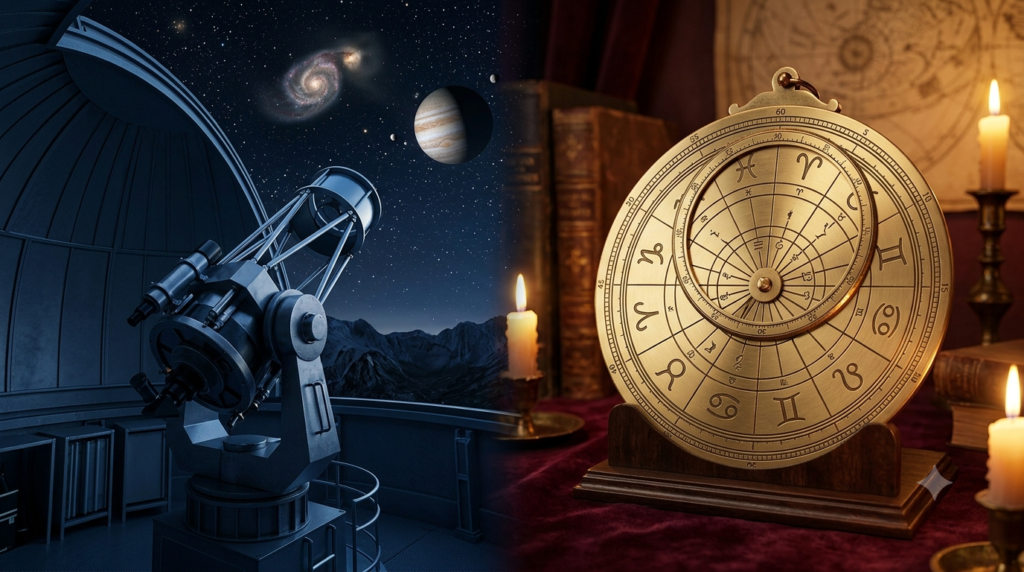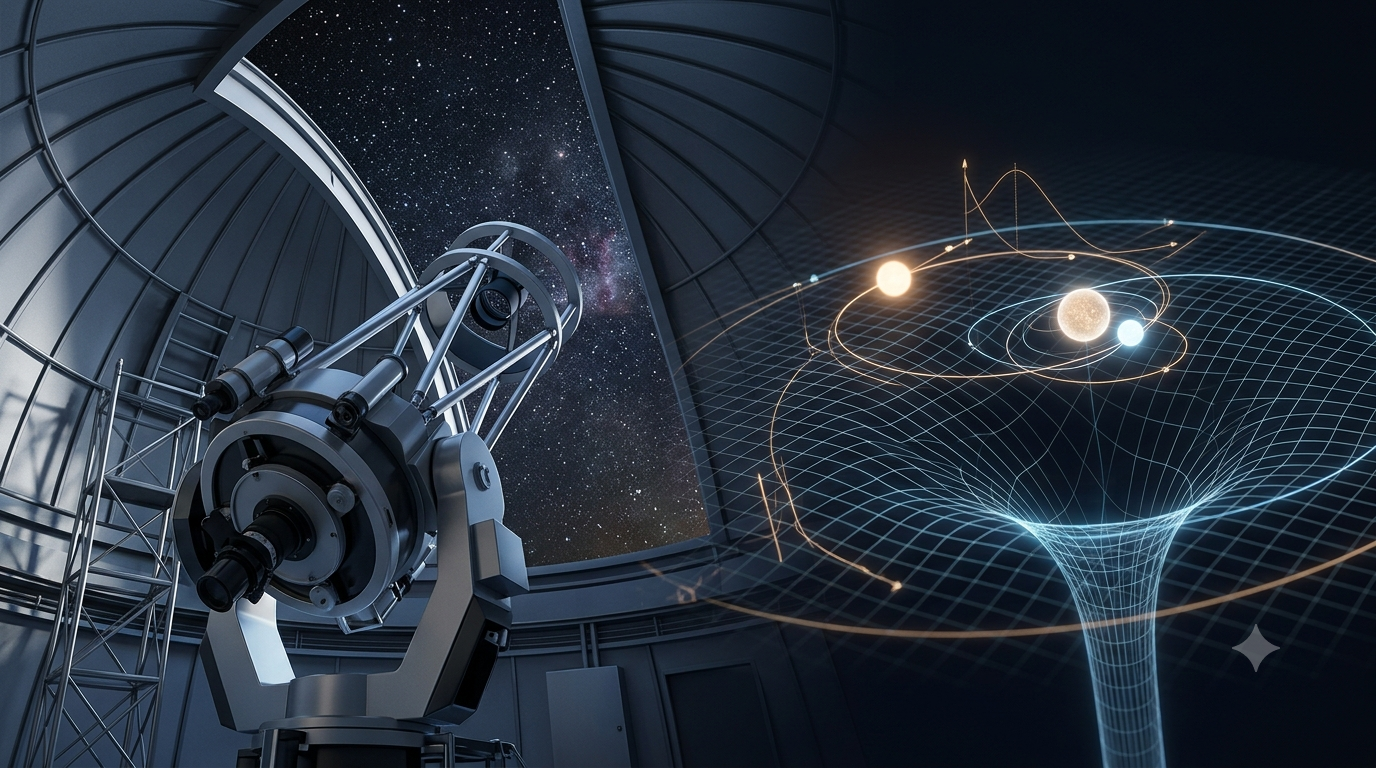
Astronomy is the scientific study of the universe, including stars, planets, galaxies, black holes, and other celestial objects. It helps us understand how the universe works, how it developed, and what physical processes take place beyond Earth. To answer these questions, astronomers use different approaches, two of the most important being observational astronomy and theoretical astronomy. Although both aim to explain the universe, they approach scientific problems in different ways.
Observational astronomy focuses on collecting and analyzing information from celestial objects using telescopes, satellites, detectors, and other scientific instruments. Theoretical astronomy, on the other hand, uses mathematical equations, physical laws, and computer simulations to develop models that explain astronomical phenomena and predict how they behave. These approaches are closely connected because observations provide evidence for theories, while theoretical predictions help astronomers decide what to observe. Understanding the difference between them reveals how modern astronomy turns observations into scientific knowledge.
What Is Observational Astronomy?
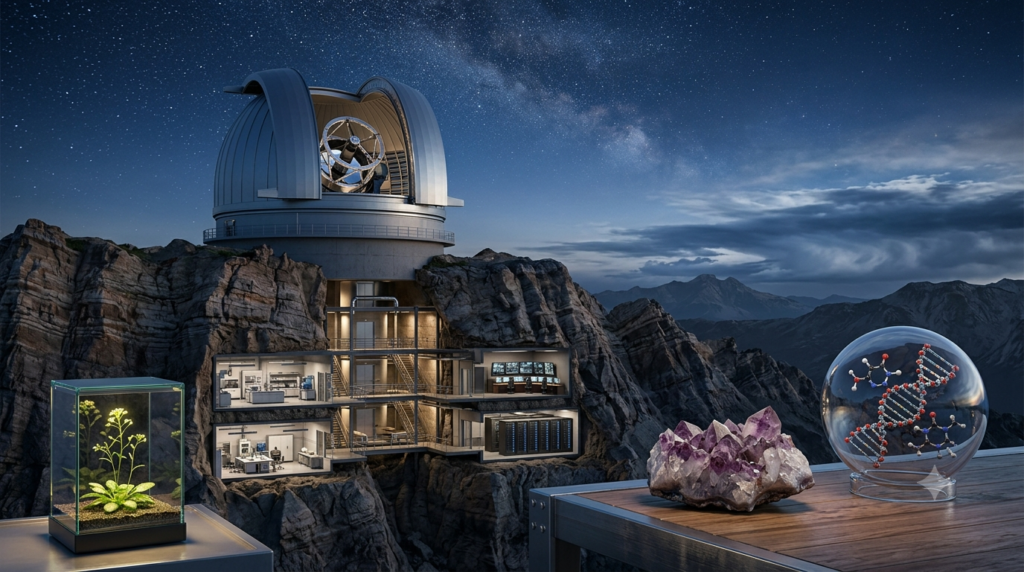
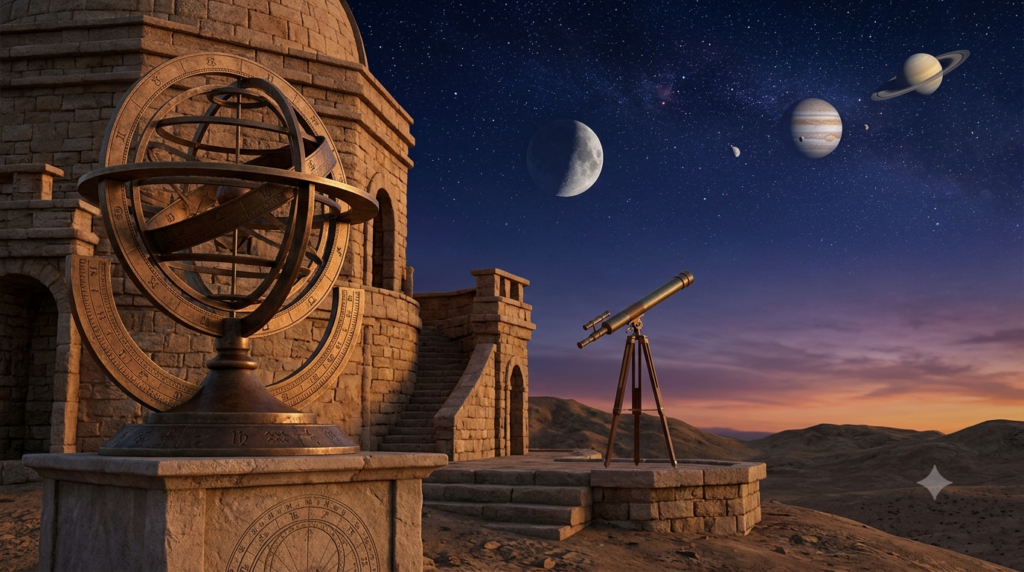
Observational astronomy is the branch of astronomy concerned with studying the universe through measurements and data collected from celestial objects. Astronomers observe the light and other forms of radiation emitted, reflected, or absorbed by objects in space. They analyze this information to determine the properties, positions, movements, compositions, and histories of astronomical objects.
Because the universe is extremely large and many objects are too distant to visit directly, observations are essential for learning about space. Astronomers often depend on the information carried by electromagnetic radiation, including visible light, radio waves, infrared radiation, ultraviolet radiation, X-rays, and gamma rays.
Different wavelengths reveal different features of the universe. For example, visible-light observations can show the shapes of galaxies, while radio observations can reveal structures associated with gas clouds and energetic cosmic objects. X-ray observations can help scientists investigate extremely hot gas around black holes and other high-energy environments.
How Observational Astronomy Works
Observational astronomy involves several steps that turn signals from space into useful scientific information.
1. Selecting an astronomical target
Astronomers begin by choosing an object or phenomenon to investigate. It might be a distant galaxy, an exoplanet, a star-forming region, or a supernova. The research question determines what kind of observations are needed.
2. Collecting data
Scientists use appropriate telescopes and detectors to gather information. Ground-based telescopes observe from Earth, while space telescopes operate above the atmosphere. Space-based instruments are particularly valuable for studying wavelengths that Earth’s atmosphere blocks or absorbs.
3. Processing the observations
Raw data may contain instrumental noise, atmospheric interference, and other unwanted signals. Astronomers use calibration procedures and computer software to improve the data and identify reliable measurements.
4. Analyzing the results
Scientists examine the collected data to identify patterns, measure physical properties, and compare objects. They may determine a star’s temperature, estimate a galaxy’s distance, or measure the orbital period of a planet around another star.
5. Comparing findings with scientific models
Finally, astronomers compare their measurements with existing explanations and theoretical predictions. If the results do not match expectations, scientists may need to improve their models or investigate new explanations.
Instruments Used in Observational Astronomy
Observational astronomy relies on several types of scientific instruments.
Optical telescopes: Collect visible light to study planets, stars, nebulae, and galaxies.
Radio telescopes: Detect radio waves from objects such as pulsars, gas clouds, and distant galaxies.
Infrared telescopes: Reveal relatively cool objects, dust-obscured regions, and young planetary systems.
Space telescopes: Observe astronomical objects without some of the limitations imposed by Earth’s atmosphere.
Spectrographs: Separate incoming light into its component wavelengths to study the chemical composition, temperature, and motion of celestial objects.
Photometers and imaging detectors: Measure the brightness of objects and record their images.
Gravitational-wave detectors: Measure tiny changes in distance caused by gravitational waves, providing information about events such as black hole mergers.
Observational astronomy is not limited to taking pictures. Much of its work involves precise measurements, statistical analysis, and interpreting signals that may not be visible to the human eye.
What Is Theoretical Astronomy?
Theoretical astronomy is the branch of astronomy that uses mathematical reasoning, physical laws, and scientific models to explain astronomical phenomena. Instead of relying primarily on collecting new observational data, theoretical astronomers develop explanations for how celestial objects form, evolve, interact, and behave.
Theoretical astronomers use established principles from physics, including gravity, thermodynamics, electromagnetism, quantum mechanics, and relativity. They combine these principles with mathematical equations to investigate questions that may be difficult to answer through observations alone.
For example, a theoretical astronomer might study how a black hole affects nearby matter, how stars produce energy, or how galaxies evolve over billions of years. Such investigations can involve mathematical calculations, numerical simulations, and comparisons with available astronomical evidence.
Theoretical astronomy does not mean simply guessing what happens in space. Scientific theories must be logically consistent, based on physical principles, and capable of producing predictions that can be tested against observations or other evidence.
How Theoretical Astronomy Works
Theoretical astronomy generally follows a process of developing, testing, and refining scientific models.
1. Identifying a scientific problem
The astronomer begins with a question about the universe. For example, why do stars of different masses have different lifetimes, or how can a planet remain in a stable orbit?
2. Applying physical laws
The researcher uses relevant principles and equations to describe the system. The laws of gravity, for example, help explain the motion of planets, stars, and galaxies.
3. Developing a mathematical model
A mathematical model represents the important properties and relationships within a system. It may describe the temperature and pressure inside a star or the gravitational interaction between two black holes.
4. Performing calculations and simulations
Some problems can be solved using mathematical equations. More complex problems require numerical methods and computer simulations. These tools allow scientists to investigate systems that involve many interacting objects or changing physical conditions.
5. Making predictions
A successful model produces predictions about observable or measurable phenomena. A model of star formation might predict the distribution of young stars, while a model of planetary motion might predict a planet’s future position.
6. Comparing predictions with evidence
Theoretical predictions are compared with observations, experimental results, or other reliable evidence. If the predictions disagree with the evidence, scientists may revise the model, investigate its assumptions, or develop a new explanation.
Tools Used in Theoretical Astronomy
Theoretical astronomers rely on tools that help them describe and investigate complex physical systems.
Mathematical equations: Express relationships between physical quantities such as mass, energy, distance, temperature, and time.
Computer simulations: Reproduce the behavior of systems such as galaxies, stars, and planetary systems under specified conditions.
Numerical methods: Provide approximate solutions when equations cannot be solved exactly.
Statistical techniques: Help researchers evaluate uncertainty, compare models, and analyze complex systems.
Physical theories: Provide the fundamental principles used to explain astronomical processes.
Scientific programming: Allows astronomers to calculate results, model physical systems, and explore different possible conditions.
Theoretical astronomy can explore situations that are difficult to observe directly, including the earliest stages of cosmic evolution and the internal processes of distant stars.
Key Differences Between Observational and Theoretical Astronomy
Observational and theoretical astronomy share the same scientific goal, but they differ in their main methods, tools, and immediate objectives.
1. Primary Objective
The primary objective of observational astronomy is to collect reliable information about the universe. Observational astronomers investigate what astronomical objects look like, how they behave, and what measurable properties they possess.
Theoretical astronomy aims to explain the physical processes responsible for those properties and behaviors. Theoretical astronomers develop models that connect observations with the laws of nature.
For example, observations may establish that a star’s brightness changes regularly. Theoretical work can help explain whether the changes result from stellar pulsations, eclipses, or another physical process.
2. Research Methods
Observational astronomers collect measurements using telescopes, detectors, and other instruments. They analyze images, spectra, brightness measurements, and other recorded signals.
Theoretical astronomers use mathematical calculations, physical principles, and computer simulations to investigate astronomical problems. They may use observational data to test their models, but their primary task is to develop and evaluate explanations.
3. Tools and Equipment
Observational astronomy depends heavily on instruments capable of detecting signals from space. These include optical telescopes, radio arrays, spectrographs, and space-based observatories.
Theoretical astronomy relies more heavily on mathematical software, computational resources, and simulation programs. Powerful computers can be necessary when researchers model millions of interacting particles or follow the evolution of a galaxy over long periods.
However, the distinction is not absolute. Observational astronomers use computers extensively, and theoretical astronomers often work with observational datasets.
4. Type of Results
Observational astronomy commonly produces images, measurements, spectra, catalogs, and statistical descriptions of astronomical objects.
Theoretical astronomy commonly produces mathematical models, simulated systems, explanations of physical mechanisms, and predictions about future or previously unobserved phenomena.
Both types of results are important. Measurements establish what the evidence shows, while models help explain why the observed behavior occurs.
5. Treatment of Scientific Questions
Observational astronomers often begin by asking what can be measured about a celestial object. They might investigate its temperature, chemical composition, distance, or motion.
Theoretical astronomers often begin by asking what physical processes could produce a particular observation. They might investigate how a star’s mass influences its temperature or how gravity affects the motion of matter near a black hole.
These questions frequently overlap, and researchers from both fields may collaborate on the same project.
6. Predictions and Discoveries
Observational astronomy can reveal unexpected phenomena that scientists did not anticipate. An unusual signal or unexplained pattern may lead to a new research question.
Theoretical astronomy can predict phenomena before they are directly detected. If an observation later confirms a prediction, it provides important support for the underlying model.
Nevertheless, neither approach guarantees a discovery. Observations can be limited by instrument sensitivity, while theoretical predictions depend on the accuracy and assumptions of the models used.
Comparison Table
| Feature | Observational Astronomy | Theoretical Astronomy |
|---|---|---|
| Main purpose | Collect evidence about the universe | Explain and predict astronomical phenomena |
| Main approach | Observation and measurement | Mathematical modeling and physical reasoning |
| Common tools | Telescopes, detectors, spectrographs | Equations, simulations, computing systems |
| Typical results | Images, spectra, measurements, catalogs | Models, explanations, calculations, predictions |
| Main questions | What can we measure or detect? | Why does it happen, and what should happen next? |
| Main challenge | Obtaining accurate data from distant objects | Building models that accurately represent nature |
| Role of evidence | Collects and analyzes observational evidence | Uses evidence to develop and test models |
How Observational and Theoretical Astronomy Work Together
Observational and theoretical astronomy are not competing branches. They are complementary approaches that depend on each other for scientific progress.
Observations provide the evidence needed to develop and evaluate theories. Without reliable measurements, astronomers would have limited ability to determine whether their explanations accurately describe the universe.
Theoretical models, in turn, help astronomers interpret their measurements. A telescope may detect radiation from a distant object, but explaining the source of that radiation may require knowledge of atomic physics, gravity, or the behavior of extremely hot matter.
The relationship also works in the opposite direction. Theoretical predictions can guide observational research by identifying what scientists should look for and which measurements would be most useful.
For example, a model may predict that a particular type of star should produce a specific pattern in its spectrum. Observational astronomers can then use spectrographs to search for that pattern. If the result matches the prediction, the model gains support. If it does not, researchers must investigate the disagreement.
This process of observation, modeling, prediction, and testing is central to modern astronomy.
Real-World Examples of Both Approaches
Several major areas of astronomy demonstrate how observations and theories work together to explain the universe.
1. The Discovery and Study of Exoplanets
Exoplanets are planets that orbit stars outside our solar system. Observational astronomers use methods such as the transit method and radial velocity method to detect them.
In the transit method, astronomers measure a small decrease in a star’s brightness when a planet passes in front of it. In the radial velocity method, they measure changes in a star’s spectrum caused by its motion in response to a planet’s gravitational influence.
Theoretical models help researchers interpret these measurements and estimate planetary properties, including orbital characteristics and, under suitable conditions, mass and size. Additional modeling can investigate the planet’s possible atmospheric structure and climate.
Observations establish the available evidence, while theoretical work helps explain what that evidence means.
2. Black Holes
Black holes are regions of space where gravity is so strong that nothing can escape from within the event horizon, not even light.
Observational astronomers investigate black holes by studying their effects on surrounding matter, nearby stars, and electromagnetic radiation. Radio telescopes have also produced images of the emission surrounding the shadows of supermassive black holes.
Theoretical astronomers use Einstein’s general theory of relativity and models of hot gas to investigate black hole properties and predict how matter and light behave near them.
The combination of observations and theory helps scientists test our understanding of gravity under extreme conditions.
3. The Evolution of Stars
Observational astronomers examine stars at different stages of their lives. They measure properties such as brightness, temperature, chemical composition, and mass to understand how stars differ.
Theoretical astronomers use models of stellar structure and nuclear fusion to explain how stars produce energy, change over time, and eventually reach different endpoints depending on their masses.
For instance, theoretical models explain why massive stars generally consume their nuclear fuel more rapidly than lower-mass stars. Observations of stellar populations help scientists test and refine these models.
4. The Expansion of the Universe
Observations of distant galaxies provide evidence that the universe is expanding. Astronomers measure the redshift of light from galaxies and combine these measurements with distance estimates to investigate cosmic expansion.
Theoretical cosmology uses general relativity and mathematical models of the universe to explain its expansion history. These models help researchers investigate the roles of matter, radiation, dark matter, and dark energy.
Observational findings constrain the models, while theoretical calculations help scientists interpret the data and predict how the universe may evolve.
5. Gravitational Waves
Gravitational waves are disturbances in spacetime produced by accelerating masses under appropriate conditions, including the merger of black holes or neutron stars.
Detectors such as LIGO measure extremely small changes in distance caused by passing gravitational waves. Scientists analyze the recorded signals to identify possible events and estimate the properties of the objects involved.
Theoretical physicists calculate the gravitational-wave patterns expected from different types of cosmic events. Researchers compare these predicted patterns with measured signals to determine which models best explain the observations.
This is a particularly clear example of the two approaches working together: theory predicts the signal, and observations test those predictions.
Advantages and Limitations of Observational Astronomy
Observational astronomy provides direct empirical evidence about astronomical objects and processes. It can reveal unexpected discoveries, establish physical measurements, and test predictions made by scientific models.
However, it has important limitations. Many celestial objects are extremely distant, faint, or difficult to observe. Earth’s atmosphere can distort incoming light or block certain wavelengths. Even space telescopes have limits related to their sensitivity, resolution, operating time, and available instruments.
Astronomers must also account for measurement uncertainty and the possibility that different physical processes can produce similar signals. As a result, an observation does not always provide a unique explanation for what scientists detect.
Advantages and Limitations of Theoretical Astronomy
Theoretical astronomy allows scientists to explore physical processes that cannot be examined directly. Mathematical models and simulations can investigate the long-term evolution of stars, the formation of galaxies, and the behavior of matter under extreme conditions.
Theoretical work can also guide future observations by predicting what instruments might detect.
Its main limitation is that models rely on assumptions, approximations, and the physical laws incorporated into them. A mathematically consistent model is not necessarily an accurate description of nature. Predictions must be compared with evidence, and models may need revision when observations reveal unexpected results.
Computer simulations also depend on the quality of their input data, numerical methods, and available computing resources. Their results must be interpreted carefully rather than treated as direct proof of a theory.
Careers in Observational and Theoretical Astronomy
Both branches offer opportunities for people interested in space, physics, mathematics, and scientific research, although their day-to-day activities can differ.
Careers in Observational Astronomy
Observational astronomers may work at universities, research institutes, observatories, or space science organizations. Their activities can include planning observations, operating or coordinating telescope systems, processing astronomical data, analyzing spectra, and publishing research.
Useful skills include physics, mathematics, data analysis, programming, statistics, and the ability to interpret scientific measurements.
Careers in Theoretical Astronomy
Theoretical astronomers commonly work on mathematical models, computational simulations, and physical explanations of cosmic phenomena. Their work may involve developing equations, writing scientific software, analyzing model predictions, and comparing results with published observations or research datasets.
Strong foundations in physics, advanced mathematics, computational methods, and scientific programming are especially useful.
Can One Astronomer Work in Both Fields?
Yes. Many astronomers work across the boundary between observation and theory. Researchers may analyze telescope data and then develop models to explain the patterns they discover. Others may begin with theoretical predictions and help design observations to test them.
Computational astronomy, in particular, often combines data analysis, physical modeling, and numerical simulations. The boundaries between these areas are flexible, and collaboration is common in modern astronomical research.
Conclusion
Observational astronomy and theoretical astronomy are two essential branches of the scientific study of the universe. Observational astronomy collects and analyzes evidence from celestial objects, while theoretical astronomy uses mathematical equations, physical laws, and computational models to explain that evidence and predict astronomical behavior.
Their differences lie mainly in their methods and immediate objectives, not in their overall purpose. Observations reveal what happens in the universe, while theoretical models help explain why it happens and what scientists might expect to discover next. Neither approach can answer every astronomical question independently. Together, they allow researchers to test scientific ideas, investigate distant cosmic phenomena, and improve our understanding of the universe. Their continued collaboration remains fundamental to discoveries in planetary science, stellar evolution, black holes, and cosmology.
FAQs
1. What is the main difference between observational and theoretical astronomy?
Observational astronomy focuses on collecting and analyzing data from celestial objects using telescopes, detectors, and other scientific instruments. Theoretical astronomy uses mathematical equations, physical laws, and computer simulations to explain astronomical phenomena and predict their behavior. For example, observational astronomers may measure the movement of stars around a black hole, while theoretical astronomers use gravity and relativity to explain those movements. Both branches are essential to understanding the universe. Observations provide scientific evidence, while theoretical models help interpret that evidence and make predictions that can be tested through further research.
2. What does an observational astronomer do?
An observational astronomer studies celestial objects by collecting and analyzing information from space. Their work may involve observing stars, galaxies, planets, nebulae, and black holes using optical telescopes, radio telescopes, and space-based instruments. They measure properties such as brightness, temperature, distance, chemical composition, and motion. Observational astronomers also process images, analyze light spectra, and use computer software to interpret their findings. Their research helps scientists discover new astronomical objects, investigate cosmic events, and test scientific predictions. Although telescopes are important tools, observational astronomy also requires strong skills in mathematics, physics, statistics, and data analysis.
3. What does a theoretical astronomer study?
A theoretical astronomer investigates the physical processes that explain how the universe and its celestial objects behave. They use mathematical equations, physical principles, and computer simulations to study topics such as star formation, black holes, galaxy evolution, and the expansion of the universe. Instead of primarily collecting new telescope observations, they develop models that describe astronomical systems and predict their behavior. These predictions can then be compared with observations to evaluate their accuracy. Theoretical astronomers need a strong understanding of physics, mathematics, and computational methods. Their work helps explain existing astronomical evidence and guides future scientific investigations.
4. What instruments are used in observational astronomy?
Observational astronomy uses several instruments to collect information about celestial objects. Optical telescopes observe visible light, while radio telescopes detect radio waves from astronomical sources. Infrared telescopes help researchers study cool objects and regions hidden by cosmic dust. X-ray telescopes investigate high-energy phenomena, including hot gas surrounding black holes. Spectrographs separate light into different wavelengths, allowing astronomers to study chemical composition, temperature, and motion. Space telescopes observe above Earth’s atmosphere, which blocks or distorts certain wavelengths. Scientists also use sensitive detectors, photometers, and specialized data-processing systems to measure astronomical signals accurately and investigate distant cosmic phenomena.
5. How does theoretical astronomy use mathematics?
Theoretical astronomy uses mathematics to describe physical relationships and explain astronomical phenomena. Equations based on gravity, motion, thermodynamics, and relativity help scientists investigate how stars, planets, galaxies, and black holes behave. For example, mathematical models can calculate planetary orbits, estimate how stars evolve, and predict the gravitational-wave signals produced by merging black holes. When astronomical systems are too complex for exact solutions, researchers use numerical methods and computer simulations. Mathematics also helps scientists compare different explanations and estimate how their predictions may change under different conditions. These calculations make it possible to investigate cosmic processes that cannot be studied directly.
6. Can theoretical astronomy predict astronomical discoveries?
Yes, theoretical astronomy can predict phenomena that may later be detected through observations. Scientists develop mathematical models based on physical laws and use them to identify possible outcomes of astronomical processes. For example, theoretical work predicted gravitational waves long before detectors successfully measured them in 2015. Similarly, mathematical models help researchers predict the properties of exoplanets, the behavior of matter near black holes, and the evolution of stars. However, a prediction is not automatically correct simply because it follows from a mathematical model. Scientists must compare predictions with reliable evidence to determine whether the model accurately describes nature.
7. How do observational and theoretical astronomy work together?
Observational and theoretical astronomy work together through a continuous process of collecting evidence, developing explanations, and testing predictions. Observational astronomers measure the properties of celestial objects, while theoretical astronomers use physical laws and mathematical models to explain the results. Theoretical predictions can also help observational researchers decide which objects or signals to investigate. For example, scientists compare gravitational-wave measurements with theoretical calculations to identify the properties of merging black holes. If observations disagree with a model, researchers investigate the reasons and may revise their explanations. This collaboration allows astronomers to improve scientific knowledge and develop a more accurate understanding of the universe.
8. Which branch of astronomy is more important, observational or theoretical?
Neither observational nor theoretical astronomy is universally more important because each contributes differently to scientific progress. Observational astronomy provides measurements and evidence about the universe, while theoretical astronomy explains physical processes and develops predictions. Without observations, scientists would struggle to determine whether their models accurately represent reality. Without theoretical explanations, many astronomical measurements would remain difficult to interpret. Some discoveries begin with unexpected observations, while others emerge from theoretical predictions that guide new research. The strongest scientific understanding develops when both approaches support and challenge each other. Their relative importance depends on the research question being investigated.
9. What skills are needed for observational and theoretical astronomy?
Both branches require a foundation in physics, mathematics, critical thinking, and scientific reasoning. Observational astronomers particularly benefit from skills in data analysis, statistics, telescope instrumentation, image processing, and interpreting light spectra. Theoretical astronomers generally need stronger preparation in advanced mathematics, physical modeling, numerical methods, and scientific programming. Computer skills are valuable in both fields because modern astronomy depends heavily on large datasets and computational tools. Communication and problem-solving skills are also important for explaining results and collaborating with other researchers. Students interested in either branch can begin by studying physics, mathematics, astronomy, and introductory programming.
10. Can an astronomer work in both observational and theoretical astronomy?
Yes, an astronomer can work in both observational and theoretical astronomy. Many researchers combine telescope data analysis with mathematical modeling to investigate complex astronomical questions. For example, an astronomer studying an exoplanet may analyze observations of its host star and use theoretical models to estimate the planet’s mass, atmosphere, or possible climate. Computational astronomy also combines observations, numerical calculations, and physical simulations. Working across both branches helps researchers connect scientific evidence with explanations and predictions. Although some astronomers specialize in one approach, understanding both observational methods and theoretical principles can provide a broader perspective on astronomical research.