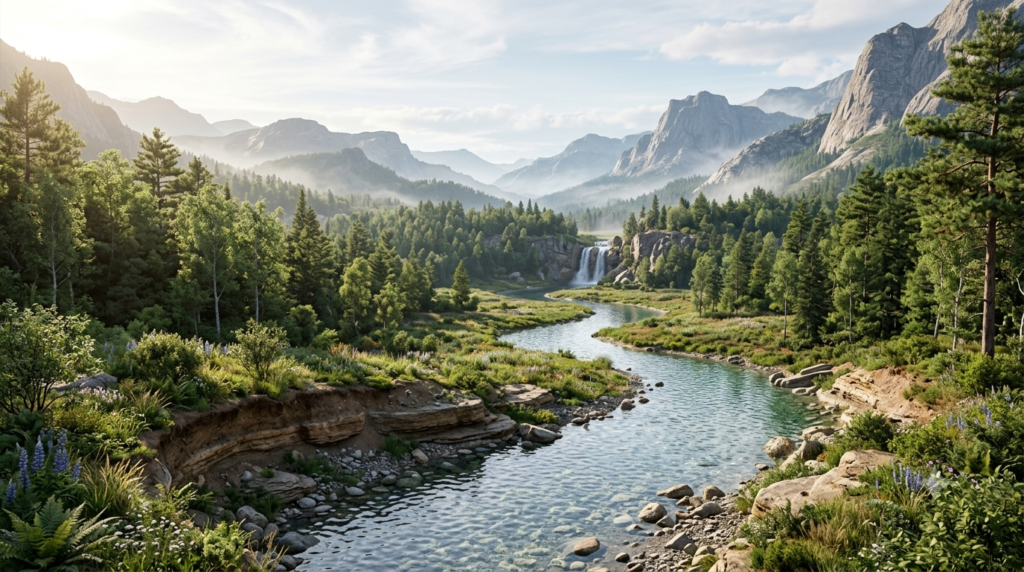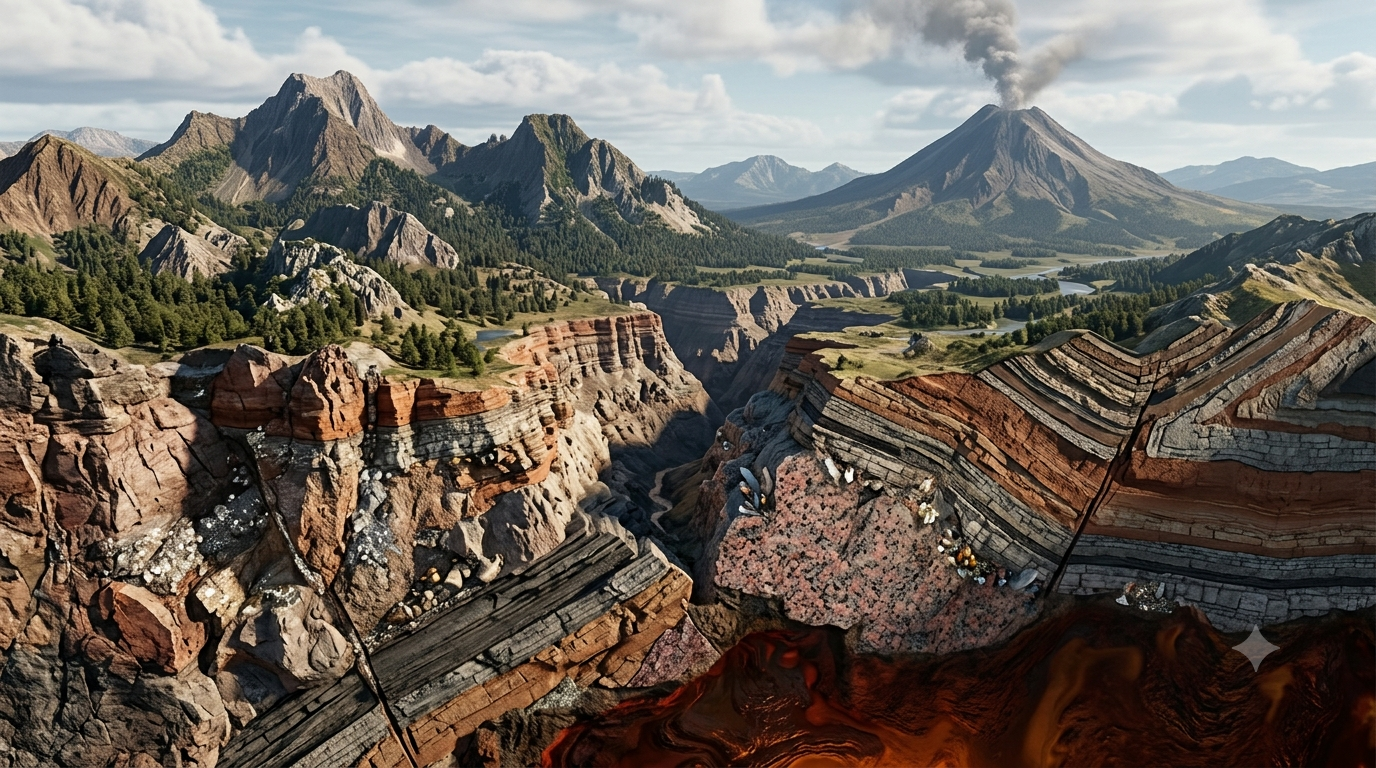
The Earth may look like a solid and unchanging planet, but it is constantly changing beneath our feet. Mountains rise, volcanoes erupt, rivers shape valleys, and earthquakes release energy stored within the Earth’s crust. Rocks form and break down, minerals develop under different conditions, and entire continents slowly move across the planet’s surface. Understanding these processes helps us discover how the Earth formed, how it has changed over billions of years, and how it may change in the future. This is where geology becomes important. Geology is the scientific study of the Earth, including its materials, structure, history, and the natural processes that shape it. It helps scientists understand natural hazards, locate valuable resources, protect the environment, and explain the geological history of our planet.
What Is Geology?
Geology is a branch of Earth science that studies the Earth’s physical structure, materials, history, and the processes responsible for shaping its surface and interior. The word geology comes from Greek words associated with the Earth and the study of something. In simple terms, geology helps us understand what the Earth is made of, how it works, and how it has changed over time.
Geologists study rocks, minerals, fossils, soil, mountains, volcanoes, earthquakes, and the layers beneath the Earth’s surface. They examine how these materials form, how they interact, and what they reveal about the planet’s past.
For example, a geologist studying a mountain may investigate how tectonic plates collided to create it. Another geologist may examine ancient rocks to determine the age of a particular region. A geologist working near a river may study how water erosion changes the landscape.
Geology is not limited to the Earth’s surface. Scientists also investigate the Earth’s interior, including its crust, mantle, and core, using rock samples, seismic waves, laboratory experiments, and other scientific techniques.
By combining observations, measurements, and evidence, geology provides a scientific explanation for many natural features and events.
What Does Geology Study?
Geology covers several interconnected areas of study. Each area helps scientists understand a different part of the Earth and the processes that influence it.
Rocks and Minerals
Rocks and minerals are among the most important subjects in geology. Minerals are naturally occurring substances with characteristic chemical compositions and structures. Quartz, feldspar, mica, and calcite are common examples of minerals.
Rocks are naturally occurring solid materials made up of one or more minerals or other geological substances. Granite, limestone, sandstone, and basalt are examples of rocks.
Geologists examine the color, texture, composition, and formation of rocks and minerals to understand their origins. These studies also help identify useful resources, including metals, industrial minerals, and materials used in construction.
Earth’s Structure
The Earth has several major internal layers. The three main layers are the crust, mantle, and core.
The crust is the Earth’s outermost solid layer. It includes the continents and the ocean floor. Beneath it lies the mantle, a thick layer of hot rock that can slowly deform and flow over geological timescales.
At the center of the Earth is the core, which consists mainly of iron and nickel. It has a liquid outer core and a solid inner core.
Scientists study these layers to understand the Earth’s internal heat, magnetic field, volcanic activity, and the movement of tectonic plates.
Plate Tectonics
Plate tectonics is one of the fundamental concepts in modern geology. The Earth’s outer rigid layer is divided into large pieces called tectonic plates. These plates move slowly over the underlying, deformable mantle.
When plates move apart, collide, or slide past one another, they can produce earthquakes, volcanoes, ocean trenches, and mountain ranges.
For example, the collision between the Indian Plate and the Eurasian Plate helped form the Himalayas. The continuing interaction between these plates contributes to the region’s geological activity.
Plate tectonics explains why many earthquakes and volcanoes occur in particular parts of the world and how continents have changed their positions over millions of years.
Fossils and Earth’s History
Fossils are preserved remains, impressions, or traces of ancient organisms. They provide evidence of life that existed long before humans appeared.
Geologists study fossils alongside rock layers to reconstruct ancient environments and understand how life has changed over time. Fossils can reveal whether an area was once covered by a sea, supported ancient forests, or experienced different climatic conditions.
The geological record also documents major events such as mass extinctions, the formation of oceans, and changes in the Earth’s atmosphere.
By studying rock layers, fossils, and radioactive decay in suitable minerals, scientists can determine the relative order and approximate ages of many geological events.
Why Is Geology Important?
Geology is important because human societies depend on the Earth for natural resources, land, water, and energy. It also helps us understand natural hazards and environmental changes.
Understanding Natural Disasters
Earthquakes, volcanic eruptions, landslides, and certain ground collapses are geological hazards that can threaten human life and infrastructure.
Geologists investigate where these hazards occur, what causes them, and which areas may be particularly vulnerable. They map active faults, examine volcanic deposits, study unstable slopes, and analyze the geological conditions beneath towns and cities.
This information helps governments and communities plan safer buildings, improve emergency preparedness, and identify areas where development may be risky.
Although scientists cannot predict the exact time and location of most earthquakes, geological research can estimate long-term seismic hazards and improve risk assessments. Similarly, monitoring volcanoes can help scientists identify signs of unrest and provide warnings when conditions indicate an increased risk of eruption.
Geology therefore plays an important role in reducing disaster-related damage and protecting communities.
Finding Natural Resources
Many materials essential to modern life come from the Earth’s crust. These include iron, copper, aluminum-bearing minerals, lithium-bearing minerals, limestone, sand, gravel, and many other resources.
Geologists study the conditions under which mineral deposits form and use geological mapping, geochemical analysis, geophysical surveys, and drilling data to investigate potential resources.
For example, copper is widely used in electrical wiring, while iron is essential for producing steel. Lithium and other minerals are important for various battery technologies.
Geological knowledge can help identify resources more efficiently. However, finding a deposit does not automatically mean that mining it is economically practical or environmentally responsible. Resource development must also consider ecological impacts, local communities, worker safety, and long-term sustainability.
Protecting Water Resources
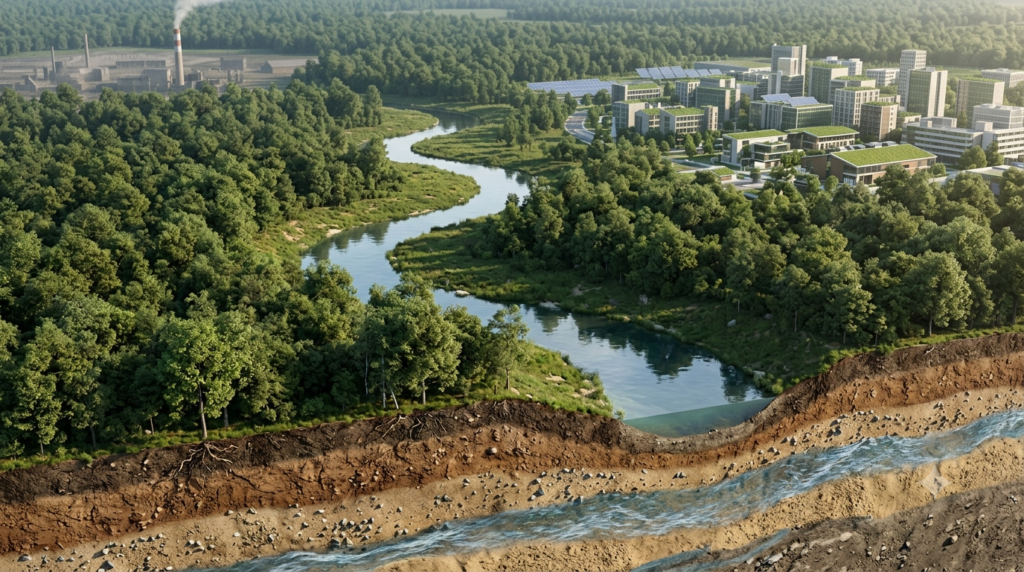
Water is essential for drinking, agriculture, sanitation, and industry. Geology helps scientists understand how water moves through soil, sediment, and rock.
Groundwater is water stored beneath the Earth’s surface in spaces within rocks and sediments. Geological formations that store and transmit usable quantities of groundwater are known as aquifers.
Hydrogeologists study aquifers to determine where groundwater occurs, how quickly it is replenished, and whether it may be affected by pollution or excessive extraction.
This knowledge is especially valuable in areas where communities depend heavily on wells. Geological investigations can help identify suitable groundwater sources, assess contamination risks, and support better water-management practices.
Geology also contributes to understanding how rivers, lakes, and underground water systems interact.
Supporting Construction and Infrastructure
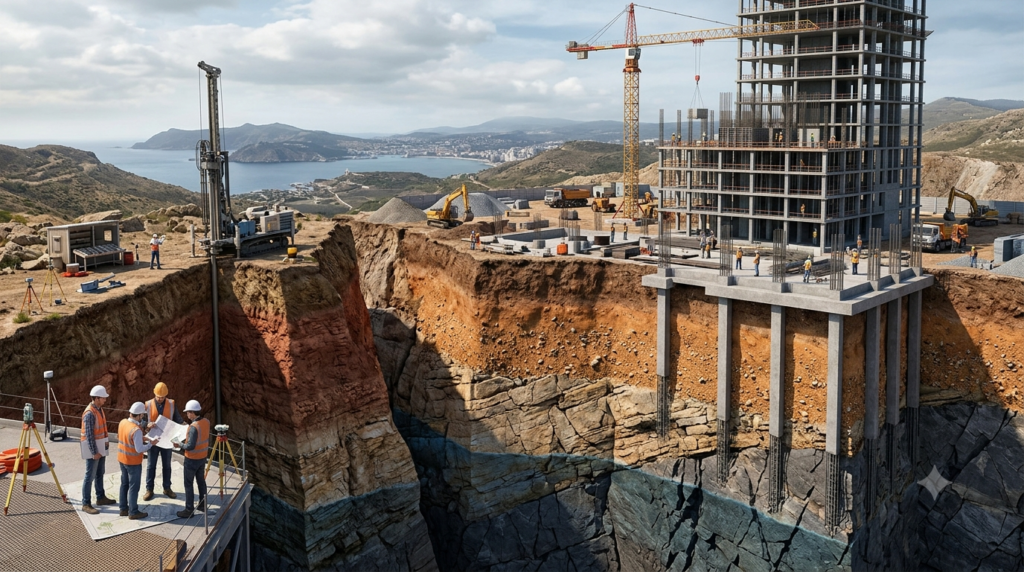
Buildings, bridges, roads, tunnels, dams, and other structures depend on the physical conditions of the ground beneath them.
Geologists and engineering geologists investigate soil, rock strength, groundwater levels, faults, and slope stability before or during construction projects. Their findings help engineers select suitable foundations and identify potential problems.
For example, a tunnel passing through fractured rock may require different support systems from one built through strong, relatively unfractured rock. A dam site must be evaluated carefully to determine whether the underlying rock can provide adequate stability and limit unwanted water leakage.
Without proper geological investigations, construction projects may face settlement, slope failure, foundation problems, or other expensive and dangerous complications.
Understanding Climate and Environmental Change
Geology provides evidence of environmental conditions that existed long before modern weather records began.
Scientists study ice cores, sediment layers, fossils, ancient soils, and certain types of rocks to investigate past temperatures, atmospheric conditions, sea levels, and changes in ecosystems.
For example, sediment deposited at the bottom of a lake may preserve information about past rainfall, vegetation, and erosion. Marine sediments can contain evidence of changes in ocean temperatures and biological productivity.
These records help scientists understand natural climate variability and compare past environmental changes with modern observations.
Geology is also important in environmental protection. Geological studies help assess soil contamination, groundwater pollution, coastal erosion, and the long-term storage of certain waste materials.
Supporting Energy Production
Geology has a major role in understanding and developing different energy resources.
Traditional energy resources, such as coal, petroleum, and natural gas, form under particular geological conditions. Geologists investigate the rocks and structures associated with these resources and evaluate where they may occur.
Geology also supports renewable and lower-carbon energy technologies. Geothermal energy uses heat from within the Earth, while geological investigations help identify suitable sites for geothermal systems.
In addition, subsurface geological knowledge can contribute to the assessment of underground carbon dioxide storage, where suitable rock formations may be used to store captured carbon dioxide under carefully monitored conditions.
As energy systems change, geological expertise remains important for resource planning, environmental assessment, and understanding the Earth’s underground structure.
What Are the Main Branches of Geology?
Geology includes several specialized branches. Each focuses on particular materials, processes, or applications.
Physical Geology
Physical geology studies the materials that make up the Earth and the processes that shape it. These include weathering, erosion, volcanic activity, earthquakes, rock formation, and the movement of tectonic plates.
It helps explain how landscapes develop and how the Earth’s surface changes over time.
Historical Geology
Historical geology investigates the Earth’s past. It uses rocks, fossils, geological structures, and dating techniques to reconstruct the sequence of events that shaped the planet.
This branch helps scientists understand the formation of continents, the development of ancient oceans, changes in life, and major events in Earth’s history.
Mineralogy
Mineralogy is the study of minerals, including their chemical composition, crystal structure, physical properties, and formation.
Mineralogists identify minerals and investigate how they develop under different temperatures, pressures, and chemical conditions. Their work supports geological research, mining, materials science, and industrial applications.
Petrology
Petrology is the study of rocks, their composition, their origins, and the processes responsible for their formation.
Petrologists examine igneous, sedimentary, and metamorphic rocks to understand how geological materials develop and change. Their findings help explain volcanic processes, sediment accumulation, and transformations deep within the Earth’s crust.
Structural Geology
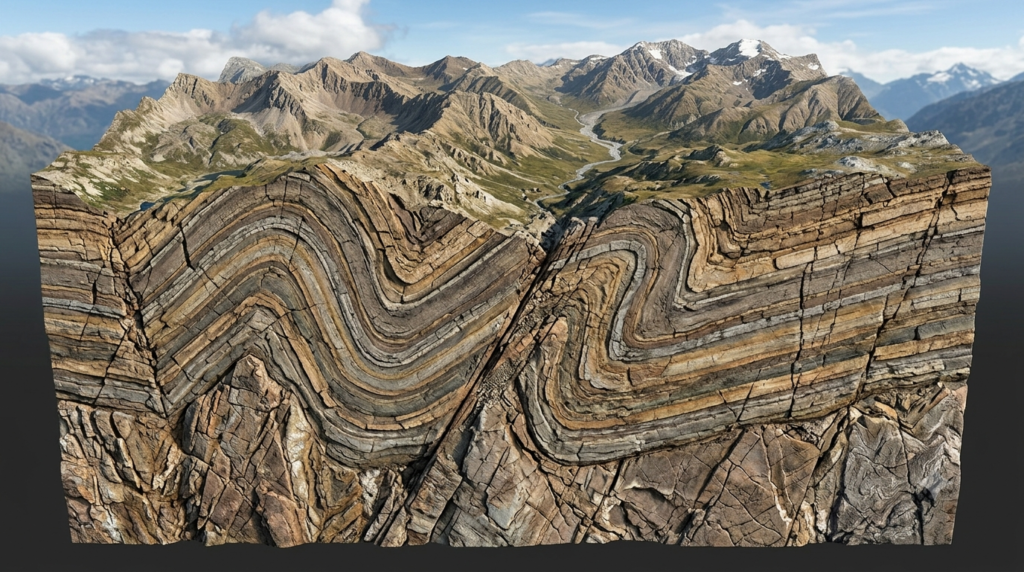
Structural geology examines the deformation of rocks and the geological structures produced by forces within the Earth.
These structures include folds, faults, fractures, and tilted rock layers. Structural geologists study them to understand mountain building, tectonic activity, and the arrangement of rocks underground.
Their work can also be useful when assessing earthquake hazards and exploring certain natural resources.
Paleontology
Paleontology studies ancient life through fossils and other preserved biological evidence.
Although it overlaps with biology, paleontology has strong connections with geology because fossils are commonly found in sedimentary rocks. By studying fossils and the layers containing them, scientists can reconstruct ancient ecosystems and investigate the evolution of life.
Economic Geology
Economic geology focuses on geological materials that have practical or commercial value. These include metallic ores, industrial minerals, and some energy resources.
Economic geologists investigate how valuable deposits form, how they are distributed, and whether they can be developed responsibly.
Engineering Geology
Engineering geology applies geological knowledge to construction, infrastructure, and land-use planning.
Engineering geologists assess rock and soil conditions, groundwater behavior, slope stability, and geological hazards to help make projects safer and more reliable.
How Do Geologists Study the Earth?
Geologists use several methods to collect evidence and investigate the Earth’s structure and history.
Fieldwork: Geologists visit natural landscapes, rock exposures, mines, river valleys, and construction sites. They observe geological features, collect samples, measure rock layers, and create maps.
Laboratory analysis: Rock, mineral, fossil, and soil samples can be examined using microscopes, chemical tests, and specialized instruments. These analyses reveal composition, texture, and other important properties.
Geological mapping: Maps show the distribution of rock types, faults, folds, and other geological features. These maps help scientists interpret how an area developed and identify potential hazards or resources.
Geophysical surveys: Scientists use measurements of seismic waves, gravity, magnetic fields, and electrical properties to investigate structures beneath the surface.
Remote sensing: Satellite images, aerial photographs, and other remote-sensing data help geologists study large areas, monitor landscape changes, and identify features that may be difficult to observe from the ground.
Radiometric dating: Some rocks and minerals contain radioactive isotopes that change at known rates. By measuring suitable isotopes and their decay products, scientists can estimate the ages of geological materials.
Together, these methods allow geologists to build evidence-based explanations of Earth’s processes rather than relying on appearances alone.
What Is the Difference Between Geology and Other Earth Sciences?
Geology is closely connected to other scientific disciplines, but each field has a different primary focus.
Geography examines the distribution of physical and human features across the Earth’s surface, including landscapes, populations, and patterns of land use.
Meteorology focuses on the atmosphere and weather, including storms, rainfall, wind, and atmospheric conditions.
Oceanography studies the oceans, including their physical properties, chemistry, circulation, and marine life.
Environmental science examines interactions among natural systems and human activities, drawing on geology, biology, chemistry, and other disciplines.
Geology contributes to all these fields by explaining the materials, structures, and long-term processes that influence the planet. For example, understanding a region’s geology can help meteorologists and environmental scientists investigate how landscapes affect water movement, erosion, and the impacts of heavy rainfall.
How Does Geology Affect Everyday Life?
Geology may seem like a subject that concerns only scientists, but it affects many ordinary activities.
The roads we travel on, the buildings we live in, and the materials used in our phones and computers depend on geological resources. Drinking water in many communities comes from underground aquifers, while agricultural productivity can depend partly on soil formed from weathered rock and sediment.
Geological conditions also influence where landslides occur, how coastlines change, and which regions face greater earthquake risks.
Even natural landscapes that attract tourists, such as mountains, caves, waterfalls, and canyons, are closely connected to geological processes.
Understanding geology helps people make informed decisions about land use, water conservation, construction, and environmental protection. It also encourages a deeper appreciation of the planet and the long history recorded in its rocks.
Career Opportunities in Geology
Geology offers career opportunities in scientific research, industry, environmental management, education, and public services.
Geologists may work for geological surveys, environmental consulting firms, mining companies, engineering organizations, universities, groundwater-management agencies, or energy companies.
Some specialize in earthquake hazards, groundwater resources, mineral exploration, fossil research, environmental assessment, or geological mapping. Others work in laboratories, conduct field investigations, analyze satellite data, or teach Earth science.
A career in geology may involve a combination of outdoor fieldwork, laboratory experiments, computer-based analysis, and scientific reporting. The exact requirements depend on the position and location, but many professional roles require a degree in geology or a closely related Earth science discipline.
As communities face challenges involving water security, natural hazards, infrastructure, and environmental change, geological knowledge continues to have practical value.
Conclusion
Geology is the scientific study of the Earth, its materials, its internal structure, and the processes that shape its surface and history. It helps us understand how mountains form, why earthquakes occur, where natural resources are found, and how past environments differed from those of today. Its importance extends beyond scientific research into construction, water management, energy production, environmental protection, and disaster-risk reduction. By studying rocks, minerals, fossils, and geological processes, scientists uncover evidence of the planet’s long and complex history. Geology also helps society make better decisions about natural resources and the safe use of land. Ultimately, learning geology allows us to understand our planet more deeply and recognize how closely human life is connected to the changing Earth.
FAQs
1. What is geology in simple words?
Geology is the scientific study of the Earth, including its rocks, minerals, structure, history, and natural processes. It helps us understand how mountains form, why earthquakes occur, how volcanoes develop, and how the Earth’s surface changes over time. Geologists study materials found on and beneath the Earth’s surface to discover how our planet formed and evolved. Geology also explains how natural resources such as metals, minerals, and groundwater occur. In simple words, geology helps us understand what the Earth is made of, how it works, and how natural processes influence the environment and human life.
2. Why is geology important?
Geology is important because it helps us understand the Earth’s structure, natural resources, and geological hazards. It supports the discovery of minerals, the management of groundwater, and the development of safe buildings, roads, tunnels, and dams. Geological research also helps scientists assess risks from earthquakes, volcanic eruptions, and landslides. By studying rocks, fossils, and ancient sediments, geologists can reconstruct past environments and understand long-term climate changes. Geology also contributes to environmental protection by helping identify contamination risks and evaluate land stability. Overall, it provides essential knowledge for using Earth’s resources responsibly and protecting communities from natural hazards.
3. What are the main branches of geology?
The main branches of geology include physical geology, historical geology, mineralogy, petrology, structural geology, paleontology, economic geology, and engineering geology. Physical geology studies Earth’s materials and the processes that shape the planet. Historical geology investigates Earth’s past using rocks, fossils, and dating methods. Mineralogy focuses on minerals, while petrology examines the formation and composition of rocks. Structural geology studies faults, folds, and rock deformation. Paleontology investigates ancient life through fossils. Economic geology explores valuable mineral and energy resources, whereas engineering geology applies geological knowledge to construction and infrastructure. Each branch contributes to a better understanding of Earth and its natural systems.
4. What do geologists study?
Geologists study rocks, minerals, fossils, soil, landforms, and the processes that shape the Earth. They investigate how rocks form, how tectonic plates move, and how earthquakes, volcanoes, erosion, and weathering change the landscape. Some geologists focus on groundwater, while others examine mineral deposits, ancient environments, or geological hazards. They also study the Earth’s internal structure using seismic waves, geophysical surveys, and laboratory analysis. Geologists collect samples, prepare maps, examine geological formations, and interpret scientific data. Their research helps explain Earth’s history, locate natural resources, assess environmental conditions, and improve our understanding of the planet’s physical processes.
5. How does geology help predict natural disasters?
Geology helps scientists understand and assess natural hazards such as earthquakes, volcanic eruptions, and landslides. Geologists study active faults, historical earthquake records, volcanic deposits, unstable slopes, and the physical properties of rocks and soil. This information helps identify areas that may face greater risks and supports the preparation of hazard maps. Monitoring volcanic activity can sometimes provide warning signs before an eruption. However, scientists cannot reliably predict the exact time and location of most earthquakes. Geological research instead improves long-term risk assessments, building standards, emergency planning, and public awareness. These measures can reduce damage, protect lives, and help communities prepare for hazardous events.
6. What is the difference between geology and geography?
Geology and geography are related fields, but they focus on different aspects of the Earth. Geology studies the Earth’s materials, internal structure, geological history, and processes such as rock formation, plate movement, and volcanic activity. Geography examines the distribution of physical and human features across the Earth’s surface. It includes landscapes, climate patterns, populations, settlements, and human interactions with the environment. For example, a geologist may investigate how a mountain range formed, while a geographer may study how that mountain range influences settlement, transportation, or land use. Both disciplines help us understand the planet from complementary scientific perspectives.
7. How does geology help us find natural resources?
Geology helps locate natural resources by explaining how and where useful materials form within the Earth. Geologists examine rock formations, mineral compositions, geological structures, and the conditions under which deposits develop. They use geological maps, laboratory tests, geochemical analysis, geophysical surveys, and drilling information to investigate potential resource locations. These methods support the exploration of metals, industrial minerals, and certain energy resources. Geological studies also help identify groundwater-bearing formations called aquifers. Although exploration can reveal valuable deposits, their extraction must be evaluated carefully to consider economic feasibility, environmental effects, and community needs. Responsible geological research supports more informed resource management.
8. How does geology help protect the environment?
Geology helps protect the environment by improving our understanding of groundwater, soil, rocks, land stability, and natural processes. Geologists investigate how pollutants move through soil and underground rock formations, helping scientists identify potential contamination pathways. They also study erosion, landslides, coastal changes, and the effects of human activities on landscapes. Geological research supports groundwater conservation, suitable waste-disposal planning, and the assessment of sites for environmental restoration. In addition, studies of ancient sediments, fossils, and other geological records provide evidence of past climate and environmental changes. This knowledge helps researchers evaluate present-day changes and develop better strategies for sustainable land and resource management.
9. What tools and methods do geologists use?
Geologists use a combination of fieldwork, laboratory analysis, mapping, and modern technology to investigate the Earth. Common tools include geological hammers, hand lenses, compasses, GPS devices, sampling equipment, and field notebooks. In laboratories, they may use microscopes and chemical instruments to identify minerals and analyze rocks. Geological maps help them understand the distribution of rock types and structures. Geophysical methods, including seismic surveys and magnetic measurements, provide information about underground features. Satellite images and remote sensing help researchers study large areas. Geologists also use radiometric dating to estimate the ages of suitable rocks and minerals, helping reconstruct the Earth’s geological history.
10. What career opportunities are available in geology?
Geology offers career opportunities in environmental consulting, mineral exploration, groundwater management, engineering, scientific research, education, and energy-related industries. Geologists may work with government geological surveys, universities, construction companies, mining organizations, environmental agencies, or research laboratories. Some specialize in studying earthquakes, fossils, groundwater, or mineral deposits. Others investigate construction sites, prepare geological maps, assess environmental risks, or analyze scientific data using computers. Many professional positions require a degree in geology or a related Earth science subject, while specialized roles may require additional qualifications. Geology can be a suitable career for people interested in science, outdoor investigations, environmental protection, and understanding how the Earth works.