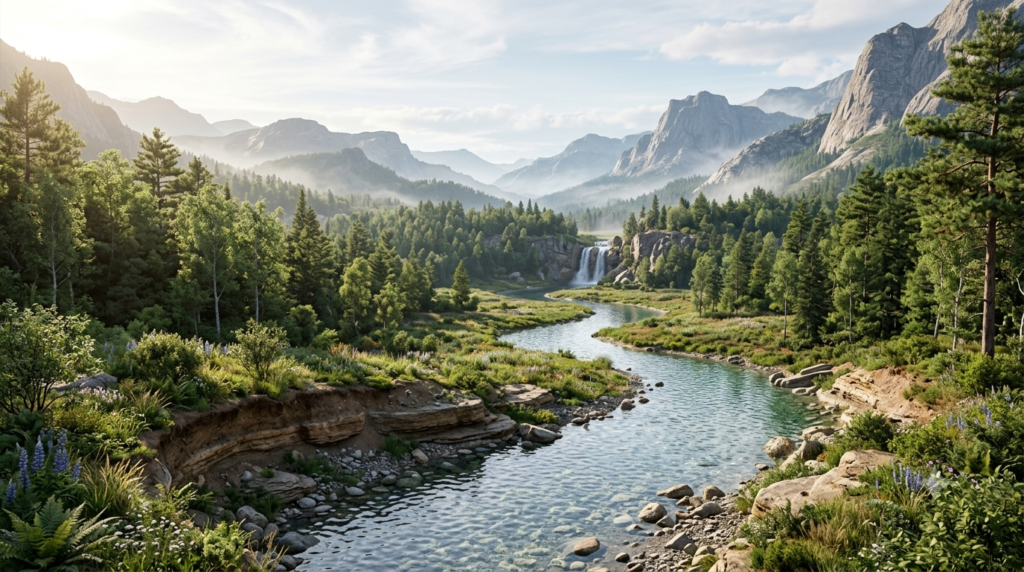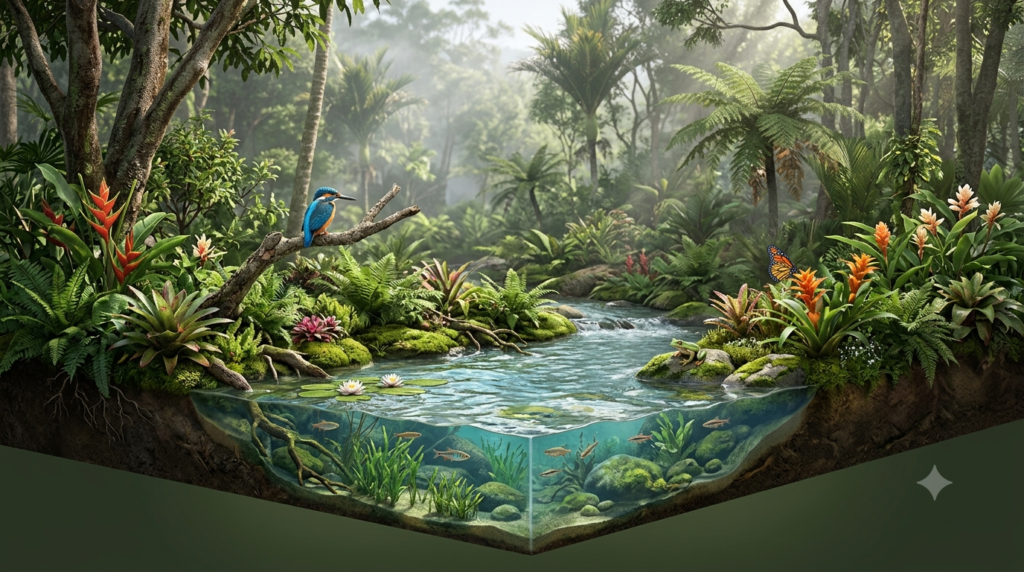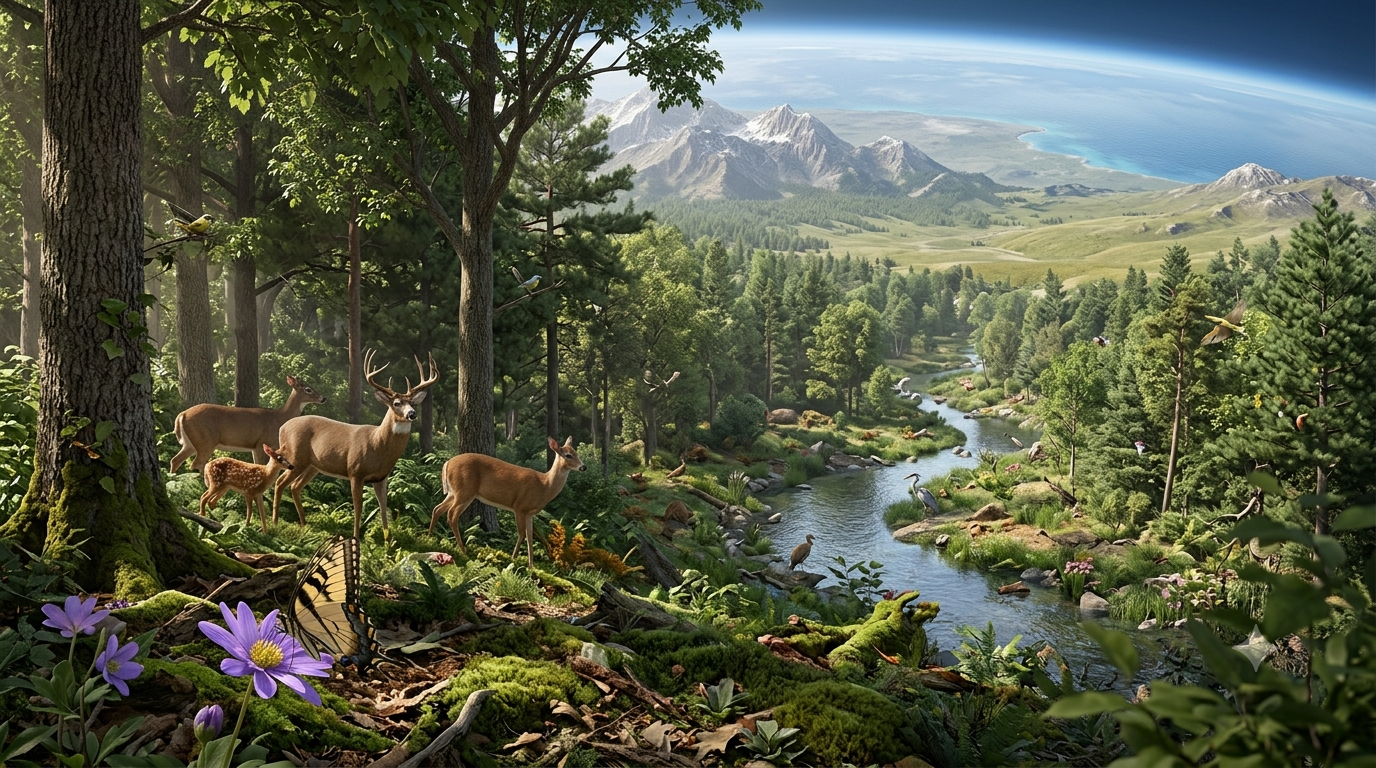
Nature is made up of living organisms that interact with one another and with their surroundings. A single plant growing in a garden, a group of birds living in a forest, and an entire tropical rainforest are all parts of the natural world. Although these examples differ in size and complexity, they are connected through ecological relationships. Ecology is the branch of biology that studies these relationships and explains how living organisms depend on one another and their environment.
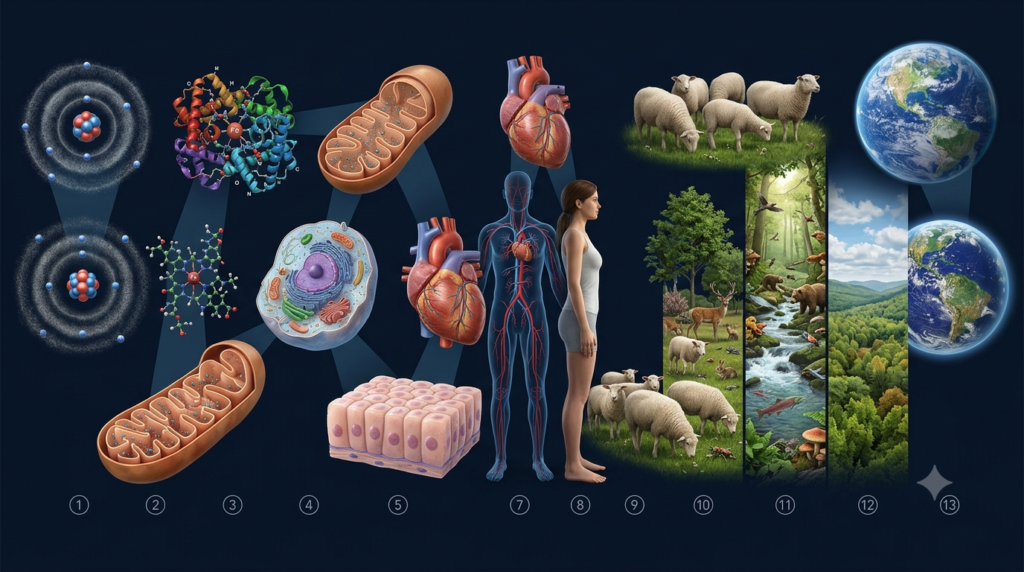
To understand these connections, scientists organize nature into different levels of ecological organization. These levels begin with an individual organism and progress through populations, communities, ecosystems, biomes, and finally the biosphere. Each level represents a broader scale of biological organization and includes relationships that may not be visible at smaller levels.
Learning about the levels of ecological organization helps us understand biodiversity, energy flow, nutrient cycling, and the effects of environmental changes. It also explains why protecting individual species, natural habitats, and entire ecosystems is important for maintaining the balance of life on Earth.
What Is Ecological Organization?
Ecological organization refers to the arrangement of living organisms and their environmental relationships into different levels, from individual organisms to the entire biosphere. Each level focuses on a particular scale of ecological study.
At the lowest level, scientists study how an individual organism survives in its environment. At broader levels, they examine how organisms of the same species form populations, how different populations interact within communities, and how living organisms exchange energy and matter with their surroundings.
The major levels of ecological organization are:
Organism
Population
Community
Ecosystem
Biome
Biosphere
These levels are interconnected. Changes at one level can influence other levels. For example, a decline in the number of insects may affect the populations of birds that feed on them. This change can influence the wider community and may eventually affect the functioning of an ecosystem.
1. Organism
An organism is an individual living thing capable of carrying out the basic processes of life. It may be a plant, animal, fungus, bacterium, or another form of living organism.
The organism is the most basic level of ecological organization because ecological relationships can be studied by examining how an individual living thing interacts with its surroundings.
Organisms require suitable environmental conditions to survive. These conditions may include appropriate temperatures, water, food, light, oxygen, and shelter. Different organisms have different requirements depending on their biological characteristics and habitats.
Examples of Organisms
Examples of individual organisms include:
A single mango tree growing in a garden
A tiger living in a forest
A frog living near a pond
A mushroom growing on decaying wood
A bacterium living in soil
Each organism has adaptations that help it survive in its environment. For example, a cactus has specialized structures that reduce water loss, allowing it to survive in dry regions. A polar bear has thick fur and a layer of body fat that help it retain heat in cold environments.
Importance of the Organism Level
Studying individual organisms helps scientists understand their behavior, growth, reproduction, feeding habits, and environmental tolerances. It also helps explain how organisms respond to environmental stress.
For instance, studying how a plant responds to limited sunlight can reveal how light availability affects its growth. Similarly, observing how an animal searches for food can help explain its role in the surrounding ecosystem.
Although an organism can be studied individually, its survival often depends on interactions with other organisms and environmental factors.
2. Population
A population consists of individuals of the same species living in a particular area at a particular time. These individuals may interact with one another, compete for resources, and reproduce.
For example, all the deer of the same species living in a particular forest may form a population. Similarly, the fish of one species living in a lake can be considered a population.
The size of a population depends on several factors, including birth rate, death rate, immigration, and emigration.
Characteristics of a Population
Several characteristics help ecologists describe and study populations.
Population size: This refers to the total number of individuals in a population. A population may contain only a few individuals or thousands of them.
Population density: Population density describes the number of individuals present per unit area or volume. For example, ecologists may measure the number of trees per hectare of forest or the number of fish per cubic metre of water.
Population distribution: This describes how individuals are spaced within an area. They may be distributed in groups, evenly spaced, or irregularly, depending on resource availability and environmental conditions.
Population growth: A population may increase when births and immigration exceed deaths and emigration. It may decrease when deaths and emigration exceed births and immigration.
Factors Affecting Population Size
Food availability, water supply, predators, diseases, competition, and climate can influence population size.
For example, when rainfall is sufficient and food is abundant, a population of grass-eating animals may increase. However, if a drought reduces the availability of vegetation, the population may decline because of starvation, disease, or migration.
Population studies are important for wildlife conservation, fisheries management, agriculture, and understanding the spread of diseases.
3. Community
A community consists of populations of different species living and interacting in the same area. Unlike a population, which includes individuals of the same species, a community includes multiple species.
For example, a pond community may contain fish, frogs, aquatic plants, algae, insects, bacteria, and fungi. These organisms interact through feeding relationships, competition, cooperation, and other ecological processes.
The structure of a community depends on which species are present, how abundant they are, and how they interact.
Interactions Within a Community
Different species influence one another in several ways.
Predation: Predation occurs when one organism captures and consumes another. For example, a frog may feed on insects, while a snake may prey on the frog.
Competition: Competition occurs when organisms require the same limited resources, such as food, water, light, or space. Two plant species growing close together may compete for sunlight and soil nutrients.
Mutualism: Mutualism is an interaction in which both species benefit. Bees obtain nectar from flowers, while flowers may be pollinated by bees.
Parasitism: Parasitism occurs when one organism benefits while another is harmed. For example, ticks feed on the blood of mammals and may cause irritation or transmit diseases.
Commensalism: In commensalism, one species benefits while the other is neither significantly helped nor harmed. Certain birds, for example, may use trees for nesting without substantially affecting the trees.
Importance of Communities
Communities support biodiversity and influence how energy and nutrients move through natural environments. Each species may perform a particular ecological role, such as pollination, seed dispersal, decomposition, or population control.
If an important species disappears, other populations may also be affected. For example, a decline in pollinating insects can reduce the reproduction of some flowering plants. This may subsequently affect animals that depend on those plants for food or shelter.
Studying communities helps ecologists understand species relationships, biodiversity loss, invasive species, and the consequences of disturbances such as fires or habitat destruction.
4. Ecosystem
An ecosystem consists of a community of living organisms and the non-living components of their environment interacting as a system.
Unlike a community, which focuses on living organisms, an ecosystem includes both biotic and abiotic components. These components are connected through energy flow and the cycling of nutrients.
Biotic Components
Biotic components are the living parts of an ecosystem. They include plants, animals, fungi, bacteria, and other organisms.
Biotic components are often grouped according to their roles in energy transfer.
Producers: Producers make organic food using energy, usually from sunlight through photosynthesis. Green plants, algae, and certain bacteria are examples.
Consumers: Consumers obtain energy by eating other organisms or their organic matter. Herbivores eat plants, carnivores eat animals, and omnivores consume both plant and animal matter.
Decomposers: Decomposers, including many fungi and bacteria, break down dead organisms and organic waste. This process releases nutrients that can be reused by other organisms.
Abiotic Components
Abiotic components are the non-living physical and chemical parts of an ecosystem. They include sunlight, temperature, water, air, soil, minerals, humidity, and pH.
These factors influence which organisms can survive in a particular environment. For example, the amount of sunlight and water available affects plant growth, while soil conditions influence the types of plants that can grow in an area.
Energy Flow and Nutrient Cycling
Energy enters most ecosystems through sunlight. Producers capture some of this energy and convert it into chemical energy stored in organic matter. Consumers obtain energy by feeding on producers or other consumers.
At each stage of a food chain, some energy is used for biological activities and dissipated as heat. Therefore, less energy is generally available at higher trophic levels.
Nutrients, unlike energy, are recycled through ecosystems. Carbon, nitrogen, and phosphorus move between organisms and the environment through biological, chemical, and physical processes.
Decomposers play an important role by breaking down dead organisms and waste, making nutrients available for reuse.
Examples of Ecosystems
Examples include forests, grasslands, deserts, lakes, rivers, oceans, and wetlands. Even a small pond or a decaying log can function as an ecosystem if its living organisms interact with one another and their physical environment.
Ecosystems may be natural or human-managed. Agricultural fields, gardens, and aquariums also contain interacting living and non-living components, although their structure and functioning may depend strongly on human activities.
Understanding ecosystems is essential for managing natural resources, protecting biodiversity, controlling pollution, and restoring damaged habitats.
5. Biome
A biome is a large ecological region characterized by a particular combination of climate, vegetation, and associated animal life. Biomes contain many ecosystems that share broad environmental characteristics.
Climate, especially temperature and precipitation, strongly influences the distribution of terrestrial biomes. Soil conditions, seasonal patterns, elevation, and disturbances such as fires also help determine which organisms can survive in a region.
Major Types of Biomes
Tropical rainforest: Tropical rainforests generally occur in warm regions with high rainfall. They support diverse plant and animal species and have complex vegetation layers.
Desert: Deserts receive very little precipitation compared with most other environments. Organisms living in deserts often have adaptations that help them conserve water or survive extreme temperatures.
Grassland: Grasslands are dominated by grasses and other herbaceous plants. Depending on their climate and location, they may support grazing animals, predators, and many species of insects and birds.
Temperate forest: Temperate forests experience seasonal changes in temperature. Depending on the region, they may contain broadleaf deciduous trees, evergreen trees, or a mixture of both.
Taiga or boreal forest: The taiga occurs across large parts of the northern high latitudes and is characterized by long, cold winters and extensive coniferous forests.
Tundra: Tundra regions have very low temperatures and short growing seasons. Arctic tundra commonly has permafrost, a layer of ground that remains frozen for at least two consecutive years.
Aquatic biomes: Aquatic environments include freshwater systems, such as lakes and rivers, and marine systems, such as oceans and coral reefs. Their ecological conditions depend on factors including salinity, water depth, temperature, light penetration, and water movement.
Importance of Biomes
Biomes help scientists understand the broad distribution of life across Earth. They provide a framework for comparing environments and identifying how climate influences vegetation and animal communities.
They are also important in climate regulation, carbon storage, water cycling, and the maintenance of biodiversity. For example, forests store carbon in their vegetation and soils, while wetlands can support wildlife, store carbon, and help regulate water movement.
Human activities, including deforestation, pollution, intensive agriculture, and climate change, can alter biome conditions and threaten the organisms that depend on them.
6. Biosphere
The biosphere is the broadest level of ecological organization. It includes all regions of Earth where life exists and the ecosystems that support living organisms.
The biosphere extends through parts of the atmosphere, hydrosphere, and lithosphere. Living organisms occur in the lower atmosphere, throughout oceans and freshwater systems, and in the soil and upper portions of Earth’s solid surface. Some microorganisms can also survive in extreme environments, including deep underground and around hydrothermal vents.
The biosphere is not a separate physical shell surrounding Earth. Instead, it is the interconnected global system of life and the environments in which organisms live.
Major Processes Within the Biosphere
Several processes connect ecosystems and help maintain life across the planet.
Global energy flow: Sunlight provides the main energy source for most ecosystems. This energy supports photosynthesis, food webs, and many biological processes. Ultimately, energy is released as heat.
Biogeochemical cycles: Elements such as carbon, nitrogen, oxygen, and phosphorus move through organisms, soil, water, rocks, and the atmosphere. These cycles connect ecosystems across different regions.
Climate regulation: Organisms influence climate-related processes. For example, plants absorb carbon dioxide during photosynthesis, while forests influence water movement and the exchange of moisture between land and atmosphere.
Movement of organisms: Birds migrate between regions, marine animals travel across oceans, and seeds may be transported by wind or animals. These movements connect habitats and influence the distribution of species.
Human Impact on the Biosphere
Human activities affect the biosphere at local, regional, and global scales. Deforestation reduces habitat availability, pollution damages land and water systems, and overexploitation can reduce populations of wild species.
The burning of fossil fuels increases atmospheric greenhouse gas concentrations, contributing to global warming. Climate change can alter rainfall patterns, shift species distributions, increase heat stress, and affect the stability of ecosystems.
However, humans can also help protect the biosphere through habitat restoration, sustainable resource use, pollution reduction, wildlife conservation, and the responsible management of land and water.
Because ecosystems are connected through climate, migration, water, and nutrient cycles, environmental changes in one region can have consequences elsewhere.
How the Levels of Ecological Organization Are Connected
The levels of ecological organization are arranged from smaller biological units to larger ecological systems. Each higher level includes the level below it while introducing additional relationships and processes.
For example, consider a grassland environment.
A single zebra is an organism. All zebras of the same species living in a particular grassland form a population. The zebra population interacts with populations of grasses, insects, birds, lions, and other organisms to form a community.
When these living populations interact with soil, sunlight, air, and water, they form a grassland ecosystem. A large region containing grassland ecosystems with similar broad climatic and ecological characteristics may be classified as a grassland biome. The grassland biome, together with all other biomes and ecosystems, forms part of Earth’s biosphere.
Changes can move through these levels in different ways. A drought may reduce grass growth at the ecosystem level, leaving less food for herbivores. Reduced food availability may cause animal populations to decline or move elsewhere. If similar changes occur across a large region, they may affect the wider grassland biome.
This example shows that ecological organization is not simply a classification system. It is also a way to understand how biological and environmental processes influence one another across different scales.
Why Is the Study of Ecological Organization Important?
Understanding ecological organization is important for several scientific and practical reasons.
Biodiversity conservation: Scientists need to understand individual species, populations, communities, and habitats to identify threats and develop effective conservation strategies.
Environmental management: Ecological knowledge helps manage forests, fisheries, agricultural land, freshwater resources, and protected areas more responsibly.
Understanding food webs: Studying ecological relationships reveals how energy moves between organisms and how changes in one population can influence others.
Climate change research: Ecologists investigate how changing temperatures, rainfall patterns, and extreme weather events affect organisms, ecosystems, and biomes.
Pollution control: Understanding the movement of pollutants through soil, water, organisms, and food webs helps scientists assess environmental risks.
Restoration of damaged habitats: Knowledge of ecological relationships helps guide the recovery of degraded forests, wetlands, grasslands, rivers, and coastal environments.
By studying ecological organization at different scales, scientists can connect observations about individual organisms with broader environmental patterns. This makes it easier to identify the causes of ecological problems and develop solutions that support both human well-being and the natural world.
Conclusion
The levels of ecological organization explain how life is arranged and connected, from a single organism to the entire biosphere. An organism interacts with its environment, individuals of the same species form populations, and populations of different species form communities. When these communities interact with non-living environmental factors, they create ecosystems. Ecosystems with similar broad climatic and ecological characteristics occur within biomes, while all Earth’s life-supporting regions together form the biosphere.
Each level provides a different perspective on the relationships between living organisms and their surroundings. Understanding these levels helps explain biodiversity, food webs, energy flow, nutrient cycling, and the effects of environmental change. Most importantly, it demonstrates that life on Earth is interconnected. Protecting individual species and their habitats contributes to the health of ecosystems, biomes, and the biosphere as a whole.
FAQs
1. What Are the Levels of Ecological Organization?
The levels of ecological organization describe how living organisms and their environments are arranged, from individual organisms to the entire biosphere. The six major levels are organism, population, community, ecosystem, biome, and biosphere. An organism is an individual living thing, while a population consists of individuals of the same species living in a particular area. A community includes populations of different species interacting with one another. An ecosystem includes both living organisms and non-living environmental factors. A biome contains large ecological regions with similar characteristics, and the biosphere includes all regions of Earth where life exists.
2. What Is the Difference Between an Organism and a Population?
An organism is an individual living thing, such as a single tiger, mango tree, or frog. A population consists of multiple individuals of the same species living in the same geographical area at a particular time. For example, one deer is an organism, while all deer of the same species living in a particular forest form a population. Organisms within a population may compete for food, water, shelter, and mates. Population size can change because of births, deaths, immigration, and emigration. Understanding this difference helps ecologists study species distribution, population growth, and the factors affecting survival.
3. What Is an Ecological Community?
An ecological community consists of populations of different species living and interacting in the same area. These populations may include plants, animals, fungi, and microorganisms. For example, a forest community may contain trees, grasses, birds, insects, mammals, and decomposers. Organisms within a community interact through predation, competition, mutualism, parasitism, and other relationships. These interactions influence the survival and distribution of species. Communities also contribute to biodiversity and help maintain ecological processes such as pollination and decomposition. Unlike a population, which includes one species, a community includes multiple species but does not directly include non-living environmental factors.
4. How Is an Ecosystem Different From a Community?
An ecosystem includes both the living organisms in an area and the non-living components with which they interact. A community, in contrast, includes only the populations of different species living and interacting in that area. For example, a pond community includes fish, frogs, algae, aquatic plants, and microorganisms. The pond ecosystem also includes water, sunlight, dissolved oxygen, temperature, minerals, and other abiotic factors. These living and non-living components interact through energy flow and nutrient cycling. Therefore, an ecosystem provides a broader understanding of ecological relationships than a community because it considers the physical environment as well.
5. What Are Biotic and Abiotic Components of an Ecosystem?
Biotic and abiotic components are the two major categories of ecosystem components. Biotic components include living organisms such as plants, animals, fungi, and bacteria. They perform different ecological roles, including producing food, consuming other organisms, and decomposing organic matter. Abiotic components are the non-living physical and chemical factors of the environment, including sunlight, water, air, soil, temperature, and minerals. Both categories influence ecosystem functioning. For example, plants require sunlight, water, carbon dioxide, and nutrients to grow. Their growth provides food and shelter for other organisms. The interaction between biotic and abiotic components helps maintain ecological processes.
6. What Is the Difference Between a Biome and an Ecosystem?
An ecosystem is a system in which living organisms interact with one another and with non-living environmental factors. A biome is a much larger ecological region characterized by broad climatic conditions, vegetation patterns, and associated animal life. A forest ecosystem may contain trees, insects, birds, soil, and water interacting within a particular location. A forest biome can include many such ecosystems across a large region. Examples of biomes include tropical rainforests, deserts, grasslands, tundra, and boreal forests. Ecosystems focus on interactions within a particular system, whereas biomes help scientists understand the distribution of ecological communities across large geographical areas.
7. What Is the Biosphere in Ecology?
The biosphere is the broadest level of ecological organization and includes all regions of Earth where life exists. It encompasses living organisms and the environments they inhabit, including parts of the atmosphere, hydrosphere, and lithosphere. The biosphere contains terrestrial ecosystems, such as forests and deserts, as well as aquatic ecosystems, including rivers, lakes, and oceans. These ecosystems are connected through processes such as the water cycle, carbon cycle, nutrient movement, and the migration of organisms. The biosphere supports life through interactions between biological, physical, and chemical processes. Human activities can affect it through pollution, deforestation, and climate change.
8. How Are the Levels of Ecological Organization Connected?
The levels of ecological organization are connected because each broader level includes the components and relationships of smaller levels. An individual organism belongs to a population, and populations of different species form communities. When these communities interact with non-living environmental factors, they form ecosystems. Many ecosystems with similar broad characteristics occur within biomes, while all Earth’s life-supporting regions together form the biosphere. Changes at one level can influence others. For example, a drought can reduce plant growth, decrease food availability for herbivores, and affect predator populations. These connections demonstrate why ecologists study life at multiple levels.
9. Why Is Ecological Organization Important for Environmental Conservation?
Ecological organization helps scientists understand how organisms, populations, communities, and ecosystems depend on one another. This knowledge is essential for protecting biodiversity and managing natural resources. For example, conserving an endangered species may require protecting its population, food sources, breeding areas, and habitat. Understanding ecosystems also helps scientists predict the effects of pollution, invasive species, deforestation, and climate change. At broader scales, studying biomes and the biosphere reveals how environmental changes can affect large regions and global ecological processes. This information supports habitat restoration, wildlife protection, sustainable agriculture, and responsible water management, helping maintain healthy environments for future generations.
10. What Happens When One Level of Ecological Organization Is Disturbed?
A disturbance at one level of ecological organization can affect other levels because ecological systems are interconnected. For example, removing many plants from a grassland may reduce food and shelter for herbivores. As herbivore populations decline or move elsewhere, predators may also experience food shortages. These changes can alter community relationships and ecosystem functioning. Large-scale disturbances, such as widespread deforestation or climate change, may affect entire biomes and contribute to changes throughout the biosphere. However, the effects depend on the type, intensity, and duration of the disturbance. Understanding these connections helps scientists predict environmental impacts and develop effective conservation strategies.