Energy is all around us. It makes objects move, produces heat, creates sound, powers machines, and allows living organisms to function. But energy does not simply appear or disappear. Instead, it can move from one object or system to another and can also change from one form to another.
A hot cup of tea warms your hands, a moving ball can knock another ball forward, and sunlight warms the surface of Earth. These everyday examples show energy being transferred. Understanding how this happens helps us explain many physical processes, from simple collisions to the operation of machines and electrical devices.
What Does Energy Transfer Mean?
Energy transfer is the movement of energy from one object, system, or place to another.
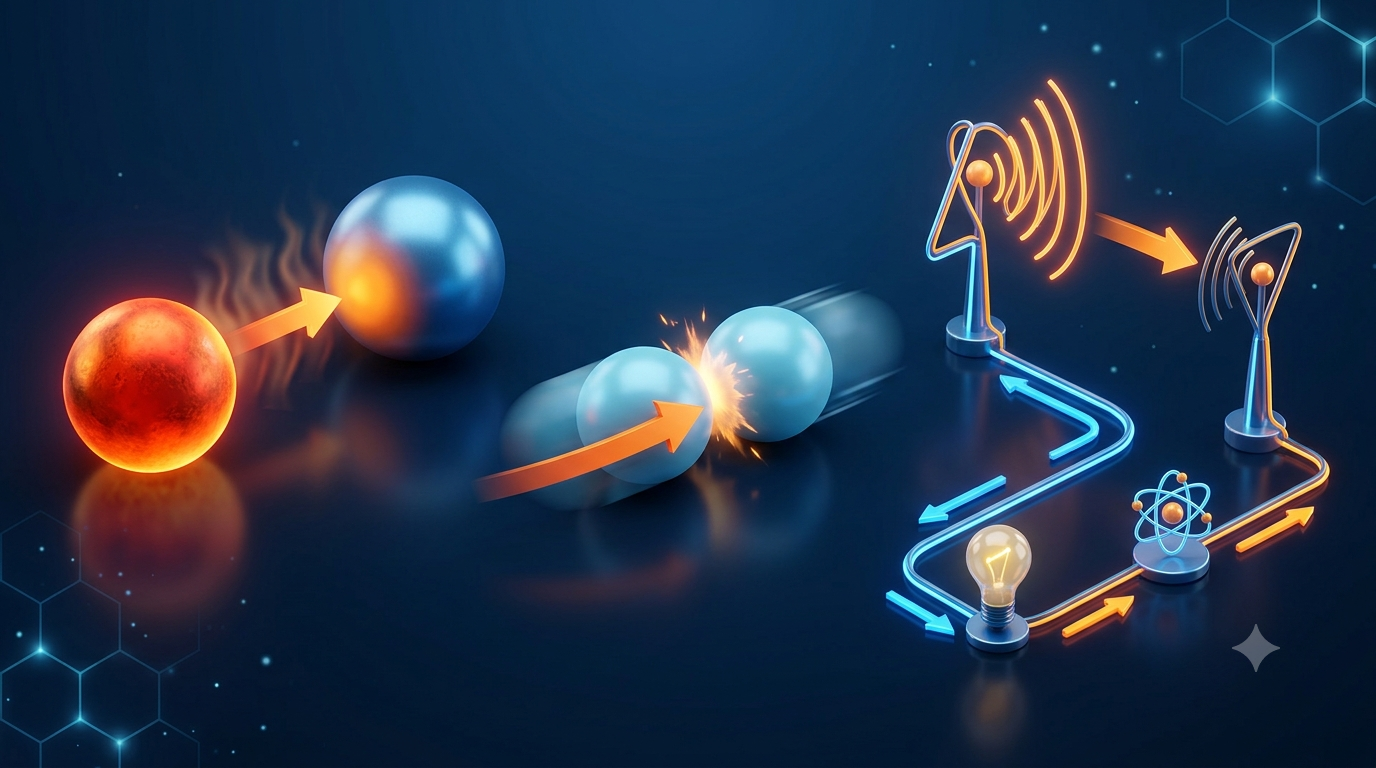
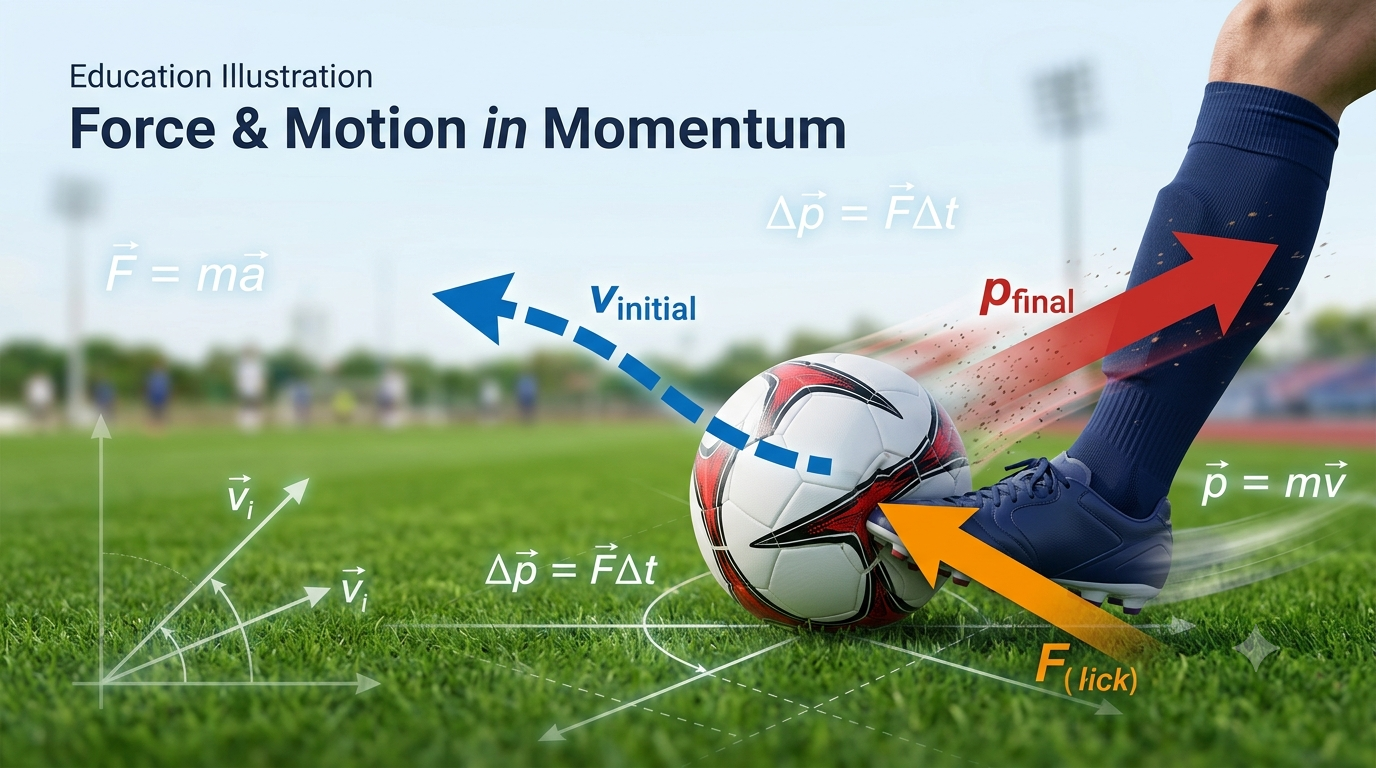
When two objects interact, energy can move between them. For example, when a moving football hits a stationary football, some of the energy associated with the moving ball is transferred to the second ball. The second ball begins to move as a result.
Energy can be transferred in several ways. Common mechanisms include heating, mechanical work, electrical transfer, and radiation. The particular mechanism depends on how the objects interact.
Energy transfer does not mean that energy is destroyed. The total amount of energy is conserved, although some energy may spread into the surroundings or change into less useful forms.
Energy Transfer Through Heating
One of the most familiar ways energy moves between objects is through heating.
When two objects have different temperatures and are able to exchange thermal energy, energy naturally transfers from the hotter object to the colder one. This continues until they reach thermal equilibrium, meaning they have the same temperature.
For example, imagine holding a warm cup of coffee. The coffee has a higher temperature than your hands. Thermal energy moves from the coffee into your hands, making them warmer.
Heating can occur through three main processes: conduction, convection, and radiation.
Conduction
Conduction transfers thermal energy through direct contact between particles.
When one end of a metal spoon is placed in hot soup, particles near the hot end gain energy and transfer some of it to neighboring particles. Gradually, energy moves along the spoon.
Metals are generally good thermal conductors because energy can move through them efficiently.
Convection
Convection occurs mainly in fluids such as liquids and gases. Warmer fluid becomes less dense and tends to rise, while cooler, denser fluid moves downward. This creates circulation that transfers thermal energy.
Boiling water is a familiar example. Water near the bottom becomes warm, rises, and is replaced by cooler water. This movement helps distribute thermal energy throughout the liquid.
Radiation
Radiation transfers energy through electromagnetic waves. Unlike conduction and convection, it does not require matter between the source and receiver.
Energy from the Sun reaches Earth through radiation across the vacuum of space. You can also feel thermal radiation from a fire even when you are not touching it.
Energy Transfer Through Mechanical Work
Energy can also be transferred when a force causes an object to move.
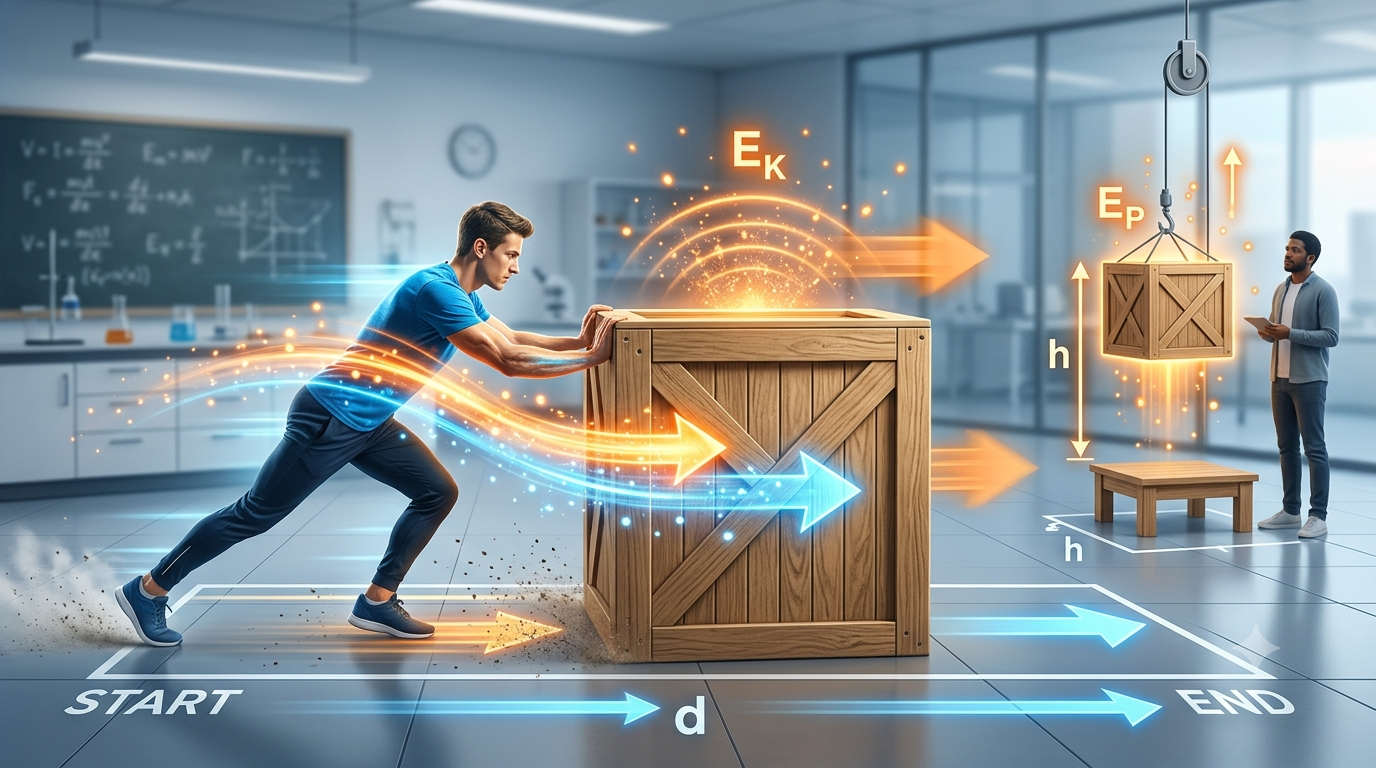
This type of energy transfer is called mechanical work. In physics, work is done on an object when a force causes displacement in the direction of that force.
For example, when you push a box across a floor, your muscles transfer energy to the box. The box gains kinetic energy as it moves. Some of the transferred energy may also become thermal energy because of friction between the box and the floor.
A moving object can transfer energy to another object as well. Consider a hammer striking a nail. The moving hammer transfers energy to the nail. Some of that energy helps drive the nail into the material, while some becomes sound and thermal energy.
Energy Transfer During Collisions
Collisions provide another clear example of energy transfer.
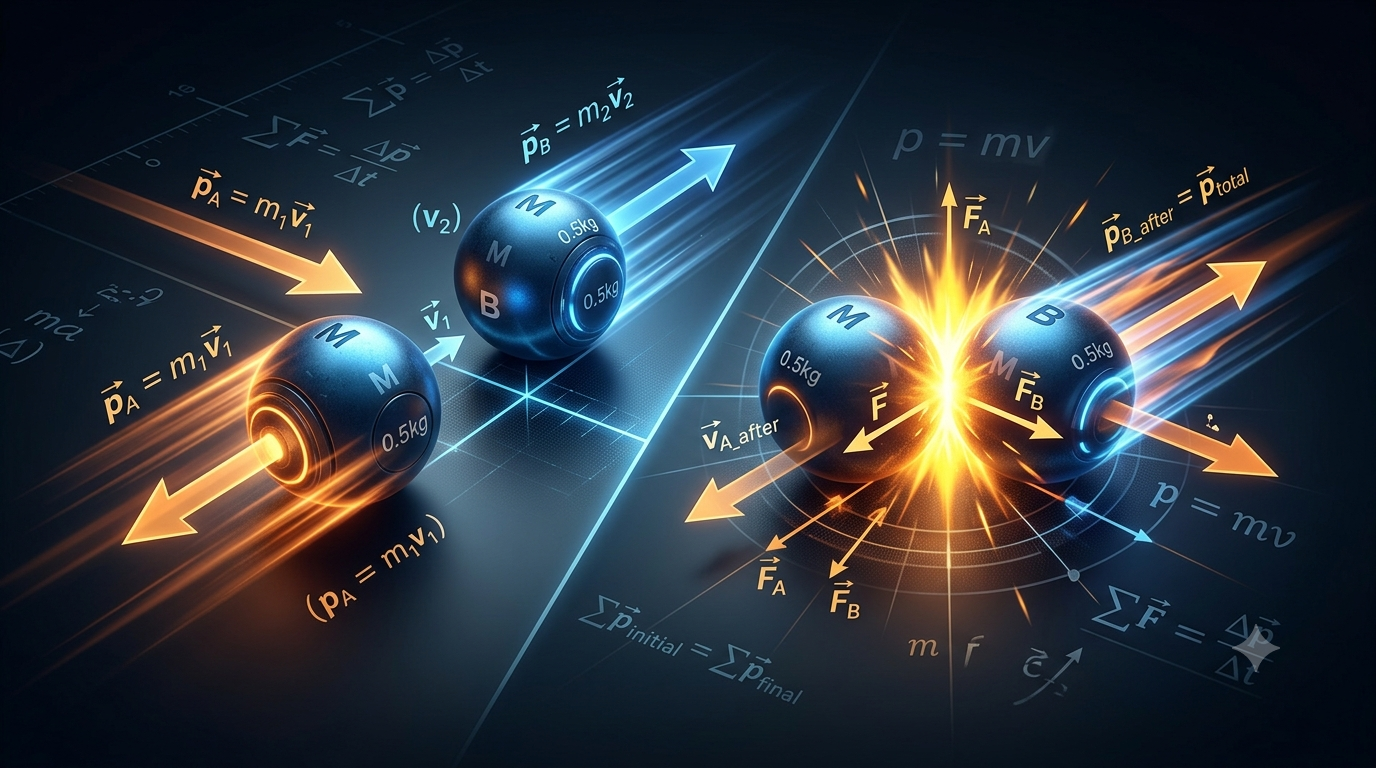
Suppose one billiard ball is moving toward another ball at rest. When they collide, energy associated with the motion of the first ball is transferred partly to the second ball. Both balls may change their speeds and directions.
The amount of kinetic energy that remains as kinetic energy depends on the type of collision. In an ideal elastic collision, kinetic energy is conserved. In many real collisions, some kinetic energy is transformed into other forms, such as sound, heat, and deformation.
This is why a collision can involve energy transfer even when the total kinetic energy before and after the collision is not the same.
Energy Transfer Through Electricity
Electrical energy can be transferred when electric charges move through a circuit.
Consider a simple circuit containing a battery, wires, and a lamp. The battery provides energy to the electrical system. As charges move through the circuit, energy is transferred to the lamp, where it is converted mainly into light and thermal energy.
Similarly, an electric motor transfers electrical energy into mechanical energy. The motor uses electrical energy to produce motion.
Electrical energy is therefore not a completely separate type of energy transfer from mechanical or thermal processes. It is one way energy can be delivered from one part of a system to another.
Energy Transfer Through Sound
Sound is another mechanism through which energy can move.
When an object vibrates, it causes nearby particles in a medium such as air to vibrate. These particles interact with neighboring particles, transferring energy through the medium.
For example, when a speaker produces sound, its vibrating surface transfers energy to the surrounding air. The resulting pressure variations travel outward as a sound wave.
When the sound reaches your ears, some of that energy causes parts of your hearing system to vibrate, allowing your brain to interpret the sound.
Energy Transfer Through Radiation
Radiation is especially important for transferring energy over large distances.
The Sun transfers enormous amounts of energy to Earth through electromagnetic radiation. When sunlight reaches Earth’s surface, some of its energy is absorbed and converted into thermal energy.
Radiation also occurs in everyday situations. A warm object emits electromagnetic radiation, and the amount and type of radiation depend on its temperature.
This process explains why objects can exchange thermal energy even when they are separated by air or another medium.
Energy Can Change Form During Transfer
Energy transfer often occurs together with an energy transformation.
For example, when you switch on an electric fan, electrical energy is transferred through the circuit to the motor. The motor converts much of that energy into mechanical energy, which causes the blades to rotate. Some energy is also transferred as sound and thermal energy.
Similarly, when a person eats food and then runs, chemical energy stored in the food is transformed and transferred through the body. Some of the energy produces movement, while some is released as thermal energy.
Therefore, asking where energy goes is often more useful than simply asking what type of energy an object has.
Why Does Energy Transfer From One Object to Another?
Energy transfer occurs because objects or systems interact.
A temperature difference can cause thermal energy transfer. A force can transfer energy through mechanical work. Moving electric charges can transfer electrical energy. Vibrating particles can transfer sound energy, while electromagnetic waves can transfer energy through radiation.
The direction and amount of transfer depend on the physical conditions of the interaction.
For thermal energy, for example, energy naturally transfers from a region of higher temperature toward a region of lower temperature. In mechanical interactions, the amount of energy transferred depends on factors such as force and displacement.
Is Energy Ever Lost?
People often say that energy is “lost” when a machine becomes less efficient. However, energy is not actually destroyed.
Instead, energy is transformed or transferred into forms that may be difficult to use.
For example, when a car moves, some of the chemical energy stored in its fuel is transformed into useful mechanical energy. Some is also transferred as heat because of friction and other processes, and some leaves the system as sound and thermal radiation.
From the perspective of useful energy, it may seem that energy has been lost. From the perspective of conservation of energy, however, the energy still exists in different forms.
The Conservation of Energy
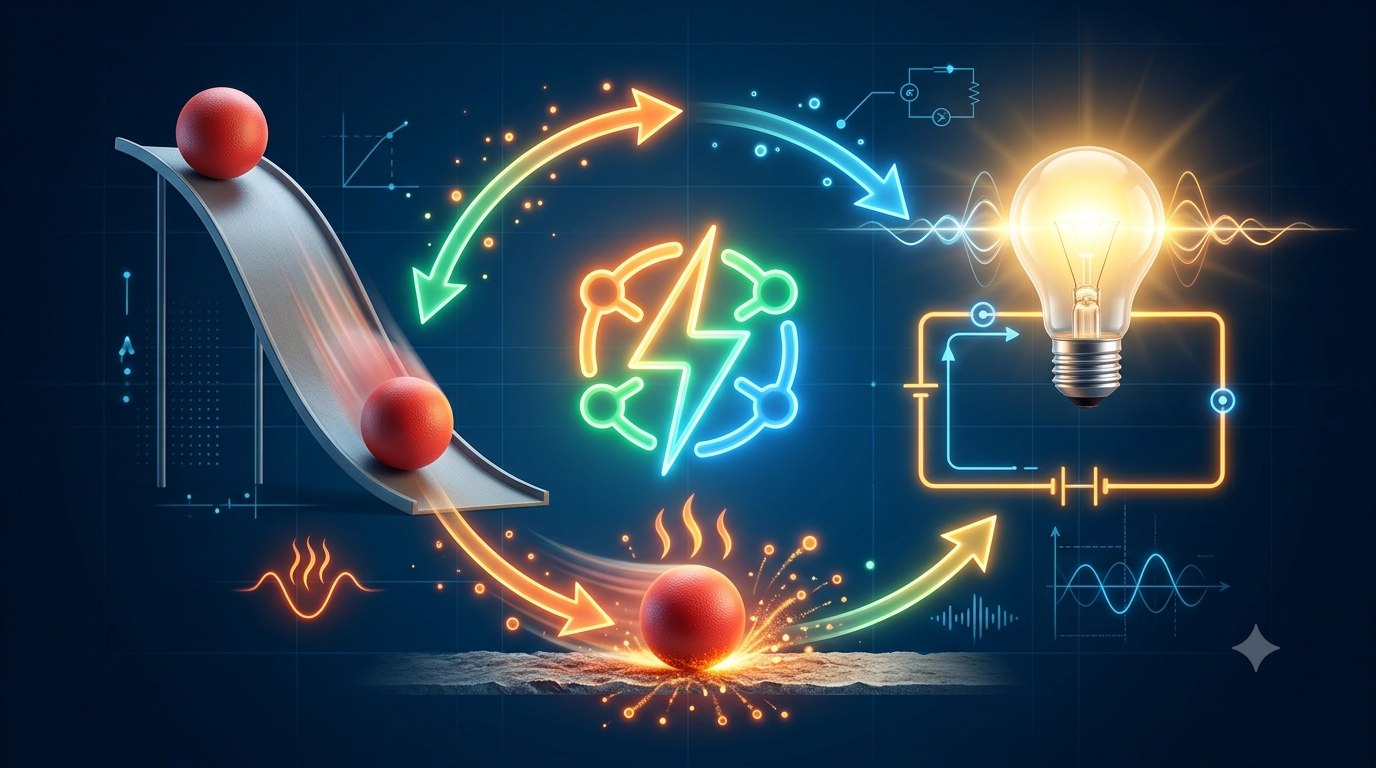
The conservation of energy is one of the most important principles in physics. It states that energy cannot be created or destroyed; it can only be transferred or transformed.
Imagine dropping a ball from a height. Before it falls, it has gravitational potential energy. As it falls, that energy is transferred into kinetic energy. When the ball hits the ground, some of its kinetic energy becomes thermal energy, sound, and energy associated with deformation.
The energy has not disappeared. It has simply been redistributed among different objects and forms.
Conclusion
Energy is transferred whenever objects or systems interact. It can move through heating, mechanical work, electricity, sound, and radiation. During these processes, energy can also change from one form to another.
A hot object can transfer thermal energy to a cooler object. A moving object can transfer energy during a collision. An electric circuit can deliver energy to a motor or lamp. Electromagnetic radiation can carry energy from the Sun to Earth.
The most important idea is that energy does not simply vanish. It moves, changes form, and spreads between objects and their surroundings. By studying these transfers, we can understand everything from everyday activities to complex natural processes and modern technologies.