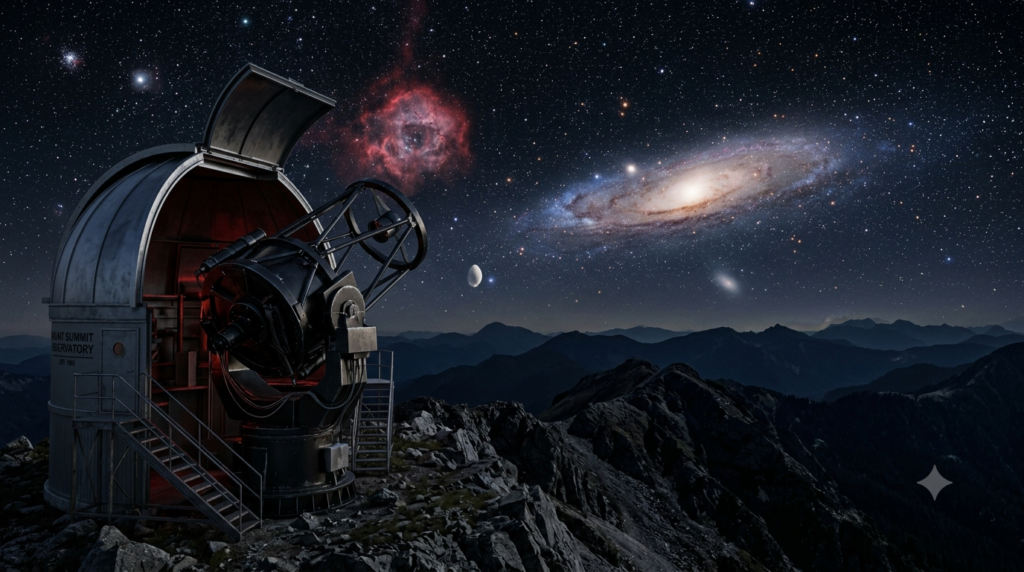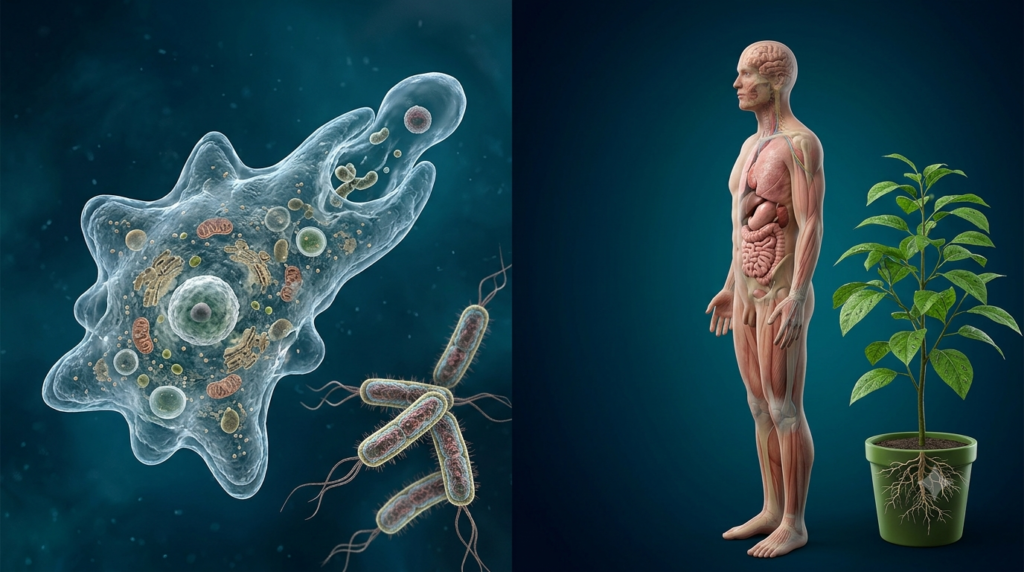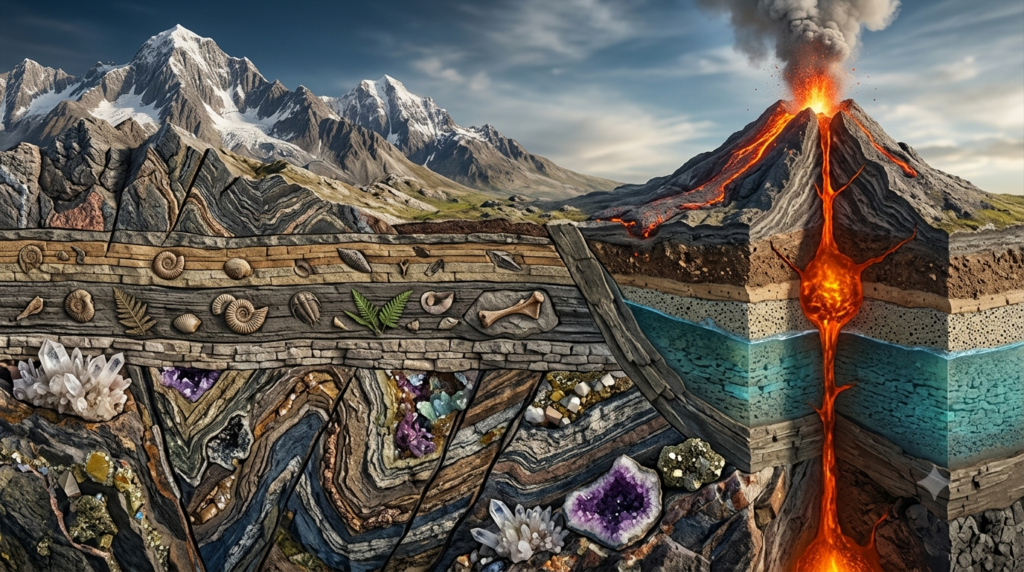
Earth is a complex and dynamic planet made up of several interconnected systems that support life and shape the environment. Scientists commonly divide these systems into four major spheres: the geosphere, hydrosphere, atmosphere, and biosphere. Each sphere has its own characteristics, materials, and functions, but none operates completely independently. Rocks break down through the action of water and air, plants absorb nutrients from soil, oceans influence weather patterns, and living organisms change the composition of the atmosphere. These connections make Earth a continuously changing system. Understanding the four major spheres and their interactions helps explain natural processes such as the water cycle, weathering, soil formation, climate regulation, and the movement of nutrients through ecosystems. It also helps us understand how human activities can affect the balance of the natural environment.
What Are the Four Major Spheres of Earth?
The four major spheres of Earth are the geosphere, hydrosphere, atmosphere, and biosphere. Each represents a different part of the planet, although their boundaries are not always clearly separated.
The geosphere includes the solid Earth, such as rocks, minerals, soil, and the planet’s internal layers. The hydrosphere includes water in oceans, rivers, lakes, groundwater, glaciers, and other water reservoirs. The atmosphere is the layer of gases surrounding Earth, while the biosphere includes all living organisms and the environments in which they live.
These spheres are connected through the continuous exchange of energy and matter. For example, rain from the atmosphere interacts with the geosphere when it falls on land. Some water enters the soil, some flows into rivers, and some is absorbed by plants. Water eventually returns to the atmosphere through evaporation and transpiration. This example demonstrates how a process involving one sphere can influence several others.
1. The Geosphere
The geosphere is the solid part of Earth. It includes the planet’s internal structure, surface rocks, minerals, sediments, and soil. It provides the physical foundation on which ecosystems develop and human societies build homes, roads, and other structures.
Structure of the Geosphere
The geosphere is commonly divided into four main layers: the crust, mantle, outer core, and inner core.
Crust: The crust is Earth’s outermost solid layer. It forms the continents and the ocean floor. Continental crust is generally thicker and less dense than oceanic crust. The crust contains rocks and minerals that supply many of the materials needed by living organisms and human activities.
Mantle: The mantle lies beneath the crust and extends to a depth of approximately 2,900 kilometres. It consists mainly of hot, solid rock that can deform and flow slowly over geological time. Movement within the mantle helps drive plate tectonics.
Outer Core: The outer core is composed mainly of liquid iron and nickel. The movement of electrically conducting liquid metal in this layer generates Earth’s magnetic field.
Inner Core: The inner core is Earth’s central region. Although temperatures are extremely high, immense pressure keeps this iron-rich layer solid.
The crust and the rigid uppermost mantle form the lithosphere, which is divided into tectonic plates. Their movement contributes to earthquakes, volcanic activity, mountain formation, and the development of ocean basins.
Importance of the Geosphere
The geosphere provides minerals, rocks, and soil that support agriculture, construction, manufacturing, and many other activities. Soil allows plants to anchor their roots and obtain water and nutrients. Geological formations also store groundwater and valuable natural resources.
The geosphere changes through processes such as weathering, erosion, deposition, volcanic activity, and plate tectonics. These processes gradually reshape Earth’s surface and create different landscapes.
For example, weathering breaks rocks into smaller particles, while erosion transports these particles by water, wind, ice, or gravity. When the transported material settles, it forms deposits that may eventually become sedimentary rock.
Interaction of the Geosphere with Other Spheres
The geosphere interacts with the hydrosphere when water dissolves minerals, erodes rocks, and transports sediments. It interacts with the atmosphere when wind, temperature changes, and rainfall contribute to weathering. It also supports the biosphere by providing soil, nutrients, habitats, and mineral resources.
Plant roots can grow into cracks in rocks, gradually widening them. Burrowing animals mix soil materials, while microorganisms help decompose organic matter and release nutrients. These examples show that even the solid Earth is continually influenced by water, air, and living organisms.
2. The Hydrosphere
The hydrosphere includes all water found on, beneath, and above Earth’s surface in liquid and solid forms. It encompasses oceans, seas, rivers, lakes, groundwater, glaciers, ice sheets, and water present in soil. Water vapour in the atmosphere is also part of the global water cycle, although atmospheric water is often discussed separately when describing the atmosphere.
Water is essential for life and plays a major role in regulating Earth’s climate, shaping landscapes, and transporting materials between different environments.
Distribution of Water on Earth
Approximately 71% of Earth’s surface is covered by water. Most of this water is found in the oceans and is salty. Only a small fraction is freshwater, and much of that freshwater is stored in glaciers, ice sheets, and underground aquifers.
Rivers and lakes contain only a small proportion of Earth’s total water, yet they are extremely important for human communities and ecosystems. Groundwater supplies drinking water in many regions and supports agriculture and industry.
Water continuously moves between different reservoirs through evaporation, condensation, precipitation, infiltration, runoff, freezing, and melting.
The Water Cycle
The water cycle, also called the hydrological cycle, describes the continuous movement of water through Earth’s systems.
Evaporation: Heat from the Sun changes liquid water from oceans, lakes, and other surfaces into water vapour.
Transpiration: Plants release water vapour through small openings in their leaves. Evaporation and transpiration together are known as evapotranspiration.
Condensation: Water vapour cools and forms tiny liquid droplets or ice crystals, contributing to the formation of clouds.
Precipitation: Water returns to Earth’s surface as rain, snow, sleet, or hail.
Infiltration: Some precipitation enters the soil and may replenish groundwater.
Runoff: Water that flows across the land can enter streams, rivers, lakes, and oceans.
The water cycle connects the atmosphere, hydrosphere, geosphere, and biosphere. It also transfers energy and helps distribute freshwater across the planet.
Importance of the Hydrosphere
Water supports cellular activities, photosynthesis, digestion, nutrient transport, and many other biological processes. Aquatic environments provide habitats for fish, aquatic plants, microorganisms, and countless other organisms.
The hydrosphere also influences temperature and weather. Oceans absorb and store large amounts of heat, while ocean currents redistribute energy around the planet. Water also shapes landforms by eroding rocks, carrying sediments, and depositing materials in river valleys, floodplains, and coastal regions.
Interaction of the Hydrosphere with Other Spheres
Water interacts with the geosphere through erosion, weathering, groundwater movement, and soil formation. It interacts with the atmosphere through evaporation, condensation, and precipitation. It supports the biosphere by providing habitats and supplying water to plants, animals, and microorganisms.
For example, when rain falls on a forest, some water enters the soil, some is absorbed by plant roots, and some flows into streams. Plants release part of the absorbed water into the atmosphere through transpiration. The same rainfall may also carry dissolved minerals and soil particles into nearby rivers.
3. The Atmosphere
The atmosphere is the layer of gases surrounding Earth. It is held in place by gravity and provides the air needed by many living organisms. It also protects the planet from harmful solar radiation, helps regulate temperature, and produces the weather conditions that influence life on the surface.
Composition of the Atmosphere
Dry air near Earth’s surface consists of approximately 78% nitrogen and 21% oxygen. Most of the remaining 1% is argon, with carbon dioxide and other gases present in much smaller amounts. The atmosphere also contains variable quantities of water vapour and suspended particles.
Nitrogen is important for the nitrogen cycle, although most organisms cannot use atmospheric nitrogen directly. Oxygen supports aerobic respiration and helps organisms release energy from food. Carbon dioxide is used by plants and other photosynthetic organisms to produce organic matter.
Water vapour is a major component of the weather system because it forms clouds and precipitation. It is also a greenhouse gas that contributes to Earth’s natural temperature regulation.
Layers of the Atmosphere
The atmosphere is commonly divided into five major layers.
Troposphere: This is the lowest atmospheric layer, where most weather occurs. It contains most of the atmosphere’s water vapour and a large proportion of its mass.
Stratosphere: The stratosphere lies above the troposphere. It contains the ozone layer, which absorbs much of the Sun’s harmful ultraviolet radiation.
Mesosphere: In this layer, temperatures generally decrease with altitude. Many meteoroids heat up and disintegrate as they enter this region.
Thermosphere: The thermosphere experiences very high temperatures because its sparse gases absorb high-energy solar radiation. Auroras occur in this region.
Exosphere: The exosphere is the outermost atmospheric layer and gradually transitions into space.
These layers differ in temperature, density, and composition.
Importance of the Atmosphere
The atmosphere makes Earth suitable for life by supplying essential gases, moderating temperature, and protecting the surface from much of the harmful radiation arriving from space.
It also drives weather and influences climate through the movement of air masses, the formation of clouds, and the exchange of heat and moisture. Winds transport water vapour, dust, pollen, and other particles over long distances.
The atmosphere is also involved in important biogeochemical cycles, including the carbon and nitrogen cycles. Changes in atmospheric greenhouse gas concentrations can affect global temperatures, precipitation patterns, sea levels, and ecosystems.
Interaction of the Atmosphere with Other Spheres
The atmosphere interacts with the hydrosphere through evaporation, cloud formation, precipitation, and the exchange of heat and gases between the air and oceans. It interacts with the geosphere through wind erosion, volcanic emissions, and the weathering of rocks. It supports the biosphere by supplying carbon dioxide for photosynthesis and oxygen for many forms of respiration.
For example, a volcanic eruption releases gases and ash into the atmosphere. These materials can influence air quality, sunlight reaching the surface, and regional weather conditions. In another example, forests absorb carbon dioxide from the atmosphere during photosynthesis and release water vapour through transpiration.
4. The Biosphere
The biosphere includes all living organisms on Earth and the regions where life exists. It extends through parts of the atmosphere, hydrosphere, and geosphere. Organisms live in forests, grasslands, deserts, oceans, rivers, soil, and even some extreme environments such as deep-sea hydrothermal vents.
The biosphere is not a separate physical shell with sharply defined boundaries. Instead, it is the global zone of life, connecting organisms with the air, water, and solid materials they depend on.
Components of the Biosphere
The biosphere contains enormous biological diversity, ranging from microscopic bacteria to large plants and animals.
Producers: Producers, such as green plants, algae, and certain bacteria, make organic matter using energy from sunlight or chemical reactions. Photosynthetic producers form the foundation of most food chains.
Consumers: Consumers obtain energy by eating plants, other animals, or organic matter. Herbivores, carnivores, and omnivores are examples of consumers.
Decomposers: Many fungi and bacteria break down dead organisms and waste materials. Decomposition returns nutrients to the environment, making them available for reuse.
These groups are connected through food chains and food webs. Energy moves through ecosystems, while matter is continually recycled.
Importance of the Biosphere
The biosphere maintains essential ecological processes. Plants produce organic matter and release oxygen during photosynthesis. Microorganisms help decompose waste and recycle nutrients. Animals contribute to pollination, seed dispersal, and the regulation of populations.
Living organisms also influence soil formation, water movement, and atmospheric composition. Forests store carbon, wetlands filter water, and marine plankton contribute significantly to global biological productivity.
Biodiversity makes ecosystems more complex and can improve their ability to withstand certain environmental disturbances. However, the stability of ecosystems depends on many factors, including climate, habitat conditions, resource availability, and interactions among species.
Interaction of the Biosphere with Other Spheres
The biosphere depends on the geosphere for soil and mineral nutrients, the hydrosphere for water, and the atmosphere for gases and suitable climatic conditions.
At the same time, organisms modify all three spheres. Plant roots help break down rocks and stabilize soil. Wetland vegetation slows water movement and traps sediments. Forests influence local humidity and temperature. Marine organisms use dissolved substances to build shells and skeletons, transferring materials between living systems and the ocean.
Human beings are also part of the biosphere. Through agriculture, industry, urban development, deforestation, and the burning of fossil fuels, people can significantly alter the other Earth spheres.
How the Four Spheres of Earth Interact
The four major spheres function as a connected Earth system. Energy from the Sun and heat from Earth’s interior drive many processes, while matter moves between the spheres through natural cycles.
An event affecting one sphere can produce changes in the others. For example, heavy rainfall begins as an atmospheric process but can cause soil erosion in the geosphere, flooding in the hydrosphere, and habitat changes in the biosphere.
Example 1: Rainfall and Soil Formation
Rainfall demonstrates the close connection between the atmosphere, hydrosphere, geosphere, and biosphere.
Water vapour condenses in the atmosphere and falls as precipitation. Rainwater reaches the land and interacts with rocks and soil. Over time, water can dissolve certain minerals and help break down rock material. Some water enters the soil, while the remainder flows across the surface.
Plants absorb water and nutrients through their roots. Their fallen leaves and other organic remains decompose, adding organic matter to the soil. This organic matter improves soil structure and can increase its ability to retain water.
Thus, rainfall, rock weathering, and biological activity work together to form and maintain soil.
Example 2: Forest Ecosystems and the Water Cycle
Forests provide another clear example of interaction among the four spheres.
Trees grow in soil, which belongs to the geosphere. Their roots absorb water from the soil, connecting the biosphere with the hydrosphere. Leaves take in carbon dioxide from the atmosphere and use sunlight to produce organic matter through photosynthesis.
Forests also return water vapour to the atmosphere through transpiration. Their roots help hold soil in place, reducing erosion during rainfall. Fallen leaves decompose and return nutrients to the soil.
When forests are removed, these interactions can change. Soil erosion may increase, less water may infiltrate the ground, and the amount of carbon stored in vegetation may decline. Changes in vegetation can also affect local temperature and moisture conditions.
Example 3: Volcanic Eruptions
Volcanic eruptions show how changes inside the geosphere can affect all the other spheres.
Magma rises through Earth’s crust and erupts as lava, ash, and gases. Lava and ash can bury vegetation, alter landscapes, and destroy habitats. Volcanic gases enter the atmosphere, where they may affect air quality and atmospheric chemistry.
Ash deposited on land can initially damage crops and aquatic habitats. However, weathered volcanic material can eventually contribute minerals to fertile soils. If volcanic material enters rivers or lakes, it can change water quality and affect aquatic organisms.
The effects depend on the eruption’s size, the materials released, and the surrounding environment.
Example 4: Ocean Warming and Marine Life
Ocean warming illustrates interactions between the hydrosphere, atmosphere, geosphere, and biosphere.
The oceans absorb a substantial amount of excess heat associated with the warming of Earth’s climate system. As ocean temperatures rise, some marine organisms experience stress, and the distribution of species may change.
Warmer water can hold less dissolved oxygen under otherwise comparable conditions, while changing circulation patterns can affect the movement of nutrients. Coral reefs are particularly vulnerable to marine heatwaves, which can cause coral bleaching.
The ocean also absorbs carbon dioxide from the atmosphere. Some dissolved carbon dioxide forms carbonic acid, changing seawater chemistry and contributing to ocean acidification. These changes affect organisms such as corals and shell-forming animals.
This example demonstrates how atmospheric composition, ocean conditions, and biological communities influence one another.
Example 5: Human Activities and Earth Systems
Human activities have become a major influence on interactions among Earth’s spheres.
Burning coal, oil, and natural gas releases carbon dioxide and other pollutants into the atmosphere. Increased greenhouse gas concentrations contribute to global warming, which affects glaciers, oceans, weather patterns, and ecosystems.
Deforestation changes the biosphere by reducing forest cover. It can also increase soil erosion, alter water infiltration, and reduce carbon storage. Agricultural fertilizers may enter rivers and lakes through runoff, contributing to excessive nutrient enrichment and harmful algal blooms.
Mining and construction modify the geosphere, while industrial waste and untreated sewage can contaminate the hydrosphere. These changes can affect air quality, water availability, soil fertility, biodiversity, and human health.
Understanding these connections is essential for managing resources and reducing environmental damage.
The Role of Earth System Cycles
Several natural cycles help maintain connections among the four spheres. These cycles move water, carbon, nitrogen, and other materials through the environment.
The Water Cycle
The water cycle connects the atmosphere, hydrosphere, geosphere, and biosphere through evaporation, condensation, precipitation, infiltration, runoff, and transpiration. It redistributes freshwater and influences weather, soil moisture, and ecosystem productivity.
The Carbon Cycle
The carbon cycle describes the movement of carbon among the atmosphere, living organisms, oceans, soils, and rocks.
Plants absorb carbon dioxide during photosynthesis and transfer carbon into food webs. Respiration and decomposition return some carbon to the atmosphere. Oceans absorb and release carbon dioxide, while some carbon becomes stored in sediments and sedimentary rocks over long periods.
Human activities, particularly fossil fuel combustion and deforestation, have changed the balance of the carbon cycle by increasing the amount of carbon dioxide in the atmosphere.
The Nitrogen Cycle
Nitrogen is essential for proteins, DNA, and other biological molecules. Although the atmosphere contains abundant nitrogen gas, most plants cannot use it directly.
Certain microorganisms convert atmospheric nitrogen into forms that plants can absorb. Animals obtain nitrogen by eating plants or other animals. Decomposition returns nitrogen compounds to soil and water, while other microorganisms convert nitrogen compounds back into atmospheric nitrogen.
Fertilizer use and the release of nitrogen-containing pollutants can alter this cycle and affect aquatic and terrestrial ecosystems.
The Rock Cycle
The rock cycle connects geological processes with water, air, and life. Igneous rocks form when magma or lava cools. Weathering and erosion produce sediments that may become sedimentary rocks. Heat and pressure can transform existing rocks into metamorphic rocks, while melting can produce magma again.
Water, wind, temperature changes, and biological activity contribute to weathering. Therefore, even the formation and transformation of rocks involve interactions among multiple Earth spheres.
Why Is It Important to Understand the Four Spheres?
Understanding Earth’s spheres helps explain environmental processes and the consequences of natural and human-induced changes.
Understanding natural hazards: Interactions among the spheres help scientists study earthquakes, volcanic eruptions, landslides, floods, droughts, and storms. This knowledge supports hazard assessment and disaster preparedness.
Managing natural resources: Water, soil, minerals, forests, and other resources are connected. Sustainable management requires understanding how the use of one resource affects others.
Protecting ecosystems: Pollution, habitat destruction, and climate change can influence several spheres simultaneously. Studying their connections helps identify ways to protect biodiversity and ecosystem services.
Understanding climate change: The atmosphere, oceans, land surfaces, ice, and living organisms exchange energy and matter. Understanding these relationships helps scientists investigate global warming and its environmental consequences.
Supporting sustainable development: Agriculture, construction, energy production, and urban planning all depend on Earth’s systems. Considering the interactions among the spheres can help reduce pollution, conserve resources, and limit environmental damage.
Conclusion
The four major spheres of Earth—the geosphere, hydrosphere, atmosphere, and biosphere—form an interconnected system that supports life and shapes the planet’s environment. The geosphere provides land, rocks, minerals, and soil; the hydrosphere supplies water; the atmosphere regulates temperature and provides essential gases; and the biosphere includes all living organisms. Their interactions drive processes such as the water cycle, soil formation, weathering, nutrient cycling, and climate regulation. Changes in one sphere can influence the others, sometimes producing effects that extend across entire regions or the planet. Human activities have increasingly altered these natural relationships, making environmental awareness and responsible resource management more important than ever. By understanding how Earth’s spheres interact, we can better explain natural processes, predict environmental changes, and work toward a healthier and more sustainable planet.
FAQs
1. What are the four major spheres of Earth?
The four major spheres of Earth are the geosphere, hydrosphere, atmosphere, and biosphere. The geosphere includes the solid Earth, such as rocks, minerals, and soil. The hydrosphere includes water in oceans, rivers, lakes, glaciers, and groundwater. The atmosphere is the layer of gases surrounding the planet, while the biosphere includes all living organisms and the environments where they live. These spheres are interconnected and continuously exchange energy and matter. Their interactions influence weather, climate, soil formation, nutrient cycling, and ecosystem development. Together, they form the complex Earth system that supports life and shapes the planet’s environment.
2. What is the geosphere, and why is it important?
The geosphere is the solid part of Earth, including its crust, mantle, outer core, inner core, rocks, minerals, and soil. It provides the physical foundation for landscapes, buildings, and ecosystems. The geosphere also supplies essential mineral resources and materials used in agriculture, construction, and industry. Geological processes such as weathering, erosion, volcanic activity, and plate tectonics continually change Earth’s surface. The geosphere interacts with water, air, and living organisms to support soil formation and nutrient cycling. Understanding the geosphere helps scientists explain earthquakes, mountain formation, volcanic eruptions, and the distribution of natural resources across the planet.
3. What does the hydrosphere include?
The hydrosphere includes the water present on, beneath, and above Earth’s surface in liquid and solid forms. It consists of oceans, seas, rivers, lakes, groundwater, glaciers, ice sheets, and soil moisture. Water vapour in the atmosphere also participates in the global water cycle. The hydrosphere is essential for all known life because organisms need water for biological processes. It also influences weather, climate, erosion, and the distribution of nutrients. Through evaporation, condensation, precipitation, infiltration, and runoff, water continuously moves between different reservoirs. This movement connects the hydrosphere with the atmosphere, geosphere, and biosphere.
4. What is the atmosphere, and what functions does it perform?
The atmosphere is the layer of gases surrounding Earth, held in place by gravity. It consists mainly of nitrogen and oxygen, along with smaller quantities of argon, carbon dioxide, water vapour, and other gases. The atmosphere supplies oxygen for many organisms and carbon dioxide for photosynthesis. It also protects Earth by absorbing much of the Sun’s harmful ultraviolet radiation through the ozone layer. Greenhouse gases help maintain temperatures suitable for life, while atmospheric movements produce weather patterns. The atmosphere interacts with oceans, land, and living organisms through heat exchange, precipitation, wind, and the movement of gases.
5. What is the biosphere, and how does it support life?
The biosphere is the part of Earth where life exists. It includes plants, animals, fungi, bacteria, and other living organisms found in terrestrial, aquatic, and some extreme environments. The biosphere depends on the geosphere for soil and minerals, the hydrosphere for water, and the atmosphere for essential gases and suitable environmental conditions. Producers create organic matter, consumers obtain energy by feeding on other organisms, and decomposers recycle nutrients from dead material. These processes maintain ecosystems and support food webs. Living organisms also influence soil formation, atmospheric composition, and water movement, making the biosphere an essential part of Earth’s interconnected system.
6. How do the four spheres of Earth interact with one another?
The four spheres interact through the continuous exchange of energy and matter. For example, rainfall forms through atmospheric processes, enters the hydrosphere, and flows across the geosphere. Some water infiltrates the soil and is absorbed by plants in the biosphere. Plants then release water vapour through transpiration, returning moisture to the atmosphere. Similarly, volcanic eruptions release gases from the geosphere into the atmosphere, while volcanic ash can affect water quality and living organisms. These connections demonstrate that the spheres cannot be understood entirely in isolation. Changes in one sphere can influence environmental conditions and processes in the other three.
7. How does the water cycle connect Earth’s four spheres?
The water cycle connects Earth’s four spheres through the continuous movement of water. Heat from the Sun causes water to evaporate from oceans, lakes, and other surfaces. Plants also release water vapour through transpiration. In the atmosphere, water vapour condenses into clouds and eventually returns to the surface as precipitation. Rainwater interacts with the geosphere through infiltration, weathering, and erosion. It supplies the biosphere by providing water for plants, animals, and microorganisms. Water also returns to rivers, lakes, and oceans through runoff and groundwater flow. These processes distribute freshwater, influence weather, and help maintain ecosystems around the planet.
8. How do human activities affect the four spheres of Earth?
Human activities can significantly change all four spheres of Earth. Burning fossil fuels increases atmospheric greenhouse gas concentrations and contributes to global warming. Deforestation damages the biosphere, reduces carbon storage, and can increase soil erosion in the geosphere. Industrial waste, sewage, and agricultural runoff may contaminate rivers, lakes, and oceans in the hydrosphere. Mining and construction alter landforms and disturb soil and rock layers. These changes often affect several spheres simultaneously. For example, fertilizer runoff can cause excessive algal growth in water, reducing oxygen levels and harming aquatic organisms. Sustainable resource management and pollution prevention can help reduce these environmental impacts.
9. Why is the interaction between Earth’s spheres important for ecosystems?
Interactions among Earth’s spheres provide the conditions necessary for ecosystems to function. The geosphere supplies soil and minerals, the hydrosphere provides water, and the atmosphere supplies gases and influences temperature and precipitation. The biosphere connects these resources through photosynthesis, respiration, decomposition, and food webs. For example, plants absorb water from the soil and carbon dioxide from the atmosphere to produce food. When plants and animals die, decomposers return nutrients to the environment. Changes in any sphere can disturb these relationships. Droughts, pollution, soil degradation, and rising temperatures may reduce biodiversity and alter ecosystem productivity, demonstrating the importance of maintaining environmental balance.
10. How does understanding Earth’s spheres help protect the environment?
Understanding Earth’s spheres helps scientists and communities recognize how environmental changes spread through interconnected natural systems. For example, deforestation can increase soil erosion, affect river flow, reduce carbon storage, and damage wildlife habitats. Studying these connections helps improve forest management, water conservation, and land-use planning. Knowledge of the spheres also supports climate research, pollution control, disaster preparedness, and the sustainable use of natural resources. Environmental problems often require solutions that consider several systems rather than one isolated issue. By understanding these relationships, people can make better decisions about agriculture, energy production, construction, and waste management while helping protect ecosystems for future generations.