

Chemical formulas are one of the most important tools used in chemistry. They tell us which elements are present in a substance and how many atoms of each element are represented. But chemical formulas are not only useful for identifying substances. They also provide the information needed to perform stoichiometric calculations.
Stoichiometry is the part of chemistry that deals with the quantitative relationships between reactants and products in a chemical reaction. It helps us determine how much of one substance is needed to react with another substance, how much product can be formed, and how different quantities are related.
To perform these calculations correctly, we need to understand what chemical formulas mean, how subscripts are interpreted, how formulas are converted into molar masses, and how balanced chemical equations connect different substances. In this article, we will learn how chemical formulas are used step by step in stoichiometric calculations.
What Is a Chemical Formula?
A chemical formula is a symbolic representation of a chemical substance. It uses element symbols and numbers to show the composition of that substance.
For example, the formula for water is:
H₂O
This formula tells us that one molecule of water contains two hydrogen atoms and one oxygen atom.
Similarly:
CO₂
represents carbon dioxide. It contains one carbon atom and two oxygen atoms.
The small number written below and to the right of an element symbol is called a subscript. It tells us how many atoms of that element are present in one molecule or formula unit.
Chemical formulas are essential in stoichiometry because they provide the basic information needed to calculate the amount of each element and the total mass of a compound.
How Do Subscripts Help in Stoichiometric Calculations?
Subscripts are especially important because they determine the composition of a compound.
Consider:
H₂O
The subscript 2 applies to hydrogen, so there are two hydrogen atoms. Oxygen has no subscript, which means there is one oxygen atom.
Now consider:
CaCl₂
This formula contains one calcium atom and two chlorine atoms.
The subscripts become important when calculating the molar mass of a compound. For CaCl₂, the contribution of each element is based on its number of atoms.
Molar mass can be calculated as:
Molar mass = sum of the atomic masses of all atoms in the formula
For CaCl₂:
Molar mass = atomic mass of Ca + 2 × atomic mass of Cl
Using approximate atomic masses:
Molar mass = 40.08 + 2(35.45)
Molar mass = 110.98 g/mol
Thus, one mole of calcium chloride has a mass of approximately 110.98 g.
Chemical Formulas and Molar Mass
One of the first steps in many stoichiometric calculations is finding the molar mass of a substance.
The molar mass tells us the mass of one mole of a substance. Its unit is usually grams per mole (g/mol).
For example, consider carbon dioxide:
CO₂
The formula contains:
1 carbon atom
2 oxygen atoms
Therefore:
Molar mass of CO₂ = 12.01 + 2(16.00)
Molar mass of CO₂ = 44.01 g/mol
This value allows us to convert between mass and amount of substance.
The basic relationship is:
moles = mass ÷ molar mass
For example, if we have 88.02 g of CO₂:
moles = 88.02 g ÷ 44.01 g/mol
moles = 2 mol
Therefore, the chemical formula helps us determine the molar mass, and the molar mass allows us to convert a measured mass into moles.
Why Are Moles Important in Stoichiometry?
Stoichiometric calculations are generally based on the mole because chemical reactions occur according to specific ratios of particles.
For example, consider the reaction:
2H₂ + O₂ → 2H₂O
This balanced equation tells us that:
2 mol of H₂ react with
1 mol of O₂ to produce
2 mol of H₂O
The chemical formulas identify the substances, while the coefficients in the balanced equation provide the mole relationships between them.
This distinction is important.
In:
2H₂ + O₂ → 2H₂O
The number 2 in front of H₂ is a coefficient, while the 2 in H₂ is a subscript.
The coefficient describes the amount of the substance involved in the reaction. The subscript describes the composition of an individual molecule or formula unit.
Changing a subscript changes the substance itself, while changing a coefficient changes the amount of that substance involved in the reaction.
Chemical Formulas and Balanced Chemical Equations
A chemical formula alone tells us the composition of a substance, but a balanced chemical equation tells us how substances interact quantitatively.
For example:
CH₄ + 2O₂ → CO₂ + 2H₂O
This equation describes the combustion of methane.
The formulas tell us that methane is CH₄, oxygen is O₂, carbon dioxide is CO₂, and water is H₂O.
The coefficients tell us the stoichiometric relationships:
1 mol CH₄ : 2 mol O₂ : 1 mol CO₂ : 2 mol H₂O
These ratios are used to convert the amount of one substance into the amount of another substance.
Using Chemical Formulas to Calculate Amounts of Reactants and Products
Suppose we want to determine how many moles of oxygen are required to react completely with 3 mol of methane.
The balanced equation is:
CH₄ + 2O₂ → CO₂ + 2H₂O
From the equation:
1 mol CH₄ reacts with 2 mol O₂
Therefore:
3 mol CH₄ × (2 mol O₂ / 1 mol CH₄) = 6 mol O₂
So, 3 mol of methane requires 6 mol of oxygen.
The chemical formulas identify the substances, while the coefficients provide the mole ratio needed for the calculation.
Converting Mass to Moles Using Chemical Formulas
Many real-world stoichiometric problems provide masses instead of moles.
In such cases, the chemical formula is used to calculate molar mass before applying the reaction ratio.
Consider:
2H₂ + O₂ → 2H₂O
Suppose we have 4 g of hydrogen gas and want to calculate the amount of water that can be produced, assuming oxygen is available in excess.
First, calculate the molar mass of H₂:
Molar mass of H₂ = 2(1.008) ≈ 2.016 g/mol
Now convert hydrogen mass into moles:
moles of H₂ = 4 g ÷ 2.016 g/mol
moles of H₂ ≈ 1.98 mol
From the balanced equation:
2 mol H₂ → 2 mol H₂O
Therefore, the mole ratio of H₂ to H₂O is 1:1.
So approximately 1.98 mol of H₂ can produce approximately 1.98 mol of H₂O.
The chemical formula of each substance is therefore essential at multiple stages of the calculation.
Converting Moles Back to Mass
Stoichiometry can also work in the opposite direction.
Suppose we know the number of moles of a product and want to calculate its mass.
For water:
H₂O
Molar mass of H₂O is approximately:
2(1.008) + 16.00 = 18.016 g/mol
If a reaction produces 2 mol of water:
mass = moles × molar mass
mass = 2 mol × 18.016 g/mol
mass ≈ 36.032 g
Thus, the chemical formula provides the information required to determine the molar mass and convert moles into grams.
Chemical Formulas in Mole-to-Mole Calculations
Mole-to-mole calculations are among the simplest stoichiometric calculations.
Consider:
N₂ + 3H₂ → 2NH₃
The balanced equation gives the relationship:
1 mol N₂ : 3 mol H₂ : 2 mol NH₃
Suppose 4 mol of nitrogen reacts completely with excess hydrogen.
Using the mole ratio:
4 mol N₂ × (2 mol NH₃ / 1 mol N₂) = 8 mol NH₃
Therefore, 4 mol of nitrogen can theoretically produce 8 mol of ammonia.
The formulas identify the substances, while the coefficients determine their quantitative relationship.
Chemical Formulas in Mass-to-Mass Calculations
Mass-to-mass stoichiometry combines several steps.
Consider:
2H₂ + O₂ → 2H₂O
Suppose we want to calculate the mass of water produced from 10 g of hydrogen, assuming oxygen is present in excess.
The general process is:
Mass of H₂ → moles of H₂ → moles of H₂O → mass of H₂O
First, use the chemical formula H₂ to calculate its molar mass.
Then convert grams of H₂ into moles.
Next, use the balanced equation to convert moles of H₂ into moles of H₂O.
Finally, use the formula H₂O to calculate its molar mass and convert moles into grams.
This sequence is often called the mass-to-mass stoichiometric pathway.
Chemical Formulas and Limiting Reactants
Chemical formulas also play an important role when identifying the limiting reactant.
The limiting reactant is the reactant that is completely consumed first and therefore limits the amount of product that can form.
Consider:
2H₂ + O₂ → 2H₂O
The equation requires hydrogen and oxygen in a 2:1 mole ratio.
Suppose a reaction mixture contains:
3 mol H₂
2 mol O₂
Three moles of H₂ require:
3 mol H₂ × (1 mol O₂ / 2 mol H₂) = 1.5 mol O₂
Since 2 mol O₂ are available, oxygen is present in excess. Hydrogen is therefore the limiting reactant.
Chemical formulas help identify the substances, while the balanced equation provides the required ratios.
Chemical Formulas and Percent Composition
Chemical formulas can also be used to determine the percentage by mass of each element in a compound.
For water:
H₂O
Its molar mass is approximately 18.016 g/mol.
The mass contributed by hydrogen is:
2 × 1.008 = 2.016 g/mol
The percentage of hydrogen is:
(2.016 ÷ 18.016) × 100 ≈ 11.19%
The percentage of oxygen is:
(16.00 ÷ 18.016) × 100 ≈ 88.81%
Therefore, the chemical formula provides the atomic composition needed to calculate the mass percentage of each element.
Chemical Formulas and Empirical Formulas
Stoichiometric calculations can also involve determining an empirical formula.
An empirical formula shows the simplest whole-number ratio of elements in a compound.
For example, suppose a compound contains carbon, hydrogen, and oxygen. Experimental data can be converted into moles, and the mole values can then be compared to determine the simplest ratio.
If the calculated mole ratio is approximately:
C : H : O = 1 : 2 : 1
the empirical formula is:
CH₂O
The chemical formula therefore connects experimental composition data with the simplest whole-number ratio of atoms.
Chemical Formulas and Molecular Formulas
A molecular formula shows the actual number of atoms of each element in a molecule.
For example:
C₆H₁₂O₆
The empirical formula of glucose is:
CH₂O
The molecular formula is six times the empirical formula.
To determine a molecular formula, the molar mass of the compound is compared with the molar mass of its empirical formula.
This shows another way chemical formulas are connected with quantitative chemical calculations.
The Importance of Correct Chemical Formulas
A small mistake in a chemical formula can produce a completely incorrect stoichiometric answer.
For example, confusing:
CO
with:
CO₂
changes the molar mass and the composition of the substance.
Similarly, confusing:
H₂O
with:
H₂O₂
changes both the number of oxygen atoms and the molar mass.
Therefore, before beginning a stoichiometric calculation, it is important to check that every chemical formula is written correctly.
A Simple Stoichiometric Calculation Method
Many stoichiometric problems can be solved using a consistent sequence.
Step 1: Write the Correct Chemical Formulas
Identify the reactants and products and write their correct formulas.
Step 2: Balance the Chemical Equation
Make sure the number of atoms of each element is the same on both sides.
Step 3: Identify the Given Quantity
Determine whether the problem gives mass, moles, particles, volume, or another quantity.
Step 4: Convert to Moles
If the given quantity is mass, use the molar mass calculated from the chemical formula.
Step 5: Use the Mole Ratio
Use the coefficients of the balanced equation to convert moles of the known substance into moles of the required substance.
Step 6: Convert to the Required Unit
Convert the calculated moles into grams, particles, volume, or another requested quantity.
Step 7: Check the Answer
Check units, significant figures, and whether the result is chemically reasonable.
Why Chemical Formulas Are the Foundation of Stoichiometry
Chemical formulas provide the composition of substances. From those formulas, we can determine molar masses, calculate the number of atoms present, find percent composition, and convert between mass and moles.
When chemical formulas are placed into a balanced chemical equation, they become part of a quantitative relationship between reactants and products.
For example:
2H₂ + O₂ → 2H₂O
The formulas tell us what substances are involved, while the coefficients tell us how many moles participate in the reaction.
This combination is what makes stoichiometric calculations possible.
Conclusion
Chemical formulas are fundamental to stoichiometric calculations because they provide the composition and identity of chemical substances. Their subscripts tell us the number of atoms in a molecule or formula unit, allowing us to calculate molar masses and determine the amount of each element present.
When formulas are used in a balanced chemical equation, the coefficients establish mole ratios between reactants and products. These ratios allow chemists to convert between moles, masses, and other measurable quantities.
Whether calculating molar mass, converting grams to moles, finding the limiting reactant, determining product yield, or analyzing the composition of a compound, chemical formulas provide the essential information. Understanding how to read and use chemical formulas is therefore one of the most important steps toward solving stoichiometric problems accurately.
FAQs
1. How are chemical formulas used in stoichiometric calculations?
Chemical formulas provide the basic information needed for stoichiometric calculations. They show which elements are present in a substance and how many atoms of each element are represented. From a chemical formula, we can calculate the molar mass of a compound. The molar mass allows us to convert between mass and moles. When the formula is included in a balanced chemical equation, the coefficients provide mole ratios between reactants and products. These ratios allow us to calculate how much of one substance is required to react with another or how much product can be formed from a given amount of reactant.
2. Why are subscripts important in chemical formulas?
Subscripts are important because they indicate the number of atoms of an element present in a molecule or formula unit. For example, H₂O contains two hydrogen atoms and one oxygen atom, while CO₂ contains one carbon atom and two oxygen atoms. These numbers are used when calculating molar mass and determining the composition of a compound. A change in a subscript changes the chemical substance itself. For example, H₂O and H₂O₂ are different substances. In stoichiometry, using the correct subscripts is essential because an incorrect formula leads to an incorrect molar mass and therefore an incorrect calculation.
3. What is the difference between a coefficient and a subscript?
A coefficient is the number placed before a chemical formula in a balanced equation, while a subscript is the small number written within a formula. A coefficient tells us how many molecules, formula units, or moles of a substance are involved in a reaction. A subscript tells us the number of atoms of a particular element in one molecule or formula unit. For example, in 2H₂O, the coefficient 2 means two water molecules or two moles of water, while the subscript 2 means each water molecule contains two hydrogen atoms. Both are important in stoichiometric calculations.
4. How does a chemical formula help calculate molar mass?
A chemical formula shows the number of atoms of each element in a substance, allowing us to calculate its molar mass. To find molar mass, multiply the atomic mass of each element by the number of atoms indicated by its subscript, then add all the contributions. For example, CO₂ contains one carbon atom and two oxygen atoms. Its molar mass is calculated as 12.01 + 2(16.00) = 44.01 g/mol. Once the molar mass is known, it can be used to convert between grams and moles. This conversion is a key step in many stoichiometric calculations.
5. Why must chemical equations be balanced before doing stoichiometry?
A chemical equation must be balanced because stoichiometric calculations depend on the correct mole relationships between reactants and products. A balanced equation has the same number of atoms of every element on both sides, following the conservation of matter. For example, 2H₂ + O₂ → 2H₂O shows that two moles of hydrogen react with one mole of oxygen to produce two moles of water. These coefficients provide the mole ratios used in calculations. If an equation is not balanced, the ratios are incorrect, which can produce incorrect amounts of reactants or products in a stoichiometric calculation.
6. How are mole ratios obtained from chemical equations?
Mole ratios are obtained from the coefficients of a balanced chemical equation. Consider the equation N₂ + 3H₂ → 2NH₃. The coefficients show that one mole of nitrogen reacts with three moles of hydrogen to produce two moles of ammonia. Therefore, the possible mole ratios include 1:3, 3:2, and 1:2, depending on which substances are being compared. These ratios are used as conversion factors in stoichiometric calculations. Chemical formulas identify the substances involved, while the coefficients establish the quantitative relationship between them. This allows one substance to be converted into another using moles.
7. How are chemical formulas used in mass-to-mass stoichiometry?
Chemical formulas are used at several stages of a mass-to-mass stoichiometric calculation. First, the formula is used to determine the molar mass of the given substance. Its mass is then converted into moles. Next, the balanced chemical equation provides the mole ratio needed to calculate the moles of the required substance. Finally, the chemical formula of the required substance is used to determine its molar mass, allowing the moles to be converted into grams. Therefore, a typical pathway is mass of reactant → moles of reactant → moles of product → mass of product.
8. Can chemical formulas help identify the limiting reactant?
Yes, chemical formulas and balanced equations are essential for identifying the limiting reactant. The chemical formulas identify the reactants, while the coefficients of the balanced equation show the required mole ratio between them. For example, in 2H₂ + O₂ → 2H₂O, two moles of hydrogen are required for every one mole of oxygen. If the available quantities do not match this ratio, one reactant will be consumed first. That substance is the limiting reactant. Once it is completely consumed, the reaction cannot produce additional product, even if some of the other reactant remains.
9. How do chemical formulas help calculate the percentage composition of a compound?
A chemical formula provides the number of atoms of each element in a compound, which can be used to calculate its percentage composition by mass. First, calculate the compound’s molar mass using the atomic masses and subscripts in the formula. Then calculate the total mass contributed by each element. The percentage of an element is found by dividing its mass contribution by the compound’s total molar mass and multiplying by 100. For example, H₂O contains two hydrogen atoms and one oxygen atom. Its formula allows us to determine the percentage by mass of hydrogen and oxygen.
10. What is the most important role of chemical formulas in stoichiometry?
The most important role of chemical formulas in stoichiometry is that they provide the composition and identity of the substances involved in calculations. They allow us to determine molar masses, calculate the amount of each element, convert mass into moles, and understand the substances participating in chemical reactions. When chemical formulas are combined in a balanced equation, the coefficients provide the mole ratios needed to relate reactants and products quantitatively. Therefore, accurate chemical formulas form the foundation of stoichiometric calculations. Understanding subscripts, formulas, molar mass, and balanced equations makes stoichiometry much easier to solve correctly.
Related Posts
SI Unit of Time Second and Its Scientific Definition
Time is one of the most fundamental quantities used in science. Almost every physical process involves time, from the motion […]
Read MoreHow to Avoid Sign Errors in Physics Calculations
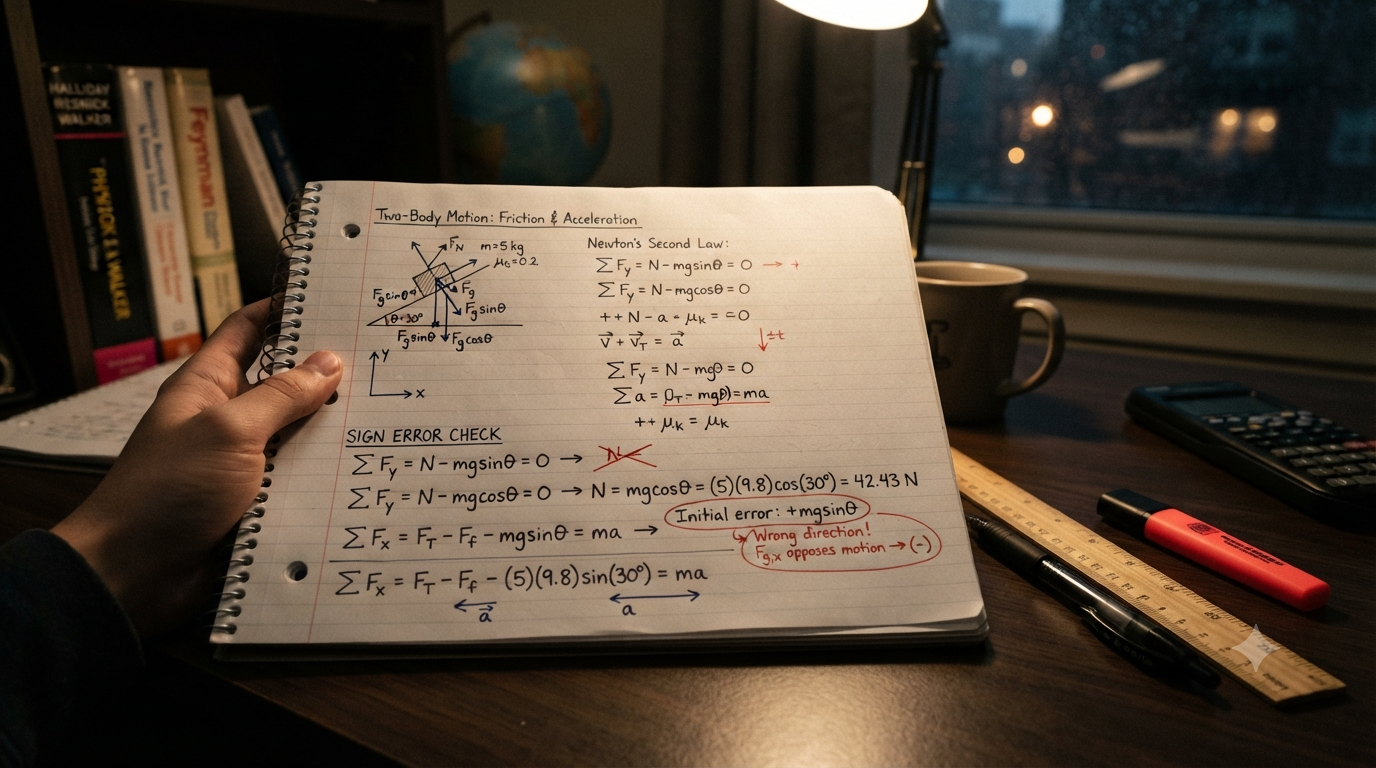
Physics calculations are not only about choosing the correct formula and putting numbers into it. The signs of physical quantities […]
Read MoreCommon Formulas of Salts in Chemistry

Salts are an important group of chemical compounds found in laboratories, industries, food, agriculture, medicines, and everyday materials. In chemistry, […]
Read MoreHow Charges Affect Chemical Formulas

Chemical formulas are a simple way to represent substances using symbols and numbers. A formula can tell us which elements […]
Read MoreHow Atomic Ratios Differ From Mass Ratios in Compounds
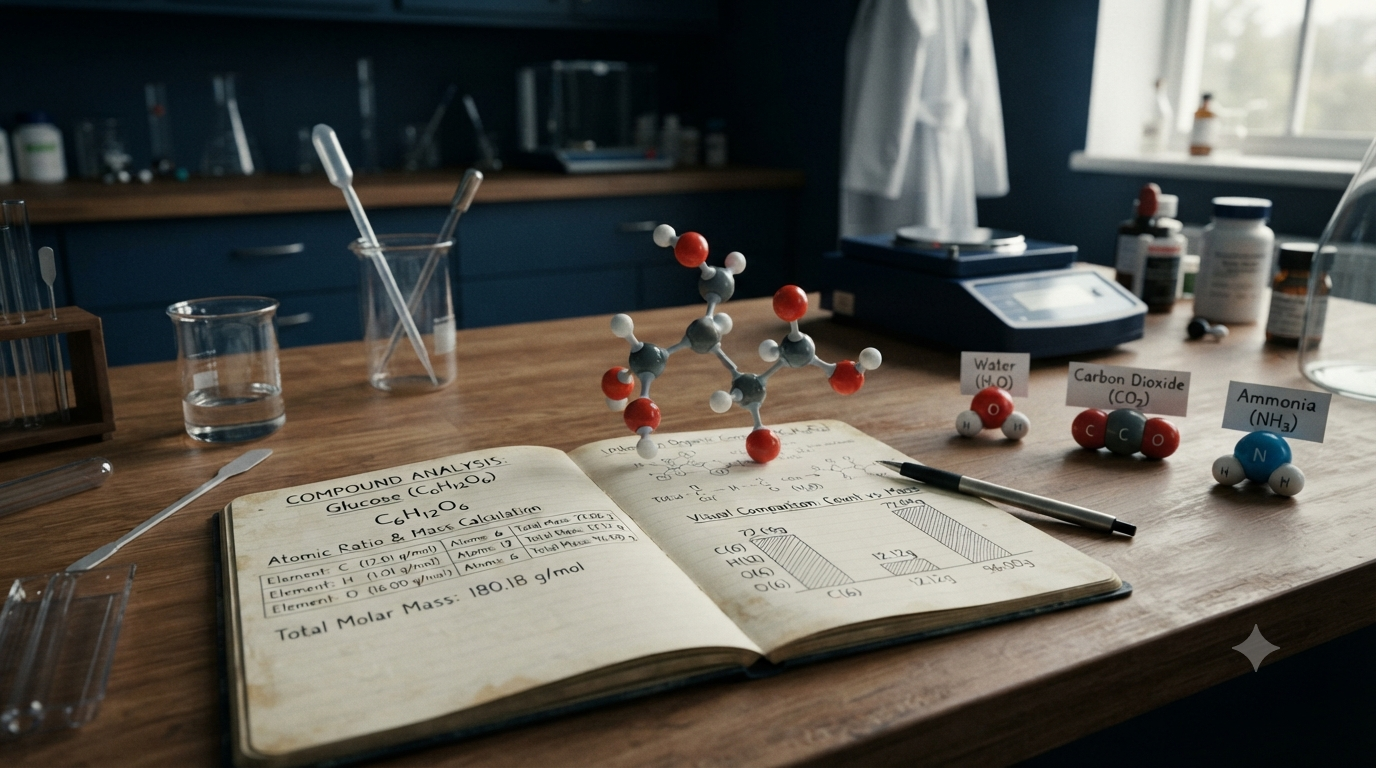
When we study chemical compounds, we often use ratios to describe how their elements are combined. Two important types of […]
Read MoreHow does physics connect mathematics with reality?
Physics is often described as the science of matter, energy, motion, space, and time. But behind almost every physical idea […]
Read MoreWhat Is an Empirical Formula?

An empirical formula is a simple way of representing the composition of a chemical compound. It shows the simplest whole-number […]
Read MoreHow to Use Chemical Formulas to Balance Chemical Equations
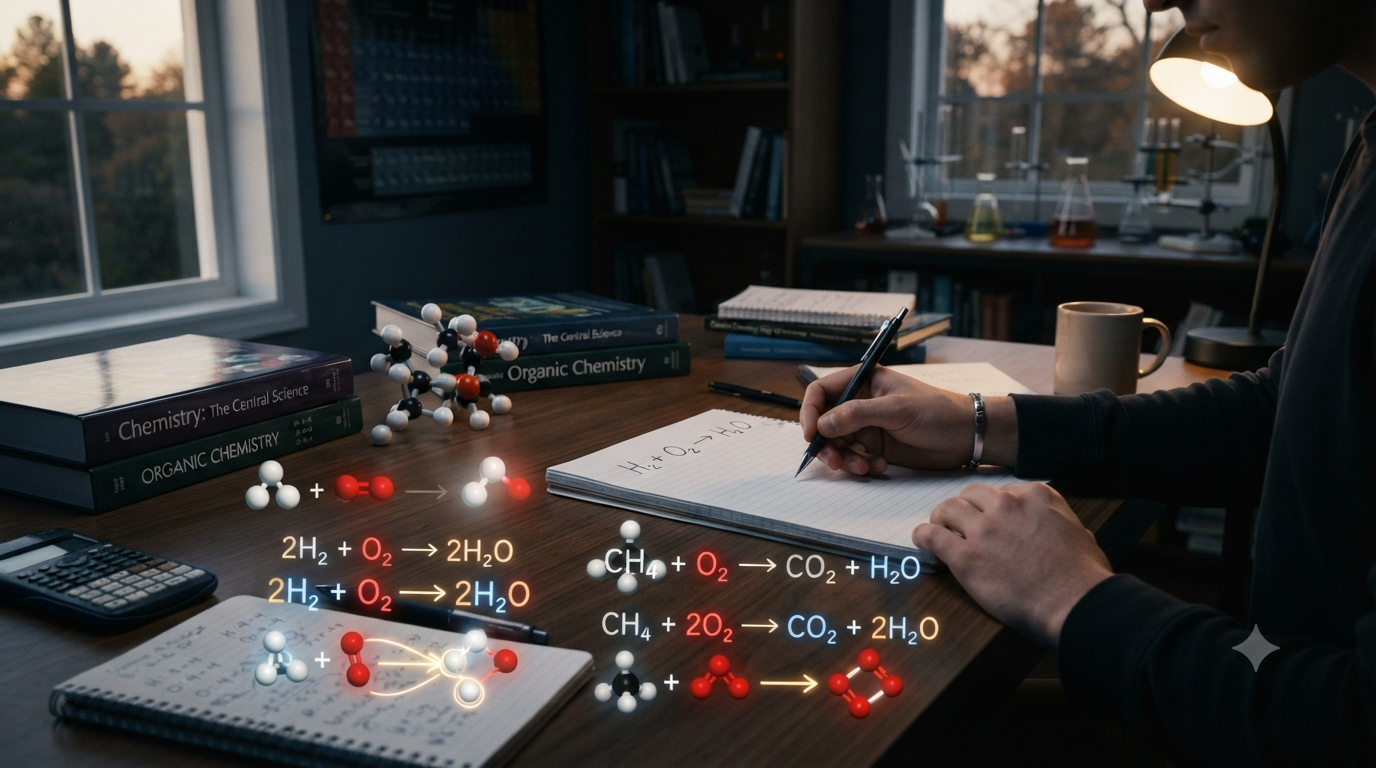
Chemical reactions describe how substances change into new substances. In chemistry, these changes are written using chemical equations. A chemical […]
Read MoreHow Are Physical Quantities Represented in Physics?
Physics is the science of describing how nature works. To study motion, forces, energy, temperature, electricity, and many other phenomena, […]
Read MoreWhat Is Density and How Is It Calculated?

Density is one of the most useful physical quantities in science. It helps us understand how much matter is packed […]
Read MoreHow to Understand Units in Physics Formulas

Physics formulas are more than mathematical expressions. They describe relationships between physical quantities, and units help us understand what those […]
Read MoreSI Base Units and Their Official Symbols

The International System of Units, known as the SI system, provides a common language for measuring physical quantities. Whether scientists […]
Read MoreHow Chemical Formulas Represent Fixed Composition
A chemical formula is much more than a short name for a substance. It gives important information about what a […]
Read MoreSI Base Units and Their Symbols Explained
Science depends on measurement. Whether scientists are studying the motion of a spacecraft, the temperature of a material, the mass […]
Read MoreSI Unit of Electric Current Ampere Explained

Electric current is one of the most important physical quantities in electricity and magnetism. Whenever electric charge moves through a […]
Read MoreHow Does Measurement Uncertainty Affect a Physics Experiment?
Every physics experiment involves measurement. We measure length, time, mass, temperature, voltage, current, speed, or other physical quantities to understand […]
Read MoreWhy the SI System Has Exactly Seven Base Units
When scientists measure the world, they need a common language for describing quantities such as time, length, mass, temperature, and […]
Read MoreWhat Are Physical Quantities in Physics?
Physics is the study of nature and the rules that describe how objects, matter, energy, space, and time behave. To […]
Read MoreHow to Count Atoms From a Chemical Formula

Chemical formulas provide a compact way to describe what a substance is made of. A formula tells us which elements […]
Read MoreCommon Formulas of Important Inorganic Compounds

Inorganic compounds are found everywhere around us, from table salt and baking soda to fertilizers, minerals, medicines, cleaning products, and […]
Read MoreCommon Mistakes When Writing Chemical Formulas

Chemical formulas are one of the simplest ways to represent substances in chemistry. A short formula can tell us which […]
Read MoreHow Are Derived Units Built From Fundamental Units?

Physics uses units to make measurements meaningful. Saying that a car travels at a speed of 20 does not tell […]
Read MoreWhat Is Physics? Definition, Meaning, Scope and Importance
Physics is one of the fundamental branches of science that helps us understand how the natural world works. From the […]
Read MoreWhy are chemical formulas important in chemistry?

Chemistry is the study of matter, its properties, composition, and the changes it undergoes. To understand and communicate these ideas […]
Read MoreHow can you count atoms from a chemical formula?

A chemical formula tells us much more than the name of a substance. It also gives information about the types […]
Read MoreWhat Are Physics Formulas and Why Are They Important?

Physics is the study of matter, energy, motion, forces, space, time, and the interactions that shape the natural world. To […]
Read MoreHow to Read and Understand Chemistry Formulas

Chemistry formulas may look like a collection of letters, numbers, and symbols, but they are actually a simple language used […]
Read MoreHow to Read Subscripts in Chemical Formulas
Chemical formulas are a simple way to represent substances using symbols and numbers. When you look at a formula such […]
Read MoreWhat Are Derived Units in Physics?
Physics uses measurements to describe everything from the motion of a car to the energy produced by a power plant. […]
Read MoreHow to Rearrange Physics Formulas Correctly

Physics formulas are often written in a particular form to make calculations easier, but the required form of a formula […]
Read More