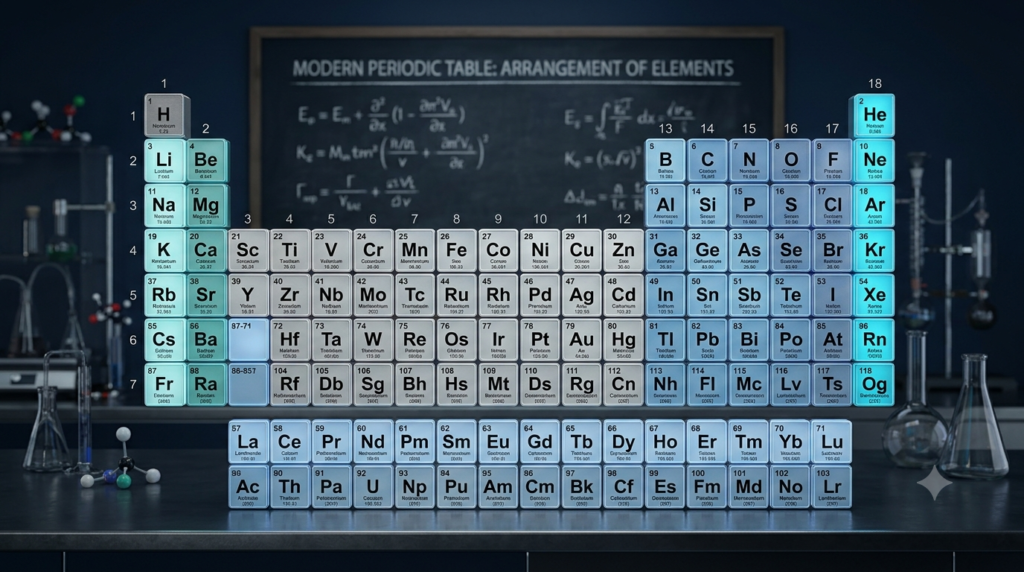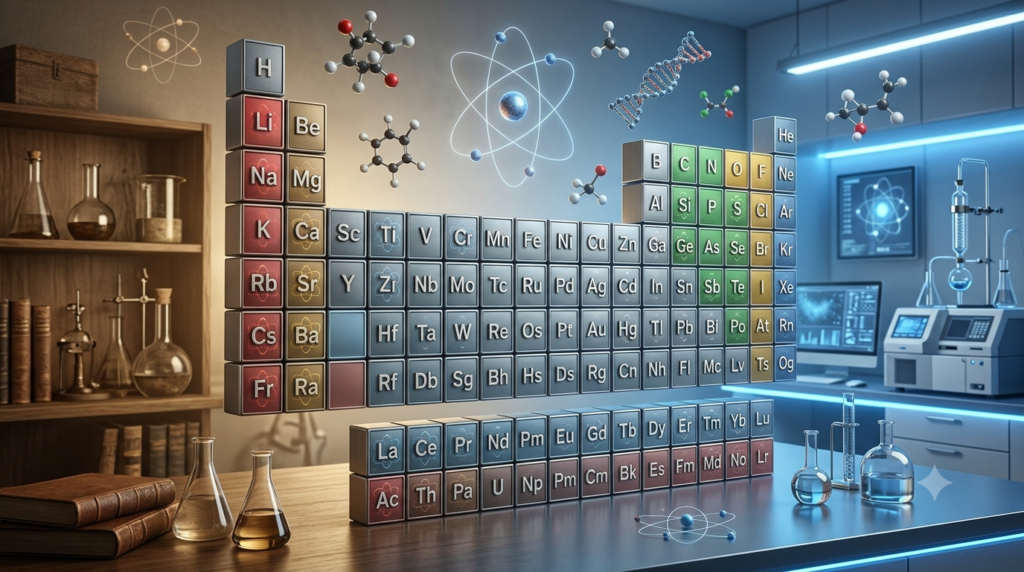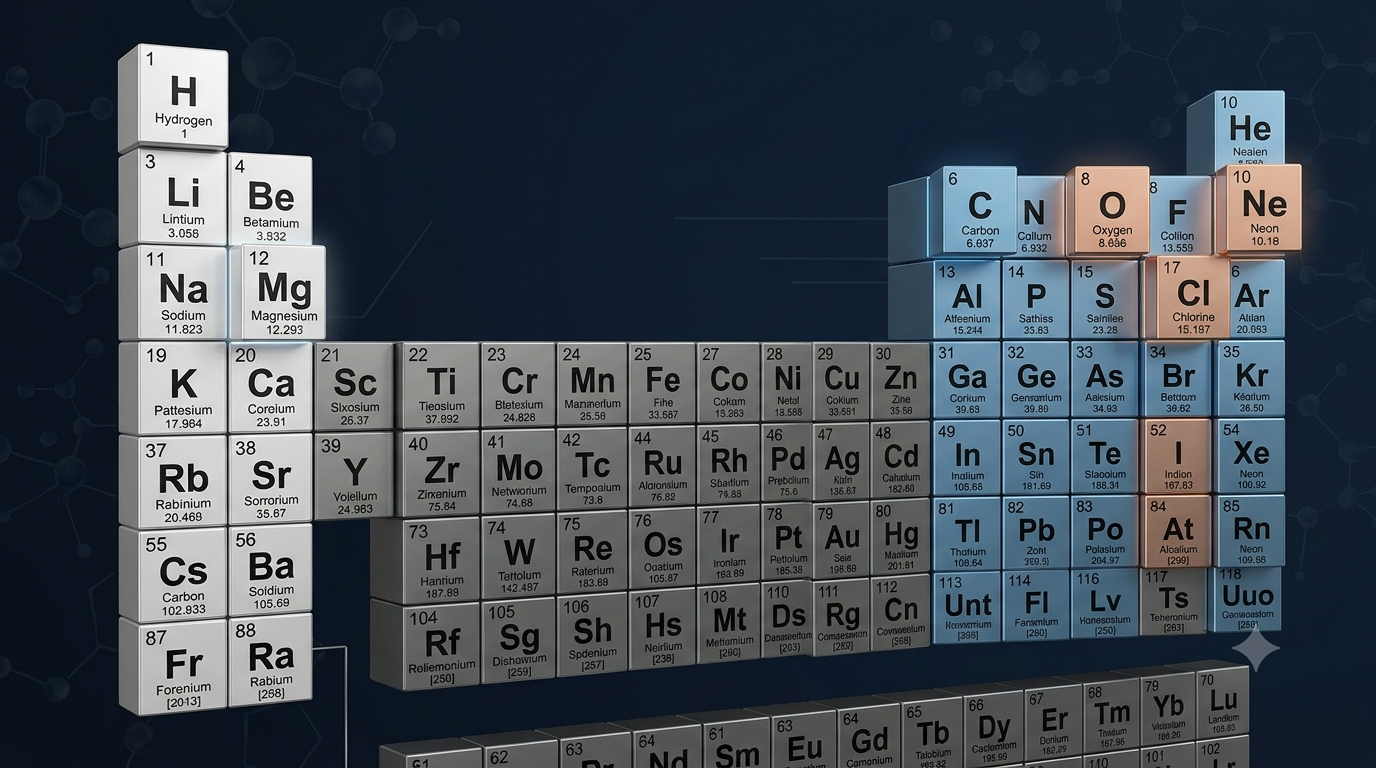
The periodic table is one of the most important tools in chemistry. It organizes all known chemical elements according to their atomic numbers and recurring chemical properties. Each element has a specific position in the periodic table, which provides useful information about its electronic configuration, chemical behaviour, and physical properties.
Among the different groups of elements, representative elements hold a particularly important place. They are also known as main-group elements and include the elements found in Groups 1, 2, and 13 to 18 of the periodic table. These elements display a wide variety of chemical properties and include metals, nonmetals, and metalloids.
Representative elements are involved in many natural processes and everyday applications. For example, oxygen is essential for respiration, carbon forms the foundation of organic compounds, sodium is important in biological functions, and silicon is widely used in electronic devices.
Understanding representative elements and their positions in the periodic table helps us understand how elements are classified and why they show different chemical properties.
What Are Representative Elements?
Representative elements are the chemical elements belonging to Groups 1, 2, and 13 to 18 of the modern periodic table. They are also called main-group elements because they occupy the two outermost sections of the periodic table, excluding the transition elements in the middle.
The chemical properties of representative elements are mainly influenced by the electrons present in their outermost shell, known as valence electrons.
These elements include:
Alkali metals
Alkaline earth metals
Boron group elements
Carbon group elements
Nitrogen group elements
Oxygen group elements
Halogens
Noble gases
Representative elements are found in both the s-block and p-block of the periodic table.
The s-block contains Groups 1 and 2, while the p-block contains Groups 13 to 18.
Position of Representative Elements in the Periodic Table
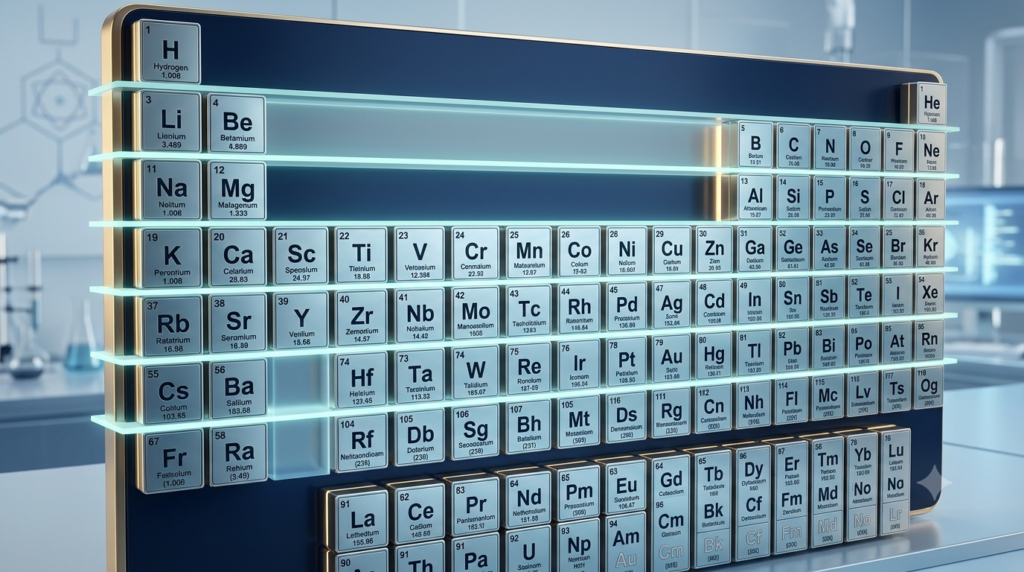
The modern periodic table is divided into 18 vertical columns called groups and 7 horizontal rows called periods.
Representative elements occupy the following groups:
Group 1: Alkali metals
Group 2: Alkaline earth metals
Groups 13–18: p-block elements
The first two groups belong to the s-block because their last electron enters an s-orbital. Groups 13 to 18 belong to the p-block because their last electron generally enters a p-orbital.
Helium is an exception in terms of electronic configuration. Although it has an s² configuration, it is placed in Group 18 because its outermost shell is completely filled and it shows the chemical characteristics of noble gases.
Representative Elements in the s-Block
The s-block consists of elements in which the last electron enters the s-orbital of the outermost shell.
It includes Group 1 and Group 2 elements.
Group 1 – Alkali Metals
Group 1 contains the following elements:
Hydrogen (H)
Lithium (Li)
Sodium (Na)
Potassium (K)
Rubidium (Rb)
Caesium (Cs)
Francium (Fr)
Hydrogen is placed in Group 1 because it has one electron in its outermost shell. However, it is a nonmetal and has properties different from those of alkali metals.
The remaining elements in Group 1 are called alkali metals. They have one valence electron and generally form positive ions with a +1 charge.
Their general outer electronic configuration is:
ns¹
Alkali metals are highly reactive, especially when they come into contact with water. Their reactivity generally increases as we move down the group.
Group 2 – Alkaline Earth Metals
Group 2 contains:
Beryllium (Be)
Magnesium (Mg)
Calcium (Ca)
Strontium (Sr)
Barium (Ba)
Radium (Ra)
These elements have two electrons in their outermost s-orbital.
Their general outer electronic configuration is:
ns²
Alkaline earth metals generally lose two electrons to form positive ions with a +2 charge.
They are reactive metals, although they are generally less reactive than Group 1 metals.
Magnesium is used in lightweight alloys and fireworks, while calcium is essential for healthy bones and teeth.
Representative Elements in the p-Block
The p-block contains elements from Groups 13 to 18.
In these elements, the last electron enters a p-orbital. Their properties vary considerably, and the block includes metals, nonmetals, metalloids, and noble gases.
Group 13 – Boron Group
Group 13 contains:
Boron (B)
Aluminium (Al)
Gallium (Ga)
Indium (In)
Thallium (Tl)
Nihonium (Nh)
The general outer electronic configuration of these elements is:
ns² np¹
They have three valence electrons and commonly show a +3 oxidation state, although heavier members can also show other oxidation states.
Boron is a metalloid, while most other members are metals.
Aluminium is widely used in construction, transportation, packaging, and electrical applications because it is lightweight and corrosion-resistant.
Group 14 – Carbon Group
Group 14 contains:
Carbon (C)
Silicon (Si)
Germanium (Ge)
Tin (Sn)
Lead (Pb)
Flerovium (Fl)
Their general outer electronic configuration is:
ns² np²
These elements have four valence electrons.
Carbon is particularly important because it forms a huge number of compounds and is the basic element of organic chemistry. Silicon is widely used in computer chips, solar cells, and semiconductor technology.
The group includes nonmetals, metalloids, and metals.
Group 15 – Nitrogen Group
Group 15 contains:
Nitrogen (N)
Phosphorus (P)
Arsenic (As)
Antimony (Sb)
Bismuth (Bi)
Moscovium (Mc)
Their general outer electronic configuration is:
ns² np³
These elements have five valence electrons and commonly show oxidation states such as −3, +3, and +5, depending on the element and compound.
Nitrogen is an essential component of proteins and nucleic acids. Phosphorus is important in DNA, RNA, ATP, and fertilizers.
Group 16 – Oxygen Group
Group 16 is also known as the chalcogen group.
It contains:
Oxygen (O)
Sulfur (S)
Selenium (Se)
Tellurium (Te)
Polonium (Po)
Livermorium (Lv)
Their general outer electronic configuration is:
ns² np⁴
These elements have six valence electrons and commonly show a −2 oxidation state, although other oxidation states are also possible.
Oxygen is essential for respiration and combustion. Sulfur is used in the production of sulfuric acid, fertilizers, and several industrial chemicals.
Group 17 – Halogens
Group 17 contains:
Fluorine (F)
Chlorine (Cl)
Bromine (Br)
Iodine (I)
Astatine (At)
Tennessine (Ts)
Their general outer electronic configuration is:
ns² np⁵
Halogens have seven valence electrons. They generally gain one electron to form negative ions with a −1 charge.
They are highly reactive nonmetals and commonly form salts when they react with metals.
For example, sodium reacts with chlorine to produce sodium chloride, commonly known as table salt.
Fluorine is used in the manufacture of certain chemical compounds, chlorine is used in water disinfection, and iodine is important in human thyroid function.
Group 18 – Noble Gases
Group 18 contains:
Helium (He)
Neon (Ne)
Argon (Ar)
Krypton (Kr)
Xenon (Xe)
Radon (Rn)
Oganesson (Og)
Their outer electronic configuration is generally:
ns² np⁶
Helium is an exception because its configuration is 1s².
Noble gases have completely filled outermost electron shells. As a result, they generally show very low chemical reactivity compared with most other elements.
Helium is used in balloons and cooling applications, neon is used in lighting, and argon is used in welding and certain industrial processes.
General Characteristics of Representative Elements
Representative elements show a wide range of physical and chemical properties. However, some common characteristics help distinguish them from transition elements.
1. Presence in the s-Block and p-Block
Representative elements occupy Groups 1, 2, and 13 to 18. Their last electron enters either an s-orbital or a p-orbital.
This electronic arrangement determines many of their chemical properties.
2. Different Numbers of Valence Electrons
The number of valence electrons generally increases from left to right across a period.
For example:
Group 1 elements have one valence electron.
Group 2 elements have two valence electrons.
Group 13 elements have three valence electrons.
Group 14 elements have four valence electrons.
Group 15 elements have five valence electrons.
Group 16 elements have six valence electrons.
Group 17 elements have seven valence electrons.
Group 18 elements generally have eight valence electrons, except helium, which has two.
This pattern helps explain why elements in the same group often show similar chemical properties.
3. Metals, Nonmetals, and Metalloids
Representative elements include all three major classifications of elements.
Metals: Sodium, magnesium, aluminium, and calcium.
Nonmetals: Carbon, nitrogen, oxygen, and chlorine.
Metalloids: Boron, silicon, germanium, arsenic, antimony, and tellurium.
This variety makes the representative elements important in numerous chemical and technological applications.
4. Formation of Ions and Chemical Compounds
Many representative elements form ions by losing or gaining electrons to achieve a more stable electronic configuration.
For example:
Sodium loses one electron to form Na⁺.
Magnesium loses two electrons to form Mg²⁺.
Chlorine gains one electron to form Cl⁻.
Oxygen gains two electrons to form O²⁻.
Representative elements also form covalent compounds by sharing electrons. Carbon dioxide (CO₂), water (H₂O), and methane (CH₄) are common examples.
5. Periodic Trends
Representative elements show several important periodic trends, including atomic radius, ionization energy, electronegativity, and metallic character.
These trends help explain how the properties of elements change across periods and down groups.
Relationship Between Group Number and Valence Electrons
One of the most useful features of representative elements is the relationship between their group numbers and valence electrons.
For Groups 1 and 2, the number of valence electrons corresponds directly to the group number.
For Groups 13 to 18, the number of valence electrons can generally be found by subtracting 10 from the group number.
For example:
Group 1: 1 valence electron
Group 2: 2 valence electrons
Group 13: 3 valence electrons
Group 14: 4 valence electrons
Group 15: 5 valence electrons
Group 16: 6 valence electrons
Group 17: 7 valence electrons
Group 18: 8 valence electrons
The exception is helium, which has two valence electrons.
This relationship is particularly useful when studying electronic configurations, chemical bonding, and the formation of ions.
Difference Between Representative Elements and Transition Elements
Representative elements and transition elements are two major categories of elements in the periodic table. They differ mainly in their electronic configurations and positions.
| Basis | Representative Elements | Transition Elements |
|---|---|---|
| Position | Groups 1, 2, and 13–18 | Groups 3–12 |
| Blocks | s-block and p-block | d-block |
| Last electron enters | s or p orbital | d orbital |
| Valence electrons | Usually in outermost s and p orbitals | Involve d and s electrons |
| Oxidation states | Often more predictable within groups | Frequently show variable oxidation states |
| Coloured compounds | Common in some elements, but less characteristic | Commonly form coloured compounds |
| Examples | Na, Mg, C, O, Cl | Fe, Cu, Ni, Cr |
The differences in electronic configuration explain why these two categories show different chemical behaviours.
Importance and Applications of Representative Elements
Representative elements play an important role in nature, industry, technology, and biological systems.
1. Importance in Living Organisms
Several representative elements are essential for life.
Carbon forms the basic framework of organic molecules.
Oxygen is required for aerobic respiration.
Hydrogen is present in water and many biological compounds.
Nitrogen is found in proteins and nucleic acids.
Phosphorus is important in DNA, RNA, and ATP.
Calcium helps maintain bones and teeth.
Without these elements, many essential biological processes would not be possible.
2. Applications in Industry
Many representative elements are used in manufacturing and industrial processes.
Aluminium is used to manufacture vehicles, aircraft components, and packaging materials. Silicon is used in semiconductor manufacturing. Sulfur is an important raw material for producing sulfuric acid.
Sodium compounds are used in the chemical industry, while chlorine is used in the production of disinfectants and several industrial chemicals.
3. Applications in Technology
Representative elements are essential in modern technology.
Silicon is one of the most important materials used in computer processors, electronic circuits, and solar panels.
Germanium is used in certain semiconductor and optical applications. Noble gases such as argon are used in specialized lighting and industrial processes.
4. Importance in Agriculture
Several representative elements are essential for plant growth.
Nitrogen, phosphorus, and potassium are major plant nutrients. Although potassium belongs to Group 1, nitrogen and phosphorus belong to Groups 15 and 15?
Nitrogen and phosphorus are representative elements, while potassium is also a representative element.
These elements are commonly supplied through fertilizers to improve soil fertility and support agricultural production.
Why Are Representative Elements Important in Chemistry?
Representative elements are important because they provide a foundation for understanding the relationship between atomic structure and chemical properties.
Their positions in the periodic table help chemists predict:
The number of valence electrons in an element.
The types of ions an element may form.
Common oxidation states.
Chemical bonding behaviour.
Trends in atomic size and electronegativity.
The reactivity of elements.
Similarities between elements in the same group.
For example, sodium and potassium belong to Group 1. Both have one valence electron and commonly form +1 ions. Similarly, fluorine and chlorine belong to Group 17 and commonly gain one electron to form −1 ions.
These similarities demonstrate how the periodic table can be used to understand and predict chemical behaviour.
Conclusion
Representative elements are an important group of chemical elements found in Groups 1, 2, and 13 to 18 of the modern periodic table. They include the s-block and p-block elements and consist of metals, nonmetals, and metalloids.
Their chemical properties are strongly influenced by the number of valence electrons in their outermost shells. This is why elements belonging to the same group often show similar chemical behaviour.
From essential biological functions to industrial manufacturing and modern electronic technology, representative elements have applications in almost every area of science and everyday life. Understanding their positions, electronic configurations, and general characteristics provides a strong foundation for studying periodic classification and chemical reactions.
FAQs
1. What are representative elements?
Representative elements are the chemical elements present in Groups 1, 2, and 13 to 18 of the modern periodic table. They are also known as main-group elements. These elements include both s-block and p-block elements and consist of metals, nonmetals, and metalloids. Their chemical properties are mainly influenced by the electrons present in their outermost shell, called valence electrons. Representative elements play important roles in biological processes, industrial applications, and modern technology. Examples include sodium, magnesium, carbon, nitrogen, oxygen, chlorine, and neon.
2. Why are representative elements called main-group elements?
Representative elements are called main-group elements because they occupy the main sections of the periodic table, specifically Groups 1, 2, and 13 to 18. They are located in the s-block and p-block, on the left and right sides of the periodic table. Their chemical properties are largely determined by their outermost electrons. These elements show predictable patterns in valence electrons, oxidation states, and chemical reactivity. They are important for understanding the basic principles of periodic classification and chemical bonding.
3. Where are representative elements located in the periodic table?
Representative elements are located in Groups 1, 2, and 13 to 18 of the modern periodic table. Groups 1 and 2 belong to the s-block, while Groups 13 to 18 belong to the p-block. These elements are found on the left and right sides of the periodic table, with transition elements occupying the central d-block. Hydrogen is placed in Group 1, while helium is placed in Group 18 because of its noble gas properties.
4. Which blocks of the periodic table contain representative elements?
Representative elements are found in two blocks of the periodic table: the s-block and the p-block. The s-block includes Groups 1 and 2, where the last electron enters an s-orbital. The p-block includes Groups 13 to 18, where the last electron generally enters a p-orbital. These blocks contain elements with different chemical and physical properties, including metals, nonmetals, metalloids, and noble gases. Together, they form the main-group elements of the periodic table.
5. How many valence electrons do representative elements have?
Representative elements generally have one to eight valence electrons. Group 1 elements have one, Group 2 elements have two, and the number increases across the p-block from three in Group 13 to eight in Group 18. Helium is an exception because it has only two electrons in its outermost shell. The number of valence electrons helps determine the chemical properties, bonding behaviour, and common oxidation states of these elements. Elements with the same number of valence electrons often show similar chemical properties.
6. What is the difference between s-block and p-block representative elements?
The main difference between s-block and p-block representative elements is the type of orbital that receives the last electron. In s-block elements, the last electron enters an s-orbital, while in p-block elements, it enters a p-orbital. The s-block contains Groups 1 and 2, whereas the p-block contains Groups 13 to 18. Both blocks include representative elements, but they show different electronic configurations and chemical properties. For example, sodium belongs to the s-block, while carbon belongs to the p-block.
7. Are all representative elements metals?
No, all representative elements are not metals. Representative elements include metals, nonmetals, and metalloids. For example, sodium, magnesium, and aluminium are metals, while carbon, oxygen, nitrogen, and chlorine are nonmetals. Silicon, germanium, and boron are examples of metalloids. Noble gases such as helium, neon, and argon are also representative elements. This variety of elements makes the s-block and p-block important in chemistry because they demonstrate a wide range of physical and chemical properties.
8. Why do elements in the same group show similar chemical properties?
Elements in the same group generally show similar chemical properties because they have the same number of valence electrons and similar outer electronic configurations. Valence electrons participate in chemical bonding and determine how an element reacts with other substances. For example, sodium and potassium belong to Group 1 and each has one valence electron. Both commonly lose this electron to form positive ions with a +1 charge. Similarly, fluorine and chlorine belong to Group 17 and commonly gain one electron to form negative ions.
9. What is the difference between representative elements and transition elements?
Representative elements belong to Groups 1, 2, and 13 to 18, while transition elements mainly occupy Groups 3 to 12 of the periodic table. Representative elements are found in the s-block and p-block, whereas transition elements belong to the d-block. Their electronic configurations are also different. Representative elements generally have their valence electrons in s and p orbitals, while transition elements involve d-orbitals in their characteristic chemical behaviour. Transition elements commonly show variable oxidation states and often form coloured compounds.
10. What are the uses of representative elements in everyday life?
Representative elements have many applications in everyday life, industry, and technology. Oxygen supports respiration, while carbon is essential for organic compounds and living organisms. Sodium and potassium are important for several biological functions. Calcium helps maintain healthy bones and teeth. Silicon is widely used in computer chips and solar panels. Aluminium is used in vehicles, buildings, and packaging materials. Chlorine is used in water disinfection, while helium is used in balloons and specialized cooling applications. These examples demonstrate the importance of representative elements in modern life.