The cell is the basic structural and functional unit of life. Every living organism, from a single-celled bacterium to a complex human being, depends on cells to perform essential activities such as obtaining energy, producing proteins, growing, and reproducing. In most eukaryotic cells, the nucleus plays a central role in coordinating these activities. It contains most of the cell’s genetic material, which carries the instructions needed for growth, development, maintenance, and reproduction.
The nucleus is often described as the control center of the cell because it regulates many important cellular processes by controlling how genetic information is used. It helps determine which proteins a cell produces, when a cell grows, and how it responds to changes in its environment. Understanding the nucleus is essential for learning how cells function and how living organisms maintain their structure and carry out life processes.
What Is the Nucleus?
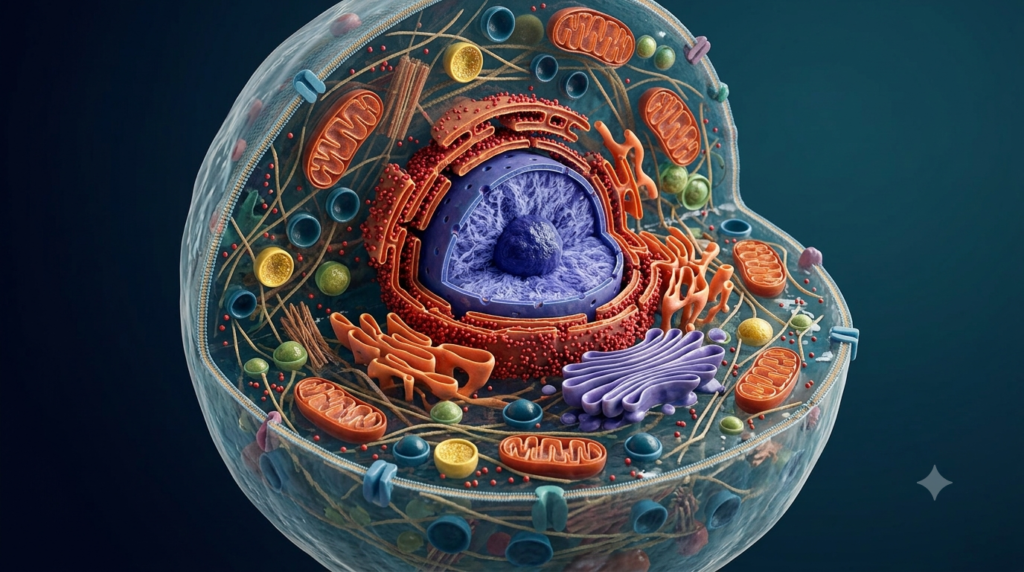
The nucleus is a membrane-bound organelle found in most eukaryotic cells, including those of animals, plants, fungi, and many microorganisms. It contains DNA, or deoxyribonucleic acid, which stores the genetic instructions required for the cell’s activities.
The nucleus is generally one of the most prominent structures inside a eukaryotic cell. In many animal cells, it is approximately spherical or oval, although its shape and position vary depending on the cell type. For example, a skeletal muscle cell may contain multiple nuclei, while a mature human red blood cell does not contain a nucleus.
The primary function of the nucleus is to store and protect genetic information and regulate its use. DNA contains genes, which provide instructions for making functional products such as proteins and certain types of RNA. These products influence the structure, behavior, and activities of the cell.
Although the nucleus has an important controlling role, it does not perform every cellular activity directly. Instead, it regulates many processes by controlling gene expression, while other organelles carry out specialized functions.
Structure of the Nucleus
The nucleus contains several important structures that work together to protect genetic material and coordinate cellular activities.
Nuclear Envelope
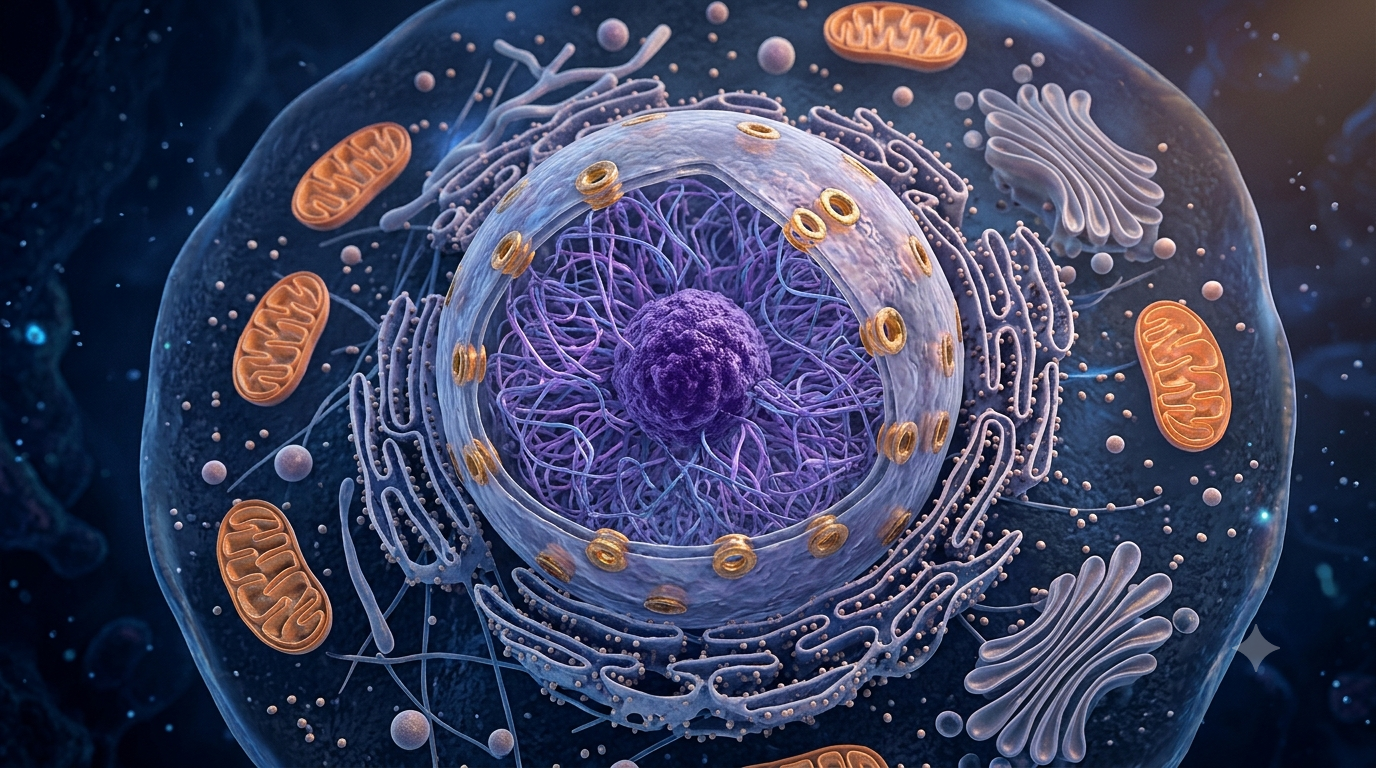
The nuclear envelope is a double membrane that surrounds the nucleus and separates its contents from the cytoplasm. It protects the genetic material and helps maintain a suitable environment for processes involving DNA and RNA.
The outer membrane of the nuclear envelope is continuous with the endoplasmic reticulum in many cells. The space between the two membranes is called the perinuclear space.
The nuclear envelope also helps regulate the movement of substances between the nucleus and the cytoplasm. This separation allows the cell to control access to its genetic information and organize different cellular processes.
Nuclear Pores
Nuclear pores are specialized openings in the nuclear envelope. They form gateways through which selected molecules move between the nucleus and the cytoplasm.
Important molecules that pass through nuclear pores include messenger RNA, proteins required for DNA-related processes, and regulatory molecules. For example, messenger RNA carries genetic instructions from the nucleus to ribosomes in the cytoplasm, where proteins are produced.
Nuclear pores do not allow every substance to pass freely. Their transport systems help ensure that molecules reach the correct location at the appropriate time.
Nucleoplasm
The nucleoplasm is the fluid-like material inside the nucleus. It contains water, ions, enzymes, nucleotides, proteins, and other substances required for nuclear activities.
Processes such as DNA replication and transcription depend on molecules present in the nucleoplasm. It provides an environment in which genetic material and associated proteins can function efficiently.
Chromatin and Chromosomes
Chromatin consists of DNA associated with proteins, particularly histones. These proteins help package DNA into a compact and organized structure inside the nucleus.
When a cell is not dividing, much of its genetic material exists as chromatin. Before cell division, the chromatin becomes more condensed, forming visible chromosomes under a microscope.
Chromosomes carry genes that influence inherited characteristics and cellular functions. The arrangement and organization of DNA help ensure that genetic information can be accessed when needed and accurately distributed during cell division.
Nucleolus
The nucleolus is a dense region inside the nucleus that is mainly involved in producing ribosomal RNA and assembling ribosomal subunits.
Ribosomes are essential for protein synthesis. They read messenger RNA and join amino acids in the correct sequence to form proteins.
Although the nucleolus does not produce complete proteins itself, it contributes to the formation of the cellular machinery required for protein production. This makes it important for growth, repair, and many other cellular activities.
How Does the Nucleus Control Cell Activities?
The nucleus controls many cellular activities primarily through the information stored in DNA. Genes contain instructions that cells use to produce functional RNA molecules and proteins. These products influence nearly every aspect of cell behavior.
1. Regulation of Gene Expression
Gene expression is the process through which information in a gene is used to produce a functional product, such as a protein or RNA molecule.
Not all genes are active in every cell at the same time. Instead, cells regulate which genes are switched on or off according to their needs.
For example, a pancreatic cell that produces digestive enzymes or hormones uses a different set of active genes from a nerve cell that transmits electrical signals. Both cells contain largely the same genetic information, but they use different portions of it.
By regulating gene expression, the nucleus helps cells develop specialized structures and perform particular functions. This regulation also allows cells to respond to signals from other cells and changes in their surroundings.
2. Control of Protein Synthesis
Proteins perform a wide range of functions in living organisms. They act as enzymes, provide structural support, transport substances, transmit signals, and participate in immune defense.
The nucleus helps control protein synthesis by regulating the production of messenger RNA from DNA. This process is called transcription.
During transcription, the information in a specific gene is copied into an RNA molecule. In eukaryotic cells, the RNA usually undergoes processing before the mature messenger RNA leaves the nucleus through a nuclear pore.
Once in the cytoplasm, messenger RNA is read by ribosomes during translation. Transfer RNA brings amino acids to the ribosome, which joins them to form a protein according to the instructions in the messenger RNA.
Therefore, the nucleus influences which proteins are produced, although the actual assembly of most proteins occurs outside the nucleus.
3. Control of Cell Growth
Cells need to grow to maintain their functions, replace damaged components, and prepare for division. Growth requires the production of proteins, lipids, nucleic acids, and other cellular materials.
The nucleus contributes to this process by regulating genes involved in metabolism, protein production, and the cell cycle. It helps coordinate the production of molecules required for growth and maintenance.
For example, when a cell receives suitable growth signals, certain genes become more active. Their products help the cell increase its size and prepare for the processes required before division.
However, cell growth also depends on the availability of nutrients, energy, and external signals. The nucleus works as part of a larger regulatory system rather than acting independently.
4. Regulation of Cell Division
Cell division is necessary for growth, tissue repair, and reproduction. Before a cell divides, it generally needs to copy its DNA so that the resulting daughter cells receive the appropriate genetic information.
The nucleus contains the chromosomes that must be accurately replicated and distributed during cell division.
The cell cycle includes several stages, commonly grouped into interphase and the division phase. During interphase, the cell grows, performs its normal functions, and replicates its DNA. During mitosis, the duplicated chromosomes are separated into two sets.
Regulatory proteins and checkpoints help determine whether the cell is ready to progress through the cell cycle. These systems monitor conditions such as DNA integrity and successful DNA replication.
If serious DNA damage is detected, the cell may pause the cycle to allow repair. If the damage cannot be repaired, the cell may activate programmed cell death, known as apoptosis. These protective mechanisms help prevent the multiplication of cells carrying dangerous genetic errors.
5. Storage and Transmission of Genetic Information
DNA stores the genetic information needed to build and maintain an organism. Genes influence characteristics such as blood group, certain physical traits, and many biological functions, although most complex characteristics depend on interactions among multiple genes and environmental factors.
In eukaryotic cells, most DNA is located in the nucleus. Before cell division, this DNA is replicated so that genetic information can be passed to daughter cells.
During the formation of reproductive cells, specialized cell division called meiosis reduces the chromosome number by half. This allows fertilization to restore the usual chromosome number in the resulting organism.
The accurate storage and transmission of genetic information are essential for continuity between generations. Changes in DNA, known as mutations, can sometimes affect how cells function and how traits are inherited.
6. Response to Internal and External Signals
Cells constantly receive signals from their surroundings. These signals may indicate that nutrients are available, that tissue repair is required, or that a cell should change its activity.
Many signaling pathways ultimately influence gene expression in the nucleus. Regulatory proteins may enter the nucleus and bind to specific regions of DNA, increasing or decreasing the activity of particular genes.
For example, a hormone may bind to a receptor and trigger a series of reactions inside a cell. The resulting signal can influence the activity of genes involved in metabolism, growth, or other physiological processes.
Through these mechanisms, the nucleus helps cells adapt to changing conditions and coordinate their behavior with the needs of the organism.
The Role of the Nucleus in Different Types of Cells
The importance of the nucleus becomes clearer when we examine how it supports different cell types.
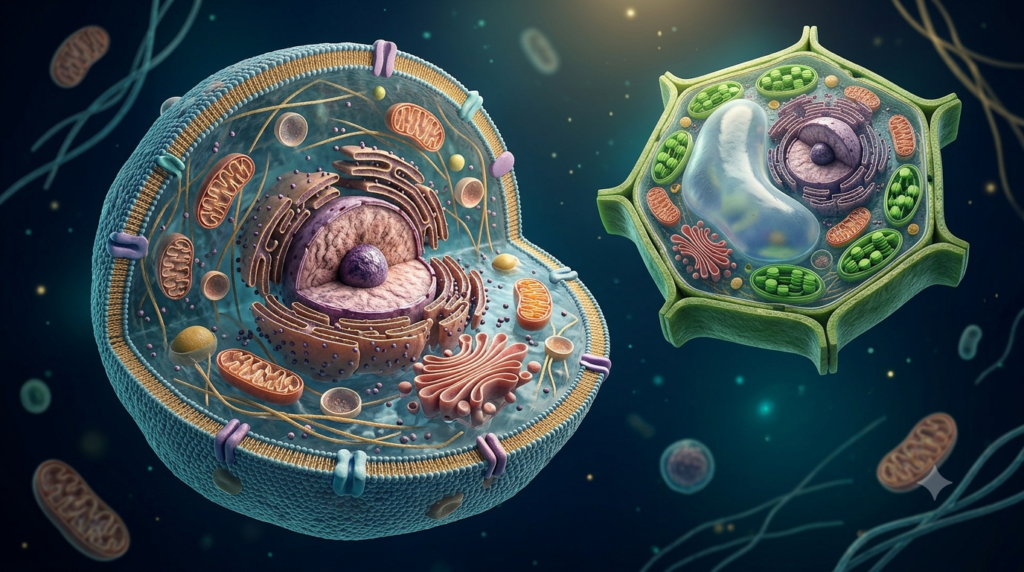
Animal Cells
In animal cells, the nucleus regulates gene expression, supports cell growth, and coordinates processes involved in tissue maintenance and repair.
For example, skin cells use genetic instructions to produce proteins that help form and maintain the skin’s protective structure. Immune cells activate specific genes to produce molecules needed to recognize and respond to harmful microorganisms.
Although these cells contain similar genetic information, differences in gene expression allow them to perform distinct roles.
Plant Cells
Plant cells also contain nuclei that regulate growth, development, and responses to environmental conditions.
The nucleus helps control the production of proteins involved in photosynthesis, water regulation, and the development of plant tissues. It also participates in coordinating responses to factors such as light, temperature, and water availability.
However, photosynthesis itself occurs in chloroplasts, not in the nucleus. The nucleus supplies genetic instructions for many proteins needed by the plant, while chloroplasts carry out the main reactions that convert light energy into chemical energy.
Specialized Cells
As cells develop, they often become specialized for particular functions. This process is known as cell differentiation.
For example, nerve cells develop structures suited for communication, while muscle cells produce proteins that enable contraction. Many mature specialized cells retain their nuclei, which continue to regulate essential activities and maintain cellular components.
Some specialized cells have unusual nuclear arrangements. Skeletal muscle fibers contain multiple nuclei, while mature human red blood cells lose their nuclei during development. Without a nucleus, these red blood cells cannot divide or replace many damaged cellular components, which contributes to their limited lifespan.
What Happens When the Nucleus Does Not Function Properly?
Proper nuclear function is essential for maintaining healthy cells. Damage to DNA or errors in the systems that regulate gene expression can interfere with normal cellular activities.
Genetic Mutations
A mutation is a change in the DNA sequence. Some mutations have little or no effect, while others alter the function of important proteins or regulatory molecules.
Mutations may occur naturally during DNA replication or result from exposure to certain environmental factors. Cells have DNA repair mechanisms that correct many forms of damage, but some changes remain.
Depending on the affected gene and the type of cell, mutations may contribute to inherited disorders, altered cell function, or the development of diseases.
Uncontrolled Cell Division
The nucleus contains DNA and participates in regulatory systems that help control the cell cycle. If genes responsible for cell growth and division become altered, cells may begin dividing when they should stop.
The accumulation of such changes can contribute to cancer. Cancer is a complex disease involving genetic and regulatory alterations, interactions with surrounding tissues, and other biological factors.
Not every nuclear abnormality causes cancer, but maintaining DNA integrity and proper cell-cycle regulation is important for reducing the risk of uncontrolled cell growth.
Problems With Protein Production
If gene expression or RNA processing is disrupted, a cell may produce insufficient amounts of particular proteins or produce abnormal versions of them.
Because proteins perform essential structural and chemical functions, these problems can affect metabolism, communication, growth, and tissue maintenance.
The consequences depend on which genes are affected and how strongly their products influence cellular function.
Why Is the Nucleus Important for Life?
The nucleus is important because it helps preserve the genetic instructions that living cells need to function, grow, and reproduce. It provides a central location for storing DNA and coordinating many processes involved in using that information.
Its activities support the formation of proteins, the development of specialized cells, and the accurate transmission of genetic material during cell division. It also helps cells respond to internal signals and environmental changes by regulating gene expression.
The nucleus does not work alone. It interacts with other cellular structures, including ribosomes, mitochondria, the endoplasmic reticulum, and the cytoplasm. Together, these structures enable cells to obtain energy, produce essential substances, remove waste, and maintain their internal conditions.
The relationship between the nucleus and the rest of the cell demonstrates that life depends on coordination among specialized structures. The nucleus supplies and regulates genetic instructions, while other cellular components carry out many of the activities directed by those instructions.
Conclusion
The nucleus is a vital organelle in most eukaryotic cells because it stores genetic information and regulates how that information is used. Through gene expression, it influences protein production, cell growth, cell division, and the development of specialized cellular functions. Its nuclear envelope protects the genetic material, nuclear pores control the movement of molecules, chromatin organizes DNA, and the nucleolus helps produce ribosomal components.
Although the nucleus is often called the control center of the cell, its functions depend on continuous cooperation with other organelles and regulatory systems. When the nucleus functions properly, cells can maintain their activities, respond to signals, and pass genetic information to new cells. Understanding the nucleus therefore provides a foundation for understanding cell biology, inheritance, growth, development, and many processes essential to life.
FAQs
1. What is the nucleus of a cell?
The nucleus is a membrane-bound organelle found in most eukaryotic cells. It contains most of the cell’s genetic material, called DNA, which carries instructions for growth, development, maintenance, and reproduction. The nucleus regulates how this genetic information is used and helps coordinate many cellular activities. It influences protein production, cell growth, and cell division by controlling gene expression. The nucleus is surrounded by a double membrane called the nuclear envelope, which protects its contents. Because it regulates many essential processes, the nucleus is commonly described as the control center of a eukaryotic cell.
2. Why is the nucleus called the control center of the cell?
The nucleus is called the control center because it stores DNA and regulates the expression of genes that influence cellular activities. These genes provide instructions for producing proteins and functional RNA molecules. Proteins perform essential functions, including chemical reactions, structural support, transport, and communication. By controlling which genes are active, the nucleus helps determine how a cell grows, responds to signals, and performs its specialized functions. However, the nucleus does not directly carry out every cellular process. Instead, it coordinates many activities through genetic instructions while other organelles perform their specific roles.
3. What is the main function of the nucleus?
The main function of the nucleus is to store and protect genetic information and regulate its use. DNA contains genes that provide instructions for producing proteins and functional RNA molecules. These products help control metabolism, growth, repair, and other cellular activities. The nucleus also participates in DNA replication before cell division, helping ensure that genetic information is passed to daughter cells. In addition, it regulates gene expression in response to signals and changing conditions. Through these functions, the nucleus supports the proper functioning, development, and continuity of cells in multicellular organisms.
4. What are the main parts of the nucleus?
The nucleus contains several important structures. The nuclear envelope is a double membrane that separates the nucleus from the cytoplasm. Nuclear pores regulate the movement of molecules between the nucleus and the cytoplasm. The nucleoplasm is the fluid-like material inside the nucleus that supports nuclear processes. Chromatin consists of DNA associated with proteins and contains the genes responsible for inherited information and cellular functions. During cell division, chromatin condenses into visible chromosomes. The nucleolus is a dense region involved in producing ribosomal RNA and assembling ribosomal subunits. Together, these structures help the nucleus maintain and use genetic information.
5. How does the nucleus control protein synthesis?
The nucleus controls protein synthesis by regulating the expression of genes that contain instructions for making proteins. During transcription, information from a specific DNA sequence is copied into messenger RNA. In eukaryotic cells, this RNA is processed before it leaves the nucleus through nuclear pores. In the cytoplasm, ribosomes read the messenger RNA during translation and join amino acids in the correct order to form a protein. The nucleus influences which proteins are produced and when their production occurs. This regulation allows different cell types to manufacture the proteins needed for their particular functions.
6. What role does the nucleus play in cell division?
The nucleus contains the chromosomes that carry the genetic information required by a cell. Before most cell divisions, DNA is replicated so that the genetic material can be distributed to the resulting daughter cells. During mitosis, duplicated chromosomes are separated into two sets, helping each daughter cell receive an appropriate copy of the genetic information. Regulatory systems also help coordinate the cell cycle and check for problems such as DNA damage. If serious damage occurs, the cell may pause division for repair or activate programmed cell death. These processes support normal growth, tissue repair, and cellular maintenance.
7. What is the difference between the nucleus and the nucleolus?
The nucleus is a membrane-bound organelle that contains most of a eukaryotic cell’s DNA and regulates gene expression. The nucleolus is a dense region located inside the nucleus and does not have its own surrounding membrane. Its primary functions include producing ribosomal RNA and assembling ribosomal subunits. These subunits later contribute to the formation of ribosomes, which synthesize proteins in the cytoplasm or on the rough endoplasmic reticulum. Therefore, the nucleus performs a broad range of genetic and regulatory functions, while the nucleolus specializes mainly in producing and assembling components needed for protein synthesis.
8. Do all cells have a nucleus?
No, not all cells have a nucleus. Most eukaryotic cells, including typical animal and plant cells, contain a nucleus. However, mature human red blood cells lose their nuclei during development, creating more space for hemoglobin and helping them transport oxygen. Prokaryotic organisms, such as bacteria, also lack a membrane-bound nucleus. Their DNA is located in a region called the nucleoid. Some specialized cells, such as skeletal muscle fibers, contain multiple nuclei. These examples show that nuclear structure varies according to the type of cell and its function. Cells without nuclei have different ways of organizing or maintaining their activities.
9. What happens if the nucleus is damaged?
Damage to the nucleus can interfere with DNA integrity, gene expression, and normal cell division. If DNA is damaged, the cell may activate repair mechanisms to correct the problem. When damage cannot be repaired, the cell may stop dividing or undergo programmed cell death. Certain mutations can alter proteins or regulatory systems, potentially contributing to inherited disorders or diseases such as cancer. Problems with gene expression may also affect protein production and disrupt essential cellular functions. The effects depend on the severity of the damage, the genes involved, and the type of cell. Not every nuclear abnormality leads to disease.
10. How does the nucleus help a cell respond to its environment?
The nucleus helps a cell respond to its environment by regulating gene expression in response to internal and external signals. These signals may come from hormones, nutrients, neighboring cells, or changes in environmental conditions. Signaling pathways can activate regulatory proteins that enter the nucleus and influence specific genes. As a result, the cell may produce proteins needed for growth, metabolism, defense, or adaptation. For example, certain signals can increase the production of proteins involved in repairing damaged tissues. Through this regulation, the nucleus helps cells adjust their activities to changing conditions and maintain normal functioning.