Every living organism, from microscopic bacteria to enormous trees and animals, is made up of cells. A cell is the basic structural and functional unit of life because it carries out essential processes such as obtaining energy, producing proteins, growing, and responding to its surroundings. Although all cells share certain fundamental features, they are not all organized in the same way. Scientists classify cells into two major types: prokaryotic cells and eukaryotic cells.
Prokaryotic cells have a relatively simple internal organization and lack a membrane-bound nucleus. In contrast, eukaryotic cells contain a well-defined nucleus that stores their genetic material, along with specialized structures called organelles. These differences influence how cells function, reproduce, and form living organisms.
Understanding prokaryotic and eukaryotic cells provides a foundation for studying biology, genetics, microbiology, medicine, and many other scientific fields. By comparing their structures and functions, we can better understand the diversity of life on Earth.
What Are Prokaryotic Cells?
Prokaryotic cells are cells that do not have a membrane-bound nucleus. Their genetic material is located in a region of the cytoplasm called the nucleoid. The DNA is not enclosed by a nuclear membrane, allowing the cell to maintain its genetic information within its relatively simple internal structure.
The term prokaryotic comes from Greek roots meaning “before nucleus.” Prokaryotic cells are generally smaller and less internally compartmentalized than eukaryotic cells. However, their simple organization does not mean that they are unimportant or incapable of performing complex biological activities.
Bacteria and archaea are the two major groups of prokaryotic organisms. They can be found in soil, water, air, and the bodies of other organisms. Some live in ordinary environments, while others survive in extreme conditions, such as highly salty water, hot springs, or oxygen-free habitats.
Prokaryotes perform essential ecological functions. Many bacteria decompose dead organic matter, recycle nutrients, and help maintain the balance of ecosystems. Certain bacteria convert atmospheric nitrogen into forms that plants can use. Other bacteria live in the human digestive system and contribute to normal digestive processes.
Structure of a Prokaryotic Cell
Although prokaryotic cells vary in shape and structure, most contain several important components.
1. Plasma Membrane
The plasma membrane surrounds the cell and separates its internal environment from the outside world. It controls the movement of substances into and out of the cell, helping maintain suitable internal conditions.
The membrane also participates in important cellular processes. In many prokaryotes, essential steps of cellular respiration occur at the plasma membrane.
2. Cytoplasm
Cytoplasm is the internal material enclosed by the plasma membrane. It contains water, dissolved substances, enzymes, ribosomes, and other cellular components.
Many chemical reactions necessary for survival take place in the cytoplasm. These reactions allow the cell to obtain energy, produce molecules, and maintain its internal organization.
3. Nucleoid
The nucleoid is the region containing the main chromosome of a prokaryotic cell. Unlike the nucleus of a eukaryotic cell, it is not surrounded by a membrane.
The chromosome contains DNA, which carries genetic instructions needed for growth, reproduction, and cellular activities. Many prokaryotes also contain smaller DNA molecules called plasmids, which may carry additional genes, including genes associated with antibiotic resistance.
4. Ribosomes
Ribosomes are responsible for protein synthesis. They use instructions carried by messenger RNA to assemble amino acids into proteins.
Prokaryotic cells contain 70S ribosomes in their cytoplasm. These ribosomes are smaller than the typical 80S ribosomes found in the cytoplasm of eukaryotic cells.
5. Cell Wall
Many prokaryotes possess a cell wall outside the plasma membrane. It provides structural support, helps maintain cell shape, and protects the cell from certain environmental stresses.
Most bacteria have cell walls containing peptidoglycan, a material that gives the wall strength. Archaea have different cell-wall compositions and do not possess bacterial peptidoglycan.
6. Capsule, Pili, and Flagella
Some prokaryotic cells have additional structures that help them survive.
A capsule is an outer covering found in certain bacteria. It can help protect the cell and support attachment to surfaces.
Pili are hair-like structures that may help bacteria attach to surfaces or exchange genetic material. Flagella are movement-related structures that allow many prokaryotic cells to move through liquid environments.
Not every prokaryotic cell has all these structures. Their presence depends on the organism and its lifestyle.
What Are Eukaryotic Cells?
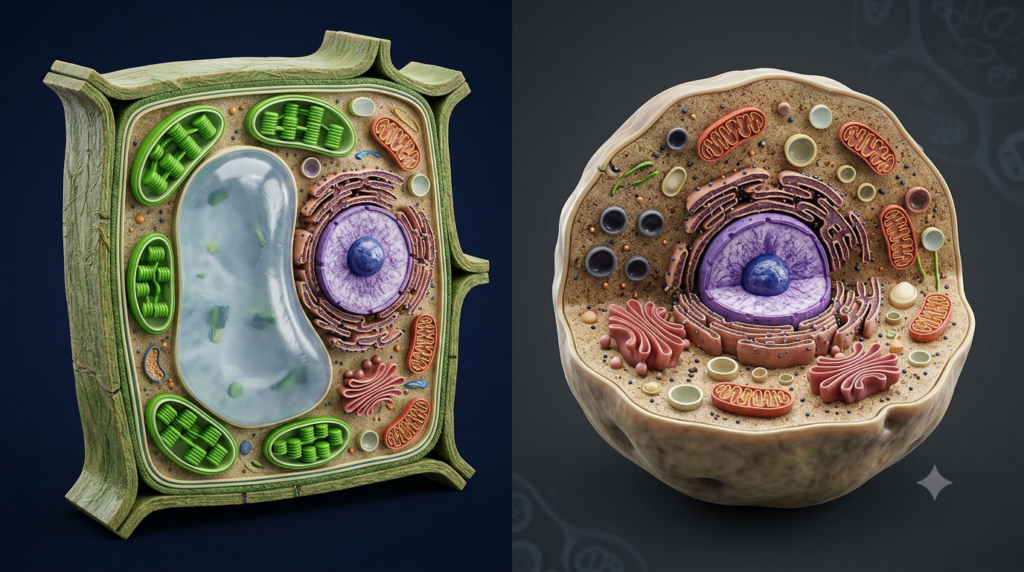
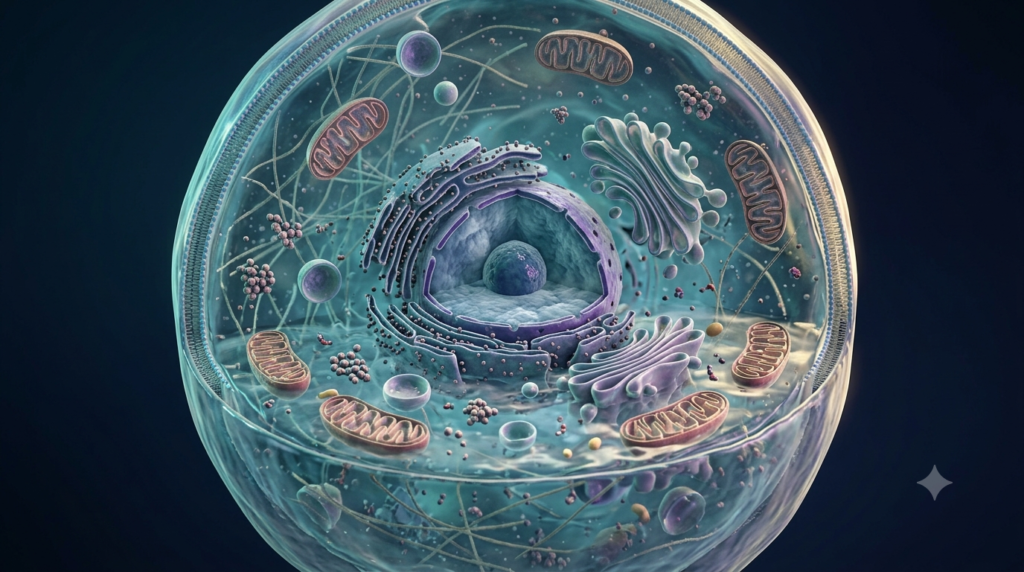
Eukaryotic cells are cells that contain a membrane-bound nucleus. Their DNA is enclosed within this nucleus, which separates most of the cell’s genetic material from the surrounding cytoplasm.
The term eukaryotic comes from Greek roots meaning “true nucleus.” These cells generally have a more complex internal organization than prokaryotic cells. They contain specialized structures called organelles, many of which are surrounded by membranes and perform particular functions.
Animals, plants, fungi, and protists are eukaryotes. Their cells differ in size, shape, and organization according to their roles. For example, a nerve cell has a structure suited to transmitting signals, while a leaf cell contains chloroplasts that support photosynthesis.
Eukaryotic cells can exist as single-celled organisms or as parts of multicellular organisms. Yeast is an example of a single-celled eukaryote, while humans and flowering plants are multicellular eukaryotes.
Structure of a Eukaryotic Cell
Eukaryotic cells contain several structures that work together to maintain life.
1. Nucleus
The nucleus stores most of the cell’s genetic material. It is surrounded by a double membrane called the nuclear envelope, which contains pores that regulate the movement of substances between the nucleus and cytoplasm.
DNA in the nucleus is organized into chromosomes. These chromosomes contain genes that provide instructions for producing proteins and regulating cellular activities.
The nucleus plays a central role in controlling gene expression, coordinating cell activities, and maintaining genetic information.
2. Plasma Membrane
Like prokaryotic cells, eukaryotic cells have a plasma membrane. It controls the movement of substances into and out of the cell and helps maintain a stable internal environment.
The membrane also contains proteins involved in communication, transport, and recognition of signals from the surroundings.
3. Cytoplasm
The cytoplasm includes the cytosol, a fluid-like component, and the structures suspended within it outside the nucleus. It provides an environment for many biochemical reactions and supports the movement and interaction of cellular components.
4. Mitochondria
Mitochondria are organelles involved in cellular respiration. They help convert energy stored in nutrients into ATP, a molecule that cells use to power many activities.
Mitochondria contain their own DNA and ribosomes. Their structure and genetic features support the scientific explanation that mitochondria evolved from ancient bacteria through an endosymbiotic relationship.
Plant cells and animal cells generally contain mitochondria, although their number and activity vary depending on the cell’s energy requirements.
5. Endoplasmic Reticulum
The endoplasmic reticulum, or ER, is a network of membranes involved in the production and processing of molecules.
Rough endoplasmic reticulum has ribosomes attached to its surface and helps produce proteins destined for membranes, certain organelles, or secretion outside the cell.
Smooth endoplasmic reticulum lacks attached ribosomes. It participates in lipid production, detoxification of certain substances, and calcium storage in some cells.
6. Golgi Apparatus
The Golgi apparatus modifies, sorts, and packages proteins and lipids. It receives materials from the endoplasmic reticulum and prepares them for transport to other cellular locations or for release outside the cell.
This organelle helps ensure that molecules reach the correct destinations.
7. Lysosomes and Peroxisomes
Lysosomes contain digestive enzymes that break down waste materials, damaged components, and certain substances taken into the cell. They are particularly prominent in many animal cells, although comparable digestive functions occur in other eukaryotic systems.
Peroxisomes contain enzymes involved in fatty acid breakdown and other chemical reactions. They also help manage hydrogen peroxide, which can be harmful when it accumulates.
8. Ribosomes
Ribosomes produce proteins in eukaryotic cells. Cytoplasmic ribosomes are generally 80S, while mitochondria and chloroplasts contain smaller, bacterial-like ribosomes.
Ribosomes may float freely in the cytoplasm or attach to the rough endoplasmic reticulum, depending on the proteins being produced.
9. Cytoskeleton
The cytoskeleton is a network of protein filaments that helps maintain cell shape, organize internal structures, and support movement. It also plays an important role during cell division and the transport of materials within the cell.
10. Chloroplasts and Cell Walls in Plants
Plant cells contain chloroplasts, which capture light energy and use it to produce sugars through photosynthesis. Chloroplasts contain chlorophyll, the pigment responsible for absorbing much of the light used in this process.
Plant cells also have cell walls primarily made of cellulose. These walls provide strength, support, and protection. Animal cells do not have cell walls or chloroplasts.
Fundamental Differences Between Prokaryotic and Eukaryotic Cells
Both cell types perform the essential activities of life, but their internal organization differs significantly.
1. Presence of a Nucleus
The most important difference is the presence or absence of a membrane-bound nucleus.
Prokaryotic cells lack a true nucleus. Their main DNA is located in the nucleoid region. Eukaryotic cells contain a nucleus that encloses most of their genetic material.
This distinction affects how genetic information is organized and how cellular processes are coordinated.
2. Size and Complexity
Prokaryotic cells are generally smaller, often around 0.1–5 micrometres in diameter, although exceptions exist. Eukaryotic cells are often around 10–100 micrometres, but their sizes also vary considerably.
Eukaryotic cells usually have greater internal compartmentalization because they contain membrane-bound organelles. Prokaryotic cells generally lack these membrane-bound organelles and carry out many processes in the cytoplasm or at the plasma membrane.
3. DNA Organization
In many prokaryotes, the main chromosome is circular, although exceptions occur. Their DNA is located in the nucleoid rather than inside a nucleus.
Eukaryotic nuclear DNA is organized into multiple linear chromosomes associated with proteins called histones. Eukaryotic cells may also contain DNA in mitochondria and, in plants and algae, chloroplasts.
4. Membrane-Bound Organelles
Prokaryotes lack the typical membrane-bound organelles found in eukaryotes, such as mitochondria, the Golgi apparatus, and the endoplasmic reticulum.
Eukaryotic cells use these organelles to separate different activities into specialized compartments. This organization helps manage complex chemical reactions and allows different cellular processes to operate efficiently.
5. Ribosomes
Prokaryotic cells typically have 70S ribosomes in their cytoplasm. Eukaryotic cells generally have 80S ribosomes in their cytoplasm.
Both types of ribosomes carry out protein synthesis, but their structural differences are important in biology and medicine. Some antibiotics target bacterial ribosomes while having different effects on human cytoplasmic ribosomes. However, certain antibiotics can also affect mitochondria, so their effects are not always limited to bacteria.
6. Reproduction and Cell Division
Prokaryotes commonly reproduce through binary fission. During this process, the cell copies its DNA and divides into two cells.
Eukaryotic cells use mitosis for many forms of cell division, including growth and tissue repair. Meiosis produces cells with reduced chromosome numbers for sexual reproduction in organisms that use this process.
These processes differ in their stages and mechanisms, reflecting the different organization of prokaryotic and eukaryotic cells.
7. Organization of Living Organisms
Prokaryotic organisms are generally unicellular. A single cell performs all the essential functions required for survival.
Eukaryotes may be unicellular or multicellular. In multicellular organisms, cells can specialize and work together to form tissues, organs, and organ systems. For example, muscle cells contract, nerve cells transmit signals, and red blood cells transport oxygen.
8. Cell Wall Composition
Many bacteria have cell walls made of peptidoglycan, while archaea have different wall materials. Eukaryotic cell walls, when present, have other compositions. Plant cell walls mainly contain cellulose, while fungal cell walls commonly contain chitin.
Animal cells lack cell walls and are surrounded by plasma membranes.
9. Energy Production
Prokaryotic cells perform energy-related processes using their plasma membranes and cytoplasm. For example, many bacteria carry out cellular respiration through membrane-associated systems.
In eukaryotic cells, mitochondria are the main sites of most aerobic cellular respiration. Plant cells also contain chloroplasts, which carry out photosynthesis. These organelles allow specialized energy-related processes to occur in distinct compartments.
10. Gene Expression
In many prokaryotes, transcription and translation can occur at the same time because there is no nuclear membrane separating DNA from cytoplasmic ribosomes.
In eukaryotic cells, transcription occurs in the nucleus, while translation occurs mainly in the cytoplasm or on ribosomes attached to the rough endoplasmic reticulum. Eukaryotic messenger RNA also commonly undergoes processing before it is used to produce proteins.
Comparison Table of Prokaryotic and Eukaryotic Cells
| Feature | Prokaryotic Cells | Eukaryotic Cells |
|---|---|---|
| Nucleus | No membrane-bound nucleus | Membrane-bound nucleus present |
| DNA location | Nucleoid region | Mainly inside the nucleus |
| Chromosomes | Usually one main circular chromosome; exceptions exist | Multiple linear nuclear chromosomes in most species |
| Typical size | Generally smaller | Generally larger |
| Membrane-bound organelles | Absent in the typical sense | Present |
| Cytoplasmic ribosomes | Usually 70S | Usually 80S |
| Cell division | Commonly binary fission | Mitosis and meiosis in relevant contexts |
| Cell wall | Present in many bacteria and archaea, with varying composition | Present in plants and fungi, absent in animals |
| Organism type | Generally unicellular | Unicellular or multicellular |
| Examples | Bacteria and archaea | Animals, plants, fungi, and protists |
These are general patterns rather than absolute rules. Some organisms and organelles have features that do not fit every typical description.
Similarities Between Prokaryotic and Eukaryotic Cells
Despite their differences, prokaryotic and eukaryotic cells share several fundamental features. These similarities reflect the common ancestry of life and the basic requirements of cellular survival.
1. Plasma Membrane
Both types of cells have a plasma membrane that regulates the exchange of substances with the environment. It helps maintain the internal conditions required for life.
2. Genetic Material
Both contain DNA as their primary hereditary material. DNA stores instructions that help cells grow, function, and reproduce.
3. Ribosomes
Both have ribosomes that produce proteins. Proteins perform many essential roles, including catalysing chemical reactions, transporting molecules, and providing structural support.
4. Cytoplasm
Both contain cytoplasm, where many biochemical reactions occur. Cellular components interact in this environment to support normal functioning.
5. Energy Use and Metabolism
Both cell types require energy to perform essential activities. They carry out metabolic reactions that obtain, transform, and use energy and materials.
These shared characteristics demonstrate that all cellular life depends on several common biological principles.
Examples of Prokaryotic and Eukaryotic Cells in Everyday Life
The differences between these cells are not limited to textbooks. They are connected to many aspects of everyday life.
Prokaryotic Cells in Everyday Life
Bacteria are present in soil, water, food, and the human body. Certain bacteria are used to prepare foods such as yoghurt and some cheeses through fermentation. Other microorganisms help decompose organic waste and recycle nutrients in ecosystems.
Some bacteria can cause diseases, including certain respiratory and intestinal infections. Understanding bacterial cell structure helps researchers develop antibiotics and other treatments. Antibiotics that target bacterial structures or processes can treat particular bacterial infections, although resistance can make treatment more difficult.
Archaea also have important ecological roles, including participation in methane production and nutrient cycling in certain environments.
Eukaryotic Cells in Everyday Life
Human skin, muscles, nerves, and blood contain specialized eukaryotic cells. These cells cooperate to keep the body functioning. Plant cells support food production through photosynthesis, while yeast cells are used in bread-making and fermentation.
Fungi help decompose dead material, and many protists play important roles in aquatic ecosystems. Studying eukaryotic cells helps scientists understand inherited diseases, tissue development, energy production, and the effects of medicines.
Why Is It Important to Understand These Differences?
Learning about prokaryotic and eukaryotic cells is important for several reasons.
First, it provides a foundation for understanding biological diversity. The distinction helps explain how different organisms are organized and how their cells carry out essential functions.
Second, it supports medical research. Scientists study differences between bacterial and human cells to develop treatments that target harmful microorganisms while minimizing damage to human cells. Knowledge of cellular structures also contributes to research on cancer, genetic disorders, and infectious diseases.
Third, cell biology is essential in biotechnology. Bacteria and yeast are used in research and industrial processes, including the production of useful proteins. Plant and animal cells are also important in agriculture, medicine, and laboratory research.
Finally, understanding cells helps explain fundamental processes such as growth, reproduction, inheritance, and energy conversion. It connects basic biology with genetics, ecology, evolution, and modern scientific discoveries.
Conclusion
Prokaryotic and eukaryotic cells are the two major types of cellular organization found in living organisms. Prokaryotic cells, including bacteria and archaea, lack a membrane-bound nucleus and generally have a simpler internal structure. Eukaryotic cells, found in animals, plants, fungi, and protists, contain a nucleus and specialized organelles that support complex cellular activities.
Although they differ in size, DNA organization, ribosomes, internal compartments, and methods of cell division, both cell types share essential features such as DNA, ribosomes, cytoplasm, and a plasma membrane. These similarities reveal the fundamental principles common to cellular life, while their differences explain the wide variety of organisms found on Earth.
By understanding prokaryotic and eukaryotic cells, we gain a clearer picture of how life functions at its most basic level and why cell biology remains essential to medicine, biotechnology, environmental science, and the study of life itself.
FAQs
1. What is the main difference between prokaryotic and eukaryotic cells?
The main difference between prokaryotic and eukaryotic cells is the presence of a membrane-bound nucleus. Prokaryotic cells do not have a true nucleus, so their DNA is located in a region called the nucleoid. Eukaryotic cells contain a nucleus that encloses most of their genetic material. Eukaryotic cells also possess membrane-bound organelles, such as mitochondria, the endoplasmic reticulum, and the Golgi apparatus. Prokaryotic cells generally lack these organelles. These structural differences influence how cells organize their activities, produce energy, reproduce, and maintain their internal environments.
2. What are examples of prokaryotic and eukaryotic cells?
Examples of prokaryotic cells include bacteria and archaea. Escherichia coli is a well-known bacterium commonly studied in biology laboratories. Some bacteria are beneficial because they help with digestion, food production, and nutrient recycling, while others can cause diseases. Examples of eukaryotic cells include human skin cells, nerve cells, plant cells, fungal cells, and many protists. Yeast is a single-celled eukaryotic organism, whereas humans and flowering plants consist of many specialized cells. These examples demonstrate that both cell types are essential to life, although they differ in their internal organization and biological functions.
3. Why do prokaryotic cells not have a nucleus?
Prokaryotic cells do not have a membrane-bound nucleus because their cellular organization differs from that of eukaryotic cells. Their DNA is located in the nucleoid region, which is not surrounded by a nuclear membrane. This arrangement allows genetic information to remain accessible within the cytoplasm. In many prokaryotes, transcription and translation can occur simultaneously because there is no nuclear membrane separating these processes. However, the absence of a nucleus does not mean that prokaryotic cells lack genetic control. Their DNA contains instructions that regulate growth, metabolism, reproduction, and responses to environmental changes.
4. Are prokaryotic cells smaller than eukaryotic cells?
Yes, prokaryotic cells are generally smaller than eukaryotic cells. Many prokaryotes measure approximately 0.1–5 micrometres, while many eukaryotic cells measure around 10–100 micrometres. However, these ranges are approximate, and exceptions exist in both groups. The smaller size of prokaryotic cells is associated with their relatively simple internal organization. Eukaryotic cells usually contain a nucleus and specialized organelles that perform different functions. Despite their small size, prokaryotic cells carry out all the processes necessary for survival, including metabolism, protein synthesis, growth, and reproduction.
5. Do prokaryotic and eukaryotic cells both contain DNA?
Yes, both prokaryotic and eukaryotic cells contain DNA, which stores genetic information. In prokaryotes, the main chromosome is usually circular and located in the nucleoid region, although exceptions occur. Some prokaryotes also possess plasmids, which are smaller DNA molecules carrying additional genes. In eukaryotes, most DNA is stored inside the nucleus and organized into linear chromosomes. Mitochondria and chloroplasts also contain their own DNA. In both cell types, DNA provides instructions for producing proteins and regulating cellular activities. These genetic instructions are essential for growth, reproduction, inheritance, and normal cellular functioning.
6. What are membrane-bound organelles, and why are they important?
Membrane-bound organelles are specialized structures enclosed by membranes inside eukaryotic cells. Each organelle performs particular functions that help the cell survive and operate efficiently. For example, the nucleus stores most of the cell’s DNA, mitochondria participate in cellular respiration, and the endoplasmic reticulum helps produce and process proteins and lipids. The Golgi apparatus modifies and packages molecules for transport. Chloroplasts in plants and algae carry out photosynthesis. These organelles divide cellular activities into specialized compartments. Typical prokaryotic cells lack these membrane-bound organelles, although some possess internal membrane systems for particular biological processes.
7. How do prokaryotic and eukaryotic cells reproduce?
Prokaryotic cells commonly reproduce through binary fission. During this process, the cell copies its DNA, grows, and divides into two daughter cells. Under suitable conditions, some bacteria can reproduce rapidly. Eukaryotic cells use more complex mechanisms. Mitosis produces daughter cells for growth, tissue repair, and asexual reproduction in many organisms. Meiosis reduces the chromosome number to produce cells involved in sexual reproduction. These processes differ in their stages and genetic outcomes. Although cell division allows both groups to reproduce, eukaryotic division involves more elaborate chromosome organization and cellular machinery.
8. What are the similarities between prokaryotic and eukaryotic cells?
Prokaryotic and eukaryotic cells share several essential characteristics. Both have a plasma membrane that regulates the movement of substances into and out of the cell. Both contain DNA as their primary hereditary material, ribosomes for protein synthesis, and cytoplasm where many biochemical reactions occur. They also require energy and carry out metabolic processes to maintain life. These similarities reflect fundamental features shared by cellular organisms. However, their internal organization differs considerably. Eukaryotic cells possess a membrane-bound nucleus and typical membrane-bound organelles, while prokaryotic cells lack these structures. Both types are essential to Earth’s biological diversity.
9. Why are the differences between prokaryotic and eukaryotic cells important in medicine?
Understanding these differences helps scientists develop treatments that target harmful microorganisms. For example, certain antibiotics act on bacterial structures or processes, including bacterial ribosomes and cell-wall formation. Because these targets differ from corresponding structures in human cells, some treatments can affect bacteria while limiting harm to human cells. However, antibiotics can have side effects, and some can affect mitochondria because of their evolutionary relationship with bacteria. Antibiotic resistance is another important challenge. Studying cellular structure helps researchers understand how medicines work, identify potential drug targets, and develop more effective treatments for bacterial infections.
10. Did eukaryotic cells evolve from prokaryotic cells?
Scientific evidence indicates that eukaryotic cells evolved from ancient prokaryotic ancestors through a complex evolutionary process. One important explanation is the endosymbiotic theory, which states that mitochondria originated from bacteria that entered an ancestral cell and established a lasting relationship with it. In plants and algae, chloroplasts also originated from ancient photosynthetic bacteria. Evidence includes the presence of their own DNA, bacterial-like ribosomes, and the ability to divide within cells. These features support their evolutionary origins. However, eukaryotic evolution involved several processes over a long period, and scientists continue to investigate the details of this history.