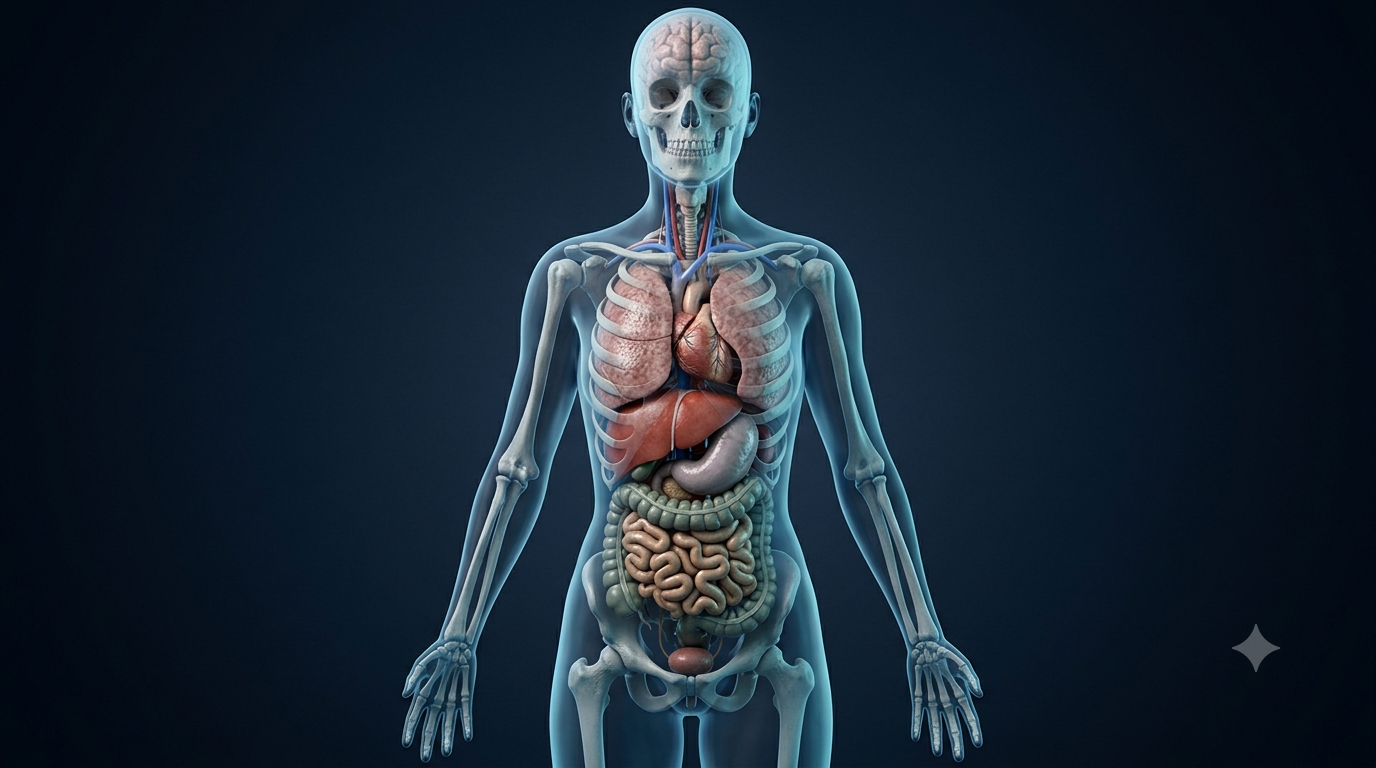
The human body is a complex and well-organized structure made up of trillions of cells. These cells work together to form tissues, organs, and organ systems that help the body perform essential activities. From breathing and digesting food to pumping blood and controlling movements, every major activity depends on the coordinated functioning of different body parts. An organ is a structure made of different tissues that performs a specific function, while an organ system is a group of organs that work together to carry out broader functions. Understanding organs and organ systems helps us learn how the human body maintains life, responds to changes, and stays healthy. This article explains the structure, functions, and importance of major human organs and organ systems in simple, easy-to-understand language.
What Are Organs?
An organ is a body structure composed of two or more types of tissues working together to perform one or more specific functions. Organs have different shapes, sizes, and structures depending on their roles in the body.
For example, the heart is a muscular organ that pumps blood, the lungs help exchange oxygen and carbon dioxide, and the stomach helps digest food. Each organ has a specialized structure that allows it to perform its particular task efficiently.
Organs do not usually work independently. They interact with other organs to maintain normal body functions. For example, the heart pumps blood to the lungs to receive oxygen, and the oxygen-rich blood is then transported to other parts of the body.
Examples of Human Organs
Some important organs in the human body include:
Brain: Controls thoughts, memory, emotions, movements, and many automatic body activities.
Heart: Pumps blood throughout the body.
Lungs: Exchange oxygen and carbon dioxide between the air and the blood.
Stomach: Mixes food with digestive juices and begins the digestion of proteins.
Liver: Processes nutrients, produces bile, and helps break down harmful substances.
Kidneys: Filter blood, remove wastes, and regulate water and electrolyte balance.
Small intestine: Completes much of digestion and absorbs most nutrients.
Skin: Protects the body and helps regulate temperature.
Each organ contributes to the body’s overall survival and normal functioning.
What Are Organ Systems?
An organ system is a group of organs that work together to perform a major function in the body. Although individual organs have specialized roles, they depend on one another to complete complex tasks.
For example, the digestive system includes the mouth, esophagus, stomach, small intestine, large intestine, and several accessory organs. Together, these structures break down food, absorb nutrients, and eliminate undigested waste.
Similarly, the respiratory system works with the circulatory system to supply oxygen to body cells and remove carbon dioxide. The nervous and endocrine systems help coordinate activities throughout the body.
The human body is commonly described as having 11 major organ systems. These systems perform different functions, but they remain closely connected and work together to maintain life.
Levels of Organization in the Human Body
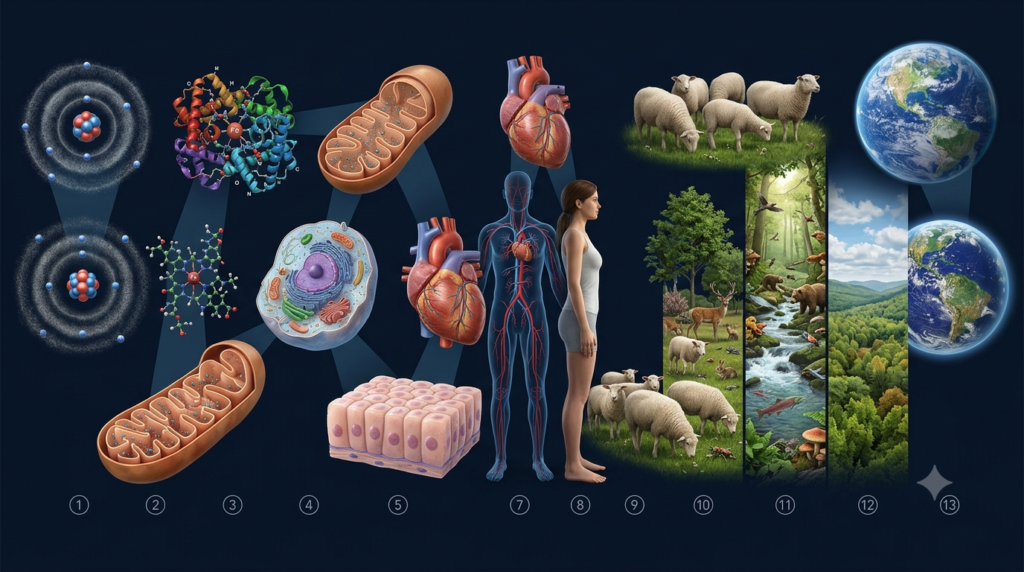
The human body is organized into several levels, from the smallest living units to the complete organism. Understanding these levels explains how individual cells contribute to the functioning of the entire body.
Cells
Cells are the basic structural and functional units of life. Different cells have different shapes and functions. For example, nerve cells transmit electrical signals, muscle cells contract to produce movement, and red blood cells transport oxygen.
Tissues
A tissue is a group of similar cells, along with their surrounding material, that work together to perform a particular function. The four primary types of tissue in the human body are epithelial, connective, muscle, and nervous tissue.
Organs
Organs are formed when different tissues combine and work together. For example, the heart contains muscle tissue that produces contractions, connective tissue that provides support, nervous tissue that helps regulate activity, and epithelial tissue that lines its internal surfaces.
Organ Systems
Organ systems are formed when multiple organs work together. The digestive system, for example, includes several organs that process food and make nutrients available to the body.
Organism
All the organ systems together form the complete human organism. Their coordinated activities allow a person to breathe, move, grow, reproduce, respond to the environment, and maintain internal balance.
The overall organization can be represented as:
Cells → Tissues → Organs → Organ Systems → Organism
Each level depends on the proper functioning of the levels below it.
The 11 Major Organ Systems of the Human Body
1. Integumentary System
The integumentary system forms the body’s outer protective covering. It consists mainly of the skin, hair, nails, sweat glands, and sebaceous glands.
Structure of the Integumentary System
The skin is the largest organ of the human body by surface area and has several layers. The epidermis is the outermost layer, while the dermis contains blood vessels, sensory receptors, glands, and connective tissue. Beneath the skin lies the subcutaneous tissue, which contains varying amounts of fat and connective tissue.
Hair and nails are made primarily of keratin, a strong structural protein. Sweat glands produce sweat, while sebaceous glands release an oily substance called sebum.
Functions of the Integumentary System
The integumentary system protects the body from physical injury, many harmful microorganisms, and excessive water loss. It also helps regulate body temperature through sweating and changes in blood flow near the skin.
Sensory receptors in the skin detect touch, pressure, pain, and temperature. The skin also contributes to vitamin D production when exposed to appropriate ultraviolet radiation.
2. Skeletal System
The skeletal system provides the body’s supporting framework. It includes bones, cartilage, ligaments, and joints. An adult human typically has 206 bones, although the exact number can vary slightly among individuals.
Structure of the Skeletal System
The skeleton is divided into two main parts. The axial skeleton includes the skull, vertebral column, ribs, and sternum. The appendicular skeleton includes the bones of the arms and legs, along with the shoulder and pelvic girdles.
Bones contain living cells and a strong matrix made of collagen and minerals, especially calcium phosphate. Cartilage provides flexible support at certain body structures and helps reduce friction at many joints.
Functions of the Skeletal System
The skeletal system supports the body, gives it shape, and protects delicate internal organs. The skull protects the brain, while the rib cage protects the heart and lungs.
Bones work with skeletal muscles to produce movement. Bone marrow produces blood cells, and bones store minerals such as calcium and phosphorus. These minerals can be released when the body needs them.
3. Muscular System
The muscular system enables movement, maintains posture, and produces heat. The human body contains three major types of muscle tissue: skeletal, smooth, and cardiac muscle.
Structure of the Muscular System
Skeletal muscles are usually attached to bones by tendons and are generally under voluntary control. Smooth muscles are found in the walls of organs such as the intestines and blood vessels. Cardiac muscle forms the muscular wall of the heart.
Muscle cells contain proteins that interact to produce contraction. In skeletal muscle, these contractions pull on bones and move joints.
Functions of the Muscular System
The muscular system allows people to walk, run, lift objects, write, and perform other movements. It also helps maintain posture and stabilize joints.
Smooth muscle moves substances through internal organs, including food through the digestive tract. Cardiac muscle contracts rhythmically to pump blood. Muscle contractions also generate heat, helping maintain normal body temperature.
4. Nervous System
The nervous system controls and coordinates many body activities. It receives information, processes it, and sends signals that produce appropriate responses.
Structure of the Nervous System
The nervous system has two main divisions: the central nervous system and the peripheral nervous system.
The central nervous system consists of the brain and spinal cord. The brain processes information, supports memory and thinking, and regulates many essential functions. The spinal cord carries signals between the brain and the body and coordinates certain reflexes.
The peripheral nervous system includes nerves and associated structures outside the brain and spinal cord. It connects the central nervous system with muscles, organs, and sensory receptors.
Functions of the Nervous System
The nervous system allows humans to see, hear, smell, taste, feel, think, learn, and remember. It also coordinates movement and helps regulate breathing, heart rate, and digestive activity.
Sensory neurons carry information toward the central nervous system, while motor neurons transmit commands to muscles and certain glands. The nervous system can produce rapid responses to changes inside or outside the body.
5. Endocrine System
The endocrine system regulates many body processes through chemical messengers called hormones. These hormones travel through the bloodstream and influence specific target cells and organs.
Structure of the Endocrine System
Major endocrine glands include the pituitary gland, thyroid gland, parathyroid glands, adrenal glands, and pineal gland. The pancreas, ovaries, and testes also have important endocrine functions.
The hypothalamus, a region of the brain, helps connect the nervous and endocrine systems. The pituitary gland regulates several other endocrine glands, while the thyroid gland produces hormones that influence metabolism.
The pancreas releases hormones such as insulin and glucagon, which help regulate blood glucose levels.
Functions of the Endocrine System
The endocrine system regulates growth, metabolism, reproduction, stress responses, and blood sugar levels. It also helps maintain water and electrolyte balance.
Hormonal effects may develop more slowly than many nervous system responses, but they can last longer. The nervous and endocrine systems work together to coordinate body functions and maintain internal stability.
6. Circulatory or Cardiovascular System
The cardiovascular system transports blood throughout the body. It consists of the heart, blood, and blood vessels.
Structure of the Cardiovascular System
The heart is a muscular organ with four chambers: two atria and two ventricles. The right side receives oxygen-poor blood from the body and pumps it to the lungs. The left side receives oxygen-rich blood from the lungs and pumps it to the rest of the body.
Blood vessels include arteries, veins, and capillaries. Arteries carry blood away from the heart, veins return blood toward it, and capillaries allow the exchange of gases, nutrients, and wastes between blood and surrounding tissues.
Blood contains plasma, red blood cells, white blood cells, and platelets.
Functions of the Cardiovascular System
The cardiovascular system delivers oxygen, nutrients, and hormones to cells. It transports carbon dioxide and other waste products away from tissues for removal.
Blood also helps regulate body temperature, maintain fluid balance, and defend against infections. Platelets and clotting proteins help prevent excessive blood loss when blood vessels are damaged.
7. Lymphatic and Immune System
The lymphatic system returns excess tissue fluid to the bloodstream and supports immune defense. Its structures include lymphatic vessels, lymph nodes, the spleen, the thymus, and other lymphatic tissues.
Structure of the Lymphatic and Immune System
Lymphatic vessels collect excess fluid from tissues and carry it as lymph. Lymph nodes contain immune cells that help identify and respond to harmful microorganisms and other foreign substances.
The spleen filters blood and supports immune responses. The thymus is important for the development of certain T lymphocytes, which help coordinate immune defense or directly attack infected or abnormal cells.
Functions of the Lymphatic and Immune System
The lymphatic system returns excess tissue fluid and some proteins to the bloodstream. It also absorbs dietary fats from the small intestine through specialized lymphatic vessels.
The immune system protects the body against infections and helps identify abnormal cells. White blood cells, antibodies, and other immune components work together to recognize and eliminate potential threats.
8. Respiratory System
The respiratory system allows the body to exchange gases with the environment. Its major structures include the nose, nasal cavity, pharynx, larynx, trachea, bronchi, and lungs.
Structure of the Respiratory System
Air enters through the nose or mouth and passes through the airways toward the lungs. The trachea divides into two main bronchi, which branch into smaller airways called bronchioles.
At the ends of many bronchioles are tiny air sacs called alveoli. These structures have thin walls and are surrounded by capillaries, making them suitable for gas exchange.
The diaphragm is a major muscle involved in breathing. When it contracts, the chest cavity expands and air moves into the lungs.
Functions of the Respiratory System
The respiratory system supplies oxygen needed for cellular respiration and removes carbon dioxide produced by metabolism.
In the alveoli, oxygen moves from the air into the blood, while carbon dioxide moves from the blood into the air to be exhaled. Breathing also helps regulate blood acidity by controlling the removal of carbon dioxide.
9. Digestive System
The digestive system breaks down food into smaller substances that the body can absorb and use. It includes the digestive tract and several accessory organs.
Structure of the Digestive System
The digestive tract begins at the mouth and continues through the pharynx, esophagus, stomach, small intestine, large intestine, rectum, and anus.
Accessory organs include the salivary glands, liver, gallbladder, and pancreas. These structures release substances that help digestion even though food does not pass through most of them.
The stomach uses muscular contractions and digestive secretions to mix food. The small intestine has a large internal surface area because of folds, villi, and microscopic projections called microvilli.
Functions of the Digestive System
Digestion begins in the mouth, where chewing breaks food into smaller pieces and saliva starts the chemical digestion of starch.
The stomach mixes food with acid and enzymes, helping digest proteins. Most digestion and nutrient absorption occur in the small intestine. The liver produces bile, the gallbladder stores and concentrates it, and the pancreas releases digestive enzymes and bicarbonate.
The large intestine absorbs water and electrolytes and helps form feces. The digestive system supplies the body with nutrients needed for energy, growth, and tissue repair.
10. Urinary or Excretory System
The urinary system removes certain metabolic wastes from the blood and regulates the body’s water, electrolyte, and acid-base balance. It consists of two kidneys, two ureters, the urinary bladder, and the urethra.
Structure of the Urinary System
The kidneys contain millions of microscopic functional units called nephrons. Each nephron filters blood plasma, reabsorbs useful substances, and secretes additional wastes into the forming urine.
Urine travels from the kidneys through the ureters to the urinary bladder, where it is stored. It leaves the body through the urethra.
Functions of the Urinary System
The kidneys remove wastes such as urea and help regulate the amount of water and electrolytes in the body. They also help maintain blood pH and contribute to blood pressure regulation.
In addition, the kidneys produce a hormone that stimulates red blood cell production and activate vitamin D into a form that helps the body absorb calcium.
The urinary system is essential for maintaining a stable internal environment. If kidney function is severely impaired, wastes and excess fluid can accumulate in the body.
11. Reproductive System
The reproductive system enables humans to produce offspring. The male and female reproductive systems have different structures, but both contribute to human reproduction.
Structure of the Male Reproductive System
Major male reproductive organs include the testes, epididymides, vas deferens, accessory glands, and penis. The testes produce sperm cells and the hormone testosterone.
Sperm mature in the epididymides and travel through the reproductive ducts. Accessory glands produce fluids that combine with sperm to form semen.
Structure of the Female Reproductive System
Major female reproductive organs include the ovaries, fallopian tubes, uterus, cervix, and vagina. The ovaries produce egg cells and hormones such as estrogen and progesterone.
The fallopian tubes carry the egg toward the uterus and are the usual site of fertilization. The uterus has a muscular wall and a lining that changes during the menstrual cycle. During pregnancy, it supports the development of the embryo and fetus.
Functions of the Reproductive System
The reproductive system produces reproductive cells and sex hormones. Fertilization occurs when a sperm cell joins with an egg cell, forming a zygote.
The female reproductive system can support pregnancy and childbirth. Reproductive hormones also contribute to puberty, sexual development, and the regulation of reproductive cycles.
How Do Organ Systems Work Together?
The organ systems of the human body are closely connected. Although each system has specialized functions, normal health depends on their cooperation.
Example 1: Working Together During Physical Exercise
During exercise, skeletal muscles require more oxygen and nutrients to produce energy. The respiratory system increases breathing to bring more oxygen into the lungs and remove additional carbon dioxide.
At the same time, the cardiovascular system increases blood flow to active muscles. The nervous system coordinates muscle contractions and helps regulate heart rate and breathing. The integumentary system contributes to temperature control through sweating and changes in skin blood flow.
This example shows that physical activity requires the coordinated action of several organ systems.
Example 2: Working Together During Digestion
When a person eats a meal, the digestive system breaks food down and absorbs nutrients. The cardiovascular system carries many of these nutrients to cells throughout the body.
The endocrine system releases hormones that help regulate blood glucose and digestive activity. The nervous system coordinates swallowing and influences digestive movements and secretions. The urinary system helps maintain fluid and electrolyte balance as the body processes absorbed substances.
Example 3: Working Together to Maintain Body Temperature
When body temperature rises, the nervous system detects the change and activates responses that promote heat loss. Sweat glands produce sweat, and blood vessels near the skin widen to increase heat transfer to the environment.
When the body becomes cold, blood vessels near the skin can narrow to reduce heat loss. Skeletal muscles may produce shivering movements that generate heat.
These responses involve communication among the nervous, muscular, and integumentary systems.
Homeostasis and the Importance of Organ Systems
Homeostasis is the process by which the body maintains relatively stable internal conditions despite changes in the environment. These conditions include body temperature, blood glucose, blood pressure, water balance, and blood pH.
Homeostasis does not mean that body conditions remain perfectly constant. Instead, the body continuously adjusts its activities to keep internal conditions within suitable ranges.
For example, when blood glucose rises after a meal, the pancreas releases insulin. Insulin helps body cells take up glucose and encourages the storage of excess glucose. When blood glucose falls, other hormonal responses help make glucose available.
The kidneys regulate water and electrolyte balance, while the respiratory and cardiovascular systems help control blood pH by managing carbon dioxide transport and removal.
Most homeostatic regulation involves negative feedback. In negative feedback, a change triggers responses that oppose the original change. This helps prevent internal conditions from moving too far away from their normal ranges.
When an organ or organ system cannot perform its function properly, homeostasis may be disrupted. This can affect other systems because the body depends on their combined activity.
What Happens When an Organ or Organ System Fails?
An organ or organ system may stop functioning properly because of injury, infection, inherited conditions, aging, or long-term disease. The effects depend on the organ involved and the severity of the problem.
For example, serious lung disease can reduce oxygen delivery to the blood. Heart disease may interfere with blood circulation, while kidney disease can cause wastes and excess fluid to accumulate.
The body sometimes compensates for reduced function. If one kidney is lost, the remaining kidney may perform enough work to maintain many normal functions. However, compensation has limits, and severe organ damage may require medical treatment or specialized support.
Organ failure can also affect several systems at once. For example, inadequate blood circulation may reduce the supply of oxygen to the brain, kidneys, and other organs.
Early diagnosis, appropriate treatment, and regular medical care can help manage many conditions that affect organs and organ systems.
How to Keep Organs and Organ Systems Healthy
Maintaining healthy habits supports the normal functioning of the body’s organs and systems. Although not every disease can be prevented, several everyday practices can reduce health risks.
Eat a balanced diet: Include vegetables, fruits, whole grains, protein-rich foods, and suitable sources of healthy fats.
Stay physically active: Regular exercise supports cardiovascular fitness, muscle strength, bone health, and metabolic function.
Drink enough water: Appropriate fluid intake helps maintain circulation, temperature regulation, and kidney function.
Get adequate sleep: Sleep supports brain function, hormone regulation, tissue repair, and immune activity.
Avoid tobacco: Smoking and other forms of tobacco use can damage the lungs, heart, blood vessels, and many other organs.
Limit alcohol: Avoiding alcohol is the safest option for preventing alcohol-related harm.
Maintain good hygiene: Handwashing, safe food preparation, and appropriate sanitation reduce the risk of many infections.
Attend recommended health screenings: Medical checkups can help identify certain health problems before symptoms become severe.
Follow medical advice: Proper treatment and management of existing conditions can protect organ function and reduce complications.
Healthy habits work together, just as organ systems do. Consistency is generally more useful than relying on a single practice to maintain health.
Conclusion
Organs and organ systems form the structural and functional foundation of the human body. Cells combine to form tissues, tissues build organs, and organs work together in systems that support essential activities. The integumentary, skeletal, muscular, nervous, endocrine, cardiovascular, lymphatic and immune, respiratory, digestive, urinary, and reproductive systems each perform specialized roles. However, none of these systems operates entirely alone. Their cooperation allows the body to obtain oxygen and nutrients, transport substances, remove wastes, respond to changes, reproduce, and maintain homeostasis. Understanding how organs and organ systems are structured and how they function together provides a valuable foundation for learning human biology, recognizing the importance of healthy habits, and understanding how the body responds to disease and injury.
FAQs
1. What is an organ in the human body?
An organ is a body structure made up of two or more types of tissues that work together to perform specific functions. Each organ has a specialized structure suited to its role. For example, the heart pumps blood, the lungs exchange oxygen and carbon dioxide, and the stomach helps digest food. Organs contain different tissues, including muscle, connective, epithelial, and nervous tissue. Most organs work with other organs rather than independently. Their coordinated activities support essential processes such as breathing, digestion, circulation, movement, and waste removal. Healthy organ function is necessary for the body to survive and maintain internal balance.
2. What is an organ system, and why is it important?
An organ system is a group of organs that work together to perform major functions in the body. Each organ contributes a particular role to the overall process. For example, the digestive system includes the mouth, esophagus, stomach, and intestines, which work together to process food and absorb nutrients. The respiratory system exchanges gases, while the cardiovascular system transports oxygen and nutrients through the blood. Organ systems are important because they coordinate complex activities that individual organs cannot accomplish alone. Their cooperation maintains homeostasis, supports growth, provides energy, removes waste, and helps the body respond to changing environmental conditions.
3. How many major organ systems are present in the human body?
The human body is commonly described as having 11 major organ systems. These are the integumentary, skeletal, muscular, nervous, endocrine, cardiovascular, lymphatic and immune, respiratory, digestive, urinary, and reproductive systems. Each system performs specialized functions. For example, the skeletal system supports and protects the body, while the nervous system coordinates responses to internal and external changes. The endocrine system regulates activities through hormones, and the urinary system removes certain wastes. Although these systems are studied separately for convenience, they constantly interact. Their combined activities enable the human body to function as an integrated living organism.
4. What is the difference between an organ and an organ system?
An organ is a structure made of different tissues that performs specific functions, whereas an organ system consists of multiple organs working together to perform broader activities. The heart is an example of an organ because its main function is to pump blood. The cardiovascular system includes the heart, blood, and blood vessels, which collectively transport oxygen, nutrients, hormones, and waste products. Similarly, the stomach is an organ, while the digestive system includes the stomach, intestines, and accessory organs. In simple terms, organs are individual functional structures, and organ systems are coordinated groups that carry out complex body processes.
5. How are cells, tissues, organs, and organ systems related?
Cells, tissues, organs, and organ systems represent different levels of organization in the human body. Cells are the basic structural and functional units of life. Groups of similar cells and their surrounding materials form tissues, which perform particular functions. Different tissues combine to form organs, and multiple organs work together to create organ systems. For example, muscle cells form muscle tissue, which contributes to the structure of the heart. The heart then works with blood and blood vessels as part of the cardiovascular system. These interconnected levels ultimately form the complete human organism, allowing the body to perform essential activities efficiently.
6. How do different organ systems work together?
Different organ systems cooperate to maintain life and perform complex activities. During exercise, the muscular system produces movement, the respiratory system supplies oxygen, and the cardiovascular system transports oxygen and nutrients to active muscles. The nervous system coordinates movement and adjusts breathing and heart rate. Meanwhile, the integumentary system helps regulate body temperature through sweating and changes in skin blood flow. Similarly, the digestive system absorbs nutrients, which the cardiovascular system distributes to cells. These examples demonstrate that body systems are interconnected. If one system becomes impaired, other systems may also be affected because they depend on one another for normal functioning.
7. Which organ is responsible for controlling most body activities?
The brain is the main control center of the nervous system and regulates many body activities. It receives sensory information, processes signals, supports thinking and memory, and coordinates voluntary movements. It also helps control automatic functions such as breathing, heart rate, and body temperature through connected neural pathways. The brain communicates with the spinal cord and peripheral nerves to coordinate responses throughout the body. However, it does not control every process independently. The endocrine system also regulates important activities through hormones, while organs such as the heart and kidneys perform specialized functions. Together, these structures help maintain the body’s internal balance.
8. What is homeostasis, and how do organ systems maintain it?
Homeostasis is the process through which the body maintains relatively stable internal conditions despite changes in the external environment. It involves regulating factors such as body temperature, blood glucose, water balance, and blood pH. Several organ systems contribute to this process. The nervous system detects changes and coordinates rapid responses, while the endocrine system uses hormones to regulate longer-lasting adjustments. The kidneys control water and electrolyte balance, and the respiratory system helps regulate blood acidity by removing carbon dioxide. These systems commonly use negative feedback, in which a response opposes an initial change. Homeostasis allows cells and organs to function under suitable conditions.
9. What happens when an organ or organ system stops functioning properly?
When an organ or organ system stops functioning properly, the body may struggle to maintain normal internal conditions. The effects depend on the organ involved and the severity of the problem. For example, damaged lungs may reduce oxygen delivery, while impaired kidneys can allow waste products and excess fluid to accumulate. Heart problems may reduce blood circulation and affect the brain and other organs. Sometimes, the body compensates for reduced function, but this ability has limits. Severe dysfunction can affect several organ systems simultaneously. Early diagnosis, appropriate treatment, and healthy lifestyle habits can help protect organ function and reduce complications.
10. How can we keep our organs and organ systems healthy?
Maintaining healthy habits can support the normal functioning of organs and organ systems. Eating a balanced diet provides nutrients required for growth, energy, and tissue repair. Regular physical activity supports the heart, muscles, bones, and metabolism. Drinking adequate water helps maintain fluid balance and supports kidney function. Getting sufficient sleep contributes to brain health, immune function, and hormonal regulation. Avoiding tobacco, limiting alcohol, maintaining good hygiene, and following recommended vaccination and screening schedules can reduce certain health risks. Managing existing medical conditions and following professional medical advice are also important. Consistent healthy habits support the body’s interconnected systems throughout life.