
Variables, Constants, Coefficients and Terms in Formulas

Variables constants coefficients and terms in algebraic formulas

Formulas are an important part of mathematics and science. They allow us to describe relationships between quantities in a short and organized way. Instead of writing a long explanation every time, we can use symbols, numbers, and mathematical operations to represent an idea. For example, the formula for the area of a rectangle is A = l × w, where A represents area, l represents length, and w represents width.

To understand formulas properly, it is important to recognize the different parts that make them up. Four basic ideas appear again and again: variables, constants, coefficients, and terms. These may look simple, but understanding their roles helps make algebraic expressions, equations, and scientific formulas much easier to read and use.

In this article, we will learn what variables, constants, coefficients, and terms are, how they differ from one another, and how to identify them in mathematical and scientific formulas.

What Is a Variable?

A variable is a symbol, usually a letter, that represents a quantity whose value can change. Common variable symbols include x, y, a, b, t, m, and n.

The value represented by a variable is not necessarily fixed. It can change depending on the situation or the values of other quantities in the formula.

For example:

y = 2x + 3

Here, x and y are variables. If the value of x changes, the value of y changes as well.

If x = 1:

y = 2(1) + 3 = 5

If x = 4:

y = 2(4) + 3 = 11

The value of x can vary, and y changes accordingly.

Variables in Science

Variables are not limited to mathematics. They are also widely used in science.

For example, the formula for speed is:

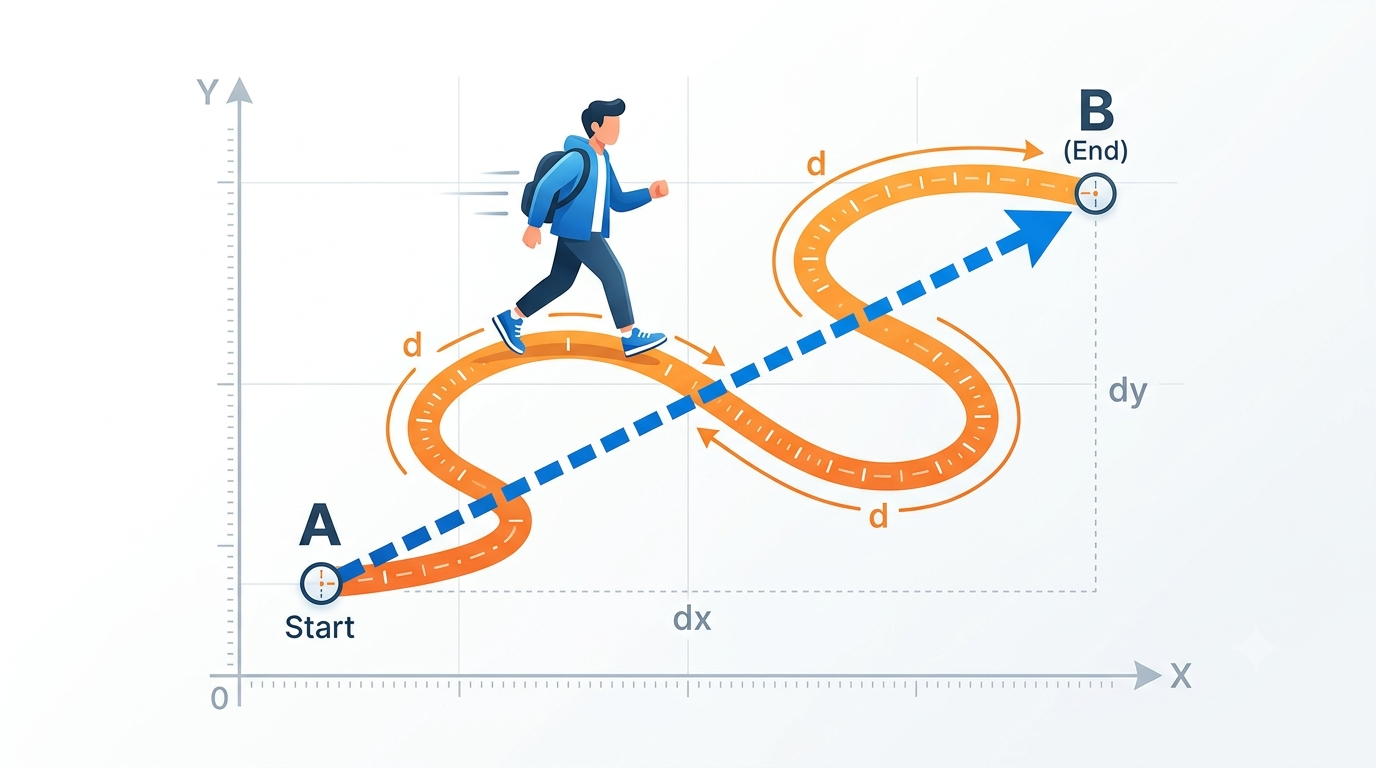
v = d/t

Here:

  • v represents speed.

  • d represents distance.

  • t represents time.

Distance and time can have different values in different situations, so they are variables in this formula.

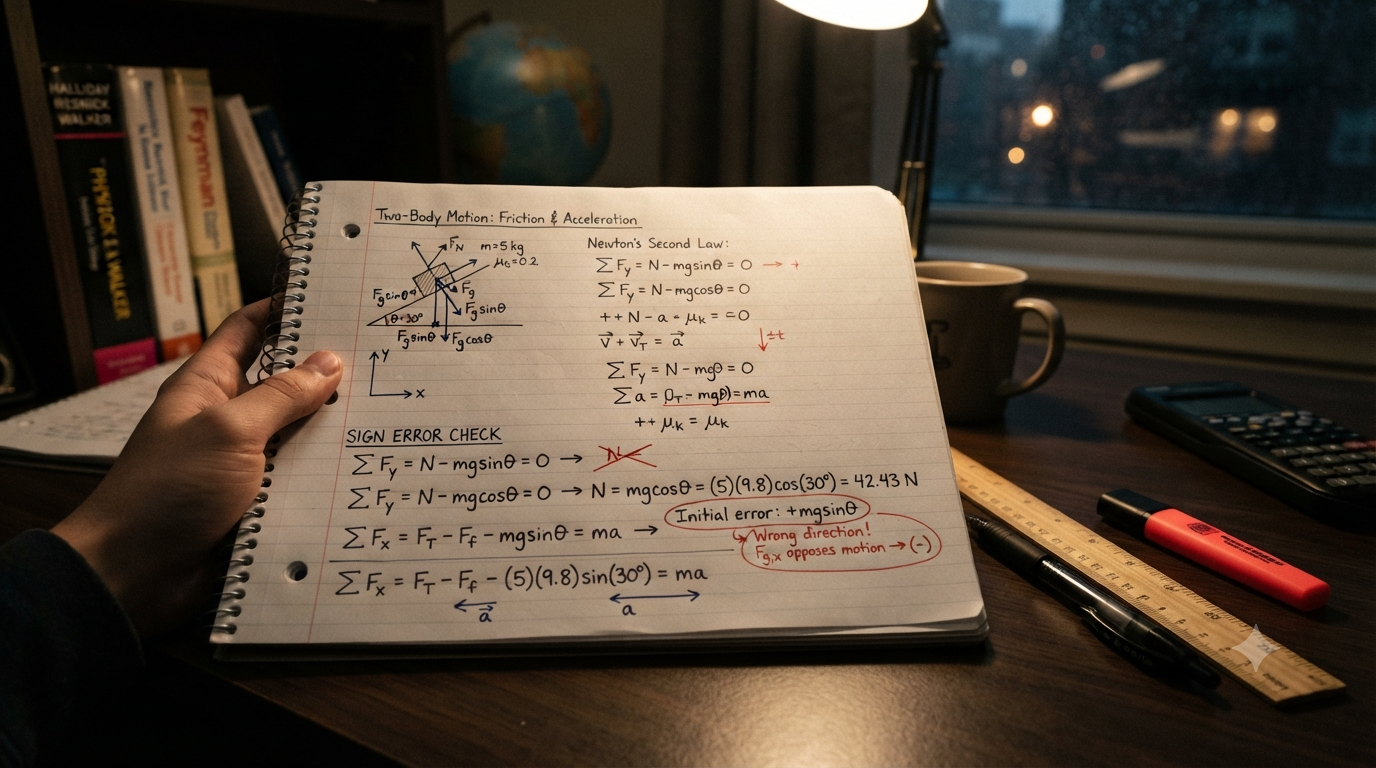
Similarly, Newton’s second law is written as:

F = ma

where:

  • F represents force.

  • m represents mass.

  • a represents acceleration.

The values of mass and acceleration can vary from one situation to another.

What Is a Constant?

A constant is a value that remains fixed within a particular formula, equation, or situation. Unlike a variable, a constant does not change its value in that context.

For example:

y = 3x + 5

Here, x can change, but 3 and 5 remain fixed numbers. Therefore, they are constants in this expression.

Consider another example:

A = πr²

The symbol π represents a fixed mathematical constant with an approximate value of:

π ≈ 3.14159

The radius r can change, but the value of π remains the same.

Numerical Constants

A number written directly in a formula can act as a constant.

For example:

y = 7x + 2

The numbers 7 and 2 are constants in this expression.

However, it is important to understand that the role of a number depends on the formula and context. A number may be a coefficient when it is directly multiplied by a variable, while another number may simply be a constant term.

Mathematical Constants

Some constants have special names and meanings in mathematics and science.

Examples include:

  • π — pi

  • e — Euler’s number

  • c — speed of light in vacuum

  • G — gravitational constant

For example, the speed of light in vacuum is represented by c and has a fixed value in the relevant physical context.

A formula involving a scientific constant might be:

E = mc²

Here, c represents the speed of light in vacuum. The mass m can vary, while c is a fixed physical constant.

What Is a Coefficient?

A coefficient is a number or quantity that is multiplied by a variable.

Consider the expression:

5x

The number 5 is the coefficient of x.

The multiplication sign is usually not written explicitly. Therefore:

5x

means:

5 × x

In the expression:

7y + 3

the coefficient of y is 7.

Coefficients Can Be Negative

A coefficient can also be negative.

For example:

-4x

The coefficient of x is -4.

Similarly:

-9y

has a coefficient of -9.

The sign is part of the coefficient because:

-4x = (-4) × x

Coefficients Can Be Fractions

Coefficients do not have to be whole numbers.

For example:

½x

has a coefficient of ½.

Similarly:

3/5y

has a coefficient of 3/5.

Coefficients can also be decimals:

2.5x

Here, 2.5 is the coefficient of x.

What Is an Implied Coefficient?

Sometimes a coefficient is not written explicitly.

For example:

x

actually means:

1x

Therefore, the coefficient of x is 1.

Similarly:

-x

means:

-1x

So the coefficient of x is -1.

Recognizing implied coefficients is useful when simplifying expressions and comparing algebraic terms.

What Is a Term?

A term is a number, variable, or product of numbers and variables that is separated from other parts of an expression by addition or subtraction signs.

For example:

3x + 5

has two terms:

  • 3x

  • 5

Another example is:

4x² - 3x + 7

This expression has three terms:

  • 4x²

  • -3x

  • 7

Each term can contain a coefficient, variables, and exponents.

Terms Separated by Addition and Subtraction

The easiest way to identify terms is to look for plus and minus signs.

Consider:

5x + 2y - 8

There are three terms:

  • 5x

  • 2y

  • -8

The subtraction sign belongs to the term that follows it when we identify the signed terms.

Therefore, -8 is considered a negative term.

Understanding Variables, Constants, Coefficients and Terms Together

Now consider the expression:

6x² + 4x - 9

We can identify its different parts.

The expression contains three terms:

6x², 4x, and -9.

In the first term, 6x²:

  • 6 is the coefficient.

  • x is the variable.

  • 2 is the exponent.

In the second term, 4x:

  • 4 is the coefficient.

  • x is the variable.

The third term, -9, is a constant term.

This shows that one expression can contain several mathematical components at the same time.

Constant Terms

A constant term is a term that contains no variable.

For example:

x² + 5x + 12

The terms are:

  • x²

  • 5x

  • 12

The term 12 is a constant term because it does not contain a variable.

Similarly, in:

3a - 7

the number -7 is the constant term.

A constant term can be positive, negative, a fraction, or a decimal.

Examples include:

8

-3

½

2.75

Like Terms and Unlike Terms

Understanding terms is especially important when simplifying algebraic expressions.

Like terms have the same variables raised to the same powers.

For example:

3x and 7x

are like terms because both contain x to the first power.

Therefore:

3x + 7x = 10x

Another example:

4x² and 9x²

are like terms.

So:

4x² + 9x² = 13x²

Unlike Terms

Terms with different variables or different powers are called unlike terms.

For example:

3x and 3x²

are unlike terms because the powers of x are different.

Similarly:

5x and 5y

are unlike terms because the variables are different.

Unlike terms cannot normally be combined by simply adding or subtracting their coefficients.

Examples from Common Formulas

These concepts become easier when we look at familiar formulas.

Area of a Rectangle

A = lw

Here:

  • A is a variable representing area.

  • l is a variable representing length.

  • w is a variable representing width.

There is no numerical coefficient written before l or w, so their implied coefficients are 1.

Perimeter of a Rectangle

P = 2l + 2w

Here:

  • P is the perimeter.

  • l is length.

  • w is width.

  • 2 is the coefficient of l.

  • 2 is the coefficient of w.

The expression on the right contains two terms:

2l and 2w.

Distance Formula

d = vt

Here:

  • d is distance.

  • v is velocity or speed, depending on the context.

  • t is time.

The variables represent quantities that can change.

Kinetic Energy

KE = ½mv²

This formula contains:

  • KE as the quantity being calculated.

  • m as mass.

  • v as velocity.

  • ½ as a numerical coefficient.

  • 2 as the exponent of v.

The expression ½mv² can be viewed as a product of the coefficient ½, the variable m, and the variable v².

How to Identify Each Part of a Formula

When you see a new formula, you can identify its components systematically.

First, look for the variables. These are usually letters representing quantities that can change.

Next, identify the constants. These are fixed values within the given context.

Then, look for coefficients. A coefficient is the number or quantity directly multiplying a variable.

Finally, identify the terms. Terms are separated by addition or subtraction.

For example:

y = 4x² - 3x + 10

The variables are x and y.

The coefficients are 4 and -3.

The constant term is 10.

The expression on the right has three terms:

4x², -3x, and 10.

Why These Concepts Matter

Variables, constants, coefficients, and terms are the basic building blocks of algebraic expressions and many scientific formulas. Once these ideas are clear, more advanced topics become easier to understand.

For example, when solving an equation, you may need to identify which quantities can change and which remain fixed. When simplifying an expression, you need to recognize like terms. When rearranging a scientific formula, understanding coefficients and variables helps you perform mathematical operations correctly.

These concepts are also useful when reading graphs, analyzing relationships between quantities, studying equations, and interpreting scientific models.

Common Mistakes to Avoid

One common mistake is confusing a coefficient with a constant term. In 5x + 3, the 5 is a coefficient because it multiplies x, while 3 is a constant term because it stands alone.

Another common mistake is forgetting implied coefficients. In x, the coefficient is 1, while in -x, the coefficient is -1.

It is also important not to confuse a variable with its value. The symbol x represents a variable, while a particular value such as 5 may be assigned to x in a specific situation.

Finally, remember that the meaning of a symbol depends on the formula and context. A letter such as c may represent different quantities in different mathematical or scientific formulas.

Conclusion

Variables, constants, coefficients, and terms are fundamental parts of mathematical formulas. A variable represents a quantity that can change, while a constant represents a fixed value in a particular context. A coefficient is a number or quantity that multiplies a variable, and a term is a mathematical part of an expression separated by addition or subtraction.

For example, in the expression 4x² - 3x + 7, x is the variable, 4 and -3 are coefficients, 7 is the constant term, and the expression contains three terms.

Learning to identify these parts makes formulas easier to read, simplify, rearrange, and apply. These simple concepts form an important foundation for algebra, mathematics, physics, chemistry, and many other areas of science.

FAQs

1. What is a variable in a formula?

A variable is a symbol, usually a letter, that represents a quantity whose value can change. Common variables include x, y, a, b, m, and t. For example, in the formula y = 2x + 3, both x and y are variables. If the value of x changes, the value of y may also change. Variables are used throughout mathematics and science to represent unknown or changing quantities. In a scientific formula such as v = d/t, v, d, and t represent speed, distance, and time, respectively.

2. What is a constant in a formula?

A constant is a value that remains fixed within a particular formula or mathematical situation. It does not change when the variable changes. For example, in the expression y = 3x + 5, the numbers 3 and 5 are constants in that expression. Some constants have special mathematical or scientific meanings, such as π, which has an approximate value of 3.14159. Constants are important because they provide fixed values that help define relationships between variables. However, whether a quantity is considered constant can depend on the specific formula and context in which it is being used.

3. What is a coefficient in mathematics?

A coefficient is a number or quantity that is multiplied by a variable. For example, in 7x, the number 7 is the coefficient of x. Similarly, in -4y, -4 is the coefficient of y. Coefficients can be positive, negative, whole numbers, fractions, or decimals. For example, ½x has a coefficient of ½, while 2.5y has a coefficient of 2.5. If a variable appears without a visible number, its coefficient is understood to be 1. Therefore, x means 1x, while -x means -1x.

4. What is a term in an algebraic expression?

A term is a number, variable, or combination of numbers and variables that forms one part of an algebraic expression. Terms are separated by addition or subtraction signs. For example, 4x² + 3x - 7 contains three terms: 4x², 3x, and -7. A term can contain a coefficient, variable, and exponent. A term without a variable is called a constant term. Identifying terms is important when simplifying expressions because only like terms can normally be combined. Understanding how terms are structured makes it easier to read and work with algebraic expressions and formulas.

5. What is the difference between a variable and a constant?

The main difference is that a variable can represent a changing value, while a constant represents a fixed value within a particular context. For example, in y = 4x + 6, x and y are variables because their values can vary, while 4 and 6 are fixed numbers in the expression. Variables are commonly represented by letters, whereas constants may appear as numbers or special mathematical symbols. However, a letter can also represent a constant, such as π. The role of a symbol depends on how it is defined and used in a particular mathematical or scientific formula.

6. How do you find the coefficient of a variable?

To find the coefficient of a variable, identify the number or quantity directly multiplying that variable. For example, in 8x, the coefficient is 8. In -5y, the coefficient is -5. In ¾a, the coefficient is ¾. If no number is written before a variable, the coefficient is usually 1. Therefore, the coefficient of x is 1, while the coefficient of -x is -1. When identifying coefficients, remember that the sign is included. Thus, in -7x², the coefficient is -7, not simply 7.

7. What is a constant term?

A constant term is a term that contains no variable. It has a fixed numerical value within the expression. For example, in 3x² + 5x + 9, the terms are 3x², 5x, and 9. The number 9 is the constant term because it does not contain a variable. Constant terms can also be negative, fractional, or decimal values. For example, in x - 4, -4 is the constant term. In 2y + ½, ½ is the constant term. Identifying the constant term helps when simplifying, evaluating, or solving algebraic expressions.

8. How many terms are in an expression?

The number of terms in an expression can usually be found by counting the parts separated by addition or subtraction signs. For example, 5x + 3 has two terms: 5x and 3. The expression 4x² - 2x + 7 has three terms: 4x², -2x, and 7. An expression such as 6xy has only one term because there is no addition or subtraction separating its parts. Multiplication does not create separate terms. For example, 3xy is one term containing a coefficient and two variables. Carefully identifying signs helps avoid counting errors.

9. Can a term contain both a coefficient and variables?

Yes. A term can contain a coefficient multiplied by one or more variables, and those variables can also have exponents. For example, 6xy² is one term. Here, 6 is the coefficient, x and y are variables, and 2 is the exponent of y. Another example is -3a²b, where -3 is the coefficient, a and b are variables, and 2 is the exponent of a. A term can therefore contain several mathematical components while still being considered one term as long as it is not separated by addition or subtraction.

10. Why are variables, constants, coefficients, and terms important?

Variables, constants, coefficients, and terms are fundamental building blocks of algebra and mathematical formulas. Understanding them helps you read expressions correctly, identify different quantities, simplify equations, and solve mathematical problems. For example, in 4x² - 3x + 8, you can identify x as the variable, 4 and -3 as coefficients, 8 as the constant term, and the expression as having three terms. These concepts are also important in science because formulas such as F = ma and KE = ½mv² use variables, constants, coefficients, and mathematical operations to describe relationships between physical quantities.

Related Posts

Leave a Comment

Your email address will not be published. Required fields are marked *

Scroll to Top